Blog

  • Zanzibar Day Trips (2026): 11 Best Excursions, Costs

    Zanzibar Day Trips (2026): 11 Best Excursions, Costs

    TL;DR

    Most visitors to Zanzibar have 3 to 5 nights, which means you can realistically fit 1 to 3 day trips without turning a beach holiday into a bus tour. The excursions worth your time depend almost entirely on where you’re staying on the island. This guide covers 11 Zanzibar day trips with real pricing, honest tradeoffs, ethical flags, and a base-area routing system so you can stop guessing and start choosing.

    If you’re combining Zanzibar with a mainland safari, see how the pieces fit together in a 14-day Tanzania itinerary.

    What Are the Best Day Trips in Zanzibar?

    The best Zanzibar day trip depends on where you are staying and what you want to do. For snorkeling, Mnemba Atoll and Chumbe Island are the strongest choices. For culture, Stone Town and a spice farm are the easiest options. Jozani Forest is best for wildlife, while Safari Blue is the classic full-day sailing trip. Travelers with extra budget can also take a fly-in safari to mainland Tanzania.

    Which Zanzibar Day Trip Is Best for You?

    If you want…

    Best choice

    Why

    Best snorkeling

    Chumbe Island

    Protected reef, high biodiversity, conservation-focused

    Best snorkeling from the north

    Mnemba Atoll

    Easy access from Nungwi, Kendwa and Matemwe

    Best culture

    Stone Town + Spice Farm

    History, architecture, food and Zanzibar’s spice heritage

    Best wildlife

    Jozani Forest

    Chance to see Zanzibar’s endemic red colobus monkeys

    Best full-day boat trip

    Safari Blue

    Sailing, sandbanks, seafood and snorkeling

    Best family-friendly option

    Prison Island + Nakupenda

    Short boat trip, tortoises and sandbank

    Best southeast-coast excursion

    Kuza Cave + Seaweed Farm

    Short drive from Paje and Jambiani

    Best romantic option

    Sunset Dhow Cruise

    Simple evening activity with minimal travel

    Best mainland wildlife experience

    Fly-In Safari

    Adds a Tanzania safari without changing hotels

    Best ethical approach to dolphins

    Reef-first snorkeling

    Avoids tours that chase or guarantee dolphin encounters

    At-a-Glance Comparison: Every Zanzibar Day Trip Ranked

    Before getting into the details, here’s the full picture. Use this table to shortlist, then read the entries that interest you.

    Excursion

    Price (pp)

    Duration

    Best From

    Crowd Risk

    Best For

    Stone Town Walking Tour

    $21–$80

    2–4 hrs

    Stone Town

    Medium

    History and culture lovers

    Spice Farm Tour

    $20–$180

    3–4 hrs

    Stone Town / transfer day

    Low–Medium

    Food lovers, families

    Prison Island + Nakupenda

    $85–$145

    Half day

    Stone Town

    High

    Easy boat day, photo seekers

    Mnemba Atoll Snorkeling

    $105–$150

    3–6 hrs

    Nungwi / Matemwe

    High

    Serious snorkelers

    Safari Blue (Kwale Island)

    $45–$130+

    Full day

    Fumba / Stone Town

    High

    All-day sailing variety

    Jozani Forest

    $12–$90

    1.5–3 hrs

    Paje / Jambiani

    Medium (low if early)

    Nature lovers, families

    Chumbe Island Eco Trip

    ~$115

    Full day

    Stone Town

    Very Low

    Eco-conscious, premium reef

    Kuza Cave + Seaweed Farm

    $50–$130

    ~5 hrs

    Paje / Jambiani

    Low

    Cultural and nature combo

    Sunset Dhow Cruise

    $30–$85

    2–3 hrs

    Any coast

    Low

    Couples, low-effort evening

    Fly-In Safari

    $450–$800

    Full day

    Any (via airport)

    Low

    Wildlife seekers, Big Five

    Dolphin Tour (Kizimkazi)

    $60–$110

    2–3 hrs

    Kizimkazi area

    High

    Only with ethical operators

    How Many Zanzibar Day Trips Should You Book?

    You do not need an excursion every day in Zanzibar. Road transfers, early departures and boat schedules can take up more time than the advertised tour duration. For most travelers, leaving at least one full day for the beach makes the trip more enjoyable.

    Zanzibar stay

    Recommended excursions

    Example plan

    3 nights

    1

    One major excursion + beach time

    4 nights

    1–2

    One full-day trip + one short activity

    5 nights

    2–3

    Two major excursions + one short evening activity

    7 nights

    3–4

    Two or three major trips with rest days

    10+ nights

    4–5

    Mix major excursions, short activities and beach days

    A good rule of thumb

    For a 4–5 night Zanzibar holiday, two substantial excursions plus one short activity is usually enough. For example, you could combine Mnemba snorkeling with a sunset dhow cruise, then keep another day completely free for the beach.

    Best Zanzibar Day Trips by Where You Stay

    Where you stay in Zanzibar can make a major difference to how much time you actually spend on an excursion. A trip that is convenient from Nungwi can become a long day of driving from Paje, while Jozani Forest is particularly easy to reach from the southeast coast.

    Where you’re staying

    Best day trips

    Best for

    Trips to reconsider

    Stone Town

    Stone Town tour, Spice Farm, Prison Island + Nakupenda, Chumbe Island, Safari Blue

    Culture, history, boats

    Mnemba, unless you don’t mind a long transfer

    Nungwi

    Mnemba Atoll, Sunset Dhow Cruise

    Snorkeling, sailing

    Jozani, Chumbe and southern excursions

    Kendwa

    Mnemba Atoll, Sunset Dhow Cruise

    Snorkeling, couples

    Long-distance southern excursions

    Matemwe

    Mnemba Atoll, Jozani Forest

    Snorkeling, nature

    Stone Town-heavy itineraries

    Kiwengwa

    Mnemba Atoll, Jozani Forest

    Snorkeling, wildlife

    Chumbe and far-south excursions

    Paje

    Jozani Forest, Kuza Cave, Seaweed Farm, Kizimkazi

    Nature, culture, beaches

    Mnemba, unless snorkeling is a priority

    Jambiani

    Jozani Forest, Kuza Cave, Seaweed Farm, Kizimkazi

    Nature, culture

    North-coast excursions

    Kizimkazi / south coast

    Dolphin-focused reef trips, Jozani Forest

    Marine life, nature

    Mnemba and north-coast trips

    The Simple Rule

    If an excursion requires more than about 1.5 hours of road travel each way, ask whether the experience is worth sacrificing most of a beach day. In Zanzibar, choosing an excursion near your accommodation is often more important than choosing the excursion with the highest online rating.

    What Counts as a Zanzibar Day Trip?

    Not every excursion on this list takes a full day. Zanzibar tours range from two-hour evening cruises to full-day island and safari excursions.

    For planning purposes, this guide uses “day trip” broadly to include half-day and full-day excursions that travelers commonly book as organized activities. The shorter options can be combined with a beach day, while full-day trips usually deserve a dedicated day.

    1. Stone Town Walking Tour

    Best for: First-timers who want Zanzibar’s history and culture concentrated into one morning.

    • Price: $21–$25 per person for a private local guide; $50–$80 through a hotel or packaged operator

    • Duration: 2–4 hours

    • Best base: Stone Town (you’re already there)

    Stone Town is a UNESCO World Heritage site, and the narrow streets genuinely are disorienting without a guide. You’ll cover the Old Fort, the House of Wonders (exterior), the Anglican Cathedral built on the former slave market, and dozens of carved Zanzibari doors.

    One reviewer on TripAdvisor put it simply: “An organized tour would be best, lots of narrow streets that twist and turn. Lots of interesting neighbourhoods to see.”

    Honest tradeoff: The tour itself is short. Plan it for the morning and leave your evening free for Forodhani Night Market, where street vendors grill seafood and Zanzibar pizza right on the waterfront.

    Book it if: You appreciate history, architecture, or food culture. Skip it if: You only have 3 nights and would rather spend your one excursion day on the water.


    2. Spice Farm Tour

    Best for: Food lovers, families with kids, and anyone curious about where cloves, vanilla, and cardamom actually come from.

    • Price: $20–$30 with a local guide (may be in larger groups, often excludes transport and lunch); up to $180 through a packaged tour operator

    • Duration: 3–4 hours (half day)

    • Best base: Stone Town, or combine it with a transfer day to the east coast

    Zanzibar was once the world’s largest clove exporter, and spice farms remain a defining part of the island’s identity. You’ll smell, taste, and handle spices you’ve only seen in jars. One reviewer described it as “an explosion of aromas and flavors… the meal and fruit tasting were fantastic.”

    Honest tradeoff: Quality varies wildly. Some farms are genuine working plantations. Others are tourist performances with rehearsed routines. Ask your operator which farm they use and whether the visit includes a meal prepared with the spices you’ve just seen.

    For a deeper breakdown of what to expect (and what to avoid), read the complete guide to Zanzibar spice tours.

    Book it if: You want a cultural experience that works for all ages. Skip it if: You’re not interested in food culture, or you’ve already done a similar farm tour elsewhere.


    3. Prison Island + Nakupenda Sandbank
    Zanzibar Day Trips (2026): 11 Best Excursions, Costs

    Best for: An easy, family-friendly boat day from Stone Town with giant tortoises and a disappearing sandbar.

    • Price: $85–$145 per person as a combined tour (Viator and TripAdvisor listings)

    • Duration: Half day to full day

    • Best base: Stone Town

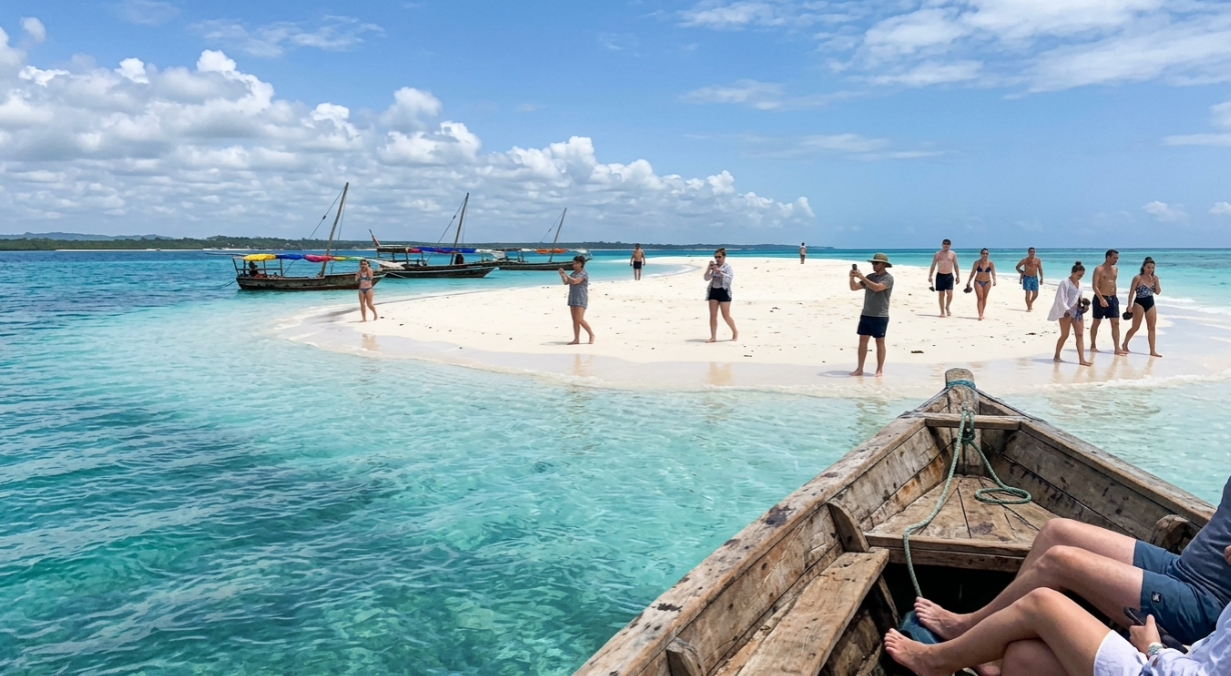
    These two stops are almost always sold as a pair, and for good reason. Prison Island alone, with its colony of Aldabra giant tortoises, is underwhelming as a standalone. Nakupenda Sandbank, on the other hand, is a strip of white sand that emerges at low tide in the middle of the turquoise channel. It’s the postcard shot.

    One experienced reviewer was blunt: “I would say it’s probably worth skipping Prison Island as not much to do there. Nakupenda was absolutely the highlight… you must visit it during your trip to Zanzibar!”

    Honest tradeoff: Nakupenda is tide-dependent, so timing matters. And the sandbank gets crowded midday when multiple tour boats converge. Go early.

    Book it if: You want a photogenic half-day without a long boat ride. Skip it if: You’re a serious snorkeler (go to Mnemba instead).


    4. Mnemba Atoll Snorkeling

    Best for: The best underwater visibility and coral variety on Zanzibar, full stop.

    • Price: $105–$150 per person including boat, equipment, and sometimes lunch

    • Duration: 3–6 hours

    • Best base: Nungwi, Kendwa, or Matemwe (shortest boat ride)

    Mnemba Atoll is a protected marine area off the northeast coast, and the snorkeling here is consistently rated the best on the island. TripAdvisor forum regulars confirm this: “The snorkeling at Mnemba is fantastic and the best on the island.”

    You cannot set foot on Mnemba Island itself (it’s a private conservation island with an exclusive lodge). The snorkeling happens in the surrounding reef waters.

    Honest tradeoff: Overcrowding is a real problem. Multiple boats anchor in the same spots, especially between 10 AM and 2 PM. If you’re based in Paje or Stone Town, the drive adds 1 to 2 hours each way, which turns a half-day trip into a long day.

    Book it if: Snorkeling is your priority and you’re staying in the north or northeast. Skip it if: You’re based on the south coast (consider Chumbe Island instead).


    5. Safari Blue (Kwale Island)

    Best for: A full-day dhow sailing experience with variety, not just snorkeling.

    • Price: $45–$130 per person for group tours; private versions run $130–$395

    • Duration: Full day (7–11 hours)

    • Best base: Fumba (departure point) or Stone Town

    Safari Blue is one of the most marketed Zanzibar day trips, and reviews are genuinely split. Positive reviews praise the traditional dhow sailing, seafood lunch on a sandbank, and the overall variety of the day. The negative reviews tell a different story.

    One detailed TripAdvisor review complained of “an 11-hour day, including 3.5 hours of driving, we spent just 30 minutes snorkelling. There was no guide or explanation, no information about marine life.” Others note that reefs in the Safari Blue area show damage from mass tourism.

    Honest tradeoff: If you expect great snorkeling, you’ll be disappointed. The reef quality is significantly lower than Mnemba or Chumbe. What you’re really paying for is the sailing, the lunch, and the scenery.

    Book it if: You want a full day on the water with lots of variety and don’t prioritize reef quality. Skip it if: You’re a snorkeling purist or hate long group days.


    6. Jozani Forest (Red Colobus Monkeys)

    Best for: Nature lovers who want to see an animal found nowhere else on Earth.

    • Price: Entrance fee approximately $12 per person, which includes an official park ranger guide. With organized tour transport: $25–$90 depending on operator.

    • Duration: 1.5–3 hours at the park

    • Best base: Paje or Jambiani (15–20 minute drive)

    Zanzibar’s Red Colobus monkeys are endemic to the island. They exist in a small population within and around Jozani Forest, and seeing them in the wild is genuinely special. The park also includes a mangrove boardwalk that’s worth the extra 20 minutes.

    The best advice comes from seasoned visitors: “Arrive by 08:30 AM. The Red Colobus monkeys are active and eating. By 11:00 AM, they are sleeping high in the trees, and the busloads of tourists arrive.”

    Honest tradeoff: Do not pay a “fixer” who approaches you on the road outside the park. The $12 entrance fee already includes a qualified ranger guide. Any extra payment goes to a middleman, not the park.

    Book it if: You’re on the east coast and want a short, rewarding nature excursion. Skip it if: You only have time for one trip and prefer water-based activities.


    7. Chumbe Island Eco Day Trip

    Best for: Eco-conscious travelers who want the best reef snorkeling in Zanzibar and don’t mind paying for it.

    • Price: $90 base rate + $25 Blue Economy Levy = approximately $115 per person for foreign adults

    • Duration: Full day (9:30 AM to 5:00 PM)

    • Best base: Stone Town (boat departs from near Stone Town)

    Chumbe Island Coral Park is a privately managed marine sanctuary that is in a different league from every other snorkeling option on Zanzibar. The sanctuary protects over 200 species of hard corals and 440 identified fish species, along with more than 60 bird species, including the rare giant coconut crab. Reviews consistently call it “the best snorkeling experience in Zanzibar.”

    The day trip includes all boat transfers, a guided snorkeling tour of the protected reef, forest and mangrove nature walks, a historic lighthouse visit, lunch, and all non-alcoholic drinks.

    Honest tradeoff: Chumbe closes annually for maintenance (in 2026, April 9 through May 18). Capacity is limited, so you must book in advance. Few competitor guides mention the $25 Blue Economy Levy that was introduced in August 2024, which brings the real cost to ~$115, not the $90 you’ll see quoted elsewhere.

    Book it if: You care about reef quality and conservation, and you’re willing to pay a premium for a genuinely protected marine environment. Skip it if: You’re on a tight budget or visiting during the maintenance closure.


    8. Kuza Cave + Seaweed Farm

    Best for: Travelers staying on the southeast coast who want a half-day cultural and nature combo without a long drive.

    • Price: $50–$130 per person (varies widely; local operators are significantly cheaper)

    • Duration: Approximately 5 hours including transfers

    • Best base: Paje or Jambiani

    Kuza Cave is a 50-meter-wide natural sinkhole in the middle of a small jungle near Jambiani. The turquoise water inside is swimmable, and the setting feels otherworldly. Pair it with a visit to the Seaweed Centre in Paje, a social enterprise that creates economic opportunities for female seaweed farmers. Seaweed is the second-biggest industry on the island, and the center explains the entire process from farming to cosmetics.

    Honest tradeoff: Neither stop takes very long on its own. This is a half-day excursion at most, which is actually a strength. You can be back on the beach by early afternoon.

    Book it if: You’re based in Paje or Jambiani and want a morning activity. Skip it if: You’re based in Stone Town or the north (the drive doesn’t justify the stops).


    9. Sunset Dhow Cruise

    Best for: Couples, honeymooners, or anyone who wants a low-effort evening on the water.

    • Price: $30–$85 per person

    • Duration: 2–3 hours (evening)

    • Best base: Any coastal area (offered from Stone Town, Nungwi, Kendwa, and others)

    A sunset dhow cruise is one of the simplest Zanzibar day trips to add without disrupting your schedule. You board a traditional wooden sailing vessel in the late afternoon, float around for a couple of hours, and watch the sun drop into the Indian Ocean.

    Honest tradeoff: Quality varies enormously. Some boats are atmospheric wooden dhows with snacks and drinks. Others are bare-bones vessels with nothing but a cooler. Ask your operator exactly what’s included before booking.

    If you’re honeymooning and weighing how to split time between safari and beach, our honeymoon safari and beach guide walks through the tradeoffs.

    Book it if: You want a romantic, zero-effort evening activity. Skip it if: You get seasick easily or expect a high-production experience.


    10. Fly-In Safari Day Trip (Nyerere or Mikumi)

    Best for: Travelers who want to see Big Five wildlife without adding mainland safari days to their itinerary.

    • Price: $450–$800 per person depending on operator and destination. Nyerere (formerly Selous) trips with a boat safari component tend to run $550–$800. Mikumi options can be slightly cheaper.

    • Duration: Full day (very early morning to evening)

    • Best base: Any (transport to the airport is included)

    A fly-in safari day trip from Zanzibar sounds extreme, but it’s a real product that multiple operators run. You take a domestic flight to the mainland, do a full-day game drive (sometimes including a boat safari on the Rufiji River), eat a bush lunch, and fly back to Zanzibar by evening. One reviewer summed it up: “It was well worth the trip! It was super fun, and seeing all the wildlife in their natural habitat was such an amazing experience.”

    This is the biggest content gap among Zanzibar day trip guides. Most articles don’t mention it at all, but it’s a legitimate option for travelers who didn’t plan a mainland safari.

    Honest tradeoff: It’s expensive. You’ll spend meaningful time in transit (flights are roughly 30–45 minutes each way, plus airport transfers). Actual safari time is around 5 to 6 hours. If budget allows and you have a strong desire to see elephants, hippos, and wild dogs, it delivers. But if you’re planning a proper Tanzania safari on the same trip, skip it.

    For travelers who want a bush-and-beach combination without the flight, Saadani National Park is the only place in East Africa where the safari meets the ocean.

    Book it if: You’re not doing a mainland safari and want a wildlife experience badly enough to pay for it. Skip it if: You already have safari days on your itinerary.


    11. Dolphin Tour (Kizimkazi)

    Best for: Only recommended if run by an operator that treats dolphin sightings as incidental to a reef snorkeling trip, not as the main event.

    • Price: $60–$110 per person

    • Duration: 2–3 hours (early morning)

    • Best base: Kizimkazi area or south coast

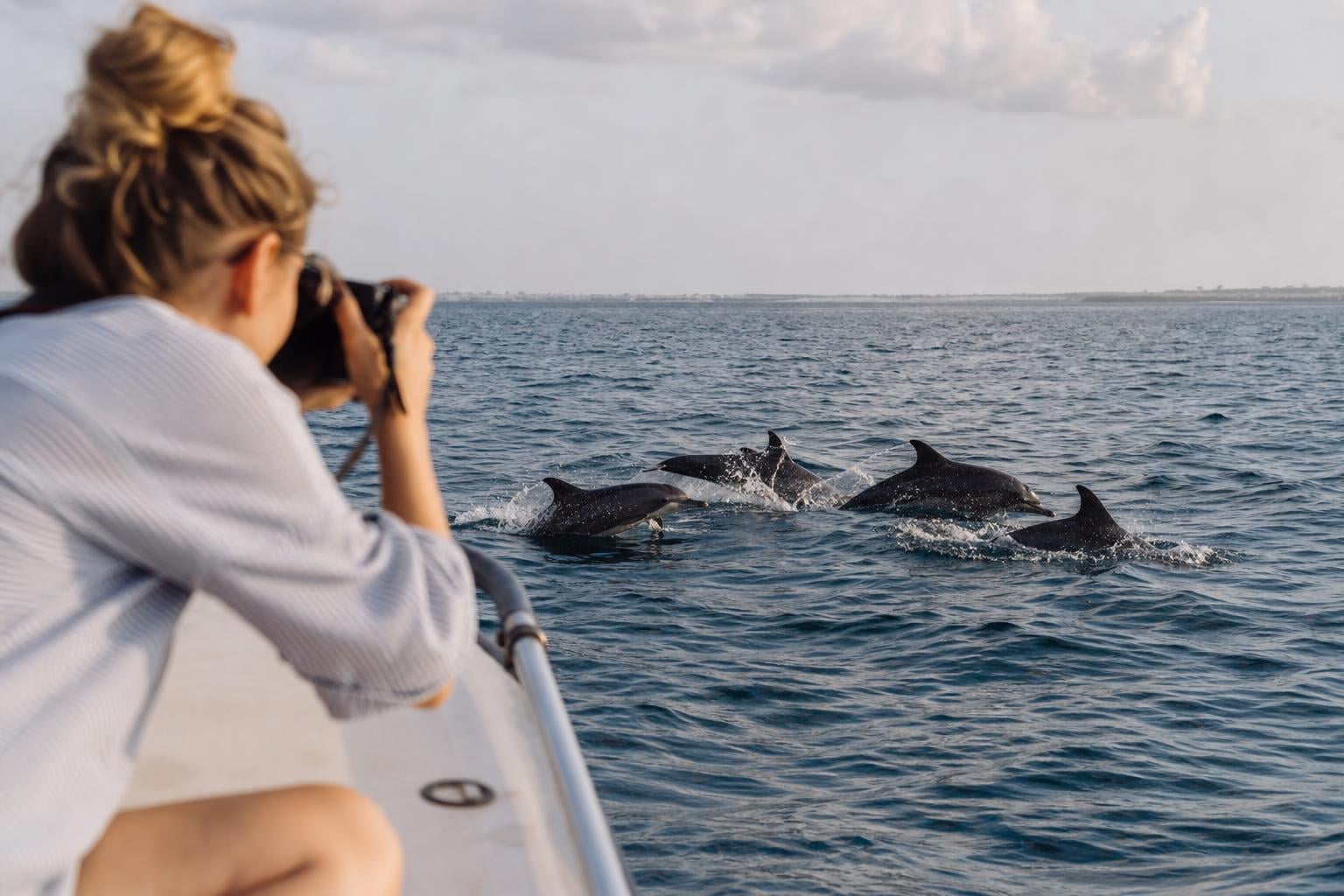
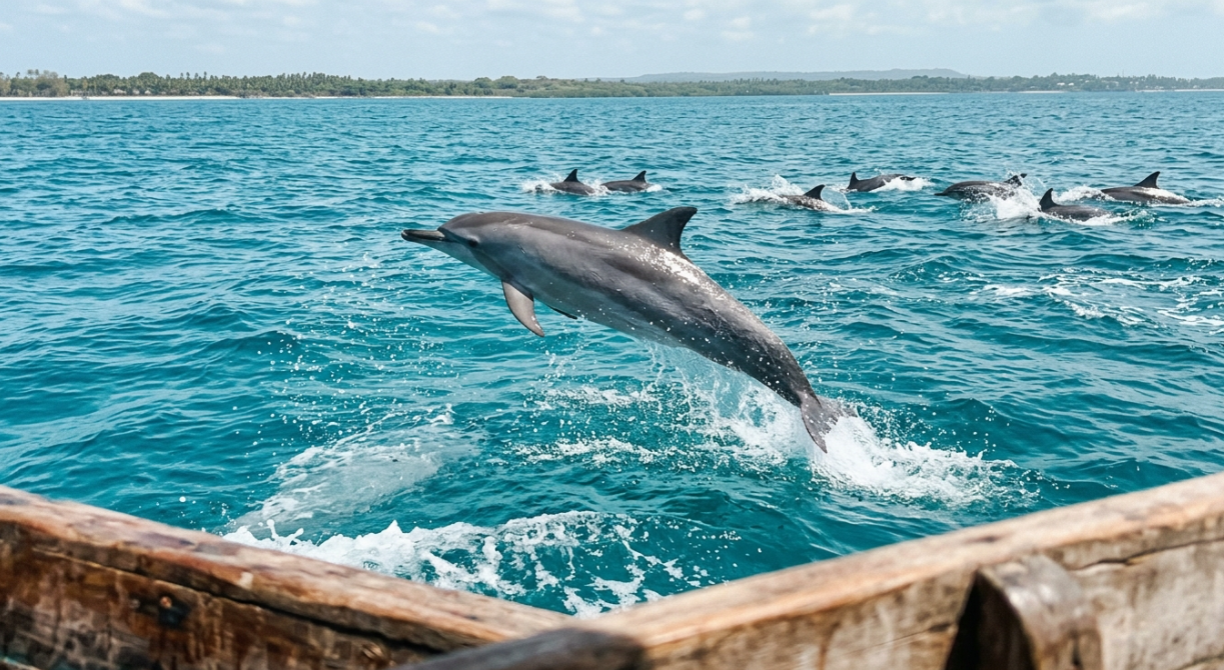
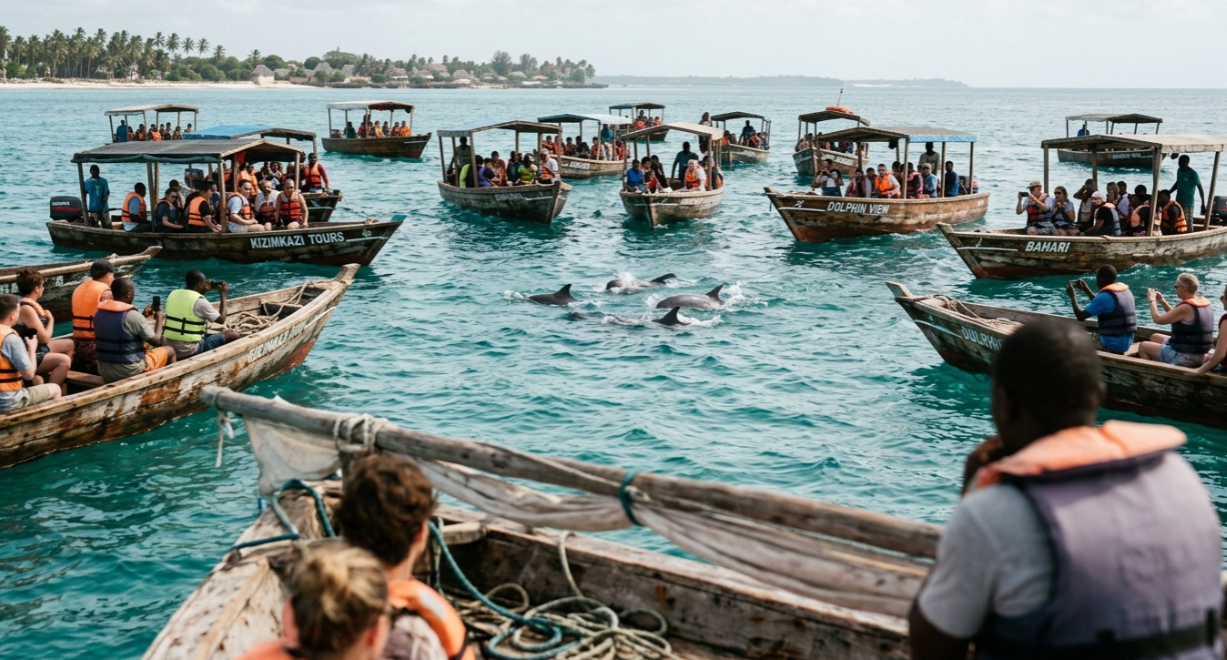
    This entry comes with a strong caveat. Dolphin tours departing from Kizimkazi are among the most popular Zanzibar day trips, but the standard operating practice is disturbing. Multiple boats chase dolphin pods at high speed, corralling them into shallow water so tourists can jump in. One reviewer was direct: “It was not nice to see the dolphins. They hunted them with the boat.”

    Practitioners on Reddit and travel forums report seeing dozens of boats pursuing a single pod. This is stressful for the animals and, frankly, not enjoyable for most visitors who witness it firsthand.

    Honest tradeoff: If you want to see dolphins in Zanzibar, do your research on the operator. Read our guide to ethical dolphin tours in Zanzibar, which covers which operators prioritize reef health over chasing.

    Book it if: You find a reef-first operator where dolphin sightings happen naturally. Skip it if: The operator “guarantees” dolphin swimming. That guarantee means chasing.


    Hidden Costs Most Zanzibar Guides Don’t Mention

    The sticker price of a Zanzibar day trip is rarely the full cost. Here’s what actually adds up.

    Mandatory Zanzibar travel insurance: All foreign visitors must purchase official Zanzibar travel insurance before arrival. The policy currently costs around $44 per adult. This is separate from your regular travel insurance. For more on travel insurance for Tanzania and Zanzibar, including what evacuation coverage you actually need, we’ve written a full breakdown.

    Entry costs before you even start touring: For most travelers in 2026, the mandatory entry cost is approximately $144 per person, covering the standard $50 tourist visa, the $44 mandatory insurance, and daily infrastructure taxes.

    Marine conservation fees: These vary by area. The Blue Economy Levy at Chumbe Island is $25 per adult foreigner. Other marine areas charge $10 to $25 for conservation fees that may or may not be included in your tour price. Always ask.

    Hotel markup on excursions: Booking through your hotel is convenient but expensive. Hotels typically mark up excursions by 20% to 40%. Booking directly with a local operator is almost always cheaper. The tradeoff is that you need to vet the operator yourself.

    Card surcharges: Many operators and small businesses in Zanzibar add a 3% to 5% surcharge for credit card payments. Carry some USD cash for excursions.

    Tipping: Tour guides, boat captains, and drivers generally expect tips. Budget $5 to $10 per person per excursion as a baseline.

    On average, a traveler in Zanzibar spends about $65 per day according to Budget Your Trip data. That figure is realistic for mid-range travelers who book directly and eat at local restaurants, but it gets blown quickly if you’re layering multiple boat excursions.

    Ethical Considerations for Zanzibar Day Trips
    Zanzibar Day Trips (2026): 11 Best Excursions, Costs

    Three issues come up repeatedly in traveler forums and deserve attention.

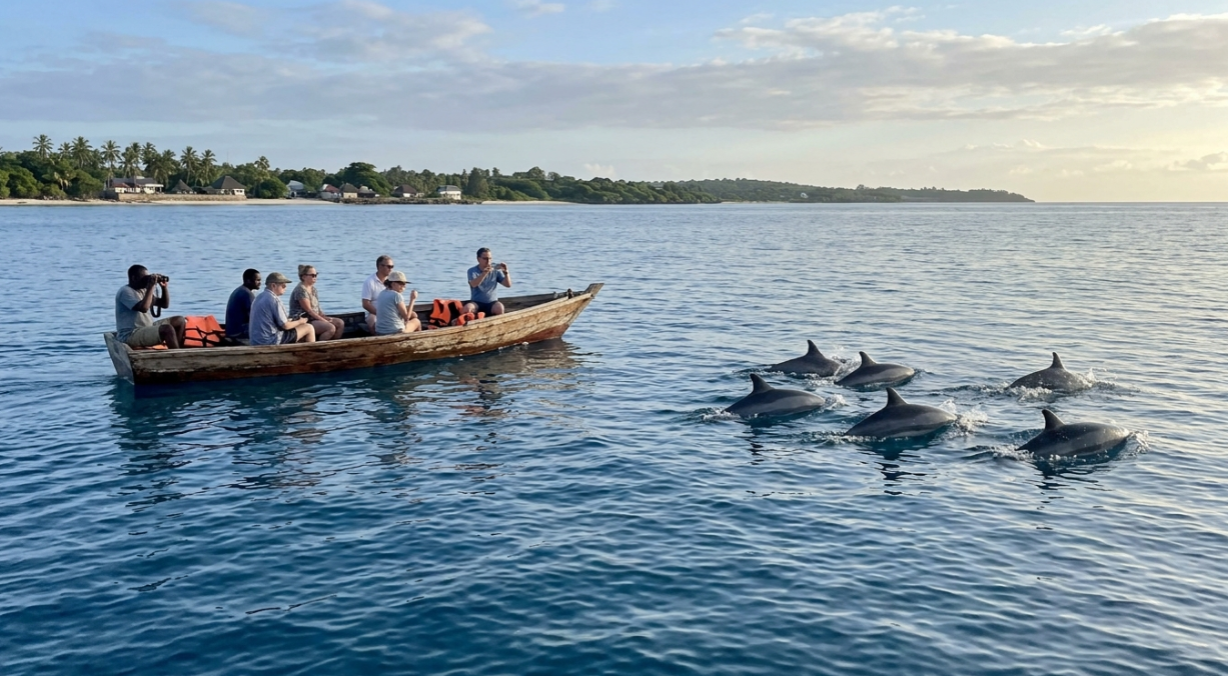
    Dolphin chasing at Kizimkazi is the most visible problem. The industry is largely unregulated, and the default practice harms dolphin welfare. Choose operators that offer reef-based snorkeling with incidental dolphin sightings, not pursuit-based “swim with dolphins” tours.

    Coral reef damage from mass tourism is documented in the Safari Blue area and at overcrowded Mnemba Atoll snorkeling spots. If reef conservation matters to you, Chumbe Island is the gold standard, operating with strict visitor caps and active reef monitoring.

    Starfish and shell removal still happens at tourist beaches, sometimes encouraged by guides. Don’t participate. Living marine organisms belong in the ocean.

    These aren’t minor concerns. They’re the kind of honest information that helps you choose better operators and have a better experience.

    Booking Tips That Save Money and Hassle

    Book directly with local operators whenever possible. The price difference between a hotel-booked excursion and a direct booking with the same operator can be 20% to 40%.

    Stack excursions on transfer days. If you’re moving between Stone Town and the east coast, combine a spice farm visit with Jozani Forest on the drive. Several Reddit users recommend this approach, and it works because both stops are on the main road between Stone Town and Paje.

    Arrive early for popular spots. Mnemba Atoll, Nakupenda Sandbank, and Jozani Forest all get significantly more crowded after 10 AM. Morning departures give you better wildlife sightings, fewer boats, and a more enjoyable experience.

    Verify what’s included. “Tour price” can mean wildly different things. Some include transport, equipment, lunch, and park fees. Others include none of the above. Ask before you pay.

    For a broader look at managing costs across a Tanzania trip, the Tanzania safari cost breakdown covers everything from park fees to domestic flights.

    Plan Your Full Trip

    If you’re visiting Zanzibar as part of a larger East Africa itinerary, the island works best as a wind-down after a mainland safari or Kilimanjaro climb. Most travelers spend 3 to 5 nights on Zanzibar, which is enough for 1 to 3 day trips plus plenty of beach time.

    For those who want a quieter coastal alternative to Zanzibar’s busier beaches, Pangani and the Swahili Coast offer a different rhythm entirely, with far fewer tourists and a deeper connection to Swahili history.

    Planning a combined safari and Zanzibar trip involves a lot of moving pieces: domestic flights, park fees, permits, accommodations, and timing everything around wildlife seasons. If you want help putting it all together, the team at Duma Explorer designs custom Tanzania itineraries that connect mainland safari, Kilimanjaro, and Zanzibar beach time into one seamless trip.


    Frequently Asked Questions

    How many day trips should I do in Zanzibar?

    For a typical 4 to 5 night stay, 2 to 3 excursions is the sweet spot. More than that and you’ll spend most of your holiday in transit rather than on the beach. If you only have 3 nights, pick one excursion that matches your base area and keep the rest as beach days.

    Is it cheaper to book Zanzibar excursions locally or in advance?

    Booking directly with local operators on the ground is almost always cheaper than booking through your hotel (which marks up 20–40%) or through international booking platforms. The tradeoff is that you need to do your own research on operator quality and safety. Arriving a day early in Stone Town gives you time to compare prices in person.

    What is the best Zanzibar day trip for snorkeling?

    Chumbe Island offers the best-protected reef with over 200 species of hard coral, but it costs ~$115 per person. Mnemba Atoll has excellent visibility and marine life at $105–$150, though it can get overcrowded. For pure reef quality with a conservation focus, Chumbe wins. For accessibility from the north coast, Mnemba is more practical.

    Do I need to pay Zanzibar’s mandatory travel insurance?

    Yes. All foreign visitors are required to purchase official Zanzibar travel insurance before arrival, currently costing around $44 per adult. This is not optional, and it’s separate from any personal travel insurance policy you may already carry.

    Are dolphin tours in Zanzibar ethical?

    Most are not. The standard practice at Kizimkazi involves multiple boats chasing dolphin pods at speed, which causes significant stress to the animals. If you want to see dolphins, look for operators that offer reef-first snorkeling where dolphin sightings happen incidentally, not as a guaranteed attraction. Our ethical dolphin tour guide goes into more detail on how to identify responsible operators.

    Can I do a safari day trip from Zanzibar?

    Yes. Fly-in safari day trips to Nyerere National Park (formerly Selous) or Mikumi National Park are available from approximately $450 to $800 per person. They include round-trip domestic flights, a full-day game drive, and a bush lunch. It’s expensive and the day is long, but it’s a real option if you didn’t plan a mainland safari.

    What hidden fees should I budget for in Zanzibar?

    Beyond excursion prices, expect to pay: $50 for a tourist visa, $44 for mandatory Zanzibar travel insurance, $10–$25 in marine conservation fees (depending on the area), potential 3–5% credit card surcharges, and tips for guides and boat captains. Hotels also mark up excursion prices by 20–40% compared to booking directly.
  • Zanzibar Weather 2026: Seasons, Winds & When to Go

    Zanzibar Weather 2026: Seasons, Winds & When to Go

    TL;DR

    Zanzibar is warm year-round, but that does not mean every month offers the same travel conditions. Rainfall, humidity, monsoon winds, sea temperature, tides, and underwater visibility can change significantly throughout the year.

    The most important distinction is between Zanzibar’s long dry season from June to October, the short dry period in January and February, the long rains from March to May, and the short rains toward November and December. The northeast Kaskazi and southeast Kusi wind systems also influence how different beaches and water activities feel from season to season.

    For most travelers, June through October offers the best overall combination of dry weather, comfortable temperatures, and reliable beach conditions. September is particularly attractive because rainfall is typically low while temperatures remain comfortable. However, the best month depends on what you want to do: January and February suit hot-weather beach trips, June through October is stronger for diving and kitesurfing, and November or late May can provide a useful balance between lower prices and acceptable weather.

    This guide explains Zanzibar weather month by month, compares the island’s seasons and wind systems, and shows how weather changes depending on where you stay and what you plan to do.

    Quick Answer: When Is the Best Time to Visit Zanzibar?

    The best time to visit Zanzibar is generally June through October, when the island has its driest weather, lower humidity, comfortable temperatures, and favorable conditions for beaches, diving, snorkeling, and safari-and-beach trips. January and February are also good for hot beach weather, while November and December offer a lower-cost shoulder-season alternative. March through May is the long-rains season, with April typically the wettest month and the greatest risk of disrupted beach days.

    In simple terms:

    * Best overall weather: June to October

    * Best single month: September

    * Hottest beach weather: January to February

    * Best for kitesurfing: June to October and December to March

    * Best for diving: June to October, with good conditions also possible in January and February

    * Lowest weather reliability: March to May, especially April

    * Best shoulder-season value: November, late May, and early June

    * Best for all-day swimming: North coast beaches such as Kendwa and Nungwi, where tidal exposure is less pronounced than on much of the east coast

    Zanzibar stays warm throughout the year. The main variables are rainfall, humidity, wind, sea conditions, and tides, rather than temperature alone.

    Zanzibar Weather at a Glance

    Season

    Months

    Typical Conditions

    Rain Risk

    Best For

    Short Dry Season

    January–February

    Hot, humid, mostly sunny

    Moderate

    Beaches, swimming, snorkeling

    Long Rains (Masika)

    March–May

    Hot, humid, frequent heavy rain

    High

    Budget travel, flexible itineraries

    Long Dry Season

    June–October

    Warm, drier, breezier

    Low

    Beaches, diving, safari combinations

    Short Rains (Vuli)

    November–December

    Warm with short showers

    Moderate

    Shoulder-season travel, lower crowds

    At-a-Glance Takeaway

    If weather reliability is your priority, choose June through October. If you prefer hotter conditions and don’t mind humidity, January and February can also be excellent. If price matters more than weather certainty, November, late May, and early June can offer a better compromise.

    Rainfall varies by weather station and dataset, so monthly figures should be treated as climate averages rather than guarantees for a specific trip.

    Zanzibar Weather Month by Month

    January

    January is hot, humid, and generally favorable for a beach holiday. The Kaskazi northeast monsoon is active, keeping temperatures high and often producing good conditions for swimming and snorkeling.

    Best for: Beach holidays, swimming, snorkeling, diving
    Watch for: High humidity and occasional rain

    February

    February is typically one of Zanzibar’s hottest months. Sea temperatures remain very warm, while the combination of heat and humidity can make afternoons feel intense.

    Best for: Beach resorts, swimming, water activities
    Watch for: Heat and humidity

    March

    March marks the transition toward the long rains. Early March can still provide good beach weather, but rainfall generally becomes more frequent as the month progresses.

    Best for: Flexible travelers, early-season beach trips
    Watch for: Increasing rain and humidity

    April

    April is normally the wettest and least reliable month for a classic beach holiday. Heavy rainfall can disrupt outdoor activities, and some tourism businesses reduce operations during the long-rains period.

    Best for: Budget-conscious travelers with flexible plans
    Watch for: Heavy rain, muddy roads, disrupted excursions

    May

    May remains part of the long-rains season, although rainfall generally begins to ease compared with April. Conditions can become more usable toward the end of the month.

    Best for: Lower-cost travel, flexible itineraries
    Watch for: Residual rain and occasional resort closures

    June

    June marks the beginning of Zanzibar’s long dry season. Conditions become cooler, drier, and breezier as the Kusi wind becomes established.

    Best for: Diving, beaches, safari-and-Zanzibar combinations
    Watch for: Stronger winds on exposed beaches

    July

    July is one of the most comfortable months for outdoor activities. Temperatures are relatively mild by Zanzibar standards, rainfall is low, and the Kusi wind creates a noticeably breezier feel.

    Best for: Diving, beach holidays, sightseeing, safari combinations
    Watch for: Windier conditions on the southeast coast

    August

    August remains dry and comfortable, with warm days and cooler nights than the hotter months at the beginning of the year. The southeast can be particularly windy.

    Best for: Diving, kitesurfing, beaches
    Watch for: Wind and choppier conditions on exposed coasts

    September

    September is one of the strongest all-round months for Zanzibar travel. Rainfall is typically among the year’s lowest while temperatures remain warm enough for swimming and beach activities.

    Best for: Beaches, diving, snorkeling, safari combinations
    Watch for: Stronger winds on some southeast-facing beaches

    October

    October remains relatively dry and warm, although conditions begin transitioning toward the short-rains season later in the month.

    Best for: Beaches, diving, sightseeing
    Watch for: Increasing humidity toward the end of the month

    November

    November brings the short rains, known as Vuli. Showers are generally more intermittent than during the long rains, and sunny periods can still dominate much of the day.

    Best for: Shoulder-season travel, lower crowds
    Watch for: Unpredictable showers

    December

    December is warm and increasingly humid as the Kaskazi wind returns. Early December can retain some short-rains influence, while the festive period is typically much busier.

    Best for: Beach holidays, festive-season travel
    Watch for: Humidity, higher demand around Christmas and New Year

    Climate Foundations

    Tropical Monsoon Climate (Am)

    What it means: Under the Köppen climate classification system, Zanzibar is designated Am, a tropical monsoon climate. This means temperatures stay high year-round and rainfall is significant across all months, with a pronounced wet season.

    Why it matters for trip planning: Unlike destinations with hot summers and cold winters, Zanzibar’s temperature barely fluctuates. The average ranges from 22°C to 33°C in every month. Rainfall is the variable that defines your experience, not temperature. When someone asks about Zanzibar weather, the real question is usually about rain.

    ITCZ (Inter-Tropical Convergence Zone)

    What it means: The ITCZ is a belt of low atmospheric pressure near the equator where trade winds from the northern and southern hemispheres collide. This collision forces warm, moist air upward, producing intense convective rainfall.

    Why it matters: The ITCZ migrates north and south with the sun throughout the year. When it passes over Zanzibar (roughly March to May, and again briefly in November), it triggers the island’s rainy seasons. When it moves away, dry conditions follow. Almost no competing travel guide explains this mechanism, but understanding it makes the entire seasonal pattern click: the rains aren’t random. They’re driven by a predictable atmospheric system.

    Trade Winds

    What it means: Trade winds are persistent wind patterns that blow from subtropical high-pressure zones toward the equatorial low-pressure belt. In the Indian Ocean, they arrive from the northeast or southeast depending on the time of year.

    Why it matters: On Zanzibar, trade winds do more than move air. They determine sea conditions, diving visibility, kitesurfing quality, humidity, and even which coast of the island feels most comfortable. The two trade wind systems that affect Zanzibar have their own Swahili names, covered next.

    Kaskazi vs. Kusi: Zanzibar’s Two Main Wind Systems

    Zanzibar Weather 2026: Seasons, Winds & When to Go

    Zanzibar’s seasonal weather is strongly influenced by two major wind patterns. Kaskazi is associated with the northeast monsoon and is most prominent around December through March, while Kusi is associated with the southeast trade winds and is strongest during the middle of the year.

    Feature

    Kaskazi

    Kusi

    Direction

    Northeast

    Southeast

    Main period

    December–March

    June–October

    Typical feel

    Hotter and more humid

    Cooler, drier and breezier

    Main travel effect

    Warm seas and generally favorable beach conditions

    Stronger winds and excellent conditions for wind sports

    Best known for

    Swimming, snorkeling, warm-water activities

    Kitesurfing, diving, breezy beach conditions

    Most affected areas

    Island-wide, especially exposed coasts

    Southeast and east coasts

    Which Wind Season Is Better?

    Neither wind season is universally better. Kaskazi generally suits travelers prioritizing warm, calm-water beach conditions, while Kusi is particularly attractive for travelers who want drier weather, lower humidity, diving, or kitesurfing.

    The exact experience also depends on which coast you choose because wind exposure, tides, and shoreline geography vary around Zanzibar.

    Zanzibar’s Wind Systems

    Kaskazi (Northeast Monsoon)

    What it means: Kaskazi is the Swahili word for “northern wind.” It refers to the northeast monsoon that blows across Zanzibar from December through March. Wind speeds typically average 12 to 20 knots.

    What it feels like: Warmer, gentler, and more humid than the alternative. The Kaskazi flattens the ocean surface, creating calm, glassy seas ideal for swimming, snorkeling, and beginner water sports. Humidity runs high (75-82%), so even though temperatures hover around 30-33°C, the air feels heavier than the numbers suggest.

    Key data: Sea temperatures during the Kaskazi peak at 28-29°C, the warmest of the year.

    Practitioners based on the Zanzibar coast note that the Kaskazi period is when humidity sits at its highest, around 80%. February at 30°C with 80% humidity feels genuinely oppressive compared to July at 28°C with 65% humidity. The wind is what saves you.

    Kusi (Southeast Trade Wind)

    What it means: Kusi (also called Kusini, meaning “southern wind” in Swahili) is the southeast trade wind that blows from June through September or October. It’s stronger and more consistent than the Kaskazi, averaging 15 to 25 knots.

    What it feels like: Cooler and drier. The Kusi brings noticeably lower humidity (73-76%) and comfortable daytime temperatures of 25-30°C. It’s the wind system behind Zanzibar’s long dry season and the reason June through October is peak tourism season.

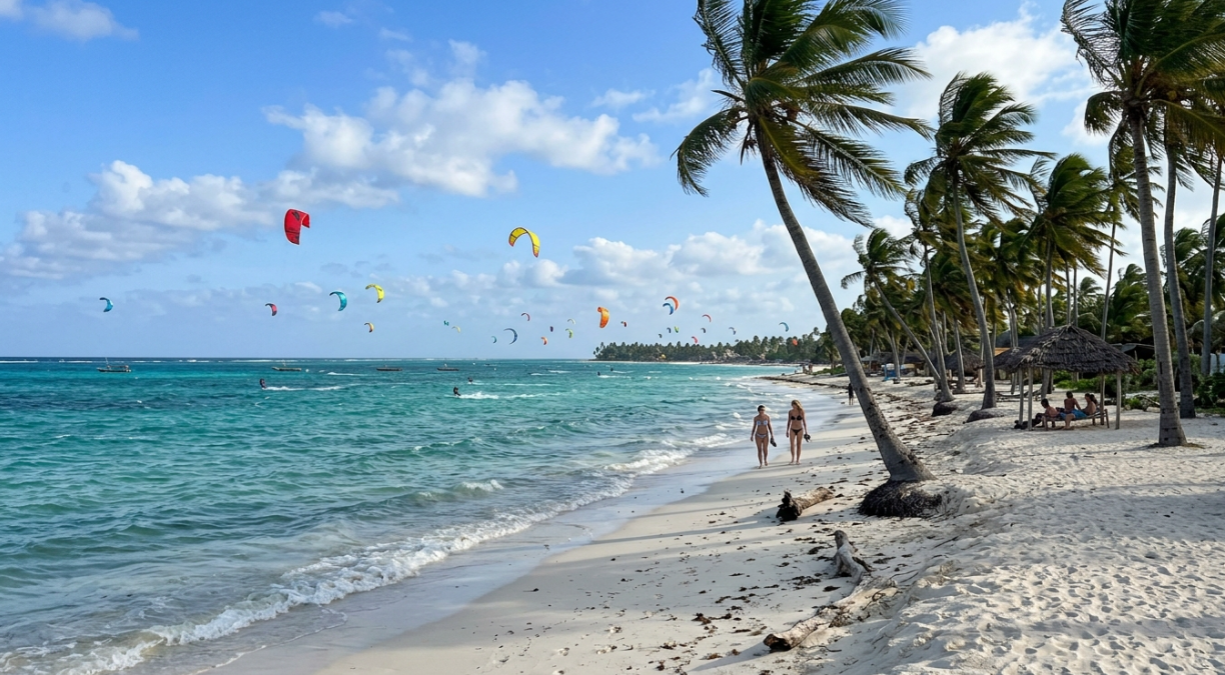
    Activity connection: The Kusi’s strength and reliability make Paje and Bwejuu on the southeast coast the center of Zanzibar’s kitesurfing scene. Those beaches catch the full force of the trade winds. For a broader look at Swahili Coast travel terms, including wind terminology, that glossary goes deeper.

    Transition Periods

    What it means: The windows between monsoon systems, roughly April to May and October to November, when neither the Kaskazi nor Kusi dominates. Winds become lighter and more variable.

    Why it matters: Transition periods overlap with the rainy seasons. Without consistent wind to push clouds through and moderate humidity, these windows tend to feel more stagnant. The April-May transition is particularly wet. The October-November transition is milder, bringing scattered showers rather than sustained downpours.


    Zanzibar’s Four Seasons

    Short Dry Season (January to February)

    What it means: The brief hot and sunny window between the short rains and the long rains. January and February are warm, bright, and relatively dry compared to what comes before and after.

    Key data: January averages a high of 32.8°C with 85mm of rain over about 10 days and 9 hours of daily sunshine. February is the hottest month on the island, with temperatures reaching 33.1°C. Sea temperature hits 28.5°C or higher.

    Trip planning note: This is one of Zanzibar’s best beach windows. The ocean is bath-warm, the Kaskazi keeps seas calm, and rainfall is manageable. The main trade-off is humidity, which can feel intense, especially in February.

    Masika (Long Rains), March to May

    What it means: Masika is the Swahili term for Zanzibar’s long rainy season. It runs from March through May and represents the heaviest sustained rainfall of the year. The ITCZ passes directly over the archipelago during this period.

    Key data: April is the peak, with roughly 320 to 400mm of rain falling over 18 or more days. May eases slightly to around 290mm. Humidity spikes to 86% in May, the year’s highest.

    The reality: April is the one month that’s genuinely difficult to recommend for a beach holiday. Some resorts close entirely during April and May because the demand drops and conditions are unpredictable. Rainfall peaks during the long rains, with heavy afternoon showers making roads muddy.

    The flip side: Hotel rates, flights, and some tours come at significant discounts during the Masika. If you’re budget-conscious and flexible, the shoulder edges of this season (early March, late May) can offer usable weather at lower prices.

    Long Dry Season (June to October)

    What it means: Zanzibar’s extended dry period, driven by the Kusi winds. This is the season most travel guides call the “best time to visit,” and the data supports it.

    Key data: Monthly rainfall drops to 50-100mm, with September recording as little as 35mm over just 7 days, the driest month of the year. Daytime temperatures hover at a comfortable 25-30°C. Sunshine averages 9 hours daily. Sea temperatures cool to 25-27°C, still warmer than most European summer seas.

    Why September stands out: Experienced Zanzibar travelers frequently cite September as the single best month. Minimal rain, maximum sunshine, comfortable temperatures, and excellent diving visibility all converge.

    This season also overlaps with safari high season in Tanzania, making it the most popular window for safari-then-beach itineraries.

    Vuli (Short Rains), November to December

    What it means: Vuli is the Swahili name for the short rainy season. It brings lighter, more scattered showers than the Masika, usually arriving as brief afternoon spells followed by sunny periods.

    Key data: November sees around 140-170mm of rainfall. Conditions typically clear by mid-December, just before the festive season. Temperatures climb back to 29-30°C as the Kaskazi onset begins.

    Trip planning note: The Vuli is a genuine shoulder season. Prices drop, crowds thin, and the rain is rarely a dealbreaker. Most showers pass within 30 minutes to two hours, leaving long stretches of usable beach weather.

    When to Visit Zanzibar Based on Your Trip

    The best Zanzibar weather depends on what you plan to do. A month that is excellent for kitesurfing may not be ideal for someone who wants completely calm water, while a budget traveler may deliberately choose a wetter month to save money.

    Your Priority

    Best Time

    Why

    Best overall weather

    June–October

    Drier, comfortable temperatures and lower humidity

    Best single month

    September

    Typically very dry with comfortable temperatures

    Hottest beach weather

    January–February

    High temperatures and very warm sea

    Diving

    June–October

    Generally favorable dry-season conditions

    Kitesurfing

    June–October; December–March

    Seasonal trade winds provide reliable wind windows

    Swimming

    Year-round

    Sea remains warm, but tides matter by location

    Safari + Zanzibar

    June–October

    Dry-season conditions work well for both regions

    Lower-cost travel

    November, late May, early June

    Shoulder-season conditions can mean fewer crowds and lower rates

    Avoiding heavy rain

    June–October

    Lowest overall rainfall period

    Cultural sightseeing

    June–October

    More predictable outdoor conditions

    Best Month for a Beach Holiday

    For travelers who want the highest probability of dry, comfortable beach weather, September is one of the strongest choices.

    Best Months for a Budget Beach Holiday

    If you are willing to accept a higher chance of rain, November and the late-May to early-June transition can provide a better balance between weather and price than the peak dry season.

    Best Months for Kitesurfing

    The strongest wind seasons are generally associated with the Kusi and Kaskazi systems, making June through October and December through March the key periods to investigate. Local conditions can vary by beach and day, so wind forecasts should be checked close to the trip.

    Measurable Weather Terms

    Average Temperature Range

    The numbers: Zanzibar’s annual highs range from 28°C to 33°C. Lows stay between 22°C and 25°C throughout the year. The hottest month is February (average 28°C overall, highs near 33°C). The “coldest” is July (average 24°C). In extreme cases, temperatures can reach 36-38°C.

    What actually matters: A four-degree difference between your hottest and coolest months is tiny. Temperature alone almost never determines whether you’ll enjoy a particular month. Humidity and rainfall are the real decision factors.

    Humidity

    The numbers: Zanzibar humidity ranges from 73% in August and September to 86% in May. The year starts high (82% in January), drops to 76% by March, spikes through the Masika, bottoms out in September, and climbs again toward December (85%).

    Why this is the most underrated Zanzibar weather variable: Locals and long-term residents consistently emphasize that humidity, not temperature, defines comfort. The four-degree temperature difference between February and July feels like a ten-degree swing once you factor in humidity. The Kusi trade winds during the long dry season actively lower the “feels like” temperature, making 28°C in July feel genuinely pleasant rather than sticky.

    Rainfall

    The numbers: Zanzibar (Unguja island) receives approximately 1,650mm of rain annually. Pemba, the smaller northern island of the archipelago, gets about 1,900mm, roughly 15% more. Monthly totals swing from as low as 35mm in September to 400mm in April.

    Measurement context: Rainfall is measured in millimeters. One millimeter equals one liter of water per square meter. When a month records 400mm, that’s a lot of water, equivalent to submerging the entire island under 40cm if it all fell at once and didn’t drain.

    Sea Temperature

    The numbers: Zanzibar’s sea temperature ranges from 25.5°C in August and September to 28.5-29.5°C between December and April. It’s warm enough for comfortable swimming every day of the year.

    Perspective: Even in the coolest month, Zanzibar’s ocean is warmer than the Mediterranean in peak summer. Water temperature is essentially never a reason to avoid a particular month.

    Sunshine Hours

    The numbers: Dry months (June through October, plus January and February) average 8 to 9 hours of sunshine daily. Even during the Masika, mornings are often clear and bright. The rain tends to build in the afternoon or arrive at night.

    Why this matters: A “rainy month” on Zanzibar rarely means gray skies all day. The pattern is usually sunny mornings, followed by an afternoon downpour, followed by clearing.

    UV Index

    What it means: The UV index measures the intensity of ultraviolet radiation from the sun. At 6° south of the equator, Zanzibar’s UV index is high to very high year-round, typically 10 or above.

    Practical note: Reef-safe sunscreen is essential every day, not just beach days. The equatorial sun burns faster than most northern visitors expect, even on overcast days when cloud cover thins the UV only slightly.

    What Does Zanzibar Weather Actually Feel Like?

    Zanzibar’s temperatures can look remarkably similar throughout the year, but the experience changes considerably depending on humidity and wind.

    During January and February, temperatures are high and humidity can make afternoons feel heavy and tropical. The Kaskazi wind can provide some relief, particularly along exposed beaches.

    During June through October, daytime temperatures are generally more comfortable and the Kusi trade winds create a noticeably breezier environment. The same nominal temperature can therefore feel much more pleasant than it does during a humid spell earlier in the year.

    During the long rains from March through May, the combination of heat, humidity and frequent rainfall can make outdoor activities less predictable.

    The practical lesson is simple: don’t choose a Zanzibar travel month based on temperature alone. Check rainfall, humidity, wind and tides together.


    Zanzibar Weather by Coast: North vs. East vs. West

    Zanzibar Weather 2026: Seasons, Winds & When to Go

    Zanzibar does not feel identical everywhere. Wind exposure, tides, shoreline orientation and local geography can make the same weather system feel very different depending on where you stay.

    Coast

    Weather/Sea Character

    Tides

    Best For

    North

    Relatively sheltered and less tide-affected

    Lower impact

    Swimming, resorts, sunsets

    East

    More exposed to trade winds and strong tidal changes

    High impact

    Kitesurfing, diving, quiet beaches

    Southeast

    Wind-exposed, especially during Kusi

    High impact

    Kitesurfing, water sports

    West

    More sheltered from southeast trade winds

    Generally less dramatic

    Stone Town, sunsets, sightseeing

    North Coast: Nungwi and Kendwa

    The north coast is one of the easiest choices for travelers who prioritize swimming. Kendwa and Nungwi are less affected by the dramatic tidal exposure found along much of the east coast.

    East Coast: Matemwe, Kiwengwa and Paje

    The east coast experiences much more noticeable tidal changes. At low tide, the sea can retreat a substantial distance from shore, exposing reef flats and tidal pools.

    This does not mean the east coast has worse beaches. It means travelers should plan swimming and water activities around the tide as well as the weather.

    West Coast: Stone Town

    The west coast is useful for travelers combining beach time with Stone Town, cultural attractions and sunset views. Its more sheltered position can also make the shoreline feel different from the wind-exposed southeast.


    Activity-Weather Connections

    Diving and Snorkeling Visibility

    The numbers: June through October offers the best underwater visibility, reaching 20 to 30 meters at top sites like Mnemba Atoll, Chumbe Island, and Tumbatu. The Kusi winds bring dry, calm conditions that reduce sediment and plankton. December through February maintains good visibility (15-25m), with calmer Kaskazi winds creating flat seas ideal for beginner divers.

    When to avoid: Visibility drops during the Masika (March through May) as rain runoff and plankton blooms cloud the water.

    For ethical dolphin tours, the calm seas of December through February are particularly well suited to boat-based excursions.

    Kitesurfing Seasons

    The pattern: Zanzibar has two distinct kitesurfing windows. During the Kusi (June through October), strong and reliable 15-25 knot winds suit intermediate to advanced riders. During the Kaskazi (December through March), lighter 12-20 knot winds and flatter water suit beginners and freestyle sessions. The transition months (April-May, November) are generally too unpredictable for consistent sessions.

    Where: Paje, on the southeast coast, is the hub. It catches the full force of both wind systems and has shallow lagoon areas exposed at low tide that create natural flat-water spots.

    Shoulder Season

    What it means: In Zanzibar context, the shoulder seasons are the transitional periods between peak dry and peak wet, roughly early to mid November, late May to early June, and March. Weather is unpredictable but often usable.

    Why it matters: Shoulder season pricing can be 20-40% lower than peak season for flights, accommodation, and excursions. If your schedule is flexible and you’re comfortable accepting occasional rain, these windows offer strong value. A rainy afternoon is also perfect for a Zanzibar spice tour, which happens mostly under tree canopy.

    Safari-Beach Weather Alignment

    What it means: Coastal Tanzania (including Zanzibar) follows a monsoon-driven weather pattern. Inland Tanzania, the safari belt around Arusha, Serengeti, and Ngorongoro, sits at higher altitude and follows a different system. The dry seasons roughly overlap (June through October is dry in both regions), but rainfall timing and intensity can differ.

    Why it matters: If you’re combining a mainland safari with a Zanzibar beach extension, expect different weather at each stop. The good news is that June through October works well for both, which is why it’s the most popular window for combination trips.

    For a detailed look at mainland safari timing, that guide breaks down each park’s season individually.


    Practical Terms

    Rainy Day Reality

    What it actually looks like: On most days during Zanzibar’s rainy seasons, showers last 30 minutes to two hours. They build in the afternoon or arrive during the night, leaving long stretches of sunshine in between. All-day gray washouts are uncommon even in April.

    Why this matters: Many travelers avoid the rainy season entirely based on the assumption that “rainy” means unusable. That’s overly cautious for most months except April, when the frequency and duration of showers do become disruptive.

    Resort Closures During Masika

    What it means: Some Zanzibar properties close during April and May because occupancy drops to the point where staying open isn’t viable. This is more common at smaller, boutique lodges than at large resorts.

    Practical impact: If you’re planning a trip during the Masika, confirm your preferred hotel is open before booking flights. The upside of reduced options is that open properties often offer their lowest rates of the year.

    Cyclone Risk

    What it means: Severe tropical cyclones in the southwest Indian Ocean occasionally generate rough weather in Zanzibar’s vicinity, but direct landfall is rare. Zanzibar sits just outside the main cyclone belt.

    Practical impact: Cyclone risk is not a significant planning consideration for Zanzibar. Heavy weather can occur, particularly during the Masika, but the statistical probability of a trip-disrupting cyclone is low.

    Ramadan and Cultural Calendar

    What it means: Zanzibar is predominantly Muslim, and Ramadan, the holy month of fasting, significantly affects daily rhythms. From 2023 to 2025, Ramadan begins in March, overlapping with the transition into the Masika.

    Why it matters for weather planning: Ramadan isn’t a weather event, but it interacts with weather-related travel decisions. If you’re visiting during March, you’ll experience both the onset of rains and shorter business hours during the day. Some restaurants and shops close until evening. The tradeoff is experiencing a vibrant cultural period, with lively evenings after the fast is broken.

    Packing for Zanzibar Weather

    What to bring: Given the year-round warmth and humidity, pack light, breathable fabrics. Quick-dry layers handle sudden rain better than cotton. Reef-safe sunscreen is critical. For complete packing guidance, including gear that works for both safari and beach, that list covers everything.

    Key items by season:

    • Kaskazi (Dec-Mar): Lightest possible clothing, high-SPF sunscreen, hat, light rain jacket

    • Masika (Mar-May): Waterproof bag for electronics, quick-dry everything, insect repellent

    • Kusi (Jun-Oct): Light fleece or long sleeve for breezy evenings, reef shoes for east coast walks at low tide

    • Vuli (Nov-Dec): Compact umbrella, sandals that handle wet surfaces, modest clothing for Stone Town visits


    Quick Reference: Zanzibar Weather by Season

    Season

    Months

    Avg High

    Avg Low

    Monthly Rain

    Humidity

    Sea Temp

    Wind

    Short Dry

    Jan-Feb

    32-33°C

    24-25°C

    55-85mm

    75-82%

    28-29°C

    Kaskazi (12-20 kn)

    Masika (Long Rains)

    Mar-May

    29-33°C

    24-25°C

    190-400mm

    79-86%

    28-29°C

    Transition

    Long Dry

    Jun-Oct

    27-30°C

    21-24°C

    35-100mm

    73-80%

    25-27°C

    Kusi (15-25 kn)

    Vuli (Short Rains)

    Nov-Dec

    29-30°C

    25-26°C

    140-170mm

    80-85%

    27-28°C

    Kaskazi onset


    Frequently Asked Questions

    What is the best month for Zanzibar weather?

    September is the strongest single month. It records the lowest rainfall of the year (around 35mm over 7 days), 9 hours of daily sunshine, comfortable temperatures, and the best diving visibility. June through October are all excellent, but September edges ahead on nearly every metric.

    Does it rain every day during Zanzibar’s rainy season?

    Not quite. During the Masika (March through May), rain falls on roughly 15-18 days per month at the peak. But showers typically last 30 minutes to two hours and arrive in the afternoon or at night. Mornings are often sunny. April is the only month where rain genuinely disrupts full days with regularity.

    Is Zanzibar weather the same across the whole island?

    No. The east coast is more exposed to trade winds and experiences dramatic tides. The north coast (Nungwi, Kendwa) is less tide-affected. The west coast (Stone Town) is more sheltered and slightly hotter. Pemba island receives about 15% more annual rainfall than Unguja. Rainfall timing follows roughly the same pattern everywhere, but wind exposure and tidal conditions vary significantly by coast.

    Can you swim in Zanzibar year-round?

    Yes, the sea temperature never drops below 25.5°C. The real constraint on swimming is tidal, not thermal. On the east coast, low tide exposes reef flats and makes swimming impossible for several hours each day regardless of season. At Nungwi and Kendwa on the north coast, the steep drop-off means you can swim at any tide.

    How does Zanzibar weather compare to mainland Tanzania safari weather?

    Coastal Zanzibar and inland Tanzania (Serengeti, Ngorongoro, Tarangire) follow different weather systems. The dry seasons roughly overlap, making June through October ideal for both safari and beach. But inland parks sit at higher altitude, so mornings and evenings are cooler, and rain patterns are driven by the East African system rather than coastal trade winds. Expect different conditions at each destination if you’re combining the two.

    Is Zanzibar’s rainy season worth visiting?

    Outside of April, yes, especially for budget-conscious travelers. November, March, and May all offer usable weather at significantly lower prices. The Vuli (November-December) in particular brings brief afternoon showers with plenty of sunshine in between. Accommodation rates, flights, and tour costs all drop.

    Do I need to worry about cyclones in Zanzibar?

    The risk is minimal. Zanzibar sits just outside the main cyclone belt of the southwest Indian Ocean. While heavy weather can occur during the wet seasons, direct cyclone landfall on the archipelago is rare enough that it shouldn’t factor into trip planning decisions.


    Ready to match Zanzibar’s best weather windows with a complete trip? Explore a safari and Zanzibar itinerary that combines mainland wildlife with island time, timed to the seasons that suit you best.

  • Zanzibar Malaria 2026: Risk, Tablets & Travel Guide

    Zanzibar Malaria 2026: Risk, Tablets & Travel Guide

    TL;DR

    Zanzibar malaria risk is real and growing. The island experienced a major epidemic in 2023 to 2024, with over 30,000 confirmed cases. Every major health authority recommends antimalarial tablets for all travelers. Chloroquine does not work against the parasites found here. Certain groups, including pregnant women, young children, and immunocompromised travelers, face especially dangerous outcomes if infected. This glossary breaks down the Zanzibar malaria terms you’ll encounter during pre trip planning, from drug names to mosquito behavior, so you can make informed decisions and travel safely.

    The Short Answer: Yes, You Need Antimalarials

    There’s a dangerous idea floating around travel forums and even some local signage that Zanzibar is malaria free. It isn’t. A UK couple who visited Zanzibar in December 2023 shared on TripAdvisor that their GP told them prophylaxis wasn’t needed. Both contracted malaria and spent January recovering, coming close to dying. They noted “there are signs on Zanzibar saying ‘there is no malaria in Zanzibar,’ but obviously the mosquitoes haven’t gotten the message.”

    The numbers tell the fuller story. Between January 2023 and March 2024, Zanzibar recorded 30,044 confirmed malaria cases, an incidence rate of 15.3 cases per 1,000 people. That’s a dramatic reversal from 2017, when incidence sat at just 2.7 per 1,000.

    The CDC, the UK’s TravelHealthPro, and the WHO all classify the entire island as a malaria area. There is no ambiguity here. Every traveler to Zanzibar should take antimalarial medication.

    If you’re building a broader Tanzania trip around this beach extension, understanding how prophylaxis timing works across multiple stops is just as important as choosing the right drug. More on that below.

    Planning a multi stop Tanzania trip? See our safari and Zanzibar itinerary guide for how to structure your time.

    Why Zanzibar Malaria Came Back

    Zanzibar’s malaria story looked like a public health triumph. Between 2000 and 2015, the island achieved a 90% reduction in malaria incidence. Parasite prevalence dropped from over 30% in 2005 to just 0.2% by 2017. Then the gains started unraveling.

    Several factors are driving the resurgence:

    Imported infections from mainland Tanzania. Seasonal workers and travelers arriving from the mainland carry the parasite to the islands, seeding new transmission chains. One Johns Hopkins study found that targeting men who work and socialize outside the home in the evenings, along with travelers from mainland Tanzania, could accelerate elimination efforts.

    Climate change. Shifting rainfall patterns have expanded mosquito breeding grounds on the islands. Mosquito behavior is changing too, with Anopheles arabiensis adapting in ways that undermine existing control measures.

    Urban breeding sites. This one surprises many visitors. Zanzibar City, particularly the historic Stone Town area, features aesthetic ponds and nonfunctional fountains containing stagnant water. These create perfect breeding habitat right where tourists spend their time. Our Stone Town travel guide covers what to see there, but pack repellent for every evening outing.

    Tourism expansion itself. The increase in visitors means a greater influx of people, some carrying the infection, moving between mainland Tanzania and the islands.

    The 2023 to 2024 epidemic wasn’t a blip. A total of 21,860 malaria cases were confirmed during a 17 week outbreak period alone, with the onset beginning in mid November 2023, right at the peak of tourist season.

    Malaria Risk Map: Tanzania and Zanzibar

    One question travelers ask repeatedly is whether certain parts of Tanzania or Zanzibar are malaria free. The short answer: almost none are.

    The CDC classifies all of Tanzania, including the entire Zanzibar archipelago (Unguja and Pemba islands), as a malaria risk area at all altitudes below approximately 1,800 meters. That means every major safari park on the northern circuit (Serengeti, Tarangire, Lake Manyara), the coast, and both Zanzibar islands fall within the transmission zone.

    The only partial exceptions are high altitude areas. Malaria risk drops significantly above 1,800 meters, which covers the upper slopes of Kilimanjaro and the Ngorongoro Crater rim. But the gateway towns (Moshi, Arusha, Karatu) all sit well below that line.

    Within Zanzibar itself, risk is not uniform. Inland areas and sheltered urban zones like Stone Town tend to have higher mosquito density because of stagnant water sources and reduced wind. The breezy east coast beaches where most resort hotels sit provide somewhat lower exposure, as coastal winds disrupt mosquito flight patterns. But “somewhat lower” is not “none.” During the 2023 to 2024 epidemic, cases were recorded across all districts on both Unguja and Pemba islands.

    Practitioners on Reddit’s travel forums frequently report confusion about Zanzibar malaria status, with some citing outdated guidebooks or hotel staff who claim the island is malaria free. Ignore those claims. The epidemiological data is unambiguous.

    For travelers combining safari with Zanzibar beach time, prophylaxis needs to cover the entire trip, from the moment you arrive in mainland Tanzania until your post trip tail is complete after leaving Zanzibar.

    High Risk Traveler Groups for Severe Malaria

    Malaria is dangerous for everyone, but certain groups face substantially higher odds of severe illness and death. Understanding whether you fall into a high risk category should influence how seriously you approach every layer of prevention.

    Pregnant women. Malaria during pregnancy increases the risk of maternal anemia, miscarriage, stillbirth, low birth weight, and maternal death. P. falciparum parasites accumulate in the placenta in ways that are uniquely harmful. The WHO and CDC both advise pregnant women to avoid travel to malaria endemic areas when possible. If travel cannot be avoided, mefloquine is the only antimalarial generally considered safe during all trimesters, though the decision must involve a physician.

    Young children. Children under five account for the majority of the roughly 600,000 annual malaria deaths worldwide. Their immune systems have no prior exposure to the parasite, so infection progresses rapidly to severe disease. Dosing antimalarials for small children requires careful weight based calculation. Parents planning a family safari with a Zanzibar extension should consult a travel medicine specialist, not just a general pediatrician.

    Immunocompromised travelers. People living with HIV/AIDS, those on immunosuppressive medications (organ transplant recipients, autoimmune disease patients on biologics), and anyone with a compromised spleen face higher parasitaemia levels and worse outcomes. Drug interactions between antimalarials and immunosuppressive regimens also require specialist review.

    Travelers without prior exposure. This category covers virtually all Western tourists. People who grew up in malaria endemic regions develop partial immunity through repeated childhood infections. Visitors from non endemic countries have zero acquired immunity, meaning any bite from an infected mosquito can lead to full blown clinical disease. The Italian case series that resulted in two deaths involved otherwise healthy adults with no prior malaria exposure.

    Older adults. Age alone increases the risk of complications from severe malaria, including renal failure and cerebral malaria. Travelers on our accessible tours for seniors should be especially rigorous about prophylaxis adherence and bite prevention.

    If you belong to any of these groups, the calculus isn’t “should I take antimalarials?” It’s “which antimalarial, and what additional precautions do I need?”

    Glossary: The Disease

    Malaria

    A parasitic disease transmitted through the bite of infected mosquitoes. Not a virus, not a bacteria. A single celled parasite enters your bloodstream, invades red blood cells, and multiplies. Symptoms include fever, chills, headache, body aches, and fatigue. Without treatment, severe malaria can cause organ failure and death within days. Malaria kills roughly 600,000 people globally each year, the vast majority in sub Saharan Africa.

    Plasmodium falciparum

    The parasite species responsible for nearly all Zanzibar malaria cases, and the most dangerous of the five species that infect humans. This is the critical fact for travelers: Tanzania’s dominant P. falciparum can cause severe, potentially fatal malaria within 24 to 48 hours of symptom onset. It progresses faster and hits harder than other species. When health authorities stress the urgency of prophylaxis for Tanzania, this parasite is the reason.

    Between December 2023 and February 2025, six Italian travelers returned from Zanzibar with P. falciparum malaria. None had taken prophylaxis. Five developed severe malaria. Two died. The researchers noted a troubling lack of clinical suspicion among both travelers and their doctors back home.

    Anopheles Mosquito

    The genus of mosquito that transmits malaria. Not all mosquitoes carry malaria, only Anopheles species. In Zanzibar, the primary vector is Anopheles arabiensis. The crucial behavioral detail: these mosquitoes bite between dusk and dawn. Daytime beach activities, snorkeling, and water sports carry minimal mosquito risk. The exposure window is the evening and nighttime, on land. That’s where your repellent and long sleeves earn their keep.

    If you’re exploring the island beyond the beach (and you should, as activities like Zanzibar spice tours are a highlight), plan your bite prevention accordingly.

    Incubation Period

    The time between an infected mosquito bite and the appearance of symptoms. For P. falciparum, this ranges from 7 to 30 days, with 9 to 14 days being typical for travelers without prior immunity. This means you could feel perfectly fine throughout your entire Zanzibar trip and develop symptoms after arriving home. Many of the documented traveler cases involve people who didn’t connect their fever to their trip, because the symptoms appeared days or weeks later.

    Parasitaemia

    The concentration of malaria parasites in the blood, usually expressed as a percentage of infected red blood cells. Doctors use this as a severity marker. Low parasitaemia means a milder infection; high parasitaemia (above 2% for P. falciparum) signals severe disease requiring urgent, often hospital based treatment. This is why early diagnosis matters so much: catching the infection while parasitaemia is still low dramatically improves outcomes.

    Glossary: Prevention (Chemoprophylaxis)

    Chemoprophylaxis

    The medical term for taking medication to prevent an infection before it establishes itself. In the context of Zanzibar malaria, chemoprophylaxis means taking antimalarial tablets before, during, and after your trip. The drugs don’t create an impenetrable shield. They work by killing parasites in the blood before the infection can take hold or progress to dangerous levels. Breakthrough infections are uncommon but possible. Prophylaxis reduces both the risk and the severity.

    The CDC lists four main options for Tanzania. All require a prescription. Visit a travel clinic 6 to 8 weeks before departure.

    Chloroquine Resistance: Why Older Drugs Don’t Work Here

    Chloroquine was once the go to antimalarial worldwide. It was cheap, widely available, and effective. That era ended decades ago in East Africa. P. falciparum in Tanzania, including Zanzibar, carries widespread resistance to chloroquine, meaning the drug simply does not kill the parasite reliably.

    The WHO confirmed chloroquine resistant P. falciparum throughout East and Central Africa by the 1980s. Resistance emerged because of decades of widespread use, which created selective pressure favoring parasites with genetic mutations (particularly in the pfcrt gene) that allow them to pump the drug out of their cells before it can act.

    This matters for travelers because chloroquine is still sold over the counter in parts of East Africa, and some older guidebooks or well meaning locals may suggest it. Do not take chloroquine for Zanzibar malaria prevention. It will not protect you. The four recommended prophylaxis options (atovaquone proguanil, doxycycline, mefloquine, and tafenoquine) all remain effective against East African P. falciparum strains.

    Practitioners on travel health forums report occasional confusion from travelers who purchased chloroquine or hydroxychloroquine at pharmacies in Dar es Salaam or Stone Town, believing they were getting adequate protection. They were not. Always arrive with your prescribed antimalarial from a travel clinic in your home country.

    Atovaquone Proguanil (Malarone)

    The most commonly chosen antimalarial for short trips to Zanzibar. Taken daily with food, starting 1 to 2 days before arrival and continuing for just 7 days after leaving the malaria zone. That short post trip tail is its biggest advantage. Side effects are generally mild. In comparative studies, atovaquone proguanil users reported fewer adverse effects than those on mefloquine, while efficacy remained equivalent.

    Practitioners on travel forums consistently recommend Malarone for trips under two weeks. The main downside is cost, as it tends to be the most expensive option.

    Doxycycline

    A daily antibiotic that doubles as malaria prophylaxis. Start 1 to 2 days before arrival, take throughout your stay, and continue for 4 weeks after returning home. It’s the budget friendly option, making it popular for longer trips where Malarone costs add up. Two important caveats: doxycycline causes photosensitivity (an exaggerated sunburn reaction), which is worth considering on a tropical beach holiday. It’s also not suitable for pregnant women or children under 8.

    Mefloquine (Lariam)

    A weekly tablet, which is convenient for long trips. Start 1 week before arrival and continue for 4 weeks after departure. However, mefloquine carries a well documented neuropsychiatric side effect profile, including abnormal dreams, insomnia, anxiety, and depressed mood. One TripAdvisor contributor noted that “this medicine more frequently has side effects, which can be serious: hallucinations, confusion, vivid dreams and even psychotic episodes.” Not everyone experiences these, but the reputation is earned. Most travel clinics now prescribe mefloquine only when other options are contraindicated.

    Tafenoquine (Arakoda)

    A newer antimalarial approved in 2018. The dosing is a hybrid: daily for 3 days before departure, then weekly during travel, then one final dose in the week after return. The short post trip requirement is attractive. The catch is that tafenoquine requires a G6PD blood test before prescribing, because people with G6PD deficiency (a genetic condition affecting red blood cells) can have dangerous reactions to the drug. Your travel clinic will determine if it’s appropriate for you.

    Post Trip Tail

    The period after leaving the malaria zone during which you must continue taking your antimalarial medication. This is where many travelers slip up. They feel fine, they’re home, and they stop the pills early. The post trip tail exists because parasites may already be in your bloodstream but haven’t yet multiplied enough to cause symptoms. Stopping early gives them the window they need.

    The tail varies by drug: 7 days for Malarone, 1 week for tafenoquine, and 4 weeks for doxycycline and mefloquine. Finish the full course.

    For a complete rundown of health items to bring, see our Tanzania safari packing list.

    Glossary: Bite Prevention

    Tablets are your second line of defense. The first is not getting bitten.

    DEET

    The gold standard insect repellent active ingredient, used for over 60 years. The CDC recommends repellents containing 20% or more DEET for protection lasting up to several hours. Higher concentrations (30 to 50%) don’t repel better but do last longer between applications. Apply to exposed skin in the evening before dinner, sundowners, or any time you’re outdoors after dusk. Reapply after swimming or heavy sweating.

    Picaridin

    A DEET alternative that works equally well at comparable concentrations. Odorless, non greasy, and doesn’t damage plastics or synthetic fabrics (DEET can dissolve certain materials). A 20% picaridin formula provides protection equivalent to 20% DEET. Good choice if you dislike the feel or smell of DEET.

    Permethrin

    An insecticide applied to clothing and gear, not skin. You can buy pre treated clothing or spray your own with permethrin solution before the trip. It bonds to fabric fibers and remains effective through multiple washes. The CDC recommends treating boots, pants, socks, and tent fabric. Combining permethrin treated clothing with DEET or picaridin on exposed skin creates a highly effective two layer defense.

    Insecticide Treated Net (ITN)

    Insecticide treated bed net in Zanzibar accommodation

    Bed nets impregnated with insecticide (typically a pyrethroid). Standard equipment in most Zanzibar accommodations. The net physically blocks mosquitoes while the insecticide kills those that land on it. If your room has a net, use it, even if there’s air conditioning. If your accommodation doesn’t provide one, that’s a red flag worth raising with management. Data from the 2023 to 2024 epidemic showed that people who reported not sleeping under insecticide treated nets had significantly higher malaria risk.

    Indoor Residual Spraying (IRS)

    A population level intervention where the interior walls and ceilings of homes are coated with long lasting insecticide. Mosquitoes that rest on treated surfaces after feeding are killed. IRS is a cornerstone of ZAMEP’s elimination strategy in Zanzibar. As a traveler, you won’t need to arrange this yourself, but understanding that it exists (and that resistance is developing) explains why personal protection remains essential even in areas with organized mosquito control.

    Glossary: Zanzibar Specific Context

    ZAMEP (Zanzibar Malaria Elimination Programme)

    The government program established in 2009 to eliminate malaria from the archipelago. ZAMEP coordinates indoor residual spraying, distributes insecticidal bed nets, runs surveillance systems, and manages case detection. The program achieved remarkable results, driving prevalence below 1%, the lowest in Tanzania and among the lowest in East and Central Africa. But the 2023 to 2024 epidemic revealed how fragile those gains are. ZAMEP continues operating, but its success depends on factors partially outside its control, particularly imported cases and climate driven mosquito breeding.

    Imported Cases

    Malaria infections acquired on mainland Tanzania and carried to Zanzibar by travelers, workers, and residents moving between the two. This is the single biggest driver of sustained transmission on the islands. Parasite prevalence in the local population has remained around 1%, but imported infections from the mainland continuously reseed local mosquito populations. For tourists, this means that even if Zanzibar’s own transmission were near zero, the risk from imported parasites keeps the threat alive.

    Rainy Season

    Zanzibar has two rainy seasons: the long rains (March through June, locally called “masika”) and the short rains (October through December, called “vuli”). Malaria transmission occurs year round but peaks during and immediately after these rainy periods, when standing water creates abundant mosquito breeding habitat. The 2023 to 2024 epidemic began in mid November, aligning precisely with the short rains and, not coincidentally, with peak tourist season. Understanding this seasonality matters for both choosing when to visit and calibrating your personal risk awareness.

    Stone Town Exposure

    Not all parts of Zanzibar carry equal risk. Stone Town’s narrow streets, old drainage systems, decorative ponds, and non functional fountains create the stagnant water that Anopheles mosquitoes need to breed. Inland areas with less wind exposure also tend to have higher mosquito density. By contrast, the breezy east coast beaches where most resort hotels sit provide somewhat lower exposure, as coastal winds disrupt mosquito flight.

    This is not a reason to skip prophylaxis. It’s context for understanding that your Zanzibar excursions into town or inland for spice tours carry different exposure levels than lounging at a beachfront resort. Plan your repellent use accordingly.

    Glossary: Diagnosis and Response

    Rapid Diagnostic Test (RDT)

    A finger prick blood test that detects malaria antigens in about 15 to 20 minutes. Available at health facilities throughout Zanzibar and mainland Tanzania. RDTs are the front line diagnostic tool, affordable and fast enough for field use. They’re reasonably accurate for P. falciparum, though they can occasionally produce false negatives at very low parasitaemia levels.

    Thick Blood Smear

    The gold standard laboratory test for malaria diagnosis. A drop of blood is spread on a glass slide, stained, and examined under a microscope by a trained technician. More sensitive than RDTs and capable of identifying the specific Plasmodium species and estimating parasitaemia levels. If an RDT is negative but clinical suspicion remains high, a thick blood smear should follow.

    ACT (Artemisinin Based Combination Therapy)

    The standard treatment for uncomplicated P. falciparum malaria worldwide. ACTs combine an artemisinin derivative (which rapidly kills most parasites) with a longer acting partner drug (which eliminates the rest). Treatment typically takes 3 days. Severe malaria requires intravenous artesunate, usually in a hospital setting. ACTs are widely available in Zanzibar and mainland Tanzania. Having travel insurance with evacuation coverage is essential for any scenario where hospital level care becomes necessary.

    Travel History Disclosure

    Perhaps the most important term in this glossary for practical purposes. If you develop a fever within a year of returning from Zanzibar, tell your doctor you visited a malaria endemic area. This sounds obvious, but the Italian case series that resulted in two deaths showed exactly how diagnostic delays happen: outside Africa, malaria is simply not what a physician looks for in a febrile patient. The CDC specifically instructs clinicians to take a travel history, but that only works if you volunteer the information.

    By January 2024, at least 13 countries had reported malaria cases imported from Zanzibar. The common thread in severe outcomes was delayed diagnosis because neither patient nor doctor connected the symptoms to travel.

    What This Means for Your Trip

    Prophylaxis Timing for Common Itineraries

    Malaria prevention applies across all of East Africa, not just Zanzibar. If you’re combining safari, mountain, and beach experiences, prophylaxis planning needs to account for every stop. Here’s how the timing works in practice:

    Northern Circuit safari (7 days) followed by Zanzibar (5 days). Malaria risk is present in all northern Tanzania parks (Serengeti, Ngorongoro, Tarangire) below 1,800m. If you’re taking Malarone, start it 1 to 2 days before your safari begins in Arusha and continue through your Zanzibar beach days. Your 7 day post trip tail starts after you leave Zanzibar, not after the safari.

    Kilimanjaro climb (7 to 8 days) followed by Zanzibar (5 days). Malaria risk is low above 1,800m on the mountain but present in Moshi and Arusha at the base. Start your antimalarial before arriving in Moshi. Continue through the climb (risk is negligible at altitude, but maintaining your drug level avoids gaps). Take it through Zanzibar and complete the tail after departure. See our Kilimanjaro safety glossary for more on mountain specific health considerations.

    Zanzibar only trip (7 to 10 days). Start Malarone 1 to 2 days before arrival. Take it daily during your stay. Continue for 7 days after leaving. This is the simplest scenario and the one where Malarone’s short tail is most advantageous.

    Extended East Africa trip (3+ weeks). For longer itineraries combining gorilla trekking with malaria endemic zones, doxycycline becomes more cost effective. Factor in the 4 week post trip tail.

    The Packing Checklist

    For Zanzibar malaria prevention specifically, pack:

    • Full course of prescribed antimalarials (with extras in case of travel delays)
    • DEET or picaridin repellent (20 to 50%)
    • Permethrin spray or pre treated clothing
    • Lightweight long sleeved shirts and long pants for evenings
    • A small portable mosquito net if you’re staying in budget accommodation

    When to See a Travel Clinic

    Travel clinic consultation for Zanzibar trip

    Book your appointment 6 to 8 weeks before departure. This gives time for any needed vaccinations (yellow fever, if relevant to your routing), the G6PD test if tafenoquine is considered, and a test run on your antimalarial to check for side effects before you’re overseas.

    Ready to start planning your Tanzania trip? Our Tanzania safari safety guide covers malaria alongside other health and safety considerations for the full journey.

    The Risk Is Real. The Prevention Is Simple.

    Zanzibar malaria is not a hypothetical concern. The 2023 to 2024 epidemic confirmed that the islands’ near elimination status was temporary. Climate change, imported infections, and insecticide resistance have brought the disease back. Chloroquine resistance means the cheap, easy fix that worked a generation ago is gone. Two Italian tourists who believed the “low risk” narrative died from it.

    The prevention, by contrast, is straightforward: take your tablets, use repellent after dusk, sleep under a net. None of this will diminish your trip. You’ll still have extraordinary beaches, world class snorkeling, spice scented walks through Stone Town, and some of the best seafood on earth. You’ll just have them without the risk of returning home with a life threatening illness.

    Talk to your travel clinic. Get your prescription. Take every pill.

    Start building your itinerary. Explore our Zanzibar day trips guide or browse our complete Swahili Coast travel glossary to plan the details.

    Frequently Asked Questions

    Is there malaria in Zanzibar in 2026?

    Yes. Malaria transmission occurs year round in Zanzibar. The 2023 to 2024 epidemic recorded over 30,000 confirmed cases, and the WHO, CDC, and UK’s TravelHealthPro all classify Zanzibar as a malaria risk area. The parasite (Plasmodium falciparum) is present throughout the archipelago.

    Can I skip antimalarials for a short Zanzibar beach trip?

    No. Even short trips carry risk. The Italian travelers who died had taken trips of typical tourist length. P. falciparum doesn’t care whether you’re staying three days or three weeks. All major health authorities recommend prophylaxis for any visit to Zanzibar, regardless of duration.

    Which antimalarial is best for Zanzibar?

    For trips under two weeks, most travel clinics recommend atovaquone proguanil (Malarone) because of its mild side effect profile and short 7 day post trip tail. Doxycycline is a good budget alternative for longer stays. Mefloquine and tafenoquine are options when the first two aren’t suitable. Your prescribing doctor will help you choose based on your medical history.

    Does chloroquine work for Zanzibar malaria?

    No. P. falciparum in Tanzania carries widespread chloroquine resistance. The drug has been ineffective against East African malaria strains since the 1980s. Do not purchase chloroquine locally as a substitute for proper prophylaxis. The four recommended options are atovaquone proguanil, doxycycline, mefloquine, and tafenoquine.

    When is Zanzibar malaria risk highest?

    Risk peaks during and after the rainy seasons: March through June (long rains) and October through December (short rains). The 2023 to 2024 epidemic began in mid November, during the short rains and peak tourist season. That said, transmission occurs year round, so prophylaxis is recommended regardless of travel dates.

    Who is most at risk for severe malaria?

    Pregnant women, children under five, immunocompromised individuals, and travelers with no prior malaria exposure (which includes virtually all Western tourists) face the highest risk of severe disease and death. Older adults also experience higher complication rates. These groups should be especially rigorous about prophylaxis and bite prevention.

    Is malaria risk lower at beach resorts than in Stone Town?

    Coastal breezes do reduce mosquito activity compared to sheltered urban areas like Stone Town, where stagnant water creates breeding sites. But “lower” does not mean “zero.” Mosquitoes are present everywhere on the island. Beach resort guests should still take prophylaxis and use repellent during evening hours.

    What should I do if I get a fever after returning from Zanzibar?

    Seek medical attention immediately and tell your doctor you visited a malaria endemic area. Symptoms can appear anywhere from 7 days to several months after exposure. Outside Africa, doctors won’t suspect malaria unless you mention your travel history. A rapid diagnostic test or blood smear can confirm or rule out malaria within minutes to hours.

    Does travel insurance cover malaria treatment?

    Standard travel insurance policies typically cover emergency medical treatment, including malaria. However, coverage limits, evacuation provisions, and pre existing condition clauses vary widely. Confirm that your policy covers medical evacuation, particularly if your itinerary includes remote safari areas before Zanzibar.

    Are mosquito nets provided at Zanzibar hotels?

    Most mid range and upscale accommodations provide insecticide treated bed nets. Budget guesthouses are less reliable. If your accommodation doesn’t provide a net and your sleeping area is exposed to the outdoors, carry a lightweight portable net as backup. Always use the net even if your room has air conditioning, as an extra layer of protection.

  • Gorilla Trekking Health 2026: Vaccines, Malaria & Safety

    Gorilla Trekking Health 2026: Vaccines, Malaria & Safety

    TL;DR

    Gorilla trekking health covers everything from vaccinations and malaria prevention to physical fitness, altitude risks, and strict day of screening protocols. These rules protect both you and the roughly 1,100 remaining mountain gorillas. Failing to prepare can mean losing a non refundable permit worth $800 to $1,500, or worse, transmitting a deadly illness to an endangered species.

    Quick Answer: What Health Preparation Do You Need for Gorilla Trekking?

    Gorilla trekking health preparation involves four main areas: required or recommended travel vaccines, malaria and other disease prevention, enough fitness for several hours of steep and uneven hiking, and strict illness prevention rules around gorillas. Travelers should arrange a travel medicine consultation several weeks before departure, check country specific entry requirements, prepare for altitude where relevant, and never trek while sick. Requirements can differ between Uganda, Rwanda, and the Democratic Republic of Congo, so verify current rules before travel.

    Gorilla Trekking Health Requirements at a Glance

    Health Factor What Travelers Should Know When to Prepare
    Yellow fever Entry requirements depend on the country and your travel itinerary; Uganda requires proof for arriving travelers, while Rwanda generally requires it when arriving from countries with yellow fever transmission risk Before departure
    Routine vaccines Make sure routine vaccinations such as MMR, polio, and tetanus are current Several weeks before travel
    Hepatitis A Recommended for travelers who are not already vaccinated Before departure
    Hepatitis B Recommended for many travelers depending on age and circumstances Start early if a multi dose series is needed
    Typhoid Recommended for many travelers, particularly those visiting rural areas Before departure
    Rabies Consider based on animal exposure risk and how quickly post exposure treatment would be available Discuss with a travel medicine provider
    Malaria Prescription prevention is recommended for travelers to both Uganda and Rwanda Before, during, and after travel depending on medication
    Fitness Be prepared for several hours of steep, muddy and uneven hiking Ideally 8 to 12 weeks before
    Altitude Higher elevation treks, particularly around Volcanoes National Park, can increase altitude related concerns Consider acclimatization before trekking
    Illness Do not trek if you have symptoms of a contagious illness Monitor especially during the final days before trekking
    Mask and distance Follow current park and conservation disease prevention rules around gorillas During the trek
    Food and water safety Traveler’s diarrhea is the most common health issue for visitors to East Africa Throughout your trip
    Travel insurance Confirm coverage for trekking, medical treatment and evacuation Before departure

    2026 Health Update: Check Requirements Before You Travel

    Gorilla trekking health requirements are not permanently fixed. Vaccination entry rules, disease alerts, park procedures, mask policies and permit conditions can change.

    For a 2026 trek, check the latest information from:

    • CDC Travelers’ Health
    • WHO travel health guidance
    • Uganda Wildlife Authority
    • Rwanda Development Board
    • The relevant gorilla park or trekking operator

    For example, current CDC guidance lists malaria prevention recommendations for travelers to both Uganda and Rwanda, while yellow fever entry requirements differ between the two countries.

    Use this article as a preparation guide, not as a substitute for current government or medical advice.

    → Considering your options? Compare Rwanda vs Uganda to decide which destination fits your trip.

    Gorilla Trekking Health Requirements by Country

    Health preparation is broadly similar across the main gorilla trekking destinations, but entry requirements, altitude, malaria considerations and trekking conditions can differ.

    Factor Uganda Rwanda Democratic Republic of Congo
    Main gorilla destination Bwindi Impenetrable National Park and Mgahinga Gorilla National Park Volcanoes National Park Virunga National Park
    Yellow fever Proof required for arriving travelers Requirements depend on origin and itinerary Check current entry requirements before travel
    Malaria prevention Recommended for travelers Recommended for travelers Discuss destination specific prevention with a travel medicine provider
    Altitude considerations Varies by sector and trail Important around Volcanoes National Park Varies by trekking area
    Minimum trekking age Generally 15 15 Check current park rules
    Health priority Fitness, malaria prevention, illness prevention Fitness, altitude awareness, malaria prevention and illness prevention Current security and health requirements require particular attention
    Best preparation Travel medicine consultation + fitness training Travel medicine consultation + acclimatization + fitness training Check current conditions and requirements before booking

    Always verify country specific requirements shortly before departure because entry, health and park regulations can change.

    What “Gorilla Trekking Health” Actually Means

    Gorilla trekking health is not a single requirement. It is the full spectrum of physical, medical, and behavioral preparations that protect trekkers and mountain gorillas before, during, and after the encounter.

    Mountain gorillas share approximately 98% of their DNA with humans. That genetic closeness makes them extraordinarily vulnerable to our diseases. A common cold that barely registers for a human could kill an entire gorilla family. The most recent census data confirmed the mountain gorilla population has exceeded 1,100 individuals for the first time in recorded history, making them the only great ape subspecies whose numbers are consistently increasing. One epidemic could undo decades of conservation work.

    This is why gorilla trekking health requirements exist: they serve a dual purpose. Your preparation keeps you safe on a physically demanding trek through remote terrain. It also keeps the gorillas alive.

    The financial stakes reinforce the point. Permits cost $800 in Uganda and $1,500 in Rwanda, with strict refund policies. If you show up sick on trek day, you will be turned away. Understanding every health related term before you book is not optional.

    → See full permit pricing and booking details for both countries.

    Required vs. Recommended Vaccines for Gorilla Trekking

    There is an important difference between a vaccine required for border entry and a vaccine recommended for personal health. Yellow fever requirements are determined by the destination and travel itinerary, while vaccines such as hepatitis A, typhoid, and routine immunizations may be recommended based on individual circumstances and travel activities.

    Vaccine or Prevention Required for Every Gorilla Trekker? Common Travel Health Recommendation
    Yellow fever Not universally; depends on destination and itinerary Check current entry requirements
    Hepatitis A No Recommended for many travelers
    Hepatitis B No Recommended for many travelers depending on circumstances
    Typhoid No Recommended for many travelers
    Rabies No Consider based on animal exposure and access to post exposure care
    MMR No destination specific requirement International travelers should be up to date
    Polio No Keep routine vaccination current
    Tetanus diphtheria No Keep routine vaccination current
    Malaria medication Not a vaccine Prescription prevention is recommended for travelers to Uganda and Rwanda

    Pre Trip Medical Preparation

    Yellow Fever Vaccine: When Is It Required?

    Yellow fever requirements depend on your destination and your travel itinerary. Uganda requires proof of yellow fever vaccination for arriving travelers, while Rwanda generally requires proof when travelers are arriving from countries with yellow fever transmission risk. Requirements can also apply because of transit through certain countries.

    The International Certificate of Vaccination or Prophylaxis (ICVP), commonly called the yellow card, is the document used to prove vaccination. A primary yellow fever vaccination becomes valid 10 days after administration.

    Do not assume that a yellow fever certificate is automatically required for every gorilla trek. Check the current entry requirements for your destination and every country on your route before departure. CDC guidance notes that country requirements can change and that transit arrangements can affect whether proof is required.

    For Uganda, Rwanda, and the Democratic Republic of Congo, verify the current requirements with the relevant government authorities and your travel medicine provider before departure.

    Hepatitis A and B Vaccines

    Hepatitis A spreads through contaminated food and water, both of which are plausible risks in rural East Africa. Hepatitis B transmits through bodily fluids. Both vaccines are strongly recommended for gorilla trekkers. Hepatitis A protection requires a single dose (with a booster at 6 to 12 months for long term immunity). Hepatitis B requires a three dose series, which is another reason to start your medical preparation early.

    Typhoid Vaccine

    Typhoid fever spreads through contaminated food and water. The injectable vaccine provides protection for two years, while the oral version lasts five. For trekkers eating at lodges and camps near remote national parks, this is a sensible precaution.

    Rabies Vaccine and Post Exposure Plan

    Rabies vaccines are recommended for gorilla trekkers, children, and anyone who may have contact with wildlife or domestic animals. The pre exposure series requires three doses over 21 to 28 days. It does not eliminate the need for post exposure treatment after a bite, but it simplifies and shortens that treatment considerably, which matters when you are hours from the nearest hospital.

    Why a post exposure plan matters: Even with pre exposure vaccination, any animal bite or scratch (from a dog, bat, monkey, or other mammal) requires prompt post exposure prophylaxis (PEP). Rabies is nearly 100% fatal once symptoms appear, so time is critical. The WHO recommends beginning PEP as soon as possible after exposure, ideally the same day.

    Before your trip, identify where you could access rabies post exposure treatment near your trekking destination. Kigali and Kampala both have facilities that stock rabies immunoglobulin and vaccine, but reaching them from gorilla parks can take several hours. Practitioners on Reddit who have traveled in rural East Africa consistently advise getting the pre exposure series specifically because it buys time: instead of needing immunoglobulin (which may not be locally available), a pre vaccinated person only needs two additional booster doses. Discuss a post exposure action plan with your travel medicine provider before departure so you know exactly what to do if bitten.

    Routine Vaccinations (MMR, Polio, Tetanus Diphtheria)

    Visitors are advised to ensure they are up to date on routine vaccinations including measles, mumps, and rubella (MMR), polio, and tetanus diphtheria. These are not exotic travel vaccines. They are the same shots you likely received as a child, but boosters may be overdue.

    Malaria Prophylaxis (Chemoprophylaxis)

    Chemoprophylaxis is the medical term for preventive medication taken before, during, and after exposure to a disease. For gorilla trekking, it refers specifically to antimalarial drugs.

    The CDC recommends antimalarial prophylaxis for all travelers to Uganda, regardless of itinerary, trip length, or time of year. Rwanda’s Volcanoes National Park sits at elevations where malaria transmission is relatively low, but lower altitude portions of any East Africa itinerary carry meaningful risk.

    Common options include atovaquone proguanil (Malarone), doxycycline, and mefloquine. Each has different dosing schedules, side effects, and lead times. Mefloquine requires starting two weeks before travel, while atovaquone proguanil needs only one to two days. Your travel medicine provider can help match the right drug to your itinerary and medical history.

    For a deeper breakdown of drug comparisons and risk levels by region, see the malaria prevention guide.

    Travel Medicine Consultation

    A travel medicine consultation is a pre trip appointment with a doctor or clinic specializing in destination specific health risks. This is where you get vaccinations, antimalarial prescriptions, and personalized advice for pre existing conditions.

    The timing matters. Six to eight weeks before departure allows time to start antimalarials with longer lead times, complete required blood tests (such as G6PD screening for tafenoquine), and receive multi dose vaccines. Waiting until the last week is a common and avoidable mistake.

    Acetazolamide (Diamox)

    Acetazolamide is a prescription medication that helps prevent acute mountain sickness by speeding up acclimatization. It is recommended for itineraries that include gorilla trekking at higher elevations, particularly in Rwanda’s Volcanoes National Park. Note that combining acetazolamide with certain antimalarials can amplify side effects. Discuss this with your prescribing doctor, not with Google.

    For more on elevation challenges at specific parks, the altitude guide by park breaks down what to expect.

    Do You Need a Travel Medicine Appointment for Gorilla Trekking?

    A travel medicine appointment is strongly recommended before gorilla trekking, particularly if you are traveling to Uganda, Rwanda or the Democratic Republic of Congo for the first time.

    A clinician can review your itinerary, vaccination history, malaria risk, routine medications, altitude exposure and any relevant medical conditions. They can also determine whether vaccines such as hepatitis A, hepatitis B, typhoid or rabies are appropriate for your circumstances.

    Ideally, make the appointment several weeks before departure. Starting early gives you more time to complete multi dose vaccine schedules, obtain prescriptions and resolve questions about yellow fever documentation or medical insurance.

    Do not use a generic online checklist as a substitute for individualized medical advice. Vaccine and malaria recommendations can depend on your exact itinerary, health history and medications.

    Food and Water Safety

    Traveler’s diarrhea is the single most common health problem for visitors to East Africa, affecting up to 40% to 60% of travelers to developing regions according to CDC estimates. It can derail a gorilla trek just as effectively as a respiratory infection, and the consequences are the same: you may be too sick to trek, too dehydrated to handle the physical demands, or excluded at the health screening.

    Preventing Traveler’s Diarrhea

    The basics are straightforward:

    • Drink only bottled, boiled, or purified water. Avoid tap water, including ice cubes made from tap water.
    • Eat cooked food served hot. Avoid raw salads, unpeeled fruit, and street food in the days before your trek.
    • Wash hands thoroughly before eating, or use hand sanitizer when soap and clean water are unavailable.
    • Choose lodges and restaurants with good hygiene reputations. Most established gorilla trekking lodges maintain high food safety standards, but risk increases at roadside stops and markets.

    Treatment if It Happens

    Despite precautions, traveler’s diarrhea can still strike. Pack oral rehydration salts (ORS) and consider asking your travel medicine provider for a standby prescription of an antibiotic such as azithromycin or ciprofloxacin. Loperamide (Imodium) can manage symptoms for short periods but does not treat the underlying infection.

    If diarrhea is severe, bloody, or accompanied by high fever, seek medical attention rather than self treating. Dehydration combined with a demanding trek at altitude is a serious health risk, not a minor inconvenience.

    One travel forum user described losing an entire trekking day because they ate a salad at a rest stop the evening before. The permit was not refunded. This kind of scenario is entirely preventable.

    Schistosomiasis: Avoid Freshwater Contact

    Schistosomiasis (also called bilharzia) is a parasitic infection transmitted through contact with freshwater lakes, rivers, and streams in parts of sub Saharan Africa. The parasite enters through the skin during swimming, wading, or even brief contact with contaminated water.

    The rule is simple: do not swim, wade, or bathe in freshwater bodies in Uganda, Rwanda, or the DRC. This includes Lake Bunyonyi (a popular post trek stop near Bwindi) and Lake Kivu near Volcanoes National Park. While some local sources describe certain lakes as “bilharzia free,” the CDC advises against freshwater swimming in sub Saharan Africa as a general rule because testing conditions can change.

    Symptoms may not appear for weeks or months after exposure, making it easy to miss the connection. If you develop unexplained fever, rash, or abdominal symptoms after returning from East Africa, mention any freshwater contact to your doctor.

    Swimming pools that are properly chlorinated and maintained are considered safe.

    Physical Readiness

    Moderate Fitness Level

    gorilla trekking fitness

    “Moderate fitness” is the minimum standard cited by park authorities and operators, but the term is vague enough to mislead people. In practice, it means you can hike four to six hours on uneven, steep terrain while carrying a daypack, maintaining enough energy to enjoy the experience rather than merely survive it.

    Gorilla trekking is not a casual walk. It involves dense forest, steep slopes, mud, and elevation changes that are unpredictable on any given day. Where possible, rangers assign trekking groups to gorilla families based on visitors’ fitness levels, pairing less mobile guests with closer ranging families. But this is a best effort system. There are no guarantees about how far you will walk.

    For a detailed look at fitness requirements and what “moderate” really means in practice, that guide breaks it down by park and sector.

    Gorilla Trekking Fitness Self Assessment

    You do not need to be an elite athlete to go gorilla trekking, but you should be comfortable with sustained hiking on uneven terrain.

    Before departure, ask yourself:

    • Can I walk continuously for 60 to 90 minutes without needing frequent breaks?
    • Can I climb several flights of stairs without becoming severely breathless?
    • Can I walk uphill for 20 to 30 minutes at a steady pace?
    • Can I hike for several hours while carrying a small daypack?
    • Can I maintain my balance on mud, roots, rocks and uneven ground?
    • Can I comfortably get up and down from low or awkward positions?

    If several answers are no, begin conditioning before your trip and discuss any concerns with your healthcare provider. Your trek may be shorter or longer than expected, so preparation should be based on the possibility of a demanding day rather than the easiest reported trek.

    Pre Trek Training Plan

    A structured 8 to 12 week fitness plan is the single best investment in your gorilla trekking health. It should include cardio training three to four times per week (hiking with a weighted pack is ideal) and strength training focused on legs and core: squats, lunges, step ups, and planks for stability on slippery paths.

    Practitioners on Reddit consistently report that the difficulty of a trek is almost entirely unpredictable. One trekker described their group finishing quickly while another group tracking the same gorilla family ended up with a seven hour round trip because the gorillas moved uphill. You cannot plan for a short trek, so you must prepare for the worst case.

    8 to 12 Week Gorilla Trekking Fitness Plan

    Training Phase Main Goal Recommended Focus
    Weeks 1 to 4 Build endurance Walking, hills, stairs, cycling and basic leg/core strength
    Weeks 5 to 8 Increase hiking capacity Longer hikes, elevation gain and gradual pack weight training
    Weeks 9 to 10 Simulate trekking Steeper trails, uneven terrain and several hour hikes
    Weeks 11 to 12 Maintain fitness Moderate hikes, mobility work and recovery rather than exhausting workouts

    The goal is not to train for a race. It is to build enough cardiovascular endurance, leg strength, balance and hiking tolerance to handle an unpredictable day in steep, muddy forest terrain.

    Trek Duration Variability

    Treks can last anywhere from 30 minutes to seven or more hours. The location of the gorilla family on any given morning determines everything. Rangers track the gorillas from the previous evening’s nest site, but the animals move overnight. This unpredictability is a core gorilla trekking health consideration because you need the cardiovascular reserve, hydration strategy, and caloric intake to handle any scenario.

    Understanding the Bwindi sectors and difficulty levels helps set realistic expectations about what each trail demands.

    Cardiovascular Fitness

    This refers to your heart and lungs’ ability to sustain prolonged physical effort. It matters more than raw strength on a gorilla trek. Steep ascents at altitude require efficient oxygen delivery to muscles. If you get winded climbing three flights of stairs, you need to start training now. Stair climbing, hill hiking, and cycling are all effective preparation.

    Altitude Sickness and Gorilla Trekking

    Altitude sickness can occur during higher elevation gorilla treks, particularly around Rwanda’s Volcanoes National Park and Uganda’s Mgahinga Gorilla National Park. Acute mountain sickness commonly causes headache, dizziness, nausea, fatigue and reduced exercise tolerance.

    The risk depends on elevation, how quickly you ascend, your individual susceptibility and whether you have had time to acclimatize. Fitness does not make someone immune to altitude illness.

    If your itinerary involves spending time at higher elevation before the trek, consider building an acclimatization period into the itinerary rather than arriving immediately before the hike. Stay hydrated, avoid excessive alcohol and follow medical advice about altitude medication.

    Severe symptoms such as confusion, difficulty walking, severe breathlessness or rapidly worsening symptoms require urgent medical attention. Do not attempt to simply push through serious altitude symptoms.

    Altitude Acclimatization

    Acclimatization is the body’s gradual adjustment to lower oxygen levels at higher elevations. For gorilla trekking, practical acclimatization means arriving at your lodge near the park a day or two early rather than flying in and trekking the next morning. Staying hydrated, avoiding alcohol, and eating light meals all support the process. If your itinerary includes Rwanda’s Volcanoes NP, a rest day at altitude before the trek is especially worthwhile.

    Pre Existing Conditions Guidance

    Trekkers with pre existing health conditions, particularly cardiovascular issues, respiratory conditions, or mobility impairments, should consult with healthcare professionals before booking. There is typically no upper age limit for gorilla trekking if you are physically capable. The minimum age requirement is 15 years across most parks.

    A frank conversation with your doctor about the specific demands (altitude, duration, terrain) is more valuable than a generic “are you fit to travel?” clearance.

    Gorilla Trekking Health Risks by Environment

    Risk Why It Matters Main Prevention
    Steep terrain Can cause exhaustion, falls and muscle strain Cardio and leg strength training
    Mud and slippery trails Increases fall risk Hiking shoes/boots with good traction and trekking poles where permitted
    Altitude Can contribute to headache, nausea and fatigue Gradual acclimatization and medical advice
    Mosquitoes Can transmit malaria and other infections Prescribed malaria prevention, permethrin treated clothing, repellent and bed nets
    Stinging vegetation Can cause painful skin irritation Long sleeves, trousers and gloves
    Dehydration Several hours of hiking can increase fluid needs Carry sufficient water and hydrate regularly
    Contaminated food or water Leading cause of traveler’s diarrhea Bottled or purified water, cooked food, hand hygiene
    Freshwater parasites Schistosomiasis risk in lakes and rivers Avoid all freshwater swimming and wading
    Respiratory illness Humans can transmit infections to gorillas Do not trek while sick; follow mask and distance rules
    Animal bites or scratches Can create rabies or other infection concerns Avoid touching wildlife, have a rabies post exposure plan, seek immediate medical care
    Remote location Medical assistance may be far away Travel insurance and evacuation coverage

    Can You Go Gorilla Trekking If You Are Sick?

    You should not go gorilla trekking if you have symptoms of a potentially contagious illness. Respiratory and other infections can pose a serious disease transmission risk to mountain gorillas, so illness exclusion is both a visitor safety and conservation measure.

    If you develop a fever, persistent cough, significant cold or flu symptoms, vomiting, diarrhea or another potentially contagious illness shortly before your trek, contact your tour operator and seek medical advice rather than trying to hide the symptoms.

    Do not assume that wearing a mask makes trekking while sick acceptable. Current great ape tourism guidance emphasizes keeping sick visitors away from habituated apes and using multiple layers of disease prevention.

    The exact screening and refund or rescheduling procedure depends on the destination and operator, so confirm the current policy before your trekking date.

    What Happens on Gorilla Trekking Day?

    Health and safety checks generally form part of the trekking process rather than being something you handle only after entering the forest.

    1. Arrival at park headquarters

    You meet your guides and receive the day’s briefing. Follow the current health and conservation instructions provided by park authorities.

    2. Health assessment

    If you are showing symptoms of illness, report them honestly before entering gorilla habitat. Sick visitors should not approach habituated gorillas.

    3. Trek assignment

    Your guide or ranger explains the route, group procedures and expectations for the trek.

    4. Hike into the forest

    Expect uneven terrain, elevation changes, mud and variable trekking times. Your physical preparation becomes important here.

    5. Gorilla encounter

    Maintain the required distance, use the required mask or respirator and follow your ranger’s instructions. Do not touch or feed the gorillas.

    6. Return from the forest

    Continue normal hygiene practices and monitor your health after the trek, particularly if you develop fever or other concerning symptoms.

    Day of Health Protocols

    Health Declaration Form

    Before your trek begins, you will complete a written health declaration form stating that you do not have symptoms of any contagious illness. Expect questions about your recent health history, including any illnesses in the 14 days preceding your visit. This is not a formality. Rangers read these forms and make decisions based on your answers.

    Health Screening (Temperature Check)

    All visitors undergo temperature screening at park headquarters before entering gorilla territory. Anyone with a fever of 37.5°C (99.5°F) or higher will be denied entry. No exceptions, no appeals, no refunds in most cases. This single checkpoint is where inadequate health preparation turns into financial loss.

    Illness Exclusion Rule

    If you are sick, you must not trek. Anyone showing symptoms of a contagious illness, including fever, persistent cough, cold, flu, diarrhea, or any respiratory condition, will be denied access. Rangers and guides conduct health assessments before the trek begins, and they are trained to spot symptoms you might try to downplay.

    This rule exists because of the gorillas’ extreme vulnerability. It is also the rule most directly tied to permit forfeiture risk, covered below.

    Masks and Respiratory Disease Prevention

    Mask requirements exist primarily to reduce the risk of transmitting human respiratory pathogens to gorillas. Mountain gorillas are highly susceptible to human respiratory infections, so mask use is part of a broader disease prevention strategy that also includes staying away when sick, maintaining distance and following guide instructions.

    Current great ape tourism guidance from the IUCN recommends high filtration respiratory protection when visitors approach habituated apes within close range. Local park rules may specify the type of mask and when it must be worn, so follow the instructions provided by your ranger or tour operator on the day.

    A mask does not make it safe to trek while sick. Illness exclusion remains one of the most important protections for gorillas.

    The Seven Meter Distance Rule

    The standard minimum distance between trekkers and gorillas is 7 meters (about 23 feet). Some sources cite 10 meters as a broader benchmark for great ape tourism, and the exact rule can vary by park and current policy. The 7 meter figure appears in official Rwanda Development Board guidelines and is the distance most commonly enforced in practice at both Volcanoes National Park and Bwindi.

    This distance exists because respiratory droplets and aerosols travel shorter distances in open air. Staying 7 meters away substantially reduces (though does not eliminate) the chance of transmitting airborne pathogens to the gorillas. Combined with mask wearing, it forms a two layer defense.

    In reality, gorillas sometimes close this gap themselves. A curious juvenile or a silverback moving through the group may walk within a meter or two of visitors. When this happens, your ranger will instruct you on how to respond. The general guidance: stay still, avoid sudden movements, do not reach toward the animal, and keep your mask on. Do not move closer just because the gorillas have. The 7 meter rule applies to your voluntary positioning, not to what the gorillas choose to do.

    On Trail Health and Hygiene

    Hand Hygiene Protocol

    Before entering the forest, trekkers are encouraged to sanitize or wash their hands. Carry a small bottle of hand sanitizer and use it before and after any contact with surfaces, food, or your face. This is a basic but critical layer of disease prevention, protecting both you and the gorillas from pathogen transfer.

    Zoonotic Disease / Cross Species Transmission

    A zoonotic disease is any illness that can pass between animals and humans. In the context of gorilla trekking, the concern runs in both directions. You could catch something from the forest environment, but more critically, you could give something to the gorillas. Respiratory viruses, gastrointestinal pathogens, and even skin infections can cross the species barrier thanks to that 98% genetic similarity.

    This two way risk is the foundation of every gorilla trekking health rule. The masks, the distance, the temperature checks, the illness exclusion: all of it exists because of zoonotic disease potential.

    For more on behavioral expectations and trekking etiquette, that guide covers the rules in full.

    Permethrin Treated Clothing and Bed Net Use

    Insect repellent applied to exposed skin is only one layer of mosquito protection. Treating your trekking clothes with permethrin adds a second layer that is particularly effective in the dense, humid forest environment where gorilla treks take place.

    Permethrin is a synthetic insecticide that bonds to fabric and remains effective through multiple washes (typically 6 washes or about 6 weeks of use for spray on treatments). You can buy pre treated clothing or treat your own shirts, trousers, socks, and hats before the trip. The EPA considers permethrin treated clothing safe for adults and children when used as directed.

    Wear permethrin treated clothing during the trek and in the evenings around your lodge, when Anopheles mosquitoes (the species that carries malaria) are most active. At night, sleep under an insecticide treated bed net. Most quality lodges near gorilla parks provide bed nets, but confirm this when booking. If your accommodation does not provide one, bring a lightweight travel net.

    The combination of DEET or picaridin repellent on exposed skin, permethrin on clothing, and a bed net at night creates a three layer defense that significantly reduces mosquito bites and malaria risk. Several travelers on Reddit who contracted malaria in East Africa have noted they skipped one or more of these layers, particularly the bed net or the antimalarial medication. All three matter.

    Stinging Nettles

    Here is a trail hazard that most gorilla trekking safety guides skip entirely. Several recent trip reports on Reddit highlight that stinging nettles line many trails in Bwindi and Volcanoes NP, causing painful welts through thin clothing. Long sleeves, gardening style gloves, and gaiters are not fashion choices. They are health protection. The welts are not dangerous but they are intensely uncomfortable and can distract you on difficult terrain.

    Porter Assistance (Physical Health Support)

    Porters do far more than carry your bag. They stabilize you on slippery slopes, set foot placements in mud, and physically assist you through the steepest sections. Hiring a porter is not a luxury. It is a health and safety tool that reduces your injury risk and energy expenditure, leaving you in better condition for the actual gorilla encounter. Porters typically cost $10 to $15 and the money goes directly to local communities.

    Sneezing and Coughing Protocol

    If you must sneeze or cough while near the gorillas, turn away from them immediately and cover your nose and mouth. This is a strict rule, not a suggestion. Even a single uncovered sneeze at close range could transmit respiratory pathogens to a gorilla family.

    Gorilla Trekking Health Packing List

    gorilla trekking packing list

    A health focused gorilla trekking kit should be small enough to carry comfortably but comprehensive enough for a long day in remote forest terrain.

    Essential health items

    • Prescription medications in their original packaging
    • Antimalarial medication if prescribed
    • Insect repellent (DEET or picaridin based)
    • Permethrin treated clothing (or permethrin spray to treat before travel)
    • Hand sanitizer
    • Appropriate masks or respirators required by current park rules
    • Small first aid kit
    • Blister treatment
    • Oral rehydration salts (ORS) for diarrhea
    • Standby antibiotic if prescribed by your travel medicine provider
    • Reusable water bottle
    • Electrolyte or rehydration supplies
    • Sunscreen
    • Long sleeved clothing
    • Long trousers
    • Gloves for vegetation and stinging nettles
    • Waterproof layer
    • Personal medical documentation
    • Travel insurance and emergency contact information

    Do not rely on a lodge or trekking operator to supply prescription medicines. Bring enough medication for the trip and a small additional supply in case of delays, following your healthcare provider’s advice.

    For the full gear breakdown, see the gorilla trekking packing list.

    Post Trek and Risk Management

    Permit Forfeiture Risk

    This is the financial consequence of inadequate gorilla trekking health preparation, and it is the term no other guide defines explicitly. If you are denied entry due to illness on trek day, your permit is at risk.

    In Uganda, if you self report to the warden before the trek starts, the Uganda Wildlife Authority often provides a 50% refund or a chance to reschedule for standard permits. In Rwanda, gorilla tracking permits are generally non refundable. With Rwanda permits at $1,500 and Uganda permits at $800, the financial exposure is real.

    This is the ultimate reason to take every health precaution seriously: vaccinations, fitness training, malaria prophylaxis, arriving well rested, and not pushing through mild illness symptoms in the days before your trek.

    → Understanding permit costs and booking rules helps you weigh the financial risk properly.

    Travel Insurance (Adventure Activity Coverage)

    Standard travel insurance often excludes trekking, wildlife encounters, or activities above certain altitudes. For gorilla trekking, you need a policy that explicitly covers adventure activities.

    Recommended minimums: emergency medical coverage of at least USD $100,000, and medical evacuation coverage of USD $250,000 to $500,000 for extraction from remote parks. Before purchasing, confirm that gorilla trekking, altitude hiking, and safari activities fall within the adventure activity clause. Many trekkers have discovered too late that their policy treated the trek as an excluded “hazardous activity.”

    For a detailed breakdown, see the gorilla trekking insurance glossary.

    AMREF Flying Doctors

    AMREF Flying Doctors operates an emergency air evacuation service across East Africa. Their Maisha Tourist Plus plan costs $35 to $55 per person for 30 days of coverage across Tanzania, Kenya, Uganda, Rwanda, and Burundi. Given that gorilla parks are located in genuinely remote areas (hours from the nearest hospital with adequate facilities), this is inexpensive peace of mind. It supplements, rather than replaces, your primary travel insurance.

    Medical Evacuation

    Medical evacuation refers to emergency transport from a remote location to a facility capable of providing adequate care. In the context of gorilla trekking, the nearest quality hospitals may be in Kampala, Kigali, or Nairobi, all hours away by road. Helicopter or fixed wing evacuation is the only realistic option for serious injuries or acute illness. This is why evacuation coverage of $250,000 or more is not excessive. A single air ambulance flight from Bwindi to Nairobi can cost $20,000 to $50,000 out of pocket.

    The safari travel insurance guide explains how to evaluate evacuation policies and avoid coverage gaps.

    Post Trek Symptom Monitoring

    After returning from the trek, monitor yourself for fever, diarrhea, respiratory issues, or unusual fatigue. Malaria symptoms can appear 7 to 30 days after exposure (sometimes longer with certain strains). If you develop a fever within several months of returning from East Africa, tell your doctor you were in a malaria zone. This detail can be the difference between a quick diagnosis and a dangerous delay.

    Watch also for signs of schistosomiasis if you had any freshwater contact, and for delayed gastrointestinal symptoms that could indicate a parasitic infection picked up during travel.

    Age Requirements

    Most gorilla parks enforce a minimum trekker age of 15 years. There is no upper age limit, provided you are physically capable of completing the trek. Both age boundaries exist for gorilla trekking health reasons: younger children have less control over noise and movement near the gorillas, while the absence of an upper limit reflects that fitness, not age, is the true limiting factor.

    Gorilla Trekking Health Preparation Timeline

    Time Before Trek What to Do
    8 to 12 weeks Book a travel medicine appointment and begin your fitness program
    6 to 8 weeks Review vaccinations, malaria prevention, rabies pre exposure series, and prescription medications
    4 weeks Confirm insurance, evacuation coverage and required travel documents; treat clothing with permethrin
    2 weeks Check that required vaccination documentation is complete and review current entry requirements
    1 week Avoid unnecessary illness exposure, finalize your health kit, practice strict food and water safety, and reduce injury risk training
    24 to 48 hours Rest, hydrate and monitor for symptoms of illness; avoid freshwater swimming
    Trek day Report illness, follow health screening, use required protective equipment and obey ranger instructions
    After trekking Continue prescribed medications as directed and seek medical attention for concerning symptoms including delayed fever

    → Ready to start planning? Explore gorilla trekking itineraries that build in proper acclimatization and health preparation time.

    Frequently Asked Questions

    What vaccinations are required for gorilla trekking?

    Yellow fever vaccination is the only legally mandatory vaccine for entering Rwanda, Uganda, and the DRC (depending on your itinerary and origin). However, hepatitis A, hepatitis B, typhoid, rabies, MMR, polio, and tetanus diphtheria are all strongly recommended. Start the process at least six to eight weeks before travel.

    Can I go gorilla trekking if I have a cold?

    No. Anyone showing symptoms of a contagious illness, including a cold, cough, fever, or diarrhea, will be denied entry at the health screening. The risk of transmitting even a mild respiratory virus to gorillas is too high. If you are feeling unwell in the days before your trek, consult a doctor immediately.

    How fit do I need to be for gorilla trekking?

    You need the cardiovascular endurance to hike four to six hours on steep, muddy, uneven terrain at moderate altitude. Rangers try to match less fit trekkers with closer gorilla families, but there are no guarantees. An 8 to 12 week training program focused on cardio, leg strength, and core stability is the best preparation.

    Do I need malaria medication for gorilla trekking?

    The CDC recommends antimalarial prophylaxis for all travelers to Uganda. Rwanda’s gorilla trekking areas at higher elevations carry lower malaria risk, but most itineraries include time at lower altitudes where transmission occurs. Common options are atovaquone proguanil, doxycycline, and mefloquine. Combining medication with permethrin treated clothing and bed nets provides the strongest protection.

    What happens to my permit if I get sick on trek day?

    In Uganda, self reporting illness before the trek may result in a 50% refund or rescheduling opportunity. In Rwanda, permits are generally non refundable. With permits costing $800 (Uganda) or $1,500 (Rwanda), comprehensive health preparation is also financial protection.

    Is altitude sickness a real concern for gorilla trekking?

    Yes, particularly at Rwanda’s Volcanoes National Park, where treks can reach above 3,000 meters. Most Bwindi treks stay below the typical AMS threshold of 2,500 meters, but sensitive individuals can experience symptoms at lower elevations.

    Why do I have to wear a mask near the gorillas?

    Gorillas are highly susceptible to human respiratory diseases due to our genetic similarity. Masks reduce the risk of airborne pathogen transmission during the one hour viewing period. Both Uganda and Rwanda enforce mandatory mask wearing without exception.

    How close can I get to the gorillas?

    The standard minimum distance is 7 meters (about 23 feet), though some guidelines reference 10 meters as the broader benchmark. Gorillas may approach closer on their own. Stay still, keep your mask on, and follow your ranger’s instructions when that happens.

    Should I hire a porter for the trek?

    Strongly recommended. Porters reduce your physical load, stabilize you on difficult terrain, and lower your injury risk. At $10 to $15, this is the most cost effective gorilla trekking health investment you can make.

    Can I swim in lakes near the gorilla parks?

    Avoid swimming, wading, or bathing in freshwater lakes and rivers in the region. Schistosomiasis (bilharzia) is present in parts of sub Saharan Africa, and even brief freshwater contact can lead to infection. Stick to properly maintained swimming pools.

    What should I do if an animal bites me during the trip?

    Clean the wound immediately with soap and water, apply antiseptic, and seek medical attention as soon as possible. If the bite is from a mammal, rabies post exposure prophylaxis may be needed regardless of whether you received pre exposure vaccination. Knowing the nearest facility that stocks rabies treatment before your trip can save critical time.

  • Gorilla Trekking FAQs 2026: Permits, Costs, Rules & Tips

    Gorilla Trekking FAQs 2026: Permits, Costs, Rules & Tips

    TL;DR: Gorilla trekking is a ranger led hike to spend one hour with a habituated mountain gorilla family in Uganda or Rwanda. Permits cost US$800 in Uganda (US$600 in low season) or US$1,500 in Rwanda, the minimum age is 15, and groups are capped at eight visitors. Trek duration ranges from 30 minutes to 7 hours depending on where gorillas are that day. DRC permits (US$400) exist on paper but gorilla treks in Virunga are closed until further notice. This glossary answers the most common gorilla trekking FAQs with current rules, pricing, refund policies, cross border logistics, and practical planning guidance for both countries.

    Gorilla trekking is straightforward on the day. Park authorities control the experience tightly: small groups, trained rangers, professional trackers, strict time limits, distance rules. The planning is what trips people up. Permit timing, country choice, trekking sector, lodge location, health requirements, and wider itinerary all need to line up before you board a plane. These gorilla trekking FAQs cover the terms and decisions you will encounter while researching your trip, with current costs, official rules, and practical notes for both Uganda and Rwanda.

    This is not a loose list of questions. It is organized by planning stage so you can start with the decision that matters most (usually the permit) and work outward from there.

    For a full cost breakdown including lodge tiers, transfers, and tips, see gorilla trekking costs explained by country.

    Gorilla Trekking FAQs: Quick Answers

    The table below covers the gorilla trekking FAQs that most travelers ask first. Each topic is explained in more detail further down.

    Question Quick answer
    Do I need a permit? Yes. No one treks without a valid permit.
    How much is a permit? Rwanda: US$1,500 for foreign visitors. Uganda: US$800 standard, US$600 in low season (April, May, November). DRC: US$400 on paper, but treks are currently closed.
    How old must I be? 15 or older in both countries.
    How long with gorillas? One hour once the family is located.
    How many in a group? Maximum eight visitors per gorilla family.
    How hard is the hike? Unpredictable. Uganda says 2 to 7 hours; Rwanda says 30 minutes to 4+ hours.
    Should I hire a porter? Yes. Helps with footing, mud, your daypack, and local employment.
    Uganda or Rwanda? Rwanda is simpler and more expensive. Uganda offers better permit value and more itinerary variety.
    Can I get a refund? Rwanda publishes formal refund and reschedule rules. Uganda’s policy is stricter and changed in 2026.
    Is DRC an option? Not for most travelers. Virunga’s tourism site says gorilla treks are closed until further notice.

    Permit and Booking Terms

    The permit is the foundation of every gorilla trek. Get this right, and the rest of the planning follows. Get it wrong, and you risk wasting money, time, or both.

    Gorilla permit

    A gorilla permit is the official booking that allows one person to join a regulated gorilla trek on a specific date in a specific park. It covers park access, the ranger and tracker system, and one hour of viewing once the gorilla family is found.

    It does not cover international flights, accommodation, meals, road transfers, domestic flights, porter fees, tips, visas, or insurance. As Horizon Guides explains in its permit guide, the permit fee includes park entrance plus guiding and tracking services, but nothing beyond the trek itself.

    Included in the permit Not included
    Right to join one regulated trek International or domestic flights
    Park authority ranger and tracker team Lodge or hotel accommodation
    One hour with a gorilla family Road transfers
    Park access for the trekking activity Porter (optional, separate fee)
    Conservation contribution Tips, visa, vaccines, insurance

    Permit pricing by visitor category

    Most North American and European travelers are classified as “foreign non residents,” which carries the highest published rate.

    Uganda (UWA 2024 to 2026 tariff):

    • Foreign non resident: US$800
    • Foreign resident: US$700
    • East African Community citizen: UGX 300,000
    • Rest of Africa: US$500

    Rwanda (RDB portal):

    • Foreign visitor: US$1,500
    • Promotional rates for Rwandan/EAC citizens (US$200) and African citizens or foreign residents in Africa (US$500), with blackout dates from June to October 2026

    DRC (Virunga National Park):

    • Foreign visitor: US$400 when treks are operational
    • This is the lowest published gorilla permit price anywhere. However, Virunga’s own tourism site currently states gorilla and Nyiragongo treks are closed until further notice, and the U.S. State Department lists North and South Kivu as Level 4: Do Not Travel. The US$400 price is academic until security conditions change.

    These rates are set by park authorities, not negotiable by operators. If someone offers a rate below the published tariff outside official promotional windows, treat it as a red flag.

    For a detailed look at Uganda permit costs and booking rules, see the dedicated guide.

    Foreign non resident, foreign resident, EAC citizen

    These are the visitor categories that determine your permit price. “Foreign non resident” applies to most American, European, and other overseas travelers. “Foreign resident” applies to non citizens who legally reside in the destination country and can prove it with documentation. Rwanda’s RDB requires a minimum of four consecutive months of residency or a work permit to qualify for resident rates. Do not assume you can claim a resident rate without proper paperwork. “EAC citizen” refers to citizens of East African Community member states, who pay the lowest rates.

    Low season permit

    UWA introduced discounted gorilla tracking rates for April, May, and November starting in 2026: US$600 for foreign non residents and US$500 for foreign residents. The tradeoff is real. Low season permits cannot be rescheduled if your dates change, and those months bring heavier rain and muddier trails.

    For flexible travelers with solid boots and good insurance, this is genuine savings. For anyone on a tight schedule or uncomfortable with weather uncertainty, the standard season permit may be worth the extra US$200.

    Seven day reservation window (suspended)

    Uganda previously allowed operators to hold permits for seven days before payment. UWA suspended this system effective March 1, 2026. Permits are now secured only after full payment at booking. If you have firm dates, expect your operator to need payment promptly before availability changes.

    Permit availability per day in Rwanda

    Rwanda’s Volcanoes National Park currently has roughly 12 habituated gorilla families open for tourism visits. With groups capped at eight visitors per family, that means a maximum of about 96 gorilla trekking permits are available on any given day. This sounds like a lot, but peak season months (June through September, December through February) consistently sell out weeks or months ahead.

    Practitioners on Reddit report that August and September are the hardest months to secure Rwanda permits, with some travelers finding their preferred dates gone three to four months in advance. January and February also fill quickly because they coincide with dry weather and school holidays in parts of Europe and North America. If Rwanda is the priority, booking four to six months out is the safe move for peak dates. Shoulder months like March, October, and early November are easier to secure but come with higher rainfall risk.

    Permit refund and reschedule policy

    This is one of the gorilla trekking FAQs that causes the most stress, and for good reason. Permits are expensive and the policies differ between countries.

    Rwanda (RDB): Rwanda publishes formal refund and reschedule terms on its booking portal. As of the current rules, cancellations made 90 or more days before the trek date are eligible for a refund minus an administrative fee. Cancellations between 30 and 89 days out may receive a partial refund or the option to reschedule. Cancellations fewer than 30 days before the trek date are generally non refundable. Rwanda also has a published reschedule policy for the rare situation where trackers fail to locate gorillas despite a full day of searching, which can result in a complimentary reschedule or partial refund at RDB’s discretion.

    Uganda (UWA): Uganda’s policy is more rigid, especially since the 2026 tariff changes. Standard season permits may be rescheduled with advance notice and subject to availability, but refunds are difficult to obtain and often require formal written applications. Low season permits (April, May, November) are explicitly non reschedulable and non refundable. Multiple travelers on Reddit have shared frustration with UWA’s refund process, describing it as slow and inconsistent even when illness or flight cancellations were documented.

    The practical takeaway: Buy travel and evacuation insurance that specifically covers “cancel for any reason” or trip interruption. A US$800 to US$1,500 permit with no guaranteed refund is exactly the kind of expense that justifies insurance. Read your policy carefully to confirm gorilla permit costs are covered as a prepaid, non refundable travel expense.

    Permit scams

    This FAQ deserves a blunt answer. Permit scams are real. A traveler on Reddit’s r/travel described trying to book what they believed were legitimate Uganda permits, being moved to WhatsApp for payment, wiring money, and then getting no permit and no response.

    The booking rules are clear: Uganda’s official tariff states that foreign non resident and Rest of Africa gorilla permits must be booked through licensed tour operators. For Rwanda, use the official RDB booking portal or a vetted operator.

    Scam warning signs:

    • Payment requested via personal WhatsApp or unverifiable wire transfer
    • Rates below published tariffs outside official promo periods
    • “Last minute” discounted permits from unknown contacts
    • Agents who cannot provide verifiable operator licensing

    Where Gorilla Trekking Happens

    Three countries host mountain gorilla trekking: Uganda, Rwanda, and the Democratic Republic of Congo. For most travelers, only the first two are practical options right now.

    Bwindi Impenetrable National Park

    Bwindi is Uganda’s most popular gorilla trekking destination and home to more than half the world’s mountain gorillas. UWA describes Bwindi as divided into four main trekking sectors: Buhoma, Ruhija, Rushaga, and Nkuringo. Each sector has its own staging area, assigned gorilla families, and nearby lodges.

    This matters because “Bwindi” is not one trailhead. A lodge that markets itself as “near Bwindi” may be a poor match for your assigned permit sector, creating a very early, uncomfortable drive on rough roads before the trek even starts. One personal travel guide flagged this as the most common planning mistake: choosing a lodge without checking the trekking sector first.

    For a detailed breakdown of each area, explore Bwindi’s trekking sectors before booking accommodation.

    Mgahinga Gorilla National Park

    Mgahinga is Uganda’s smaller gorilla park, located in the Virunga Mountains. UWA says it issues roughly eight permits per day, making availability tight. The appeal is significant, though. Mgahinga shares the same Virunga volcanic ecosystem as Rwanda’s Volcanoes National Park, potentially offering more open bamboo forest views than Bwindi’s dense jungle, all at Uganda’s lower permit price.

    Practitioners on Reddit frequently describe Mgahinga as underrated. Several travelers who trekked both Bwindi and Mgahinga say they preferred the Mgahinga setting, noting the bamboo forest felt more open and the volcanic terrain reminded them of the Rwandan side. The constraint is simple: with only about eight daily permits, Mgahinga cannot be treated as a fallback plan. Book early or expect disappointment.

    Volcanoes National Park (Rwanda)

    Rwanda’s gorilla treks operate in Volcanoes National Park, about two to three hours northwest of Kigali. The RDB portal instructs visitors to report at registration centers by 07:00. Rwanda often wins on logistics because the drive from Kigali is shorter and on better roads than most Uganda routes.

    A 2026 Reddit trip report described leaving Kigali around 4 a.m. for a same day trek, saving money by avoiding a night near the park. The same user still recommended staying near Volcanoes if budget allows, noting the early Kigali departure was manageable but not exactly relaxing.

    Choose gorilla trekking lodges that match your permit sector and itinerary.

    Virunga National Park (DRC)

    Do not plan on this as a standard option. Virunga’s own tourism site currently states that gorilla and Nyiragongo treks are closed until further notice, and the U.S. State Department lists North and South Kivu as Level 4: Do Not Travel. Even when operational, DRC’s permit price of US$400 attracted a small number of adventurous travelers willing to accept the security risks and logistical challenges. For now, it remains off the table.

    Choosing Between Uganda and Rwanda

    Most gorilla trekking FAQs eventually land on this question: which country? The answer depends on what constrains your trip, not on which country is objectively “better.”

    Your primary constraint Usually the better fit
    Limited time Rwanda. Volcanoes is easier to reach from Kigali.
    Permit budget Uganda. Standard permit is US$800 vs. US$1,500.
    Luxury lodge priority Either. Both have strong premium options near their parks.
    Wildlife variety beyond gorillas Uganda. Pairs naturally with chimps, Queen Elizabeth, Murchison Falls.
    Tanzania or Kenya safari add on Either works, but flight routing should drive the choice.
    Mobility concerns Discuss with your operator. Porter and sedan chair support may help.
    Deep forest adventure feel Bwindi often feels more rugged and immersive.
    Time efficient extension Rwanda’s Kigali access usually wins.

    Reddit and TripAdvisor discussions consistently echo this pattern. Travelers who prioritize simplicity and time lean Rwanda. Travelers who want permit savings and the option to combine gorillas with chimps, crater lakes, and other Uganda parks lean Uganda. Forum users also emphasize that Bwindi has multiple starting points, so the area choice matters as much as the country choice.

    For a side by side comparison, see Rwanda vs Uganda gorilla trekking broken down by cost, logistics, and experience.

    Cross Border Trekking Logistics

    A growing number of travelers combine gorilla trekking with a wider East Africa trip, which often means crossing borders between Uganda, Rwanda, Tanzania, and Kenya. This creates real logistical questions that the standard gorilla trekking FAQs tend to skip.

    Uganda to Rwanda (or reverse)

    The Cyanika and Katuna (Gatuna) border crossings connect southwestern Uganda to northwestern Rwanda. Travelers doing gorilla treks in both countries sometimes trek Bwindi one day, cross the border, and trek Volcanoes a day or two later. The drive from Bwindi’s southern sectors (Rushaga or Nkuringo) to Volcanoes National Park takes roughly three to five hours depending on the border crossing used and road conditions.

    The key requirements:

    • Visas: The East Africa Tourist Visa (EATV) covers Uganda, Rwanda, and Kenya for US$100 and is valid for 90 days. It is the simplest option for multi country itineraries. Single entry visas for each country also work but add cost and complexity if you plan to re enter.
    • Yellow fever: Both countries recognize each other’s yellow fever certificates. Carry your yellow card with your passport at every border crossing.
    • Permit coordination: If trekking in both countries, the permit dates need to be spaced with at least one full day between treks for the border crossing and transfer. Trying to cross the border and trek on the same day is theoretically possible but extremely stressful and not recommended.
    • Operator coordination: Some travelers use one operator for both countries, which simplifies vehicle handoffs, guide briefings, and permit logistics at the border. Others book separately in each country, which can save money but requires more self management at the crossing.

    For broader visa guidance across the region, the East Africa visa guide covers the EATV and country specific requirements.

    Tanzania to Uganda or Rwanda

    Many travelers combine a Tanzania safari or Kilimanjaro climb with gorilla trekking. The most practical connection is a flight from Kilimanjaro International Airport (JRO) or Dar es Salaam (DAR) to Entebbe (Uganda) or Kigali (Rwanda). Direct flights between these hubs are available on several carriers and typically run one to two hours.

    Overland crossings from Tanzania into Uganda (via Mutukula) or Rwanda (via Rusumo) are possible but add significant travel time and are rarely worth it unless the overland journey is part of the experience.

    The critical planning point: the gorilla permit date anchors the entire multi country itinerary. Book the permit first, then schedule the connecting flight and safari dates around it. Practitioners on Reddit consistently flag this as the number one mistake in multi country trip planning: booking the safari first and then scrambling to find a permit that fits.

    If you are combining gorilla trekking with Tanzania, Kenya, Kilimanjaro, or Zanzibar, plan your itinerary around permit availability first, then build the rest of the route.

    Trek Day Terms

    Understanding what happens on the day removes most of the anxiety around gorilla trekking FAQs.

    Gorilla trekking vs. gorilla tracking

    “Gorilla trekking” is the term most travelers use. “Gorilla tracking” is the term park authorities use. They refer to the same activity. UWA’s official page title is “Gorilla tracking,” and Rwanda’s RDB calls it “Mountain Gorilla Tracking.” The difference is only language, not experience.

    Morning briefing and gorilla family allocation

    Trek day starts with a briefing at the park staging area. Rangers explain rules, assign visitors to gorilla families, and organize groups of up to eight. You do not choose your gorilla family. Rangers consider fitness levels, group needs, family locations, and operational factors.

    Family allocation is why trek difficulty cannot be guaranteed in advance. Gorillas move daily, so even within the same park, one group may reach gorillas in 30 minutes while another hikes for several hours. Reddit travelers who have trekked multiple times report very different durations even on consecutive days.

    Rangers and trackers

    Rangers lead visitors, enforce rules, and manage safety. Trackers are the field team that locates gorilla families based on previous nest sites, movement patterns, and radio communication. Trackers typically head out early, well before visitors begin hiking, which is why sightings are highly likely even though never 100% guaranteed.

    One hour rule

    Once the gorilla family is located, visitors spend one hour with them. Not longer. This rule protects gorillas from prolonged stress and disease exposure. Both UWA and RDB enforce this limit.

    Many travelers say the hour passes quickly. Those for whom gorillas are the primary reason for the trip should consider whether a second trek, or Uganda’s gorilla habituation experience (up to four hours with a semi habituated group, currently US$1,500 for foreign non residents), is worth adding.

    Habituated gorilla family

    Habituation means a wild gorilla group has been gradually accustomed to controlled human presence for research, monitoring, or tourism. It does not mean tame. All distance, behavior, health, and photography rules still apply. The gorillas tolerate your presence; they have not been domesticated.

    Porter

    A porter is a local assistant you hire at the trailhead to carry your daypack and help you on difficult terrain. This is one of the gorilla trekking FAQs that deserves a strong recommendation: hire the porter.

    Porters are not just for people who struggle with hiking. They help with mud, steep slopes, balance on uneven ground, and fatigue. They also provide direct conservation linked income for communities near the parks. A 2026 Reddit trip report on Rwanda recommended hiring a porter for every one to two people, saying the mud was a real factor even in generally pleasant February weather. On TripAdvisor, a Bwindi traveler called their porter “worth every cent of $20.”

    Sedan chair

    Some parks offer a sedan chair (sometimes called an “African helicopter”), a carried chair or stretcher that allows travelers with mobility limitations to participate. This must be arranged and budgeted in advance. A Reddit user reported that a friend used this option in Rwanda and was able to see the gorillas despite being unable to hike. If mobility is a concern, discuss it with your operator well before the trip, not at the trailhead.

    Rules, Safety, and Gorilla Conservation

    Distance rule

    Uganda’s official tariff requires visitors to maintain 10 meters (about 33 feet) from gorillas. Rwanda’s official booking portal currently states 7 meters (about 23 feet). Best practice conservation messaging from Gorilla Doctors recommends at least 10 meters and highlights great apes’ susceptibility to human respiratory pathogens.

    The honest answer: official rules can differ by country and may be updated. Follow the ranger briefing on your trek day, and use 10 meters as your personal conservation standard whenever terrain and gorilla movement allow.

    Mask guidance

    Bring surgical masks and expect to wear one during the viewing hour, especially if instructed by your guide. Visit Rwanda promotes the Gorilla Friendly Pledge, which includes wearing a facemask near gorillas. Gorilla Doctors explains that human respiratory pathogens pose a serious risk to mountain gorillas, citing a 2009 outbreak linked to human metapneumovirus that caused gorilla deaths in Rwanda.

    Don’t trek when sick

    If you have a cold, flu, fever, or any contagious symptoms, do not trek. Rangers can and will deny access. This is not bureaucratic caution. Great apes are genuinely vulnerable to human respiratory diseases, and a single sick visitor could endanger an entire gorilla family.

    A useful way to think about it: if you would cancel dinner with a friend because you are coughing or feverish, you should skip the gorilla trek too.

    For the full set of behavior rules during your trek, review gorilla trekking etiquette for Uganda and Rwanda.

    No flash photography

    Flash can disturb gorillas. Both UWA and RDB prohibit it. Turn off your flash before entering the viewing area. Phones are fine for photos but set them to silent and disable the flash. For dedicated camera gear and settings advice, see the gorilla trekking photography guide.

    Mock charge

    If a gorilla charges or vocalizes, do not run. Stand still, look away, and follow the guide’s directions. Mock charges are warning displays, not attacks. Rangers are trained to read gorilla behavior and will manage the situation. The key is to stay calm and listen.

    Fitness, Terrain, and Altitude

    How hard is the trek?

    This is one of the most common gorilla trekking FAQs, and the answer is genuinely unpredictable. UWA says Uganda treks may last 2 to 7 hours. Rwanda’s RDB says hikes range from 30 minutes to 4+ hours depending on the family allocation and gorilla location.

    You do not need to be an athlete, but you should be comfortable walking on uneven, uphill, often muddy forest trails for a potentially extended period. If you have knee, hip, or balance concerns, tell your operator before booking so they can advise on sector choice, porter support, or alternative options.

    Mud is year round

    Gorillas live in tropical montane forest. Even during dry season months (roughly June through September, December through February), rain can arrive without notice and trails can be muddy from the day before. A 2026 Reddit trip report from Rwanda described February conditions as pleasant in temperature but still muddy underfoot. Waterproof boots and gaiters are not seasonal gear. They are standard equipment for any gorilla trek in any month.

    Altitude

    Gorilla trekking parks sit at meaningful altitude. Rwanda’s Volcanoes National Park starts around 2,400 meters (roughly 7,900 feet). Bwindi’s sectors range from about 1,160 to over 2,600 meters. Rwanda’s RDB advises walking slowly and drinking water.

    For park specific altitude and elevation details, check the guide by park.

    What to Wear and Pack

    Keep this simple. Rwanda’s RDB recommends long trousers, long sleeved shirts, sturdy walking shoes or hiking boots, and rain gear. Personal travel guides and YouTube packing videos consistently emphasize the same core items.

    Essential gear:

    • Waterproof hiking boots (broken in before the trip)
    • Long pants tucked into socks or gaiters
    • Long sleeved shirt
    • Rain jacket
    • Garden style gloves (for grabbing branches and avoiding nettles)
    • Surgical mask
    • Camera with flash turned off
    • Small daypack (which your porter will carry)
    • Water and a snack (consumed away from gorillas, not during viewing)
    • Cash for porter fee and tips

    Health, Vaccines, and Insurance

    See a travel medicine provider

    Both Uganda and Rwanda require health preparation. The CDC recommends malaria prophylaxis for both countries. Uganda requires yellow fever vaccination for all arriving travelers age one and older. Rwanda does not require it for travelers arriving directly from the U.S. but does require it for travelers coming from countries with yellow fever risk.

    Consult a travel medicine clinician well before your trip, not a few days beforehand.

    For malaria prevention around gorilla trekking areas, see the detailed risk and prevention guide.

    Travel and evacuation insurance

    Gorilla permits are expensive and often non refundable or difficult to reschedule (as outlined in the refund section above). Trekking areas are remote. The CDC advises travelers to review health insurance coverage and consider travel health and medical evacuation insurance.

    For a trip costing several thousand dollars per person, insurance is not an optional add on. It protects both the permit investment and your ability to get medical care if something goes wrong far from a major hospital.

    Is Gorilla Trekking Worth It?

    The cost is high. One hour with gorillas, preceded by a muddy hike that could last most of the day, for US$800 to US$1,500 in permit fees alone, plus lodges, transfers, and tips on top. The question is fair.

    Gorilla trekking is most worth it for travelers who value rare wildlife encounters, care about conservation, and appreciate being in a remote forest. The roughly 1,063 mountain gorillas alive today (based on combined census results from the Virunga and Bwindi Sarambwe populations) exist partly because the permit system funds their protection.

    It is least worth it for travelers who are mainly after photos, dislike hiking and group experiences, or would feel resentful paying this much for a single activity.

    Reddit threads on this topic are consistently split but revealing. Budget travelers sometimes question the value, while wildlife focused travelers call it one of their best travel experiences. One Reddit poster who did Uganda twice said one trek reached gorillas in about 30 minutes while the second took several hours, and found both deeply memorable. Another said it was the most expensive activity they had ever done and would not repeat it. The value is personal, and no article can decide it for you.

    Decide whether gorilla trekking fits your priorities and budget.

    Planning Gorilla Trekking as Part of a Larger East Africa Trip

    Most gorilla trekking FAQs focus on the trek itself, but the bigger planning challenge is making the permit date work inside a wider itinerary. Gorilla trekking is often combined with a Tanzania safari, Kenya safari, Kilimanjaro climb, or Zanzibar extension. The permit date becomes the anchor around which flights, lodges, border crossings, and rest days must be built.

    Five things to confirm before buying a gorilla permit:

    1. Country: Uganda or Rwanda?
    2. Date: Is the permit available for your travel window?
    3. Park and sector: Bwindi (which sector?), Mgahinga, or Volcanoes?
    4. Lodge match: Is your accommodation close to the correct briefing point?
    5. Itinerary fit: Does the trek date work with your flights, safari routing, and rest days?

    Planning the permit in isolation is the most common mistake for travelers building multi country East Africa trips. The permit, lodge, and transfer logistics need to be coordinated together. This is especially true for cross border itineraries where visa requirements, vehicle handoffs, and flight connections all depend on the trekking date.

    To start planning, share your travel dates, number of travelers, ages of any children or teens, preferred country (Uganda, Rwanda, or open), whether gorilla trekking is the main focus or an add on, accommodation level, mobility considerations, and any special occasion like a honeymoon or family milestone.

    For help stitching together a multi country route, see East Africa itinerary planning with routes and permit coordination.

    Frequently Asked Questions

    Is a gorilla sighting guaranteed?

    No wildlife sighting is ever truly guaranteed, but encounters are highly likely because professional trackers monitor habituated gorilla families daily. Trackers head out before visitors and communicate gorilla locations by radio. Rwanda’s RDB portal even publishes refund and reschedule rules for the rare situations where visitors fail to make contact despite a full day of tracking.

    Can children go gorilla trekking?

    Only travelers age 15 and older can participate in both Uganda and Rwanda. Families traveling with younger children need alternate activities or childcare logistics during trek day. Gorilla trekking can still be the centerpiece of a family trip, but the itinerary needs to account for this age restriction on that specific day.

    How far in advance should I book a permit?

    Three to six months is a safe window for most dates. Peak season months (June through September, December through February) and popular sectors can sell out earlier. Rwanda’s roughly 96 daily permits fill fastest during August and September. With UWA’s suspended seven day reservation window, Uganda permits now require full payment at booking, making early decisions more important than before.

    What happens if I get sick on trek day?

    Rangers can deny access if you show symptoms of a cold, flu, or contagious illness. This protects gorillas from human respiratory diseases. Check your travel insurance policy for trip interruption coverage in case you cannot trek after purchasing a permit. Rwanda’s RDB has published policies for this scenario; Uganda’s approach is less formalized and may require working through your operator.

    What happens if my permit date no longer works?

    Rwanda allows rescheduling with sufficient advance notice (generally 30+ days), subject to availability and possible administrative fees. Uganda’s standard season permits may be reschedulable but low season permits are explicitly non transferable. In both cases, starting the reschedule process as early as possible improves outcomes. Travel insurance with “cancel for any reason” coverage is the best safety net.

    What should I wear?

    Waterproof hiking boots (broken in), long pants tucked into socks or gaiters, a long sleeved shirt, rain jacket, and garden gloves. Bring a surgical mask for viewing time and turn off camera flash before approaching the gorillas.

    Should I book through an operator or on my own?

    In Rwanda, travelers can use the official RDB portal directly or book through a vetted operator. In Uganda, UWA’s tariff says foreign non resident and Rest of Africa permits must be booked through licensed tour operators. For multi country East Africa trips, using one reputable operator is typically safer and more efficient because permits, lodges, flights, transfers, and route timing all need to align.

    Can I trek gorillas twice on one trip?

    Yes, if permits are available. Some travelers book one trek in Rwanda and one in Uganda to compare the experiences (see cross border logistics above for how to connect the two). Others trek twice in the same park on consecutive days. Reddit discussions suggest a second trek is most worthwhile for travelers deeply interested in wildlife, because gorilla family behavior and trek conditions can vary significantly from one day to the next.

    How does the DRC permit price compare?

    At US$400, DRC’s Virunga National Park offers the cheapest gorilla permit by a wide margin. But the price is irrelevant for planning purposes because treks have been suspended indefinitely due to security conditions. Even when Virunga was open, infrastructure, safety, and insurance complications made it a niche choice for experienced, risk tolerant travelers. Uganda and Rwanda remain the only practical options.

  • Tarangire Safari 2026: A–Z Terms for Your First Game Drive

    Tarangire Safari 2026: A–Z Terms for Your First Game Drive

    TL;DR

    Tarangire National Park is the most underrated stop on Tanzania’s northern safari circuit, covering roughly 2,850 square kilometers of baobab-dotted savanna that hosts over 3,000 elephants during the dry season. A Tarangire safari offers night drives, walking safaris in adjacent wildlife management areas, and 550+ bird species, all at lower cost and with fewer crowds than the Serengeti. This glossary breaks down every term and concept you need to plan confidently.

    Planning a Tarangire safari means running into vocabulary that no one bothers to explain. What exactly is a WMA? Where does walking actually happen? Why do park fees have to be paid electronically? Most safari content skips these details or gets them wrong.

    This glossary covers the terms, places, wildlife, and logistics that come up when researching Tarangire National Park. Each entry is short, factual, and tied to decisions you will actually need to make. If you are building a Tanzania safari itinerary, this is the reference page to bookmark.

    Tarangire Safari 2026: What You Need to Know

    A Tarangire safari is one of the best wildlife experiences on Tanzania’s northern safari circuit, particularly during the dry season from June through October. Tarangire National Park is known for large elephant concentrations, baobab-dotted landscapes, the Tarangire River, more than 550 recorded bird species, and access to distinctive safari activities. The park covers about 2,850 square kilometers and is roughly 2.5–3 hours by road from Arusha.

    If you are planning your first visit, the most important things to understand are when to go, how many days to spend, what animals you can see, where walking and night activities are available, how park fees work, and how Tarangire fits into a northern Tanzania itinerary.

    This A–Z guide explains the terminology, wildlife, activities, fees, seasons, access points, and planning decisions you are most likely to encounter when researching a Tarangire safari.

    Quick Answer: Is Tarangire Worth Visiting?

    Yes. Tarangire is especially worth adding to a Tanzania safari if you want elephants, baobab landscapes, strong birding, and a different experience from the Serengeti. The park is most famous during the dry season, when wildlife concentrates around permanent water sources and the Tarangire River. It can also complement the Serengeti and Ngorongoro Crater rather than compete with them.

    For a first safari, plan at least one full game-drive day, with two days preferable if you want more time for different areas of the park or additional activities.

    Tarangire Safari at a Glance

    Planning question

    Quick answer

    Location

    Northern Tanzania, in the Manyara Region

    Park size

    About 2,850 km²

    Best known for

    Elephants, baobabs, the Tarangire River and birding

    Birdlife

    More than 550 recorded bird species

    Best wildlife season

    Generally June through October

    Green-season advantage

    Lush scenery, migratory birds and fewer visitors

    Distance from Arusha

    Roughly 2.5–3 hours by road

    Main safari activity

    Game drives

    Other activities

    Guided walking, night game drives and balloon safaris, depending on current regulations and location

    Main wildlife draw

    Elephants and dry-season concentrations of large mammals

    Nearby safari stops

    Lake Manyara, Ngorongoro Crater and Serengeti

    Recommended minimum

    One full day

    Better for a slower safari

    Two or more days

    Main planning issue

    Choosing the right season, location and combination of park/WMA activities

    TANAPA currently describes Tarangire as a 2,850+ km² park with more than 2,500 elephants and highlights game viewing, guided walking safaris and optional balloon safaris among visitor activities.

    The 10 Tarangire Safari Terms You Should Know First

    You do not need to memorize the entire glossary before visiting Tarangire. These 10 terms have the biggest impact on how you plan your safari.

    1. Dry Season

    The June–October dry season is when wildlife generally becomes more concentrated around permanent water, making it the most popular period for traditional game viewing.

    2. Tarangire River

    The Tarangire River is the park’s defining water source and a major focus of dry-season wildlife activity.

    3. Game Drive

    A vehicle-based safari through the park. Game drives are the standard way to explore Tarangire.

    4. WMA

    A Wildlife Management Area is community-managed conservation land outside the national park. WMAs can provide access to activities and experiences that differ from those available inside the national park.

    5. Walking Safari

    Walking activities require authorized guides or rangers and must follow the rules of the specific area. Do not assume that every “Tarangire walking safari” takes place inside the national park. TANAPA’s current visitor guidance states that walking activities must be accompanied by authorized rangers.

    6. Night Drive

    A nighttime wildlife drive that allows visitors to observe nocturnal species and behavior. Availability depends on the specific area, operator and applicable park regulations.

    7. Silale Swamp

    A major habitat in southern Tarangire that can be important for visitors who want to explore beyond the more frequently visited northern areas.

    8. Park Fees

    TANAPA charges entry fees according to visitor category, age and applicable activity. Fees can change, so check the current tariff before traveling.

    9. Northern Circuit

    The classic northern Tanzania safari route connecting destinations such as Tarangire, Lake Manyara, Ngorongoro and Serengeti.

    10. Green Season

    The wetter part of the year, generally associated with greener scenery, changing wildlife distribution and strong birding opportunities.

    The Glossary: A to Z

    Arusha

    The gateway city for Tanzania’s northern safari circuit. Tarangire National Park sits about 140 kilometers southwest of Arusha along the A104, a drive of roughly three hours. Most travelers fly into Kilimanjaro International Airport (JRO) or Arusha Airport (ARK), spend a night in town, and head out the next morning. Every northern circuit safari starts and ends here.

    Baobab Tree

    The visual signature of Tarangire. These massive, bulbous trees dot the landscape in concentrations found nowhere else on the northern circuit, and some specimens are estimated to be over 1,000 years old. Elephants strip their bark to access the moisture inside, creating the gnarled, scarred trunks you see in every Tarangire photograph. During the green season, baobabs produce large white flowers that attract fruit bats as pollinators.

    Big Five (in Tarangire Context)

    Tarangire has four of the Big Five: elephant, lion, leopard, and buffalo. Rhino are absent from the park. If completing the Big Five matters to you, pair Tarangire with a visit to Ngorongoro Crater, where black rhino are regularly sighted. For a deeper comparison of parks on the circuit, see this guide to Tanzania’s best safari locations.

    Birding / Bird Species

    With more than 550 species recorded, Tarangire is widely considered the best birding park on the northern circuit. Highlights include the ashy starling (a Tanzanian endemic), yellow-collared lovebird, kori bustard (Africa’s heaviest flying bird), and a variety of raptors. The green season from November through May is peak birding time, when migratory species from Europe and North Africa arrive.

    For a full overview of the country’s birding hotspots, the birding in Tanzania guide goes deeper.

    Burunge WMA

    A Wildlife Management Area bordering Tarangire to the north and west. Burunge enables activities that are restricted inside the national park itself, including walking safaris and cultural visits. Several lodges and tented camps sit on Burunge land, and staying there means paying a WMA concession fee on top of (or instead of) national park entry fees. This is one of the areas where “walking safari in Tarangire” actually takes place.

    Concession Fee

    A separate charge for staying at lodges or camps located on private or community-managed land adjacent to the park. Concession fees may or may not be bundled into your room rate, so always ask. They typically range from $25 to $50 per person per night and go toward the community or land management authority rather than TANAPA.

    Dry Season

    June through October. This is the best time for a Tarangire safari, full stop. As water sources outside the park dry up, animals converge on the Tarangire River and its associated swamps. One practitioner on the Fodor’s travel forum described staying three nights in Tarangire during February and, after continuing across Manyara, Ngorongoro, and the Serengeti for two and a half weeks, still rating Tarangire as a highlight of the trip. Imagine how much stronger that experience would be during peak dry season, when elephant herds of 300+ gather at the river.

    Tarangire rewards getting the month right more than any other park on the circuit. The difference between September and April is the difference between hundreds of elephants at the river and a quiet green park with good birds. For month-by-month guidance, see best time for safari in Tanzania.

    Elephant Herds

    Tarangire hosts one of the largest elephant populations in East Africa, estimated at more than 3,000 individuals during the dry season. It is entirely possible to encounter several hundred elephants over the course of a single game drive, particularly along riverside road circuits. This concentration is the park’s main draw and the reason Lonely Planet calls it one of Africa’s most underrated parks.

    Fly Camping

    A lightweight overnight camping experience set up in the bush, typically in a WMA adjacent to Tarangire rather than inside the park boundaries. You sleep in a minimalist tent (sometimes just a bedroll under mosquito netting), eat dinner cooked over a fire, and wake up to the sounds of the savanna. Fly camping is one of the activities that makes the Tarangire ecosystem unique on the northern circuit, as it is not available in the Serengeti or Ngorongoro.

    Fringe-Eared Oryx

    A rare dry-country antelope found in Tarangire and one of the park’s special wildlife sightings. Also called the East African oryx, this species is a relative of the gemsbok and thrives in the arid scrubland that characterizes parts of southern Tarangire. Most northern-circuit parks do not support this species, making it a genuine Tarangire exclusive.

    Game Drive

    The primary safari activity. In Tarangire, game drives come in four flavors: morning (departing around 6:30 AM), afternoon (starting after lunch, running until sunset), full-day (with a packed lunch eaten in the bush), and night (see Night Drive below). Early morning and late afternoon produce the best wildlife activity and the best photographic light. For tips on getting the most from your time in the vehicle, the safari photography tips guide is worth a read.

    Gate

    Tarangire has multiple access corridors rather than a single universal entrance for every safari. TANAPA’s current visitor guide identifies the Maweninga and Sangaiwe/Kwasuyo corridors among the park’s main access points. The best entrance depends on your accommodation, route and the area of the park you plan to explore.

    When booking, ask your operator which gate or access corridor your safari will use and how that affects driving time inside the park.

    Gerenuk

    Sometimes called the “giraffe gazelle,” the gerenuk is a rare, long-necked antelope that browses standing upright on its hind legs to reach foliage other species cannot. Tarangire is one of the few places on the northern circuit where gerenuks are sighted with any regularity. Spotting one is a genuine highlight, especially for wildlife photographers.

    Green Season

    November through May. Migratory animals disperse out of the park during this period because water is available across the wider ecosystem, so large mammal concentrations drop significantly. The trade-off: lower crowds, discounted lodge rates (sometimes 30% to 40% off peak pricing), lush green scenery, and excellent birding as migratory species arrive. Park fees stay the same year-round.

    Hot-Air Balloon Safari

    Dawn flights over Tarangire’s baobab-studded plains, lasting roughly an hour. Pricing runs around $495 per person, and this is almost never included in a standard safari package. Balloons launch at first light, and the flight ends with a champagne breakfast in the bush. It is a memorable add-on but a significant budget item.

    Lake Manyara

    A smaller national park neighboring Tarangire, often combined on two or three-day safari circuits. Manyara is known for its groundwater forest, alkaline lake, tree-climbing lions, canopy walkway, and canoeing. The practical comparison: if you can only pick one park and it is dry season, take Tarangire for the elephants and baobabs. If it is green season, Manyara holds up better because its resident wildlife does not leave.

    Night Drive / Night Safari

    Tarangire Safari 2026: A–Z Terms for Your First Game Drive

    A nighttime wildlife drive that provides an opportunity to see nocturnal species and observe wildlife behavior that is rarely visible during daylight game drives. TANAPA currently lists night game drives among Tarangire’s visitor experiences.

    Availability, departure times, permitted areas and prices depend on the specific operator and conservation area, so confirm the details before booking. If a night drive is important to you, choose accommodation and an itinerary that explicitly includes the activity rather than assuming every Tarangire camp offers it.

    Northern Circuit

    Tanzania’s most popular safari route, typically running Tarangire, Lake Manyara, Ngorongoro Crater, and the Serengeti, all accessible from Arusha. Tarangire is usually the first or last stop. Most itineraries give it a single day, which is a mistake. Two days allows time for the southern swamps and a night drive.

    For a complete breakdown of how the circuit fits together, the northern circuit safari guide covers routes, timing, and costs.

    Park Fees (TANAPA)

    Tarangire National Park entry fees depend on visitor category, age and applicable activities, and separate charges may apply for vehicles, camping and guiding. TANAPA’s current Tarangire information lists an international adult entry fee of $70 and an international child fee of $20. Because park tariffs can change by financial year, confirm the current TANAPA tariff before booking or traveling.

    For safari planning, do not treat the entry fee as the total cost of a Tarangire safari. Your overall price can also include transportation, vehicle and guide costs, accommodation, meals, conservation or WMA charges, and optional activities.

    Randilen WMA

    A Wildlife Management Area adjacent to Tarangire on its eastern border. Randilen is prime walking safari territory, with landscapes of open plains, scattered baobabs, and seasonal water that mirror Tarangire itself. Many camps in this area bundle walking safaris, night drives, and fly camping into their activity packages. When someone says they did a “walking safari in Tarangire,” they almost certainly mean Randilen or Burunge.

    Silale Swamp

    A major swamp system in the southern part of Tarangire that most day visitors never reach. Silale attracts large buffalo herds (200+ animals), the resident Silale lion pride, and occasional wild dog sightings. Getting here requires a full day in the park or, better yet, staying at a camp in the south. The reward for the extra effort is near-total solitude, even during high season.

    Tarangire Ecosystem

    The full Tarangire landscape extends far beyond the park boundaries to cover approximately 3.5 million hectares. This ecosystem supports East Africa’s third-largest terrestrial mammal migration. The problem: eight migration corridors for wildlife existed in 1964, and only two remain today. Growing human settlements and agricultural expansion have blocked the rest. Conservation efforts by TANAPA and international partners focus on protecting these last two corridors through community programs, including beehive fences that deter elephants from farms while giving locals a honey-based income source.

    Tarangire Migration

    Distinct from the famous Serengeti Great Migration, this is Tarangire’s own seasonal wildlife movement. Roughly 250,000 animals, including wildebeest, zebra, buffalo, and eland, move into the park during the dry season, following the Tarangire River’s permanent water. When the rains return in November, these animals disperse across the wider ecosystem. This migration is poorly marketed compared to the Serengeti’s, but it is the engine that drives Tarangire’s extraordinary dry-season wildlife concentrations.

    Tarangire River

    The park’s lifeline. The river flows roughly north to south and is the primary permanent water source in the region during the dry season. Every major species in the park eventually comes to the river, making its banks the single best place for game viewing. The name “Tarangire” may translate to “river of warthogs” or “spotted water” (a river that never dries), depending on the linguistic source.

    Tree-Climbing Lions

    Tarangire’s lions occasionally climb trees, a behavior also associated with Lake Manyara. The sightings are not as reliable as at Manyara, but they are documented. Lions in Tarangire are common overall, with more than 700 resident individuals in the wider ecosystem. Leopard and cheetah are present but rare.

    Vehicle Fee

    A separate TANAPA charge for safari vehicles entering the park, ranging from $10 to $40 depending on the vehicle type and weight class. This fee is typically included in your safari package but worth confirming. It is separate from both park entry fees and any WMA concession fees.

    Walking Safari

    A guided wildlife experience on foot rather than from a safari vehicle. Walking activities in the Tarangire area must follow the rules of the specific conservation area and be conducted with authorized guides or rangers. TANAPA currently lists guided walking safaris among Tarangire visitor activities, while nearby Wildlife Management Areas can provide additional walking experiences under their own management arrangements.

    If walking is a priority, confirm exactly where the activity takes place, who provides the guide or ranger, and whether the experience is inside the national park or on adjacent community-managed land.

    Wildlife Management Area (WMA)

    Community-managed conservation land adjacent to national parks. WMAs enable activities not allowed inside TANAPA parks, including walking safaris, night drives, and fly camping. Revenue from tourism goes directly to the local communities that manage the land, creating economic incentives for conservation. In the Tarangire context, Burunge and Randilen are the two most relevant WMAs.

    Where Tarangire Safari Activities Take Place

    One of the easiest sources of confusion is assuming that every activity described as a “Tarangire safari” happens inside Tarangire National Park. The exact location matters.

    Experience

    Possible location

    What to confirm

    Game drive

    Tarangire National Park

    Which park area and access gate

    Guided walking

    National park or authorized adjacent conservation area

    Who provides the authorized guide/ranger

    Night drive

    Depends on the specific area and regulations

    Whether it is permitted in your planned location

    Fly camping

    Depends on camp/operator and permitted area

    Exact campsite location and inclusions

    Balloon safari

    Tarangire area, subject to operator availability

    Launch location, season and current price

    Cultural experience

    Often on community-managed land outside the park

    Community or WMA involved

    Birding

    Throughout the Tarangire ecosystem

    Season and target species

    TANAPA currently lists game viewing, guided walking safaris, photographic safaris, bush experiences and optional balloon safaris among Tarangire activities.

    Best Time to Visit Tarangire National Park

    The best time to visit Tarangire depends on whether your priority is concentrated wildlife, birding, scenery, lower visitor numbers or accommodation value.

    Period

    What to expect

    Best for

    June–July

    Dry conditions begin concentrating wildlife around reliable water

    First-time safari visitors

    August–October

    Strong dry-season wildlife viewing and classic Tarangire scenery

    Elephants and game viewing

    November–December

    Short rains and greener landscapes begin

    Birding and greener scenery

    January–February

    Seasonal changes, greener landscapes and varied wildlife distribution

    Travelers seeking a quieter experience

    March–May

    Long-rain period, greener scenery and wetter conditions

    Birding, photography and lower-season travel

    TANAPA describes Tarangire as a year-round destination, with wildlife particularly concentrated during the dry season when animals gather around the Tarangire River.

    Best Month for a First Tarangire Safari

    For a first-time visitor whose priority is wildlife concentration, the core dry-season months are the safest recommendation. If birding, green scenery and fewer visitors matter more than maximum concentrations of large mammals, the wetter months can be a better fit.

    There is no single “best” month for every traveler. Choose the season based on the experience you want rather than treating Tarangire as a one-season destination.

    What Animals Can You See on a Tarangire Safari?

    Tarangire is particularly known for elephants, but the park supports a much broader range of wildlife.

    Animal or group

    Tarangire experience

    Elephants

    One of the park’s defining wildlife attractions, especially during the dry season

    Lions

    Regularly encountered predator

    Leopards

    Present but less predictable than lions

    Cheetahs

    Present but generally less commonly seen

    Buffalo

    Common, particularly around suitable water and wetland habitat

    Giraffes

    Regularly seen

    Zebras

    Seasonal movements can produce large concentrations

    Wildebeest

    Seasonal and migratory

    Eland

    One of the larger antelopes found in the ecosystem

    Gerenuk

    A distinctive dry-country antelope and notable Tarangire sighting

    Oryx

    A specialist dry-country sighting

    Wild dogs

    Possible but uncommon

    Birds

    More than 550 species have been recorded

    TANAPA highlights Tarangire’s elephant concentration, while its broader park information identifies species including cheetah, African wild dog, Beisa oryx and gerenuk. TANAPA also records about 550 bird species in the park.

    Wildlife sightings are never guaranteed, and seasonal distribution can change significantly.

    How Much Does a Tarangire Safari Cost?

    There is no single Tarangire safari price because the total depends on accommodation level, group size, transportation, number of safari days, park fees and optional activities.

    Think of the cost in four layers:

    Cost component

    What it covers

    Park fees

    Entry and applicable TANAPA charges

    Safari vehicle and guide

    Transportation, driver-guide and game-drive logistics

    Accommodation

    Lodge, tented camp or other overnight stay

    Activities and extras

    Walking, night activities, balloon flights, cultural experiences and other optional services

    TANAPA’s current visitor information confirms that Tarangire fees vary by visitor category, age and activity, with separate charges potentially applying for vehicles, camping and guiding.

    For an accurate 2026 quote, compare complete safari packages rather than comparing only the advertised per-person rate. Ask whether park fees, accommodation, meals, transfers, vehicle costs and optional activities are included.

    How to Plan Your Tarangire Safari

    How Many Days Do You Need in Tarangire?

    For most first-time visitors, one full day is enough for a useful introduction to Tarangire, but two days provide a more complete experience.

    Time

    Best for

    What you can realistically do

    1 day

    First-time visitors with limited time

    Full-day game drive and major wildlife areas

    2 days

    Best balance for most travelers

    Multiple game-drive periods and more time to explore different habitats

    3 days

    Photographers and serious wildlife enthusiasts

    Slower game viewing, photography and additional activities

    3+ days

    Specialist travelers

    Birding, photography, walking and other experiences where available

    My Recommendation

    If Tarangire is your first safari park, book two days if your budget and itinerary allow it. One day can show you the park’s headline attractions, but additional time gives you more flexibility to explore different habitats and avoid making your entire experience depend on one game drive.

    If Tarangire is only one stop on a longer northern-circuit itinerary, one full day can still make sense.

    When to Go

    Dry season (June through October) for maximum wildlife density. September is arguably the single best month. Green season (November through May) for birding, discounted lodges, and fewer tourists.

    What to Combine It With

    Tarangire fits naturally into a northern circuit itinerary with Ngorongoro Crater and the Serengeti. Lake Manyara makes a good half-day addition. Travelers with more time often add Zanzibar for a beach finish or gorilla trekking in Uganda or Rwanda.

    For a longer trip framework, the 14-day Tanzania itinerary shows how Tarangire fits into a two-week adventure.

    Where to Stay

    The northern part of the park near the main gate has the most lodges and the most traffic. Camps deeper in the park, particularly in the south near Silale Swamp, offer far better exclusivity. Even during high season, it is common to have wildlife sightings completely to yourself in the remote southern areas. Staying inside the park (rather than at a lodge outside the gate) eliminates the repetitive drive in and out, and gives you more actual game-viewing time.

    Working With an Operator

    Between park fees, WMA concession fees, vehicle fees, electronic payment requirements, and the logistics of getting camps and activities aligned, a Tarangire safari has enough moving parts that working with an experienced operator saves real headaches. The right operator also knows which camps deliver the best experience for your budget and when to time your visit for peak wildlife.

    For a clear picture of what a Tanzania safari costs, the cost per person guide breaks down pricing across budget levels.


    Tarangire vs. Serengeti: Which Safari Is Better?

    Tarangire and Serengeti offer different safari experiences, so the better choice depends on what you want to see and how much time you have.

    If your priority is…

    Better choice

    Large elephant concentrations

    Tarangire

    Baobab landscapes

    Tarangire

    Great Migration

    Serengeti

    Vast open plains

    Serengeti

    Predator-focused safari

    Serengeti

    Birding

    Tarangire

    Shorter road journey from Arusha

    Tarangire

    Night-game-drive opportunities

    Tarangire area, subject to current rules and location

    First northern-circuit stop

    Tarangire

    Combining multiple parks

    Both

    Choose Tarangire If…

    Choose Tarangire if elephants, baobabs, birding, varied habitats and a shorter road transfer from Arusha are your priorities.

    Choose Serengeti If…

    Choose the Serengeti if the Great Migration, expansive grasslands and major predator encounters are the main reason you are traveling to Tanzania.

    Best Option for a First Northern-Circuit Safari

    If your itinerary allows it, you do not have to choose. Tarangire and Serengeti serve different purposes and can work especially well when combined with Ngorongoro Crater.

    Tarangire vs. Serengeti vs. Ngorongoro vs. Lake Manyara

    Park

    Best known for

    Best suited to

    Tarangire

    Elephants, baobabs and dry-season wildlife

    Wildlife variety, elephants and a shorter first safari stop

    Serengeti

    Great Migration, plains and predators

    Big-cat viewing and migration-focused safaris

    Ngorongoro Crater

    Dense wildlife in a dramatic crater setting

    First-time visitors, Big Five goals and compact game viewing

    Lake Manyara

    Forest, birding and varied habitats

    Short visits and travelers wanting a different landscape

    The Simple Choice

    Choose Tarangire for elephants and baobabs, Serengeti for migration and predators, Ngorongoro for dense wildlife and rhino possibilities, and Lake Manyara for forest, birding and a compact park experience.

    For a first northern Tanzania safari, combining two or more of these parks usually provides more variety than spending the entire trip in one destination.

    What to Expect on Your First Tarangire Game Drive

    Tarangire Safari 2026: A–Z Terms for Your First Game Drive

    A first Tarangire game drive is less like visiting a zoo and more like searching a large, living landscape for signs of wildlife. Your guide may slow down for tracks, alarm calls, movement in vegetation, birds or animals partly hidden by woodland.

    Expect the landscape to change between open grassland, woodland, riverine areas, swamps and baobab-dotted sections. The Tarangire River and wetland areas can become particularly important for dry-season wildlife viewing.

    What Your Guide Does

    Your guide is responsible for more than driving. They help identify animals, interpret behavior, choose routes and manage safe viewing distances.

    What You Should Do

    Stay inside the vehicle unless your guide identifies an authorized place to exit. Do not call to wildlife, feed animals or encourage animals to approach the vehicle. TANAPA’s current visitor guidance specifically instructs visitors to remain on designated tracks, follow speed limits and leave vehicles only at designated points.

    The Most Important Tip

    Do not measure a game drive only by the number of animals you photograph. A good guide can turn tracks, bird calls, behavior and habitat into part of the experience.

    Frequently Asked Questions

    Is a Tarangire safari worth it?

    Absolutely. Lonely Planet calls Tarangire one of Africa’s most underrated parks, and that reputation holds. The dry-season elephant concentrations are among the best on the continent, the baobab scenery is unlike anything else on the northern circuit, and the availability of night drives and walking safaris (in adjacent WMAs) gives Tarangire a diversity of experiences that even the Serengeti cannot match.

    What animals will I see on a Tarangire safari?

    Elephant (abundant, with herds of 300+ during dry season), lion (common, 700+ in the ecosystem), giraffe (common), buffalo, wildebeest, zebra, warthog, and impala. Rarer sightings include leopard, cheetah, fringe-eared oryx, gerenuk, and wild dog (mostly in the south near Silale Swamp). Tarangire also has 550+ bird species.

    Can you do a walking safari in Tarangire?

    Not inside the national park itself. Walking safaris take place in adjacent Wildlife Management Areas, primarily Randilen and Burunge. These areas share the same landscape and wildlife as Tarangire but are managed by local communities under rules that permit walking with armed rangers. Most camps on WMA land include walking as a standard activity.

    How much does a Tarangire safari cost?

    Park entry alone is $50 to $60 per adult per day for international visitors. A full-day game drive with a private vehicle, guide, packed lunch, and park fees typically runs $250 to $500+ per person depending on group size and vehicle type. Multi-day safari packages that include Tarangire alongside other parks, accommodations, meals, and all logistics start in the range of $2,000 per person for budget options and go up from there. The Tanzania safari cost breakdown has a detailed fee-by-fee analysis.

    How does Tarangire compare to Ngorongoro Crater?

    They are very different experiences. Ngorongoro is a collapsed volcanic caldera with dense wildlife in a small area and the chance to see black rhino (completing the Big Five). Tarangire is open savanna with baobabs, massive elephant herds, and more diverse activities. Most itineraries include both, and they complement each other well. For Ngorongoro specifics, see the Ngorongoro Crater planning guide.

    Is Tarangire safe for families?

    Yes. Game drives are vehicle-based, the park is well-managed by TANAPA, and children under 5 enter free. Families with older kids can add night drives for excitement. The family safari guide covers family-specific logistics across East Africa.

    Do I need to book park fees in advance?

    Your safari operator handles this. All TANAPA fees must be paid electronically, so you cannot simply show up with cash. This is one of the practical reasons to book through an operator rather than attempting a self-drive safari in Tarangire.

  • Kilimanjaro Solo Climb (2026): Rules, Costs & Safety

    Kilimanjaro Solo Climb (2026): Rules, Costs & Safety

    TLDR

    Climbing Mount Kilimanjaro alone is possible, but not in the way the phrase “solo climb” might suggest. Tanzania requires Kilimanjaro climbers to use a licensed guide, so you cannot simply enter the national park and make an unsupported ascent by yourself. Instead, a solo climb normally means traveling without friends or family and either joining a group departure or paying for a private climb with a dedicated crew.

    For solo travelers, the biggest decisions are not whether you can climb alone. They are which route gives you enough time to acclimatize, whether to join a group or book privately, what the total cost includes, how the operator handles altitude emergencies, and whether the guides and porters are treated fairly.

    Kilimanjaro Solo Climb: Key Takeaways

    • You can climb Kilimanjaro as a solo traveler, but you cannot make an unsupported, self-guided ascent.

    • Kilimanjaro climbs require a licensed guide and must be arranged through an appropriate operator.

    • “Solo” usually means you are traveling without companions, not that you are physically alone on the mountain.

    • You can either join a group departure or book a private climb where you are the only paying client.

    • Private solo climbs usually cost more because fixed guide, crew, transport, permit, food, and logistics costs are not shared with other climbers.

    • Route length matters for acclimatization. Longer itineraries generally provide more time to adjust to altitude.

    • Porters are not simply a cost-cutting issue. Ask how an operator manages porter loads, wages, food, accommodation, and tipping.

    • The most important safety question is what happens if you develop altitude sickness and need to descend.

    Quick Answer: Can You Climb Kilimanjaro Solo?

    Yes, you can climb Kilimanjaro as a solo traveler, but you cannot climb it as an unsupported or self-guided trekker. Kilimanjaro climbs require a licensed guide, so a person traveling alone must either join a group departure or book a private climb with a guide and support crew.

    In practice, “solo Kilimanjaro climb” means you are traveling without friends or family, not that you are completely alone on the mountain.

    Solo Climbing Option

    Allowed?

    What It Means

    Travel alone and join a group

    Yes

    You book as one person and climb with other clients

    Private solo climb

    Yes

    You are the only paying climber with a dedicated crew

    Self-guided climb

    No

    You cannot make an unsupported ascent without the required guide

    Minimal-support guided climb

    Operator-dependent

    You may carry more of your own equipment, but guide and park requirements still apply

    The best option for most solo travelers is a 7- to 8-day guided itinerary that provides more time for acclimatization rather than choosing the shortest possible route simply to reduce the price.

    Is Solo Climbing Kilimanjaro Legal?

    Solo travel to Kilimanjaro is legal, but self-guided climbing is not. Tanzania National Parks (TANAPA) states that Kilimanjaro climbs require a guide. Climbers should therefore arrange their ascent through an appropriate tour operator rather than attempting to enter the park and climb independently.

    The important distinction is between traveling alone and climbing without required support.

    Scenario

    Can You Do It?

    Travel to Tanzania alone

    Yes

    Book a Kilimanjaro climb alone

    Yes

    Join a group as a solo traveler

    Yes

    Book a private climb for yourself

    Yes

    Enter Kilimanjaro National Park for an unguided climb

    No

    Ignore park registration and permit requirements

    No

    The widely cited 1991 date is useful historical context, but the article should avoid presenting the date as the legal authority itself unless you can cite the underlying regulation or official historical source. Current TANAPA guidance is the stronger source for the present-day rule.

    What Does “Solo Climb” Mean on Kilimanjaro?

    The phrase “solo Kilimanjaro climb” can describe several different arrangements. Understanding the terminology prevents confusion when comparing operators and prices.

    Solo Traveler

    A solo traveler is someone who arrives in Tanzania and books the climb without friends, family, or a travel companion. You may join other climbers on a group departure or arrange a private climb.

    Private Solo Climb

    A private solo climb means you are the only paying client in the climbing party. Your guide and support crew are assigned to your climb rather than shared with other clients.

    Group Climb as a Solo Traveler

    You book alone but join other travelers who have booked the same departure. This is usually the lower-cost option because many trip costs are shared.

    Self-Guided Climb

    A self-guided climb means attempting the mountain without the required licensed guide and operator support. This is not the same thing as a private solo climb and is not permitted under current Kilimanjaro park requirements.

    Bottom line: On Kilimanjaro, “solo” describes your travel or booking arrangement. It does not mean you are allowed to climb without a guide.

    Why You Cannot Climb Kilimanjaro Without a Guide

    Kilimanjaro Solo Climb (2026): Rules, Costs & Safety

    Kilimanjaro is a regulated national park and a UNESCO World Heritage site. At 5,895 meters, it is the highest mountain in Africa and the largest free-standing volcanic mass in the world. Five distinct vegetation zones stretch from montane forest to summit ice, and the park protects roughly 75,575 hectares.

    The guide requirement is not a suggestion. Both full climbs and day hikes require a licensed guide affiliated with a registered company. The operator handles permits, park fees, equipment, food, crew logistics, and regulatory compliance. A freelance guide who cannot arrange permits is not a substitute.

    Guides do more than navigate. They manage pacing, enforce park rules, sign the group in at each camp, monitor altitude sickness symptoms, and make descent decisions when a climber’s health demands it. On a solo climb, these responsibilities become even more concentrated because there is no group of fellow climbers to notice when something is off.

    For a deeper look at the safety systems your guide should be running, see Duma Explorer’s Kilimanjaro safety terms guide.

    Group Departure vs. Private Solo Climb

    Every solo Kilimanjaro traveler faces the same fork: join a group or book a private climb. Neither option is universally better. The right choice depends on budget, personality, and how much control you want over pacing and dates.

    Joining a group departure

    Group departures run on fixed dates. Solo travelers are paired with other climbers, typically 4 to 12 people depending on the operator and route. Costs are lower because guide fees, park permits, transport, food, and crew wages get split across multiple paying climbers.

    The trade-off is flexibility. You climb on the group’s schedule, at the group’s pace, and with the group’s dynamics. Tent sharing is common unless you pay a single supplement. For many solo travelers, the social element is a positive: you meet people, share meals, and have company on summit night.

    Booking a private solo climb

    A private climb gives you dedicated guide attention, freedom to choose your dates, and more control over pace. If you need to rest longer at a camp for acclimatization, there is no group vote. Privacy is built in.

    The cost is higher because one person covers the entire fixed infrastructure: guide, assistant guide, porters, cook, park fees, transport, food, and equipment. This is not a markup or penalty. It is the simple math of fixed costs divided by one instead of six or eight.

    The decision in practice

    Factor

    Group departure

    Private solo climb

    Cost

    Lower per person

    Higher per person

    Flexibility

    Fixed dates and pace

    Choose your dates and pace

    Social

    Meet other climbers

    Mostly your crew

    Privacy

    Tent sharing unless you pay extra

    Private by default

    Guide attention

    Shared across group

    Dedicated to you

    Duma Explorer offers both formats: small-group Kilimanjaro departures with stated maximum sizes and private custom climbs with a 1:1 guide-to-climber ratio on summit day. The private vs. group decision guide covers the broader trade-offs for East Africa travel.

    How Much Does a Solo Kilimanjaro Climb Cost?

    The cost of a solo Kilimanjaro climb depends heavily on whether you join a group departure or book a private itinerary. A private climb generally costs more because you are not sharing the operator’s fixed costs with other paying climbers.

    Rather than comparing headline prices alone, compare what each quote includes.

    Cost Component

    Group Solo Traveler

    Private Solo Climb

    Park and conservation fees

    Included in operator quote

    Included in operator quote

    Guide costs

    Shared across clients

    Primarily your responsibility

    Porters and crew

    Shared across clients

    Dedicated to your climb

    Food and camp logistics

    Shared

    Dedicated

    Airport transfers

    Depends on operator

    Often private or arranged separately

    Pre/post-climb hotel

    Depends on package

    Depends on package

    Gear rental

    Usually optional

    Usually optional

    Private tent

    May cost extra

    Often included or available

    Private toilet

    Optional

    Available from some operators

    Travel insurance

    Separate

    Separate

    Tips

    Usually separate

    Usually separate

    Why Private Solo Climbs Cost More

    A private solo climb does not simply multiply the price of a group climb by one person. Many expenses are relatively fixed: guides, transport, food logistics, crew, equipment, permits, and pre- or post-climb arrangements.

    When several clients share those costs, the per-person price falls. When one climber books privately, a larger share of those costs is allocated to that one traveler.

    What to Ask When Comparing Prices

    Before choosing the cheapest quote, ask whether the price includes:

    • Park and conservation fees

    • Rescue fees

    • Guide and porter wages

    • Meals

    • Camping or hut fees

    • Airport transfers

    • Pre- and post-climb accommodation

    • Private or shared tent

    • Emergency equipment

    • Gear rental

    • Government taxes and fees

    • Tips

    Because TANAPA fees can change, use the operator’s current quote and verify the latest official tariff rather than relying on an old published price. TANAPA maintains current park guidance and tariff information through its official channels.

    Why Solo Climbs Cost More (and Why Minimal Support Rarely Saves Money)

    Many solo travelers assume they can reduce costs by stripping down support. Fewer porters, no cook, carry your own gear. The logic makes sense on paper. In practice, it falls apart because of how Kilimanjaro costs are structured.

    The cost equation for any Kilimanjaro climb looks roughly like this:

    Fixed park fees + crew wages and logistics + route length + comfort choices + operator safety standards + private vs. shared cost allocation

    Park fees (conservation fees, camping or hut fees, rescue fees) are charged per person per day. They do not shrink because you have fewer porters. Transport to and from the gate, hotel nights before and after the climb, food supplies, cooking fuel, and guide wages remain regardless of group size. Fee schedules change periodically, so confirm current TANAPA rates when booking. But as a structural point, park fees and logistics make up the expensive core of a climb. Porter wages, while important for ethical reasons, are a smaller slice of the total.

    This is why reducing porters does not meaningfully reduce the price. Practitioners on Reddit echo this: one July 2026 r/kilimanjaro thread asked whether ultralight hikers can carry their own gear for a discount. Replies emphasized that most operators do not reduce crew because altitude can force even strong hikers to hand off gear, and reducing porters risks shifting overweight burdens to the remaining crew.

    For a complete breakdown of where your money goes, see the Kilimanjaro climb cost breakdown.

    Can I carry my own gear?

    You carry your own daypack every day. It typically holds water, snacks, rain gear, warm layers, sunscreen, camera, and medications. The main duffel (sleeping bag, extra clothing, personal items) gets carried by porters between camps.

    Some operators may let you carry more. But this usually does not change the need for a support team, and it often does not meaningfully reduce cost. The bigger risk is practical: altitude can change your strength quickly. A 20 kg pack that felt manageable at 3,000 meters can become unbearable at 4,500 meters when your body is working harder just to breathe.

    What Is Included in a Solo Kilimanjaro Climb?

    A Kilimanjaro climb package can include very different services depending on the operator. Never assume that two prices are comparable simply because they cover the same number of climbing days.

    A typical full-service package may include:

    • Kilimanjaro park fees

    • Climbing permits and required registrations

    • Licensed mountain guide

    • Assistant guides when required by group size or operator policy

    • Porters

    • Cook and camp meals on camping routes

    • Tents and camping equipment

    • Drinking water during the trek

    • Airport or hotel transfers, depending on the package

    • Pre- or post-climb accommodation, depending on the package

    Items commonly charged separately or requiring confirmation include:

    • International flights

    • Tanzania visa

    • Travel insurance

    • Medical expenses

    • Personal climbing equipment

    • Gear rental

    • Tips

    • Private toilet facilities

    • Extra hotel nights

    • Personal expenses

    Before booking, ask the operator for a written list of inclusions and exclusions.

    Altitude Sickness: What Solo Climbers Need to Know

    The biggest risk on Kilimanjaro is not loneliness. It is altitude.

    A 2022 prospective study of 1,237 recreational hikers on Kilimanjaro found severe altitude illness symptoms in 8.6% of recreational hikers and 1.1% hospitalized due to severe altitude illness. The study also found that 87.9% reached Uhuru Peak, and that climbing in more days predicted summit success. The authors noted something troubling: hikers often continued ascending despite symptoms, rather than pausing or descending.

    For solo climbers, this finding matters enormously. Without a group of peers to compare notes with, a solo traveler depends on their guide to notice early signs and make the right call.

    Key altitude terms

    AMS (Acute Mountain Sickness): The common form. Headache plus nausea, fatigue, dizziness, or appetite loss after ascending. The CDC Yellow Book recommends not ascending until mild symptoms resolve. Travelers with AMS typically improve rapidly with descent of at least 300 meters.

    HACE (High-Altitude Cerebral Edema): Severe. Affects the brain. Emergency requiring immediate descent and medical treatment. Coma can occur within 12 to 24 hours without action.

    HAPE (High-Altitude Pulmonary Edema): Severe. Affects the lungs. Symptoms include worsening breathlessness, cough, and reduced exercise performance. Descent is urgent.

    Acclimatization day: A rest or short-hike day built into the itinerary to let the body adjust. The CDC recommends increasing sleeping altitude by no more than about 500 meters per day above 3,000 meters and adding an extra acclimatization night for every additional 1,000 meters of sleeping-altitude gain.

    Diamox (acetazolamide): A medication some travelers take to help prevent or treat AMS. This is a conversation with your doctor, not a blog recommendation. CDC guidance lists preventive dosing, but individual medical history matters.

    What should happen if a solo climber shows symptoms

    On a well-run guided climb, the process should look like this:

    1. Guides check vital signs (pulse oximetry, symptom questions) at each camp.

    2. If mild symptoms appear, the guide slows or pauses ascent.

    3. If symptoms worsen, the guide arranges descent, not tomorrow, now.

    4. On a group climb, a separate guide or assistant can accompany the sick climber down while the group continues.

    5. Emergency communication, oxygen, and evacuation plans should be in place before the climb starts.

    Solo travelers should also carry travel insurance covering trekking to 5,895 meters, including helicopter evacuation. The park rescue fee covers a basic rescue response, not the full cost of medical evacuation.

    Duma Explorer’s Kilimanjaro guides carry 15+ years of mountain experience and hold Wilderness First Responder certification. The company also avoids the Western Breach ascent for safety and maintains a 1:1 guide-to-climber ratio on summit day.

    Porter Welfare: Why It Matters for Solo Climbers

    Solo travelers sometimes feel uneasy about having a team of porters. It can feel excessive. Some want fewer porters out of a desire for a more self-sufficient experience. That instinct is understandable, but Kilimanjaro works differently from most mountains.

    Porters are part of the local mountain economy. They carry group equipment, tents, food, cooking supplies, and a portion of each climber’s personal gear between camps. A typical full-service climb includes a guide, assistant guide, cook, and several porters.

    The question is not whether you need porters. It is whether your porters are treated fairly.

    The Kilimanjaro Porters Assistance Project (KPAP) monitors porter welfare across wages, tipping practices, bag weight, food provision, and accommodation. Their good-practice standards include minimum wages, salary payment within two days after descent, transparent tipping, proper porter numbers (at least 3 per climber on camping routes), three meals daily, proper tents and sleeping space, gear checks, and medical help for sick porters. Since 2003, KPAP reports that porters on 37,478 climbs have borrowed mountain gear free of charge, and over 7,000 porters per year receive fair treatment through Partner companies.

    A low quote from an operator may mean the crew is underpaid or poorly equipped. KPAP’s 2024 data found that some workers earned as little as TSh 10,000 per day, well below adequate wages. Transparent tipping was reported on 95.2% of Partner company climbs, and good-quality tents were provided 97.4% of the time.

    Duma Explorer is a KPAP founding partner and Travelife Certified. For a deeper look at what ethical porter treatment looks like, read the porter wages and tipping guide.

    Porter load limit

    The maximum weight a porter should carry is 20 kg, enforced through park regulations and ethical operator practices. KPAP Partner companies weigh bags to ensure compliance. If a climber insists on fewer porters, the remaining crew may end up carrying overweight loads, which is both unsafe and unethical.

    Solo Women on Kilimanjaro: Practical Logistics, Not Just Reassurance

    Solo women climb Kilimanjaro every year. Saying “it’s safe” as a blanket statement is not useful. What matters is answering the specific questions solo women actually ask.

    A June 2026 thread on r/kilimanjaro from a 31-year-old woman planning a solo climb showed the real anxieties: altitude sickness, traveling alone, joining a group, tent privacy, female-only climbs, private toilets, hygiene, and whether fitness protects against AMS. Replies from climbers and operators emphasized that solo travelers are common, 7 to 8 day routes are better for acclimatization, private tents may be worth paying for, and guides monitor health closely.

    Questions solo women should ask before booking

    • Can I have a private tent, and what does it cost?

    • Can I request a female guide or female crew member?

    • Are airport transfers included, and what happens when I land?

    • Where do I stay before and after the climb?

    • What is the bathroom setup on the mountain?

    • How does the guide handle privacy during trail breaks?

    • What happens if I need to descend while the group continues?

    • Is the group mixed-gender, and what is the expected group size?

    • Can I book a private toilet tent?

    Industry attention to women on Kilimanjaro is growing. KPAP’s LinkedIn posts encourage climbers to choose Partner operators with fair standards. Other industry voices on LinkedIn have highlighted all-female or mostly female crew concepts, with women increasingly entering mountain guiding and porter roles. If having a female guide or crew member matters to you, ask the operator directly during the booking conversation.

    Best Kilimanjaro Routes for Solo Climbers

    Kilimanjaro Solo Climb (2026): Rules, Costs & Safety

    There is no single “best” Kilimanjaro route for every solo traveler. For most people, the most important factor is not scenery or crowd levels but whether the itinerary provides enough time for acclimatization.

    Route

    Typical Duration

    Best For

    Main Consideration

    Lemosho

    7–8 days

    Strong acclimatization and scenery

    Longer and usually more expensive

    Machame

    6–7 days

    Scenic, popular trekking

    More crowded

    Northern Circuit

    8–9 days

    Maximum acclimatization time

    Longest itinerary

    Rongai

    6–7 days

    Quieter approach and drier conditions

    Different scenery and logistics

    Marangu

    5–6 days

    Climbers who prefer huts

    Short itineraries provide less acclimatization time

    Which Route Is Best for a Solo Climber?

    For most solo travelers, a 7- or 8-day itinerary is a better starting point than choosing the shortest available route. A longer itinerary gives the body more time to adjust to increasing altitude, and research on Kilimanjaro has found that climbing over more days was associated with summit success.

    The right route still depends on your experience, budget, preferred scenery, accommodation preferences, and the operator’s itinerary.

    For a detailed comparison, see the Kilimanjaro route comparison guide.

    Duma Explorer offers climbs on Lemosho, Machame, Northern Circuit, Rongai, and Marangu, and avoids the Western Breach for safety while still providing access to Crater Camp via a safer ascent route.

    Summit night

    The final push to Uhuru Peak usually begins around midnight from high camp (Barafu Camp on most routes, Kibo Hut on Marangu). It takes roughly 6 to 8 hours. This is the hardest mental and physical phase of the entire climb. Cold, dark, steep scree, thin air. For solo climbers, having a dedicated and experienced guide next to you during these hours makes a real difference.

    Is Kilimanjaro Safe for Solo Climbers?

    Kilimanjaro can be climbed safely by solo travelers when the trip is properly guided and the itinerary allows adequate acclimatization, but altitude illness remains the major medical risk. A prospective study of 1,237 recreational Kilimanjaro hikers found severe altitude-illness symptoms in 8.6% of hikers, while 1.1% were hospitalized for severe altitude illness. The study also found that climbing over more days was associated with a higher probability of reaching the summit.

    For a solo climber, the most important safety questions are therefore:

    1. How does the operator monitor altitude symptoms?

    2. What happens if you need to stop ascending?

    3. Who accompanies you if you need to descend?

    4. What emergency communication is available?

    5. What medical and evacuation coverage does your insurance provide?

    Being fit does not eliminate the risk of altitude illness. Acclimatization and the ability to recognize symptoms are critical.

    Gear Basics for Solo Climbers

    Daypack

    Your small backpack for each day’s hike. Usually 20 to 35 liters, holding water, snacks, rain gear, warm layers, sunscreen, camera, medications, and personal essentials. Reddit logistics threads show this is a common source of confusion for first-time climbers.

    Duffel bag

    The main soft bag carried by porters between camps. It holds your sleeping bag, extra clothing, toiletries, and other non-essential items. A soft duffel is easier for porters to carry than a rigid backpack. Most operators limit duffel weight to 15 kg.

    What to leave behind

    Non-climb luggage (city clothes, electronics, extra shoes) stays at your hotel in Arusha or Moshi. Ask your operator about storage arrangements. For a complete gear list, the East Africa packing list covers both mountain and safari essentials.

    Altitude Sickness: What Should a Solo Climber Do?

    Situation

    What It Means

    Appropriate Response

    Mild altitude symptoms

    Possible AMS

    Do not continue ascending until symptoms resolve

    Symptoms getting worse

    Increasing altitude illness risk

    Stop ascent and reassess with the guide

    Severe neurological symptoms

    Possible HACE

    Emergency descent and medical treatment

    Severe breathlessness or respiratory symptoms

    Possible HAPE

    Immediate descent and emergency medical care

    The key principle is simple: do not treat worsening altitude symptoms as something to push through for the summit. The Kilimanjaro cohort study found that many hikers continued ascending despite symptoms, while not climbing higher when mild symptoms appeared was associated with a lower incidence of severe symptoms.

    The SOLO Decision Framework

    Use this as a simple mental checklist before booking a Kilimanjaro solo climb:

    S, Support level: Do you want group, private, or minimal support? Match your budget, personality, and experience level.

    O, Operator ethics: Does the operator use licensed guides, fair porter practices, transparent tipping, and proper crew gear? Is the company a KPAP Partner?

    L, Length of route: Are you choosing enough days for acclimatization? A 5-day route is riskier than a 7 or 8-day route, regardless of your fitness.

    O, On-mountain safety: What are the health checks, guide-to-climber ratios, oxygen and medical kit protocols, and descent plan?

    Questions to Ask Before Booking a Solo Kilimanjaro Climb

    1. Am I joining a group or booking a private climb?

    2. What is the maximum group size?

    3. Will I share a tent?

    4. What is the guide-to-climber ratio on the mountain and on summit day?

    5. What route and number of days do you recommend for acclimatization?

    6. What altitude checks are done daily?

    7. What happens if I need to descend while the group continues?

    8. Is supplemental oxygen carried? Is a pulse oximeter used?

    9. Are guides Wilderness First Responder or first-aid certified?

    10. Is the company a KPAP Partner or independently monitored for porter welfare?

    11. What is the tipping procedure, and how is it handled transparently?

    12. What is included in the price: park fees, rescue fees, airport transfers, hotel nights, gear rental, private tent, private toilet?

    13. Where can I store non-climb luggage?

    14. What altitude limit does my travel insurance need to cover?

    For guidance on tipping amounts and etiquette, plan this before you arrive on the mountain.

    Regulations and Fees: A Freshness Note

    Park fees, conservation fees, camping fees, and rescue fees are set by TANAPA (Tanzania National Parks Authority) and can change between financial years. During research for this article, the most recent official tariff material found covered the period through June 30, 2026, and may no longer reflect current rates. Always confirm the latest fee schedule with your operator before booking.

    The structural point stands regardless of the exact numbers: park fees are charged per person per day and represent a major portion of total climb cost. One person on a private solo climb pays the same daily park fees as one person in a group of ten.

    Putting It All Together

    A Kilimanjaro solo climb is entirely doable and thousands of solo travelers do it every season. The key is understanding that “solo” refers to how you book, not how you climb. You will have a guide, a crew, and a support structure around you. The real planning decisions are about group vs. private format, route length, operator quality, porter ethics, altitude safety, and whether the price you see reflects fair treatment of the people carrying your gear up the mountain.

    If you are traveling alone, Duma Explorer can help you decide whether a small-group departure or private Kilimanjaro climb fits your dates, route preference, budget, and comfort level. Start with the Kilimanjaro route comparison to narrow your options.

    Frequently Asked Questions

    Can I climb Kilimanjaro solo?

    Yes, if “solo” means traveling alone or booking a private climb as the only paying climber. No, if you mean climbing without a guide. Kilimanjaro climbs require a licensed guide and registered operator. Self-guided ascents have not been permitted since 1991.

    Can I climb Kilimanjaro without porters?

    Sometimes, but only as a specialized guided minimal-support climb. You still need a licensed guide. These climbs require carrying much more gear, handling camp tasks, and coping with extra physical stress at altitude. They are not recommended for most climbers and usually do not save much money because park fees and logistics remain.

    Is a private solo Kilimanjaro climb more expensive than joining a group?

    Usually yes. A private solo climber pays for a dedicated guide, crew, and logistics without splitting those costs with other climbers. The fixed costs (park fees, transport, food, equipment) do not shrink because only one person is climbing.

    Is Kilimanjaro safe for solo women?

    Solo women climb Kilimanjaro regularly, but safety depends on the operator, group setup, guide professionalism, privacy arrangements, route length, and logistics before and after the climb. Ask about private tents, female crew availability, bathroom logistics, and airport transfers.

    What happens if I get altitude sickness while climbing solo?

    On a well-run guided climb, the guide monitors symptoms, adjusts pace, pauses ascent if mild symptoms appear, and arranges descent if symptoms worsen. A Kilimanjaro-specific study found severe altitude illness symptoms in 8.6% of recreational hikers and emphasized that climbers should not continue ascending until symptoms resolve.

    Which route is best for a solo Kilimanjaro climber?

    The best route is one with enough days for acclimatization. Longer routes like Lemosho (7 to 8 days) and Northern Circuit (8 to 9 days) give more adjustment time and are associated with higher summit success rates. Route choice matters more than fitness level when it comes to altitude safety.

    What is KPAP and why does it matter for solo climbers?

    KPAP (Kilimanjaro Porters Assistance Project) monitors porter welfare including wages, tipping, load limits, food, and accommodation. A KPAP Partner operator has agreed to meet specific ethical standards. For solo climbers, choosing a KPAP Partner means the people supporting your climb are treated fairly, which is both an ethical and a quality signal.

    Should I carry my own gear on Kilimanjaro to save money?

    Carrying your own daypack is standard. Carrying all your gear (replacing porters) is rare, physically much harder at altitude, and usually does not reduce cost significantly. Most operators will not reduce crew because altitude can force even strong hikers to hand off gear unexpectedly.

  • Kilimanjaro Group Size 2026: Optimal Ratios & Success

    Kilimanjaro Group Size 2026: Optimal Ratios & Success

    TL;DR

    Kilimanjaro group size refers to two different numbers: the paying climbers (typically 6 to 15) and the total expedition including crew (often 40 to 60+ people). The optimal climber group size is 6 to 8, which allows better guide attention, faster medical response, and higher summit success rates. The most important number to ask any operator about is the guide-to-climber ratio on summit night, where 1:1 is ideal and anything beyond 1:4 becomes risky.


    Roughly 40,000 people attempt to climb Mount Kilimanjaro each year. About 60% reach the summit. The difference between those who make it and those who don’t comes down to a handful of factors: route choice, acclimatization days, guide quality, and group size.

    Group size is the factor most climbers underestimate and most operators obscure. This guide breaks down every term, ratio, and number that matters so you can make a sharper decision about how you climb.

    Planning a Kilimanjaro climb? Check out the Kilimanjaro route comparison to pair the right route with the right group format.

    Quick Answer: What Is the Best Kilimanjaro Group Size?

    For most climbers, 6 to 8 climbers is a practical small-group range for Kilimanjaro, balancing cost, social experience, and guide attention. However, group size alone does not determine summit success. Before booking, ask for the operator’s maximum number of climbers, guide-to-climber ratio during the trek and summit attempt, route length, acclimatization schedule, and porter policy. A smaller group is valuable primarily because it can make individualized pacing and monitoring easier.

    Why this is better

    It targets several conversational queries:

    • What is the best group size for Kilimanjaro?

    • How many people should climb Kilimanjaro together?

    • Is a small group better for Kilimanjaro?

    • What is the ideal Kilimanjaro group size?

    • How many people are in a Kilimanjaro group?

    It also avoids making the unsupported claim that 6–8 guarantees better summit success.

    What “Kilimanjaro Group Size” Actually Means

    There are two numbers people consistently confuse when discussing Kilimanjaro group size, and the difference between them is enormous.

    Climber group size is the number of paying trekkers walking together. This is the number you’ll see on an operator’s website when they say “small group” or “max 8 per group.” It’s the number most people think about.

    Term

    What it means

    Why it matters

    Climber group size

    Number of paying trekkers

    Determines social environment, pacing and guide workload

    Guide-to-climber ratio

    Number of climbers assigned to each guide

    Helps indicate how much individual guide attention is available

    Total expedition size

    Climbers plus guides, porters, cooks and other crew

    Shows the true size of the operation

    Porter-to-climber ratio

    Number of porters supporting each climber

    Affects luggage handling, camp logistics and crew workload

    Private climb

    Your own climbing party rather than a shared departure

    Provides greater control over pace and schedule

    Group departure

    Climbers from different bookings sharing an expedition

    Usually lowers the cost per person

    Total expedition size is everyone on the mountain for your climb: climbers plus guides, assistant guides, cooks, porters, and sometimes a waiter and toilet attendant. This number is much larger than most first-timers expect.

    Here’s what the math actually looks like:

    Climbers

    Guides

    Porters

    Cooks/Support

    Total Expedition Size

    2

    2

    10

    3

    ~15

    4

    2–3

    11–12

    4–5

    ~21

    6

    3–4

    17–18

    5–6

    ~28

    8

    4–5

    25–30

    5–6

    ~40

    12

    5–6

    40+

    6–8

    ~57

    One climber writing about their experience on a Substack newsletter described the scale shock: for just two people, they had a crew of 15, including two guides, a chef, a waiter, a portable toilet manager, and 10 porters. A Kilimanjaro climb is not a hike with a guide. It’s a full expedition.

    For a deeper look at the crew roles and what each person does, see the Kilimanjaro porters glossary.

    How Is Kilimanjaro Group Size Determined?

    A Kilimanjaro expedition’s final size depends on more than the number of people who book together. Operators also consider the route, number of climbing days, camping requirements, porter workload, guide availability and whether the departure is private or shared.

    A two-person private climb can therefore have a much larger support crew than the number of climbers suggests. Conversely, a larger shared departure may divide camp infrastructure and support staff across more trekkers.

    Before booking, ask the operator to give you two separate numbers: the maximum number of climbers and the expected total crew size.

    Optimal Kilimanjaro Group Size

    Kilimanjaro Group Size 2026: Optimal Ratios & Success

    The consensus across operators, guides, and experienced climbers points to 6 to 8 climbers as the sweet spot. Groups this size are large enough to share costs and build camaraderie, but small enough for guides to monitor each person individually.

    Here’s how different sizes play out on the mountain:

    1 to 2 climbers (solo or couple). Maximum flexibility and attention. The most expensive per person, but the guide is focused entirely on you. Good for experienced hikers or those with specific medical concerns.

    4 to 6 climbers (small group). The range where cost savings start to matter without sacrificing personalized care. Guides can track each climber’s condition, adjust pace individually, and respond quickly to altitude sickness symptoms.

    8 to 10 climbers (medium group). Still manageable for experienced guide teams. Camp logistics get more complex, and pace tends to default to the group average rather than individual need.

    12 to 16+ climbers (large group). Cost per person drops further, but so does the quality of medical monitoring, the flexibility to adjust pace, and the speed of emergency response. Practitioners on Reddit and mountaineering forums frequently report that groups this size create bottlenecks at camp, on narrow trail sections, and especially during the summit push.

    Some operators run groups of 10 to 15 and call that optimal for camp management and social dynamics. Others cap at 6 and argue that anything larger compromises safety. The “optimal” number depends heavily on the operator’s priorities, whether they optimize for cost efficiency or for summit success and individual attention.

    What “Small Group” Actually Means (And Why the Label Is Unreliable)

    The term “small group” appears on nearly every Kilimanjaro operator’s website. Very few define what it actually means.

    This is one of the biggest labeling problems in the Kilimanjaro industry. Some operators describe groups of 16 or more as “small.” Others cap at 12. A handful go lower. The number matters far more than the label.

    Here’s the actual range of group caps across the industry:

    Operator Cap Category

    Typical Max Climbers

    Ultra-small

    6

    Small

    8

    Medium

    10–12

    Large

    12–16

    Charity/corporate

    18–30+

    When an operator says “small group,” the only response that matters is: “What is your stated maximum group size?” If the answer is 12 or higher, that’s a medium-to-large group by any honest standard. If it’s 6 to 8, you’re in genuine small-group territory.

    The second question to ask: does that maximum include just paying climbers, or does it include the guides too? Some operators count guides in the group number, which inflates the apparent cap.

    What Actually Has the Biggest Impact on Kilimanjaro Summit Success?

    Group size matters operationally, but it should not be treated as the primary predictor of whether someone reaches Uhuru Peak.

    The major variables to evaluate include:

    Factor

    Why it matters

    What to look for

    Route duration

    Slower ascents generally provide more acclimatization opportunity

    Prefer itineraries with adequate acclimatization

    Altitude profile

    Rapid elevation gain increases altitude-related risk

    Review daily elevation changes

    Acclimatization days

    Additional time at altitude can improve adaptation

    Look for well-designed itineraries rather than the shortest climb

    Guide quality

    Guides monitor symptoms and manage pace

    Ask about experience and medical training

    Group size

    Smaller groups can make individualized attention easier

    Approximately 4–8 is a practical small-group range

    Guide ratio

    Determines how many climbers each guide monitors

    Ask for the actual ratio

    Personal response to altitude

    Individuals acclimatize differently

    Follow symptoms and guide/medical advice

    Emergency procedures

    Problems at altitude can require rapid descent

    Ask what happens if someone becomes ill

    Guide-to-Climber Ratio: The Number That Matters Most

    Of all the numbers related to Kilimanjaro group size, the guide-to-climber ratio has the most direct impact on your safety and your chances of reaching the summit. It’s also the number that varies most dramatically between operators.

    During the General Trek

    On a typical hiking day (camps 1 through 4 or 5), reputable operators maintain a ratio of roughly 1 guide for every 2 climbers. This allows guides to observe and evaluate each person’s condition, watch for early signs of altitude sickness, and adjust the pace without slowing the entire group.

    Budget operators sometimes run ratios of 1:6 or even 1:8 during the trek. At those ratios, a guide simply cannot monitor individual climbers effectively. Dangerous symptoms get missed.

    For more on altitude sickness warning signs, pulse oximetry, and what Kilimanjaro safety terms mean, that glossary covers the medical vocabulary you’ll encounter.

    On Summit Night (The Critical Phase)

    Summit night is the most physically demanding and medically dangerous phase of the entire climb. You leave camp around midnight, climb in darkness and extreme cold through thin air, and push for the crater rim at 5,685 meters or higher. This is when altitude sickness peaks, when exhaustion is greatest, and when the margin for error shrinks to almost nothing.

    A 1:1 guide-to-climber ratio on summit night means each climber has a dedicated guide monitoring their condition, adjusting pace, and ready to turn back with them individually if they show signs of serious altitude illness. No one else is affected if one person needs to descend.

    A 1:4 or 1:6 ratio means one guide splits attention across multiple climbers in darkness, brutal cold, and oxygen-thin air. If one climber needs to turn back, the guide faces an impossible choice: escort that person down, or stay with the others.

    The data supports this distinction clearly. Research from climbing operators and KPAP data shows that moving from a 1:3 ratio to a 1:8 ratio correlates with a 15 to 20 percentage point drop in summit success rates. That’s the difference between a 85% chance and a 65% chance, roughly speaking.

    Duma Explorer runs a 1:1 guide-to-climber ratio on summit day, with WFR-certified (Wilderness First Responder) guides. This is the gold standard for summit-night support.

    Porter-to-Climber Ratio

    Porters carry your gear, camp equipment, food, water, cooking fuel, and the group’s shared infrastructure (mess tent, toilet tent, tables, chairs). The number of porters assigned per climber varies by route, trip length, and service level.

    Most sources cite a range of 3 to 5 porters per climber on camping routes. A common standard is 4 porters per climber. The Marangu route, which uses permanent hut accommodations, requires fewer porters because there’s no tent infrastructure to carry.

    One useful pattern: as the Kilimanjaro climbing group size increases, the number of porters per person tends to decrease slightly. That’s because shared group equipment (mess tent, cooking gear, toilet tent) gets spread across more climbers. A group of 2 might need 5 porters each, while a group of 12 might need only 3.5 per person.

    KINAPA regulations cap porter loads at 20 kg of client gear per porter, a rule designed to protect porter welfare. Operators who comply with this regulation (and whose KPAP partnership status can verify it) will have the correct porter numbers. Operators cutting corners may overload porters or understaff the crew.

    Your total porter count directly affects your tipping budget. For a clear breakdown of what to tip and how, see the Kilimanjaro tipping guide.

    How Kilimanjaro Group Size Affects Summit Success Rates

    The overall summit success rate across all Kilimanjaro climbers hovers around 65%, according to data from KPAP and TANAPA. But that average masks massive variation.

    Shorter routes (5-day itineraries) produce success rates as low as 27%. Longer routes (7 to 8 days) push success rates up to 85% or higher. But route length alone doesn’t guarantee success. Guide quality, group size, and proper pacing are equally important.

    Operator quality can swing outcomes by 30 to 40 percentage points on the same route. A budget operator running a large group on the Lemosho route might see 60% success. A premium operator running a small group on the same route with better guides and proper acclimatization protocols might see 90% or above.

    Smaller groups perform better for three specific, compounding reasons:

    Faster medical response. When a climber shows symptoms of HACE or HAPE (the two life-threatening forms of altitude sickness), minutes matter. In a group of 6 with a 1:2 guide ratio, the response is immediate. In a group of 15 with a 1:6 ratio, a guide might not notice the symptoms for 20 or 30 minutes.

    Individualized pacing. Altitude acclimatization is deeply personal. In a small group, the guide can slow the pace for someone struggling and speed it up for someone doing well. Large groups default to a single pace that’s wrong for most people.

    Morale and team cohesion. Smaller groups bond faster and maintain morale better, especially during the grueling summit night push. Practitioners on climbing forums consistently report that smaller groups develop a stronger “team” feeling that carries people through the hardest hours.

    For a deeper look at success rates broken down by route and number of days, see the Kilimanjaro success rate guide.

    The Summit Night Problem With Large Groups

    A blog post from a climber on the Lemosho route illustrates exactly what goes wrong with large Kilimanjaro group sizes on summit night. At least half the group was, in the writer’s words, “hopelessly disorganised” during the midnight departure. A combination of sleep deprivation, darkness, and reluctance to leave warm sleeping bags created a cascading delay.

    This isn’t just an inconvenience. Summit night is tightly time-constrained. You need to reach Stella Point or Uhuru Peak early enough to descend before afternoon weather rolls in. Every 30 minutes of delay at the departure camp compresses your summit window and increases exposure to cold and altitude.

    In a group of 6, getting everyone ready and moving takes 15 to 20 minutes. In a group of 15, it can take an hour or more. That hour translates directly into reduced summit time, increased exhaustion, and higher risk of altitude-related medical emergencies.

    Group Climb vs. Private Climb

    Kilimanjaro Group Size 2026: Optimal Ratios & Success

    This is the core decision for most Kilimanjaro climbers, and it comes down to three factors: cost, flexibility, and social preference.

    Cost

    Group climbs are cheaper per person because you split the cost of guides, porters, cooking staff, and shared equipment with other climbers. A private climb for 2 people will cost meaningfully more per person than a group departure for 8.

    The crossover point is around 3 to 4 people. If you have a private group of 4 or more, the per-person cost aligns closely with what you’d pay on a group departure. So “private” doesn’t necessarily mean “expensive” if you’re traveling with friends or family.

    For a broader comparison of private versus group travel in East Africa, the safari private vs. group guide covers the same decision framework applied to game drives.

    Flexibility

    Private climbs give you control over your daily program. If you’re a slower hiker or have medical conditions, your guide can focus entirely on your needs. You won’t feel pressure from faster climbers in the group, and you won’t feel guilty about holding others back.

    Group climbs lock you into a shared pace and schedule. For fit, sociable climbers without altitude concerns, this is usually fine. For anyone who needs personalized pacing, it’s a real limitation.

    Social Factor

    Some people climb Kilimanjaro specifically for the shared experience. Meeting strangers from around the world, suffering through summit night together, celebrating at the top as a group. For these climbers, a group departure is the right call.

    Others want solitude, family time, or the ability to set their own rhythm. Private is better for them.

    Questions to Ask Any Operator About Kilimanjaro Group Size

    Before you book, ask these questions. The answers will tell you more about an operator’s quality than any marketing copy.

    1. What is your maximum group size? Get a specific number, not a vague “small group” label.

    2. What is the guide-to-climber ratio during the general trek? Look for 1:2 or better.

    3. What is the guide-to-climber ratio on summit night? 1:1 is ideal. Anything beyond 1:3 is a red flag.

    4. Are your guides WFR-certified or equivalent? Wilderness First Responder certification means they can handle altitude emergencies.

    5. How many porters per climber do you assign? 3 to 5 is normal. Fewer than 3 on a camping route suggests understaffing.

    6. Are you a KPAP partner? The Kilimanjaro Porters Assistance Project verifies fair treatment of mountain crews.

    7. What happens if one climber needs to turn back on summit night? In a well-run small group, one guide descends with that person while others continue. In a large group with thin ratios, the logistics get messy.

    8. Can you provide references from recent climbers in groups of similar size?

    For guidance on evaluating guide credentials specifically, see the how to choose Kilimanjaro guides guide.

    Summary Table: Kilimanjaro Group Size at a Glance

    Factor

    Small Group (4–8)

    Medium Group (8–12)

    Large Group (12–18+)

    Guide ratio (trek)

    1:2

    1:3 to 1:4

    1:5 to 1:8

    Guide ratio (summit night)

    1:1 to 1:2

    1:2 to 1:3

    1:4 to 1:6+

    Total crew size

    15–40

    40–57

    57–80+

    Summit success impact

    Highest

    Moderate

    Lowest

    Cost per person

    Higher

    Moderate

    Lowest

    Flexibility/pacing

    High

    Moderate

    Low

    Medical response time

    Fast

    Moderate

    Slow

    Social dynamic

    Tight-knit

    Mixed

    Variable

    KINAPA/TANAPA Regulations on Group Size

    Tanzanian law requires every Kilimanjaro climber to have a licensed guide. Since 1991, KINAPA (Kilimanjaro National Park Authority) has required a minimum support team of a certified lead guide, an assistant guide, a cook, and porters for every climbing group.

    Some sources state that the maximum Kilimanjaro group size is typically limited to 15 people. In practice, this appears to be a soft guideline rather than a hard regulatory cap. Charity treks and corporate groups have arranged climbs for 30 or more participants, though these are usually split into sub-groups on the mountain with separate guide teams.

    The more meaningful regulations relate to porter welfare: the 20 kg weight limit per porter, minimum wage requirements, and proper equipment provisions. Operators partnered with KPAP submit to regular audits on these standards.

    Choosing the Right Kilimanjaro Group Size for You

    The right group size depends on what you prioritize. If safety and summit success matter most, book with an operator that caps groups at 6 to 8 and runs a 1:1 summit-night guide ratio. If budget is the primary driver, a group of 10 to 12 with a reputable operator is a reasonable compromise.

    What you should avoid: any operator that won’t give you a specific maximum group size, won’t disclose their guide-to-climber ratios, or uses “small group” as a label without a number behind it.

    Duma Explorer runs small-group Kilimanjaro departures with a maximum of approximately 8 climbers, a 1:1 guide-to-climber ratio on summit day, and WFR-certified guides. As a KPAP founding partner, their porter treatment standards are independently verified. For a full breakdown of route options and pricing, explore the Kilimanjaro climb cost breakdown.


    Frequently Asked Questions

    What is the ideal Kilimanjaro group size for a first-time climber?

    Six to eight climbers. This range provides enough guide attention for individualized pacing and altitude monitoring, which first-timers need most. It also keeps costs reasonable compared to a fully private climb.

    Does a smaller group size guarantee I’ll reach the summit?

    No. Group size is one factor among several. Route choice, number of acclimatization days, personal fitness, and guide quality all matter. But smaller groups consistently produce higher success rates because they allow better medical monitoring and individualized pacing.

    How many porters will my Kilimanjaro group need?

    Expect 3 to 5 porters per climber on camping routes (Lemosho, Machame, Northern Circuit, Rongai, Umbwe). The Marangu route requires fewer because it uses permanent hut accommodations. A group of 8 climbers will typically have around 25 to 30 porters, plus guides and cooks, bringing the total expedition to roughly 40 people.

    Is a private Kilimanjaro climb worth the extra cost?

    If you have 4 or more people, the per-person cost of a private climb approaches group-climb pricing. For 1 to 2 climbers, the premium is significant but buys you complete schedule flexibility, personalized pacing, and undivided guide attention. It’s especially worth it for climbers with medical conditions or those who want to set their own rhythm.

    What guide-to-climber ratio should I look for?

    During the general trek, 1 guide for every 2 climbers (1:2) is the gold standard. On summit night, look for 1:1. If an operator runs 1:6 or higher on summit night, that’s a meaningful safety concern. Always ask for both ratios before booking.

    Can I join a Kilimanjaro group climb as a solo traveler?

    Yes. Most operators offer fixed-date group departures that solo travelers can join. You’ll be matched with other climbers who booked the same date. This is one of the most cost-effective ways to climb Kilimanjaro while still having a social experience on the mountain.

    Why do some operators run groups of 15 or more?

    Economics. A larger group means more paying climbers sharing the fixed costs of guides, cooks, and equipment. It’s more profitable per departure. The trade-off is lower guide ratios, slower medical response, and reduced summit success rates. Budget operators tend toward larger groups; safety-focused operators cap lower.

  • Kilimanjaro Oxygen: Do You Need It to Climb? (2026 Guide)

    Kilimanjaro Oxygen: Do You Need It to Climb? (2026 Guide)

    TL;DR

    At Kilimanjaro’s summit (5,895 meters), each breath delivers roughly half the oxygen your body receives at sea level, not because there’s less oxygen in the air, but because atmospheric pressure drops by about 50%. Supplemental oxygen is not needed to climb Kilimanjaro and can actually be dangerous if used to push higher. Responsible operators carry emergency oxygen for evacuation scenarios only. Understanding how oxygen works at altitude, and how your body adapts, is the single most important piece of pre-climb knowledge you can have.

    Do You Need Oxygen to Climb Kilimanjaro?

    No, most climbers do not need supplemental oxygen to summit Kilimanjaro. At 5,895 meters (19,341 feet), the air contains the same 20.9% oxygen as at sea level, but atmospheric pressure is much lower, so each breath provides fewer oxygen molecules. Proper acclimatization, a slow ascent, symptom monitoring, and timely descent are more important than carrying oxygen for routine climbing. Emergency oxygen may be used to stabilize a seriously ill climber during evacuation.

    The key takeaway: Oxygen is an emergency treatment for altitude illness, not a substitute for acclimatization or a tool for safely climbing higher.

    TL;DR

    • You normally do not need supplemental oxygen to climb Kilimanjaro. Most trekkers can acclimatize naturally during a properly paced ascent.

    • Kilimanjaro’s summit is 5,895 meters (19,341 feet). Oxygen still makes up about 20.9% of the atmosphere, but atmospheric pressure is much lower, reducing the amount of oxygen available with each breath.

    • Acclimatization matters more than supplemental oxygen. Slower ascent, adequate rest, and additional days on the mountain give your body more time to adapt.

    • Emergency oxygen is different from climbing oxygen. Oxygen can be an important treatment for serious altitude illness while arranging or carrying out descent.

    • Do not use oxygen to mask worsening symptoms and continue ascending. Serious symptoms such as confusion, loss of coordination, severe breathlessness at rest, or signs of HAPE/HACE require immediate medical attention and descent.

    • Ask operators about their emergency protocols. A reputable operator should have a clear plan for altitude illness, descent, emergency oxygen, communications, and evacuation.

    Kilimanjaro Oxygen at a Glance

    Question

    Short Answer

    Do you need supplemental oxygen to climb Kilimanjaro?

    No, not routinely.

    How high is Kilimanjaro?

    5,895 m (19,341 ft)

    Does the percentage of oxygen change?

    No. It remains about 20.9%.

    What changes at altitude?

    Atmospheric pressure and oxygen partial pressure decrease.

    Can your body acclimatize naturally?

    Yes, if the ascent gives your body enough time to adapt.

    Is emergency oxygen useful?

    Yes. It may help treat serious altitude illness while descent or evacuation is arranged.

    Is oxygen a replacement for descent?

    No. Descent remains the primary treatment for serious altitude illness.

    Should oxygen be used to keep climbing despite symptoms?

    No. Oxygen should not be used to mask serious symptoms so a climber can continue ascending.

    What is more important than carrying oxygen?

    Appropriate ascent rate, acclimatization, symptom monitoring, and a reliable descent plan.

    Why Oxygen Matters on Kilimanjaro

    Here’s a fact that surprises most people planning a Kilimanjaro climb: the percentage of oxygen in the air at the summit is exactly the same as at the beach. It’s 20.9% at sea level, and it’s 20.9% at 19,341 feet. What changes is the atmospheric pressure pushing that oxygen into your lungs. At the top of Kilimanjaro, barometric pressure falls to roughly 50 kiloPascals compared to 101 kiloPascals at sea level. The result? Each breath contains about half as much usable oxygen.

    This distinction matters because it shapes everything from how your body acclimatizes to whether supplemental oxygen makes any sense on this mountain. Misunderstanding the science leads to bad decisions, and bad decisions at altitude can kill.

    This guide defines every Kilimanjaro oxygen term you’ll encounter during research and on the mountain itself, from the physics of thin air to the SpO2 thresholds your guides will use to decide if you keep climbing or turn around. For broader safety terminology beyond oxygen, see our Kilimanjaro safety glossary.

    Planning a Kilimanjaro climb with safety as a priority? Explore our Kilimanjaro route comparison guide to find the route that gives you the best acclimatization profile.

    The Science: How Altitude Affects Oxygen on Kilimanjaro

    Atmospheric (Barometric) Pressure

    The weight of the air column above you. At sea level, this pressure is about 101 kiloPascals (kPa). At Kilimanjaro’s summit, it drops to approximately 50 kPa. This reduction means air molecules are spread farther apart. You’re breathing in the same mix of gases, but fewer molecules per breath. This is the root cause of every oxygen-related challenge on the mountain.

    Partial Pressure of Oxygen (PO2)

    The portion of total atmospheric pressure contributed by oxygen alone. Since oxygen makes up 20.9% of the atmosphere, PO2 at sea level is roughly 21 kPa (20.9% of 101 kPa). At Kilimanjaro’s summit, PO2 drops to about 10.5 kPa. This is the number that actually determines how much oxygen crosses from your lungs into your bloodstream. When climbers say there’s “less oxygen” at altitude, they’re really talking about lower PO2.

    Oxygen Availability

    A practical way of describing PO2 in everyday terms. At the summit of Kilimanjaro, there is approximately 49% less available oxygen than at sea level. Think of it this way: if your lungs were a bucket being filled with oxygen molecules, each scoop at the summit catches roughly half as many molecules as a scoop at sea level. The bucket is the same size, but the air is thinner.

    Hypoxia

    The medical term for insufficient oxygen reaching your body’s tissues. On Kilimanjaro, every climber experiences some degree of hypoxia above roughly 3,000 meters. Mild hypoxia causes shortness of breath and fatigue. Severe hypoxia impairs judgment, coordination, and consciousness. It’s the physiological trigger behind altitude sickness in all its forms.

    How Your Body Responds: Acclimatization Terms

    Acclimatization

    Your body’s process of adapting to reduced oxygen availability. It happens through several mechanisms that kick in at different speeds. Almost immediately, you breathe deeper and faster, and your heart rate increases. Over days, your blood thickens as your body produces more red blood cells. Your essential organs eventually receive adequate oxygen, but these changes take time. Rushing the process is the primary reason climbers get sick.

    A Queen’s University cardiologist who summited Kilimanjaro documented this process firsthand, noting that oxygen saturations dropped from over 95% at sea level to 87% and 83% by the time the climbing party reached Barafu base camp at 4,673 meters. The body was adapting, but not instantly.

    Ventilatory Response

    The increase in breathing rate and depth triggered by low oxygen. This is your body’s first and fastest adaptation. Within hours of arriving at altitude, you’ll notice you’re breathing harder even while sitting still. This response is normal and beneficial. It’s your respiratory system compensating for lower PO2.

    Erythropoiesis

    The production of new red blood cells, stimulated by altitude exposure. Your kidneys detect low oxygen levels and release a hormone called erythropoietin (EPO), which tells your bone marrow to produce more oxygen-carrying red blood cells. This process takes days to weeks, which is why longer climbs have significantly higher success rates. The extra red blood cells improve your blood’s oxygen-carrying capacity.

    Pole Pole

    Swahili for “slowly, slowly.” This isn’t just a charming local expression. It’s the fundamental climbing philosophy on Kilimanjaro. Walking slowly reduces your body’s oxygen demand, giving your acclimatization mechanisms time to work. Experienced guides will slow you down even when you feel strong. Trust them. The pace that feels embarrassingly slow at 3,000 meters is the pace that gets you to the summit.

    Climb High, Sleep Low

    Kilimanjaro Oxygen: Do You Need It to Climb? (2026 Guide)

    The acclimatization strategy built into routes like the Lemosho, Machame, and Northern Circuit. Climbers ascend to a higher elevation during the day, then descend to sleep at a lower camp. This exposes the body to lower oxygen levels during the day while letting it recover at night. The Lemosho route is particularly effective at this because its itinerary naturally incorporates multiple climb-high-sleep-low opportunities.

    Altitude Sickness: The Oxygen-Deprivation Spectrum

    Altitude sickness exists on a spectrum, from a bad headache to life-threatening brain swelling. Understanding where you are on that spectrum determines whether you keep climbing, wait, or go down immediately.

    Acute Mountain Sickness (AMS)

    The most common form of altitude illness. Symptoms include headache, nausea, fatigue, dizziness, and poor sleep. A study published in PubMed found that the incidence of AMS among Finnish Kilimanjaro trekkers on the Marangu route was 75%. That number is consistent with broader estimates that more than 75% of trekkers experience at least some mild symptoms.

    Mild AMS does not automatically mean an immediate evacuation, but it does mean the climber should stop ascending and be monitored. If symptoms worsen or fail to improve, descent may be necessary.

    The most important rule is simple: do not continue ascending while altitude-illness symptoms are getting worse.

    Severe symptoms or neurological changes require much more urgent action. Confusion, altered mental status, difficulty walking or loss of coordination can indicate HACE. Severe breathlessness, especially at rest, persistent cough, chest tightness, or rapidly worsening respiratory symptoms can indicate HAPE. Both conditions require immediate medical attention and descent.

    How Serious Are HAPE and HACE on Kilimanjaro?

    HAPE and HACE are medical emergencies, but precise mountain-wide percentages are difficult to establish because not every altitude-related illness or death is captured in the same way.

    A two-year review of climbers treated at a major referral hospital in the Kilimanjaro region found that HAPE was the most common serious altitude-related diagnosis among patients presenting for care. Among 21 deceased climbers who underwent postmortem evaluation, HAPE was identified as the cause of death in 16 cases (76%), while combined HAPE/HACE accounted for another 3 cases (14%).

    These figures come from a hospital and postmortem cohort, not from every person who climbs Kilimanjaro, so they should not be presented as the percentage of all Kilimanjaro deaths.

    The practical takeaway is more important than the exact percentage: HAPE and HACE can become life-threatening quickly, and suspected cases require urgent descent and medical treatment.

    High Altitude Cerebral Edema (HACE)

    Swelling of the brain caused by fluid leakage from blood vessels at altitude. Symptoms include severe headache unresponsive to medication, confusion, loss of coordination (ataxia), irrational behavior, and eventually loss of consciousness. HACE accounts for approximately 15 to 25% of fatalities on Kilimanjaro. Treatment is immediate descent, supplemental oxygen, and dexamethasone. HACE can progress from first symptoms to incapacitation in hours.

    To put fatality statistics in context: approximately 50,000 people ascend Kilimanjaro every year. According to recorded statistics, on average 3 to 10 people die annually. The numbers are low, but every death is preventable with proper monitoring and willingness to descend.

    Lake Louise Scoring System (LLSS)

    The standardized diagnostic tool guides use to assess AMS severity. Originally developed in 1991 and revised in 2018, the LLSS uses a questionnaire covering headache, gastrointestinal symptoms, fatigue, and dizziness. A total score of 3 to 5 indicates mild AMS. A score of 6 or more indicates severe AMS. Mild AMS is common and doesn’t necessarily mean you need to descend, but it does mean your guide should be monitoring you closely.

    When Should You Descend on Kilimanjaro?

    The decision to descend should be based on symptoms, severity, progression, and the overall clinical picture rather than one pulse-oximeter number.

    Stop Ascending

    If you develop symptoms consistent with acute mountain sickness, do not continue ascending until the symptoms have improved. Your guide should monitor you and determine whether additional rest, treatment, or descent is appropriate.

    Descend Urgently

    Urgent descent is warranted when altitude illness becomes severe, symptoms continue to worsen, or neurological or respiratory warning signs appear.

    Warning signs include:

    • confusion or altered mental status

    • loss of coordination or difficulty walking

    • severe or worsening headache

    • severe shortness of breath at rest

    • persistent cough or worsening respiratory symptoms

    • chest tightness

    • inability to walk normally

    • rapidly deteriorating condition

    The Wilderness Medical Society identifies descent as the primary treatment for severe AMS and HACE and recommends descent for HAPE, with supplemental oxygen used when appropriate as part of emergency management.

    Do not wait for an oxygen-saturation number to become “low enough” before taking serious symptoms seriously.

    Monitoring Tools: How Kilimanjaro Oxygen Levels Are Tracked

    Pulse Oximeter (SpO2 Monitor)

    A small, clip-on device placed on your fingertip that measures blood oxygen saturation using light waves. On Kilimanjaro, guides use pulse oximeters at least twice daily, typically at morning and evening health checks. The device is painless and gives a reading in seconds. It’s one of three pillars of on-mountain monitoring (alongside the LLSS questionnaire and symptom interviews).

    The quality of these health checks depends entirely on the quality of your guides. Choosing a Kilimanjaro guide with Wilderness First Responder (WFR) certification means they’ve been trained to interpret SpO2 readings in the context of other symptoms, not just react to a number.

    SpO2 (Blood Oxygen Saturation)

    The percentage of hemoglobin in your blood that is carrying oxygen. At sea level, healthy individuals sit between 95 and 99%. On Kilimanjaro, these numbers drop as altitude increases.

    Here’s what typical SpO2 readings look like at key Kilimanjaro camps:

    Altitude Zone

    Typical Camp

    Elevation

    Expected SpO2 Range

    Trailhead

    Gate area

    ~1,800m

    95-99%

    Mid-mountain

    Shira Camp

    ~3,600m

    88-95%

    High camp

    Barranco Camp

    ~3,960m

    85-92%

    Pre-summit camp

    Barafu Camp

    ~4,673m

    80-88%

    Summit zone

    Uhuru Peak

    5,895m

    60-75%

    These ranges vary by individual. The Queen’s University cardiologist mentioned earlier recorded saturations of 87% and 83% at Barafu Camp. Some climbers will read lower, some higher. The trend matters more than any single number.

    How SpO2 Should Be Interpreted on Kilimanjaro

    A pulse oximeter can provide useful information during a Kilimanjaro climb, but there is no single SpO2 number that can determine whether every climber is safe to continue.

    Oxygen saturation normally falls as altitude increases. A reading that would be concerning at sea level may occur in an otherwise well-adapted climber at high altitude. The important question is not simply whether the number is low, but whether it is changing, whether the measurement is reliable, and whether the climber has symptoms of altitude illness.

    Guides should consider SpO2 alongside:

    • headache and other AMS symptoms

    • breathing difficulty at rest

    • cough or chest symptoms

    • nausea and vomiting

    • unusual fatigue or weakness

    • confusion or altered mental status

    • loss of coordination or ataxia

    • heart rate and overall condition

    • whether symptoms are improving or worsening

    For this reason, a pulse oximeter should be treated as one monitoring tool, not a pass/fail test for summit day.

    The 2024 Wilderness Medical Society guidelines likewise emphasize clinical assessment and recommend descent for severe altitude illness rather than relying on a single oxygen-saturation reading.

    Daily Health Checks

    The combination of LLSS questionnaire, pulse oximeter readings, and face-to-face symptom assessment. These checks are the backbone of on-mountain safety. Guides assess heart rate, SpO2, headache severity, appetite, sleep quality, and coordination. This is where WFR training pays off: a well-trained guide recognizes patterns that a number alone can’t reveal.

    Supplemental Oxygen: What It Is and What It Isn’t

    This is the section that matters most for climbers evaluating operators. The Kilimanjaro oxygen question has a clear answer, but it gets muddied by marketing.

    Emergency Oxygen

    Bottled oxygen carried by responsible operators on every single climb, used exclusively during evacuation of a seriously ill climber. When a trekker develops severe AMS, HAPE, or HACE, emergency oxygen stabilizes them while the team descends. The oxygen is not a treatment. It’s a bridge, keeping the climber alive during the hours it takes to reach lower altitude where natural air pressure does the real work.

    Emergency oxygen is administered alongside immediate descent. No responsible guide will give a climber oxygen and then continue upward. That combination (oxygen plus continued ascent) is where the real danger lies.

    Having travel insurance with evacuation coverage is essential precisely because these emergency scenarios, while rare, require rapid response that can include helicopter evacuation from accessible zones.

    Why Supplemental Oxygen Does Not Replace Acclimatization

    Supplemental oxygen can improve oxygenation during an altitude emergency, but it is not a substitute for acclimatization.

    The important distinction is between treating illness and using oxygen to continue an ascent despite illness. A climber who develops serious symptoms should not rely on supplemental oxygen to make it possible to keep climbing higher.

    For serious altitude illness, the Wilderness Medical Society identifies descent as the primary treatment. Supplemental oxygen can be used when available, particularly while descent is being arranged, when descent is temporarily impractical, or during evacuation. The 2024 guidelines recommend using enough oxygen to relieve symptoms or raise SpO2 above 90% rather than treating a particular oxygen-flow rate as the goal.

    In other words:

    Oxygen can stabilize a sick climber. It should not be used to turn a sick climber into a climber who keeps ascending.

    Personal Oxygen Systems (ALTOX and Similar)

    Commercial products marketed specifically to Kilimanjaro climbers, promising to “reduce altitude sickness.” The ALTOX product website uses the term “altoxia” as though it’s a recognized medical condition. It is not. No medical literature uses this term. This is a marketing invention.

    Community sentiment runs strongly against personal oxygen systems. On TripAdvisor, one experienced contributor stated plainly: “A normal healthy person should not need supplemental O2 on Kili, and any climbing operator worth paying money to should recognise other signs of AMS and bring you down before you have to be given O2.” Another noted that “most people who climb Kilimanjaro wouldn’t go with a company that uses ALTOX.”

    The concern isn’t just philosophical. Personal oxygen creates a false sense of security. Climbers who mask their symptoms with supplemental oxygen may push past the point where descent is safe or even possible.

    Western Breach and Emergency Oxygen

    The Western Breach deserves special mention because its terrain and evacuation logistics can make altitude emergencies more complicated.

    However, climbers should not treat supplemental oxygen as permission to continue upward after developing serious altitude-illness symptoms. If illness develops in a difficult-to-evacuate section of the mountain, the guide and medical team must make an emergency decision based on the terrain, symptoms, available evacuation options, and the climber’s condition.

    Emergency oxygen and medications may be used as temporary medical measures, but they do not replace descent when descent is possible.

    If you are considering the Western Breach, ask the operator specifically how it handles altitude illness, emergency oxygen, descent, communications, and evacuation from the upper mountain.

    Is Kilimanjaro in the “Death Zone”?

    Kilimanjaro Oxygen: Do You Need It to Climb? (2026 Guide)

    No. Kilimanjaro’s summit is 5,895 meters (19,341 feet), well below the approximately 8,000-meter elevation commonly referred to as the mountaineering “death zone.”

    That does not mean altitude illness is harmless. Severe altitude illness can occur well below 8,000 meters, which is why acclimatization and timely descent remain critical on Kilimanjaro.

    Medications Related to Oxygen and Altitude

    Diamox (Acetazolamide)

    Acetazolamide, commonly known by the brand name Diamox, is a medication used to help prevent and treat acute mountain sickness. It works in part by stimulating ventilation, helping the body acclimatize to reduced oxygen availability.

    It is not the same as supplemental oxygen and does not replace a gradual ascent or appropriate response to altitude-illness symptoms.

    Common side effects include tingling in the hands or feet, increased urination, and changes in the taste of carbonated drinks. Whether acetazolamide is appropriate for you depends on your medical history, medications, allergies, and other factors, so discuss its use with a qualified healthcare professional before your trip.

    Most importantly, taking Diamox does not mean you should ignore worsening symptoms or continue ascending when you are becoming ill.

    Dexamethasone

    A powerful corticosteroid used as an emergency treatment for HACE. It reduces brain swelling rapidly and can stabilize a climber long enough for descent. Dexamethasone is not a prevention tool and is not taken routinely. Guides carry it alongside emergency oxygen as part of their medical kit. It’s typically administered in conjunction with supplemental oxygen and immediate descent.

    Ibuprofen

    An over-the-counter anti-inflammatory that can relieve mild headaches at altitude. Some studies suggest it may reduce AMS incidence, but the evidence is mixed. The critical warning: ibuprofen should never be used to mask worsening symptoms so you can keep climbing. If your headache requires medication and worsens after treatment, tell your guide immediately.

    Does a Longer Kilimanjaro Route Reduce Altitude Risk?

    Generally, yes. The pace at which you gain altitude is one of the most important modifiable risk factors for acute altitude illness.

    Kilimanjaro itineraries vary considerably in duration, and shorter itineraries give the body less time to adapt. Research on Kilimanjaro has found substantially different summit-success rates depending on itinerary length, with one published review reporting success rates of approximately 53% to 61% for 4- to 5-day climbs compared with about 88% for a 6-day climb.

    Itinerary

    General Acclimatization Profile

    4–5 days

    Rapid ascent; less time to acclimatize

    6 days

    Better than very short itineraries, but still relatively fast

    7 days

    More time for gradual altitude exposure

    8–9 days

    Generally allows a slower ascent and more acclimatization opportunities

    These are general comparisons, not guarantees. Route profile, sleeping elevations, individual physiology, and the exact itinerary all affect acclimatization.

    If altitude is your main concern, prioritize an itinerary that gives your body more time to adapt rather than simply choosing the shortest or cheapest climb.

    What Should a Kilimanjaro Operator Provide for Altitude Safety?

    When comparing Kilimanjaro operators, do not simply ask whether they “carry oxygen.” Ask what their complete altitude-safety system looks like.

    Safety Question

    What a Good Answer Looks Like

    Do you carry emergency oxygen?

    The operator has a defined plan for using oxygen during serious altitude illness and evacuation.

    How do you monitor altitude illness?

    Guides regularly ask about symptoms and assess the climber’s condition.

    Do guides have medical training?

    Guides have appropriate wilderness or first-aid training for the environment and role.

    What happens if someone becomes seriously ill?

    There is a clear descent and evacuation procedure.

    Who decides when a climber must descend?

    The operator has defined medical and safety procedures rather than leaving the decision to the client’s summit ambitions.

    How do you communicate from the mountain?

    Guides have a reliable way to contact the operator or emergency support.

    What happens during a summit-day emergency?

    The company can coordinate assistance and descent quickly.

    Does the itinerary allow acclimatization?

    The schedule provides appropriate time for gradual altitude exposure rather than prioritizing the shortest possible climb.

    The best operator is not the one promising that you will never need oxygen. It is the one with a clear plan for what happens if you become sick.

    Frequently Asked Questions

    Do I need supplemental oxygen to climb Kilimanjaro?

    No. Kilimanjaro’s summit at 5,895 meters is well below the altitude threshold (roughly 7,000+ meters) where supplemental oxygen becomes necessary. Your body can acclimatize to this elevation naturally. Using supplemental oxygen during the climb actually disrupts acclimatization and creates risk if the supply runs out at altitude.

    What happens to my blood oxygen level on Kilimanjaro?

    Your SpO2 will drop progressively with altitude. Expect readings in the high 80s to low 90s at mid-mountain camps, low to mid 80s at Barafu Camp (4,673m), and potentially 60 to 75% at the summit zone. These numbers would be alarming at sea level but are normal at altitude when the climber is otherwise symptom-free.

    How do guides decide when to turn a climber around?

    Most operators use a combination of the Lake Louise Scoring System, pulse oximeter readings, and symptom assessment. Sustained SpO2 below 75%, an LLSS score of 6 or higher, or any signs of HAPE or HACE typically trigger mandatory descent. The specifics vary by operator, which is why asking about safety protocols is one of the most important questions during the booking process.

    Is Diamox the same as supplemental oxygen?

    Not at all. Diamox helps your body acclimatize faster by stimulating deeper, faster breathing, so you absorb more oxygen naturally. Supplemental oxygen bypasses acclimatization entirely by artificially enriching the air you breathe. Diamox supports adaptation; supplemental oxygen prevents it.

    What is ALTOX and should I use it?

    ALTOX is a personal oxygen system marketed for Kilimanjaro climbers. The climbing community and most reputable operators strongly advise against it. It can mask symptoms of altitude sickness, giving climbers false confidence to continue ascending when they should descend. The term “altoxia” used in their marketing is not a recognized medical term.

    How many people die on Kilimanjaro from altitude-related causes?

    Approximately 3 to 10 people die annually out of about 50,000 climbers. HAPE accounts for 30 to 40% of those fatalities, and HACE for 15 to 25%. Nearly all altitude-related deaths are preventable with proper monitoring, timely descent, and emergency oxygen administration during evacuation.

    Does being physically fit prevent altitude sickness?

    No. There is no proven link between physical fitness and AMS resistance. Altitude sickness is primarily driven by ascent rate and individual physiological response, not cardio capacity. Fit climbers who push too fast are sometimes at higher risk than slower, less-fit climbers who take their time.

    Ready to climb with an operator that takes oxygen safety seriously? Learn how guide credentials directly affect your summit-day experience in our guide to choosing a Kilimanjaro guide, or compare routes and acclimatization profiles in our full route breakdown.

  • Zanzibar Dolphins: Ethical Tours & Best Spots (2026)

    Zanzibar Dolphins: Ethical Tours & Best Spots (2026)

    TL;DR

    Three dolphin species live in Zanzibar’s waters: Indo-Pacific bottlenose, spinner, and the endangered Indian Ocean humpback dolphin. The main watching spots are Kizimkazi, Menai Bay, Mnemba Atoll, and Fumba. Research estimates only about 114 bottlenose and 19 humpback dolphins in the Menai Bay area, making ethical operator choice critical. Early morning during the dry season (June to October) offers the best sightings.


    Zanzibar dolphins draw tens of thousands of visitors each year to the island’s southern and northeastern coasts. For many travelers, a dolphin tour is the first thing they book after landing in Stone Town. But the topic goes deeper than a boat ride. It involves three distinct species (one of them endangered), a genetically isolated population small enough to fit in a large classroom, a marine protected area that struggles with enforcement, and an ethics debate that dominates every travel forum discussing the experience.

    This guide covers the species you can actually see, where to find them, what the tours involve, what they cost, and how to make choices that don’t contribute to the problem. If you’re planning a broader trip, our Zanzibar excursions guide covers the full range of day trips and activities on the island.

    Quick Answer: Where Is the Best Place to See Dolphins in Zanzibar?

    Kizimkazi is the best-known place for dolphin tours in Zanzibar because resident Indo-Pacific bottlenose dolphins use the Menai Bay area year-round. However, it also has the greatest concern about boat crowding. For a more responsible experience, compare operators based on their wildlife-watching practices rather than simply choosing the tour with the highest sighting guarantee. Early departures generally offer better sea conditions, but dolphins can be encountered year-round.

    Zanzibar Dolphin Tours at a Glance

    Location

    Main attraction

    Typical tour format

    Best for

    Main consideration

    Kizimkazi

    Indo-Pacific bottlenose dolphins

    Short morning dolphin safari

    Highest chance of a dedicated dolphin encounter

    Boat crowding and wildlife-watching pressure

    Menai Bay

    Bottlenose and Indian Ocean humpback dolphins

    Dolphin tours from Kizimkazi or Fumba

    Conservation-focused travelers

    Marine protected area does not automatically mean low-impact tourism

    Mnemba Atoll

    Spinner dolphins plus reef snorkeling

    Dolphin and snorkeling excursions

    Travelers staying in the north/east

    Verify the operator’s wildlife-watching practices

    Fumba

    Menai Bay, snorkeling and sandbanks

    Full-day marine excursion

    Travelers wanting a broader day trip

    Dolphin watching is usually only one part of the excursion

    Best overall for dedicated dolphin watching: Kizimkazi, but choose the operator carefully.

    Best for combining dolphins with other marine activities: Fumba.

    Best option for travelers staying in northern Zanzibar: Mnemba-area excursions.

    Most important factor: The operator’s behavior around dolphins matters more than the departure location.

    Zanzibar is one of East Africa’s best-known destinations for dolphin watching, with tours operating around Kizimkazi, Menai Bay, Fumba and the waters around Mnemba. The experience can be memorable, but choosing a responsible operator is important because some of Zanzibar’s resident dolphin populations are small and vulnerable to human activity.

    The best-known population is the Indo-Pacific bottlenose dolphin in Menai Bay. Research also documents the endangered Indian Ocean humpback dolphin in the same area, with a 2015 estimate of just 19 non-calf individuals.

    This guide explains where to see Zanzibar dolphins, which species you may encounter, the best time to go, typical tour formats and prices, current wildlife-watching rules, and how to identify a more responsible dolphin tour.

    What Dolphins Can You See in Zanzibar?

    Several dolphin species have been documented in the waters around Zanzibar, but the species most relevant to dolphin tourism are the Indo-Pacific bottlenose dolphin, spinner dolphin and Indian Ocean humpback dolphin. The Menai Bay Conservation Area is particularly important for resident Indo-Pacific bottlenose and Indian Ocean humpback dolphins.

    Indo-Pacific Bottlenose Dolphin

    The Indo-Pacific bottlenose dolphin (Tursiops aduncus) is the species most closely associated with dolphin tours around Kizimkazi and Menai Bay.

    A 2015 abundance estimate put the Menai Bay population at approximately 114 non-calf individuals, with a 95% confidence interval of 89 to 144. Researchers have also found that this population has high site fidelity and is genetically distinct from a bottlenose population found off northern Zanzibar.

    Spinner Dolphin

    Zanzibar Dolphins: Ethical Tours & Best Spots (2026)

    Spinner dolphins (Stenella longirostris) are also found in Zanzibar’s waters and are known for their characteristic spinning leaps. They are frequently associated with offshore and deeper-water environments and may be encountered during marine excursions around the island.

    Sightings are wildlife encounters rather than guaranteed attractions, so an operator should never promise that a particular species will appear.

    Indian Ocean Humpback Dolphin

    The Indian Ocean humpback dolphin (Sousa plumbea) is the most important species from a conservation perspective. The species is classified as Endangered, while the Menai Bay population has been assessed as exceptionally vulnerable.

    A 2015 survey estimated only 19 non-calf humpback dolphins in Menai Bay, with a 95% confidence interval of 14 to 25. The estimate represented a 63% reduction from the 2002 estimate. Researchers identified fisheries bycatch and unregulated tourism among the major pressures on the population.

    Other Dolphin Species

    Other dolphin species have been recorded around Zanzibar, including Risso’s dolphins, Fraser’s dolphins and pantropical spotted dolphins. These sightings are comparatively uncommon and should not be treated as guaranteed parts of a standard dolphin tour.

    Best Places to See Dolphins in Zanzibar

    The best location depends on whether you prioritize dedicated dolphin watching, convenience, snorkeling or a broader marine excursion.

    Location

    Best for

    Dolphins

    Typical experience

    Ethics consideration

    Kizimkazi

    Dedicated dolphin tours

    Bottlenose

    Short early-morning boat trip

    Choose an operator carefully because of potential boat congestion

    Menai Bay

    Wildlife and conservation context

    Bottlenose and humpback

    Marine excursions from several departure points

    Protected status does not eliminate tourism pressure

    Fumba

    Full-day marine excursion

    Dolphins plus other activities

    Safari Blue-style day trip

    Look for operators following wildlife-watching rules

    Mnemba area

    Northern Zanzibar travelers

    Often spinner dolphins

    Dolphin watching plus snorkeling

    Check how the operator approaches and interacts with dolphins

    Which Zanzibar Dolphin Spot Is Best?

    Choose Kizimkazi if your priority is a dedicated dolphin excursion and you are willing to research the operator carefully.

    Choose Fumba if you want dolphin watching combined with snorkeling, sandbanks and a longer marine excursion.

    Choose Mnemba if you are staying in northern or northeastern Zanzibar and want to combine marine wildlife with reef activities.

    The departure point matters, but the operator’s behavior around dolphins is more important than simply choosing one location over another.

    Where to See Dolphins in Zanzibar

    Four locations account for nearly all dolphin encounters. Each offers a different experience, and the distance from your hotel matters more than most guides let on.

    Kizimkazi

    Kizimkazi sits on Zanzibar’s southern coast, about 60 km from Stone Town (roughly 1.5 to 2 hours by car). The village is split into two sections: Kizimkazi Dimbani to the north and Kizimkazi Mkunguni to the south. Mkunguni is the main departure point for dolphin tours. In the early 1990s, this was a quiet fishing village. By the mid-2000s, it had become one of Zanzibar’s most-visited destinations, with over 20,000 tourists arriving annually for boat excursions.

    The concentration of boats here is the source of most ethical concerns. Practitioners on TripAdvisor describe mornings with 30 or more boats pursuing the same pod.

    Menai Bay Conservation Area (MBCA)

    Menai Bay is Zanzibar’s largest marine protected area, covering 470 square kilometers off the southwest coast. It has been a designated conservation area since 1997. This is where the resident bottlenose and humpback dolphin populations live, and where most of the population research has been conducted.

    Tours departing from Fumba or Kizimkazi often enter Menai Bay waters. The MBCA is supposed to offer greater protection, but enforcement of boating regulations remains inconsistent.

    Mnemba Atoll

    Mnemba Island is a protected atoll off Zanzibar’s northeast coast. It’s the best option for travelers staying on the north or east side of the island. Dolphin safaris here (often featuring spinner dolphins) are typically combined with world-class snorkeling on the reef. This is a premium experience, and the marine environment around Mnemba is generally in better condition than the heavily trafficked Kizimkazi area.

    For families weighing options, our Zanzibar family travel glossary covers kid-friendly considerations for marine excursions.

    Fumba Peninsula

    Fumba, on the southwest coast, is the departure point for Safari Blue, one of Zanzibar’s most popular full-day excursions. These sailing safaris combine dolphin watching with snorkeling, sandbank visits, and a seafood lunch. Fumba tours enter the Menai Bay Conservation Area and tend to be less frantic than the Kizimkazi experience, partly because the excursion isn’t solely focused on finding dolphins.

    Why Kizimkazi Can Be Crowded

    Zanzibar Dolphins: Ethical Tours & Best Spots (2026)

    Kizimkazi’s popularity is also its biggest drawback. Because multiple operators may be looking for the same dolphins, the quality of the encounter depends heavily on how captains behave around wildlife.

    Zanzibar’s 2024 tourism-related watersports standard sets specific limits for dolphin watching. It states that a maximum of five vessels should be in the dolphin-watching area at one time and that only one dolphin-watching vessel should be within 50 meters of a dolphin group. Vessels should also limit their time in the watching area and leave dolphins alone when they show signs of disturbance.

    For travelers, this means a responsible tour is not simply one that finds dolphins. It is one that allows the animals to control the encounter.

    Tour Types, Costs, and Key Terms

    Dolphin Safari

    The standard Zanzibar dolphin tour is a morning boat trip lasting 2 to 4 hours. Boats depart early (often 6:00 to 7:00 AM) and cruise the coastal channels looking for pods. Some operators stop for snorkeling afterward. Basic group tours from Kizimkazi start around $25 to $45 per person.

    Safari Blue

    A full-day excursion departing from Fumba that packages dolphin watching, snorkeling, sailing on a traditional dhow, and lunch on a sandbank. Prices typically range from $75 to $120 per person. This is the most popular combo format.

    Dhow

    A dhow is a traditional wooden sailing vessel with a lateen (triangular) sail, used across the Swahili Coast for centuries. Many dolphin tours and Safari Blue excursions use motorized dhows or a mix of motorboats and dhows.

    Private Dolphin Watching

    For travelers who want more control over the experience (and the ability to leave a pod alone if it’s being harassed by other boats), private charters run approximately $140 per adult for a full-day experience.

    Snorkeling vs. Swimming with Dolphins

    These terms get used interchangeably, but they describe different activities. Snorkeling means exploring a reef with mask and fins. “Swimming with dolphins” means entering the water when a pod is nearby, hoping they’ll swim close. The distinction matters because swimming with dolphins is far more disruptive to the animals than watching from a boat.

    No-Chase Policy

    A commitment by an operator to let dolphins approach the boat rather than driving into or after a pod. This is the single most important criterion when choosing a tour. Operators with a genuine no-chase policy will wait, drift, and accept that some mornings the dolphins simply aren’t interested.


    Conservation and Regulation

    Government Guidelines

    The Zanzibar Department of Fisheries and Marine Resources has issued official guidelines for dolphin tourism. The rules mandate keeping a minimum distance of 50 meters from dolphins and prohibit driving boats into a pod’s path. In practice, enforcement is the gap. Multiple sources, including researchers and tourists, report that these guidelines are routinely ignored by boat operators competing to give their passengers the closest encounter.

    KIDOTOA

    KIDOTOA is a local NGO dedicated to the long-term sustainable development of dolphin tourism in Menai Bay. The organization focuses on dolphin research, education, and environmental conservation. In 2005, KIDOTOA held the first intensive training course in sustainable dolphin tourism for tour guides, a program that remains one of the only formal training efforts in the area.

    African Impact Conservation Program

    Established in 2013 in Kizimkazi, this volunteer research program investigates the impact of marine tourism on dolphin populations. Carried out in partnership with the University of Dar es Salaam, the findings support the development and implementation of tourism policies.

    Why Boat Behavior Matters

    Marine researchers sometimes describe an animal’s allocation of time to feeding, resting, nursing and socializing as its behavioral budget. Repeated boat disturbance can interrupt these activities and force dolphins to change their normal behavior.

    Research on Zanzibar’s dolphins has raised concerns about tourism intensity and its effects on dolphin behavior, which is why responsible watching focuses on minimizing pursuit, noise and repeated disturbance.

    Bycatch

    The accidental capture of dolphins in fishing nets. Along with tourism pressure, bycatch is the primary threat to Zanzibar’s dolphin populations, particularly the endangered humpback dolphins. The IUCN assessment identifies incidental mortality in fisheries as the issue primarily responsible for population declines across the Indian Ocean.

    For context on Zanzibar’s cultural traditions and how fishing communities interact with marine conservation efforts, that guide offers useful background.

    Zanzibar Dolphin Watching Rules

    Zanzibar has specific requirements for dolphin and whale watching vessels. The 2024 tourism-related watersports standard requires dolphin-watching operators to be licensed and requires guides to provide instructions and guidelines to clients during the trip.

    Key requirements include:

    Rule

    What it means for travelers

    Maximum five vessels in the watching area

    Large clusters of boats should be a warning sign

    One watching vessel within 50 m of a dolphin group

    Boats should not crowd dolphins

    Maximum one hour in the watching area

    Operators should not remain indefinitely around the same animals

    Approach at very low speed and on a parallel course

    Boats should not race toward dolphins

    No head-on or directly-from-behind approach

    Dolphins should have space to move naturally

    Slow to no-wake speed or stop if dolphins are within 100 m ahead

    Captains should avoid sudden approaches

    Avoid dolphins with young

    Mothers and calves require additional space

    Leave dolphins alone when they show avoidance behavior

    The animals’ behavior should determine whether the encounter continues

    The standard also says operators should respect the dolphins’ choice to approach or flee and should leave an elusive group alone rather than continuing to pursue it.

    When to See Zanzibar Dolphins

    Best Time of Day

    Zanzibar dolphins are best observed in the early morning, between 6:00 and 8:00 AM. This is when pods come into shallow, protected waters to rest and socialize after nighttime feeding. By mid-morning, they’ve typically moved to deeper water. Every reputable operator departs at or before dawn.

    Best Season

    Thanks to resident populations, dolphin sightings are possible throughout the year. The dry seasons offer the best conditions: June through October and December through February. Calmer seas improve visibility and make boat travel more comfortable. The long rains (March through May) bring rougher water and lower visibility, though dolphins are still present.

    For travelers coordinating a dolphin trip with a mainland safari, the best time to visit East Africa guide breaks down seasonal patterns across the region.


    Ethical Dolphin Watching: What Travelers Should Know

    This is the section that matters most. The ethics of Zanzibar dolphin tourism are not abstract. They involve a population of roughly 114 bottlenose dolphins and 19 humpback dolphins being pursued daily by fleets of motorboats.

    What Travelers Report

    Recent TripAdvisor reviews paint a stark picture. One visitor in 2026 described over 30 boats chasing a pod, with dolphins “coming up for air then shooting back down deep just to get away from the roaring boats.” No instructions were given other than “jump” when dolphins surfaced nearby. Another contributor noted that swimming with dolphins in Zanzibar “verges on harassment,” with boats zooming up to feeding pods and dropping swimmers directly into their path.

    Not every experience is like this. Some travelers specifically credit ethical operators as the highlight of their trip. The difference comes down to who you book with.

    How to Choose an Ethical Dolphin Tour in Zanzibar

    The easiest way to evaluate a dolphin tour is to focus on what the operator does when dolphins appear, not what the tour advertisement promises.

    Green Flags

    Choose operators that:

    • Explain dolphin-watching rules before departure.

    • Approach slowly rather than racing toward dolphins.

    • Keep a clear escape route for the animals.

    • Avoid mothers and calves.

    • Stop or leave when dolphins show signs of avoidance.

    • Do not promise a guaranteed dolphin sighting.

    • Do not pressure guests to enter the water.

    • Are willing to leave a crowded pod rather than joining a cluster of boats.

    • Can explain their wildlife-watching policy clearly before you book.

    Red Flags

    Be cautious if an operator:

    • Promises guaranteed sightings or guaranteed swimming.

    • Chases dolphins to get closer photographs.

    • Cuts across a pod’s path.

    • Encircles dolphins with multiple boats.

    • Encourages swimmers to jump into the water immediately.

    • Approaches mothers with calves.

    • Continues following dolphins when they repeatedly change direction or dive to avoid boats.

    • Cannot explain its wildlife-watching rules.

    The Simple Test

    Ask the operator one question before booking:

    “What do you do if the dolphins move away from the boat?”

    A responsible answer should involve slowing down, stopping, giving the animals space or leaving the group. If the answer is essentially “we follow them,” choose another operator.

    Alternatives Worth Considering

    Travelers who want a coastal wildlife experience without the ethical tension of Zanzibar’s dolphin tourism scene have options. Pangani and the Saadani coast offer a quieter Swahili Coast experience with beach, bush, and marine encounters minus the crowds. Saadani National Park is the only park in East Africa where the beach meets the bush, and boat safaris on the Wami River provide wildlife sightings in a completely different setting.

    What to Expect on a Zanzibar Dolphin Tour

    A typical Zanzibar dolphin excursion begins early in the morning from a coastal departure point such as Kizimkazi or Fumba. The exact itinerary varies by operator, but most trips involve a boat ride to areas where dolphins are known to occur, time observing marine wildlife, and a return trip to shore.

    Depending on the tour, the itinerary may also include snorkeling, reef visits, sandbanks or lunch.

    Do not expect a guaranteed wildlife encounter. Dolphins are wild animals, and responsible operators should allow the animals to determine whether an encounter happens.

    Should You Swim With Dolphins in Zanzibar?

    Swimming with wild dolphins is more controversial than observing them from a boat. If an operator encourages guests to chase dolphins, jump directly into their path or repeatedly enter the water around a pod, that is a strong reason to choose a different tour.

    Zanzibar’s official guidance emphasizes allowing dolphins to choose whether to approach or move away.

    For the lowest-impact experience, watching quietly from a properly operated boat is the safer choice for the animals.

    How Much Does a Zanzibar Dolphin Tour Cost?

    Zanzibar dolphin tour prices vary substantially by departure point, group size, inclusions and whether the boat is private or shared. Treat the figures below as planning ranges rather than fixed 2026 prices.

    Tour type

    Planning range

    Usually includes

    Shared dolphin trip

    $25–$45 per person

    Boat trip and dolphin watching

    Full-day marine excursion

    $75–$120 per person

    Dolphin watching, snorkeling and other activities

    Private boat

    From roughly $140+

    Private boat and flexible itinerary

    Always confirm the current price directly with the operator before booking. Hotel transfers, park or conservation fees, food, equipment and private-boat supplements may be charged separately.


    Planning a Zanzibar Dolphin Trip into a Broader Itinerary

    Most travelers visiting Zanzibar are adding a beach extension to a Tanzania safari or Kilimanjaro climb. Dolphin watching fits naturally into a 2 to 3 day Zanzibar stay, especially if booked for the first morning when energy and enthusiasm are highest.

    If you’re building a longer trip, our 14-day Tanzania safari and Zanzibar itinerary shows how a dolphin excursion fits into the broader flow of a safari-to-beach trip.

    The key is making an informed choice. Knowing that you’re visiting a population of barely over 100 dolphins, that the humpback dolphins sharing those waters are endangered, and that your operator selection directly affects their daily survival, that knowledge transforms a generic tourist activity into something more considered.

    When Is the Best Time to See Dolphins in Zanzibar?

    Dolphins can be encountered around Zanzibar throughout the year, but sea conditions, tides, weather and local dolphin behavior can affect the quality of a trip.

    Best Time of Day

    Early-morning departures are common because sea conditions are often calmer and visibility can be better before winds increase. However, dolphin activity is not controlled by a simple 6:00–8:00 AM rule. Research in Menai Bay has found that dolphin occurrence varies by time of day, tide and monsoon season.

    Best Months

    For generally favorable beach and boating conditions, June through October and December through February are commonly preferred periods.

    March through May coincides with the main long-rain season and can bring more challenging marine conditions.

    The Bottom Line

    Choose an early departure for better boating conditions, but do not book a tour solely because an operator claims that a particular hour guarantees dolphins. Wildlife sightings remain unpredictable.

    Kizimkazi vs Mnemba vs Fumba: Which Dolphin Tour Should You Choose?

    Choose Kizimkazi if…

    You want a dedicated dolphin-watching trip and are staying in southern or central Zanzibar. Kizimkazi is strongly associated with the resident bottlenose dolphins of Menai Bay.

    Choose Mnemba if…

    You are staying in northern or northeastern Zanzibar and want to combine marine wildlife with snorkeling. Verify the operator’s dolphin-watching practices rather than assuming that a premium or protected location automatically means an ethical encounter.

    Choose Fumba if…

    You want a broader marine day trip that combines dolphin watching with snorkeling, sandbanks and other activities. Fumba is also a practical departure point for exploring Menai Bay.

    Which Is Best for Responsible Dolphin Watching?

    There is no location that automatically guarantees an ethical encounter. The best choice is the operator that follows Zanzibar’s wildlife-watching requirements, avoids chasing or crowding dolphins, and is willing to end an encounter when the animals show signs of disturbance.

    Frequently Asked Questions

    Where is the best place to see dolphins in Zanzibar?

    Kizimkazi is the best-known place for dedicated dolphin tours because resident Indo-Pacific bottlenose dolphins use the Menai Bay area. However, Kizimkazi can also experience significant boat activity, so operator choice is important.

    How far should a boat stay from dolphins in Zanzibar?

    Zanzibar’s 2024 tourism-related watersports standard states that only one dolphin-watching vessel should be within 50 meters of a dolphin group, with additional rules governing vessel numbers, speed and approach behavior.

    Are dolphin tours in Zanzibar ethical?

    They can be, but the experience depends heavily on the operator. Responsible tours avoid chasing dolphins, approaching mothers and calves, cutting across pods or continuing an encounter when dolphins show avoidance behavior. Zanzibar’s official guidance requires operators to respect the animals’ behavior and leave them alone when they show signs of disturbance.

    How long is a Zanzibar dolphin tour?

    A dedicated dolphin excursion commonly takes several hours, although the exact duration varies by departure point and operator. Full-day marine excursions can combine dolphin watching with snorkeling, sandbanks and lunch.

    Can you swim with dolphins in Zanzibar?

    Some tours offer swimming or entering the water near dolphins, but this is more ethically sensitive than observing from a boat. A responsible operator should never chase dolphins or force an interaction and should allow the animals to decide whether they approach swimmers.

    Do dolphins live in Menai Bay year-round?

    Yes. Indo-Pacific bottlenose and Indian Ocean humpback dolphins are resident in the Menai Bay Conservation Area, with research documenting strong site fidelity to the area.

    Do Dolphins Live in Zanzibar?

    Yes. Several dolphin species occur in the waters around Zanzibar, and Indo-Pacific bottlenose and Indian Ocean humpback dolphins are resident in the Menai Bay Conservation Area. Research has documented high site fidelity among the resident populations, meaning these dolphins regularly use the area rather than simply passing through it.