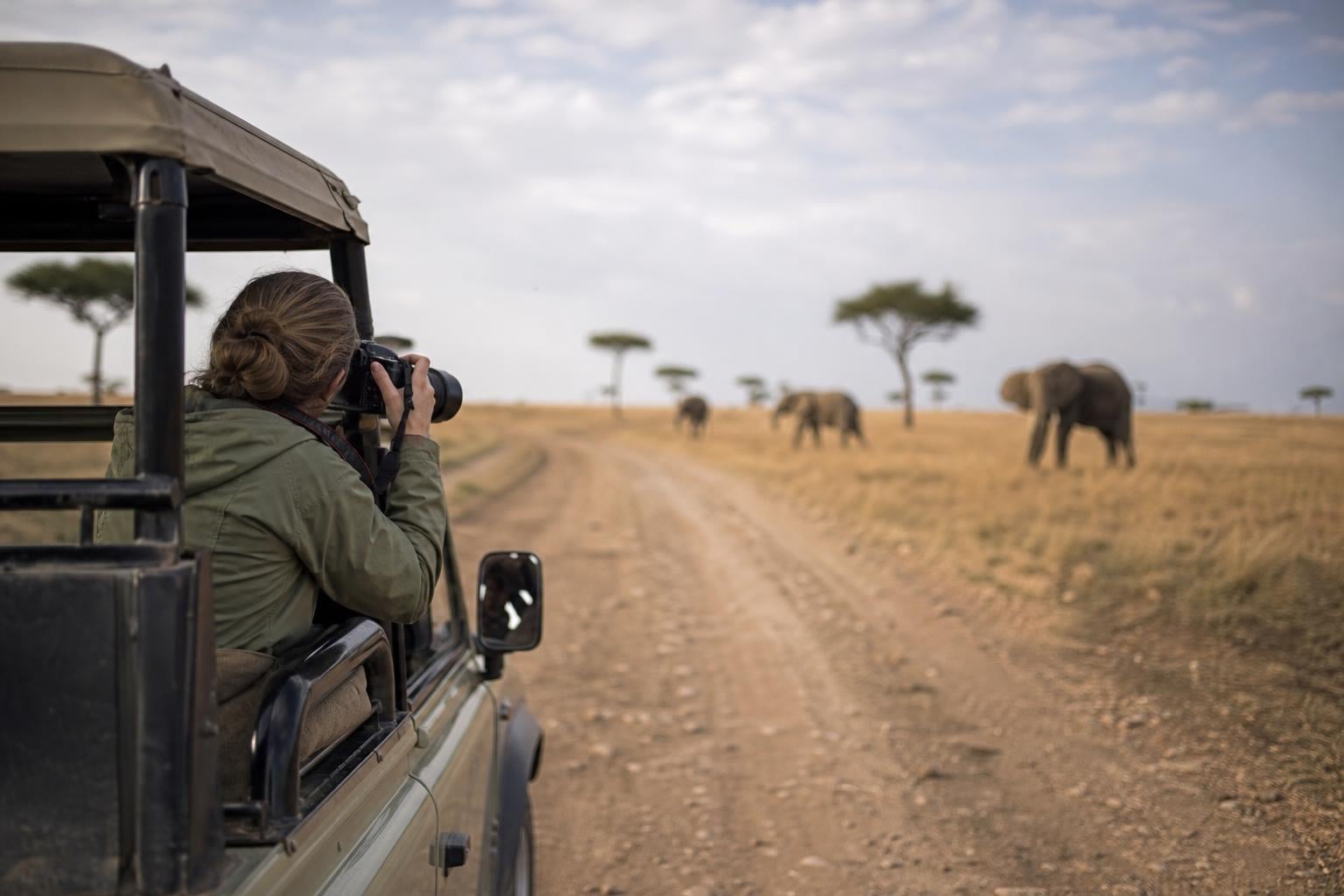
TL;DR: The best Tanzania safari depends on your travel dates, wildlife priorities, group composition, and budget. First-timers should start with a 6 to 8 day Northern Circuit covering Tarangire, Ngorongoro Crater, and the Serengeti. Migration-focused travelers should target the northern Serengeti from July to October or the Ndutu calving plains from January to March. Families, honeymooners, and photographers almost always get better results with a private vehicle and fewer rushed stops.
The question behind most Tanzania safari searches is not really “which tour should I book?” It is “what kind of trip makes sense for me, and how do I avoid planning it wrong?”
Tanzania recorded 2,141,895 international visitor arrivals in 2024, with nearly 87% traveling for leisure. The country offers more safari variety than most travelers realize, from river crossings in the northern Serengeti to boat safaris in the remote south, from Kilimanjaro summit adventures to quiet beach recoveries on the Swahili Coast. That range is exactly what creates overwhelm.
One poster on Reddit captured the problem well: after spending “countless hours” on review sites, they still felt paralyzed by thousands of operators, authenticity concerns, and too many itinerary options. The answer is not more choices. It is a framework for choosing.
This guide compares 11 distinct styles of Tanzania safaris, explains who each one fits best, and covers the practical decisions (timing, length, budget, private vs. group) that actually shape the trip.
If you already know your travel dates but not the right route, compare itinerary and cost options to narrow things down before requesting a custom plan.
Quick Comparison: Which Tanzania Safari Fits You?
| Safari style | Best for | Ideal length | Best timing | Budget pressure | Main tradeoff |
|---|---|---|---|---|---|
| Duma Explorer custom private safari | All traveler types, multi-experience trips | 5–16+ days | Year-round | Medium to high | Bespoke planning takes more lead time |
| Classic Northern Circuit | First-timers, families, wildlife variety | 6–8 days | Year-round, strongest in dry season | Medium to high | Can feel rushed under 6 days |
| Mara River crossing safari | Great Migration drama | 8–10 days | July–October | High | Crossings are never guaranteed |
| Ndutu calving season safari | Predator action, photographers | 6–8 days | January–March | Medium to high | Highly seasonal, location-specific |
| Private family safari | Families, multigenerational groups | 7–10 days | School breaks, shoulder seasons | Medium to high | Costs more than shared group trips |
| Honeymoon safari | Couples, special occasions | 8–12 days | June–October, Jan–Feb | High | Ambience can overtake wildlife value |
| Safari + Zanzibar | Beach recovery, couples, families | 10–14 days | Match safari and beach seasons | Medium to high | Domestic flight logistics matter |
| Kilimanjaro + safari | Active travelers, adventurers | 12–16+ days | Route-dependent | High | Climb fatigue and sequencing matter |
| Photography/big-cat safari | Wildlife photographers | 8–12 days | Dry season, calving season | High | Needs private vehicle, patient guide |
| Cultural/walking add-on | Travelers wanting more than drives | Add 1–3 days | Varies by region | Medium | Must be ethical, not performative |
| Remote southern Tanzania | Repeat visitors, low-crowd seekers | 7–10+ days | Dry season | High (fly-in) | Less iconic for first-timers |
How These Tanzania Safaris Were Selected
The 11 styles below were chosen based on wildlife quality, seasonal reliability, routing logic, time efficiency, and suitability for different types of travelers.
Two sources anchor the wildlife claims. UNESCO identifies the Serengeti migration as the largest remaining unaltered animal migration on earth, with over one million wildebeest plus hundreds of thousands of zebras and gazelles moving in a roughly 1,000 km annual circuit. TANAPA’s own Mara River crossing guidelines provide calving statistics, responsible viewing rules, and conservation context that shaped the migration and calving sections below.
Tanzania’s government data shows how concentrated visitor traffic really is. In 2024, Serengeti accounted for 34.4% of international park arrivals, Tarangire for 27.5%, and Lake Manyara for 13.3%. That explains why most first-time safaris focus on the northern circuit, but it also explains why crowd management, camp location, and pacing matter so much.
The 11 Best Tanzania Safaris
1. Duma Explorer Custom Private Safari
Best for: Travelers who want a single operator to handle safari design, Kilimanjaro climbs, gorilla trekking, and beach extensions across East Africa.
Ideal length: 5 to 16+ days depending on trip combination.
Best timing: Year-round, with itineraries adjusted to migration patterns, calving windows, and climbing seasons.
Core regions: Tarangire, Ngorongoro, Serengeti, Ruaha, Nyerere, Kilimanjaro, Zanzibar, Pangani, Saadani, plus extensions into Kenya, Uganda, and Rwanda.
What makes it work:
Duma Explorer, operating locally in Tanzania as Alika Africa, is a dual U.S.-Tanzanian owned operator that designs private and small-group trips across Tanzania’s northern and southern circuits, Kilimanjaro, Zanzibar, the Swahili Coast, and into Uganda, Rwanda, and Kenya. The company is led by Stacy Readal, who has spent 15+ years based in Tanzania and speaks fluent Swahili.
What separates Duma Explorer from template-driven operators is the combination of owner-led trip design with strong ground operations. Safari guides are completing advanced training through EcoTraining and FGASA Level 1 certification. Kilimanjaro guides carry Wilderness First Responder certification and 15+ years of mountain experience. The company avoids the higher-risk Western Breach ascent while still offering Crater Camp via a safer route.
Practitioners on Reddit have shared positive experiences, noting high responsiveness from Stacy, well-coordinated honeymoon logistics, and strong recommendations for balloon safaris over the Serengeti. On SafariBookings, Alika Africa holds a 5.0/5 rating across 86 reviews. The company also carries TripAdvisor Travelers’ Choice recognition from 2020 through 2025, with 600+ five-star reviews.
Duma Explorer is a founding partner of the Kilimanjaro Porters Assistance Project (KPAP) and holds Travelife Certification, one of only a handful of Tanzania operators with that sustainability credential. They also offset carbon through Carbon Tanzania and support the Inuka Tusonge women’s job-skills program in Arusha.
What they offer:
- Private custom safaris across the Northern Circuit (Tarangire, Ngorongoro, Serengeti) and southern parks (Ruaha, Nyerere)
- Private and small-group Kilimanjaro climbs on Lemosho, Machame, Northern Circuit, Rongai, and Marangu routes
- Gorilla trekking coordination in Uganda and Rwanda
- Safari + Zanzibar, Pangani, or Saadani beach combinations
- Multi-country itineraries including Kenya’s Maasai Mara
- Family safaris, honeymoon safaris, photography-focused trips, and birding safaris
Budget note: Private safari pricing starts from roughly $2,000 per person for a 5-day Northern Circuit trip, with longer multi-experience itineraries (mountains, safari, beach) running to approximately $6,000 per person including accommodations, meals, and transport. Small-group Kilimanjaro climbs start from around $2,399 per person. Credit cards are accepted with a roughly 4% surcharge.
2. Classic Northern Circuit Safari
Best for: First-time safari travelers, families, anyone who wants high-probability wildlife across varied ecosystems.
Ideal length: 6 to 8 days on the ground. Five days is possible but compressed.
Best timing: Year-round, strongest during dry season (June to October and January to February).
Core parks: Tarangire, Ngorongoro Crater, Serengeti. Lake Manyara can be added if time allows, but should not steal meaningful Serengeti days.
What makes it work:
- Tarangire delivers elephant herds and baobab scenery. TANAPA reports 3,000+ elephants concentrated along the Tarangire River during dry season.
- Ngorongoro Crater is a volcanic caldera with Big Five game in a single day.
- Serengeti provides the migration backdrop and some of the best predator viewing in Africa.
Practitioners on Reddit consistently push back against rushed versions of this route. One detailed comment recommended at least two nights inside Tarangire to reach areas beyond the crowded entrance zone, like Silale Swamp. Another common point: Ngorongoro works well as one carefully timed crater day with an early-morning descent, while Serengeti usually deserves the most allocated time.
Watch out for:
- Too many one-night stops turn the trip into a driving holiday.
- Lake Manyara is useful for birding and forest scenery but not always essential when time is short.
- Under six days, the itinerary gets tight and transfers dominate.
For a closer look at how this route works day by day, see why Tarangire deserves time and plan a Ngorongoro Crater day without overloading the schedule.
Budget note: Market averages for private mid-range Tanzania safaris run roughly €375 per person per day, while private luxury averages around €625 per person per day, excluding international flights, tips, and personal items. Duma Explorer, which operates locally in Tanzania as Alika Africa, can customize this route around family pacing, photography priorities, migration timing, or Zanzibar extensions.
3. Great Migration Mara River Crossing Safari
Best for: Travelers who specifically want the dramatic spectacle of wildebeest crossing the Mara River, and who accept that crossings are never guaranteed.
Ideal length: 8 to 10 days, especially when combined with Central and Northern Serengeti.
Best timing: Roughly July to October, though exact herd movement varies with rainfall.
Core region: Northern Serengeti near the Mara River, usually combined with Central Serengeti, Ngorongoro, and Tarangire.
What makes it work:
The Great Migration involves over 1.5 million wildebeest, hundreds of thousands of zebras, and the predators that follow them. It is the defining Serengeti attraction, and the Mara River crossings are its most photographed moments.
But this type of Tanzania safari carries real ethical weight. TANAPA published formal Mara River crossing guidelines because unethical tourism practices had developed at crossing points. The rules require vehicles to remain stationary in designated areas, prohibit blocking animal movement, and enforce maximum vehicle limits at crossing sites. A good guide follows these rules without being asked.
Watch out for:
- Crossings depend on weather, herd behavior, and river conditions. No ethical operator guarantees them.
- Crowds build quickly at river points during peak season. Government park data shows July and August 2024 had the highest monthly international park visitation, with over 150,000 international visitors each month.
- Camp location matters more than lodge décor. A cheaper camp far from the action wastes hours each day on transfers.
For deeper Serengeti planning, explore Serengeti safari regions to understand the difference between central, northern, and western zones.
Budget note: Northern Serengeti camps are in high demand during peak migration months. Luxury safaris in this window can run $700 to $1,500+ per person per day, and ultra-luxury private camps can exceed $2,000 per person per day.
4. Ndutu Calving Season Safari
Best for: Predator action, wildlife photographers, travelers who can visit January to March, and anyone who wants a top-tier migration experience without the river-crossing crowds.
Ideal length: 6 to 8 days, often combined with Tarangire and Ngorongoro.
Best timing: January to March, with mid-February typically the peak calving window.
Core region: Ndutu, southern Serengeti, short-grass plains near the Ngorongoro Conservation Area border.
What makes it work:
Most “Tanzania safaris” pages treat calving season as a footnote under the Great Migration. It deserves its own category. TANAPA’s migration guideline states that approximately 250,000 wildebeest calves are born each year, with four-fifths born within a few short weeks on the short-grass plains around mid-February. At peak, 8,000 to 12,000 births happen per day.
That concentration of newborns draws lions, cheetahs, hyenas, and wild dogs into the open. The predator action during calving season is often more consistent and more visible than during peak dry season, partly because the short grass offers unobstructed sightlines.
Watch out for:
- Highly seasonal. Miss the window and the herds may have moved.
- Mud and rain can affect roads, especially in March.
- Travelers looking for river crossings should choose a different season.
Budget note: February calving demand pushes rates at popular Ndutu-area camps, but overall this period can offer better value than peak July-to-October rates depending on camp choice and routing.
5. Private Family Safari
Best for: Families with children, teens, grandparents, multigenerational groups, and travelers with mobility or pacing needs.
Ideal length: 7 to 10 days for safari, or 10 to 14 days with a beach extension.
Best timing: School breaks and shoulder seasons often work well.
Core parks: Tarangire, Ngorongoro, Serengeti. Add Zanzibar or a quieter Swahili Coast extension if the family needs downtime.
What makes it work:
The value of a private family safari is not about nicer lodging. It is about control. Practitioners on Reddit emphasize this repeatedly: with a private vehicle, you control wake-up times, how long you spend at sightings, whether to prioritize big cats or birds, and the day’s pacing. One commenter wrote that if you want dawn starts and control over sighting time, you should not be in a group where other travelers sleep in or have different wildlife priorities.
For families, this matters even more. Younger children tire faster, grandparents may need flexible schedules, and teens often want to photograph everything. A shared vehicle with strangers makes all of that harder.
Watch out for:
- Younger children may not enjoy long transfer days. Build shorter driving segments.
- Some camps have minimum age limits or child-specific policies.
- Room configuration matters for families. Confirm bed arrangements before booking.
- Private vehicle costs more per person when there are fewer travelers, but families can improve per-person value by sharing one vehicle.
For detailed guidance, plan a private family safari covering logistics, kid-friendly parks, and camp selection.
Budget note: Families of four or more sharing one private vehicle can sometimes bring the per-person cost closer to mid-range group pricing while keeping all the flexibility benefits.
6. Honeymoon or Special-Occasion Safari
Best for: Couples, honeymooners, anniversary travelers, milestone celebrations.
Ideal length: 8 to 12 days, or 10 to 14 days with a beach add-on.
Best timing: June to October for peak wildlife, January to February for calving, shoulder seasons for fewer crowds and better rates.
Core route: Serengeti, Ngorongoro, and Tarangire, often with Zanzibar, Pangani, or Saadani as a coast extension.
What makes it work:
Honeymoon travelers typically care as much about privacy, camp atmosphere, and seamless logistics as they do about the park checklist. The best honeymoon Tanzania safaris balance wildlife with pacing: enough game-drive time to feel immersed, enough downtime to feel like a holiday.
A boutique operator can often design a more tailored route than camp-owning companies that push their own properties regardless of fit.
Watch out for:
- Do not spend the entire budget on the most photogenic lodge if its location weakens game-drive quality. Position matters more than pool design.
- Honeymoon pacing should avoid too many one-night stays. Two or three nights in key locations creates a calmer rhythm.
- Balloon safaris can be a memorable upgrade, but Reddit sentiment is genuinely mixed. Some travelers call it “absolutely amazing,” while others say it may not be worth sacrificing a morning game drive when time is limited. One commenter also raised an ethical concern about balloons getting too close to wildlife. Best suited for travelers with enough safari time and realistic expectations about wind-dependent routes.
For couples planning this trip, design a private honeymoon safari with routing, lodge, and extension options built around your dates.
Budget note: Luxury honeymoon safaris typically run $700 to $1,500+ per person per day depending on camp level and season.
7. Safari + Zanzibar or Swahili Coast Trip
Best for: Couples, families, post-Kilimanjaro travelers, and anyone who wants wildlife followed by beach recovery.
Ideal length: 10 to 14 days total.
Best timing: Match safari season and beach weather. Check Zanzibar seasonal conditions before locking dates.
Core sequence: Safari first, beach second. A common routing: Arusha to Tarangire to Ngorongoro to Serengeti, then fly to Zanzibar or the coast.
What makes it work:
This combination is popular for good reason. After several days of early wake-ups, bumpy roads, and intense wildlife focus, a few days on a beach feels like a different kind of vacation. The sequencing matters: safari fatigue is real, and putting the active portion first means you wind down rather than ramp up.
Forum discussions on both Reddit and Tripadvisor consistently recommend the same logistical principle: fly one way out of the Serengeti to Arusha or directly to Zanzibar rather than repeating the same long, rough drive back. One commenter said flying at the end spares travelers the same punishing transfer twice. Another recommended it specifically for saving a full day.
Watch out for:
- Domestic flight timing and connections matter. Build buffer time.
- Zanzibar works well, but Pangani and Saadani offer quieter mainland alternatives.
- Safari and beach weather should align, especially for honeymooners traveling in shoulder months.
Budget note: Duma Explorer already coordinates domestic flights, transfers, and sequencing between northern circuit parks and coast destinations including Zanzibar, Pangani, and Saadani.
8. Kilimanjaro + Safari Combination
Best for: Adventure travelers, couples or friends with two or more weeks, active honeymooners.
Ideal length: 12 to 16+ days depending on Kilimanjaro route and safari length.
Best timing: Route-dependent. Dry months (January to March, June to October) generally suit both climbing and safari.
Core sequence: Usually climb first, safari second, beach last if included.
What makes it work:
Tanzania is unusually strong for this combination because Kilimanjaro, Arusha, Tarangire, Ngorongoro, and the Serengeti can all be logistically linked into a single multi-week trip. Few other destinations let you summit Africa’s highest peak and watch the Great Migration within the same journey.
Duma Explorer has deep Kilimanjaro expertise with guides holding 15+ years of mountain experience and Wilderness First Responder certification. Combined with custom safari planning through their local Alika Africa operations, a Kilimanjaro-safari-beach trip can be designed as one coordinated itinerary rather than three separate bookings.
For sequencing guidance, combine Kilimanjaro, safari, and Zanzibar without compressing recovery time.
Watch out for:
- Do not under-allocate recovery time after the climb. At least one full rest day before starting a safari.
- The safari should not start with the most punishing transfer day.
- Travel insurance must cover high-altitude trekking. Standard policies often do not.
Budget note: A multi-week Kilimanjaro-safari-beach trip is a significant investment, but consolidating through one operator can simplify logistics and sometimes reduce coordination costs.
9. Photography and Big-Cat Safari
Best for: Wildlife photographers, serious hobbyists, travelers who want fewer rushed sightings and more time at dawn and dusk.
Ideal length: 8 to 12 days.
Best timing: Dry season for open visibility, calving season for predator action, Central Serengeti kopje regions for year-round cats.
Core parks: Serengeti, Ndutu (in calving season), Tarangire, Ngorongoro.
What makes it work:
The best Tanzania safari photography is not determined by expensive lodges. It is determined by guide skill, positioning, patience, vehicle setup, and time at sightings. Reddit users are clear on this point: private vehicles matter because photographers can decide how long to stay at a sighting and whether to prioritize big cats, birds, or landscapes without negotiating with other travelers.
A skilled guide who understands animal behavior, light conditions, and approach angles will outperform any amount of lodge luxury.
Watch out for:
- Shared group trips rarely work well for serious photography. Timing conflicts are constant.
- Balloon safaris can produce dramatic landscape shots but are wind-dependent and not primarily close-up wildlife experiences.
- Private vehicle and guide quality matter more than anything else on the equipment list.
For camera gear and field technique guidance, prepare for safari photography with practical settings and lens recommendations.
Budget note: Photography trips usually push toward private mid-range or luxury pricing because the private vehicle is non-negotiable for serious results.
10. Cultural, Walking, and Lake Natron Add-On Safari
Best for: Travelers who want more than vehicle-based game drives, active families with older children, repeat safari visitors.
Ideal length: Add 1 to 3 days to a core safari itinerary.
Best timing: Varies by region and activity.
Possible add-ons: Maasai village visit, Lake Natron hike, Lake Eyasi and Hadzabe cultural experience, walking safari where permitted, Mto wa Mbu cultural visit, Olduvai Gorge, Empakaai Crater and Ngorongoro Highlands.
What makes it work:
Most safari listicles treat cultural experiences as filler. They can be genuinely transformative when chosen carefully and conducted ethically. The key distinction: a meaningful cultural exchange versus a staged performance for tourists.
Walking safaris, where permitted, change the entire sensory experience. Moving through the bush on foot with a qualified guide introduces sounds, smells, tracks, and plant life that a vehicle simply cannot deliver.
Watch out for:
- Cultural visits can feel performative if not vetted. Ask whether community members benefit directly from the fees.
- Walking safaris require specific park or area permissions and armed rangers or qualified guides.
- Lake Natron adds driving time. Choose it intentionally, not as a throwaway add-on.
Budget note: Cultural activities are typically modest relative to safari lodging and park fees, but they can add transfer complexity. This is also a good place to note that responsible tourism credentials matter. Duma Explorer holds Travelife Certification (one of few in Tanzania) and is a founding partner of the Kilimanjaro Porters Assistance Project.
11. Remote Southern Tanzania Safari
Best for: Repeat safari travelers, low-crowd seekers, travelers interested in walking safaris, boat safaris, and African wild dogs.
Ideal length: 7 to 10+ days, often with fly-in logistics.
Best timing: Dry season (June to October) for wildlife concentration.
Core regions: Nyerere National Park, Ruaha National Park. Possible coastal pairing with Saadani or Pangani.
What makes it work:
Southern Tanzania offers a fundamentally different safari character. TANAPA describes Nyerere as protecting miombo woodlands, floodplains, and Rufiji River channels, with boat safaris and African wild dogs as key draws. Ruaha features baobab savanna, rocky kopjes, large lion prides, and dry-season concentrations of elephants and buffalo.
The trade is clear: you give up the iconic Serengeti and Ngorongoro for lower visitor density, a wilder atmosphere, and species (like wild dogs) that are harder to find in the north.
Watch out for:
- Less iconic for first-time travelers who have their heart set on the northern circuit.
- Fewer lodge options and higher logistical complexity.
- Flights and remote camps often replace road-based logistics, increasing cost.
- Better as a second safari or for travelers explicitly seeking solitude.
Budget note: Short domestic flights to southern parks cost at least $150 per person even for short hops, and remote camp rates tend to be higher. The total cost often exceeds a comparable number of days on the northern circuit.
How Many Days Do You Need for a Tanzania Safari?
| Days | Best use |
|---|---|
| 3–4 | Very short Tarangire + Ngorongoro or fly-in Serengeti taste |
| 5 | Compressed Northern Circuit (tight but workable) |
| 6–8 | Best first-safari range for Tarangire, Ngorongoro, and Serengeti |
| 9–10 | Better Serengeti depth or migration split between Central and Northern |
| 10–14 | Safari + Zanzibar or Swahili Coast |
| 12–16+ | Kilimanjaro + safari + beach |
Reddit planners repeatedly advise that six to seven days is a much stronger minimum than trying to squeeze everything into three or four days. The biggest mistake is choosing a safari by park checklist rather than time on the ground. Three nights in Serengeti beats one night each in four parks.
When Should You Go on a Tanzania Safari?
June to October (dry season): Peak demand, highest wildlife concentration around water sources, best window for northern Serengeti river crossings. Also the most crowded and expensive period. Government data shows July and August 2024 each drew over 150,000 international park visitors, compared with just 23,319 in April.
January to March (calving and short dry): Ndutu calving season, strong predator activity, greener landscapes, generally lower crowds than peak dry season. February is typically the calving peak.
March to May (long rains): Lower prices, lush scenery, some road and lodge limitations. Not all camps stay open. Can be rewarding for birding and photography if planned carefully.
November to December (short rains and shoulder): Good value, fewer crowds, rain is usually short afternoon bursts. Can work well for travelers with flexible dates.
For month-by-month detail, choose the best time for your specific priorities.
Private vs. Group Tanzania Safaris
The private-versus-group decision is one of the most important choices in planning a Tanzania safari, and it is frequently misunderstood. Private does not automatically mean luxury. It means control.
Choose private if you care about:
- Dawn starts and flexible schedules
- How long you spend at sightings
- Photography time without compromise
- Family pacing for children or older travelers
- Honeymoon privacy
- Special wildlife interests (birding, predators, specific species)
- Mobility considerations
Choose group if:
- Budget and social travel matter more than flexibility
- You are comfortable with fixed schedules and shared priorities
- You enjoy meeting other travelers
One commenter on a safari forum put it simply: if you want to decide whether to spend 30 minutes watching a leopard or move on after five, you need your own vehicle.
For a closer look at vehicle types and how they affect the experience, compare safari vehicles and their tradeoffs.
Travelers deciding between shared and private options can ask Duma Explorer to price the same route both ways, then decide whether the added control is worth the difference.
Where Spending More Actually Improves the Safari
Not every upgrade is worth it. This table separates the investments that change outcomes from the ones that mostly change comfort.
| Upgrade | Usually worth it? | Why |
|---|---|---|
| Better guide and operator | Yes | Changes safety, sightings, ethics, wildlife interpretation |
| Private vehicle | Often | Controls time, pacing, and sighting decisions |
| Better camp location (especially during migration) | Yes | Saves hours and improves wildlife access |
| Fewer one-night stays | Yes | Reduces transfer fatigue, improves morning and evening game drives |
| Fly-out from Serengeti | Often | Saves a full day and avoids repeated rough driving |
| Crater rim lodge for dawn access | Situational | Matters if early descent timing is a priority |
| Ultra-luxury lodge | Depends | Improves comfort, not animal behavior |
| Balloon safari | Depends | Memorable when timed well, but not ideal for every itinerary |
| Adding extra parks | Not always | More parks can mean less real safari time per location |
The guide is the single biggest variable. A guide with strong training, local knowledge, and ethical field behavior transforms the same parks into a different experience. This is why guide qualifications matter more than most travelers realize when comparing operators.
Questions to Ask Before Booking a Tanzania Safari
Before putting down a deposit, get clear answers to these questions:
- What parks and regions are included, and how many nights in each?
- Are park fees, concession fees, crater descent fees, domestic flights, and transfers included in the quoted price?
- Is the vehicle private or shared? How many guests per vehicle?
- Who is the guide, and what training or certification do they hold?
- Where are camps located relative to migration activity or park gates?
- What happens if flights or logistics disrupt the schedule?
- What are the deposit, cancellation, and insurance requirements?
- Is the operator licensed? Tanzania’s Tourism Act requires operators to hold valid licenses.
- Does the operator follow TANAPA’s wildlife viewing rules, including Mara River crossing guidelines?
These questions separate operators who are planning your trip from operators who are selling a template.
Final Recommendation
For most first-time travelers, the best Tanzania safari is a privately guided Northern Circuit itinerary with enough time for Tarangire, Ngorongoro, and the Serengeti without rushing. Six to eight days is the sweet spot.
If your dates fall in July to October, consider a migration-focused route that reaches the northern Serengeti. If your dates fall in January to March, consider Ndutu calving season, which delivers some of the best predator viewing on the continent with fewer crowds than peak dry season.
Add Zanzibar or the Swahili Coast if you have 10 to 14 days. Add Kilimanjaro only if you can give the climb and safari enough breathing room. Skip the temptation to squeeze in every park and instead spend more time in fewer places.
Whatever style you choose, the decisions that matter most are guide quality, vehicle privacy, camp location, and honest pacing. Those are the things that separate a good Tanzania safari from a great one.
Request a Custom Tanzania Safari Itinerary
Frequently Asked Questions
What is the best Tanzania safari for a first trip?
A 6 to 8 day Northern Circuit safari combining Tarangire, Ngorongoro Crater, and the Serengeti is the strongest first-time choice. It balances wildlife variety, scenic diversity, and manageable logistics. Travelers with more time can extend into the northern Serengeti for migration viewing or add Zanzibar for beach recovery.
How many days do you need for a Tanzania safari?
Plan at least 6 to 8 days for a strong first safari. Five days can work with a focused itinerary, but 7 to 10 days gives better Serengeti time and fewer rushed transfers. Safari-and-beach combinations work best at 10 to 14 days, and Kilimanjaro-safari-beach trips need 12 to 16+ days.
When is the best time for Tanzania safaris?
June to October is the most popular dry-season window, especially for migration trips to the northern Serengeti. January to March is best for Ndutu calving season and strong predator viewing. November to December can offer good value with manageable short rains. March to May brings the greenest landscapes and lowest prices but can include road challenges.
Are Tanzania safaris expensive?
Yes. Tanzania is one of Africa’s higher-cost safari destinations. Private mid-range safaris average roughly €375 per person per day and private luxury safaris around €625 per person per day, excluding international flights, tips, and personal expenses. Accommodation location, group size, season, and transport method are the biggest cost drivers.
Is a private Tanzania safari worth it?
A private safari is worth it when travelers care about dawn starts, photography time, family pacing, honeymoon privacy, or specific wildlife interests. The value is control over the day’s schedule and priorities, not status. Families of four or more can sometimes bring the per-person cost close to mid-range group rates while keeping full flexibility.
Is the Great Migration guaranteed?
No. The migration is a natural movement driven by rainfall, grazing patterns, and water availability. Choosing the right region for your dates improves the odds significantly, but no ethical operator should guarantee a river crossing or a specific animal sighting. Good guides maximize positioning; nature decides the rest.
Should I fly or drive between parks?
Drive when the transfer adds scenery, culture, or game-drive time along the way. Fly when the drive would repeat the same rough road or cost a full safari day. Many experienced planners recommend driving into the northern circuit and flying out of the Serengeti to Arusha or Zanzibar at the end, saving both time and energy.
Leave a Reply