TL;DR
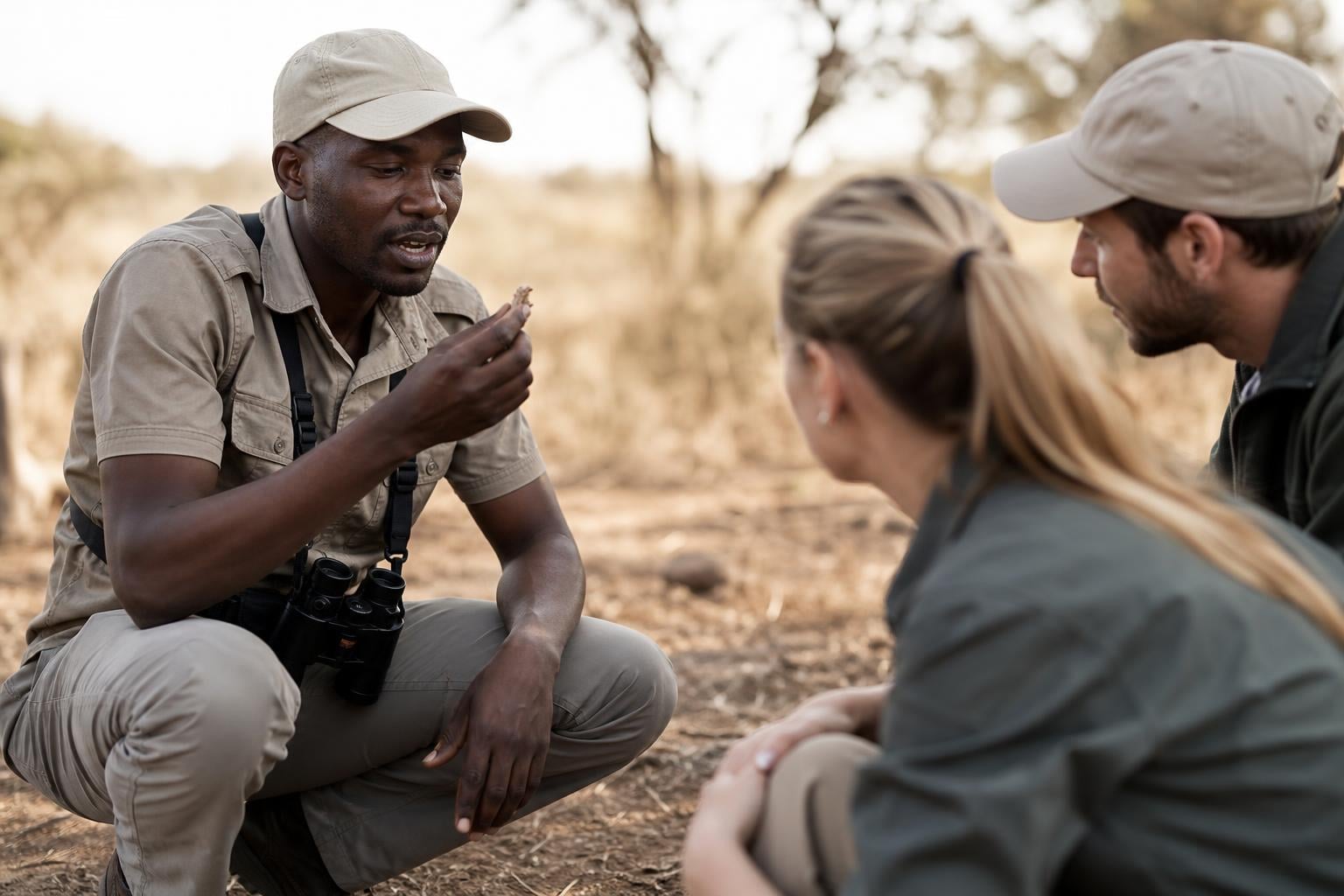
Your safari guide will shape your trip more than the lodge, the vehicle, or even the wildlife itself. But most travelers have no idea what separates a properly qualified guide from someone who just knows how to drive a Land Cruiser. The three major certification systems are FGASA (Southern Africa), KPSGA (Kenya), and Tanzania’s TALA licensing. Each country runs its own standards, and the best operators invest heavily in guide training beyond the legal minimums. Knowing what these credentials mean, and how to verify them, gives you a real edge when choosing a safari operator.
Quick Answer
When evaluating safari operators, look for guides who hold credentials well above the legal minimum. In South Africa, that means FGASA NQF4 or higher (not just the entry-level NQF2). In Kenya, look for KPSGA Silver or Gold certification, not just Bronze. In Tanzania, guides must hold TALA licenses and be Tanzanian citizens, but top operators go further with additional training through programs like EcoTraining and FGASA Level 1. For walking safaris, your guide should carry Trails Guide certification with firearms proficiency (PFTC). For Kilimanjaro climbs, Wilderness First Responder (WFR) certification is a critical safety credential. Specialist skills like CyberTracker tracking often mean the difference between a good game drive and an extraordinary one. Any reputable operator should be able to tell you exactly what qualifications their guides hold. If they can’t, that’s a red flag.
Major Safari Guide Qualification Systems
| Country | Primary Qualification | Legal Minimum | What Top Operators Aim For |
|---|---|---|---|
| South Africa | FGASA + CATHSSETA | CATHSSETA NQF2 | NQF4 or Professional Field Guide |
| Kenya | KPSGA | KPSGA Bronze | Silver or Gold |
| Tanzania | TALA | TALA License | TALA + EcoTraining/FGASA + WFR |
| Botswana | Botswana Qualification Authority | National Licensing | National License + FGASA |
| Uganda | UWA | Wildlife Authority Licensing | Gorilla specialist training |
| Rwanda | RDB | Wildlife Authority Licensing | Gorilla specialist training |
Why Safari Guide Qualifications Matter to You as a Traveler
A safari guide shapes your trip more than the lodge, the vehicle, or the weather. Experienced travelers on safari forums say it bluntly: a skilled guide will create an amazing experience regardless of what wildlife shows up, because they know how to read the bush, tell its stories, and find what others miss. A poorly qualified guide, on the other hand, can turn a week in the Serengeti into little more than an expensive drive through tall grass.
The problem is that the alphabet soup of guide credentials (FGASA NQF4, KPSGA Silver, WFR, TALA, CyberTracker) looks impenetrable from the outside. Most travelers skip the research entirely and hope their operator has sorted it out. Some operators have. Many haven’t.
This guide breaks down every major safari guide qualification system so you can ask the right questions before you book, spot the operators who invest in their guides, and understand exactly what you’re paying for when one company charges more than another. Because much of that price difference often comes down to guide caliber.
Operators like Duma Explorer invest in advanced training programs (including EcoTraining and FGASA Level 1 certification) for their private Tanzania safari teams precisely because they know the right credentials translate directly into better guest experiences and stronger safety outcomes. Not every operator makes this investment.
What to Look For: The Five Credentials That Matter Most
You don’t need to become an expert in guide certification. But knowing these five things will immediately separate the best operators from the rest:
- FGASA is the most internationally recognized safari guide qualification. If an operator in Southern or East Africa mentions FGASA-trained guides, that’s a strong quality signal. NQF4 or higher means the guide has logged at least 260 days in the field.
- KPSGA Silver or Gold is what distinguishes top guides in Kenya. Bronze is just the entry level. When booking a Maasai Mara safari, ask whether your guide holds Silver or Gold certification.
- Tanzania requires all guides to hold TALA licenses and be Tanzanian citizens. That’s the legal minimum. The best operators layer additional training on top, like EcoTraining or FGASA programs.
- Walking safari guides need Trails Guide certification and firearms proficiency (PFTC). If you’re booking a walking safari and the operator can’t confirm these credentials, reconsider.
- For Kilimanjaro and mountain guiding, Wilderness First Responder (WFR) is the safety credential that matters. Altitude emergencies happen. You want a guide trained to manage them.
How Guide Qualifications Affect Your Safari Experience
Understanding the difference between qualification levels helps explain why some safaris feel transformative and others feel routine. Here’s what each level means for your experience as a guest.
Entry-Level Guides (NQF2 / KPSGA Bronze)
These guides have completed basic training covering fundamental ecology, animal identification, navigation, and guest safety. NQF2 is the legal minimum for paid guiding in South Africa. KPSGA Bronze requires at least six months of field experience before the exam, which covers mammals, birds, plants, reptiles, cultures, geography, conservation, and first aid. As of September 2024, there were 881 Bronze-certified guides in Kenya.
An entry-level guide can run a competent game drive. They’ll identify the major species, follow the common routes, and keep you safe. But they’re less likely to track a leopard off the beaten path, explain the ecological dynamics that connect a termite mound to a cheetah hunt, or time your arrival at a river crossing with the precision that comes from years of experience.
Budget safaris and large group tours often staff with entry-level guides. That’s a trade-off worth understanding before you book.
Intermediate Guides (NQF4 / KPSGA Silver)
This is where guide quality jumps noticeably. FGASA NQF4 requires at least 260 days of logged fieldwork at a lodge, plus passing both a written exam and a practical test (a simulated game drive). KPSGA Silver requires three additional years beyond Bronze. These guides have spent real time in the bush under professional conditions before earning the credential.
For your safari, the difference shows up in specifics. An NQF4 or Silver guide reads animal behavior more accurately, anticipates where wildlife will move, positions the vehicle for better photography angles, and narrates the bush in a way that turns a sighting into a story. This is the level that quality operators look for when staffing private safari experiences, and it’s the level where your trip shifts from good to genuinely memorable.
Expert Guides (Professional Field Guide / KPSGA Gold)
FGASA’s highest tier requires NQF4 plus multiple additional years of documented professional experience. A guide holding this credential has typically been working in the bush for the better part of a decade. KPSGA Gold requires at least six years of practical experience and an exceptionally difficult exam. A Gold-certified KPSGA guide is genuinely rare.
These are the guides guests request by name, the ones featured in travel magazine profiles, and the ones luxury lodges compete to employ. If an operator tells you they have Professional Field Guides or Gold-certified guides on staff, you’re looking at a serious investment in quality.
Trails Guides: Walking Safari Specialists
Walking safaris are one of the most thrilling (and highest stakes) forms of safari. Your guide carries a rifle, makes split-second judgment calls about dangerous game, and is responsible for your safety on foot in places where lions, buffalo, and elephants move freely.
To become a Professional Trails Guide under FGASA, a guide must already hold Professional Field Guide status, plus a minimum of three years’ additional experience and PFTC firearms certification. If an operator offers walking safaris, asking about Trails Guide credentials is one of the most important safety questions you can raise.
KPSGA Bronze, Silver, and Gold: Kenya’s Exam-Based System
KPSGA is Kenya’s independent, non-profit certification body, founded in 1996. The progression from Bronze to Gold typically spans six or more years of active guiding, with progressively harder examinations at each stage.
When booking a Kenya safari, particularly in prime areas like the Maasai Mara, Amboseli, or Laikipia conservancies, ask your operator about the KPSGA level of the guides they assign. Silver or Gold certification costs the operator more in guide salaries, but it correlates directly with the depth and quality of your wildlife experience.
The Certification Bodies: What Each One Means
FGASA (Field Guides Association of Southern Africa)
FGASA, established in 1990, is the most widely recognized professional body for safari guides. It sets standards of conduct and ethics while issuing tiered qualifications. Its influence now extends well beyond South Africa, with many East African operators sending guides through FGASA training even though it’s not legally required there.
Duma Explorer, for example, is rolling out a 55-day FGASA Level 1 (NQF2) certification program for its Tanzania safari guides starting in late 2025, layered on top of EcoTraining coursework their team already completed. When you see an operator investing in FGASA training for guides in a country that doesn’t require it, that tells you something about their commitment to quality.
The certification pathway works in three tiers:
- Apprentice Field Guide (NQF2): The entry level. Covers basic ecology, animal identification, navigation, and guest safety. Many training providers offer this as a standalone course lasting 28 to 55 days.
- Field Guide (NQF4): The intermediate qualification. Requires at least 260 days of logged fieldwork, plus passing both written and practical exams. FGASA will not issue this certificate without a valid first aid qualification.
- Professional Field Guide: The highest FGASA tier. Requires NQF4 plus additional years of practical experience and advanced ecological knowledge. Reaching this level typically takes five or more years.
KPSGA (Kenya Professional Safari Guides Association)
KPSGA certifies Safari Driver Guides, Lodge Naturalists, and other tourism professionals through a rigorous examination process. If you’re booking a Kenya safari, KPSGA certification is what you should ask about.
The three tiers:
- Bronze (Entry Level): Requires six months of field experience. The test covers 100 multiple-choice questions spanning mammals, birds, plants, reptiles, cultures, geography, conservation, and first aid.
- Silver (Intermediate): Requires three additional years as a working Bronze guide. Tests deeper ecological understanding and advanced guiding techniques. This is the level that top Kenyan operators prefer.
- Gold (Expert): Requires at least six years of practical experience and exceptionally deep knowledge. Gold-certified guides are rare. They command the highest salaries and are typically assigned to the most discerning guests.
CATHSSETA (South Africa’s Legal Framework)
CATHSSETA stands for the Culture, Arts, Tourism, Hospitality, and Sport Sector Education and Training Authority. In South Africa, the CATHSSETA Nature Site Guide qualification (NQF2) is the legal minimum for any paid guiding work. Think of it as the baseline compliance standard. FGASA certification builds on top of it. If an operator in South Africa only mentions CATHSSETA compliance but not FGASA, their guides may meet the legal minimum but little more.
IFGA (International Field Guide Association)
IFGA was established in 2023 with a focus that older certification systems largely miss: soft skills. While FGASA and KPSGA test ecological knowledge and technical guiding ability, IFGA evaluates storytelling, guest experience management, emotional intelligence, and the interpersonal qualities that separate a knowledgeable guide from a truly memorable one.
IFGA offers three certification tiers (Guide, Advanced Guide, Ambassador) using a 1 to 100 scoring scale. Because it’s new, it hasn’t achieved the recognition of FGASA or KPSGA yet. But as a traveler, an operator who mentions IFGA certification is signaling that they care about the guest experience side of guiding, not just the technical knowledge.
TATO (Tanzania Association of Tour Operators)
TATO is Tanzania’s primary trade body for safari operators. It doesn’t certify individual guides, but it publishes and enforces a Safari Guide Code of Conduct covering professionalism, vehicle safety, environmental impact, respectful wildlife interaction, and cultural sensitivity. When you book with a TATO-member operator, you have an additional layer of professional accountability.
TALA (Tourism Agent Licensing Authority, Tanzania)
TALA is Tanzania’s government licensing body. Every safari operator in Tanzania must hold a valid TALA license to operate legally, and individual guides need TALA licenses alongside first aid certification and training from recognized wildlife institutions. A 2025 Government Order stipulates that only Tanzanian citizens are eligible to be licensed as safari tour guides. For a deeper look at how Tanzania’s safari safety regulations work in practice, that link covers the broader regulatory framework.
The TALA requirement is the legal floor. What separates premium operators is the training they add on top. This is why operators that invest in EcoTraining or FGASA programs for their Tanzanian guides deliver noticeably different safari experiences than those who stop at the minimum.
Specialist Credentials That Signal a Superior Safari
Beyond the core certifications, several specialist credentials directly affect the quality and safety of your trip. Here’s what to look for.
CyberTracker Certification
CyberTracker is a practical, field-based assessment of animal tracking ability. No classroom component, no multiple choice. Guides are evaluated on their ability to follow tracks and find animals, tested on spoor recognition, anticipation, situational awareness, alertness, and stealth. Since 1994, more than 20,000 CyberTracker certificates have been issued to over 12,000 trackers worldwide.
For your safari, a CyberTracker-certified guide is the person who can track a leopard for an hour on foot and position your vehicle for a close encounter. This skill is especially valuable on remote safaris where wildlife is less habituated and finding animals requires genuine tracking ability rather than just following the crowd of other vehicles. If you care about wildlife photography or seeing the big cats, asking about tracking credentials is worth your time.
EcoTraining Programs
EcoTraining is Africa’s leading guide training school, running courses in unfenced wilderness camps across South Africa, Botswana, and Kenya. They were the first guide training school to receive formal accreditation from South Africa’s Council for Higher Education, and their programs are both FGASA-endorsed and CATHSSETA-accredited.
When an operator mentions that their guides have completed EcoTraining, it signals a real investment in guide development. Duma Explorer completed an EcoTraining program for its Tanzania guides in April 2025, with a FGASA Level 1 55-day certification following from December 2025. Not every operator spends the time and money to put working guides through residential training programs. The ones that do tend to charge more, but the safari experience reflects it.
Mweka College (College of African Wildlife Management)
Founded in 1963, Mweka is a pioneer institution for training African wildlife managers. Located in Tanzania near Kilimanjaro, it offers hands-on training through field experiences in iconic conservation areas including Serengeti, Ngorongoro, Tarangire, Lake Manyara, and Mkomazi.
Given Tanzania’s citizen-only guiding rule, Mweka-trained guides form the backbone of the country’s safari industry. If your Tanzanian operator mentions Mweka-trained guides, that’s a solid quality indicator. The training goes beyond guiding into conservation science and park management, producing guides with deeper ecological understanding.
Professional Driving Permit (PrDP)
In South Africa, any guide who drives guests must hold a Professional Driving Permit, a commercial license specifically for carrying paying passengers. This is separate from a standard driver’s license and involves additional testing on vehicle handling, passenger safety, and defensive driving. It’s a legal requirement, and any reputable South African operator will ensure their guides have one.
Wilderness First Responder (WFR)
The WFR certification is the gold standard in wilderness medicine for outdoor professionals. This 70 to 80 hour course prepares guides to manage medical emergencies where advanced care may be hours or even days away. Certification remains valid for two years, requiring regular recertification.
WFR matters most for Kilimanjaro climbs (where altitude emergencies are common), walking safaris in remote areas, and any trip where evacuation to a hospital takes more than an hour. Quality Kilimanjaro operators require their lead guides to hold WFR certification. Duma Explorer’s Kilimanjaro guides carry WFR, and this credential is increasingly expected for top mountain guiding positions.
If you’re planning a Kilimanjaro climb, ask the operator directly: are your lead guides WFR-certified? If the answer is vague or evasive, look elsewhere. Altitude sickness can escalate quickly, and a guide trained in wilderness medicine could save your life.
Wilderness First Aid (WFA)
A shorter alternative to WFR, typically around 16 hours. WFA covers basic backcountry emergencies: wound management, splinting, and basic assessment protocols. Many vehicle-based safari guides hold WFA as their primary medical credential. For standard game drives near well-equipped lodges, WFA is adequate. For mountain guiding and remote walking safaris, WFR is what you want.
Country-by-Country: What to Expect and What to Ask
Safari guide qualifications differ significantly from country to country. Here’s what travelers should know about the standards in each major destination.
Tanzania
Tanzania requires all operators to hold TALA licenses, and individual guides need TALA licensing, first aid certification, and training from recognized institutions (typically Mweka College). The 2025 Government Order mandating Tanzanian citizenship for guides means your safari guide will always be a local, someone with deep cultural knowledge and a personal connection to the land.
There is no mandatory FGASA equivalent in Tanzania, which is why the additional training choices operators make tell you so much. Forward-thinking companies send their guides through FGASA or EcoTraining programs voluntarily, at significant cost and time investment. Tanzania’s TATO code of conduct adds an additional layer of standards for guides at member operators.
For safaris in remote Tanzania parks like Katavi, Ruaha, or the western Serengeti, guide training in wilderness medicine and vehicle recovery becomes especially important because backup infrastructure is farther away. Ask your operator about these capabilities before committing to a remote itinerary.
Kenya
KPSGA certification is Kenya’s primary standard. Bronze is the legal entry level, but top operators and lodges in prime conservancies actively prefer Silver-certified guides or higher. Kenya’s exam-based system makes it straightforward for travelers to evaluate: ask what KPSGA level your assigned guide holds.
One practical note from travelers on Reddit: in Kenya, the quality gap between a Bronze guide and a Silver or Gold guide can be dramatic. Silver and Gold guides tend to have deep knowledge of specific ecosystems, know individual animals by sight, and understand migration timing at a level that transforms the quality of game viewing. If your Maasai Mara safari matters to you, the guide’s KPSGA level should matter too.
South Africa
South Africa has the most formalized system. CATHSSETA NQF2 is the legal minimum for any paid guiding. FGASA serves as the dominant quality benchmark, with NQF4 and Professional Field Guide certifications distinguishing experienced guides from beginners. Trails guides conducting walking safaris must hold PFTC firearms proficiency certification and specialized dangerous game training. A PrDP is required for vehicle-based guiding.
South Africa also has the most developed training infrastructure, which means there’s a larger pool of well-qualified guides to choose from. When booking a South African safari, operators should be able to tell you the exact FGASA level of the guide assigned to your trip.
Botswana
Botswana runs its own guiding certification through the Botswana Qualification Authority. Many high-end Botswana lodges also require or strongly prefer FGASA certification, especially for guides working in the Okavango Delta and Chobe. The country’s low-volume, high-value tourism model means guide standards tend to be above average across the board.
Uganda and Rwanda
Both countries have their own guiding licensing requirements, administered through their respective wildlife authorities (UWA in Uganda, RDB in Rwanda). Gorilla trekking guides undergo specialized training in primate behavior, group dynamics, and strict habituation protocols that protect mountain gorillas.
Gorilla trekking guides are typically assigned by the wildlife authority rather than chosen by operators. Your safari operator can’t control which trekking guide you get, but a good operator handles all the logistics, permits, and briefings that make the experience smooth. Practitioners on Reddit warn that permit scams exist in this space, which is one reason booking gorilla permits through a vetted operator rather than independently is worth the added cost. Understanding gorilla trekking etiquette and rules before your trip will also help you get the most from the experience.
How Guide Qualifications Map to Safari Types
Different safari experiences demand different guide credentials. Here’s what to look for based on the type of trip you’re planning:
Vehicle safari (game drives): At minimum, FGASA NQF2 or KPSGA Bronze. Ideally, NQF4 or Silver. First aid certification and a professional driving permit should be standard. CyberTracker certification is a strong bonus that directly improves wildlife sightings.
Walking safari: Trails Guide certification is non-negotiable. This includes PFTC firearms proficiency, dangerous game assessment training, and emergency protocols. WFR certification adds another safety layer. If an operator offers walking safaris, ask specifically about these credentials.
Kilimanjaro climb: WFR certification, altitude sickness management training, and extensive summit experience measured in years. Understanding optimal guide-to-climber ratios is also important, because the best credentials matter less if one guide is stretched across too many climbers. TALA licensing and Tanzanian citizenship are legal requirements.
Gorilla trekking: Country-specific UWA or RDB licensing, plus specialized primate behavior training. These guides are assigned by the wildlife authority, so your focus here should be on choosing a reputable operator who handles permits and logistics well.
Birding safari: FGASA or KPSGA base certification plus advanced birding specialization. Birding specialists are in high demand because relatively few guides pursue this niche. If birding is a priority, ask specifically whether the assigned guide has birding credentials or a known specialty in ornithology.
Remote or off-the-beaten-path safaris: Guides working in remote parks should carry WFR or WFA, have vehicle recovery skills, and ideally hold CyberTracker certification for tracking in areas with less habituated wildlife.
How to Evaluate an Operator’s Guide Quality
Knowing what credentials exist is useful. Knowing how to verify them is what gives you a real advantage when comparing operators. Here are the questions worth asking.
✔ “What formal certifications do your guides hold?” A serious operator gives specific answers: FGASA NQF4, KPSGA Silver, WFR-certified. Vague claims about “fully qualified” or “experienced” guides without specifics are a warning sign.
✔ “How many years has my assigned guide worked in this specific park or region?” A guide with deep local knowledge of animal movement patterns, hidden water sources, and seasonal behaviors in a particular ecosystem is worth more than certification alone. The best operators match guides to specific parks based on their field knowledge.
✔ “What first aid or wilderness medicine training do your guides maintain?” For multi-day safari itineraries or mountain operations, WFR should be the standard. For vehicle-based game drives near well-equipped lodges, WFA at minimum.
✔ “Do any of your guides hold CyberTracker or specialist tracking certification?” This is especially relevant if you prioritize wildlife photography or finding specific species like leopard, wild dog, or pangolin.
✔ “What ongoing training do you invest in for your guide team?” Operators who fund annual refresher courses, send guides through EcoTraining, or pursue new certifications like FGASA are signaling long-term commitment to quality. This is exactly the kind of investment that separates a $200/day safari from a $600/day one.
Understanding how safari pricing works helps here too. A significant portion of what you pay goes toward guide salaries, training, and certification maintenance. Operators who invest in guide development charge accordingly, but you get a meaningfully better experience.
Why Experience and Credentials Both Matter
Experienced travelers and practitioners in the guiding community consistently emphasize that formal credentials and years of field experience are complementary, not interchangeable. A freshly NQF4-certified guide with 260 days of field time is competent but still developing. A guide with fifteen years in the bush but no formal certification may have extraordinary instinctive knowledge but may lack the structured ecological framework and emergency protocols that training provides.
The best guides have both: formal safari guide qualifications stacked on top of years (often decades) of daily fieldwork. They know the Latin name for a martial eagle and they know the specific tree where one has nested for six years running.
Soft skills matter at least as much. As IFGA’s emergence in 2023 reflects, the industry is recognizing that technical knowledge alone does not create great guest experiences. Your guide’s ability to read the mood of the group, adjust the pace of a drive, tell a compelling story about a dung beetle, or know when silence is the best commentary: these are the qualities that turn a competent safari into one you’ll talk about for years.
Reviews are your friend here. Multiple languages also factor in. If you prefer guiding in a specific language, ask the operator whether they have guides who speak it fluently, rather than at a basic level.
How Credentials Affect Your Experience: A Quick Comparison
| Guide Profile | Wildlife Knowledge | Safety | Guest Experience |
|---|---|---|---|
| Entry-level certified | Adequate | Meets legal standard | Competent but limited depth |
| Experienced without advanced certification | Very High | Variable | Often excellent, but inconsistent |
| Experienced and certified (NQF4+/Silver+) | Excellent | Excellent | Consistently outstanding |
The takeaway: operators who invest in guide training and credentials deliver more reliable experiences. When you’re spending thousands on a safari, guide quality is not the place to economize.
How to Verify a Guide’s Qualifications
Reputable operators will share guide credentials proactively. But if you want to verify independently:
- FGASA and KPSGA both maintain membership databases. You can request a guide’s certification card or number directly from the operator.
- CATHSSETA qualifications are registered on South Africa’s National Learners’ Records Database.
- TALA licensing in Tanzania can be confirmed through license numbers that operators should be able to provide on request.
- WFR certification is issued by organizations like NOLS Wilderness Medicine, and guides can show current certification cards.
- Operator memberships in TATO, KPAP (Kilimanjaro Porters Assistance Project), or Travelife provide additional verification that the company operates to professional standards.
One practical tip from travelers on Reddit: don’t be shy about asking these questions. Legitimate operators welcome them. It’s the shady ones who bristle at being asked for specifics.
Red Flags: When Guide Credentials Don’t Add Up
Watch for these warning signs when evaluating operators:
- Vague claims like “all our guides are fully trained” without specifying which certifications they hold.
- Walking safaris offered without any mention of Trails Guide certification or firearms proficiency.
- Kilimanjaro operators who can’t confirm WFR or equivalent wilderness medicine training for their lead guides.
- Extremely low pricing that makes it hard to see how the operator could fund proper guide salaries and ongoing training.
- No affiliation with recognized trade bodies (TATO, KPAP, Travelife) that provide external accountability.
Duma Explorer, for comparison, is a KPAP founding partner, Travelife Certified, and publicly documents its investment in EcoTraining and FGASA programs. That kind of transparency is what responsible operators look like.
What Quality Guide Training Costs (and Why It Affects Your Price)
Residential training programs for guides typically cost between $3,000 and $12,000 or more depending on duration and provider. A full one-year professional course at EcoTraining can run $10,000 to $15,000+. FGASA exam and certification fees add to this. WFR recertification is required every two years.
When an operator invests in sending guides through these programs, those costs are reflected in safari pricing. This is one reason why a quality Tanzania safari costs more than a bare-bones budget option. Part of what you’re paying for is the confidence that your guide has been properly trained, tested, and recertified. Think of it the same way you’d think about a surgeon’s training. You want the one who invested in the credentials.
Frequently Asked Questions
What is the most recognized safari guide qualification?
FGASA (Field Guides Association of Southern Africa) is the most widely recognized certification system across the continent. Within Kenya specifically, KPSGA holds that position. Neither is universally required everywhere, but both are respected internationally as quality benchmarks. When comparing operators, ask which of these systems their guides are certified under.
How can I verify my guide’s qualifications before a trip?
Ask the operator directly for specific certification names and levels (e.g., “FGASA NQF4” or “KPSGA Silver,” not just “qualified”). FGASA and KPSGA both maintain membership databases. CATHSSETA qualifications are registered on South Africa’s National Learners’ Records Database. For TALA licensing in Tanzania, operators should provide license numbers on request. Reputable operators welcome these questions.
Does a more qualified guide actually make a difference on safari?
Yes, and the difference is often dramatic. An NQF4 or KPSGA Silver guide has spent at least a year (often much more) in the field before earning the credential. They read animal behavior more accurately, know where to position the vehicle for photography, understand the ecological stories behind every sighting, and handle safety situations with more confidence. Experienced travelers consistently say the guide made or broke their trip.
What qualifications should a walking safari guide have?
At minimum, a Trails Guide certification (which includes PFTC firearms proficiency and dangerous game assessment), Wilderness First Responder (WFR) or equivalent wilderness medicine training, and several years of on-foot guiding experience. Walking safaris put you in close proximity to dangerous wildlife without a vehicle as a barrier, so these credentials are non-negotiable for your safety.
What qualifications should Kilimanjaro guides have?
TALA licensing (legally required in Tanzania), Wilderness First Responder (WFR) certification, altitude sickness management training, and extensive summit experience. Ask how many summits your lead guide has completed and whether they hold WFR. Also check the guide-to-climber ratio, because even the best-qualified guide can’t provide adequate support if they’re responsible for too many climbers simultaneously.
Why do some operators charge more than others?
Guide quality and training is one of the biggest variables. An operator that employs NQF4 or Silver-certified guides, funds ongoing training through EcoTraining or FGASA programs, maintains WFR certification, and supports fair wages will charge more than one staffing with entry-level guides at lower salaries. You’re also paying for vehicle maintenance, safety equipment, park-specific expertise, and logistical reliability. The full breakdown of safari costs explains where your money goes.
Do Tanzania safari guides need FGASA certification?
No. Tanzania has its own licensing system through TALA, and FGASA is not a legal requirement there. However, some Tanzanian operators voluntarily invest in FGASA training for their guides as a quality differentiator. Guides in Tanzania must be Tanzanian citizens under a 2025 government order, hold TALA licenses, and maintain first aid certification. Operators who add FGASA or EcoTraining on top of these requirements are going beyond the minimum, which is exactly what you want.
Should I ask about guide qualifications when booking?
Absolutely. It’s one of the most important questions you can ask, and serious operators will answer it readily. Ask for specific certification names and levels, years of experience, and any specialist skills (tracking, birding, photography guidance). If an operator can’t or won’t give you specific answers, consider that a red flag. Operators like Duma Explorer publicly share their investment in EcoTraining and FGASA programs because they know it’s a genuine differentiator.
What is the Wilderness First Responder (WFR) and why should I care?
WFR is a 70 to 80 hour wilderness medicine certification that trains guides to manage medical emergencies far from hospitals. You should care because safaris and mountain climbs happen in remote areas where a hospital may be hours away. For Kilimanjaro climbs and walking safaris in particular, having a WFR-certified guide means someone nearby has the training to manage altitude sickness, snakebite, fractures, or allergic reactions until evacuation is possible. For standard vehicle-based safaris near well-serviced lodges, Wilderness First Aid (WFA) is typically sufficient, but WFR is always better.
Are safari guide qualifications the same across all African countries?
No. Each country has its own system. South Africa uses CATHSSETA and FGASA. Kenya uses KPSGA. Tanzania uses TALA licensing and Mweka College training. Botswana has its own qualification authority. There is no single pan-African certification. If your trip spans multiple countries, your guides will change as you cross borders, and each guide will hold credentials from their respective country’s system. A well-organized multi-country operator handles these transitions seamlessly.
How do gorilla trekking guides work?
Gorilla trekking guides are assigned by the national wildlife authority (UWA in Uganda, RDB in Rwanda), not by your safari operator. They undergo specialized training in primate behavior and strict habituation protocols. Your operator handles permits, logistics, and getting you to the right place at the right time, but the trekking guide is provided by the park. Understanding gorilla trekking etiquette and rules before arrival will help you get the most from the experience.
What makes Duma Explorer’s guides different?
Duma Explorer invests in training beyond Tanzania’s legal requirements. Their safari guides complete EcoTraining programs and are moving through FGASA Level 1 (NQF2) 55-day certification starting in late 2025. Their Kilimanjaro guides carry Wilderness First Responder certification and have 15+ years of mountain experience. The company is a KPAP founding partner (verified fair porter treatment) and Travelife Certified. These aren’t just claims on a website: they represent specific, verifiable investments in guide quality and operational ethics. Explore how they structure their Tanzania safari operations to see what this looks like in practice.
Leave a Reply