Blog

  • Zanzibar Cost 2026: The Complete Price & Fees Guide

    Zanzibar Cost 2026: The Complete Price & Fees Guide

    TLDR: A trip to Zanzibar costs $40 to $90 per day for budget travelers, $120 to $250 for mid-range, and $300 to $600+ for luxury. Accommodation is the biggest cost lever, with rooms ranging from $20 per night in basic guesthouses to $500+ in beachfront resorts. Don’t forget mandatory government fees: a $50 visa, $44 compulsory travel insurance (new since October 2024), and a nightly infrastructure tax of $2 to $5 depending on your hotel’s star rating.


    Takeaway: Is Zanzibar Expensive in 2026? A trip to Zanzibar is moderately priced compared to other Indian Ocean destinations. A typical traveler can expect to spend between $120 and $250 per day for a mid-range experience. This includes boutique accommodation, restaurant meals, and daily activities. However, mandatory entry fees including a $50–$100 visa and the new $44 mandatory ZIC travel insurance add approximately $100–$150 in upfront costs before your trip begins.


    What Does Zanzibar Actually Cost? A Quick Overview

    Zanzibar has a reputation as an expensive beach destination, but the numbers tell a more nuanced story. Budget travelers consistently spend less than $100 a day, while mid-range visitors can enjoy boutique hotels and restaurant meals for $120 to $250 daily. Luxury, of course, has no ceiling.

    Here’s the daily breakdown by travel style (per person, excluding international flights and government fees):

    Travel Style

    Daily Budget

    What That Gets You

    Budget

    $40 to $90

    Guesthouse, street food, dala-dala transport, select activities

    Mid-range

    $120 to $250

    Boutique hotel with pool, mix of local and tourist restaurants, guided tours

    Luxury

    $300 to $600+

    Beach resort or villa, fine dining, private transfers, premium excursions

    These ranges hold up against real spending data. One solo traveler documented $110 per day over 10 days in Zanzibar, covering accommodation, food, transport, and tours. Another budget-focused traveler reported just $61 per day across two full weeks. A travel blogger tracked an average of $51.53 daily for a one-week stay. The range is wide because your choices, particularly around accommodation and dining, matter far more than the destination itself.

    The rest of this guide breaks down every cost category with current prices, highlights fees that most guides miss entirely, and provides context for travelers adding Zanzibar onto a Tanzania safari.


    Entry Fees and Government Charges

    Step-by-Step: Mandatory ZIC Insurance 2026

    To avoid entry delays, follow this checklist for the compulsory Zanzibar Insurance Corporation (ZIC) fee:

    • Cost: $44 per adult; $22 per child (3–17); free for infants.

    • Validity: Valid for up to 92 days.

    • Where to Buy: Only via the official Visit Zanzibar portal.

    • Timing: Must be purchased before arrival.

    • Required Info: You will need your passport number and flight details to complete the registration.

    Before you spend a single shilling on a hotel room or a plate of octopus, Zanzibar’s government fees will cost you at least $94 to $144 per person. These are non-negotiable, and several are recent additions that older cost guides haven’t caught up with.

    Tanzania e-Visa

    Every visitor needs a visa. Most nationalities pay $50. US citizens pay $100. You apply online through the Tanzania Immigration portal before arrival. Processing typically takes a few business days, though applying at least two weeks ahead is wise.

    Zanzibar Mandatory Travel Insurance (New Since October 2024)

    This is the cost most guides still miss. Since October 1, 2024, all visitors to Zanzibar must purchase mandatory travel insurance from the Zanzibar Insurance Corporation (ZIC). It costs $44 per adult and $22 per child (ages 3 to 17), and it’s valid for up to 92 days.

    The policy covers emergency medical expenses up to $50,000 and includes coverage for activities like kitesurfing and scuba diving. You purchase it through the Visit Zanzibar portal before arrival.

    This is a real addition to Zanzibar costs that wasn’t part of anyone’s budget before late 2024. For a couple, that’s $88 in mandatory insurance alone.

    Infrastructure Tax

    Hotels in Zanzibar collect a nightly infrastructure tax on behalf of the Zanzibar Revenue Authority. The amount depends on the hotel’s star rating:

    Hotel Category

    Tax Per Person Per Night

    5-star and 4-star

    $5

    3-star and 2-star

    $4

    1-star and unclassified

    $2

    Over a five-night stay at a mid-range hotel, that’s $20 per person. Not a dealbreaker, but it adds up, especially for families.

    Tourism Development Levy

    This bed-night levy is usually folded into your hotel rate rather than charged separately. It’s worth knowing it exists so you understand why Zanzibar hotel pricing feels higher than comparable destinations in mainland Tanzania. For more on visa requirements and health considerations, see our complete safari planning guide.


    Getting to Zanzibar: Flight and Ferry Costs

    Zanzibar Cost 2026: The Complete Price & Fees Guide

    How you reach Zanzibar is one of the biggest variables in your total trip cost. The island has no road or rail connection, so you’re flying or taking a ferry.

    International Flights

    Route

    Round-Trip Cost

    Europe to Zanzibar

    $600 to $1,200 (with one connection, typically via Nairobi, Doha, or Istanbul)

    North America to Zanzibar

    $900 to $1,400 (two stops common)

    Direct flights to Zanzibar exist from a handful of European and Middle Eastern hubs. From North America, plan on at least one layover.

    Domestic Flights (From Safari Hubs)

    This is the relevant cost for travelers combining a safari with a Zanzibar beach extension:

    Route

    One-Way Cost

    Dar es Salaam to Zanzibar

    $40 to $80

    Arusha/Kilimanjaro to Zanzibar

    $80 to $180

    Serengeti to Zanzibar (bush flight)

    $200 to $400

    Bush-to-beach flights on carriers like Coastal Aviation or Safari Air Link fly directly from Serengeti airstrips to Zanzibar, eliminating the need to backtrack through Arusha or Dar es Salaam. They’re more expensive but save a full day of travel.

    Ferry From Dar es Salaam

    Azam Marine runs ferries from Dar es Salaam to Stone Town five times daily. The crossing takes about 1 hour and 45 minutes.

    Class

    One-Way Cost

    Economy

    $35

    Business / VIP

    $50 to $100

    The ferry is the cheapest way to reach Zanzibar. It’s a reasonable option if you’re already in Dar es Salaam, though the journey from Arusha or the Northern Circuit safari parks to Dar es Salaam adds time and cost that often makes flying the smarter choice.


    Accommodation Costs in Zanzibar

    Accommodation is the single biggest cost lever on any Zanzibar trip. It’s also where the gap between travel styles widens the most.

    Tier

    Per Night Range

    What to Expect

    Budget guesthouse

    $20 to $70

    Fan-cooled or basic AC room, shared or private bathroom, local neighborhood

    Mid-range boutique hotel

    $80 to $200

    Private bathroom, swimming pool, breakfast included, beachfront possible

    Luxury beach resort

    $250 to $600+

    Full-service resort, spa, premium dining, direct beach access

    Ultra-luxury villa

    $500 to $5,000+

    Private villa with staff, exclusive island lodges

    For a closer look at specific properties, our guide to the best Zanzibar beach resorts covers options across these tiers.

    A Warning About Star Ratings

    Zanzibar’s hotel star classification system is unreliable. Practitioners at local tour operators report that it’s common for a hotel to label itself as 4-star while barely meeting a 3-star standard. Price is a more reliable indicator than stars. If a “4-star” hotel charges $60 a night, adjust your expectations accordingly.

    Seasonal Pricing Swings

    This is where savvy travelers save real money. Resort prices in Zanzibar drop 30 to 40% during the low season (April and May, the heavy rain months). Shoulder season (November, early December, March) typically offers 20 to 30% savings with better weather than peak rainy season.

    A resort charging $250 per night in July might list the same room at $150 to $175 in November. Over five nights, that’s $375 to $500 in savings per person. For guidance on timing your trip around both safari seasons and beach weather, see our guide on the best time for a Tanzania safari.


    Food and Drink Costs

    Eating in Zanzibar ranges from extraordinary bargains at local markets to resort-level pricing that matches European capitals. Where you eat matters more than what you eat.

    Street Food and Night Markets

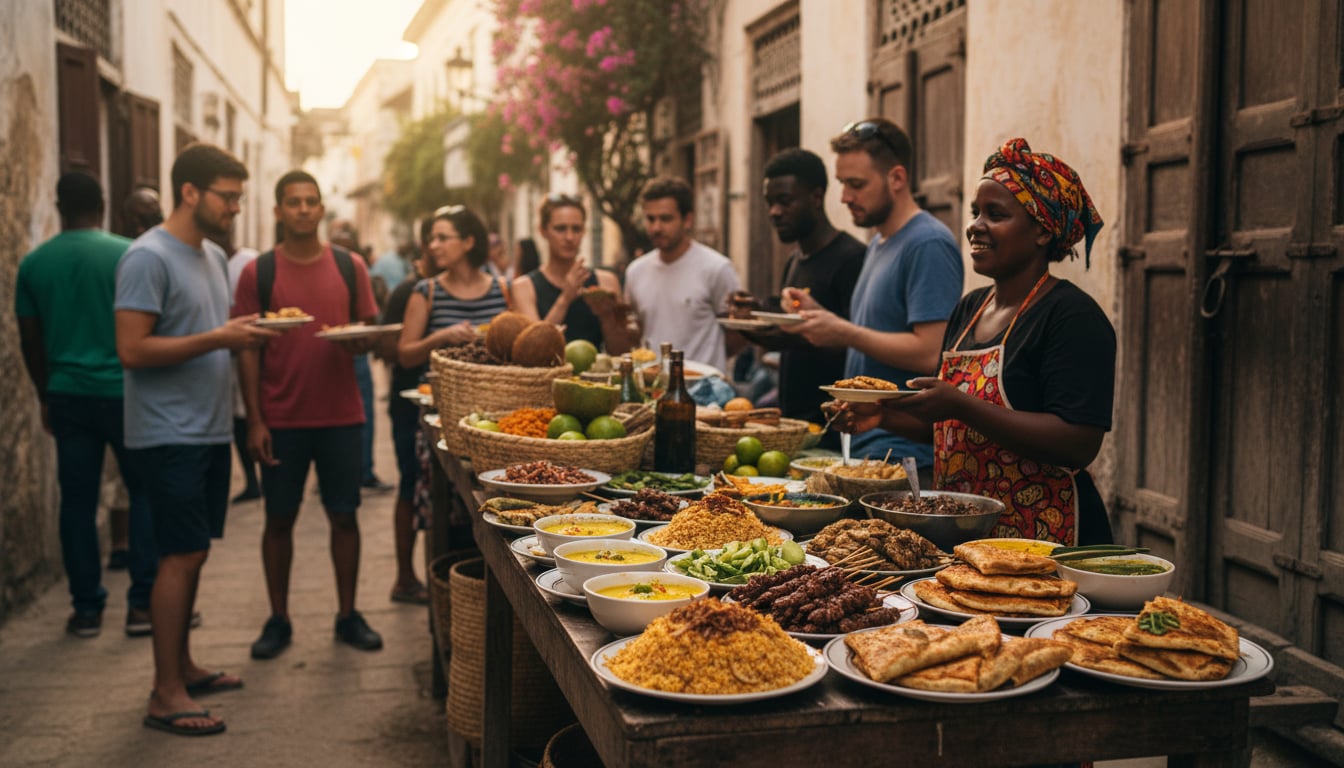
    The Forodhani Night Market in Stone Town is the iconic example. Zanzibar pizza costs $2 to $3. Grilled octopus skewers run $3 to $5. Sugar cane juice and fresh fruit smoothies are under $1. A full dinner from market stalls rarely exceeds $5 to $8 per person.

    Local Restaurants

    A plate of rice with fish or meat at a local restaurant costs $4 to $8 (roughly 10,000 to 20,000 TZS). These are the places where Zanzibaris eat, often a few blocks back from the tourist strip.

    Tourist and Mid-Range Restaurants

    Main courses at establishments like 6 Degrees South in Stone Town run $12 to $20. These restaurants serve a mix of Swahili and international cuisine in nicer settings.

    Fine Dining

    The Rock Restaurant, perched on a limestone outcrop off Pingwe beach, is Zanzibar’s most photographed dining spot. Expect roughly $40 for a meal with a beer and dessert. Resort restaurants operate in a similar range, with some pushing well past $50 per person.

    Drinks

    Local beers (Safari, Kilimanjaro, Serengeti brands) cost around $2 at local bars and $4 to $6 at tourist spots. Fresh juice is $1 to $2 everywhere. Cocktails at resort bars start around $8 to $12.

    All-Inclusive: When It Makes Sense

    All-inclusive packages at Zanzibar’s mid-range and luxury resorts typically add $50 to $150 per person per day on top of room rates. They make financial sense if you plan to eat most meals at your hotel and enjoy drinks by the pool. If you want to explore Stone Town’s food scene or eat at beachside shacks, they’re a waste.


    Getting Around: Transport Costs Within Zanzibar

    Mode

    Typical Cost

    Best For

    Dala-dala (local minibus)

    $0.50 to $2

    Budget travelers comfortable with crowded, unscheduled transport

    Boda-boda (motorcycle taxi)

    $2 to $5 for a short ride

    Quick trips around town

    Taxi: Airport to Stone Town

    $10 to $20

    Standard arrival transfer

    Taxi: Airport to Nungwi/Kendwa

    $40 to $60

    North coast beach transfers

    Taxi: Stone Town to Paje

    $35 to $50

    East coast beach transfers

    Scooter rental

    $20 to $30 per day

    Independent exploration

    Car with driver (full day)

    $250+

    Day tours, family groups

    A few notes on the Zanzibar cost of getting around. Taxis don’t have meters. Negotiate the fare before getting in, and confirm whether the price is per person or per vehicle. Dala-dalas are incredibly cheap but run on loose schedules and pack passengers tightly. They’re an experience in themselves.

    Scooter rental is popular among independent travelers, though Zanzibar’s roads have potholes, sand patches, and unpredictable traffic. Insurance coverage on rentals is often minimal.


    Activities and Excursion Costs

    Zanzibar offers more than beach lounging. Here’s what the popular activities cost per person:

    Activity

    Typical Cost

    Stone Town walking tour

    $15 to $25

    Spice farm tour

    $10 to $20 (group) / $20 to $180 (private, comprehensive)

    Snorkeling trip (half-day)

    $30 to $60

    Single scuba dive (equipment included)

    $50 to $80

    PADI Open Water course

    $120 to $180

    Dolphin tour (Kizimkazi)

    $25 to $60

    Jozani Forest entry (Red Colobus monkeys)

    ~$10 with guide

    Sunset dhow cruise

    $25 to $90 (group) / $90 to $150 (private)

    Kitesurfing lesson

    $70 to $100

    Prison Island visit

    $30 to $60

    Booking directly with local operators is almost always cheaper than going through your hotel, which typically marks up excursions by 20 to 40%. Ask at your accommodation for recommendations, then contact the operators yourself.

    For ideas on what to do in the historic center, check out our guide to things to do in Stone Town. And if you’re choosing between beach areas, Zanzibar’s best beaches breaks down what each coastline offers.


    Hidden and Often-Missed Costs

    Zanzibar Cost 2026: The Complete Price & Fees Guide

    This section exists because Zanzibar has several costs that don’t show up on booking confirmations but absolutely show up on your credit card statement.

    Card Payment Surcharges

    All card payments in Zanzibar are subject to a 3 to 5% surcharge, charged by the merchant on top of any foreign transaction fees from your own bank. On a $200 hotel night paid by card, that’s an extra $6 to $10. Over a week-long stay with multiple card transactions, the surcharge can total $30 to $50 that never appeared in your planning spreadsheet.

    The practical response: carry more USD cash than you might elsewhere, and save card payments for large transactions where carrying cash feels risky.

    ATM Withdrawal Limits

    ATMs in Zanzibar dispense a maximum of roughly 400,000 TZS per transaction (about $155). Each withdrawal comes with a fee, typically 10,000 TZS ($4). If you need $300 in cash, that’s two withdrawals and $8 in fees.

    Dynamic Currency Conversion

    When paying by card and the terminal asks whether you’d like to pay in USD or TZS, always choose TZS. Choosing USD triggers dynamic currency conversion, which applies a markup of 3 to 7% on top of the already-unfavorable exchange rate. It’s a trap, and it’s everywhere.

    Tipping

    Tipping isn’t expected in Zanzibar, but it is appreciated. General guidelines:

    Recipient

    Suggested Amount

    Hotel staff

    $2 to $5 per day

    Tour guides

    $5 to $10 per tour

    Drivers/transfers

    $3 to $5 per transfer

    SIM Card and Data

    A local SIM card (Airtel or Vodacom) costs $1 to $2, with data packages running roughly $5 for 3 to 5 GB. This is one of the cheapest items on the entire Zanzibar cost list, and it saves a fortune compared to international roaming.


    What a Zanzibar Beach Extension Costs After Safari

    For many visitors, Zanzibar isn’t a standalone trip. It’s the beach chapter that follows a Tanzania safari or Kilimanjaro climb. This context changes how you should think about costs.

    Extension Costs by Travel Style (Per Person, 4 to 5 Nights)

    Style

    Accommodation

    Flights/Transfers

    Meals & Activities

    Total Per Person

    Budget

    $100 to $350

    $80 to $180

    $150 to $250

    $400 to $700

    Mid-range

    $400 to $1,000

    $80 to $250

    $250 to $400

    $700 to $1,500

    Luxury

    $1,250 to $3,000+

    $200 to $400

    $500 to $800

    $2,000 to $5,000+

    After spending $2,000 to $3,000 per person on a Kilimanjaro climb, or $3,000 to $8,000 on a safari, a mid-range Zanzibar extension adds roughly $800 to $1,500. That’s a meaningful addition but proportionally modest compared to the safari itself.

    DIY vs. Booking Through an Operator

    Arranging your own Zanzibar extension involves booking flights, transfers, accommodation, and activities separately. It can be cheaper, but it requires time and carries coordination risk, especially when you’re transitioning from a guided safari to independent travel on the same trip.

    Booking through a safari operator bundles the logistics. The flight from the Serengeti, the airport transfer in Zanzibar, and your hotel reservation all happen without you toggling between browser tabs. For travelers who want to understand how safari and beach fit together in a single trip, our guide on fitting multiple experiences into one East Africa trip lays out the options.

    A Mainland Coast Alternative

    Here’s something no other Zanzibar cost guide mentions: you don’t actually have to fly to Zanzibar for a beach extension.

    The Swahili Coast, specifically the Pangani and Saadani areas, offers beautiful Indian Ocean beaches accessible by road from the Northern Circuit safari parks. No $200+ flight. No mandatory Zanzibar insurance fee. No airport-to-hotel transfer across an island.

    Duma Explorer’s Pangani and Saadani beach and bush itinerary starts from approximately $1,000 to $1,100 per person. For travelers watching their budget or wanting a less-touristed coastal experience, it’s worth comparing against Zanzibar. Our Zanzibar vs. mainland Tanzania comparison covers the differences in detail.

    Zanzibar vs. Other Destinations: Cost Comparison

    How does Zanzibar compare to other tropical escapes?

    • vs. Maldives: Zanzibar is significantly cheaper for mid-range travelers. While a Maldives water villa starts at $600+, a luxury Zanzibar beachfront suite can be found for $350.

    • vs. Seychelles: Dining and transport are roughly 40% cheaper in Zanzibar than in the Seychelles.

    • vs. Bali: Bali remains cheaper for accommodation and digital nomad living, but Zanzibar offers superior value for combined wildlife (Safari) and beach trips.


    How to Reduce Your Zanzibar Costs

    Ten practical ways to cut your Zanzibar spending without sacrificing the experience:

    1. Travel in shoulder season. November, early December, and March offer 20 to 30% lower accommodation rates with generally good weather.

    2. Eat where locals eat. A $5 meal at a local restaurant is often better than a $20 meal at a tourist spot.

    3. Use dala-dalas for longer routes. Stone Town to Paje by dala-dala costs $2 instead of $40 by taxi.

    4. Pay in Tanzanian shillings. Prices quoted in USD at markets, restaurants, and small shops are almost always inflated. Convert to TZS and you’ll get a better rate.

    5. Carry cash. Avoiding the 3 to 5% card surcharge saves meaningfully over a week.

    6. Book accommodation directly. Contact hotels through their own websites or via WhatsApp. Booking platforms charge commissions that hotels sometimes pass on to you, or you lose access to unadvertised discounts.

    7. Negotiate taxi fares upfront. Always. No exceptions.

    8. Skip the all-inclusive package if you plan to explore. You’ll spend less eating out than paying the daily all-inclusive surcharge.

    9. Book excursions directly with local operators. Hotels mark up tours by 20 to 40%.

    10. Consider the mainland coast. Eliminating the flight to Zanzibar saves $200 to $350 per person each way.


    Sample Trip Budgets

    These are total per-person estimates, including accommodation, food, transport within Zanzibar, activities, and government fees. International flights are excluded.

    Zanzibar Only (7 Days)

    Style

    Total Per Person

    Daily Average

    Budget

    $500 to $750

    $70 to $107

    Mid-range

    $1,000 to $1,800

    $143 to $257

    Luxury

    $2,500 to $4,500+

    $357 to $643+

    Safari + Zanzibar Combo (10 to 14 Days)

    Style

    Total Per Person

    Notes

    Budget

    $3,500 to $5,500

    Camping safaris + budget guesthouses

    Mid-range

    $6,000 to $10,000

    Lodge safaris + boutique hotels

    Luxury

    $11,000 to $22,000+

    Premium lodges + luxury resorts

    For a detailed example of what a combined safari and beach trip looks like, Duma Explorer’s Safari and Zanzibar Sands itinerary covers a 14-day private trip including both experiences. Travelers who also want to add a Kilimanjaro climb can explore the Mountains, Safari and Beach itinerary, which combines all three.


    Frequently Asked Questions

    How much money do I need per day in Zanzibar?

    Budget travelers spend $40 to $90 per day, mid-range travelers $120 to $250, and luxury travelers $300 to $600+. Real traveler data confirms these ranges: documented daily averages range from $51 to $110 depending on travel style. These figures exclude international flights and visa fees.

    Is Zanzibar expensive compared to other beach destinations?

    Zanzibar is significantly cheaper than the Maldives, Seychelles, or Mauritius at every price tier. A mid-range Zanzibar trip costs roughly half what a comparable Maldives trip does. The trade-off is infrastructure: Zanzibar’s roads, water supply, and hotel standards are less polished than those more developed island destinations.

    What is the new mandatory insurance for Zanzibar?

    Since October 2024, all visitors must purchase travel insurance from the Zanzibar Insurance Corporation (ZIC) before arrival. It costs $44 per adult and $22 per child (ages 3 to 17), covers emergency medical expenses up to $50,000, and is valid for up to 92 days. You buy it online through the Visit Zanzibar portal.

    Should I bring USD or Tanzanian shillings to Zanzibar?

    Bring both. USD is accepted at hotels, tour operators, and taxi drivers. Tanzanian shillings (TZS) get you better rates at local restaurants, markets, and small shops. ATMs dispense TZS with a per-transaction limit of about 400,000 TZS ($155). Avoid paying by card when possible due to the 3 to 5% surcharge.

    How much does it cost to add Zanzibar after a safari?

    A budget Zanzibar extension (4 to 5 nights) adds $400 to $700 per person. Mid-range runs $700 to $1,500. Luxury ranges from $2,000 to $5,000+. These estimates include flights from safari hubs, accommodation, transfers, meals, and basic activities.

    What are the hidden costs in Zanzibar most travelers miss?

    The three biggest surprises are: the $44 mandatory travel insurance (introduced October 2024), the nightly infrastructure tax of $2 to $5 per person based on hotel star rating, and the 3 to 5% surcharge on all card payments. Together these can add $100 to $200+ per person to a week-long trip.

    Is it cheaper to fly or take the ferry to Zanzibar?

    The ferry from Dar es Salaam costs $35 (economy) compared to $40 to $80 for a flight on the same route. But if you’re coming from Arusha or the Serengeti, the ferry requires getting to Dar es Salaam first, which costs money and a full day of travel. From safari hubs, flying directly to Zanzibar is almost always the better value when you factor in time.

    When is the cheapest time to visit Zanzibar?

    April and May (the heavy rain season) offer the lowest prices, with resort rates dropping 30 to 40% below peak season. The shoulder months of November, early December, and March provide a better balance: 20 to 30% savings with significantly better weather.
  • Best Time to Visit Zanzibar (2026): Month-by-Month Guide

    Best Time to Visit Zanzibar (2026): Month-by-Month Guide

    TL;DR

    The best time to visit Zanzibar is during the dry season from June to October, when rainfall drops below 53mm per month, skies stay clear, and beach conditions are near perfect. January and February offer a lesser-known dry window with hotter temperatures and thinner crowds. Divers and snorkelers should target September through March for the calmest seas and best visibility. If you’re combining Zanzibar with a Tanzania safari, June through October gives you the best overlap between island weather and mainland wildlife viewing.

    Why “Best” Depends on What You Want

    Most guides answer this question with a single date range and move on. That’s not enough. The best time to visit Zanzibar shifts depending on whether you want to kitesurf in Paje, swim with whale sharks off Mafia Island, explore Stone Town on foot, or tack a beach week onto the end of a Serengeti safari.

    Zanzibar sits 6 degrees south of the equator. It’s warm year-round, the ocean never dips below 25°C, and even the “rainy season” rarely means all-day downpours. But the island’s two monsoon wind systems, dramatic tidal patterns, and cultural calendar create real differences month to month, and knowing a few Swahili terms will help you decode what local operators and weather forecasts are actually telling you.

    This guide defines every season, wind pattern, and timing concept you’ll encounter while planning. Use it as a quick-reference glossary rather than reading straight through.

    Zanzibar Seasons Defined

    Dry Season (June to October)

    This is the classic best time to visit Zanzibar and the answer you’ll find in nearly every travel guide. Monthly rainfall averages just 35 to 53mm, skies are reliably clear, and daytime temperatures sit around 28 to 30°C (82 to 86°F). Humidity drops to its lowest point of the year.

    June through October also coincides with Tanzania’s safari high season, which matters if you’re planning a combined trip. Hotels charge peak rates, and Zanzibar received a record 736,755 visitors in 2024 (up 15.4% year-on-year), with July through September among the busiest months.

    Who it’s best for: First-time visitors, families, anyone prioritizing guaranteed sunshine and calm logistics.

    Zanzibar 2026 Visitor Trends

    Zanzibar’s popularity is surging, with over 100,000 international arrivals recorded in January 2026 alone—a 19.2% increase over the previous year. This growth is driven largely by European markets (Italy and Germany), meaning “High Season” now requires booking 6–8 months in advance.

    Market Trend

    Impact on Your 2026 Trip

    Rising Arrivals

    Popular spots like Nungwi and Paje reach 90%+ occupancy in August.

    Direct Flights

    92.3% of visitors arrive via air; book regional flights from Arusha early.

    Sustainability

    Growing focus on “Roots Tourism” in Stone Town and local eco-tours.

    Masika (Long Rains, March to May)

    Masika is the Swahili name for Zanzibar’s main rainy season. You’ll hear this term from local guides, hotel staff, and tour operators constantly, so it’s worth knowing. April is the wettest month, averaging 229.7mm of rainfall across 18 rainy days. May follows at 166mm across 15 rainy days.

    Here’s the nuance most guides miss: Masika doesn’t mean nonstop rain. Practitioners on travel forums consistently report that even in April, mornings are often sunny with rain concentrated in heavy afternoon bursts. One Zanzibar hotel editorial put it well, noting that “for those who crave romance, nature, stillness, and soulful beauty, Zanzibar’s rainy months are pure magic.”

    The budget case is real. Hotel rates can drop roughly 30% compared to peak season, with average nightly costs falling from around $354 in busy season to roughly $190 for a comparable stay. Some resorts close entirely during April and May, though, so options narrow.

    Who it’s best for: Budget travelers, couples seeking privacy, photographers who love dramatic skies.

    Vuli (Short Rains, November to December)

    Vuli is the second, lighter rainy season. November averages 101.7mm across 13 rainy days; December is similar at 108mm. The showers tend to be brief morning events rather than the heavier afternoon downpours of Masika.

    Many travelers skip over November entirely, which is a mistake. It’s a genuine shoulder season with lower prices and fewer tourists, while conditions remain good enough for most activities. December picks up as holiday travelers arrive for Christmas and New Year’s.

    Who it’s best for: Shoulder-season seekers, divers (visibility is improving), and anyone comfortable with occasional morning showers.

    Short Dry Season (January to February)

    This is the underrated window. Rainfall drops to just 55mm in January and 50mm in February, making these months nearly as dry as the main dry season. The difference is heat: daytime highs push past 32°C, and the air feels more humid.

    January in particular deserves attention. One Zanzibar tourism resource describes it as “one of our favourite times to visit” because it’s quieter than peak season, excellent for whale shark encounters, and hotel prices haven’t fully climbed back to high-season levels.

    Who it’s best for: Heat lovers, whale shark enthusiasts, travelers pairing Zanzibar with the Ndutu calving season on safari.

    High Season, Low Season, and Shoulder Season

    These terms get thrown around loosely in Zanzibar trip planning, so here’s what they actually mean in practice:

    • High season (July to October, plus Christmas/New Year): Peak pricing, fully booked hotels at popular beaches, the best weather. Advance booking is essential.

    • Low season (March to May): Lowest prices, emptiest beaches, and the most rain. Some properties close.

    • Shoulder season (June, November, early December, January to February): The sweet spot for many travelers. Good weather, moderate prices, fewer crowds.

    With visitor numbers growing steadily (from 548,503 in 2022 to 736,755 in 2024), peak-season crowding is becoming a real consideration, especially in August and September.

    Wind and Ocean Terms Every Visitor Should Know

    Kusi (Southeast Trade Wind, June to October)

    Kusi is the dominant wind of Zanzibar’s dry season. It blows steadily from the southeast at 15 to 25 knots, making the east coast choppy but turning Paje into one of Africa’s top kitesurfing destinations.

    The practical impact: if you’re booking an east-coast beach hotel during Kusi season, expect wind. Swimming can be uncomfortable on exposed eastern shores. North-coast beaches like Nungwi and Kendwa sit sheltered from Kusi and offer calmer water.

    Kaskazi (Northeast Monsoon, December to March)

    Kaskazi blows from the northeast and is lighter than Kusi, averaging 14 to 20 knots. It’s still strong enough for kitesurfing (good for beginners), but it brings a side effect: seaweed gets pushed onto eastern beaches.

    Kaskazi also marks the warmer, more humid period. Sea temperatures peak at around 29.5°C in late March.

    Tidal Range and Why It Matters

    This is one of the biggest gaps in most Zanzibar travel advice, and it catches visitors off guard constantly.

    East coast beaches (Paje, Jambiani, Pingwe, Matemwe) experience dramatic tidal shifts. At low tide, the ocean can recede more than a kilometer, exposing shallow lagoons and seagrass beds. You can’t really swim during low tide on the east coast. Your day revolves around the tide schedule.

    North coast beaches (Nungwi and Kendwa) have minimal tidal variation. Swimming is possible at any time, regardless of tide. This single fact drives a lot of accommodation decisions, and it’s worth considering when choosing among the best beaches in Zanzibar.

    West coast and southwest beaches (near Stone Town and Kizimkazi) are sheltered from Kusi wind and can be excellent during the November to February period when Kaskazi hits the east coast.

    Seaweed Season

    Seaweed accumulates primarily on east coast beaches during the Kaskazi wind season (December to March). The northeast wind direction pushes floating seaweed onto shore. Many hotels rake their beach sections daily, but the seaweed is visible and can affect the aesthetic.

    If a pristine beach is your top priority during December through March, choose the north coast. If you’re visiting during Kusi season (June to October), east coast beaches are cleaner, though windier.

    Sea Temperature

    Zanzibar’s ocean stays swimmable all year. The range runs from about 25°C in August to 29.5°C in late March. You won’t need a wetsuit at any point, though divers doing multiple dives per day during the cooler months sometimes appreciate a thin rashguard.

    Best Time to Visit Zanzibar by Activity

    Best Time to Visit Zanzibar (2026): Month-by-Month Guide

    Beach and Swimming

    Best months: June to October, January to February

    The dry season delivers the most reliable beach days. January and February are hotter but equally dry. Choose your coast carefully: north coast for all-tide swimming, east coast for dramatic scenery but tide-dependent water access.

    Diving and Snorkeling

    Best months: September to March

    Sea conditions are calmest during this window, and underwater visibility can exceed 25 meters in October. The transition months of September and October combine dry-season weather with improving underwater conditions, making them arguably the single best time to visit Zanzibar for divers.

    Key dive sites around Mnemba Atoll, Tumbatu, and the Menai Bay area are accessible year-round, but choppy Kusi-season seas (June to August) can make boat rides rough and limit visibility.

    Kitesurfing (Paje)

    Best months: June to October (Kusi wind), December to March (Kaskazi wind)

    Paje is Zanzibar’s kitesurfing capital. Kusi season brings the strongest, most consistent winds (15 to 25 knots), attracting experienced riders. Kaskazi season is lighter and better suited to beginners and intermediates.

    April and May are a dead zone for wind. If kitesurfing is your main reason for visiting, avoid those months entirely.

    Whale Shark Season

    Best months: October to March

    Whale shark encounters peak off Mafia Island during these months. January is particularly popular because it coincides with the short dry season, giving you warm weather on Zanzibar plus excellent odds of swimming alongside the largest fish in the ocean.

    Dolphin Watching (Kizimkazi)

    Best months: June to October, January to March

    Dolphins are present year-round in the waters off Kizimkazi on Zanzibar’s southwest coast, but calm seas make sightings more reliable during these windows. Bottlenose and Indo-Pacific humpback dolphins are the most common species.

    Sport Fishing

    Best months: August to March (peak August to October)

    Sailfish and marlin fishing peaks in the late dry season and extends through the short rains. The waters around Zanzibar and Pemba Island are productive for big game fishing during this stretch.

    Stone Town Sightseeing

    Best months: June to October

    Walking Stone Town’s narrow alleys in 32°C heat and 80% humidity (typical of January to March) is significantly less enjoyable than doing so in the cooler, drier conditions of the main dry season. July and August offer the most comfortable temperatures for extended exploration. There’s plenty to see, from the Old Fort and House of Wonders to the best things to do in Stone Town.

    Spice Tours and Clove Harvest

    Best months: July to December

    Zanzibar’s spice farms operate year-round, but visiting during harvest season adds a sensory dimension you won’t get in other months. The clove harvest on Pemba Island runs from July through December, and this is when the air across both islands smells distinctly of spice.

    Turtle Hatching (Mafia and Juani Island)

    Best months: June to September

    Peak nesting and hatching season for green turtles falls during the dry season. Juani Island, near Mafia, is one of the most reliable spots in East Africa for watching hatchlings make their way to the ocean.

    Cultural Calendar and Events

    Sauti za Busara Music Festival

    When: Usually the second week of February

    East Africa’s largest music festival takes place at the Old Fort in Stone Town. It draws performers from across the continent and is worth building a trip around if live music matters to you. The festival coincides with the short dry season, so weather is typically cooperative. More details are in this Sauti za Busara overview.

    Festival of the Dhow Countries (ZIFF)

    When: First two weeks of July

    This film, music, and arts festival celebrates the cultural heritage of the Indian Ocean trading world. It overlaps perfectly with the dry season.

    Mwaka Kogwa

    When: Late July

    A Persian New Year celebration held in the southern village of Makunduchi. The festival involves ritual fighting, singing, and feasting. It’s one of the most distinctive cultural events in East Africa and rarely mentioned in mainstream travel guides.

    Ramadan

    When: Shifts annually (2026: approximately February 18 to March 19)

    Zanzibar is predominantly Muslim, and Ramadan has a real impact on daily life. Restaurants outside of hotels close during daylight hours. Some shops operate on reduced schedules. Hotels continue serving guests normally.

    Practical advice: if your visit overlaps with Ramadan, dress modestly and avoid eating or drinking in public during daylight. The evenings come alive with Iftar meals and a festive atmosphere that many visitors enjoy.

    New Year’s Eve

    Stone Town and the north-coast beaches host lively celebrations on December 31. Hotels book up months in advance, and rates spike. If you want a tropical New Year’s, plan early.

    Safari Plus Zanzibar: How to Time the Combo

    Best Time to Visit Zanzibar (2026): Month-by-Month Guide

    This is where timing decisions get interesting for travelers planning a broader East Africa trip. A flight from Arusha or Dar es Salaam to Zanzibar takes just one to two hours, making the combo logistically simple. The question is when to do it.

    June to October: The Perfect Overlap

    Both Zanzibar and the Tanzania safari circuit are at their best during these months. The Great Migration river crossings happen in the Serengeti from July through October, predator sightings are concentrated around shrinking water sources, and Zanzibar’s dry season delivers flawless beach weather for your wind-down days.

    This is the most popular combo window and the most expensive. Book well ahead.

    January to February: The Underrated Pairing

    The Ndutu area of the southern Serengeti hosts the wildebeest calving season from late January through February, one of the most dramatic wildlife spectacles in Africa. Zanzibar’s short dry season runs simultaneously, with minimal rainfall and hot, sunny conditions.

    This pairing gives you world-class safari plus excellent beach weather at prices below the June-to-October peak. It’s a favorite window among experienced East Africa travelers.

    March to May: Skip It for Combos

    Both mainland parks and Zanzibar enter their low seasons. Roads in some safari areas become difficult, several lodges close, and Zanzibar’s Masika rains are at their heaviest. This is not the time for a combination trip.

    Planning a Multi-Experience East Africa Trip

    If you’re considering adding Kilimanjaro, gorilla trekking, or a Kenya extension alongside Zanzibar, the logistics get more complex but remain very manageable. Our guide on fitting multiple experiences into one East Africa trip walks through the sequencing options in detail.

    For a full walkthrough covering flights, accommodations, and logistics, start with the complete East Africa trip planning guide.

    Month-by-Month Quick Reference

    Month

    Avg High (°C)

    Rainfall (mm)

    Rainy Days

    Sea Temp (°C)

    Crowd Level

    Price Level

    Best For

    January

    32

    55

    8

    28.5

    Medium

    Medium

    Whale sharks, beach, heat

    February

    33

    50

    5

    29

    Medium

    Medium

    Sauti za Busara, diving

    March

    32

    147

    13

    29.5

    Low

    Low

    Budget travel, diving

    April

    30

    230

    18

    29

    Very Low

    Very Low

    Budget, empty beaches

    May

    30

    166

    15

    28

    Very Low

    Very Low

    Budget, quiet retreat

    June

    29

    53

    9

    27

    Medium-High

    High

    Beach, safari combo

    July

    28

    35

    7

    25.5

    High

    High

    ZIFF festival, Mwaka Kogwa

    August

    28

    36

    7

    25

    Very High

    Very High

    Beach, kitesurfing, safari

    September

    29

    40

    8

    25.5

    High

    High

    Diving, beach, fishing

    October

    30

    73

    10

    26.5

    Medium-High

    Medium-High

    Diving (25m+ visibility)

    November

    30

    102

    13

    27.5

    Medium

    Medium

    Shoulder season value

    December

    31

    108

    13

    28

    High

    High

    Holidays, New Year’s Eve

    Data sourced from Zanzibar climate records and Climates to Travel.

    What to Pack for Zanzibar’s Seasons

    • June – Oct (Dry): Light layers for breezy evenings on the East Coast; a light windbreaker if you are kitesurfing.

    • Nov – Dec (Short Rains): A compact, high-breathability raincoat and waterproof bags for electronics during boat trips.

    • Jan – Feb (Hot): High-SPF reef-safe sunscreen and hydration salts. Temperatures frequently exceed 33°C.

    • Mar – May (Long Rains): Quick-dry clothing and sturdy sandals that won’t slip on Stone Town’s wet limestone alleys.

    Common Timing Mistakes

    Booking an east-coast hotel during Kusi season without expecting wind. The southeast trade wind makes Paje and Jambiani breezy from June through October. That’s a feature for kitesurfers and a frustration for sunbathers who wanted calm conditions. If wind bothers you, choose Nungwi or Kendwa, or read through the top Zanzibar beach resorts to find properties that match your coast preference.

    Assuming rainy season means nonstop rain. April’s 18 rainy days sound miserable until you learn that tropical rain in Zanzibar typically means one to two hours of heavy downpour, often in the afternoon, followed by sunshine. Many visitors report enjoyable April trips with plenty of dry time.

    Ignoring tidal schedules on the east coast. If your dream is waking up and walking straight into turquoise water, you need a north-coast hotel or an east-coast hotel where you’ve checked the tide times. At low tide on the east coast, the ocean can be a kilometer away.

    Not syncing safari and Zanzibar dates. Travelers who plan their safari for peak season but accidentally schedule Zanzibar during Masika (or vice versa) miss the best of one half of their trip. The timing overlap is straightforward if you plan it deliberately.

    Visiting during Ramadan without preparation. Ramadan doesn’t ruin a trip, but it changes the rhythm of daily life outside hotel walls. Know the dates, pack modest clothing for town visits, and embrace the evening energy rather than fighting the daytime quiet.

    Underestimating peak-season crowds. January 2026 alone brought over 100,000 visitors to Zanzibar. The days of having beaches to yourself in August are mostly gone at popular spots. Shoulder season offers a better balance of weather and space.

    Choosing Your Timing

    The best time to visit Zanzibar comes down to your priorities. June through October is the safe, reliable choice with guaranteed sunshine and the easiest safari combination. January and February offer nearly the same conditions with fewer people and lower prices. November works well for budget-conscious divers. And even the maligned Masika season has its charm if you embrace the rhythm and the savings.

    Whatever window you choose, pairing Zanzibar with time on the mainland transforms a beach holiday into something much bigger. Explore our 7 to 10 day Tanzania safari itineraries to see how a Zanzibar extension fits into a broader East Africa adventure.

    Frequently Asked Questions

    What is the single best month to visit Zanzibar?

    September. It offers dry-season weather, the start of prime diving conditions (visibility exceeds 25 meters), manageable crowds compared to August, and perfect timing for a post-safari beach extension. It’s not the cheapest month, but it balances weather, activities, and crowd levels better than any other.

    Is Zanzibar worth visiting during the rainy season?

    Yes, with caveats. The rain is rarely continuous. Mornings often start sunny, with downpours arriving in the afternoon and clearing by evening. Hotel prices drop significantly, beaches are empty, and the landscape turns lush. Avoid it if guaranteed sunshine is non-negotiable or if you’re planning water sports that require calm seas.

    How many days do you need in Zanzibar?

    Most travelers spend four to six days. That’s enough for two to three days of beach time, a Stone Town walking tour, a spice farm visit, and one water activity like snorkeling or a dolphin trip. If you’re combining with a safari, three to four beach days as a wind-down works well.

    Can you swim in Zanzibar year-round?

    The ocean is warm enough for swimming every month (25 to 29.5°C). The real question is where. North-coast beaches allow swimming at any tide. East-coast beaches only offer good swimming conditions around high tide. Check tide tables before planning your beach days on the east coast.

    When is the cheapest time to visit Zanzibar?

    March through May (Masika season) offers the lowest hotel rates, with savings of roughly 30% compared to peak season. November is a secondary budget window with better weather than Masika and fewer tourists than the dry season.

    Is Zanzibar good for a honeymoon?

    Very much so. For honeymoons, the best time to visit Zanzibar is either the dry season (June to October) for worry-free weather or the short dry season (January to February) for a more intimate, less crowded experience. The Sauti za Busara music festival in February adds a cultural dimension that many couples enjoy.

    How do I combine a Tanzania safari with Zanzibar?

    Fly from the Serengeti, Arusha, or Dar es Salaam to Zanzibar in one to two hours. The simplest combination runs June through October, when both the safari circuit and Zanzibar are in peak form. January to February is an excellent alternative that pairs the wildebeest calving season with Zanzibar’s secondary dry period. Our best time for Tanzania safari guide breaks down mainland timing in detail.

    Does Zanzibar get crowded?

    Increasingly, yes. Visitor arrivals hit 736,755 in 2024 and continue rising. August, September, and the Christmas/New Year period are the busiest times. Popular north-coast beaches like Nungwi feel noticeably packed during peak weeks. For quieter conditions with good weather, target June, October, or January.

  • Zanzibar Food Guide 2026: 15 Must-Try Dishes & Where to Eat

    Zanzibar Food Guide 2026: 15 Must-Try Dishes & Where to Eat

    TL;DR

    Zanzibar’s food is shaped by centuries of Indian Ocean trade, blending Swahili, Indian, Arab, and Portuguese flavors into something you won’t find anywhere else in East Africa. Street food costs as little as $1 per item, mid-range restaurant meals run $6 to $12, and the best dishes live at night markets and local holes-in-the-wall rather than resort dining rooms. This guide covers 15 must-try dishes with prices, where to eat them, and practical tips for navigating everything from Forodhani Gardens to Ramadan iftar feasts.

    The Zanzibar Food Takeaway: What to Eat & What it Costs

    If you only have 24 hours, the three non-negotiable dishes are Zanzibar Pizza (street food), Urojo (island-style soup), and Pweza wa Nazi (octopus coconut curry). In 2026, expect to pay $1–$3 for street snacks and $10–$20 for a mid-range restaurant dinner. The best local flavor is found at Lukmaan Restaurant and the Forodhani Gardens Night Market.

    Why Zanzibar Food Is Unlike Anything Else in East Africa

    For centuries, Zanzibar sat at the center of Indian Ocean trade routes. Omani sultans, Indian merchants, Portuguese colonizers, and Bantu farmers all passed through, and each group left something in the kitchen. The result is a cuisine that doesn’t exist on the Tanzanian mainland, or anywhere else in Africa for that matter.

    Zanzibari food is defined by what the island provides: fresh seafood pulled from warm coastal waters, tropical fruits ripening year-round, and staples like cassava, plantains, and coconut. But the real signature comes from the spices. Cloves, cardamom, cinnamon, black pepper, and turmeric grow on the island itself, and they find their way into nearly every dish. If you’ve been exploring Tanzania’s cultural heritage on a mainland safari, the food shift when you arrive in Zanzibar is immediate and welcome.

    The difference between Zanzibar and mainland Tanzania shows up on the plate. Mainland meals tend toward ugali (maize porridge) with grilled meat. Zanzibar’s food leans on coconut milk, tamarind, and layered spice blends that feel closer to coastal India or Oman than to Arusha. Travelers coming off a safari, where lodge meals are often Western-influenced and standardized, find Zanzibar’s independent food scene a genuine culinary reset.

    At-a-Glance: 15 Must-Try Zanzibar Foods

    Dish

    Type

    Price (USD)

    Best For

    Where to Try

    Vegetarian

    Zanzibar Pizza

    Street food

    $1.20 – $2

    First night in Stone Town

    Forodhani Gardens

    Available (veggie/sweet versions)

    Urojo (Zanzibar Mix)

    Street food / soup

    $1 – $2

    Adventurous eaters

    Stone Town back alleys

    No (usually)

    Pilau

    Rice dish

    $2 – $3

    Everyday comfort food

    Lukmaan Restaurant

    Available

    Biryani

    Rice dish

    $3 – $5

    Special occasion meals

    Lukmaan; Ramadan iftars

    Available

    Pweza wa Nazi

    Seafood curry

    $8 – $15

    Seafood lovers

    Fisherman’s; beach restaurants

    No

    Samaki wa Kupaka

    Grilled fish

    $10 – $20

    Sit-down dinners

    The Rock Restaurant

    No

    Mishkaki

    Street food

    $0.80 – $1.60

    Quick snacks

    Forodhani; street vendors

    No

    Chips Mayai

    Street food

    $1 – $2

    Late-night cravings

    Any local diner

    Vegetarian

    Mandazi

    Breakfast pastry

    $0.30 – $0.50

    Morning with tea

    Street carts, mornings

    Vegan

    Nyama Choma

    Grilled meat

    $5 – $10

    Casual group dinners

    Local joints outside tourist areas

    No

    Kisamvu

    Side dish

    $2 – $4

    Cultural immersion

    Cooking classes; Lukmaan

    Vegan

    Wali wa Nazi

    Side dish

    $1 – $2

    Pairs with everything

    Everywhere

    Vegan

    Vitumbua

    Breakfast snack

    $0.30 – $0.50

    Morning street food

    Stone Town morning stalls

    Vegan

    Samosas

    Snack

    $0.50 – $1

    Anytime snacking

    Every market and stall

    Available

    Zanzibar Chocolate

    Sweet snack

    $0.50 – $1

    Edible souvenir

    Street vendors

    Vegan

    Zanzibar Food Cheat Sheet: Dietary & Safety

    Category

    Best Dish Options

    SEO Tip

    Vegan / Plant-Based

    Kisamvu, Wali wa Nazi, Vitumbua, Mandazi

    Ask for “Hamna nyama” (No meat).

    Gluten-Free

    Wali wa Nazi, Grilled Seafood (ensure no flour rub), Fresh Fruit

    Most street snacks use wheat flour.

    Best Value ($)

    Chips Mayai, Mishkaki, Samosas

    Stick to back-alley stalls for $1 deals.

    Food Safety

    Hot-off-the-grill Mishkaki, Fresh Sugarcane Juice

    Avoid pre-plated seafood at Forodhani.

    What Zanzibar Food Actually Costs

    Almost no Zanzibar food guide includes real prices, which leaves travelers guessing. Here’s what to expect in 2025:

    • Street food snacks (Zanzibar pizza, mishkaki, samosas): $0.50 to $3 per item

    • Local restaurant lunch (pilau, biryani, chips mayai with a drink): $5 to $10

    • Mid-range restaurant dinner (seafood curry, grilled fish, coconut rice): $15 to $30

    • Fine dining (The Rock, Emerson on Hurumzi): $30 to $60+

    • Average daily food spend: roughly $30 per person for travelers mixing street food and restaurants

    Most street vendors and smaller restaurants accept cash only in Tanzanian shillings. Mid-range and upscale restaurants increasingly take cards. Bring small bills (1,000 and 2,000 TZS notes) for market stalls.

    The 15 Foods

    Zanzibar Food Guide 2026: 15 Must-Try Dishes & Where to Eat

    1. Zanzibar Pizza

    Best for: Your first night in Stone Town, when you’re jet-lagged but hungry.

    Zanzibar pizza has nothing to do with Italian pizza. It starts as a ball of dough that gets stretched thin, piled with your choice of fillings (chicken, beef, onion, egg, cheese, mayonnaise, chili sauce), then folded into a square and pan-fried on a flat griddle until crispy. Sweet versions with Nutella and banana exist too.

    • Street food format, cooked to order in about 3 minutes

    • The dough is closer to a stuffed crepe than any bread you’d associate with pizza

    • Savory versions are the move; sweet ones can be cloying

    • Price: 3,000 to 5,000 TZS ($1.20 to $2)

    • Where to try it: Forodhani Gardens Night Market, specifically the “Mr. Mango” stall that travelers consistently recommend

    Good to know: Every Forodhani stall makes these, and quality varies. Stick with the stalls that have the longest lines of locals, not the ones with the most aggressive vendors calling to you in English.

    2. Urojo (Zanzibar Mix)

    Best for: Adventurous eaters who want the single dish that best represents Zanzibar’s food identity.

    This tangy, soup-like street food combines a turmeric-infused mango broth with fritters (bhajia), boiled potatoes, hard-boiled eggs, and spiced meat or seafood. It gets topped with coconut chutney, chili sauce, and tamarind. It’s called “Zanzibar Mix” because the whole multicultural history of the island seems to be in one bowl.

    • The broth is sour and warming, not what most visitors expect

    • Textures range from crunchy (fritters) to soft (potatoes) to chewy (meat)

    • Considered genuine comfort food by Zanzibaris, not a tourist novelty

    • Price: $1 to $2 at street stalls

    • Where to try it: Small local stalls in Stone Town’s back alleys near the heart of Stone Town; also at Forodhani

    Good to know: Practitioners on Reddit’s Zanzibar community frequently name urojo as the single dish that surprised them most. The flavor profile is unlike anything in Western food, so approach it with an open mind. If you don’t like sour or tangy, this one may challenge you.

    3. Pilau

    Best for: A cheap, filling lunch that locals eat every day.

    Pilau is spiced rice cooked directly in the meat broth so every grain absorbs the flavor. The spice mix, heavy on cloves, cardamom, cinnamon, black pepper, and cumin, came to Zanzibar with Omani traders. Every Friday, pilau and biryani appear on the table in most Zanzibari homes, a tradition with deep cultural and religious roots.

    • The rice should be deeply golden and aromatic, not white

    • Served with a side of kachumbari (fresh tomato and onion salad) and sometimes a banana

    • Easily the best value-for-money meal on the island

    • Price: 5,000 to 8,000 TZS ($2 to $3) at local restaurants

    • Where to try it: Lukmaan Restaurant in Stone Town, a local institution that consistently gets recommended by both residents and travelers

    Good to know: Pilau at tourist-oriented restaurants tends to be milder and less interesting. The best versions come from the places with Swahili-only menus and plastic chairs.

    4. Biryani

    Best for: Friday lunches, celebrations, and Ramadan iftars.

    Biryani looks similar to pilau but the technique is different. The rice and curry are cooked separately, then layered together so the flavors meld during a final slow steam. This extra step makes it a celebration dish, common at weddings, religious holidays, and Friday gatherings.

    • Richer and more complex than pilau, with distinct layers visible in the serving

    • Typically chicken, goat, or beef

    • During Ramadan, biryani appears everywhere as part of iftar spreads

    • Price: $3 to $5 at local restaurants; higher at upscale spots

    • Where to try it: Lukmaan Restaurant; also widely available during Ramadan evenings across Stone Town

    Good to know: Reddit users in Zanzibar travel threads consistently put biryani near the top of their must-eat lists, often rating it above the more famous Zanzibar pizza. If you only have time for one rice dish, pick biryani over pilau.

    5. Pweza wa Nazi (Octopus in Coconut Curry)

    Best for: Seafood lovers who want the signature Zanzibar food experience.

    Tender octopus simmered in creamy coconut milk with lime juice, curry, cardamom, garlic, and cinnamon. This is arguably the most distinctly Zanzibari dish on the island, connecting the ocean to the spice farms in a single plate. The octopus is caught by local spear-fishermen wading the tidal flats at low tide. Zanzibar’s octopus fisheries support an estimated 7,300 individuals, roughly 30% of them women, so ordering this dish directly supports coastal livelihoods.

    • The coconut curry should be thick, not watery

    • Best paired with wali wa nazi (coconut rice) to soak up the sauce

    • Quality depends entirely on how fresh the octopus is and how long it was cooked

    • Price: $8 to $15 at mid-range restaurants

    • Where to try it: Fisherman’s Seafood & Grill (rated 4.8 stars from over 2,100 reviews on TripAdvisor); beach restaurants in Nungwi and Jambiani

    Good to know: Overcooked octopus turns rubbery. At Forodhani, the pre-grilled octopus skewers sit around for a while and can be tough. For pweza wa nazi, order it at a sit-down restaurant where it’s cooked fresh.

    6. Samaki wa Kupaka (Grilled Fish in Coconut Sauce)

    Best for: A proper sit-down dinner with a view.

    A whole fish (usually red snapper or kingfish) grilled over charcoal, then simmered in a coconut milk sauce infused with turmeric, garlic, and chili. This is the signature Swahili coast fish preparation, found from Mombasa to Mozambique but perfected in Zanzibar.

    • The fish is typically served whole, head and tail included

    • The coconut sauce is lighter than the pweza wa nazi curry

    • Pairs well with a cold Kilimanjaro beer or fresh passion fruit juice

    • Price: $10 to $20 depending on the restaurant

    • Where to try it: The Rock Restaurant in Michamvi Pingwe (book well ahead, it’s literally on a rock formation in the ocean); Emerson on Hurumzi for a rooftop dinner with live taarab music

    Good to know: The Rock Restaurant is about 45 minutes from Stone Town and is accessible only by foot at low tide or by boat at high tide. It’s as much a photo opportunity as a meal, and the food is solid if not extraordinary. For pure flavor, smaller beach restaurants in Jambiani or Paje along Zanzibar’s best beaches often do this dish better.

    7. Mishkaki (Meat Skewers)

    Best for: Grabbing something quick while walking through Stone Town in the late afternoon.

    Chunks of beef or chicken marinated in a blend of spices and sauce, threaded onto sticks, and grilled over charcoal to a slight char. You’ll smell these before you see them. By mid-afternoon, alleyways throughout Stone Town fill with smoke from mishkaki vendors setting up for the evening.

    • Usually beef or chicken; occasionally goat

    • Served with a squeeze of lime and sometimes a chili dipping sauce

    • The ultimate grab-and-go Zanzibar street food

    • Price: 2,000 to 4,000 TZS ($0.80 to $1.60) per skewer

    • Where to try it: Forodhani Gardens; street vendors throughout Stone Town

    Good to know: At Forodhani, agree on the price per skewer before the vendor starts grilling. Some travelers on TripAdvisor report vendors quoting one price and charging another, especially to tourists who look uncertain.

    8. Chips Mayai (French Fry Omelette)

    Best for: Late-night comfort food after a long day.

    French fries folded into an omelette, served with kachumbari (tomato and onion salad), chili sauce, and mayo. Nothing fancy. Nothing pretending to be fancy. This is the dish every Zanzibari eats when they’re hungry and in a hurry, and it shows up on virtually every local menu.

    • The ultimate Tanzanian fast food, loved across the country

    • Vegetarian-friendly (no meat, just eggs and potatoes)

    • Best eaten fresh, when the fries are still crispy inside the egg

    • Price: $1 to $2

    • Where to try it: Any local diner or street stall; also at Forodhani Gardens

    Good to know: Chips mayai is one of those dishes that Reddit travelers consistently rave about despite its simplicity. One thread on the Zanzibar subreddit called it “the sleeper hit” of Zanzibari food. Don’t skip it because it sounds ordinary.

    9. Mandazi (Swahili Doughnuts)

    Best for: Breakfast with spiced tea, ideally before 8 AM.

    Triangular pieces of deep-fried dough, lightly sweetened, flavored with cardamom or coconut milk. They’re the Swahili coast’s answer to a doughnut, though less sweet and more bread-like. Always paired with chai, they’re the way most Zanzibaris start the day.

    • Available from street carts starting at dawn

    • The cardamom flavor is subtle but present

    • They go stale quickly, so eat them within an hour of buying

    • Price: $0.30 to $0.50 for two or three pieces

    • Where to try it: Morning street carts around Stone Town, especially near Darajani Market

    Good to know: Mandazi are best before about 9 AM, when they’re freshest. By midday the ones sitting on vendor trays have hardened. If they don’t give slightly when you squeeze, move on to the next cart.

    10. Nyama Choma (Grilled Meat)

    Best for: A casual evening meal away from the tourist circuit.

    Slow-grilled goat, beef, or chicken, this is a staple across all of East Africa. In Zanzibar, the marinades incorporate local spice blends that make it taste noticeably different from mainland versions. The meat is typically ordered by weight and grilled fresh.

    • Usually served with ugali or chips and kachumbari

    • The Zanzibari version uses more aromatic spices than the mainland style

    • This is a social dish, ordered with friends around a communal plate

    • Price: $5 to $10 for a serving

    • Where to try it: Local “nyama choma joints” outside the tourist areas; ask your hotel staff for their favorite spot

    Good to know: Nyama choma spots catering to locals often don’t have English menus. Point at what other tables are eating, or use basic Swahili: “nyama ya mbuzi” (goat) or “nyama ya ng’ombe” (beef).

    11. Kisamvu (Cassava Leaves in Coconut Milk)

    Best for: Travelers who want to eat what Zanzibari families actually eat at home.

    Cassava leaves pounded with garlic, onion, chili, and salt, then boiled and finished with rich coconut milk. This is a daily staple in Zanzibari households but almost never appears on tourist food lists. It’s the kind of dish you’d eat sitting on a mat in someone’s living room, and the flavor is deeper and more interesting than it sounds.

    • Vegan by default

    • The coconut milk gives it a creamy, slightly sweet finish

    • One of the best examples of the food gap between what tourists eat and what locals eat

    • Price: $2 to $4 as a side at local restaurants

    • Where to try it: Cooking classes like Mamas of Zanzibar, where you prepare it from scratch starting at the local market; also at Lukmaan Restaurant

    Good to know: If you take a Zanzibari cooking class, kisamvu will almost certainly be on the menu. That’s the best context to try it, surrounded by the cultural explanation that makes the dish meaningful.

    12. Wali wa Nazi (Coconut Rice)

    Best for: Accompanying literally every other dish on this list.

    Rice cooked in coconut milk instead of water. Simple, foundational, and omnipresent. This is the default starch in Zanzibar, replacing the ugali that dominates the mainland. The coconut gives it a subtle sweetness and richness that elevates whatever it’s served alongside.

    • Vegan

    • Appears on every restaurant menu, local and upscale alike

    • The quality varies more than you’d expect; good wali wa nazi should be fluffy, not gummy

    • Price: $1 to $2 as a side

    • Where to try it: Everywhere on the island. You’ll eat this daily.

    Good to know: After several days in Zanzibar, you may get tired of coconut in everything. That’s normal. The island’s cuisine runs on coconut milk the way French cooking runs on butter.

    13. Vitumbua (Coconut Rice Pancakes)

    Best for: A light morning snack alongside Zanzibari coffee.

    Small, slightly sweet pancakes made from rice flour, coconut milk, and cardamom, cooked in a special round mold that gives them their distinctive shape. They’re eaten for breakfast or as an afternoon snack, and they pair perfectly with a cup of kahawa.

    • Vegan

    • The texture is denser than a Western pancake, almost like a rice cake

    • Usually sold in bags of five or six from morning vendors

    • Price: $0.30 to $0.50 for several pieces

    • Where to try it: Morning street stalls in Stone Town, often from the same vendors selling mandazi

    Good to know: Vitumbua are best when still warm. The cardamom and coconut flavors fade as they cool. Buy them from vendors who are actively cooking, not from a pre-made stack.

    14. Samosas

    Best for: Anytime snacking between meals.

    The Zanzibar version of samosas reflects the island’s Indian heritage but uses local spice blends that set them apart. Filled with spiced minced meat or vegetables, wrapped in a thin pastry, and deep-fried until golden. They’re sold at every market, food stall, and street corner.

    • Vegetable samosas are widely available and fully vegetarian

    • The pastry should be thin and crispy, not thick and doughy

    • Often sold alongside bhajia (chickpea-battered fritters)

    • Price: $0.50 to $1 each

    • Where to try it: Darajani Market, Forodhani Gardens, or any food stall in Stone Town

    Good to know: Samosas that have been sitting in a display case for hours will be soggy. Look for vendors frying them fresh. The oil should be hot and the samosas should sizzle when they go in.

    15. Zanzibar Chocolate (Sesame Bars)

    Best for: An edible souvenir to bring home.

    Despite the name, Zanzibar chocolate contains no chocolate. It’s a dense, chewy bar made from toasted sesame seeds bound with rich honey, cut into small diamond-shaped pieces. Locals call it “chocolate” as a term of endearment for the island’s favorite sweet, and travelers describe it as highly addictive once they try it.

    • Vegan

    • Small, portable, and shelf-stable, which makes it a great gift

    • The honey and sesame combination is simple but satisfying

    • Price: $0.50 to $1 for a small bag

    • Where to try it: Street vendors throughout Stone Town and Darajani Market

    Good to know: The quality depends on the freshness of the sesame and the quality of the honey. If a piece tastes stale or overly hard, try a different vendor. The good stuff should be slightly chewy, not rock-solid.

    Zanzibar Drinks Worth Trying

    Zanzibar Food Guide 2026: 15 Must-Try Dishes & Where to Eat

    The Zanzibar food experience extends well beyond solid meals. Four beverages deserve attention:

    Kahawa (Arabic-style Coffee): Tiny cups of black, intensely flavored coffee spiced with cardamom, served by mobile vendors who carry ornate brass coffee pots. Jaws Corner in Stone Town is the most famous spot, a gathering place where locals debate politics over coffee for about $0.25 a cup.

    Sugarcane Juice: Freshly pressed through a hand-cranked wooden machine, sometimes spiked with ginger or a squeeze of lime. Sold from carts throughout Stone Town. Roughly $0.50 per glass.

    Tangawizi Tea: Ginger-spiced tea, strong and warming, the beverage of choice in the evening. Most restaurants serve it, and it pairs well with mandazi.

    Fresh Tropical Juice: Mango, passionfruit, tamarind, and watermelon juices are available year-round, though mango peaks in April and December and lychee appears in May. A glass of fresh juice costs $1 to $2 at most spots.

    Where to Eat in Zanzibar

    Street Food

    Forodhani Gardens Night Market is the flagship. It opens nightly around 6 PM in Stone Town’s waterfront park, with dozens of vendors cooking Zanzibar pizza, mishkaki, urojo, sugarcane juice, and grilled seafood. It’s a quintessential Stone Town experience and the single best place to sample multiple Zanzibar foods in one evening.

    Darajani Market is where locals shop for raw ingredients. It’s more chaotic and less tourist-friendly, but some prepared food stalls serve excellent samosas and pilau at rock-bottom prices.

    Local Restaurants

    Lukmaan Restaurant in Stone Town is the go-to for affordable, authentic Swahili food. Buffet-style, with a rotating daily menu of pilau, biryani, curries, and stews. Expect to spend $3 to $5 for a full meal. The Passing Show Restaurant is another local institution nearby.

    Mid-Range and Fine Dining

    Emerson on Hurumzi offers a set Swahili dinner on a rooftop terrace with views over Stone Town and live taarab music. Book in advance. The Rock Restaurant in Michamvi Pingwe serves seafood on a rock formation in the Indian Ocean, accessible by foot at low tide or by boat at high tide. Fisherman’s Seafood & Grill in Nungwi holds the top TripAdvisor rating at 4.8 stars from over 2,100 reviews.

    Beyond Stone Town

    Beach restaurants in Nungwi, Paje, and Jambiani serve fresh-catch seafood daily, often grilled within hours of being pulled from the water. If you’re staying at one of Zanzibar’s beach resorts, venture outside the resort for at least a few meals. The food is better and a fraction of the price.

    Food Experiences Worth Booking

    Spice Farm Tours take you to working plantations where cloves, cardamom, vanilla, and cinnamon grow. You’ll taste spices at the source and learn how they end up in the dishes you’ve been eating. Around $20 to $30 per person.

    Cooking Classes with operations like Mamas of Zanzibar, located outside Stone Town, teach traditional Zanzibari dishes in the founder’s home, beginning with a trip to the local market. Expect to cook pilau, coconut curry, and kisamvu. Classes typically run $30 to $50 per person.

    Stone Town Food Walking Tours are guided evening walks through alleys and markets, typically lasting 2 to 3 hours and covering 6 to 8 food stops. A good option if you want to hit multiple Zanzibar food highlights in one night with a local guide who can translate and negotiate.

    5 Things I Wish I Knew Before Eating in Stone Town

    1. The “Tourist Tax” at Forodhani: Vendors at the night market often have “tourist menus.” Always ask the price in Shillings before they start cooking to ensure you get the local rate.

    2. Friday is Biryani Day: Don’t look for the best Biryani on a Tuesday. It is a traditional Friday lunch; go to Lukmaan or Passing Show early (12:30 PM) before they sell out.

    3. Tipping Culture: Tipping isn’t mandatory at street stalls, but in sit-down restaurants, a 10% tip is highly appreciated by the local staff.

    4. The Coffee “Clink”: When you hear a vendor clinking porcelain cups in the street, that is the Kahawa (spiced coffee) man. It costs pennies—try it at least once.

    5. Dry Island vs. Wet Island: While Zanzibar is a Muslim society, many tourist restaurants serve alcohol. However, local spots (like Lukmaan) are strictly “dry.” Plan your evening accordingly!

    Practical Tips for Eating in Zanzibar

    Food Safety

    At Forodhani, eat items cooked fresh in front of you. Avoid pre-cooked seafood that’s been sitting under heat lamps, especially octopus skewers. Ask prices before ordering at market stalls. Drink bottled water and skip ice unless you’re at an established restaurant.

    Dining Etiquette

    Eating with the right hand is customary in local settings. Meals are often communal, with food placed on shared platters reflecting the island’s culture of togetherness. Most restaurants provide a basin for washing hands before and after eating.

    Ramadan Considerations

    During Ramadan, many local restaurants close during daylight hours. But this is actually one of the most food-rich times to visit Zanzibar. Iftar feasts featuring dates, spiced rice, seafood, and sweet treats appear nightly, and the evening atmosphere in Stone Town becomes electric. Resort restaurants stay open for tourists year-round.

    Vegetarian Options

    Zanzibar’s food scene is seafood and meat-heavy, but vegetarian travelers have solid options. Kisamvu, wali wa nazi, mandazi, vegetable samosas, vitumbua, and chapati are all meat-free. The spice-forward cooking style means even simple vegetable dishes carry big flavor. Most restaurants can prepare vegetable curries on request.

    From Safari to Spice Island: Planning Your Food Journey

    If you’re combining a Tanzania safari itinerary with time in Zanzibar, the food transition is one of the trip’s quiet highlights. After days of lodge-provided meals on the Serengeti or in the Ngorongoro Crater, where menus are designed for international guests and tend toward safe, Western-influenced dishes, Zanzibar’s independent food scene hands you control of what you eat, where, and how much you spend.

    A typical safari-plus-beach combination allows 3 to 5 days on the island, which is enough to work through this entire food list if you’re ambitious. Prioritize Forodhani on your first evening, book a cooking class for day two, and leave the rest for spontaneous discovery.

    For travelers building a trip that spans multiple experiences, from wildlife viewing to mountain trekking to coastal eating, a guide on fitting multiple experiences into one East Africa trip covers the logistics of combining these pieces. And for those still in the early planning stages, the complete East Africa trip planning guide walks through timing, budgets, and how to structure a trip that includes both safari and Zanzibar.

    Frequently Asked Questions

    What is the most famous food in Zanzibar?

    Zanzibar pizza is the most recognized dish among international visitors, largely because of its presence at Forodhani Gardens Night Market. But among locals and food-focused travelers, urojo (Zanzibar Mix) and pweza wa nazi (octopus in coconut curry) are considered more representative of the island’s cuisine.

    How much does food cost in Zanzibar?

    Street food runs $0.50 to $3 per item. A full meal at a local restaurant costs $5 to $10. Mid-range restaurant dinners range from $15 to $30. The average daily food budget for travelers eating a mix of street food and restaurants is roughly $30 per person.

    Is Zanzibar food spicy?

    Zanzibar food is aromatic and well-spiced, but not typically burn-your-mouth spicy. The spice profile leans toward warming flavors like cardamom, cinnamon, and cloves rather than raw chili heat. Chili sauce is usually served on the side so you can adjust.

    Is Forodhani Gardens Night Market safe to eat at?

    Yes, for the most part. Stick to items cooked fresh in front of you, avoid seafood that’s been sitting out, and confirm prices before ordering. Experienced travelers on TripAdvisor note that some vendors can be pushy or quote higher prices to tourists, so a quick price check before committing helps.

    Can vegetarians eat well in Zanzibar?

    Vegetarians won’t struggle. Kisamvu (cassava leaves in coconut milk), wali wa nazi (coconut rice), mandazi, vegetable samosas, vitumbua, and chapati are all widely available and meat-free. The coconut and spice-forward cooking style means vegetarian Zanzibar food is genuinely flavorful, not an afterthought.

    What is the best time to visit Zanzibar for food?

    Zanzibar’s food scene is strong year-round, but Ramadan (dates shift annually) brings extraordinary evening iftar feasts. For fruit lovers, mango peaks in April and December, lychee appears in May, and avocado is best in July. The best time to visit Tanzania for a combined safari and Zanzibar trip typically falls in the dry seasons (June through October, or January through February).

    Should I take a food tour or explore on my own?

    Both work. A guided food walking tour on your first evening gives you a framework, introduces key dishes, and removes the intimidation of ordering at Swahili-only stalls. After that, explore independently. The best Zanzibar food discoveries happen when you follow the smoke from a mishkaki grill down an alley you hadn’t planned to enter.

    Is it safe to drink tap water in Zanzibar?

    No. Stick to bottled or filtered water. Avoid ice at street stalls and smaller restaurants. Established mid-range and upscale restaurants typically use filtered water for ice, but when in doubt, order drinks without it.

  • Zanzibar Safety 2026: Every Term Travelers Should Know

    Zanzibar Safety 2026: Every Term Travelers Should Know

    TL;DR

    Is Zanzibar Safe to Visit in 2026?

    Yes, Zanzibar is considered safe for the vast majority of travelers. While the US State Department issued a Level 3 advisory for Tanzania in late 2025 due to mainland unrest, the Zanzibar archipelago remains stable and peaceful. Most visits are trouble-free, provided travelers take standard precautions against petty theft, use malaria prophylaxis, and respect local Islamic customs regarding dress and behavior. The most common “safety” issues are non-violent, such as persistent beach vendors or sea urchin stings.

    Zanzibar is broadly safe for tourists, with over 736,000 visitors in 2024 and numbers approaching one million in 2025. The biggest risks are petty crime, beach vendor pressure, and preventable health issues like malaria, not violent crime. The US Level 3 advisory covers all of Tanzania and was triggered by mainland unrest, not events on the islands. This glossary breaks down every safety-related term you will encounter while planning your trip, from advisory levels to sea urchins.


    Zanzibar welcomed 736,755 tourists in 2024, a 15.4% jump from the year before. By September 2025, monthly arrivals had surged to 84,154, putting the archipelago on track for roughly one million visitors for the year. Those numbers don’t suggest a dangerous destination. They suggest a popular one getting more popular.

    Still, “Zanzibar safety” is one of the first things travelers search when they start planning, and that makes sense. The October 2025 US advisory upgrade rattled a lot of people. Malaria is real. The cultural context is different from what most Western visitors know. And scam reports from forums can make any destination sound sketchy when you read enough of them.

    This glossary cuts through the noise. It organizes every safety-related term, concept, and risk factor into scannable categories so you can find exactly what applies to your trip. Each entry gives you a plain definition, the Zanzibar-specific context, and a practical tip.


    Travel Advisory Terms

    Travel Advisory Level (US State Department)
    The US government rates countries on a four-tier scale: Level 1 (Exercise Normal Precautions), Level 2 (Exercise Increased Caution), Level 3 (Reconsider Travel), and Level 4 (Do Not Travel). On October 31, 2025, Tanzania was upgraded to Level 3, with risk indicators for unrest, crime, terrorism, and targeting of LGBTQ+ individuals. This applies to the entire country, including Zanzibar.

    Reconsider Travel (Level 3)
    This is the second-most-serious US advisory level, but it does not mean “do not travel.” It means the State Department wants you to think carefully, prepare thoroughly, and register with their enrollment program. Countries like Colombia, Honduras, and Pakistan have also carried Level 3 ratings while receiving millions of tourists annually. The designation reflects worst-case risk across the whole nation, not necessarily conditions in every region.

    FCDO Advice (UK Foreign, Commonwealth & Development Office)
    The UK’s equivalent of a travel advisory. The FCDO currently notes risk of armed crime throughout Tanzania, with specific mention that incidents in Zanzibar have occurred in Stone Town, at hotels, and on tourist beaches. The UK system doesn’t use numbered levels; it issues narrative guidance with regional breakdowns.

    Smartraveller (Australian Government)
    Australia’s travel advisory platform, managed by the Department of Foreign Affairs and Trade. Its Tanzania guidance generally mirrors the UK’s, focusing on crime awareness and health precautions. Worth checking if you hold an Australian passport, since consular support details differ by nationality.

    STEP (Smart Traveler Enrollment Program)
    A free US government service that registers your trip with the nearest embassy or consulate. If there is a natural disaster, civil unrest, or family emergency, the embassy can locate and contact you. Takes about five minutes to complete at step.state.gov. Non-US citizens should check their own government’s equivalent registration system.

    Semi-Autonomous Status (Zanzibar)
    This is the single most important context for understanding Zanzibar safety advisories. Zanzibar is a semi-autonomous archipelago within Tanzania. It has its own president, its own House of Representatives, and a distinct cultural identity. The October 2025 advisory upgrade was driven primarily by mainland political unrest and crime patterns in cities like Dar es Salaam. Zanzibar remained calm and unaffected. TripAdvisor Destination Experts with thousands of posts consistently describe the islands as significantly safer than mainland urban areas. One longtime expert called it “very safe, a lot safer than, say, Cape Town.” For a deeper look at how Zanzibar differs from mainland Tanzania, the distinction matters for trip planning well beyond safety.

    Global Peace Index
    Published annually by the Institute for Economics and Peace, the GPI ranks 163 nations. Tanzania ranked 73rd in 2025, making it the most peaceful country in East Africa, though it dropped eight positions year-over-year.


    Crime and Personal Security Terms

    Petty Crime
    Pickpocketing and opportunistic theft. In Zanzibar, petty crime exists but occurs at lower rates than in mainland cities or many other popular beach destinations. Keep phones and wallets in front pockets or a money belt. Avoid flashing expensive jewelry or electronics in markets.

    Beach Boys
    Perhaps the most discussed Zanzibar safety topic in traveler forums. Beach boys are persistent vendors who approach tourists on the sand to sell tours, spice excursions, snorkeling trips, and souvenirs, often at inflated prices. They are not dangerous. Practitioners on Reddit describe the main concern as “harassment from beach boys, not physical safety,” with one user calling Zanzibar “a very touristy island” where pressure sales are the norm. A local operator confirms that scams in Zanzibar “are rarely violent or sophisticated, they’re mostly opportunistic.” A firm, polite “no thank you” repeated consistently works. Once you have a relationship with one local guide or vendor, others tend to back off.

    Bag Snatching
    A specific tactic where thieves on motorbikes grab bags from pedestrians. The UK FCDO recommends walking against the direction of traffic so you can see approaching vehicles, and avoiding carrying bags loosely on the traffic side of your body. Don’t strap a bag across your chest, which could pull you off your feet if grabbed. This is more of a risk in Dar es Salaam than in Zanzibar, but the precaution applies anywhere.

    Express Kidnapping
    A crime pattern reported in Dar es Salaam where victims are held briefly and forced to withdraw cash from ATMs. This has not been reported as a pattern in Zanzibar. Mentioned here because it appears in Tanzania-wide advisories and travelers confuse mainland risks with island risks.

    Taxi Scam / Unlicensed Taxi
    Unlicensed drivers at the airport and ferry terminal quote fares two to three times the standard rate. Official taxis in Zanzibar have yellow license plates. Typical reference fares: Airport to Stone Town is roughly 30,000 to 50,000 TZS; Airport to Nungwi is roughly 80,000 to 120,000 TZS. Pre-booking your airport transfer through your hotel or tour operator eliminates this risk entirely.

    Stone Town Street Safety
    Stone Town’s narrow alleys are part of its charm but create disorientation, especially at night. During the day, the area is bustling and safe for walking. After dark, stick to lit, populated streets and consider hiring a local guide. Mugging incidents have been reported in isolated alleys late at night. For daytime exploration, a guided walk actually enhances the experience. There are plenty of things to do in Stone Town that are best appreciated with someone who knows the history behind each doorway and alley.

    Nightlife Safety
    Zanzibar has a modest nightlife scene, mostly concentrated in Stone Town and around the Nungwi/Kendwa beach areas. The same rules that apply anywhere in the world apply here: don’t walk alone at night in unfamiliar areas, watch your drinks, and arrange transport back to your accommodation in advance. Violent incidents targeting tourists at bars are rare but not unheard of.

    Solo Female Traveler Safety
    A Destination Expert on TripAdvisor who has traveled solo in Zanzibar since age 19 advises covering shoulders and knees outside of resorts, not walking alone at night, and wearing a “wedding ring” to deter unwanted attention. These precautions reflect the conservative cultural context more than a specific danger. Solo female travelers consistently report positive experiences on the islands when they respect local norms.


    Health and Medical Terms

    Zanzibar Safety 2026: Every Term Travelers Should Know

    Malaria Zone
    The CDC classifies all of Tanzania below 1,800 meters (5,900 feet) as a malaria transmission area. Zanzibar is at sea level. Malaria risk is real, and this is not something to be casual about.

    Antimalarial Prophylaxis
    Prescription medication taken before, during, and after your trip to prevent malaria infection. The CDC recommends atovaquone-proguanil (Malarone), doxycycline, mefloquine, or tafenoquine for Tanzania. Each has different dosing schedules and side effect profiles. Consult a travel medicine doctor at least four to six weeks before departure. Chloroquine-resistant malaria exists in Tanzania, so chloroquine alone is not effective.

    Cholera
    The CDC notes widespread cholera transmission in Tanzania. The primary precaution is avoiding unsafe food and water and washing hands frequently. An oral cholera vaccine exists but is not routinely recommended for most travelers; discuss with your doctor if you have underlying conditions.

    Yellow Fever Certificate
    Required for travelers arriving from yellow fever endemic countries, including those with layovers longer than 12 hours in endemic areas. If you are flying direct from Europe or North America, you typically do not need one. If your routing passes through Nairobi or Addis Ababa, check whether your layover duration triggers the requirement.

    Mandatory Travel Insurance ($44 USD)
    Starting mid-2025, Tanzania requires all foreign visitors to purchase mandatory travel insurance for $44 per person. This government-mandated policy covers medical emergencies, accidents, emergency evacuations, and repatriation. It does not replace personal travel insurance. The mandatory policy has limited coverage caps and does not cover trip cancellation, lost luggage, stolen gear, or higher medical expenses. Buy the $44 policy because you have to, then carry your own comprehensive policy because you should. For context on what a full trip budget looks like, understanding the complete cost of a Tanzania trip helps you plan for insurance alongside everything else.

    Tap Water
    Not safe to drink anywhere in Zanzibar. Use bottled water (check the seal is intact) or filtered water. This includes brushing teeth. Most hotels and resorts provide bottled water in rooms.

    Aga Khan Hospital (Stone Town)
    The best-equipped medical facility in Zanzibar, located in Stone Town. Contact: +255 24 223 0710. It handles emergencies and routine care. For anything serious (major surgery, intensive care), evacuation to Dar es Salaam or Nairobi is standard practice, which is why personal travel insurance with evacuation coverage matters.

    Mnazi Mmoja Hospital
    Zanzibar’s main government hospital. Contact: +255 24 223 1071. Adequate for basic care but limited by resources. Foreign visitors are better served at private facilities.

    Zanzibar Medical Group
    A private clinic option. Contact: +255 777 410 078. Useful for non-emergency medical needs.


    Cultural Safety Terms

    Cultural awareness is arguably the single biggest Zanzibar safety multiplier. Respecting local norms doesn’t just keep you out of trouble. It opens doors, earns goodwill, and transforms surface-level interactions into genuine connections.

    Modest Dress
    In towns, markets, and anywhere outside your resort’s beach or pool area, cover shoulders and knees. This applies to all genders, though women receive more scrutiny. Swimwear and revealing clothing in Stone Town or village settings draws negative attention and can provoke confrontation. For tips on what to pack, our guide to what to wear on safari and beach trips covers the practical details.

    Zanzibar’s Religious Context
    Approximately 99% of Zanzibar’s population is Muslim. This shapes daily life, dress expectations, alcohol availability in certain areas, and social norms around interactions between men and women. Understanding this context is not just polite, it is practical. Travelers who dress appropriately and greet people respectfully report overwhelmingly positive interactions.

    Public Displays of Affection (PDA)
    Discouraged for all couples, regardless of orientation. Holding hands is generally fine. Kissing, embracing, and other physical affection in public spaces will draw disapproval and can cause genuine offense in more conservative areas.

    LGBTQ+ Safety
    This requires honest treatment. Homosexuality is illegal in Tanzania, including Zanzibar, with penalties of up to 30 years imprisonment for same-sex acts. The US State Department specifically lists “targeting of gay and lesbian individuals” as a risk factor in its Level 3 advisory. Prosecutions targeting foreign tourists are described as extremely rare, but no openly gay-friendly establishments, bars, or pride events exist. LGBTQ+ travelers should exercise complete discretion. This is not a destination where visibility is safe. Couples should present as friends in all public settings.

    Ramadan
    During the Islamic holy month (dates shift annually based on the lunar calendar), many restaurants in Stone Town and villages close during daylight hours. Eating, drinking, or smoking in public during fasting hours is considered deeply disrespectful. Resort restaurants and tourist-oriented establishments typically continue normal service. If your trip overlaps with Ramadan, plan meals around your resort and show sensitivity in public spaces.

    Greeting Culture (“Jambo” / “Habari”)
    A simple Swahili greeting goes remarkably far. “Jambo” (hello) or “Habari” (how are you?) followed by a smile transforms interactions with vendors, taxi drivers, hotel staff, and locals on the street. Zanzibar’s culture places high value on greetings, and skipping them can be perceived as rude. This small effort is genuinely connected to your safety experience because people who feel respected are far more likely to help you and look out for you. For more on this cultural dimension, Tanzania’s rich cultural heritage provides useful context.


    Ocean and Beach Safety Terms

    Tidal Range (East Coast vs. North Coast)
    This is the most underappreciated Zanzibar safety factor for beach travelers. The east coast beaches (Paje, Jambiani) experience dramatic tidal swings. At low tide, the water can recede hundreds of meters, exposing seagrass flats and tidal pools. Swimming is only practical at certain times of day. The north coast (Nungwi, Kendwa) has much less tidal variation, offering consistent swim-depth water throughout the day. Neither is better or worse, but they require different expectations. Check our breakdown of Zanzibar’s best beaches to understand what each coast offers.

    Sea Urchins
    The primary marine hazard in Zanzibar. Black, spiny, and lurking on rocks and reef flats, especially at low tide. Stepping on one drives dozens of thin, brittle spines into your foot. Removal is painful and infection is possible. Prevention is simple: wear reef shoes.

    Reef Shoes / Dive Boots
    Closed-toe water shoes with hard soles. Essential gear for any beach time in Zanzibar, not optional. They protect against sea urchins, sharp coral fragments, and rough volcanic rock. Available cheaply in Stone Town if you forget to pack them, but quality varies.

    Coral Reef
    The fringing reefs along Zanzibar’s east coast serve as natural barriers that block large waves and significantly reduce shark presence in nearshore waters. They also mean the seafloor is rough and sharp. Swimming shoes aren’t just for urchins, they protect against coral cuts, which heal slowly in tropical climates and infect easily.

    Rip Current
    Less common in Zanzibar than in open-ocean destinations because the reefs break wave energy, but still possible at certain beaches and during specific tidal conditions. Standard rip current advice applies: swim parallel to shore, not against the current.

    Life Jacket (Boat Tours)
    Dhow cruises, snorkeling trips, and island-hopping excursions don’t always provide life jackets by default. Ask for one and insist on wearing it, especially if you are not a confident swimmer. This applies to sunset cruises and fishing trips too, not just open-water excursions.


    Transport Safety Terms

    Zanzibar Safety 2026: Every Term Travelers Should Know

    Yellow-Plate Taxi
    Official, registered taxis in Zanzibar carry yellow license plates. This is your visual check for legitimacy. Unlicensed cars with white plates may offer rides at the airport, ferry terminal, or on the street. They are unregulated, uninsured, and often charge significantly more.

    Dala Dala
    Local minibus transport. Extremely cheap (a few hundred TZS per ride), packed to capacity, no seatbelts, no fixed schedules. An authentic local experience if you want one, but not recommended for airport transfers, long distances, or anyone carrying valuables. Pickpocketing risk is higher in crowded dala dalas.

    Airport Transfer (Pre-Booking)
    The single most effective way to avoid the top reported Zanzibar safety annoyance: being hassled or overcharged at the airport. Pre-book your transfer through your hotel, resort, or tour operator. The driver meets you at arrivals with a sign. No negotiation, no confusion, no stress. This is standard practice for nearly all organized trips.

    Road Conditions
    Main routes between the airport, Stone Town, and major beach areas (Nungwi, Kendwa, Paje) are paved and generally in reasonable condition. Secondary roads to more remote areas can be rough, especially during the rainy season. Organized transfers in appropriate vehicles handle this without issue.

    Ferry Safety (Dar es Salaam to Zanzibar)
    The Dar es Salaam to Zanzibar ferry crossing takes roughly 90 minutes to two hours. Use reputable companies, Azam Marine being the most commonly recommended. Older, cheaper ferries have a poor safety record, including several capsizing incidents over the past two decades. This is not an area to save money. Book economy or business class on a modern, well-maintained vessel.


    Emergency Reference

    Emergency Phone Numbers

    Service

    Number

    Police

    999

    Fire

    114

    General Emergency

    112 (may not work outside Dar es Salaam)

    Traffic Police

    +255 24 223 0772

    Medical Facilities in Zanzibar

    Facility

    Contact

    Aga Khan Hospital (Stone Town, best on island)

    +255 24 223 0710

    Mnazi Mmoja Hospital (government)

    +255 24 223 1071

    Zanzibar Medical Group (private clinic)

    +255 777 410 078

    Save these numbers in your phone before you arrive. Screenshot this table or write the numbers on a card you keep in your daypack. Cell service in Zanzibar is generally reliable in populated areas.

    Travel Insurance Claims

    If you need to make a claim, contact your personal insurance provider’s 24/7 emergency line (found on your policy card) before or immediately after seeking treatment. Keep all receipts, medical reports, and police reports (for theft). The mandatory $44 government insurance has a separate claims process through the issuing authority.


    Putting It All Together

    Zanzibar safety comes down to preparation, not worry. The risks are real but manageable: take antimalarials, wear reef shoes, dress modestly in towns, pre-book your airport transfer, and carry personal travel insurance on top of the mandatory policy. Do those five things and you have addressed the vast majority of what could go wrong.

    The archipelago’s tourism numbers are growing for a reason. The beaches are stunning, the culture is rich, the diving is world-class, and the overwhelming majority of visitors leave with nothing worse than a sunburn and a lighter wallet from too many spice market purchases.

    For travelers combining Zanzibar with a mainland safari or Kilimanjaro climb, working with an operator who handles ground logistics across both the mainland and the islands makes the safety equation even simpler. Our complete East Africa planning guide walks through how to stitch together a multi-destination trip where transfers, permits, and local coordination are handled end-to-end. And if you want to see how a safari and Zanzibar combination fits into one trip, that is exactly what we design.


    Frequently Asked Questions

    Is Zanzibar safe for tourists right now?

    Yes. Despite Tanzania’s Level 3 US travel advisory (issued October 2025), Zanzibar has remained calm and unaffected by the mainland unrest that triggered the upgrade. Over 736,000 tourists visited in 2024, and 2025 numbers are tracking toward one million. TripAdvisor Destination Experts with thousands of posts describe Zanzibar as “very safe” compared to many popular destinations.

    Is the US Level 3 travel advisory specific to Zanzibar?

    No. The advisory covers all of Tanzania. Zanzibar is a semi-autonomous archipelago with its own government and a distinct security situation. The advisory was driven by mainland unrest, crime patterns in cities like Dar es Salaam, and other nationwide risk factors. Travelers should register with the STEP program regardless.

    What is the $44 mandatory travel insurance for Tanzania?

    Starting mid-2025, all foreign visitors must purchase a government-mandated travel insurance policy for $44 per person. It covers basic medical emergencies, accidents, evacuation, and repatriation. It does not cover trip cancellation, lost luggage, or higher medical limits. You still need your own comprehensive travel insurance.

    Is Zanzibar safe for solo female travelers?

    Generally yes, with cultural awareness. Cover shoulders and knees outside resorts, avoid walking alone after dark, and consider wearing a ring on your wedding finger to reduce unwanted attention. Veteran solo travelers on TripAdvisor forums consistently report positive experiences when these basic precautions are followed.

    What is the biggest safety concern in Zanzibar?

    For most visitors, it is not crime or health, it is beach boys (persistent beach vendors) and petty scams like taxi overcharging. These are annoyances, not dangers. Firm, polite refusal handles the first, and pre-booking transport handles the second.

    Do I need malaria medication for Zanzibar?

    Yes. The CDC classifies all of Tanzania below 1,800 meters as a malaria zone, and Zanzibar is at sea level. Prescription antimalarials (atovaquone-proguanil, doxycycline, mefloquine, or tafenoquine) are recommended. See a travel medicine doctor at least four to six weeks before your trip.

    Is it safe to swim in the ocean in Zanzibar?

    Yes, with awareness of tidal patterns and marine hazards. The east coast has extreme tidal swings that limit swimming to certain hours. The north coast (Nungwi, Kendwa) offers consistent swimming conditions. Wear reef shoes everywhere to protect against sea urchins, which are the primary marine hazard.

    Is Zanzibar safe for LGBTQ+ travelers?

    Homosexuality is illegal in Tanzania, with penalties of up to 30 years imprisonment. The US State Department flags targeting of LGBTQ+ individuals as a specific risk. While prosecutions of foreign tourists are described as extremely rare, no openly gay-friendly venues exist. Complete discretion is essential. LGBTQ+ couples should present as friends in all public settings.

  • Zanzibar Packing List 2026: What to Wear, Pack & Avoid

    Zanzibar Packing List 2026: What to Wear, Pack & Avoid

    TL;DR

    Zanzibar requires more thoughtful packing than a typical beach vacation because of Islamic modesty norms, Tanzania’s plastic bag ban, specific power plug types (D and G), and extreme tidal conditions that make water shoes essential. If you’re combining a mainland safari with Zanzibar, domestic bush flights enforce a strict 15 kg soft-bag luggage limit that forces strategic choices. This guide covers every item category, explains why each one matters for Zanzibar specifically, and breaks down what to pack by season so nothing catches you off guard at the airport.

    Quick Checklist: Zanzibar Essentials

    What are the most important things to pack for Zanzibar? To stay compliant with local laws and customs in 2026, your Zanzibar packing list must include:

    Modest Clothing: Shoulders and knees covered for Stone Town and villages.

    Water Shoes: Essential for East Coast coral/sea urchins during low tide.

    Soft-Sided Luggage: Strictly under 15kg if taking bush flights.

    Universal Adapter: Type G (UK) and Type D (Tanzania-specific).

    Reef-Safe Sunscreen: To protect the fragile Mnemba and Chumbe ecosystems.

    Prohibited: All plastic carrier bags (subject to fines/confiscation).

    Why Zanzibar Demands Its Own Packing List

    Zanzibar is not a generic tropical destination. It is a semi-autonomous archipelago off Tanzania’s coast, a UNESCO World Heritage site (Stone Town), and home to a population that is roughly 97 to 99 percent Muslim. These facts shape every packing decision you make, from the clothes on your back to the bags you carry them in.

    A standard beach packing list will leave you underprepared. You’ll need to account for how Zanzibar differs from mainland Tanzania in terms of culture, climate, and logistics. You’ll need to understand Tanzania’s nationwide plastic bag ban, know which power adapters fit the outlets, and plan your wardrobe for both resort beaches and conservative town settings.

    If you’re arriving from a safari on the mainland (as most East Africa travelers do), you also face a wardrobe transition challenge: fitting neutral-colored safari layers and light beach wear into a single soft duffel that weighs under 15 kilograms. This Zanzibar packing list covers all of it.

    Clothing and Cultural Dress

    Zanzibar Dress Code and Modesty Norms

    This is the single most important concept on your Zanzibar packing list that separates it from any other beach destination. Modesty is a core value deeply rooted in Islamic culture on the island. When you show too much skin in public areas, it is considered inappropriate and offensive to locals.

    What this means in practice: avoid short shorts, mini-skirts, crop tops, strapless tops, low-cut necklines, sleeveless shirts, and overly tight clothing when you’re in Stone Town, at markets, or walking through villages. At your resort pool or private hotel beach, standard swimwear is perfectly fine. The key is knowing when you’re transitioning from a tourist zone to a public space.

    Zanzibar hotel operators report that a scarf or shawl for modesty is one of the items guests forget most frequently. Pack one.

    Cover-Up, Sarong, and Kanga

    A kanga is the local East African wrap, a rectangular cotton cloth with printed borders and often a Swahili proverb along the edge. A sarong serves the same function. Either one is arguably the most versatile item on the island.

    Travelers consistently describe this as their hardest-working piece of clothing: sun shield at the beach, cover-up for walking into town, light blanket on a dhow boat trip, towel in a pinch, and mosque cover when exploring Stone Town’s historic sites. You can buy kangas cheaply at Darajani Market in Stone Town, but pack at least one from home so you’re covered from day one.

    Linen and Breathable Fabrics

    Natural fibers (cotton, linen, bamboo, silk) allow airflow in Zanzibar’s tropical humidity, which regularly exceeds 80 percent. Linen breathes better than anything else in those conditions, though it wrinkles easily. Cotton is the reliable middle ground.

    Synthetic athletic fabrics wick moisture but tend to trap heat against your skin. They work for active excursions but feel miserable during a slow afternoon wandering Stone Town’s narrow alleys. Pack lightweight, loose-fitting pieces in natural fabrics for town days and save the synthetics for water sports or snorkeling trips.

    Modest Swimwear and Rash Guards

    For snorkeling or swimming near local (non-resort) beaches, a one-piece swimsuit or rash guard strikes the right balance between cultural sensitivity and practicality. Rash guards also serve double duty as UV protection, which matters enormously near the equator where the UV index regularly hits 11 or higher.

    If you’re booking a snorkeling trip to Mnemba Atoll or swimming off Chumbe Island, a rash guard is the smarter choice over a bikini top anyway. It prevents sunburn on your back during hours spent floating face-down over coral.

    Neutral-Colored Safari Layers for Combo Trips

    Here’s a packing insight that no other Zanzibar packing list seems to cover: if you’re arriving from a Tanzania safari, your safari wardrobe can do double duty. The neutral-toned long-sleeved shirts and lightweight trousers you wore on game drives work perfectly as modest town clothing in Zanzibar. Olive, khaki, and tan all fit Stone Town’s relaxed aesthetic.

    This matters because of luggage constraints (more on the 15 kg rule below). Instead of packing entirely separate wardrobes for safari and beach, plan for overlap. A linen button-down in a muted tone works in a Land Cruiser and in a Stone Town restaurant. For women, safari outfit tips translate directly to Zanzibar town wear.

    Light Evening Layer

    During the dry season (June through October), nighttime temperatures on Zanzibar drop to around 20°C (68°F), according to climate data for the region. After spending all day in 30°C heat, that drop feels significant. A light fleece, linen cardigan, or cotton hoodie takes up minimal bag space and makes rooftop dinners in Stone Town far more comfortable.

    Footwear

    Zanzibar Packing List 2026: What to Wear, Pack & Avoid

    Water Shoes and Reef Shoes

    These are not optional on Zanzibar’s east coast. At beaches like Paje, Jambiani, and Michamvi, the tidal range is extreme. At low tide, the water recedes hundreds of meters and exposes a vast flat of razor-sharp coral reef. To reach swimmable depth, you walk across this exposed reef. Without water shoes, you risk deep cuts from coral and puncture wounds from sea urchin spines.

    Practitioners on travel forums call water shoes “non-negotiable” for Zanzibar’s east coast, and they’re right. Neoprene or mesh reef shoes with a solid sole are the standard. They’re also useful for beach entries on the north coast, where rocky patches appear without warning. Check our guide to Zanzibar’s best beaches to understand which coastlines require them most.

    Walking Shoes for Stone Town

    Stone Town’s streets are a maze of narrow alleys paved with old stone and coral rag. These surfaces are uneven, slippery when wet, and rough on bare feet or thin-soled shoes. A pair of comfortable closed-toe walking shoes or sturdy sneakers makes a full day of exploring much more pleasant.

    You don’t need hiking boots. Lightweight trail shoes or comfortable sneakers with good traction are enough.

    Hybrid Sandals vs. Flip-Flops

    Sport sandals (the kind with adjustable straps and textured soles) work for casual beach walks, boat transfers, and light town exploration. Most experienced Zanzibar travelers recommend these over flip-flops for anything beyond the resort pool. Stone Town’s uneven streets and steep staircases are genuinely hazardous in flip-flops.

    That said, flip-flops still earn a spot on your Zanzibar packing list for showers, pool decks, and quick walks from your room to the beach. Just don’t make them your primary footwear.

    Sun and Reef Protection

    Reef-Safe Sunscreen

    Approximately 14,000 tons of sunscreen enter the ocean every year, and chemicals like oxybenzone and octinoxate have been shown to damage coral DNA and accelerate bleaching. Zanzibar’s coral reefs, particularly around Mnemba Atoll and Chumbe Island Coral Park, are protected marine ecosystems.

    Reef-safe sunscreen uses mineral-based active ingredients, typically zinc oxide or titanium dioxide, instead of chemical UV filters. It leaves a slight white cast on skin but does not dissolve into the water to poison coral. Given that snorkeling and diving are among Zanzibar’s biggest draws, packing reef-safe sunscreen is both an environmental and practical choice.

    SPF 50+ and UPF Ratings Explained

    SPF (Sun Protection Factor) measures how long sunscreen protects against UVB rays. SPF 50 blocks about 98 percent of UVB. UPF (Ultraviolet Protection Factor) measures the same thing for fabric. A UPF 50 shirt blocks roughly 98 percent of UV radiation from reaching your skin.

    Zanzibar sits at approximately 6 degrees south of the equator, meaning the sun is nearly directly overhead year-round. The UV index routinely exceeds 11, which the WHO classifies as “extreme.” Reapply sunscreen every two hours, and more often after swimming. A UPF-rated hat and shirt remove the guesswork.

    Wide-Brim Hat and Polarized Sunglasses

    A wide-brim hat (not a baseball cap) protects your ears, neck, and nose. Polarized sunglasses cut the intense glare off Zanzibar’s turquoise water, which matters both for comfort and for actually seeing the reef while snorkeling from a boat. Bring a retention strap for your sunglasses. Losing them overboard on a dhow trip is a common and expensive mistake.

    Health and Safety Essentials

    DEET and Picaridin Insect Repellent

    These are the two most effective active ingredients for mosquito repellent. The CDC recommends that travelers going to Tanzania take malaria precautions for all areas below 1,800 meters elevation, and Zanzibar is at sea level. While Zanzibar’s malaria risk is lower than the mainland, it is not malaria-free.

    Peak mosquito activity runs from roughly 5 PM to 9 PM. A repellent with 25 to 50 percent DEET or 20 percent picaridin provides effective protection. Apply it to exposed skin every evening, especially if you’re dining outdoors.

    Malaria Prophylaxis

    This is prescription anti-malarial medication that you begin taking before arriving in Tanzania and continue for a period after leaving (the duration depends on the drug). Recommended options include atovaquone-proguanil (Malarone), doxycycline, mefloquine, and tafenoquine. Each has different side effect profiles and dosing schedules.

    Consult a travel medicine doctor at least four to six weeks before departure. This isn’t something to sort out at the last minute, because some prophylaxis regimens start one to two weeks before you enter the malaria zone.

    Yellow Fever Certificate

    A yellow fever vaccination certificate (the “yellow card”) is required if you’re arriving from or transiting through a country where yellow fever is endemic. This includes many East African and South American nations. If you’re flying directly from the US, UK, or Europe, it is not required.

    Enforcement at Zanzibar’s airport can be strict. Travelers on forums report being pulled aside and asked to show the certificate upon arrival, particularly those with connecting flights through Nairobi, Addis Ababa, or Kigali. If your routing passes through an endemic country, get the vaccine and bring the card. No exceptions.

    Basic Medical Kit

    Zanzibar has pharmacies in Stone Town and some tourist areas, but the selection is unpredictable and quality varies. Pack a small kit with: anti-diarrhea medication (loperamide), oral rehydration salts, adhesive bandages, antiseptic wipes, antibiotic ointment, pain relievers (ibuprofen and acetaminophen), and any personal prescriptions.

    A broad-spectrum antibiotic prescribed by your travel doctor is worth having for bacterial infections that might develop in remote beach areas far from a pharmacy.

    Hydration Salts and Electrolytes

    Zanzibar’s hot season (December through March) pushes maximum temperatures to 32 to 33°C with high humidity. Dehydration sneaks up fast, especially when you’re spending full days in the sun or on boat excursions. Electrolyte sachets weigh almost nothing and can prevent a miserable day. Toss five or six packets into your medical kit.

    Documents and Money

    Tanzania eVisa

    Tanzania offers an electronic visa through its official immigration portal. The cost is $50 for most nationalities and $100 for US travelers. You can also get a visa on arrival, but the eVisa process avoids long queues at immigration.

    Your passport must be valid for at least six months beyond your entry date and have a minimum of two blank pages. Apply for the eVisa at least two weeks before travel. Processing times vary, and applying early removes one source of pre-trip stress.

    Tanzanian Shillings (TZS)

    The local currency is the Tanzanian shilling. US dollars are widely accepted at hotels, tour operators, and some restaurants, but you’ll need shillings for markets, street food, local buses (dala-dalas), and small shops. ATMs are available in Stone Town and major tourist areas.

    Experienced travelers recommend carrying $200 to $500 USD in cash as backup. Bring clean, newer bills (2006 series or later for USD), as older or damaged notes are sometimes refused. Smaller denominations ($5, $10, $20) are more useful than $100 bills for everyday transactions.

    Travel Insurance

    This belongs on every Zanzibar packing list, even though it’s not a physical item. A policy that covers medical evacuation is essential. Zanzibar has basic medical facilities, but anything serious requires evacuation to Dar es Salaam or Nairobi. Medical evacuation flights can cost $10,000 to $50,000 without insurance. Read the fine print to confirm your policy covers water sports like snorkeling and diving if you plan to do either.

    Passport Requirements

    Six months validity beyond your entry date. Two blank pages minimum. Make a photocopy of your passport’s information page and store it separately from the original (a photo on your phone works too). If your passport is stolen, having a copy dramatically speeds up the replacement process at your embassy.

    Electronics and Gear

    Zanzibar Power & Connectivity at a Glance

    Feature

    Specification

    Requirement

    Voltage

    230V / 50Hz

    Voltage converter needed for US 110V devices

    Plug Types

    Type G (Primary), Type D (Old buildings)

    Universal “World” Adapter

    Mobile Data

    Zantel or Airtel

    Purchase eSIM or local SIM at Stone Town

    Power Stability

    Frequent brownouts

    10,000+ mAh Power Bank essential

    Type D and Type G Power Adapters

    Zanzibar uses Type D and Type G power plugs at 230V and 50Hz. Type G is the UK-style three rectangular pins. Type D has three large round pins in a triangular pattern. Most accommodations have Type G outlets, but you may encounter Type D in older buildings.

    A universal travel adapter covers both. North American travelers absolutely need one, as US plugs won’t fit either socket type. Do not forget that the voltage is 230V. Devices with built-in voltage converters (laptops, phone chargers, most modern electronics) are fine, but older appliances designed for 110V only will be damaged without a voltage converter.

    Power Bank

    A power bank rated at 10,000 mAh or higher is a genuine necessity on Zanzibar, not a convenience. Full-day excursions (spice tours, snorkeling trips, dhow cruises) keep you away from outlets for 8 to 12 hours. Power outages are also a reality, particularly at guesthouses and lodges outside Stone Town. Practitioners on Reddit and travel forums frequently mention evening blackouts in rural areas along the east coast.

    A headlamp or small flashlight serves a similar purpose. When the power goes out at your guesthouse at 9 PM, you’ll be glad you packed one.

    Waterproof Phone Case and Dry Bag

    Between boat transfers, snorkeling excursions, and unexpected rain, your electronics face constant moisture exposure. A waterproof phone case rated IPX8 lets you take underwater photos while protecting against the obvious. A small dry bag (5 to 10 liters) protects your wallet, passport, and camera during boat trips where spray is unavoidable.

    Camera and Memory Cards

    Zanzibar is absurdly photogenic: turquoise water, white sand, carved wooden doors in Stone Town, dhow boats at sunset. If you’re bringing a camera beyond your phone, pack extra memory cards and a lens cleaning cloth (salt spray coats everything). A polarizing filter cuts water glare for reef shots from boats.

    Luggage and Packing Logistics

    Soft-Sided Duffel and the 15 kg Bush Flight Rule

    This is the most overlooked item on any Zanzibar packing list, and it matters enormously for travelers combining safari with beach time. Domestic bush flights between safari parks and Zanzibar (operated by carriers like Coastal Aviation and Auric Air) enforce a maximum luggage allowance of 15 kg (33 lbs) per person including carry-on, in soft bags only. Maximum dimensions are 40 cm x 40 cm x 80 cm for soft duffel-style bags.

    Hard-shell suitcases may not physically fit in the cargo pods of small Cessna aircraft. This isn’t a suggestion. Travelers report being asked to leave hard luggage behind at the airstrip. If you’re planning a multi-experience East Africa trip that moves from safari to Zanzibar, a soft-sided duffel is the only sensible luggage choice.

    Tanzania Plastic Bag Ban

    Zanzibar Packing List 2026: What to Wear, Pack & Avoid

    What Counts as “Plastic” in 2026?

    To avoid delays at Abeid Amani Karume International Airport (ZNZ), swap these common items:

    • REMOVE: Plastic grocery bags used for dirty laundry.

    • REPLACE WITH: Nylon or mesh drawstring laundry bags.

    • REMOVE: Plastic “Ziplocs” used for snacks.

    • REPLACE WITH: Silicone reusable pouches (Stasher bags).

    • STAY: Transparent toiletry “Ziplocs” are currently permitted for liquids, provided they leave the country with you.

    Tanzania has prohibited the importation, exportation, manufacture, sale, storage, supply, and use of all plastic carrier bags. This isn’t a vague policy. Customs officers at airports and border posts have designated desks where they collect prohibited plastic bags.

    Ziplock bags used to carry toiletries are allowed, as they’re considered to remain in your possession. But the plastic shopping bags, garbage bags, and carrier bags many travelers use to organize clothes inside their luggage? Those can be confiscated. TikTok creators who’ve traveled to Zanzibar consistently flag this as catching people off guard at the airport. Replace plastic bags with reusable alternatives before you leave home.

    Packing Cubes

    Compression cubes or packing organizers become especially valuable when you’re fitting two trip contexts (safari and beach) into a single 15 kg soft duffel. Organize by activity: one cube for safari layers, one for beach and town wear, one for swimwear and undergarments. The compression versions can reduce volume by 30 to 50 percent.

    For travelers looking at Tanzania safari itineraries that end with a Zanzibar extension, packing cubes transform a logistical headache into something manageable.

    Reusable Tote Bag

    With the plastic bag ban in effect, a lightweight, foldable tote bag handles everything from market shopping in Stone Town to carrying your snorkel gear to the beach. It weighs almost nothing and solves a real, recurring problem throughout your trip.

    Seasonal Packing Adjustments

    Zanzibar’s climate is tropical year-round, but what you add to your base packing list shifts meaningfully with the seasons.

    Dry Season: June Through October

    This is the easiest packing window. Warm days around 29 to 30°C, low humidity, and breezy evenings. The cooler period runs from May through August, and nighttime lows around 20°C mean you’ll want a light layer for evenings. Otherwise, pack your standard Zanzibar essentials and not much else. This is also prime time for combining with a mainland safari, as it coincides with the best time for a Tanzania safari.

    Hot Season: December Through March

    The hottest period, with maximum temperatures hovering around 32 to 33°C and high humidity. Plan for two shirt changes per day due to sweat. Pack extra breathable tops, more underwear than you think you need, and strong antiperspirant. Electrolyte sachets earn their weight in gold during this window. Dehydration risk is real, especially on full-day boat excursions without shade.

    Long Rains: March Through May

    Heavy afternoon downpours are the norm. A packable rain jacket and quick-dry clothing become essential additions to your Zanzibar packing list. A waterproof bag or dry bag for electronics is mandatory, not optional. Some east-coast beaches accumulate seaweed during this period, which can affect your beach plans and reduce the utility of packing exclusively for swimming.

    Short Rains: November Through December

    Quick tropical showers interspersed with mostly sunny days. A compact travel umbrella or packable poncho is enough. This is still strong beach weather, and the brief rains often clear within an hour. The shoulder season also means fewer crowds at popular spots.

    What NOT to Bring to Zanzibar

    Knowing what to leave behind saves weight and prevents hassles.

    Plastic carrier bags. They will be confiscated at customs. Use reusable bags or packing cubes instead.

    Heavy jeans or thick fabrics. Denim in 80 percent humidity is pure misery. Leave it at home.

    Revealing clothing for town use. Crop tops, short shorts, and strapless tops are inappropriate outside resort grounds. You won’t be arrested, but you’ll draw negative attention and disrespect local culture.

    Hard-shell luggage. If you’re flying domestically between safari parks and Zanzibar on bush planes, hard cases may not fit and will likely exceed the 15 kg limit.

    Excessive “just in case” items. The 15 kg limit forces discipline. If you haven’t used an item in your last three trips, it doesn’t belong in the bag. Stone Town has shops and pharmacies if you’ve genuinely forgotten something critical.

    Valuable jewelry. Leave it at home. You don’t need it, and it creates unnecessary risk.

    Planning a Safari and Zanzibar Trip?

    Most travelers visiting Zanzibar are combining it with a mainland Tanzania safari or Kilimanjaro climb. That dual-context trip creates specific packing challenges, from wardrobe crossover to luggage weight limits to visa and vaccination logistics. Working with an operator who handles these transitions daily makes the planning significantly easier. Duma Explorer designs custom safari and Zanzibar itineraries that account for bush flight logistics, seasonal timing, and the small details that turn a trip from stressful to seamless. If you’re weighing Zanzibar beach resorts alongside safari lodges, having one operator coordinate both sides removes the guesswork.

    Frequently Asked Questions

    Do I really need water shoes for Zanzibar?

    On the east coast, yes. Beaches at Paje, Jambiani, and Michamvi have extreme tidal shifts that expose hundreds of meters of sharp coral reef at low tide. Walking to swimmable water without reef shoes risks serious cuts and sea urchin punctures. On the north and west coast beaches, water shoes are less critical but still useful for rocky entry points.

    Can I use US dollars everywhere in Zanzibar?

    Hotels, tour operators, and some restaurants accept USD. But markets, street food vendors, dala-dala buses, and small shops operate in Tanzanian shillings. ATMs in Stone Town dispense shillings. Carry both currencies and keep smaller USD bills ($5, $10, $20) for flexibility.

    What happens if I bring plastic bags to Tanzania?

    Customs officers at Zanzibar’s airport have designated desks where they inspect luggage and confiscate prohibited plastic carrier bags. Ziplock bags for toiletries are allowed since they stay in your possession. Replace any plastic shopping or garbage bags with reusable alternatives before you travel.

    How do I pack for both safari and Zanzibar in one bag?

    Use a soft-sided duffel (not a hard suitcase) that fits within the 15 kg domestic flight limit. Choose neutral-colored clothing that works for both game drives and modest town wear. Pack two or three beach-specific items (swimsuit, sarong, water shoes) and let your safari wardrobe handle the rest. Packing cubes keep everything organized.

    Is malaria a risk in Zanzibar?

    Yes, though the risk is lower than mainland Tanzania. The CDC recommends malaria prophylaxis for all areas of Tanzania below 1,800 meters, and Zanzibar is at sea level. Consult a travel medicine doctor at least four to six weeks before your trip to get a prescription and start the appropriate medication on schedule.

    What type of power adapter do I need for Zanzibar?

    Zanzibar uses Type D and Type G plugs at 230V/50Hz. Type G is the UK-style three rectangular pins. A universal travel adapter handles both socket types. Most modern phone chargers and laptop adapters automatically convert voltage, but check your devices before plugging them in.

    When is the best time to visit Zanzibar for easy packing?

    The dry season from June through October requires the lightest packing load: warm days, cool breezes, low humidity, and virtually no rain. The hot season (December through March) demands more clothing changes and hydration supplies. Both rainy seasons add rain gear to the list.

    Do I need a yellow fever vaccine for Zanzibar?

    Only if you’re arriving from or transiting through a yellow fever endemic country (common transit hubs like Nairobi and Addis Ababa may trigger this requirement depending on your routing). Direct arrivals from the US, UK, or Europe do not need the certificate. Check your specific itinerary carefully, as enforcement at Zanzibar’s airport is strict.

  • Lemosho Route Guide 2026: Itinerary, Cost & Success Rates

    Lemosho Route Guide 2026: Itinerary, Cost & Success Rates

    Thinking about climbing Mount Kilimanjaro? The Lemosho Route is often called the most beautiful path to the summit, and for good reason. It offers breathtaking panoramic views, a quiet start away from the crowds, and an excellent acclimatization profile that gives climbers a fantastic chance of reaching the top.

    This comprehensive guide covers everything you need to know about the Lemosho Route, from the day by day itinerary and difficulty to what it costs and how it compares to other trails.

    At a Glance: The Lemosho Route 2026

    • Total Distance: 70 km (42 miles)

    • Recommended Duration: 8 days (for 90%+ success rate)

    • Difficulty: Moderate to Challenging

    • Scenery: High (Traverses 5 climate zones)

    • Traffic: Low (starts remote, merges with Machame on Day 4)

    • Best For: Climbers seeking scenic beauty and the highest possible acclimatization safety.

    An Overview of the Lemosho Route

    The Lemosho Route is a newer trail on Kilimanjaro that begins on the remote western side of the mountain. It was designed to offer a superior experience to the older Shira route by providing a better acclimatization schedule and more spectacular scenery.

    What makes it so special?

    • Incredible Scenery: You’ll trek through five distinct climate zones, starting in a lush rainforest, crossing the vast Shira Plateau (https://www.dumaexplorer.com/blog/shira-plateau-the-complete-kilimanjaro-guide), and moving through heath, alpine desert, and finally the arctic summit zone.

    • Fewer Crowds: For the first few days, the trail is wonderfully quiet, as its western starting point is far from the more crowded access gates. You’ll only merge with the busier Machame route (https://www.dumaexplorer.com/blog/kilimanjaro-machame-route) traffic around day four.

    • High Success Rates: Lemosho can be completed in 6 to 8 days. This longer duration gives your body more time to adjust to the altitude, leading to one of the highest summit success rates on the mountain, around 90% for the 8 day itinerary.

    For these reasons, many expert operators, including the team at Duma Explorer, highly recommend the Lemosho Route for both first time and experienced trekkers who want the best all around Kilimanjaro experience.

    The Lemosho Route Start Point

    Lemosho Route Guide 2026: Itinerary, Cost & Success Rates


    Your journey on the Lemosho Route begins at Londorossi Gate on Kilimanjaro’s western side. The gate sits at an elevation of approximately 2,100 meters (6,890 feet) inside the montane forest.

    Getting here is part of the adventure. It involves a 3 to 4 hour drive from the towns of Moshi or Arusha, taking you through rural villages and coffee plantations. After registering with the park authorities, your trek officially begins. The first section of the trail is a narrow path through dense, green rainforest where you might spot black and white colobus monkeys leaping through the canopy.

    By starting at a lower elevation, the Lemosho Route allows for a gentler ascent in the first couple of days, which is a key factor in its excellent safety and success record.

    Lemosho Route Map and Distance

    The Lemosho Route covers a total distance of approximately 70 kilometers or 42 miles from the Londorossi Gate to the Mweka Gate, where you descend. This makes it one of the longer trails on Kilimanjaro, surpassed only by the Northern Circuit.

    A quick look at a Lemosho Route map shows a journey that traverses the mountain from west to south. Key landmarks you’ll pass include:

    • Londorossi Gate (Start)

    • Shira Plateau

    • Lava Tower

    • Barranco Valley

    • Barafu Camp (Summit Base Camp)

    • Uhuru Peak (The Summit)

    • Mweka Gate (Finish)

    The longer distance is a huge benefit. By spreading the trek over more days, usually seven or eight, your body gets more time to adapt to the thinning air, significantly boosting your chances of a successful summit.

    Day

    Start Point

    End Point

    Elevation Gain/Loss

    Hiking Time

    1

    Londorossi Gate

    Mti Mkubwa

    +550m

    3-4 hrs

    2

    Mti Mkubwa

    Shira 1 Camp

    +650m

    5-6 hrs

    3

    Shira 1 Camp

    Shira 2 Camp

    +350m

    3-4 hrs

    4

    Shira 2 Camp

    Barranco Camp

    +780m / -650m

    6-8 hrs

    5

    Barranco Camp

    Karanga Camp

    +150m (after Wall)

    4-5 hrs

    6

    Karanga Camp

    Barafu Camp

    +600m

    4-5 hrs

    7

    Barafu Camp

    Uhuru Peak

    +1,230m / -2,100m

    12-15 hrs

    8

    Mweka Camp

    Mweka Gate

    -1,400m

    A Detailed 8 Day Lemosho Route Itinerary

    While a 7 day option exists, the 8 day itinerary for the Lemosho Route is highly recommended for its superior acclimatization. Here’s what you can expect day by day.

    • Day 1: Londorossi Gate to Mti Mkubwa (Big Tree) Camp. You’ll start your trek through the beautiful rainforest. The hike is relatively short, about 3 to 4 hours, allowing you to settle into the rhythm of the mountain.

    • Day 2: Mti Mkubwa to Shira 1 Camp. The trail leaves the forest and enters the heath and moorland zone. You’ll get your first expansive views of the Shira Plateau, an ancient collapsed volcanic crater.

    • Day 3: Shira 1 Camp to Shira 2 Camp. This is a gentler day of hiking across the plateau. It’s a crucial day for acclimatization, allowing you to explore the unique landscape dotted with giant groundsels.

    • Day 4: Shira 2 Camp to Barranco Camp via Lava Tower. A classic “climb high, sleep low” day. You’ll ascend to the impressive Lava Tower at 4,630 meters before descending into the stunning Barranco Valley to sleep at 3,976 meters. This process is vital for helping your body adapt.

    • Day 5: Barranco Camp to Karanga Camp. The day begins with the exciting challenge of the Barranco Wall. After conquering the wall, you’ll traverse a series of scenic ridges and valleys to reach Karanga Camp.

    • Day 6: Karanga Camp to Barafu Camp. A shorter hike brings you to Barafu Camp, the base camp for your summit attempt. The landscape here is rocky and alpine desert. You’ll arrive early to rest, eat, and prepare for the big night ahead.

    • Day 7: Summit Day! Barafu Camp to Uhuru Peak to Mweka Camp. Your day starts around midnight. The climb to the summit is a tough, 6 to 7 hour push in the dark, but watching the sunrise from the roof of Africa is an unforgettable reward. After celebrating at Uhuru Peak (5,895 m), you’ll descend all the way down to Mweka Camp for a well earned rest. This is a very long and demanding day.

    • Day 8: Mweka Camp to Mweka Gate. A final few hours of descent through the rainforest brings you to Mweka Gate. Here, you’ll sign out of the park and celebrate with your guides and porters before heading back to your hotel.

    The Barranco Wall: A Thrilling Scramble

    Lemosho Route Guide 2026: Itinerary, Cost & Success Rates


    One of the most talked about features of the Lemosho Route is the Barranco Wall. This is a steep, 257 meter (843 foot) rock face you scramble up on the morning of day five.

    Despite its intimidating look, it’s not a technical climb. It’s more like a fun, challenging scramble using your hands and feet. There is a clear path, and your guides will be there to assist you at every step. Many hikers find it to be one of the most exhilarating parts of the entire trek. It’s often called the “Breakfast Wall” because you tackle it right after your morning meal.

    Lemosho Route Difficulty and Success Rate

    The difficulty of the Lemosho Route is considered moderate to challenging. No Kilimanjaro route is easy, but Lemosho’s design makes it very achievable for anyone with good fitness and determination.

    The main challenge is the altitude, not the terrain. Learn more about dealing with altitude sickness on Kilimanjaro (https://www.dumaexplorer.com/blog/dealing-with-altitude-sickness-on-mount-kilimanjaro). The trail itself is well established. The longer itinerary, however, is the route’s biggest strength. By allowing for gradual ascent and a “climb high, sleep low” profile, it gives your body the best possible chance to acclimatize.

    This directly translates into an excellent summit success rate.

    Compared to the overall Kilimanjaro average of 45% success rate for reaching the summit, Lemosho stands out as one of the most reliable paths to Uhuru Peak.

    Lemosho Route: 7 Day vs 8 Day Itinerary

    The main difference between a 7 day and 8 day Lemosho climb is pacing. The 8 day itinerary includes an extra day for acclimatization, usually by breaking up a longer day into two shorter ones. This gives your body a critical extra night on the mountain to adjust.

    While the 7 day option is slightly cheaper and faster, the 8 day trek is almost universally recommended by high altitude experts. That extra day significantly reduces your risk of developing serious altitude sickness and increases your summit success rate from around 85% to over 90%. If your schedule and budget allow, choosing the 8 day Lemosho Route is one of the best decisions you can make to maximize your chances of a safe and enjoyable climb.

    If you’re unsure which itinerary is right for you, you can speak with a Duma Explorer Kilimanjaro specialist who can provide personalized advice.

    Lemosho Route vs The Northern Circuit

    The Lemosho and Northern Circuit routes are often considered the two best options on Kilimanjaro. They actually share the same starting point at Londorossi Gate and follow the same path for the first couple of days.

    The key difference is where they go after crossing the Shira Plateau.

    • The Lemosho Route heads south, joining the Machame route and tackling the Barranco Wall.

    • The Northern Circuit veers north, circling around the quiet, rarely seen northern slopes of the mountain.

    The Northern Circuit is the longest route on Kilimanjaro (8 to 9 days) and offers the most solitude. Lemosho is slightly shorter (8 days) and offers the iconic experience of the Barranco Wall. Both have phenomenal success rates above 90%, so you can’t go wrong with either. The choice often comes down to whether you prefer more solitude (Northern Circuit) or the challenge of the Barranco Wall (Lemosho). If you’re weighing which is the best Kilimanjaro route (https://www.dumaexplorer.com/blog/best-kilimanjaro-route) for your goals, this comparison will help.

    How Much Does the Lemosho Route Cost?

    The cost to climb the Lemosho Route typically ranges from $2,500 to $3,500 per person. Lemosho is one of the more expensive routes because its longer duration means higher park fees and crew wages.

    A large portion of the cost goes directly to Kilimanjaro National Park fees, which can be over $800 per climber for an 8 day trek. The rest covers the salaries for your guides and porters, food, equipment, and transportation.

    Be cautious of budget operators offering the climb for under $2,200. Low prices can be a red flag for poor safety standards, unethical porter treatment, or low quality gear. To help you vet companies, see our guide to the best Kilimanjaro tour operators (https://www.dumaexplorer.com/blog/best-kilimanjaro-tour-operators). Investing in a reputable company is crucial for your safety and success. For transparent pricing and a breakdown of what’s included, it’s a good idea to visit Duma Explorer’s website to see their climb packages.

    Lemosho Route FAQ

    Q: When is the best time to climb the Lemosho Route?
    A: The best times are during the two dry seasons, from June to October and from January to March. The weather is generally clear and stable, which is ideal for trekking and especially for climbing the Barranco Wall.

    Q: How crowded is the Lemosho Route?
    A: Lemosho is known for being very quiet for the first half of the trek. It gets busier after it merges with the Machame route around day four, but it’s still less crowded overall than routes that start on the busier southern side.

    Q: Do I need special training for the Lemosho Route?
    A: You don’t need any technical climbing skills, but you should have a good level of fitness. The best preparation is hiking, especially on hills, for several months before your trip. The most important thing is to be able to walk for 6 to 8 hours a day, day after day. For a deeper prep checklist and training tips, download our Kilimanjaro guidebook (https://www.dumaexplorer.com/blog/kilimanjaroguidebook).

    Q: What about altitude sickness?
    A: Altitude sickness is a risk on any Kilimanjaro route, but Lemosho’s excellent acclimatization schedule greatly reduces that risk. The key is to walk slowly (“pole pole”), drink plenty of water, and communicate openly with your guides if you feel any symptoms.

    Q: Is the Lemosho Route safe?
    A: Yes, the Lemosho Route is very safe when you climb with a reputable operator. Licensed guides are trained in high altitude medicine and carry emergency oxygen. Duma Explorer, for example, uses Wilderness First Responder certified guides and offers a 1:1 guide-to-climber ratio for small groups on summit day for maximum support. For added peace of mind, here’s what to know about helicopter evacuation on Kilimanjaro (https://www.dumaexplorer.com/blog/helicopter-evacuation-on-kilimanjaro-what-every-climber-needs-to-know).

    If you have more questions about planning your climb, don’t hesitate to reach out to the experts at Duma Explorer. They have helped hundreds of climbers reach the summit and can provide all the information you need for a successful adventure. You can also read reviews from past climbers (https://www.dumaexplorer.com/blog/duma-explorer-reviews-from-past-climbers).

  • Rongai Route Kilimanjaro Guide 2026: 7-Day Itinerary

    Rongai Route Kilimanjaro Guide 2026: 7-Day Itinerary

    Thinking about climbing Mount Kilimanjaro? The Rongai Route is the only trekking path that starts from the mountain’s northern side, close to the Kenyan border. If you’re looking for a trail with fewer crowds, incredible wilderness, and a high chance of success, this unique route might be your perfect match for experiencing the Roof of Africa.

    Rongai Route at a Glance

    • Total Distance: 73 km (45 miles)

    • Duration: 6 or 7 days (7 days highly recommended)

    • Difficulty: Medium (No technical scrambling)

    • Success Rate: ~85% (7-day itinerary)

    • Key Feature: Only route approaching from the North; driest path on the mountain.

    • Best Season: Year-round, but superior during the rainy seasons (April-May & Nov).

    What is the Northern Approach?

    The Rongai Route is famous for being the only trekking path that starts from Mount Kilimanjaro’s northern side, close to the border between Kenya and Tanzania. All other popular trails, like the Machame Route and Lemosho, begin on the southern or western flanks. This northern starting point means a more remote and unspoiled journey. Trekkers often walk for days in peaceful solitude, seeing very few other groups until the trail merges with the Marangu Route for the final summit push. If you’re still comparing options, see our overview of Kilimanjaro climbing routes.

    A major advantage of this northern approach is the weather. This side of the mountain sits in a rain shadow, meaning it gets significantly less rain than the southern face. This results in drier, clearer conditions, making the Rongai Route an excellent choice, especially if you plan to climb during Kilimanjaro’s wetter seasons.

    Feature

    Rongai Route

    Machame/Lemosho

    Marangu (Coke)

    Crowd Level

    Low (Very Quiet)

    High

    High

    Scenery

    Wilderness & Mawenzi Peak

    Lush Rainforest & Barranco

    Constant views, same path up/down

    Difficulty

    Moderate (Gradual)

    High (Steep/Scrambling)

    Moderate

    Accommodation

    Camping

    Camping

    Huts

    Success Rate

    High

    High

    Medium

    The Starting Line at Nale Moru (Rongai Gate)

    Your adventure begins at the Nale Moru Gate, often just called Rongai Gate. This trailhead is located in a small farming village at an altitude of about 1,950 meters (roughly 6,400 feet). The drive to the gate itself is scenic, passing through local corn and potato fields with views across the plains into Kenya.

    After registering at the park gate, your trek on the Rongai Route starts in a montane rainforest. This forest is thinner and drier than the jungles on the southern side, and the trail quickly transitions into open heath and moorland. In this initial woody section, you might even spot some unique wildlife, like the beautiful black and white colobus monkeys.

    Mapping Your Journey

    Rongai Route Kilimanjaro Guide 2026: 7-Day Itinerary


    A map of the Rongai Route shows a fantastic traverse of the mountain. You ascend from the north and descend down the southeast, meaning you get to experience two different sides of Kilimanjaro without backtracking.

    The map highlights the key landmarks and campsites along the way. You’ll see the path winding around Mawenzi Peak, Kilimanjaro’s dramatic secondary cone, before crossing the vast, lunar like saddle to Kibo, the main summit cone. The route joins the Marangu trail at Kibo Huts for the final ascent to Uhuru Peak and then follows the Marangu path all the way down to the exit gate on the opposite side of the mountain.

    By the Numbers: Distance, Duration, and Altitude

    How Long is the Rongai Route?

    The total trekking distance for the Rongai Route is approximately 70 to 74 kilometers, or about 43 to 46 miles. This journey is typically completed over six or seven days. However, a seven day itinerary is highly recommended. That extra day, usually spent acclimatizing at Mawenzi Tarn, dramatically improves your chances of a safe and successful summit. On an average day, you can expect to hike for four to eight hours.

    A Gentle Climb: The Altitude Profile

    The altitude profile of the Rongai Route is one of its biggest selling points. The climb is known for being very gradual and steady, which is excellent for helping your body adapt to the altitude. You start at around 1,950 meters and ascend in manageable steps each day.

    While the route has a gentle incline, it does lack the natural “climb high, sleep low” opportunities found on trails like Machame. This is why the seven-day itinerary with an extra acclimatization day is so crucial to reduce the risk of altitude sickness. The most significant altitude challenge is summit night, when you climb about 1,200 vertical meters from Kibo Hut to the peak. By then, five days of gradual ascent will have prepared you for that final push.

    How to Prepare for the Rongai Route

    To ensure a successful summit in 2026, your physical preparation should begin 3–4 months in advance. While the Rongai Route is gradual, the summit night is grueling.

    • Cardio: Focus on hiking, swimming, or cycling to build lung capacity.

    • Strength: Prioritize leg strength (quads and calves) and core stability.

    • Hiking Practice: The best training is hiking in your summit boots with a weighted daypack (5–7kg) to build “trail legs.”

    • Mental Toughness: Be prepared for long days and cold summit temperatures.

    The Ideal Seven Day Rongai Route Itinerary

    A seven day trek is the best way to experience the Rongai Route, balancing steady progress with essential acclimatization. Here’s what you can expect day by day.

    • Day 1: Rongai Gate to Simba Camp. The trek begins with a gentle 3 to 4 hour hike through forest and moorland to Simba Camp (2,635 m), located near a feature known as First Cave.

    • Day 2: Simba Camp to Kikelelwa Camp. You’ll continue through the heathland, enjoying beautiful views of Kibo’s eastern glaciers. The path leads to Second Cave (3,450 m) for lunch before continuing to Kikelelwa Camp (around 3,600 m) for the night.

    • Day 3: Kikelelwa Camp to Mawenzi Tarn. This is a shorter hiking day but a significant altitude gain, bringing you to the stunning Mawenzi Tarn Camp (4,315 m). This camp sits beside a picturesque alpine lake at the foot of the jagged Mawenzi Peak. The afternoon is spent resting and acclimatizing.

    • Day 4: Mawenzi Tarn to Kibo Hut. Today you cross the famous Saddle, a wide, barren plateau that connects Mawenzi and Kibo. The landscape feels like a desert on the moon. After about 8 km, you reach Kibo Huts (4,703 m), your base camp for the summit attempt.

    • Day 5 (Summit Day): Kibo Hut to Uhuru Peak, then down to Horombo Hut. Your day starts around midnight with a tough, slow climb up the steep scree slopes of Kibo. After about 5 to 6 hours, you’ll reach Gilman’s Point (5,681 m) on the crater rim as the sun rises. From there, it’s another 1 to 2 hours around the rim to Uhuru Peak (5,895 m), the highest point in Africa. After celebrating, you descend back to Kibo Hut for a short rest and then continue far down to Horombo Hut (3,720 m).

    • Day 6: Horombo Hut to Marangu Gate. The final day is a long but beautiful descent through the rainforest on the Marangu route. The 19 km trek takes about 5 to 7 hours, ending at Marangu Gate (1,860 m), where you’ll sign out and receive your official summit certificate.

    • Day 7: Departure. This day is typically for resting after the climb and preparing for your journey home or your next adventure. If time allows, unwind on Zanzibar’s best beaches before you fly home.

    For climbers seeking a safe and well planned experience, Duma Explorer’s standard Rongai Route treks are seven days, prioritizing proper acclimatization for the best chance at the summit.

    Summit Day: Gilman’s Point to Uhuru Peak

    Summit day on the Rongai Route is the ultimate test of endurance. After an early wake up call around midnight, you begin the slow, steady trek from Kibo Hut. The path is a series of switchbacks on loose volcanic scree, making it the most challenging part of the entire climb. For peace of mind, read our guide to helicopter evacuation on Kilimanjaro.

    You’ll hike for hours in the cold and dark, guided by your headlamp. Around dawn, you reach Gilman’s Point (5,681 m) on the crater rim, a massive achievement in itself. The sunrise from this vantage point is breathtaking. From here, the trail to Uhuru Peak is a gentler incline along the crater’s edge. It takes another hour or so to finally reach the iconic sign at Uhuru Peak (5,895 m), the true summit of Kilimanjaro. You’ll spend a short time taking photos and soaking in the 360 degree views before beginning the long descent.

    A Grand Traverse: Descending via Marangu Gate

    Rongai Route Kilimanjaro Guide 2026: 7-Day Itinerary


    One of the best features of the Rongai Route is that it’s a traverse. You descend via the Marangu Route on the mountain’s southeast side, which means you’re always seeing new landscapes.

    The descent is long but straightforward. After summiting, you’ll spend the night at Horombo Hut (3,720 m). The next day involves a continuous downhill trek of about 20 kilometers through the lush rainforest, a stark contrast to the dry northern side. You finally emerge at Marangu Gate, where you’ll sign out of the park and celebrate your incredible accomplishment.

    How Hard is the Rongai Route?

    The Rongai Route is considered one of the easier climbs on Kilimanjaro. Its difficulty is moderate, with a gradual ascent and no technical climbing sections like the Barranco Wall. This makes it an excellent choice for first time high altitude trekkers and those with less backpacking experience.

    The real challenge, as with any Kilimanjaro route, is the altitude. Because the Rongai ascent is so steady, it’s vital to take the seven day option to allow your body to acclimatize properly. The success rate for the seven day Rongai Route is very high, often around 80% or more. The six day option has a noticeably lower success rate.

    Expert guiding makes a huge difference. Operators like Duma Explorer prioritize safety with highly experienced, Wilderness First Responder certified guides who set a proper “pole pole” (slowly, slowly) pace and monitor your health throughout the climb. Use our guide to choosing the best Kilimanjaro operator in Moshi to vet providers.

    Solitude and Scenery on the Mountain

    If you want to avoid crowds, the Rongai Route is an outstanding choice. It’s one of the least traveled trails, offering a peaceful and remote atmosphere. For the first few days, you may hardly see another soul outside of your own group. This solitude only changes when the trail merges with the Marangu Route at Kibo Hut.

    The scenery is beautifully rugged. You’ll hike through a dry forest, open moorlands dotted with giant groundsels, and across the stark alpine desert of the Saddle. The views of Mawenzi Peak are particularly dramatic.

    Rongai is also the best route for potential wildlife sightings. Because it’s so quiet, animals are less disturbed. It’s common to see black and white colobus monkeys in the forest. There’s even a small chance of spotting larger animals like antelope, buffalo, or even elephants on the lower slopes, a rare treat on Kilimanjaro.

    When to Climb: The Best Season for the Rongai Route

    While Kilimanjaro can be climbed all year, the best times are during the dry seasons from January to February and June to September. However, the Rongai Route has a unique advantage: it’s the best route to climb during the wet seasons (April, May, and November). Its location in the mountain’s rain shadow means it receives far less precipitation, keeping the trail drier and more pleasant when other routes are muddy.

    No matter when you go, summit night will be very cold, with temperatures often dropping well below freezing. But for the ascent, Rongai generally offers milder and drier weather than any other trail.

    Frequently Asked Questions about the Rongai Route

    Is the Rongai Route good for beginners?

    Yes, the Rongai Route is highly recommended for beginners. Its gradual slope and steady pace make for a forgiving acclimatization profile, and there are no technical sections that require scrambling.

    What kind of accommodation is on the Rongai Route?

    Accommodation is in mountain tents at designated campsites. Your crew will set up and take down your tents each day. Only on the descent do you stay at Horombo Hut, which has A frame sleeping shelters.

    How crowded is the Rongai Route?

    It is one of the least crowded routes on Kilimanjaro. You will enjoy a quiet, wilderness experience for most of the ascent before joining the more popular Marangu Route for the summit push and descent.

    Can I see wildlife on this route?

    Yes, Rongai offers the best chances for wildlife viewing. Colobus monkeys are common, and because the area is so remote, larger game like antelope and buffalo are sometimes seen on the lower slopes.

    What is the success rate for the Rongai Route?

    The success rate is very high, especially on the seven day itinerary, which often sees 80% or more of climbers reaching the summit. The longer duration is key for proper acclimatization.

    Essential Packing List for 2026

    Don’t forget these specific items for the drier, dustier northern slopes:

    1. Gaiters: Essential for the scree on summit night and dust on the lower slopes.

    2. 4-Season Sleeping Bag: Temperatures at Kibo Hut can drop to -15°C (5°F).

    3. Buff or Face Mask: The northern side can be windier; protection from dust is key.

    4. Hydration Bladder: 3L capacity is recommended, plus an insulated cover for the tube to prevent freezing on summit night.

    Ready to take on this incredible journey? Explore customized Kilimanjaro climbs with Duma Explorer and consider pairing your ascent with one of our 7 to 10 day Tanzania safari itineraries.

  • Umbwe Route 2026: Kilimanjaro’s Steepest 6–7 Day Guide

    Umbwe Route 2026: Kilimanjaro’s Steepest 6–7 Day Guide

    So, you’re thinking about climbing Mount Kilimanjaro and you’ve heard whispers of the Umbwe Route. Let’s talk about it. Known as the steepest, shortest, and most direct path to the roof of Africa, this trail is not for the faint of heart. It’s a serious challenge that rewards experienced trekkers with breathtaking scenery and a quiet, almost solitary, start to their adventure.

    At a Glance: Climbing Kilimanjaro via Umbwe

    Is the Umbwe Route the hardest? Yes, it is widely considered the most difficult and steepest path on Kilimanjaro due to its rapid ascent profile.

    • Total Distance: 53 km (32 miles)

    • Average Success Rate: 60%–70% (7 days is recommended)

    • Difficulty Level: Very High (Experienced trekkers only)

    • Best For: Those seeking solitude and a physical “true” climb.

    • Key Highlight: The quietest rainforest approach and the Barranco Wall scramble.

    Unlike the more popular trails, the Umbwe Route is a path less traveled. In a recent year, only about 1% of the 47,000 people who climbed Kilimanjaro chose this route. If you’re looking for a tough, rewarding climb away from the crowds, the Umbwe Route might be your perfect match.

    The Umbwe Route by the Numbers: Distance, Duration, and Profile

    The Umbwe Route is a compact and intense journey. It covers a total distance of about 53 kilometers (32 miles) from start to finish. Because of its direct nature, the climb is typically completed in six or seven days. While a five day trek is technically possible, it is strongly discouraged by reputable operators due to the dangerously rapid ascent and extremely low summit success rates. Most itineraries will travel for 6 or 7 days, which builds in a critical acclimatization day to boost safety and success.

    What truly defines the Umbwe Route is its elevation profile. The trail starts at Umbwe Gate (around 1,600 meters) and makes a relentlessly steep climb. By the end of day two, hikers are already at Barranco Camp, standing at an impressive 3,900 meters. This rapid gain of over 2,300 meters in just 48 hours is what makes the Umbwe Route so demanding and why proper acclimatization is non negotiable. After this initial intense push, the route joins the Southern Circuit, which offers a more gradual approach to the base camp before the final summit push.

    The Journey Begins: Your Path on the Umbwe Route

    Umbwe Route 2026: Kilimanjaro’s Steepest 6–7 Day Guide


    Understanding the flow of the trek helps paint a clearer picture of what to expect. The journey can be broken down into three main phases: the initial ascent, the traverse, and the descent.

    Starting Point: Umbwe Gate

    Your adventure begins at Umbwe Gate, located on the southern side of Kilimanjaro at an elevation of about 1,600 meters. It’s a more remote and less developed entrance compared to others. Often, climbers will first register at the busier Machame Gate before a short drive over to Umbwe Gate to begin hiking. The trail immediately enters a lush, humid rainforest, quickly narrowing from a forestry track into a steep, root covered footpath that signals the challenge ahead.

    The Ascent: To Barranco Camp and the Southern Circuit

    The first two days are a steep climb through rainforest and then into the moorland zone. The quiet trail eventually merges with the much busier Machame Route, Lemosho, and Shira trails at the scenic Barranco Camp (3,900 meters). This is a pivotal point in the trek.

    From Barranco, you’ll follow the Southern Circuit path eastward. This section is famous for its incredible views of Kibo’s southern glaciers. The trail takes you up the famous Barranco Wall, across the Karanga Valley, and finally to Barafu Camp (4,670 meters), the base camp for your summit attempt. Barafu, meaning “ice” in Swahili, is a stark, rocky, and windswept camp that serves as the launching point for the final push to Uhuru Peak.

    The Descent: Down the Mweka Route

    After reaching the summit, you won’t return the way you came. Instead, you’ll descend using the Mweka Route, a trail designated for descent only. This path offers a faster and safer way down the mountain, leading you from the arctic conditions of the summit back through the moorland and rainforest to Mweka Gate (1,640 meters). The rapid loss of altitude on this well trodden path helps your body recover, though it can be tough on the knees.

    Is the Umbwe Route Right for You? Difficulty and Success

    Before committing to this trail, it’s essential to understand the challenges involved. The Umbwe Route is considered the most difficult of Kilimanjaro’s standard trekking routes.

    The Steepest Challenge: Difficulty and Terrain

    The primary difficulty of the Umbwe Route is its unrelenting steepness. The first two days are a continuous, aggressive ascent with very little flat ground. You’ll find yourself using tree roots and rocks as natural staircases, requiring good leg strength and endurance. While it’s a non technical trek (no ropes or climbing gear needed), the sharp gradients and occasional exposed ridges make it a physically demanding endeavor. It’s best suited for hikers who are confident in their ability to handle long, steep climbs.

    The Acclimatization Hurdle

    The single greatest challenge on the Umbwe Route is acclimatization. The body needs time to adjust to lower oxygen levels, and this trail provides very little. Ascending to 3,900 meters in just two days significantly increases the risk of Acute Mountain Sickness (AMS). In fact, many climbers begin to feel the effects of altitude on the third day, which is why a seven day itinerary with an extra rest day at Barranco Camp is so important for success. This extra day can make a huge difference in how your body copes with the altitude.

    How to Beat the Umbwe Ascent Profile

    Because you reach 3,900 meters within 48 hours, your strategy must be proactive:

    1. Pre-Acclimatize: If possible, hike a smaller peak like Mount Meru immediately before starting Umbwe.

    2. Hydration: Drink 4 liters of water daily to help blood oxygenation.

    3. The “Pole Pole” Rule: Even though the trail is steep, maintain a slow, rhythmic pace to keep your heart rate in a sustainable zone.

    Summit Success Rate: What Are the Odds?

    Due to the acclimatization challenges, the Umbwe Route generally has a lower summit success rate than other, longer routes.

    Umbwe Route vs. Popular Kilimanjaro Routes

    Route

    Difficulty

    Traffic

    Success Rate (Avg)

    Recommended Days

    Umbwe

    Expert

    Very Low

    60-70%

    7 Days

    Machame

    High

    High

    85%

    7 Days

    Lemosho

    Moderate

    Medium

    90%+

    8 Days

    Marangu

    Moderate

    High

    50%

    These statistics highlight why rushing is not a good idea. Choosing a longer itinerary and a reputable operator like Duma Explorer, who prioritizes safety and acclimatization, will give you the best possible chance of standing on Uhuru Peak. If you’re still deciding between routes, see our complete overview of Kilimanjaro climbing routes.

    Umbwe Route 2026: What’s New?

    Planning for a 2026 trek requires attention to updated park regulations and booking trends:

    • Permit Requirements: Kilimanjaro National Park (KINAPA) requires all trekkers to be accompanied by a licensed guide. Permits for the Umbwe Route remain less competitive than Machame, but 2026 bookings are trending 6–8 months in advance for dry season slots.

    • Sustainability Fees: Ensure your 2026 quote includes the latest conservation and camping fees, as these are subject to annual adjustments by the Tanzanian government.

    • Safety Protocols: Updated 2026 safety standards recommend that all Umbwe climbers undergo a pulse oximetry check twice daily due to the steep ascent profile.

    The Experience: Scenery, Crowds, and When to Go

    While difficult, the Umbwe Route offers a unique and rewarding experience for those who are prepared.

    Scenery: Is the View Worth the Climb?

    Absolutely. The scenery on the Umbwe Route is nothing short of spectacular. You’ll start in a dense, primeval rainforest, ascend a narrow ridge with stunning vistas on either side, and emerge into a surreal moorland dotted with giant Senecio plants. The views from Barranco Camp, with the Great Barranco Wall on one side and Kibo’s glaciers on the other, are often cited as a highlight. The Southern Circuit offers constant, dramatic panoramas of the Southern Ice Fields before you reach the stark, beautiful alpine desert of Barafu Camp.

    Popularity and Trail Traffic

    The Umbwe Route is one of Kilimanjaro’s best kept secrets, at least for the first two days. It sees very few climbers, offering a truly quiet and wild experience. You may not see another group until you reach Barranco Camp. At that point, the route merges with the main artery of the Machame and Lemosho trails, and the traffic increases significantly. So, you get the best of both worlds: initial solitude followed by the shared energy of fellow climbers on the final push.

    Best Season and Weather for the Climb

    The best times to climb Kilimanjaro on any route, including the Umbwe Route, are during the two dry seasons.

    • July through September: This is the primary dry season and offers the clearest skies and most stable weather.

    • January through early March: This is the shorter dry season, which is also a great time to climb, though there can be more clouds.

    You should try to avoid the rainy seasons of April, May, and November, as the steep Umbwe trail can become extremely muddy and slippery. No matter when you go, be prepared for a wide range of temperatures. It can be warm and humid in the rainforest, cool in the moorland, and well below freezing at the summit, where temperatures can drop to as low as −20°C at night, especially with wind chill.

    A 7 Day Umbwe Route Itinerary: Day by Day

    Here’s a look at what you can expect on a recommended seven day Umbwe Route climb. This itinerary includes the all important acclimatization day.

    Day 1: Umbwe Gate to Umbwe Cave Camp

    The first day is a tough, 1,250 meter ascent through dense rainforest. The trail is steep and can be slippery, with tree roots forming natural steps. You’ll arrive at Umbwe Cave Camp, a small, secluded campsite in the forest, feeling tired but accomplished.

    Day 2: Umbwe Cave Camp to Barranco Camp

    You’ll continue the steep ascent along a ridge, leaving the forest behind and entering the heath and moorland zone. The landscape opens up with incredible views of Kibo peak ahead. The day ends at the stunning Barranco Camp, located in a valley beneath the imposing Barranco Wall.

    Day 3: Barranco Camp Acclimatization

    This is your crucial acclimatization day. You will spend a second night at Barranco Camp to let your body adjust to the altitude. To aid the process, your guides will likely lead a short “climb high, sleep low” hike partway up the Barranco Wall or toward the Karanga Valley before you return to camp to rest.

    Day 4: Barranco Camp to Karanga Camp

    The day begins with the exciting scramble up the Barranco Wall. This 257 meter rock face looks intimidating but is a fun, non technical climb that requires using your hands and feet. After conquering the wall, the trail crosses several ridges and valleys before arriving at Karanga Camp, which offers fantastic views of Kibo.

    Day 5: Karanga Camp to Barafu Camp

    This is a short but steep day, taking you into the high alpine desert. The trail is a steady uphill walk over rocky terrain to Barafu Camp, a cold and windy camp perched on a narrow ridge. You’ll arrive early to eat and rest as much as possible before the midnight summit attempt.

    Day 6: Summit Day (Barafu Camp to Uhuru Peak to Mweka Camp)

    Umbwe Route 2026: Kilimanjaro’s Steepest 6–7 Day Guide
    • [* Trekking Time: 10-13 hours total

    • Distance: 16.36km total

    • Elevation: 4,662m up to 5,895m, then down to 3,106m](https://suricatasafaris.com/wp-content/uploads/2025/03/6-Days-Kilimanjaro-Trekking-Umbwe-Route.pdf)

    The longest and most challenging day of the trek. You’ll start around midnight, hiking up steep scree slopes in the dark for 6 to 8 hours to reach Uhuru Peak (5,895 meters) around sunrise. After celebrating at the summit, you’ll begin the long descent back to Barafu for a short rest, and then continue down to Mweka Camp (3,100 meters) for the night.

    Day 7: Mweka Camp to Mweka Gate

    The final day is a pleasant, easy downhill walk through the lush rainforest to Mweka Gate. At the gate, you will sign out of the park, receive your official summit certificate, and celebrate with your incredible crew before heading back to your hotel for a well deserved shower and rest. Many climbers reward themselves with a few days on Zanzibar. A good place to start is with Zanzibar’s best beaches.

    Key Features and Preparations for the Umbwe Route

    Success on the Umbwe Route depends on good preparation. Here are a few key things to know.

    Conquering the Barranco Wall

    The Barranco Wall is a famous landmark on the mountain. This 257 meter (843 foot) ridge requires a bit of scrambling, using your hands for balance and to pull yourself up over rocks. It’s often described as looking more intimidating than it actually is and becomes a fun highlight for most climbers. No technical skills are needed, and your guides will be there to show you the way.

    Your Essential Equipment and Gear Checklist

    Packing properly is critical for a safe and comfortable climb. You will need to be prepared for everything from tropical heat to arctic cold.

    • Layered Clothing: Bring moisture wicking base layers, insulating mid layers (like fleece), and a waterproof and windproof outer shell.

    • Footwear: Broken in, waterproof hiking boots are a must.

    • Cold Weather Gear: For the summit, you’ll need an insulated down jacket, warm gloves or mittens, a thermal hat, and a balaclava.

    • Sleeping Gear: A sleeping bag rated to at least negative 10°C (14°F) is recommended.

    • Packs: A daypack (25 to 35 liters) for your daily essentials and a larger duffel bag for porters to carry.

    • Essentials: A headlamp with extra batteries, sunglasses, high SPF sunscreen, and trekking poles are non negotiable.

    Many essential items can be rented in Tanzania if you don’t own them. Companies like Duma Explorer provide a detailed packing list and can help arrange high quality gear rentals.

    Training and Fitness Preparation

    You don’t need to be a professional athlete, but you do need to be in good physical shape for the Umbwe Route. Start training at least 2 to 4 months before your trip. Your training should focus on:

    • Cardiovascular Fitness: Hiking, jogging, cycling, and stair climbing are all excellent ways to build aerobic endurance.

    • Strength Training: Focus on strengthening your legs (squats, lunges) and core to handle the steep terrain.

    • Endurance: Go for long hikes (4 to 6 hours) on weekends to simulate the long days on the mountain. Practice carrying a daypack with some weight in it.

    The better your physical condition, the more you will be able to enjoy the climb rather than just endure it.

    The Final Verdict: Who Should Attempt the Umbwe Route?

    The Umbwe Route is best suited for seasoned trekkers who are in excellent physical condition and have previous high altitude hiking experience. It is not recommended for beginners or anyone who is unsure about their fitness level. This is a route for those who are specifically looking for a tough physical and mental challenge and who value solitude over comfort.

    If this sounds like you, the Umbwe Route can be an incredibly rewarding journey. Conquering Kilimanjaro’s most demanding trail offers an unparalleled sense of accomplishment. If you are ready to take on this challenge, it’s vital to go with an experienced and safety conscious team. A private climb with one of the best Kilimanjaro tour operators ensures you have the expert guidance and support needed for success.

    Ready to plan your ultimate Kilimanjaro adventure? Contact Duma Explorer to start designing your private Umbwe Route expedition.

    Frequently Asked Questions About the Umbwe Route

    What is the success rate of the Umbwe Route?
    The success rate varies greatly with the itinerary length. A 6 day Umbwe climb has an estimated success rate of about 50%, and a 7 day Umbwe climb about 70%.

    Is the Umbwe Route dangerous?
    The main danger is the increased risk of severe altitude sickness due to the rapid ascent. The terrain itself is not technically dangerous, but it is steep and demanding. Choosing a seven day itinerary and a reputable operator with experienced, medically trained guides mitigates these risks (see our guide to choosing the best Kilimanjaro climb operator in Moshi).

    How many days are best for the Umbwe Route?
    A seven day itinerary is strongly recommended. The extra day for acclimatization at Barranco Camp is crucial for increasing your safety and your chance of reaching the summit.

    Can a beginner climb the Umbwe Route?
    No, the Umbwe Route is not recommended for beginners. Its steepness and poor acclimatization profile make it suitable only for experienced hikers who are physically fit and have previous high altitude trekking experience.

    What makes the Umbwe Route different from Machame?
    The Umbwe Route is much steeper and more direct in its first two days. It is also far less crowded. After two days, it joins the Machame Route at Barranco Camp., and from that point on, the two routes follow the same path to the summit and down the Mweka descent. If you prefer gentler gradients and hut accommodations, consider the Marangu Route.

    How cold does it get on the Umbwe Route?
    Temperatures can range from over 20°C (68°F) in the rainforest to well below freezing on the summit. At Barafu Camp and on the way to Uhuru Peak, temperatures can drop to At Barafu Camp (4,670 m), nighttime temperatures are typically −10°C to −5°C (14–23°F), and during summit night in the summit zone they range from −20°C to −10°C (−4–14°F)., with wind chill making it feel even colder.

  • Kilimanjaro Route Comparison 2026: 9 Best Routes Ranked

    Kilimanjaro Route Comparison 2026: 9 Best Routes Ranked

    Choosing how you’ll climb Mount Kilimanjaro is the single most important decision you’ll make for your trip. The path you take determines your acclimatization schedule, the scenery you enjoy, the crowds you encounter, and ultimately, your chances of standing on Uhuru Peak. This guide provides a comprehensive Kilimanjaro route comparison, breaking down the key factors to help you select the perfect itinerary for your adventure. Use this information to understand the landscape, and then connect with an expert to finalize your plan.

    At a Glance: The Best Kilimanjaro Route for You

    • Highest Success Rate: Northern Circuit (9 Days) – ~95% success.

    • Most Scenic Route: Lemosho Route (8 Days) – Best variety of views.

    • Best for Beginners: Machame Route (7 Days) – Great “climb high, sleep low” profile.

    • Best for Solitude: Rongai Route (7 Days) – Only northern approach.

    • Only Hut Accommodation: Marangu Route (6 Days) – No camping required.

    The Bottom Line: To maximize safety and success, choose an 8-day itinerary. Longer routes allow your body to acclimatize to the altitude, significantly reducing the risk of AMS (Acute Mountain Sickness).

    Kilimanjaro Route Landscape at a Glance

    There are seven main routes leading to the summit of Kilimanjaro. While they all end at the same peak, they offer vastly different experiences. Some are known for their beauty, others for their challenge, and some for their superior acclimatization profiles. This initial Kilimanjaro route comparison table gives you a quick overview of the most popular options.

    Route

    Rec. Days

    Success Rate

    Difficulty

    Scenery

    Traffic

    Northern Circuit

    9 Days

    95%

    Moderate

    High

    Very Low

    Lemosho

    8 Days

    90%

    Moderate+

    Highest

    Medium

    Machame

    7 Days

    85%

    High

    High

    High

    Rongai

    7 Days

    80%

    Moderate

    Medium

    Low

    Marangu

    6 Days

    50%

    Moderate

    Low

    High

    Umbwe

    7 Days

    60%

    Extreme

    H

    How to Choose a Kilimanjaro Route: Key Decision Factors

    A detailed Kilimanjaro route comparison requires looking beyond the basic stats. Your personal fitness, budget, and trekking style all play a role. Consider these critical factors before you commit to an itinerary.

    Acclimatization Profile and Summit Success

    The golden rule of high altitude trekking is to “climb high, sleep low.” Routes that follow this principle give your body the best chance to adapt to the thinning air, significantly boosting your summit success rate. Longer routes, like the 8 day Lemosho or 9 day Northern Circuit, are structured for optimal acclimatization. This is why experienced operators prioritize itineraries of seven days or more. Shorter, five or six day trips dramatically lower your chances of success and increase the risk of altitude sickness on Mount Kilimanjaro.

    Scenery and Route Variety

    Each trail offers a unique perspective of Kilimanjaro’s five distinct climate zones, from lush rainforest to the arctic summit.

    • Routes from the west (Lemosho, Machame): Generally considered the most beautiful, offering panoramic vistas and diverse landscapes.

    • The Northern Circuit: This route circles the northern face of the mountain, providing unique views and a feeling of true wilderness solitude.

    • The Rongai Route: As the only route approaching from the north, it offers a different perspective and is often drier during the rainy season.

    • The Marangu Route: Known as the “Coca Cola” route, it traverses the same path up and down.

    Difficulty and Physical Challenge

    No Kilimanjaro climb is easy, but some routes are more physically demanding than others. Difficulty is determined by daily trek length, elevation gain, and specific obstacles like the Barranco Wall, a steep but non technical scrambling section found on the Machame and Lemosho routes. A good Kilimanjaro route comparison considers your trekking experience. However, with highly experienced guides managing your pace, even challenging sections become achievable milestones on your journey.

    Traffic and Crowds

    Kilimanjaro is a popular mountain. Routes like Machame and Marangu see the most traffic, especially during peak seasons. If you’re seeking a more solitary experience, the Northern Circuit is by far the quietest trail. The Rongai and Lemosho routes offer a good balance, starting off quiet before merging with more popular trails closer to the summit.For a deeper side-by-side breakdown, see our Lemosho vs Northern Circuit comparison.

    Best Routes by Season (2026 Weather Patterns)

    Different routes perform better depending on the time of year. Use this guide to match your route to the weather:

    • Dry Season (Jan–March, June–Oct): All routes are viable. Lemosho and Machame are peak experiences here.

    • Rainy Season (April–May, Nov): Choose the Rongai Route. Because it starts on the north side of the mountain, it sits in a rain shadow and receives significantly less moisture than southern routes.

    • Full Moon Summits: If you want to summit under a full moon, book the Northern Circuit to avoid the massive crowds that flock to the southern base camps.

    Acclimatization, Difficulty, and Safety Fundamentals

    Your safety on the mountain is paramount. Proper acclimatization is the most critical safety factor, which is why choosing a route of at least seven, and preferably eight or more, days is essential. Beyond the itinerary itself, the quality of your operator and guides makes all the difference. For what to expect in rare emergencies, see our guide to helicopter evacuation on Kilimanjaro.

    Reputable companies like Duma Explorer ensure that all lead guides are Wilderness First Responder (WFR) certified, equipping them to handle medical emergencies in a remote environment. They also maintain a 1:1 guide-to-climber ratio for small groups on summit day, providing personalized support when you need it most. If you’re comparing outfitters, start with our best Moshi Kilimanjaro climb operator guide.

    Furthermore, ethical operator practices contribute to a safer climb for everyone. As a founding partner of the Kilimanjaro Porters Assistance Project (KPAP), Duma Explorer guarantees fair porter treatment, including proper wages, food, and gear. A well cared for crew is a strong, motivated crew, which directly translates to a safer and more successful expedition for you. This aspect of an operator is a crucial part of any Kilimanjaro route comparison.

    The 7-Day Rule

    Kilimanjaro Route Comparison 2026: 9 Best Routes Ranked


    Data from the Kilimanjaro National Park (KINAPA) consistently shows a direct correlation between time on the mountain and reaching the summit.

    • 5-Day Routes: 27% average success rate.

    • 8-Day Routes: 85%+ average success rate.

    • The Science: Taking more time allows your blood to produce more red cells to carry oxygen. On routes like the Lemosho, you spend two days between 3,500m and 4,600m before the final push, which is the “sweet spot” for adaptation.

    Kilimanjaro Route Comparison: 7 official routes up Kilimanjaro

    To help you navigate the diverse options available, we have ranked the nine primary routes based on their unique characteristics, success rates, and scenic value. This comprehensive comparison highlights the trade-offs between physical challenge and acclimatization potential, ensuring you find the path that best matches your fitness and experience level. By understanding how these trails differ in terrain and traffic, you can make an informed choice that maximizes your chances of successfully reaching Uhuru Peak.

    1. Northern Circuit Route

    This wide-arcing traverse begins at Londorossi Gate, glides across the Shira Plateau, then slips onto Kilimanjaro’s little-visited north side for a quiet clockwise loop before descending the Mweka trail. The scenery keeps unfolding-heath to high desert to sweeping glacier views-while the route’s long, steady profile builds acclimatization day by day. Summit night from School Hut is longer than on southern routes, but the gradual approach leaves most trekkers feeling ready when it counts.

    Route at a glance:

    Why choose it:

    • Highest summit success and best acclimatization window

    • Superb solitude on the mountain’s north side

    • Skips the Barranco Wall bottleneck

    Keep in mind:

    • Longest itinerary and higher trip cost

    • Summit push is a longer overnight effort

    Best for & recommended duration: Success-focused first-timers who value quiet trails; 9 days recommended for the safest acclimatization.

    2. Lemosho Route

    Kilimanjaro Route Comparison 2026: 9 Best Routes Ranked


    From the west, Lemosho eases through prime rainforest and the broad Shira Plateau before curving into the Southern Circuit for a classic line to Barafu and a Mweka descent. It bakes in smart acclimatization (climb high at Lava Tower, sleep low in Barranco Valley) while delivering cinematic views from every camp. Summit night is a stern, scree-covered grind, but most trekkers find the extra day makes all the difference.

    Route at a glance:

    Why choose it:

    • Best balance of scenery, time, and acclimatization

    • Lava Tower “climb high, sleep low” day boosts success odds

    Keep in mind:

    • Western access logistics add cost

    • Summit night is steep and sustained on loose scree

    Best for & recommended duration: Beginners and photographers wanting strong safety margins; 8 days recommended. Not sure if Lemosho is right for you? Compare it in our Best Kilimanjaro Route guide.

    3. Machame Route

    The “Whiskey Route” rises from the southwest through misty forest and high moorland, then threads Lava Tower, Barranco Valley, and Barafu before a Mweka descent, an efficient line with real alpine drama. Its profile bakes in classic acclimatization if taken over seven days, giving your body time to adjust while keeping the pace snappy. Expect a social trail and a long, chilly summit push that rewards with sunrise over Mawenzi.

    Route at a glance:

    Why choose it:

    • Big-screen scenery and varied terrain

    • Proven acclimatization when run in 7 days

    Keep in mind:

    • High foot traffic and camp congestion

    • Includes the Barranco Wall scramble

    Best for & recommended duration: Fit hikers chasing scenery and value; 7 days recommended for safer acclimatization. For a step-by-step overview, see our Machame Route guide.

    4. Rongai Route

    Rongai sneaks up from the dry, wild north near the Kenyan border, offering sweeping views of Mawenzi and a tranquil approach across the high Saddle to Kibo, with a descent via Marangu for contrast. Early gradients are gentle, and the trail stays quieter than southern options, especially in the rains. Opt for the seven-day plan to work in key acclimatization at Mawenzi Tarn before a cold, often windy summit night.

    Route at a glance:

    Why choose it:

    • Drier footing during wet seasons

    • Peaceful, less-traveled north-side approach

    Keep in mind:

    • Less varied scenery than western routes

    • Longer approach drive to the trailhead

    Best for & recommended duration: Rain-season planners and crowd-averse trekkers; 7 days recommended.

    5. Marangu Route

    Marangu’s southeast approach follows a straightforward out-and-back on well-cut paths, trading tents for dorm-style huts, an appealing comfort in foul weather. The forest and alpine desert are lovely, but the line is direct, so acclimatization can lag on five-day plans. Add the sixth day for a crucial Mawenzi Ridge acclimatization hike, then brace for a steep, chilly summit night on scree to the crater rim.

    Route at a glance:

    Why choose it:

    • Sleeping in huts reduces exposure and simplifies camp life

    • Gentle trail underfoot most of the way

    Keep in mind:

    • Heavier traffic and less scenic variety than western routes

    • Five-day versions have notably lower success rates

    Best for & recommended duration: Hut-seekers and time-limited trekkers; 6 days strongly recommended. Get hut details and pacing tips in our Marangu Route guide.

    6. Western Breach/Arrow Glacier Route

    This is Kilimanjaro’s direct, high-commitment line into the crater, approached via Lemosho or Machame before turning up to Arrow Glacier. The Breach itself is a steep, exposed scramble with objective rockfall hazard, sometimes paired with an overnight at Crater Camp for surreal dawn light, at the cost of added altitude stress. Descent typically follows the Mweka trail.

    Route at a glance:

    • – Days: 7-9

    • Difficulty: Strenuous/Class 3 scramble

    • Success rate: High for screened, experienced teams

    • Accommodation: Camping (Crater Camp optional)

    • Crowd level: Very quiet

    Why choose it:

    • Direct access into the crater with dramatic terrain

    • Serious adventure on a quiet line

    Keep in mind:

    • Rockfall risk and occasional official closures

    • Limited “walk-high, sleep-low” opportunities raise altitude risk

    Best for & recommended duration: Experienced alpine scramblers with robust risk tolerance; 8-9 days recommended.

    7. Shira Route

    Shira skips the rainforest with a high start at the Morum Barrier, stepping immediately onto the wide-open Shira Plateau before merging with Lemosho on the Southern Circuit and descending via Mweka. The panoramas are immense and the camps quiet, but the elevated trailhead front-loads altitude exposure. A Lava Tower acclimatization day helps, followed by a demanding summit push from Barafu.

    Route at a glance:

    • Days: 6–7

    • Distance: approximately 56 km

    • Difficulty: Challenging

    • Success rate: Moderate (55-85%)

    • Accommodation: Camping

    • Crowd level: Quiet and less frequented

    Why choose it:

    • Vast, high-moorland scenery from day one

    • Quieter alternative to Lemosho with similar upper-mountain arc

    Keep in mind:

    • High starting elevation increases early AMS risk

    • Requires extra days to match Lemosho’s acclimatization

    Best for & recommended duration: Altitude-tolerant hikers craving big-sky solitude; 8 days recommended.

    8. Umbwe Route

    Umbwe charges straight up a narrow ridge from the south, rocketing out of the forest into the Barranco Valley before joining the Southern Circuit and descending via Mweka. It’s the steepest standard line on the mountain, rewarding with raw, dramatic views but offering little time for your body to adapt. For most, summit night feels especially punishing after such rapid gain.

    Route at a glance:

    Why choose it:

    • Wild, direct ridge climbing with big drama

    • Minimal crowds early on

    Keep in mind:

    • Poor acclimatization profile and high physical demand

    • Not advised for first-timers prioritizing safety

    Best for & recommended duration: Very fit, experienced trekkers seeking a hard challenge; 7 days minimum recommended.

    9. Mweka Route

    Mweka is the fast, efficient descent corridor used by southern approaches like Machame, Lemosho, and Shira. From high on the mountain it drops quickly through alpine desert and heather to lush rainforest, shedding altitude (and fatigue) after a taxing summit night. It’s not an ascent option, but it’s how most climbers go home.

    Route at a glance:

    Why choose it:

    • Rapid altitude loss aids recovery

    • Beautiful rainforest finish

    Keep in mind:

    • Descent-only; can be tough on knees and joints

    • Slippery when wet; trekking poles recommended

    Best for & recommended duration: Trekkers descending southern routes; allow 1-2 days for a safe, controlled exit.

    Conclusion: Put the Comparison to Work for Your Trip

    This Kilimanjaro route comparison should give you a clear framework for deciding which path to the Roof of Africa is right for you. There is no single “best” route, only the route that best fits your priorities for scenery, solitude, and acclimatization. The key takeaway is that longer routes almost always lead to a safer and more successful climb.

    Use this guide as your starting point. The next step is to discuss your goals with a true expert who can tailor an itinerary to your specific needs. Start planning your adventure of a lifetime by visiting Duma Explorer to see proven itineraries and get in touch with a trip design specialist. Considering a beach wind-down after your summit? Explore Zanzibar’s best beaches.

    FAQ

    What is the easiest Kilimanjaro route?

    While no route is truly “easy,” the Marangu and Rongai routes are considered physically less demanding due to their gradual slopes. However, Marangu’s short 5 day option offers poor acclimatization, making it difficult in other ways.

    Which Kilimanjaro route has the highest success rate?

    Longer routes consistently have the highest success rates. The 9 day Northern Circuit and the 8 day Lemosho route typically boast summit success rates well over 90% due to their excellent acclimatization profiles.

    How does this Kilimanjaro route comparison help me choose?

    This Kilimanjaro route comparison helps you align your personal priorities, like scenery, budget, and tolerance for crowds, with the characteristics of each trail. It highlights the critical link between trip duration, acclimatization, and your chance of success.

    How long does it take to climb Kilimanjaro?

    Climbs range from five to eleven days. We strongly recommend a minimum of seven days on the mountain to allow for proper acclimatization. Most successful climbs are planned for eight or nine days.

    What is the best Kilimanjaro route for beginners?

    For first time high altitude trekkers, the 8 day Lemosho route is an excellent choice. It combines a great acclimatization schedule, beautiful scenery, and moderate traffic, providing a fantastic all-around experience with a high chance of success.

    Why is porter treatment important when choosing an operator?

    Ethical porter treatment is a direct reflection of an operator’s commitment to safety and responsibility. Companies that are partners with the Kilimanjaro Porters Assistance Project (KPAP) ensure their crews are paid fairly, fed properly, and have adequate gear. A healthy, motivated crew is fundamental to a safe and successful climb for everyone.

  • Kilimanjaro Packing List 2026: Complete Gear & Checklist

    Kilimanjaro Packing List 2026: Complete Gear & Checklist

    Tackling Mount Kilimanjaro is an adventure of a lifetime. The journey takes you through five distinct climate zones.pdf), a trek often compared to walking from the equator to the arctic in just a few days. This incredible variation means your success and safety hinge on having the right gear. At its core, a successful Kilimanjaro packing list includes a layered clothing system, broken-in waterproof hiking boots, a warm four-season sleeping bag, and key daily items like water and rain gear. A well-thought-out list is not just a suggestion; it’s one of the most important steps in your preparation.

    This comprehensive guide breaks down everything you need, from the big bags to the smallest accessories. We’ll cover what each item is, why it matters, and how to pack it. If you’re still selecting your path to the summit, compare options in our Best Kilimanjaro Route guide.

    Kilimanjaro Packing Essentials: At a Glance

    To successfully summit Kilimanjaro, your gear must accommodate temperatures ranging from 20°C (70°F) to -20°C (-4°F). The non-negotiable essentials include:

    • Clothing: A moisture-wicking 4-layer system (Base, Mid, Heavy Fleece, Waterproof Shell).

    • Footwear: Mid-weight, waterproof trekking boots (well broken-in) and moisture-wicking thermal socks.

    • Sleep System: A four-season sleeping bag rated to at least -15°C (5°F).

    • Technical Gear: A 30L daypack, 80L waterproof duffel, and a high-output headlamp (minimum 300 lumens).

    • Health: 3 liters of water capacity, electrolyte tabs, and high-calorie snacks.

    Your Luggage System: Duffel Bag vs. Daypack

    Kilimanjaro Packing List 2026: Complete Gear & Checklist


    On Kilimanjaro, you won’t be carrying all your gear yourself. Your luggage is split into two crucial pieces: a large duffel bag carried by your porter and a smaller daypack that you carry.

    The Duffel Bag: Your Mountain Wardrobe

    Your duffel bag is your main piece of luggage on the mountain. It holds everything you don’t need during the day’s hike, like your sleeping bag, extra clothes, and toiletries. Porters carry these bags between camps, so you will only have access to your duffel in the evenings and mornings.

    A tough, water resistant, soft sided duffel of about 80 to 90 liters is ideal. Hard suitcases are not suitable for the mountain. The most critical rule is the weight limit. To protect the welfare of the porters, responsible operators like Duma Explorer enforce a strict 15 kg (about 33 lbs) limit for each climber’s duffel bag. Your bag will be weighed at the park gate to ensure compliance. If you’re still choosing a team, see our guide to the best Kilimanjaro tour operators for what to look for in a responsible outfitter.

    The Daypack: Your On Trail Companion

    Your daypack, or backpack, is what you’ll carry each day on the trail. It should be a comfortable pack of around 25 to 35 liters with a good hip belt. This pack contains all your daily essentials since you won’t see your duffel until you reach camp.

    What goes in your daypack?

    • Water: At least 2 to 3 liters.

    • Rain Gear: A waterproof jacket and pants.

    • Warm Layers: An extra fleece or light insulated jacket.

    • Snacks: High energy bars, nuts, and trail mix.

    • Sun Protection: Sunglasses, sunscreen, a hat, and SPF lip balm.

    • Personal Items: Your camera, phone, passport, and cash.

    A properly packed daypack will weigh around 5 to 7 kg. Make sure it has a rain cover, as weather can change in an instant.

    Dressing for the Mountain: A Head to Toe Guide

    Kilimanjaro Packing List 2026: Complete Gear & Checklist


    Your clothing is your first line of defense against Kilimanjaro’s changing elements. The key is layering with technical fabrics that manage moisture and trap heat.

    Core Concepts of Climbing Clothing

    The best approach is a three part layering system: a base layer to wick sweat, a mid layer for insulation, and an outer shell for weather protection. Absolutely avoid cotton, which holds moisture and can make you dangerously cold. Stick to merino wool or synthetic materials that are lightweight and quick drying.

    Upper Body Layers: Your Personal Thermostat

    On summit night, you could be wearing four to five layers on your upper body to stay warm in freezing temperatures.

    • Base Layer: A moisture wicking long sleeve shirt (merino wool or synthetic).

    • Mid Layers: A fleece jacket (like a 200 weight Polartec) and a light insulated puffy jacket or vest.

    • Outer Layer: A waterproof and windproof hardshell jacket to shield you from the elements.

    The beauty of this system is its flexibility. You can add or remove layers as you warm up or cool down.

    Headwear, Hands, and Feet

    Your extremities are the first to feel the cold, so protecting them is a top priority for your Kilimanjaro packing list.

    • Head: You’ll need a wide brimmed sun hat for the lower slopes and a warm beanie or thermal hat for the cold nights and the summit. A neck gaiter or buff is also incredibly versatile for warmth and sun protection.

    • Hands: A dual system works best. Start with a thin pair of liner gloves, which you can wear under a pair of thick, insulated, waterproof gloves or mittens. Mittens are often warmer since your fingers share heat.

    • Feet: Pack 4 to 5 pairs of wool or synthetic hiking socks. Some climbers prefer a thin liner sock under a thicker sock to help prevent blisters.

    Technical Gear Specifications for 2026

    Item

    Recommended Spec

    Why it Matters

    Hiking Boots

    Gore-Tex or Leather (Mid-to-High Cut)

    Prevents ankle rolls and keeps feet dry in snow.

    Sleeping Bag

    Down or Synthetic (-15°C/5°F rating)

    Critical for recovery; summit night camps are freezing.

    Headlamp

    300+ Lumens with extra batteries

    Essential for the 12:00 AM summit start.

    Power Bank

    20,000 mAh (Cold-resistant)

    Batteries drain 50% faster in sub-zero temps.

    Trekking Poles

    Telescopic with carbide tips

    Reduces knee impact by 25% on the 4,000m descent.

    Essential Gear for Your Kilimanjaro Packing List

    Beyond clothing, several key pieces of equipment are non negotiable for a safe and comfortable climb. Remember, Kilimanjaro is a non technical trek, so you won’t need ropes, harnesses, or ice axes.

    Footwear: Your Most Important Gear

    Your feet will carry you to the roof of Africa, so treat them well.

    • Hiking Boots: This is arguably the single most important item on your Kilimanjaro packing list. Choose a pair of waterproof, mid weight hiking boots with good ankle support. Most importantly, they must be well broken in before your trip to prevent blisters. Do not show up with brand new boots.

    • Camp Shoes: A pair of trail runners or sneakers to wear around camp is a huge relief after a long day of hiking. They let your feet breathe and recover.

    Trekking Poles: Your Knees’ Best Friend

    Trekking poles are highly recommended. They improve your balance on uneven trails and significantly reduce the impact on your knees, especially during the long descent. Research has shown that poles can reduce the strain on your knees by up to 25% on downhills. They provide stability and help you maintain a steady rhythm. They’re especially helpful on the Kilimanjaro Machame Route during long descent days.

    Sleeping Gear: Staying Warm at Night

    Nights on Kilimanjaro are cold, with temperatures at high camp often dropping well below freezing.

    • Sleeping Bag: You need a four season sleeping bag with a temperature rating of at least –15°C (5°F). A mummy shaped bag with a hood is best for trapping heat.

    • Sleeping Pad: This insulates you from the cold ground. Most operators provide a foam pad, but you can bring your own inflatable pad for extra comfort. If you choose the Marangu Route, you’ll sleep in mountain huts rather than tents, which can influence what sleeping pad you pack.

    The Little Things That Make a Big Difference

    A solid Kilimanjaro packing list also includes the smaller items that support your health, hygiene, and overall experience on the mountain.

    Hydration: Water Bottles and Packs

    Staying hydrated is crucial for acclimatization. You should aim to drink 4 to 5 liters of water daily. For more on recognizing and preventing issues at elevation, read our guide to altitude sickness on Kilimanjaro.

    Most climbers use a combination of a hydration pack (like a CamelBak) for easy sipping on the trail and a couple of one liter wide mouth water bottles (like Nalgenes). The tube of a hydration pack can freeze on summit night, so insulated bottles are a better choice for the final ascent. Note that disposable single use plastic bottles are banned in the park.

    Toiletry and First Aid Kit

    Keep your toiletry kit minimal and travel sized.

    • Essentials: Toothbrush, toothpaste, sunscreen, SPF lip balm, hand sanitizer, and wet wipes.

    • Personal First Aid: Blister treatment (moleskin), painkillers (ibuprofen), anti diarrhea medication, and any personal prescription medications. Your guides will have a comprehensive kit, but you should carry your personal basics. If you plan to take Diamox for altitude, consult your doctor for a prescription.

    Tech Items: Power and Photos

    There is no electricity on the mountain. To keep your gadgets charged, bring a high capacity power bank (10,000 mAh or more). Cold drains batteries quickly, so keep your phone, camera, and spare batteries warm in your sleeping bag at night.

    Your most critical tech item is a reliable headlamp with spare batteries. The summit push starts around midnight, meaning you’ll be hiking in complete darkness for hours.

    Food, Water, and Snacks on the Trail

    Your tour operator provides all main meals, but you should bring your own favorite snacks. High altitude can suppress your appetite, so having familiar, high energy snacks you enjoy can be a lifesaver. Think energy bars, trail mix, jerky, and chocolate. Electrolyte powders to add to your water are also a great idea to replenish salts and encourage drinking.

    The 2026 Update: Sustainability & Connectivity

    • Plastic Ban 2.0: Tanzania has strictly reinforced the ban on non-biodegradable plastic. Ensure your snacks are transferred to reusable silicone bags or beeswax wraps before arrival.

    • Solar Charging: While power banks are standard, lightweight foldable solar panels (attached to your daypack) are now highly effective on the Shira Plateau and Baranco Wall due to high UV exposure.

    • eSim Readiness: If using a local Tanzanian eSim for camp connectivity, download your offline maps (AllTrails or Gaia GPS) before leaving Moshi/Arusha.

    Pre Trip Prep: Documents and Final Checks

    Properly organizing your travel documents and using a checklist are final steps in preparing your Kilimanjaro packing list. Planning a beach recovery after your summit? Explore the 10 best Zanzibar beach resorts to pick the perfect place to unwind.

    Essential Travel Documents

    Keep these documents safe and accessible in a waterproof pouch inside your daypack.

    • Passport: Must be valid for at least six months beyond your entry date.

    • Tanzanian Visa: Many nationalities can get this upon arrival, but an e visa can save time.

    • Vaccination Records: Proof of Yellow Fever vaccination may be required if you are arriving from a country with risk of yellow fever.

    • Travel Insurance: Comprehensive coverage for high‑altitude trekking and emergency evacuation is mandatory with most operators. Learn how helicopter evacuation on Kilimanjaro works so you can confirm your policy covers it.

    Using a Packing Checklist

    A packing checklist is your best tool to ensure nothing gets forgotten. As you gather your gear, physically tick each item off the list. Reputable companies provide a detailed Kilimanjaro packing list to their clients. It’s a simple step that eliminates the stress of wondering if you’ve packed your rain pants or your passport. Need a reliable checklist? The team at Duma Explorer can provide a complete gear guide based on decades of experience on the mountain. Not sure which trail fits your pace and comfort? Start with our guide to Kilimanjaro climbing routes.

    Frequently Asked Questions About Your Kilimanjaro Packing List

    1. What is the single most important item on a Kilimanjaro packing list?
    Without a doubt, your hiking boots. A comfortable, waterproof, and well broken in pair of boots can make or break your climb.

    2. How heavy should my duffel bag and daypack be?
    Your duffel bag should not exceed 15 kg (33 lbs). Your daypack will naturally weigh around 5 to 7 kg (11 to 15 lbs) when filled with water, snacks, and daily essentials.

    3. Can I rent equipment for Kilimanjaro?
    Yes, many key items like sleeping bags, trekking poles, and heavy winter jackets can be rented in Tanzania. This is a great option if you don’t want to invest in expensive gear you may only use once.

    4. What kind of snacks should I bring?
    Bring a mix of your personal favorites that are high in energy. A combination of sweet and salty is good. Energy bars, gels, gummies, nuts, dried fruit, jerky, and chocolate are all excellent choices.

    5. Do I really need a big winter jacket in Africa?
    Yes. Temperatures on the summit of Kilimanjaro regularly drop well below freezing, and the wind chill can make it feel even colder. A proper insulated winter jacket is essential for summit night.

    6. Should I use a hydration bladder or water bottles?
    A combination is best. A hydration bladder is great for easy sipping on warmer, lower altitude days. For summit night, wide mouth insulated water bottles are better because the hose of a bladder can freeze solid.