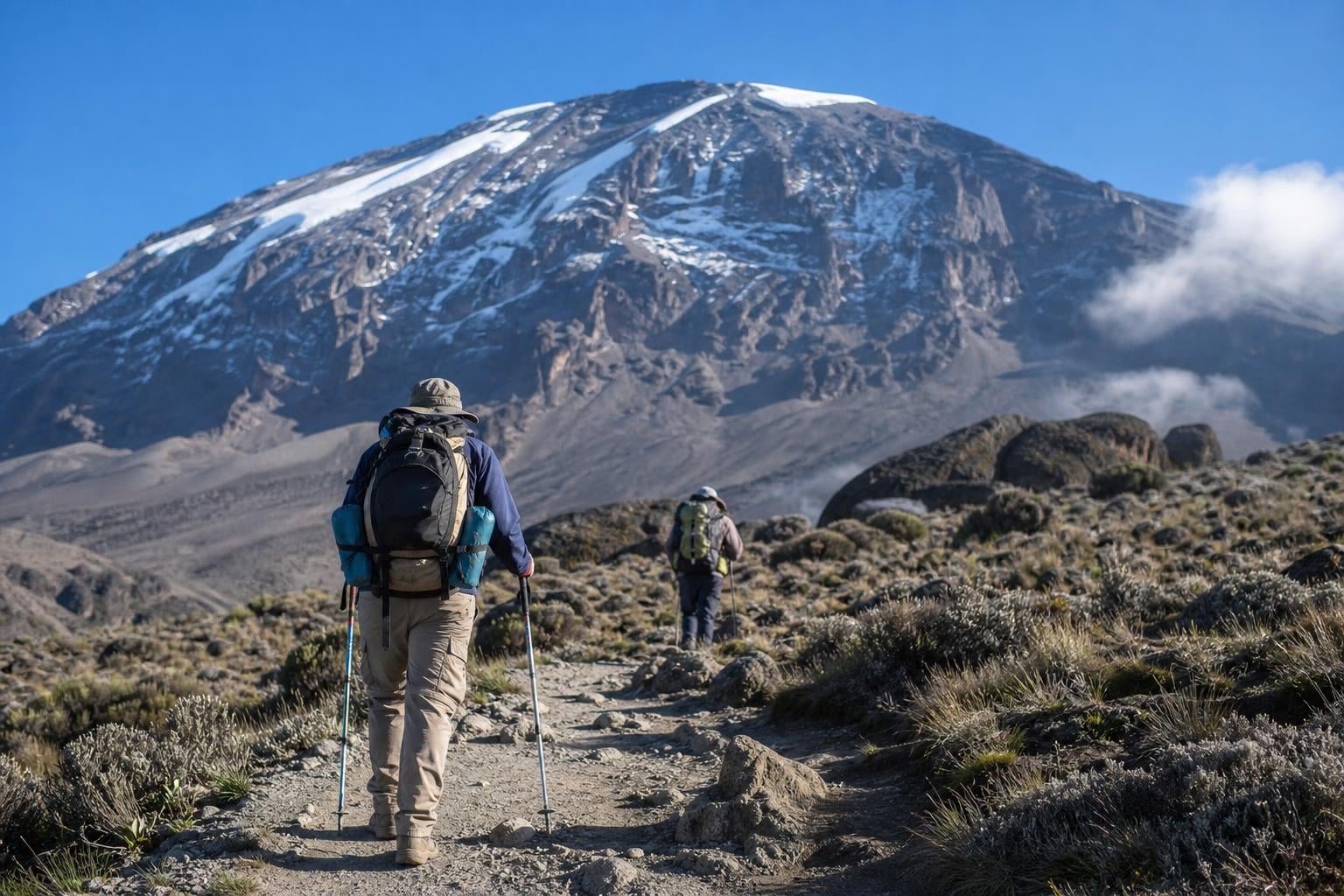
TL;DR
The best Kilimanjaro route for most first time climbers is the 8 day Lemosho route, which balances acclimatization time, scenery, and summit preparation. If you have 9 days and want the quietest, most gradual option, choose the Northern Circuit. For fit climbers with 7 days and a tighter budget, the Machame route is the best value. The most scenic route depends on what you want to see, but Lemosho and Machame both cross the most climate zones. The route name alone does not determine your outcome. The number of days on the mountain matters more than any marketing label.
How to Choose the Right Route for Your Climb
Choosing the best Kilimanjaro route is one of the highest stakes decisions in adventure travel. You are about to spend several thousand dollars, take a week or more off work, and fly to Tanzania to attempt Africa’s highest peak at 5,895 meters. The route you pick will shape your acclimatization, your comfort, your scenery, and your odds of standing on Uhuru Peak.
Most people start by Googling route names and reading conflicting advice. This guide cuts through that confusion. It gives you a direct recommendation, compares every major route honestly, explains the altitude and trail terms you will encounter during planning, covers the best time to climb, identifies the most scenic and most challenging routes, and lays out what to ask an operator before you book.
Ready to explore specific itinerary details and costs? See the full Lemosho route guide for day by day breakdowns.
The Best Kilimanjaro Route for Most Climbers: Quick Answer
The best Kilimanjaro route for most first time climbers is the 8 day Lemosho route. It offers strong acclimatization, varied scenery across multiple climate zones, quieter early trail days, and enough time to prepare for summit night.
Here is how the top routes compare at a glance:
- 8 day Lemosho is the best overall route for most people.
- 9 day Northern Circuit is the best route for maximum acclimatization and quiet trails.
- 7 day Machame is the best value route for fit, time limited climbers.
- 6 day Marangu is the best route only if hut accommodation is your deciding factor.
- 7 day Rongai is the best choice for a quieter, drier northern approach.
- Umbwe and Shira are not recommended for most first timers.
Do not choose a route based only on price or a nickname like “Coca Cola Route” or “Whiskey Route.” A 2022 study of 1,237 recreational Kilimanjaro hikers found that climbing in more days predicted summit success, and that many hikers kept ascending despite worsening symptoms. The number of days on the mountain is the single most important variable in your route decision.
For a side by side breakdown of all routes with pricing, explore the full Kilimanjaro route comparison.
What “Best Route” Actually Means on Kilimanjaro
There is no universal best Kilimanjaro route. There is a best route for your time, budget, altitude history, tolerance for crowds, and sleeping preference. The mistake most people make is comparing route names as if “Lemosho” and “Machame” are fixed products. They are not. A 6 day Lemosho and an 8 day Lemosho are meaningfully different climbs.
A useful framework for thinking through your choice is the SCORE model:
- S, Summit odds: How many days does the itinerary give you? How gradual is the sleeping altitude gain?
- C, Crowds: Do you want a social trail or a remote, quiet experience?
- O, Overnight style: Camping in tents or sleeping in mountain huts?
- R, Route character and risk: How steep is the daily hiking? How long is summit night? What are the rescue logistics?
- E, Expense and time: Longer, more remote routes cost more because of extra park fees, crew days, and food.
Why acclimatization drives everything
Kilimanjaro is non technical, meaning you do not need ropes or ice axes. But altitude is the real challenge, and most route choice mistakes are altitude management mistakes. Understanding this is essential to picking the best Kilimanjaro route for your situation.
The CDC’s travel guidance states that above 3,000 meters, sleeping elevation should increase by no more than about 500 meters per day, with an acclimatization day added for every 1,000 meters gained. The CDC also states plainly that physical fitness does not affect altitude illness risk. Susceptibility is partly genetic, and there is no simple screening test.
That finding is important. A very fit person can fail on a short, rushed route. A slower, less fit climber can succeed on a longer itinerary that gives the body time to adjust. For a deeper look at altitude terms like AMS, HACE, and HAPE, see this Kilimanjaro safety glossary.
The research backs this up
A 2009 study of trekkers on the Marangu route found that 77% developed acute mountain sickness and only 61% summited. A 2016 study of a 6 day Rongai ascent with 175 participants showed better results (52.6% AMS, 88% summit success) but still high illness rates. The pattern is consistent: faster ascents produce more altitude sickness and lower summit rates.
Practitioners on Reddit reinforce this. One climber who failed on a 5 day route despite being fit and having previously summited Mt Kenya wrote that their first lesson was “don’t take the shortest route.” They concluded that beginners should consider 7 to 9 days because acclimatization is everything.
Summit Success Rate by Route
One of the most searched questions about Kilimanjaro is which route gives you the best chance of reaching Uhuru Peak. The answer is straightforward: longer itineraries produce higher summit rates, regardless of route name. But the differences between routes are real and worth understanding.
What the data actually shows
Operator reported summit success rates should be treated with skepticism. They are self reported, not independently audited, and companies define “success” differently. Some count Stella Point (5,756 m) as a summit. Others only count Uhuru Peak (5,895 m). Some exclude clients who turned back early due to illness, which inflates the numbers.
The peer reviewed pattern is more reliable. The 2009 Marangu study showed a 61% summit rate on a fast itinerary. The 2016 Rongai study showed 88% on a 6 day ascent. Operators commonly report success rates of 85% to 95% on 8 day Lemosho and 9 day Northern Circuit itineraries, and around 75% to 85% on 7 day Machame.
For a full statistical breakdown, see the detailed analysis of Kilimanjaro success rates by route and number of days.
Route by route summit success estimates
| Route | Typical Duration | Estimated Summit Success Range |
|---|---|---|
| Northern Circuit | 9 days | 90% to 95% |
| Lemosho | 8 days | 85% to 95% |
| Machame | 7 days | 75% to 85% |
| Rongai | 7 days | 80% to 85% |
| Marangu | 6 days | 60% to 70% |
| Marangu | 5 days | 50% to 60% |
| Umbwe | 6 to 7 days | 65% to 75% |
These ranges come from aggregated operator data and published studies. Your individual outcome depends on your body’s altitude response, your operator’s pacing strategy, weather conditions, and whether the itinerary genuinely follows a “climb high, sleep low” profile.
Why the same route can have wildly different success rates
A 7 day Machame with a reputable operator who monitors pulse oximetry twice daily, enforces rest days, and maintains a strong guide ratio will outperform a budget 7 day Machame where the crew pushes through on a rigid schedule. The route name is the starting point, not the whole picture. Practitioners on Reddit consistently warn against comparing success rates across operators at face value, noting that the quality of the guide team matters as much as the route selection.
Route Distance and Length: How Far You Actually Walk
Most Kilimanjaro planning content focuses on altitude and days, which makes sense. But the total distance you cover and the daily mileage breakdown also affect your experience, especially if you are training and want to know what your legs are in for.
Total distance by route
| Route | Typical Duration | Approximate Total Distance |
|---|---|---|
| Marangu | 5 to 6 days | 64 km (40 mi) |
| Rongai | 7 days | 73 km (45 mi) |
| Machame | 7 days | 62 km (38 mi) |
| Umbwe | 6 to 7 days | 53 km (33 mi) |
| Lemosho | 8 days | 70 km (43 mi) |
| Northern Circuit | 9 days | 90 km (56 mi) |
These distances are approximate and vary slightly depending on the specific itinerary variant your operator uses. The descent route (usually Mweka for southern routes) is included in the total.
What distance means in practice
The Northern Circuit covers the most ground at roughly 90 km, but spread across 9 days that averages about 10 km per day. Umbwe covers the least distance but gains altitude the fastest, so the shorter mileage is deceptive. Machame packs significant elevation change into its 62 km, with steeper daily profiles than Lemosho despite covering less total ground.
Daily hiking time matters more than raw distance. Most Kilimanjaro days involve 5 to 8 hours of walking. Summit night is the exception: climbers typically hike 12 to 16 hours total, ascending through the night and descending the same day. On Machame and Lemosho, the summit night push from Barafu Camp covers roughly 5 km and 1,200 meters of elevation gain to Uhuru Peak, followed by a long descent.
One detail that catches people off guard is that Rongai and Marangu climbers who reach the crater rim at Gilman’s Point face an additional 2 km walk along the rim to Uhuru Peak. That extra distance, at 5,700+ meters in thin air, adds roughly two hours and is physically and mentally draining.
Machame vs Marangu: The Two Most Popular Routes Compared
This is the comparison that dominates Kilimanjaro forums, and for good reason. Machame and Marangu are the two highest traffic routes on the mountain. They attract different types of climbers and offer genuinely different experiences.
The fundamental differences
Marangu is the only route with hut accommodation. Climbers sleep in communal dormitory style shelters at three fixed camps (Mandara, Horombo, Kibo). You carry less gear because sleeping pads and tents are unnecessary. The trail is the gentlest gradient on the mountain, and it ascends and descends on the same path.
Machame is a camping route with steeper, more varied terrain. It includes the Barranco Wall scramble, passes through all five climate zones, and descends via the Mweka route rather than retracing its steps. The scenery is more dramatic, and the “climb high, sleep low” profile around Lava Tower is one of the best acclimatization tools on the mountain.
Acclimatization and summit odds
This is where the comparison gets decisive. Standard Marangu is offered in 5 or 6 days. Standard Machame is 6 or 7 days. The difference in acclimatization time is significant.
On a 5 day Marangu itinerary, climbers sleep at roughly 2,700 m on night one, 3,700 m on night two, and 4,700 m on night three before attempting the summit. That is a 2,000 meter sleeping altitude gain in three nights, far exceeding CDC recommendations. The 6 day version adds an extra night at Horombo (3,700 m), which helps but still produces high AMS rates.
The 7 day Machame itinerary handles altitude better. Climbers ascend to Lava Tower at 4,600 m during the day, then descend to sleep at Barranco Camp around 3,900 m. That intentional altitude exposure followed by descent is the “climb high, sleep low” principle in action. For a detailed itinerary and pricing, see the Machame route guide.
Scenery
Machame wins clearly. The southern corridor views (Shira Plateau, Barranco Valley, glacier panoramas) are spectacular. The route crosses all five climate zones with distinct visual transitions each day. Marangu’s scenery is pleasant, particularly in the rainforest and moorland sections, but the same trail up and down means you see the same views twice. For full details on the Marangu experience, see the Marangu route guide.
Cost
Marangu is typically the least expensive route because of the shorter duration (fewer park fee days, fewer crew days). A 5 day Marangu climb can cost $500 to $800 less per person than a 7 day Machame. But the cost savings come at the expense of summit odds and overall experience quality.
Crowds and social dynamics
Both routes are busy during peak season. Marangu’s hut system means you share sleeping quarters with strangers, which some climbers enjoy and others find disruptive (snoring is a common complaint in forum discussions). Machame’s campsites can be crowded, but you have your own tent.
Which one to pick
For most first time climbers, 7 day Machame is the stronger choice. It offers better acclimatization, more dramatic scenery, and a more complete mountain experience. Marangu makes sense only if hut accommodation is a genuine priority, and even then, the 6 day version is the minimum acceptable itinerary.
Practitioners on Reddit who have done both routes almost universally recommend Machame over Marangu for first timers. The common refrain: Marangu’s “easy” reputation is misleading because the altitude challenge is identical, but you get less time to prepare for it.
Kilimanjaro Route Comparison Table
| Route | Best for | Recommended days | Accommodation | Acclimatization | Crowds | Main trade off |
|---|---|---|---|---|---|---|
| Lemosho | Best overall for most climbers | 8 | Camping | Excellent | Moderate (quiet early) | Costs more than Machame |
| Northern Circuit | Best acclimatization and quiet | 9 | Camping | Excellent | Low | Longest and most expensive |
| Machame | Best value serious route | 7 | Camping | Good to excellent | High | Busier, steeper, more demanding |
| Marangu | Hut preference | 6 | Huts | Fair to moderate | Moderate to high | Same trail up and down; 5 day version too rushed |
| Rongai | Quieter, drier northern side | 7 | Camping | Good | Low to moderate | Summit approach can feel longer |
| Shira | Experienced altitude hikers | 7 to 8 | Camping | Mixed (high start) | Low to moderate | Poor first day altitude profile |
| Umbwe | Experienced trekkers wanting steep challenge | 6 to 7 | Camping | Poor to fair | Low early | Too steep and rushed for most beginners |
Best Overall Route: 8 Day Lemosho
The 8 day Lemosho route is the best Kilimanjaro route for most first time climbers who can afford the time and cost. It starts on the western side of the mountain, where the early trail days pass through lush rainforest with fewer hikers than Machame or Marangu. After merging with the southern route corridor, Lemosho climbers get key experiences including Lava Tower (a natural acclimatization point at roughly 4,600 m), Barranco Wall, and the Barafu summit approach.
Why 8 days beats 6 or 7 on Lemosho
Lemosho is sometimes offered in 6 or 7 days, but the 8 day version is stronger for two reasons. First, the extra day provides more time for the body to adjust to altitude. Second, it often means a shorter, easier day before summit night, which matters because summit attempts typically begin around midnight.
An Overland Safaris guide explained on LinkedIn that on the 8 day Lemosho itinerary, splitting the Barranco to Barafu section over two days gives climbers a rest day before the midnight summit push. That extra day is not just about acclimatization; it is about arriving at Barafu rested rather than exhausted.
Community discussions on Reddit back this up. One climber who completed 8 day Lemosho reported that shorter route climbers looked fit but were “absolute zombies” on summit night. The consensus: if you can do 8 days, do 8 days.
Lemosho trade offs
Lemosho is not perfectly quiet for the entire climb. After the first two days, it joins the same trail corridor as Machame, so campsites can be busy during peak season. It is also typically more expensive than Machame because of the extra day’s park fees, crew costs, and food. For a complete breakdown of what those costs look like, see the Kilimanjaro climb cost guide.
Who should choose Lemosho
First time climbers with 8 days available, adequate budget, and no strong preference for hut accommodation. It is the best Kilimanjaro route if you want the strongest balance of scenery, acclimatization, and summit odds.
Best for Acclimatization and Quiet: 9 Day Northern Circuit
The Northern Circuit is the longest mainstream Kilimanjaro route, typically done in 9 days. It starts from the west (often sharing Lemosho’s early trail) and circles the northern slopes of the mountain before approaching the summit. The result is lower daily altitude gain, more time on the mountain, and significantly fewer hikers on the trail.
Why Northern Circuit works
The extra days mean a more gradual ascent profile, which aligns with the Wilderness Medical Society’s recommendation to limit sleeping elevation gain above 3,000 meters. The northern side of the mountain also sees fewer climbers, so the trail feels genuinely remote.
In a Reddit thread comparing Northern Circuit and Machame, one commenter described it as a 9 day “360 degree” experience with varied views and quiet paths. But another pushed back, arguing that Northern Circuit’s main benefit is fewer crowds and that the views are not necessarily better than what Lemosho or Machame offer. The takeaway: Northern Circuit is best for time rich climbers who value gradual acclimatization and solitude, but it is not a magic guarantee of summit success.
Northern Circuit trade offs
It costs more because of the additional days. Nine nights in a tent is a bigger commitment. And depending on the operator and itinerary design, rescue logistics on the less traveled northern side may differ from the well established southern corridor. Always ask your operator about emergency protocols for this route specifically.
Who should choose Northern Circuit
Climbers who have 9 days, a flexible budget, and who care more about quiet trails and maximum altitude adjustment than getting up and down quickly. For those prioritizing acclimatization above all else, this is arguably the best Kilimanjaro route available.
Best Value Route: 7 Day Machame
The Machame route, sometimes called the Whiskey Route, is Kilimanjaro’s most popular climbing route. It is scenic, physically demanding, and usually less expensive than Lemosho or Northern Circuit because it takes one fewer day.
Machame’s strength lies in its “climb high, sleep low” profile. Climbers ascend to Lava Tower (around 4,600 m) during the day, then descend to sleep at Barranco Camp (around 3,900 m). This exposure then descent cycle helps the body produce more red blood cells before the real push begins.
7 days, not 6
Some operators offer Machame in 6 days. That itinerary compresses an already demanding route and eliminates the rest day before summit night. Seven days is the strong recommendation. Kilimanjaro guide practitioners on LinkedIn and multiple YouTube educators steer beginners away from the 6 day version, naming the intense elevation gain before summit as the core issue.
Machame trade offs
It is the busiest route on the mountain. During peak season (July through September, and late December through February), campsites can be full, trails can feel social, and summit night often features a long line of headlamps. One Reddit thread described the Uhuru Peak sign area as having 20 plus people waiting to rotate through photos, though nothing close to Everest style queues.
The trail is also steeper than Marangu or Rongai, with sections like Barranco Wall requiring hands on scrambling.
Who should choose Machame
Fit climbers who want the best value on a serious, scenic route and can handle crowds. Group departures are more widely available on Machame, which also helps with cost. TripAdvisor forum posts show that many climbers end up on Machame because group availability influenced the decision, even when they originally preferred Lemosho. For guidance on group versus private trip dynamics, the article on optimal guide ratios covers what to expect.
Most Scenic Kilimanjaro Route
Scenery is subjective, but some routes objectively cross more terrain variety than others. Kilimanjaro passes through five distinct climate zones: cultivated farmland, rainforest, heath and moorland, alpine desert, and arctic summit. The routes that traverse the most zones, and offer the most varied vantage points, deliver the richest visual experience.
Lemosho and Machame lead on scenery
Both the 8 day Lemosho and 7 day Machame routes pass through all five climate zones. They share the spectacular southern corridor, which includes the Shira Plateau, Lava Tower, Barranco Valley, and the dramatic Barranco Wall scramble with views down to the cloud line. The key difference is Lemosho’s quieter western rainforest start, where the canopy is dense with Colobus monkeys and birdlife. Machame’s rainforest section is similarly beautiful but busier.
Practitioners on YouTube consistently highlight two visual moments that define the southern corridor: the sunrise from Barranco Camp looking up at the Breach Wall, and the moonlit glacier views during the midnight summit push. Both Lemosho and Machame deliver these.
Northern Circuit for panoramic variety
The 9 day Northern Circuit circumnavigates nearly the entire mountain. Climbers see the northern ice fields from angles that southern route trekkers never encounter. The north side also feels emptier, which changes the character of the scenery. Watching Kibo’s glaciers shift from foreground to background over several days, without crowds, creates a different kind of visual experience.
Rongai for a different perspective
Rongai approaches from the Kenyan border side and offers drier, more open landscapes early on, with views toward Kenya’s plains. It lacks the lush rainforest start of Lemosho or Machame, so it ranks lower for overall zone variety. But the remoteness has its own appeal.
The bottom line on scenery
If scenic variety is the top priority, choose 8 day Lemosho. It combines the quiet western rainforest with the full southern corridor experience. Machame is a close second. Northern Circuit wins on panoramic breadth but trades rainforest immersion for the longer northern traverse.
Best Time to Climb Kilimanjaro
Route choice and timing work together. The best Kilimanjaro route on the wrong month can mean rain soaked trails, poor visibility, and a miserable summit night. The best months for climbing Kilimanjaro fall into two dry season windows.
The two dry seasons
Tanzania’s primary dry season runs from late June through mid October. This is peak climbing season. Skies are typically clear, trails are drier, and summit night temperatures, while brutal, come with better visibility and calmer winds. July through September sees the highest traffic on popular routes like Machame.
The secondary dry season runs from late December through early March. It is slightly warmer, and the southern slopes can see occasional afternoon showers, but conditions are generally good for climbing. January and February are popular with climbers who want to avoid the July/August crowds.
TANAPA’s official Kilimanjaro brochure confirms that the mountain’s dry seasons run roughly June through September and December through early March.
Months to approach with caution
The long rains (March through May) bring heavy precipitation, especially on southern routes. April is the wettest month. Trails turn muddy, cloud cover blocks views, and summit success rates drop. The short rains (late October through November) are less intense but still reduce visibility and comfort.
How route choice interacts with season
If climbing during the wetter shoulder months (November or early April), Rongai’s northern approach stays drier because the northern slopes receive less rainfall. Southern routes like Machame and Lemosho get more moisture during these windows.
During peak dry season, route choice matters less for weather and more for crowds. Machame and Marangu will be busiest in July and August. Lemosho and Northern Circuit remain comparatively quieter even during peak months.
For a detailed month by month breakdown of weather, temperatures by altitude zone, and crowd patterns, see the full best time to climb Kilimanjaro guide.
How to Train for Your Kilimanjaro Route
Picking the best Kilimanjaro route only solves half the equation. Physical preparation determines how much you enjoy the experience, even if fitness alone cannot prevent altitude sickness.
What training actually needs to accomplish
Training for Kilimanjaro is not about building peak cardio capacity. It is about preparing your legs and lungs for 5 to 8 hours of daily hiking on uneven terrain, often at a slow pace, while carrying a daypack. The goal is muscular endurance and joint resilience, not speed.
Practitioners on Reddit consistently report that leg strength matters more than running fitness. One climber who completed 8 day Lemosho wrote that stair climbing with a weighted pack was the single most useful exercise, because it replicates the sustained uphill effort and the knee strain of descending. Another noted that long weekend hikes (4 to 6 hours with elevation gain) built the stamina that treadmill sessions did not.
A practical training timeline
Most guides and operators suggest starting structured training at least 8 to 12 weeks before your climb date. A reasonable plan includes:
- Hiking with elevation twice a week, building to 4 to 6 hour sessions in the final month
- Stair climbing or step machine work with a 5 to 8 kg daypack
- Core and leg strength exercises (squats, lunges, calf raises) twice weekly
- At least one back to back hiking weekend to simulate consecutive days on the mountain
The CDC notes that physical fitness does not reduce altitude illness risk, but arriving in strong hiking shape means your body can focus its energy on acclimatizing rather than recovering from muscular exhaustion. For structured training plans, see the Kilimanjaro training glossary.
Route specific physical demands
Machame and Umbwe require more upper body confidence because of the Barranco Wall scramble and steeper trail sections. Lemosho and Northern Circuit are more about sustained endurance over longer distances. Marangu’s gentler gradient means less joint stress but does not reduce altitude demands.
The bottom line: train your legs, train for consecutive days, and do not assume your gym fitness translates directly to mountain readiness.
What to Pack for Different Kilimanjaro Routes
Gear choices shift slightly depending on which route you climb, though most of the packing list stays constant across all options.
The universal essentials
Every Kilimanjaro climber needs proper layering for temperatures that range from 25°C at the gate to minus 15°C or colder on summit night. A good base layer, insulating mid layer, and waterproof shell are non negotiable. Broken in hiking boots with ankle support, a quality headlamp (summit night starts around midnight), and a sleeping bag rated to at least minus 10°C round out the critical items.
Route specific gear considerations
Marangu climbers sleep in huts, so a lighter sleeping bag may suffice (though huts can still be cold at Kibo Hut, 4,703 m). You do not need a sleeping pad, which saves weight and pack space.
Camping routes (Lemosho, Machame, Northern Circuit, Rongai, Umbwe) require a sleeping pad for insulation from the ground. Most operators provide tents, but confirm this before packing your own.
Longer routes like Northern Circuit (9 days) mean more time in the elements, so an extra pair of hiking socks and a second base layer become worthwhile. Rain protection matters more on southern routes during shoulder seasons.
Summit night across all routes demands the warmest kit you have: down jacket, balaclava, insulated gloves with liners, and hand warmers. The wind chill on the crater rim regularly pushes effective temperatures below minus 20°C.
For a full checklist organized by category, see the Kilimanjaro packing list.
Climbing Kilimanjaro Solo vs. in a Group
Whether you climb solo (meaning with a private crew, not literally alone) or join a group departure affects cost, pace, and social dynamics on the mountain.
Solo (private) climbs
Tanzania requires all Kilimanjaro climbers to use a licensed guide, so “solo” really means booking a private trip with your own dedicated crew. The advantage is total control over pace, rest breaks, and itinerary flexibility. If you are slower or faster than average, a private climb adapts to you.
The trade off is cost. A private 8 day Lemosho climb typically costs more per person than a group departure on the same route because you are not splitting crew and logistics fees with other climbers. Practitioners on Reddit note that solo private climbs can feel quiet during meals and evenings, though many find this meditative rather than lonely. For a detailed look at rules and costs, see the guide on climbing Kilimanjaro solo.
Group departures
Joining a scheduled group departure (typically 4 to 8 climbers) brings the per person cost down and adds a social element. You will share campsites, meals, and the summit push with people at roughly your fitness level.
The trade off is pace. Group climbs move at the speed of the slowest member, and you have less say over rest breaks or hiking start times. During summit night, this can become a real factor if part of the group is struggling.
One practical consideration from forum discussions: if you are an experienced hiker who moves quickly, a slow group pace can actually help with acclimatization. Pole pole (slowly, slowly) is the mantra for a reason.
Most Challenging Kilimanjaro Route
Not every climber wants the gentlest path. Some experienced trekkers seek out steeper, more demanding routes deliberately. Kilimanjaro’s difficulty comes primarily from altitude, but trail steepness, daily elevation gain, and the psychological grind of certain ascent profiles add meaningful physical challenge.
Umbwe: the steepest mainstream route
Umbwe is the most challenging standard route on Kilimanjaro. It gains altitude rapidly through dense forest, with steep, direct trail sections that feel more like a proper mountain climb than a trek. Daily elevation gains on Umbwe are aggressive, and acclimatization opportunities are limited.
The route is short (typically 6 to 7 days) and quiet, which appeals to experienced altitude trekkers. But the steep profile creates a harsh trade off: your body gets less time to adjust, so AMS rates are higher and summit success rates are lower than on longer routes. One experienced climber on a forum described Umbwe as “the route that punishes overconfidence,” noting that the physical difficulty is real but the altitude penalty is the bigger risk.
For a deeper look at what Umbwe demands, see the Umbwe route guide.
Machame’s physical demands
Machame is not as steep as Umbwe, but it is the most physically demanding of the popular routes. The Barranco Wall scramble, the long summit night approach from Barafu, and the overall daily hiking hours make it a genuine workout. For fit climbers, this is a feature rather than a bug.
Western Breach: the hazardous variant
The Western Breach is a steep, rockfall prone route to the crater rim that experienced fatalities in 2006. It is not a separate trailhead route but a summit approach variant. Some operators still offer it, but many responsible companies (including Duma Explorer) do not ascend via the Western Breach for safety reasons. The added risk is unnecessary when safer summit approaches exist.
Shira’s altitude challenge
Shira is not steep in the traditional sense, but its high starting elevation (roughly 3,500 m) creates an immediate altitude challenge for climbers arriving from sea level. The first day on Shira can feel harder than the first day on Lemosho simply because your body has had zero time to adjust. Most operators now recommend Lemosho over Shira for this reason.
Who should consider a challenging route
Only climbers with documented high altitude experience (successful ascents above 4,500 m within the past year or two) and a realistic understanding that difficulty does not equal a better summit chance. If you want physical challenge with reasonable summit odds, 7 day Machame is the sweet spot. If you want the steepest trail and accept higher risk, Umbwe with a strong guide team is the option.
Best Hut Route: 6 Day Marangu
Marangu, nicknamed the Coca Cola Route, is the only major Kilimanjaro route with hut accommodation instead of camping. If sleeping in a hut matters to you, this is your only mainstream option.
But “hut route” is the beginning and end of Marangu’s advantage for most climbers. The huts are basic dormitory style shelters, often noisy and shared with other groups. The trail ascends and descends on the same path, so there is less scenic variety. And the standard 5 day version provides very little acclimatization time.
A 2009 study of Marangu trekkers found 77% developed acute mountain sickness. The 5 day itinerary simply does not give most bodies enough time to adjust to nearly 6,000 meters.
Marangu recommendations
Choose 6 days over 5 whenever possible. Ask your operator for the itinerary’s sleeping altitude profile. And understand that “easiest” is a misleading label. Marangu may have the gentlest terrain, but altitude does not care about trail gradient.
Who should choose Marangu
Climbers who strongly prefer hut sleeping over camping. Everyone else should consider Lemosho, Machame, or Northern Circuit.
Best Quiet and Drier Route: 7 Day Rongai
Rongai is the only main Kilimanjaro route approaching from the north. It starts near the Kenyan border, is quieter than southern routes, and tends to stay drier because the northern side receives less rainfall.
This makes Rongai a solid choice during wetter shoulder months (November, March, early April) when southern routes can be muddier and cloudier. For the full route breakdown, see the Rongai route guide.
Rongai trade offs
Rongai does not offer as strong a “climb high, sleep low” profile as Machame or Lemosho. The summit approach also reaches the crater rim at Gilman’s Point, which is on the opposite side from Uhuru Peak. That means the final walk along the crater rim to the actual summit can feel longer, adding roughly two extra hours compared to routes arriving via Stella Point.
Who should choose Rongai
Climbers who want fewer crowds, are climbing during wetter months, or prefer the northern side’s drier, more gradual terrain. Seven days is the recommended duration.
What to Eat on Kilimanjaro (and Why It Matters by Route)
Food on Kilimanjaro is surprisingly good when the operator takes it seriously, and it plays a real role in summit success. At altitude, appetite drops. Eating enough calories to fuel 5 to 8 hours of daily hiking becomes a deliberate effort rather than something that happens naturally.
How route length affects nutrition
On shorter routes (5 or 6 day itineraries), there is less margin for poor eating days. If you lose your appetite on day 2 and cannot eat much on day 3, you are heading into summit night with a caloric deficit. Longer routes like 8 day Lemosho or 9 day Northern Circuit give your body more time to adjust, meaning appetite tends to stabilize before the critical summit push.
What meals look like on the mountain
Most operators provide three hot meals per day plus snacks. Breakfasts typically include porridge, eggs, toast, and fruit. Lunches are packed or served at a midday stop (soup, sandwiches, sometimes pasta). Dinners are the largest meal: soup, a main course with rice or pasta and vegetables, and a dessert.
Practitioners on YouTube who have filmed their Kilimanjaro meals consistently note that the quality gap between budget and premium operators is most visible in the food. Watery porridge and plain rice on a budget trip versus fresh vegetables, varied proteins, and proper seasoning on a well run expedition. For details on what to expect, see the Kilimanjaro food guide.
Practical tips
Bring personal snack favorites (energy bars, dried fruit, electrolyte tablets) regardless of route. Hydration matters as much as food, with most guides recommending 3 to 4 liters of water daily at altitude. If you have dietary restrictions, communicate them to your operator well before arrival. Good mountain cooks can accommodate vegetarian, vegan, gluten free, and halal diets with advance notice.
Routes Most First Time Climbers Should Avoid
Not all routes or itinerary lengths are appropriate for beginners. Based on altitude research, operator consensus, and community experience, here are the options to reconsider.
5 day Marangu
Too little acclimatization time. The peer reviewed data shows high AMS rates and relatively low summit success on fast Marangu ascents.
6 day Machame
Compresses a physically demanding route and removes the rest day before summit night. Seven days is the recommendation from most experienced operators and guides.
6 day Lemosho
Possible but rushed. Lemosho’s advantage comes from gradual acclimatization, and cutting it to 6 days undermines the reason you chose it. Community discussions repeatedly warn against the 6 day version for first timers.
Umbwe
The steepest mainstream route with rapid altitude gain and poor acclimatization opportunities. It is a direct, punishing climb that experienced altitude trekkers sometimes enjoy, but it is a poor choice for anyone without a track record at high elevation.
Shira
Similar to Lemosho after the early section, but starts at roughly 3,500 meters instead of lower. That high starting point creates a sudden altitude spike for climbers arriving from sea level. Most operators now recommend Lemosho instead of Shira for exactly this reason.
Western Breach
A more hazardous variant that experienced rockfall fatalities in 2006. It is not necessary for a strong Kilimanjaro experience. There are safer ways to reach the summit, and many responsible operators do not ascend via the Western Breach.
Glossary of Kilimanjaro Route Terms
Acclimatization
The body’s gradual adjustment to lower oxygen levels at higher altitude. On Kilimanjaro, acclimatization matters more than cardio fitness because the summit sits at 5,895 meters. The CDC confirms that physical fitness does not prevent altitude illness.
AMS (Acute Mountain Sickness)
The most common form of altitude illness. Symptoms include headache, nausea, dizziness, fatigue, and poor sleep. A 2016 Kilimanjaro study found AMS in 52.6% of participants on a 6 day ascent, even with a longer than minimum itinerary.
HACE (High Altitude Cerebral Edema)
A life threatening condition involving brain swelling at altitude. Requires immediate descent and medical treatment.
HAPE (High Altitude Pulmonary Edema)
A life threatening condition involving fluid buildup in the lungs. Like HACE, it demands urgent descent.
Climb High, Sleep Low
A route design principle where climbers hike to a higher point during the day, then descend to sleep at a lower camp. Machame and Lemosho use this effectively around Lava Tower and Barranco Camp. It is one of the strongest acclimatization tools available in itinerary design.
Uhuru Peak
The highest point on Kilimanjaro and the highest point in Africa at 5,895 meters. It sits on the rim of the Kibo crater. UNESCO describes Kilimanjaro as the largest free standing volcanic mass in the world.
Stella Point
A crater rim point reached by climbers approaching from the south via Machame, Lemosho, or similar routes. It is less than an hour’s walk from Uhuru Peak.
Gilman’s Point
A crater rim point reached by Marangu and Rongai approaches. It sits on the opposite side of the crater from Uhuru Peak, meaning climbers face an additional walk of roughly two hours along the rim to reach the true summit.
Lava Tower
A high altitude rock formation at roughly 4,600 meters, used as an acclimatization point on Machame and Lemosho itineraries. Climbers hike up to Lava Tower during the day, then descend to sleep at Barranco Camp.
Barranco Wall
A famous scramble section on the southern route corridor. It looks intimidating from camp but is usually more manageable than it appears for guided trekkers. Hands are needed in places, but it is not a technical rock climb.
Barafu Camp
The high camp (roughly 4,600 m) where many summit attempts begin around midnight. Climbers on Machame, Lemosho, and Northern Circuit typically launch from Barafu.
Mweka Route
A descent only route used after summiting from multiple routes. It drops steeply through moorland and forest back to the park gate.
Summit Success Rate
The percentage of climbers reaching Uhuru Peak. Be cautious with operator published success rates. They are often self reported, not independently verified, and calculated differently across companies. The most reliable pattern from peer reviewed research: more days and slower ascent profiles consistently produce higher summit rates.
KPAP (Kilimanjaro Porters Assistance Project)
A monitoring program under KRTO (Kilimanjaro Responsible Tourism Organization) that tracks porter welfare including wages, tipping, load weight, food, and shelter. For more on what this means for your climb, see this porter welfare guide.
Pole Pole
Swahili for “slowly, slowly.” You will hear this constantly on the mountain. It is not just a saying; it is the pacing strategy that supports acclimatization.
Decision Tree: Which Route Should You Choose?
Use this to narrow your options quickly:
Do you have 9 days on the mountain and budget flexibility? Choose Northern Circuit for the quietest, most gradual experience.
Do you have 8 days and want the best all around choice? Choose Lemosho. It is the best Kilimanjaro route for the largest number of climbers.
Do you have 7 days and want value plus scenery? Choose Machame. It is the strongest 7 day option.
Do you require hut accommodation? Choose Marangu, but book 6 days over 5.
Are you climbing during wetter months or want the northern side? Consider Rongai, preferably 7 days.
Are you highly experienced at altitude and want a steep challenge? Consider Umbwe with a strong guide team and realistic expectations.
Are you drawn to Shira because it sounds remote? Choose Lemosho instead, unless you have recent high altitude experience. Lemosho starts lower and gives better acclimatization.
Is scenery your top priority? Lemosho and Machame cross the most climate zones. Northern Circuit offers the widest panoramic variety.
Are you climbing in the rainy season? Rongai’s northern approach stays drier than southern routes during shoulder months.
Are you planning a honeymoon or celebration trip? Many climbers combine Kilimanjaro with safari or Zanzibar. The honeymoon after Kilimanjaro guide covers how to structure both halves of the trip.
What to Ask Your Kilimanjaro Operator Before Booking
Route choice is not just geography. A well paced 7 day Machame climb with health monitoring and strong summit support is not the same as a rushed budget itinerary on the same trail. Selecting the best Kilimanjaro route only gets you halfway; the operator you book with determines the rest. Here are the questions that separate good operators from mediocre ones:
- How many days are on the mountain? Not just “how many days is the trip,” but actual trekking days on the mountain.
- What is the sleeping elevation each night? This reveals the ascent profile better than any brochure.
- Does the route include a climb high, sleep low day? Routes passing Lava Tower should have this built in.
- What is the guide to climber ratio on summit night? This is when climbers need the most individual attention.
- Are guides trained in wilderness medicine? Look for Wilderness First Responder or equivalent certification.
- Is emergency oxygen carried? And are pulse oximeter checks part of the daily health monitoring? For more on this topic, see the guide on Kilimanjaro oxygen use.
- What is the descent and evacuation plan if symptoms worsen?
- Is the company a KPAP partner? This ensures independently monitored porter welfare.
- Are park fees, rescue fees, meals, tents, guides, porters, and transfers included?
For guidance on evaluating mountain crews specifically, see how to choose the best guide.
Duma Explorer (operating locally as Alika Africa) offers Kilimanjaro climbs across Lemosho, Machame, Northern Circuit, Rongai, and Marangu. The company is a KPAP founding partner, employs guides with Wilderness First Responder certification and 15 plus years of Kilimanjaro experience, provides a 1:1 guide to climber ratio on summit day, and does not ascend via the Western Breach for safety reasons.
Adding Safari or Zanzibar After Kilimanjaro
Many climbers combine Kilimanjaro with a Tanzanian safari or beach time in Zanzibar. Community discussions on Reddit show that route and safari planning often happen in the same conversation, with climbers asking for 7 day Machame or 8 day Lemosho recommendations alongside 3 to 5 day safari suggestions.
The standard advice: climb first, safari second. Your legs and lungs will thank you for not starting the mountain after days of bumpy game drives. A 3 to 5 day northern circuit safari through Tarangire, Ngorongoro, and the Serengeti fits naturally after the descent. For help structuring that, see the Tanzania safari itinerary guide.
Also make sure your travel insurance covers evacuation from altitude, not just standard medical costs.
Frequently Asked Questions
What is the best Kilimanjaro route overall?
The 8 day Lemosho route is the best Kilimanjaro route for most first time climbers. It balances acclimatization, scenery, and summit preparation. The 9 day Northern Circuit is better if maximum acclimatization and quiet trails are the priority. The 7 day Machame is the best value option for fit climbers with less time.
Which Kilimanjaro route has the highest summit success rate?
Longer routes with more acclimatization days consistently perform better. Operators generally rank Northern Circuit and 8 day Lemosho highest (90% to 95% range), but exact success rates vary by operator, itinerary design, season, and how “success” is defined. Peer reviewed studies confirm the pattern: more gradual ascent profiles produce higher summit rates and lower altitude sickness.
Which is the most scenic Kilimanjaro route?
Lemosho and Machame both cross all five of Kilimanjaro’s climate zones and share the spectacular southern corridor (Lava Tower, Barranco Wall, glacier views on summit night). Lemosho edges ahead because its quieter western rainforest start feels more immersive. Northern Circuit wins for panoramic breadth, circling nearly the entire mountain over 9 days.
What is the best time to climb Kilimanjaro?
The two best windows are late June through mid October (primary dry season, clearest skies, highest traffic) and late December through early March (secondary dry season, slightly warmer, fewer climbers). Avoid the long rains from March through May, especially April. For shoulder months, Rongai’s northern approach stays drier.
What is the most challenging Kilimanjaro route?
Umbwe is the steepest and most physically demanding route. It gains altitude rapidly, offers limited acclimatization, and has lower summit success rates. Machame is the most challenging of the popular routes, with steeper trail sections and the Barranco Wall scramble. The Western Breach is the most hazardous summit approach and is avoided by many responsible operators.
Is Lemosho better than Machame?
For most first timers, yes, if you can afford 8 days. Lemosho gives quieter early trail days and usually more acclimatization time. Machame is the better value choice and a strong 7 day option for fit climbers who don’t mind busier trails.
Is Machame or Marangu better for beginners?
Machame, at 7 days, is better for most beginners despite its steeper terrain. The “climb high, sleep low” profile around Lava Tower provides stronger acclimatization than Marangu’s direct ascent. Marangu’s hut accommodation is its only clear advantage. Choose Marangu only if huts are a genuine priority, and always book the 6 day version over 5.
How far do you walk on Kilimanjaro?
Total distance varies by route: roughly 53 km on Umbwe, 62 km on Machame, 64 km on Marangu, 70 km on Lemosho, 73 km on Rongai, and 90 km on Northern Circuit. Daily hiking typically runs 5 to 8 hours, with summit night being the longest day at 12 to 16 hours total.
Is Marangu the easiest Kilimanjaro route?
Not in the way most people assume. Marangu has hut accommodation and gentler terrain, but shorter itineraries can make altitude harder. It is best for climbers who prefer huts, not necessarily best for summit odds.
Which Kilimanjaro route is least crowded?
Northern Circuit and Rongai are usually the quietest. Lemosho is quiet for the first two days but becomes busier after it joins the southern route corridor. Machame and Marangu are the most social routes.
How many days do I need to climb Kilimanjaro?
Most climbers should plan at least 7 days on the mountain. Eight or nine days is better for acclimatization. Both the CDC and the Wilderness Medical Society recommend gradual sleeping altitude gain above 3,000 meters, which 5 and 6 day itineraries often violate.
Can a fit person climb Kilimanjaro in 5 days?
Some can. But fitness does not prevent altitude sickness. The CDC states this clearly. A fit climber on a 5 day route can fail while a less fit climber on an 8 day route succeeds, because acclimatization and genetic susceptibility matter more than cardiovascular conditioning.
Which route should I avoid as a beginner?
Avoid 5 day Marangu, 6 day Machame, 6 day Lemosho, Umbwe, and Shira unless you have strong reasons and recent altitude experience. These itineraries either rush acclimatization, start too high, or gain elevation too steeply for most first time altitude hikers.
How much does it cost to climb Kilimanjaro?
Costs range from roughly $2,000 to $3,500 or more per person depending on route, duration, group size, and operator quality. Machame tends to be the least expensive serious option. Northern Circuit and longer Lemosho itineraries cost more due to extra park fees and crew days. For a full breakdown, see the Kilimanjaro climb cost guide.
How much should I tip my Kilimanjaro crew?
Tipping is customary and expected. Guidelines vary, but a combined tip of $200 to $300 per climber for the full crew (guides, porters, cook) is a common range. See the Kilimanjaro tipping guide for specific breakdowns by crew role.
Choosing the best Kilimanjaro route is the foundation of a successful climb. For a complete look at all seven routes with itinerary maps and pricing, explore the full Kilimanjaro route comparison.
Leave a Reply