Author: rankaiexpert

  • Tanzania Safari Locations: Guide to Parks & Circuits 2026

    Tanzania Safari Locations: Guide to Parks & Circuits 2026

    TL;DR

    Tanzania has more than 22 national parks and reserves spread across three main safari circuits: Northern, Southern, and Western. The Northern Circuit (Serengeti, Ngorongoro, Tarangire, Lake Manyara) draws the most visitors, but the Southern and Western circuits offer larger parks, fewer crowds, and unique experiences like boat safaris and chimpanzee trekking. Where you go depends on what you want to see, how much time you have, and whether you prioritize the Great Migration, Big Five density, or genuine wilderness solitude.


    Tanzania protects roughly 44% of its land as wildlife areas. That’s a staggering amount of wilderness, and it means the list of Tanzania safari locations stretches far beyond the Serengeti and Ngorongoro Crater that dominate most travel brochures. There are remote western parks where fewer than 2,000 international visitors show up per year, a coastal park where elephants wander within sight of the Indian Ocean, and a southern reserve larger than Belgium that receives less than 1% of the country’s tourists.

    This guide covers every major safari destination in Tanzania, organized by circuit. Each entry explains what makes the location distinct, what wildlife to expect, how to get there, and when to visit. Whether you’re comparing parks for a first trip or building a multi-stop itinerary, every section is designed to help you make decisions faster.

    Planning your route? Our East Africa safari itineraries guide breaks down the most popular multi-park routes with timing and cost context.

    Quick Answer: Which Tanzania Safari Location Is Best?

    If you’re planning your first safari, the Northern Circuit is the best overall choice because it combines the Serengeti, Ngorongoro Crater, Tarangire, and Lake Manyara into one easy itinerary with the highest wildlife density.

    Choose a different circuit if your priorities differ:

    If you want…

    Go here

    First safari

    Northern Circuit

    Great Migration

    Serengeti

    Big Five in one day

    Ngorongoro Crater

    Elephant herds

    Tarangire

    Boat safaris

    Nyerere

    Wild dogs

    Ruaha

    Chimpanzees

    Mahale or Gombe

    Very few tourists

    Katavi

    Safari + beach

    Saadani + Zanzibar

    Budget safari

    Mikumi

    Luxury fly-in safari

    Southern Circuit


    Safari Circuits Explained

    Tanzania’s safari locations are organized into three geographic circuits. Think of these as regional clusters. Parks within the same circuit sit close enough together to combine into a single trip without exhausting travel days.

    Northern Safari Circuit

    The Northern Circuit is the most popular Tanzania safari route. It includes the Serengeti, Ngorongoro Conservation Area, Tarangire, Lake Manyara, and Arusha National Park. The gateway city is Arusha, which has an international airport and sits within a few hours’ drive of every park in the circuit.

    Most first-time visitors to Tanzania choose the Northern Circuit, and for good reason. It concentrates the Big Five, the Great Migration, and some of Africa’s most iconic scenery into a compact area. A typical Northern Circuit safari runs 4 to 7 days, which keeps costs manageable relative to the remoter circuits.

    The trade-off: popularity means higher visitor density, especially at Ngorongoro Crater and central Serengeti between July and October.

    Southern Safari Circuit

    The Southern Circuit is larger, less visited, more remote, and offers different wildlife experiences. It includes Nyerere National Park (formerly Selous Game Reserve), Ruaha National Park, Mikumi, and the Udzungwa Mountains. The gateway is Dar es Salaam rather than Arusha.

    What sets the south apart? Boat safaris on the Rufiji River, walking safaris through genuine wilderness, and some of Africa’s best wild dog sightings. Tanzania’s southern parks are larger than the entire Serengeti ecosystem combined, yet they receive a fraction of the visitors.

    The trade-off is higher cost and logistics complexity. Light aircraft flights are usually necessary, and most 7-day southern trips run $4,500 to $9,000 per person. For a deeper look at what these trips involve, see our remote Tanzania safaris guide.

    Western Safari Circuit

    The Western Circuit covers Mahale Mountains, Katavi, and Gombe Stream, all clustered around Lake Tanganyika in far western Tanzania. These parks are the hardest to reach and the least visited, but they offer something no other circuit can: wild chimpanzee trekking in pristine mountain forest.

    Access is by small aircraft and, in Mahale’s case, by boat only. Visitors who make the effort are rewarded with near-total solitude and some of Africa’s most dramatic scenery, where jungle-cloaked mountains plunge straight into the continent’s deepest lake.

    Which Tanzania Safari Circuit Should You Choose?

    Most travelers only have enough time to visit one safari circuit. The best choice depends on your priorities.

    Choose the Northern Circuit if…

    • It’s your first safari

    • You want the Great Migration

    • Seeing the Big Five matters most

    • You’re driving instead of flying

    • You have under a week

    Choose the Southern Circuit if…

    • You’ve already visited Serengeti

    • You dislike crowds

    • You want walking safaris

    • Boat safaris interest you

    • You want luxury fly-in camps

    Choose the Western Circuit if…

    • Chimpanzees are your priority

    • You enjoy remote travel

    • You have a larger budget

    • You want one of Africa’s least-visited safari experiences

    This captures many long-tail searches like:

    • best safari circuit Tanzania

    • northern vs southern safari

    • which Tanzania safari should I choose

    Tanzania Safari Locations at a Glance

    Location

    Best Known For

    Days Needed

    Crowd Level

    First-Time Friendly

    Serengeti

    Great Migration

    3-5

    High

    Yes

    Ngorongoro

    Big Five

    1

    High

    Yes

    Tarangire

    Elephants

    1-2

    Medium

    Yes

    Lake Manyara

    Birding

    0.5-1

    Medium

    Yes

    Arusha

    Walking safari

    0.5-1

    Low

    Yes

    Nyerere

    Boat safari

    3-4

    Low

    No

    Ruaha

    Lions & wild dogs

    3-4

    Very Low

    No

    Katavi

    Wilderness

    3-4

    Extremely Low

    No

    Mahale

    Chimp trekking

    3-5

    Extremely Low

    No

    Gombe

    Jane Goodall

    2-3

    Very Low

    No

    Saadani

    Bush & beach

    2-3

    Low

    Yes

    Northern Circuit Locations

    Arusha National Park

    It always surprises repeat safari visitors how few people bother with Arusha National Park. Sitting just 25 kilometers from Arusha city, this compact park gets skipped by travelers rushing to the Serengeti. That’s a mistake.

    Arusha NP sits at the foot of Mount Meru (Tanzania’s second-highest peak at 4,566 meters) and packs diverse habitats into a small footprint: montane forest, crater lakes, and open grassland. It’s one of the few Northern Circuit parks that offers walking safaris, and its Momela Lakes attract flamingos and over 400 bird species. Black-and-white colobus monkeys are common in the forest sections, and buffalo, giraffe, and waterbuck roam the meadows.

    Best for: Half-day or full-day safaris on arrival day, walking safaris, Mount Meru acclimatization hikes, birding.

    Access: 45-minute drive from Arusha or Kilimanjaro International Airport. No flight needed.

    Crowd level: Low. Most tour vehicles pass through without stopping.

    Lake Manyara National Park

    Covering just 33,000 hectares, Lake Manyara National Park is a compact sanctuary of remarkable biodiversity. The park sits at the base of the Great Rift Valley escarpment, and its alkaline lake can host millions of flamingos during the right season.

    Lake Manyara is famous for two things: tree-climbing lions and exceptional birding. Over 500 bird species have been recorded here. The park also supports buffalo, hippo, giraffe, elephant, and leopard in a condensed area that makes for productive half-day game drives.

    Best for: Birding, tree-climbing lions, a shorter game drive between Arusha and the Serengeti or Ngorongoro.

    Access: 2-hour drive from Arusha. Often combined as a stopover en route to Ngorongoro.

    Crowd level: Moderate. The small size means vehicles cluster, but drives are typically half-day.

    Ngorongoro Conservation Area and Crater
    Tanzania Safari Locations: Guide to Parks & Circuits 2026

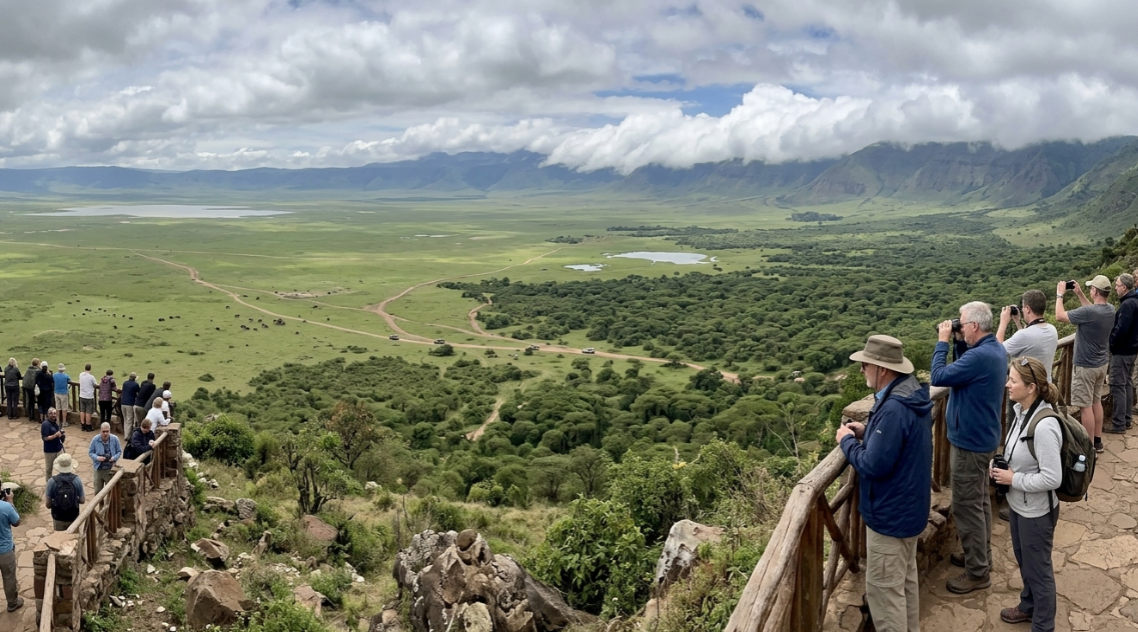
    Ngorongoro is not a national park. It’s a conservation area managed by a separate authority (the Ngorongoro Conservation Area Authority, not TANAPA), where Maasai pastoralists co-exist with wildlife. This distinction matters for two reasons: the management and fee structures differ from parks, and the Maasai cultural presence adds a dimension you won’t find elsewhere.

    The centerpiece is the Ngorongoro Crater, the world’s largest intact volcanic caldera. Its walls rise 600 meters above a floor measuring approximately 260 square kilometers, creating a natural enclosure that holds between 26,000 and 28,000 individual large animals. The crater offers the highest chance to see the critically endangered black rhinoceros anywhere in Africa. All Big Five species are present within this single caldera.

    One notable absence inside the crater: giraffe. The steep walls apparently discourage them from descending to the floor.

    Ngorongoro received 752,232 tourists in 2023, making it one of Tanzania’s most visited wildlife areas. It’s been a UNESCO World Heritage Site since 1979.

    Best for: Big Five in a single day, black rhino sightings, Maasai cultural encounters.

    Access: 3-hour drive from Arusha to the crater rim. Most visitors stay at rim lodges and descend for a full-day game drive.

    Crowd level: High, especially between July and October. Early morning crater descents help, but expect other vehicles.

    Serengeti National Park

    The Serengeti is the anchor of Tanzania safari locations and arguably the most famous wildlife destination on Earth. Its name comes from the Maasai word “siringet,” meaning “endless plains,” and the park extends across 14,763 square kilometers of grassland, woodland, and kopje-dotted terrain.

    The Serengeti hosts over 70 species of large mammals and 500 species of birds. It is home to the most varied collection of terrestrial wildlife on the planet, and it’s the stage for the Great Migration (more on that below).

    Park fees: USD 83 per adult per 24 hours for foreign non-residents. Staying at a hotel inside the park during peak season adds a USD 60 concession fee plus 18% VAT, bringing the per-person daily total to roughly USD 160. For a full breakdown of what Tanzania safari costs actually look like, see our safari cost and fee guide.

    Best for: Great Migration, Big Five, big cat concentrations, classic African savanna scenery.

    Access: 8-hour drive from Arusha via Ngorongoro, or a 1.5-hour flight to one of several airstrips.

    Crowd level: Varies dramatically by zone and season. Central Serengeti gets busy. Northern and western corridors are much quieter.

    Tarangire National Park

    Tarangire covers approximately 2,850 square kilometers and sits southeast of Lake Manyara. During the dry season (June to October), up to 3,000 elephants converge on the Tarangire River, joined by buffalo, wildebeest, and zebra. It has the greatest concentration of wildlife outside the Serengeti ecosystem.

    Two features set Tarangire apart from other Tanzania safari locations. First, the ancient baobab trees. Some are over a thousand years old, and they give the park a visual character unlike anything in the Serengeti. Second, the dry-country antelope: gerenuk and oryx appear here in numbers you simply won’t see in other Northern Circuit parks.

    Birders should pay attention. More than 550 species have been recorded, making Tarangire one of Tanzania’s best birding parks.

    Best for: Elephants, baobab scenery, birding, dry-country antelope species.

    Access: 2-hour drive from Arusha. Often the first park visited on a Northern Circuit safari.

    Crowd level: Moderate in dry season, low in green season (November to May).

    Mkomazi National Park

    Mkomazi sits on the Kenyan border near Kilimanjaro and is one of the least-known Northern Circuit parks. It’s home to a rhino sanctuary and wild dog breeding program, set against a backdrop of the Usambara and Pare mountain ranges. Practitioners on travel forums describe it as “the Tsavo of Tanzania” because of the dry, scrubby landscape and sparse visitor numbers. Check our dedicated Mkomazi National Park guide for details on what to expect.

    Best for: Rhino sanctuary visits, wild dogs, off-the-beaten-path experience.

    Access: 3 to 4 hours from Arusha by road, or combine with a Kilimanjaro climb.

    Crowd level: Very low.


    Key Serengeti Sub-Regions

    Where you stay in the Serengeti determines what you see. This is a nuance that confuses first-time planners, because the park functions less like a single destination and more like four distinct zones.

    Central Serengeti (Seronera)

    The area around Seronera Valley is the Serengeti’s year-round game viewing heartland. Resident populations of lion, leopard, cheetah, and hyena remain here regardless of migration patterns. The kopjes (rocky outcrops scattered across the plains) are famous leopard resting spots. Most camps and lodges are concentrated here, which means Seronera is also the busiest zone.

    Best for: Big cat sightings year-round, accessible game drives for shorter trips.

    Ndutu (Southern Plains)

    Ndutu sits on the southern edge of the Serengeti, straddling the border with the Ngorongoro Conservation Area. From January through March, this is where the Great Migration calving season unfolds. An estimated 500,000 wildebeest calves are born during a two-to-three-week window in February, attracting predators from across the ecosystem. The wildebeest migration guide maps these movements in detail.

    Best for: Calving season (January to March), predator action around newborns, green-season photography.

    Grumeti Reserve and the Western Corridor

    The Western Corridor stretches toward Lake Victoria and includes the Grumeti River, where dramatic river crossings occur in May and June as the migration herds push northwest. The Grumeti reserves are private concession areas with exclusive-use camps, meaning fewer vehicles and more flexibility (night drives, walking safaris, off-road driving).

    Best for: June river crossings, exclusive concession experiences, lower visitor density.

    Kogatende (Northern Serengeti)

    Kogatende is the epicenter of the Mara River crossings that define the Great Migration’s most dramatic chapter. From roughly July through October, hundreds of thousands of wildebeest and zebra attempt the crocodile-infested river, creating the wildlife spectacle that fills every nature documentary. This is also where Tanzania and Kenya’s safari ecosystems connect, as the herds move between the Serengeti and Kenya’s Masai Mara.

    Best for: Mara River crossings (July to October), high-drama predator-prey action.

    Serengeti vs Ngorongoro: Which Is Better?

    Many travelers wonder whether to prioritize the Serengeti or Ngorongoro Crater if time is limited.

    Feature

    Serengeti

    Ngorongoro

    Size

    Huge

    Compact

    Great Migration

    Yes

    No

    Big Five

    Usually 4 of 5

    All Big Five

    Rhino

    Rare

    Excellent

    Lions

    Excellent

    Excellent

    Leopards

    Excellent

    Good

    Crowds

    Moderate

    Heavy

    Minimum stay

    2-4 days

    1 day

    Southern Circuit Locations

    Mikumi National Park

    Mikumi is the most accessible Southern Circuit park, sitting just four hours by road from Dar es Salaam. Its open grasslands (often compared to the Serengeti in miniature) support lion, elephant, buffalo, zebra, wildebeest, and giraffe. For travelers with limited time who want a southern Tanzania safari without the cost of fly-in logistics, Mikumi is the practical choice.

    Best for: Weekend or short safaris from Dar es Salaam, budget-friendly Southern Circuit option.

    Access: 4-hour drive from Dar. Road-accessible (no flight required).

    Crowd level: Low to moderate.

    Nyerere National Park (formerly Selous Game Reserve)

    Nyerere is the largest national park in Tanzania and the biggest in East Africa, covering a staggering 30,893 square kilometers. To put that in perspective: it’s roughly twice the size of the Serengeti. Yet less than 1% of Tanzania’s tourists reach it.

    The park centers on the Rufiji River, which enables something many Tanzanian parks don’t offer: boat safaris. Gliding past hippo pods and crocodiles while watching African fish eagles overhead is a fundamentally different experience from a standard game drive. Nyerere is also one of the best places in Africa to see the endangered African wild dog, with healthy pack numbers across the reserve.

    Best for: Boat safaris, wild dog sightings, walking safaris, genuine solitude.

    Access: Fly-in from Dar es Salaam (45-minute flight). Some lodges accessible by road during dry season.

    Crowd level: Very low. You can go hours without seeing another vehicle.

    Ruaha National Park

    At 20,226 square kilometers, Ruaha is Tanzania’s largest national park proper (Nyerere is larger but was reclassified from a game reserve). Ruaha is home to an estimated 10 to 15% of the world’s lion population and the third largest wild dog population in all of Africa.

    What really distinguishes Ruaha from northern parks is the antelope diversity. Sable antelope, roan antelope, and greater kudu, species the Northern Circuit rarely produces, are present in good numbers. The park sits at the convergence of East and Southern African ecosystems, creating unusual biodiversity overlaps.

    Ruaha’s vastness combined with very few camps make for an unparalleled experience. It truly feels as if you have this diverse wilderness to yourself.

    Best for: Lions, wild dogs, rare antelope species, crowd-free game viewing.

    Access: Fly-in from Dar es Salaam (approximately 2 hours) or Arusha.

    Crowd level: Very low. Ruaha received far fewer visitors than Serengeti or Ngorongoro.

    Udzungwa Mountains National Park

    Udzungwa breaks the standard safari mold entirely. There are no game drives here. Instead, this is a hiking and trekking park, home to six primate species (two found nowhere else on Earth) and some of East Africa’s most impressive waterfalls. Scientists have nicknamed it “the Galapagos of Africa” for its level of endemism.

    Best for: Hiking, endemic primates, waterfalls, botanists and serious nature enthusiasts.

    Access: Road from Dar es Salaam (5 to 6 hours) or combine with Mikumi.

    Crowd level: Very low.


    Western Circuit Locations

    Gombe Stream National Park

    Gombe Stream is famous for one reason: Jane Goodall. This tiny park on the shores of Lake Tanganyika is where Goodall began studying chimpanzees in 1960. The habituated Kasakela community has been studied continuously since then, making them the most researched wild chimpanzees in the world.

    Gombe is Tanzania’s smallest national park, but what it lacks in size it makes up for in primatological significance. Chimp trekking here typically involves hiking through steep forest terrain for 1 to 4 hours before spending an hour observing a habituated group.

    Best for: Chimpanzee trekking with a research-site backdrop, primatology enthusiasts.

    Access: Fly to Kigoma, then boat transfer (1 to 2 hours along the lakeshore).

    Crowd level: Very low. Visitor permits are limited.

    Katavi National Park

    If you’re seeking a truly untamed safari, Katavi is your destination. Located in western Tanzania between Lake Tanganyika and Lake Rukwa, Katavi received just 1,557 international visitors in 2022. For context, the Serengeti handles that number every few days.

    During the dry season (August to October), Katavi’s floodplains shrink into a few remaining pools that concentrate enormous herds. Buffalo congregate in groups of several thousand, and hippo pools become so packed that animals literally pile on top of each other. Huge lion prides patrol the periphery.

    Best for: Raw, unvisited wilderness, massive buffalo and hippo concentrations, big lion prides.

    Access: Fly-in from Dar es Salaam or Arusha (with a stop). No realistic road access for tourists.

    Crowd level: Among the lowest of any safari destination in Africa.

    Mahale Mountains National Park

    Mahale is home to one of Africa’s largest chimpanzee populations, estimated at around 800 individuals. The park occupies a chain of mountains that rise sharply from the eastern shore of Lake Tanganyika, with peaks reaching over 2,400 meters. The pristine environment, accessible only by boat or small aircraft, makes it a secluded gem.

    Chimp trekking in Mahale is considered by many safari veterans to be the more rewarding experience compared to Gombe, thanks to larger habituated groups and a more dramatic forest setting. After trekking, visitors can swim in the crystal-clear lake, an experience that has no equivalent at any other Tanzania safari location.

    Best for: Chimpanzee trekking, Lake Tanganyika swimming and kayaking, ultimate remoteness.

    Access: Fly to a nearby airstrip, then transfer by boat. No roads.

    Crowd level: Extremely low.


    Coastal and Island Locations

    Saadani National Park
    Tanzania Safari Locations: Guide to Parks & Circuits 2026

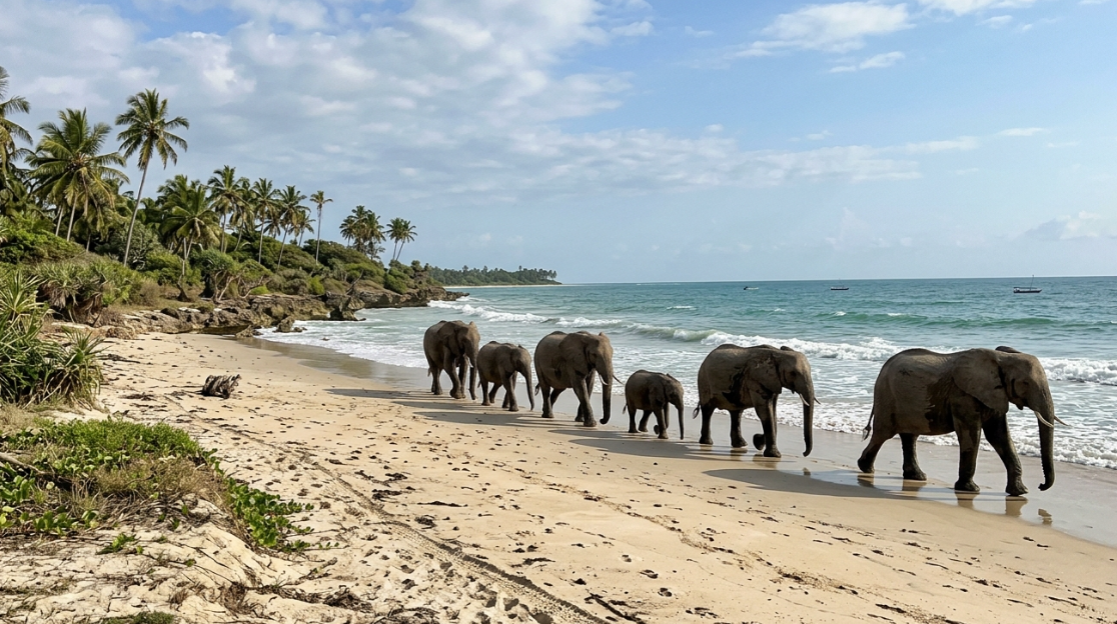
    Saadani is the only Tanzanian park where the bush meets the Indian Ocean. Elephants, buffalo, and lions roam within earshot of breaking waves, and green turtles nest on the beaches between May and September. The Wami River provides boat safari opportunities with hippo, crocodile, and mangrove-dwelling birdlife.

    This park is a blind spot in most Tanzania safari guides, which is puzzling given how unique it is. It sits north of Dar es Salaam and combines well with Zanzibar for a beach-and-bush itinerary.

    For the full picture of what this park offers, see our Saadani National Park guide.

    Best for: Beach-and-bush combination, green turtle nesting season, boat safaris, Swahili Coast culture.

    Access: 5 to 6 hours by road from Dar, or short charter flight. Can also be reached from Pangani.

    Crowd level: Very low.

    Zanzibar

    Zanzibar isn’t a safari destination in the traditional sense, but it’s the most common extension after a Tanzania safari. The archipelago offers Stone Town’s UNESCO-listed historic center, spice plantations, white-sand beaches, and some of the Indian Ocean’s best snorkeling and diving.

    Most travelers spend 3 to 5 days on Zanzibar after their mainland safari. The combination of wildlife and tropical beach is one of the main reasons Tanzania safari locations attract visitors over competing destinations in Southern Africa.

    Best for: Post-safari beach relaxation, cultural exploration, snorkeling, diving.

    Access: Short flight from Arusha, Serengeti, or Dar es Salaam. Also reachable by ferry from Dar.

    Mafia Island and Pemba

    For divers and travelers seeking something less commercialized than Zanzibar, Mafia Island and Pemba are worth considering. Mafia Island Marine Park protects whale shark feeding grounds (October to March), and Pemba’s drop-offs offer some of East Africa’s best wall diving. Both islands are quiet, with limited accommodation and a genuinely remote feel.

    Best for: Serious diving and snorkeling, whale shark encounters (Mafia), off-grid island stays.

    Access: Short flights from Dar es Salaam or Zanzibar.


    The Great Migration: Where and When

    The Great Migration is the largest mass movement of land mammals on Earth. More than a million wildebeest, along with hundreds of thousands of zebra and gazelle, circle through the Serengeti-Mara ecosystem in a continuous, year-round loop. There are no defined start or end points, but the herds follow a broadly predictable seasonal pattern.

    Here’s the month-by-location breakdown:

    • January to March: Ndutu and the southern Serengeti plains. Calving season. Approximately 500,000 calves are born in a concentrated February window.

    • April: Herds begin moving northwest through the southwestern Serengeti.

    • May to June: Western Corridor and Grumeti area. River crossings at the Grumeti.

    • July to October: Northern Serengeti around Kogatende. Mara River crossings, the migration’s most dramatic spectacle.

    • November to December: Herds drift south again toward the Ndutu plains as the short rains green up the grasslands.

    Because the migration is a fluid, year-round movement of about two million animals, no single month guarantees a specific sighting. Timing your visit to the right Serengeti zone matters more than picking the “right month.” Our seasonal guide for East Africa maps these patterns across the entire region.


    Essential Safari Planning Terms

    Big Five

    Lion, leopard, elephant, Cape buffalo, and black rhinoceros. In Tanzania, the best single-day Big Five location is Ngorongoro Crater. The Serengeti reliably produces four of the five (rhino sightings are rare there). Southern parks like Ruaha offer strong lion and buffalo but no rhino.

    Concession Area

    A concession is a privately managed wildlife area adjacent to or within a national park. Operators like Grumeti Reserves in the western Serengeti hold exclusive rights to a defined area, which means fewer vehicles, off-road driving permissions, night drives, and walking safaris. The trade-off is higher nightly rates. For a look at what premium camps in these areas cost, see our luxury Tanzania safari guide.

    Fly-in Safari

    A safari where you travel between parks by light aircraft (typically Cessna Caravans carrying 12 to 14 passengers) rather than driving. Fly-in safaris are standard for the Southern and Western circuits, where road distances are impractical. The 15-kilogram soft-bag luggage limit is strictly enforced on most bush flights.

    Game Drive

    The standard safari activity: a guided drive in an open-sided or pop-top 4×4 vehicle, typically departing at dawn (around 6:00 AM) and again in the afternoon (around 3:30 PM). In national parks, vehicles must stay on marked tracks. In concession areas, off-road driving is often permitted.

    Mobile Tented Camp

    Camps that physically relocate two to four times per year to follow the Great Migration or seasonal game concentrations. They offer a genuine bush experience (canvas tents, bush showers, lantern lighting) while staying close to the action. Mobile camps are most common in the Serengeti, tracking the migration from Ndutu in January to Kogatende by July.

    Walking Safari

    A guided, on-foot experience in the bush, typically lasting 2 to 4 hours. Walking safaris are available in specific parks: Arusha NP, Tarangire (on certain conservancies), Lake Manyara, and most Southern Circuit parks. They are not permitted in the Serengeti’s main park area or inside Ngorongoro Crater.


    Choosing Your Circuit: A Quick Comparison

    Factor

    Northern Circuit

    Southern Circuit

    Western Circuit

    Gateway city

    Arusha

    Dar es Salaam

    Kigoma / Dar

    Typical trip length

    4 to 7 days

    7 to 10 days

    5 to 8 days

    Access

    Road from Arusha

    Mostly fly-in

    Fly-in + boat

    Crowd level

    Moderate to high

    Low to very low

    Extremely low

    Key wildlife

    Great Migration, Big Five, big cats

    Wild dogs, boat safaris, rare antelope

    Chimpanzees, buffalo, hippo

    Budget range

    $2,000 to $6,000+ pp

    $4,500 to $9,000+ pp

    $5,000 to $10,000+ pp

    Best for

    First-timers, migration seekers

    Repeat visitors, solitude seekers

    Primate enthusiasts, adventurers

    The Northern Circuit is the obvious choice for a first Tanzania safari. It offers the greatest variety of experiences per day of travel, the most accommodation options across price ranges, and the easiest logistics.

    But if you’ve done the Northern Circuit already (or you simply don’t want crowds), the Southern Circuit deserves serious consideration. Ruaha and Nyerere deliver a quality of wilderness immersion that the Serengeti’s popular zones can’t match.

    Ready to plan a custom itinerary? Our private Tanzania safari options page walks through routes, costs, and what to expect from a tailored trip.


    Frequently Asked Questions

    What are the best Tanzania safari locations for first-time visitors?

    The Northern Circuit is the standard recommendation: Serengeti, Ngorongoro Crater, and Tarangire make a strong 5 to 7 day combination. You’ll see Big Five species, experience the Serengeti’s scale, and encounter Tarangire’s elephants and baobabs. Adding Lake Manyara as a half-day stop rounds out the route without adding significant cost.

    When is the best time to visit Tanzania for safari?

    It depends on which location you’re targeting. The dry season (June to October) is generally considered peak safari season across all circuits, with the best game viewing as animals concentrate around water sources. But the Great Migration calving season in Ndutu (January to March) is spectacular, and the green season (November to May) brings lower prices, fewer crowds, and lush scenery. Our best time to visit guide maps optimal timing across every major park.

    How much does a Tanzania safari cost?

    Northern Circuit safaris start around $2,000 per person for a 5-day budget trip and scale up significantly for luxury lodges and private concession camps. Southern Circuit trips typically run $4,500 to $9,000 per person for 7 days due to fly-in logistics and higher-end camp options. Park fees alone in the Serengeti run $83 per adult per 24 hours before accommodation and concession fees.

    Can you combine Northern and Southern Circuit parks in one trip?

    Yes, but it requires internal flights. There’s no practical way to drive between circuits without losing multiple days. A common approach is 4 to 5 days on the Northern Circuit followed by a flight to Ruaha or Nyerere for 3 to 4 days. Expect 10 to 14 day total trip lengths for multi-circuit itineraries.

    Which Tanzania safari locations are best for seeing wild dogs?

    Nyerere National Park and Ruaha National Park, both on the Southern Circuit, are the top wild dog destinations. Ruaha holds Africa’s third-largest wild dog population. Northern Circuit parks occasionally produce wild dog sightings, but they’re unreliable.

    Is the Serengeti worth the hype?

    Yes. Practitioners on Reddit and travel forums sometimes debate whether it’s “overrated,” but the consensus from people who’ve actually been is overwhelmingly positive. The scale of wildlife, particularly during migration season, is genuinely unmatched. The key is choosing the right zone for your travel dates rather than defaulting to central Serengeti.

    What’s the difference between Ngorongoro and a national park?

    Ngorongoro is a Conservation Area, not a national park. It’s managed by its own authority (NCAA) rather than TANAPA. The critical difference: Maasai communities live inside the conservation area and graze their cattle alongside wildlife. This coexistence creates a cultural layer that national parks don’t have, but it also means different rules, fees, and management priorities.

    Are Western Circuit parks worth the extra cost and effort?

    For primate enthusiasts, absolutely. Mahale and Gombe offer chimpanzee trekking experiences that can’t be replicated anywhere in East Africa. Katavi’s dry-season wildlife concentrations rival anything on the continent. But these parks require more time, more budget, and more flexibility. They reward travelers who prioritize depth over breadth.
  • Tanzania Safari Visa: 2026 Guide, Fees, Requirements

    Tanzania Safari Visa: 2026 Guide, Fees, Requirements

    TL;DR

    Most travelers need a Tanzania safari visa costing $50 (or $100 for US citizens), available as an eVisa or on arrival at airports like Kilimanjaro (JRO). Tanzania is not covered by the East Africa Tourist Visa, so you need a separate visa even if you hold an EATV. If your safari includes Zanzibar, budget an additional $44 for mandatory travel insurance. Apply for the eVisa 3 to 4 weeks before departure, but carry crisp US dollar bills as backup in case you need visa on arrival.


    Planning a Tanzania safari means confronting a tangle of entry requirements that go well beyond a single visa form. There’s the visa itself, yes. But there’s also the yellow fever certificate that catches travelers routing through Kenya off guard, the mandatory Zanzibar insurance that didn’t exist before October 2024, and the widespread confusion about whether the East Africa Tourist Visa covers Tanzania (it doesn’t).

    This guide defines every term you’ll encounter when sorting out your Tanzania safari visa and related entry documents. Think of it as a glossary built for people who are actually booking a trip, not just browsing. The visa fee is just one of several mandatory costs to budget for before your safari.

    Quick Answer

    If you’re traveling to Tanzania for a safari in 2026, you’ll usually need a tourist visa before or upon arrival. Most travelers pay $50 USD, while US passport holders pay $100 USD for a mandatory Multiple Entry Visa. Tanzania is not part of the East Africa Tourist Visa, so you must obtain a separate Tanzania visa. If your itinerary includes Zanzibar, you must also purchase mandatory Zanzibar travel insurance. Apply for an eVisa at least 3–4 weeks before departure and carry printed copies of your visa approval, passport, return ticket, and any required health documents.

    Tanzania Safari Visa Requirements at a Glance

    Requirement

    Most Travelers

    Visa Required

    Yes

    Visa Cost

    $50 USD

    US Citizens

    $100 Multiple Entry Visa

    Visa on Arrival

    Yes

    eVisa Available

    Yes

    Passport Validity

    6 months minimum

    Blank Passport Page

    At least 1

    Return Ticket

    Required

    Yellow Fever Certificate

    Only when arriving from risk countries

    Zanzibar Insurance

    Required only when visiting Zanzibar

    Recommended Application Time

    3–4 weeks before travel

    Core Visa Types for Safari Travelers

    Ordinary (Single Entry) Visa

    This is what most safari travelers need. It costs $50 USD and is valid for up to 90 days. Citizens of almost every country can apply for this visa type when visiting Tanzania for tourism. The one big exception: US passport holders, who must apply for the Multiple Entry Visa instead.

    Ninety days is more than enough for even the most ambitious safari itinerary. If you’re doing a standard 7 to 14 day trip through the Serengeti, Ngorongoro Crater, and Tarangire, this is your visa.

    Multiple Entry Visa

    Costs $100 USD and is valid for one year. US citizens are required to get this visa type for tourism, with no option to purchase the cheaper single entry version. This is a quirk of bilateral agreements, not a choice.

    The multiple entry visa also makes sense for travelers planning to leave Tanzania and return later in the same year. For example, a safari in the Serengeti followed by a side trip to Kenya’s Maasai Mara, then back to Tanzania for Zanzibar.

    Transit Visa

    A $30 visa for travelers passing through Tanzania en route to another destination. Valid for 14 days. This applies if you have a long layover or overland connection through Tanzania but aren’t staying for a safari. Most safari visitors won’t need this.

    Referral Visa

    This is where things get complicated for certain nationalities. Travelers from a list of referral countries (including Nigeria, Pakistan, Bangladesh, Somalia, and others) cannot get a visa on arrival. They need advance clearance from Tanzania’s Commissioner General of Immigration, and the process can take weeks.

    The official advice is stark: applicants under the referral category should not book flights or make any reservations in Tanzania before receiving approval. Apply at least two months before your travel date. This is not a formality. Ignoring it can mean being denied boarding.

    Business Visa

    Not relevant for safari travelers, but worth a brief mention to avoid confusion. If you’re visiting Tanzania for conferences, meetings, or commercial purposes, a different visa category applies. Tourism activities, including safari, fall under the Ordinary or Multiple Entry visa.


    Two Ways to Get Your Tanzania Safari Visa

    eVisa (Recommended, With Caveats)

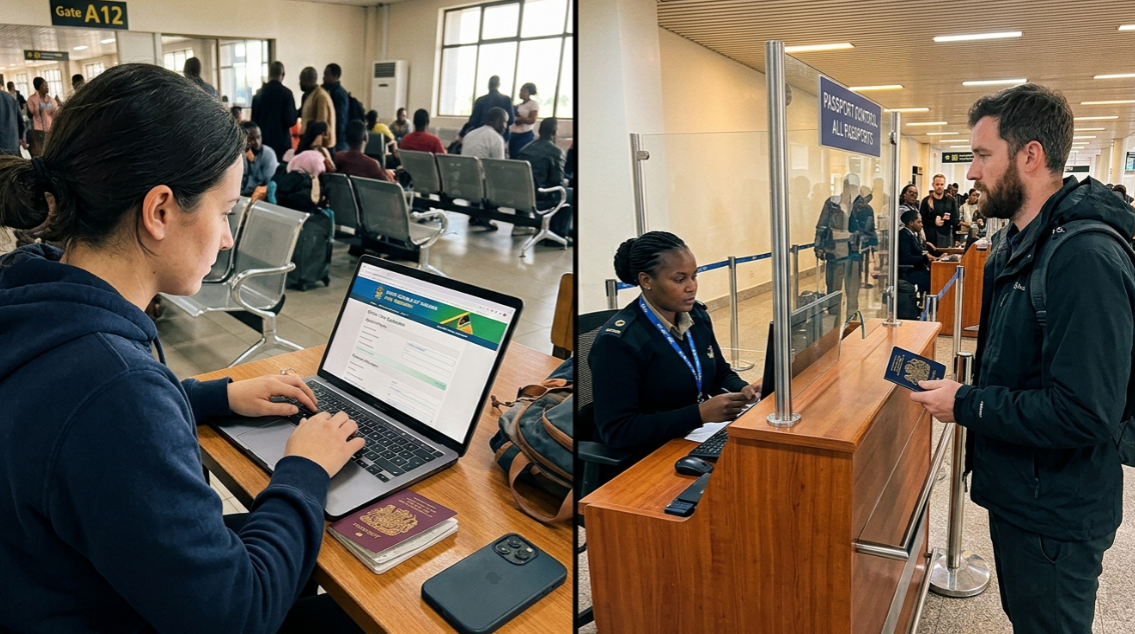
    The Tanzania Immigration Services portal is the official online application system. Processing officially takes 3 to 10 business days, with most applicants receiving a decision within 4 to 6 business days.

    There is no paid expedited option. Everyone waits in the same queue regardless of nationality or visa type.

    Here’s what the official guidance doesn’t tell you: the eVisa system has a reputation for unreliability. In March 2026, the Tanzania Immigration Services Department announced its system was down following a technical incident, with no timeline for restoration. This wasn’t an isolated event.

    Practitioners on TripAdvisor report persistent problems. One frequent traveler wrote: “I advise everyone to just get visa on arrival. In my opinion, it’s much easier than trying to deal with the online system which is very finicky.” Another discussion described a family from the Netherlands who couldn’t complete their eVisa application due to repeated error messages and had read that processing sometimes stretches beyond four weeks.

    Team Kilimanjaro, a veteran operator, offers a balanced perspective: if you have time to plan ahead, the eVisa is recommended for peace of mind and to skip the arrival queue. But among more than 10,000 climbers they’ve processed, only one client has ever been denied entry with visa on arrival.

    Practical recommendation: Apply 3 to 4 weeks before departure. If your eVisa hasn’t arrived by the time you fly, bring cash and get it on arrival.

    If you’re planning a private Tanzania safari, a good operator can advise on timing your visa application alongside your itinerary logistics.

    Visa on Arrival

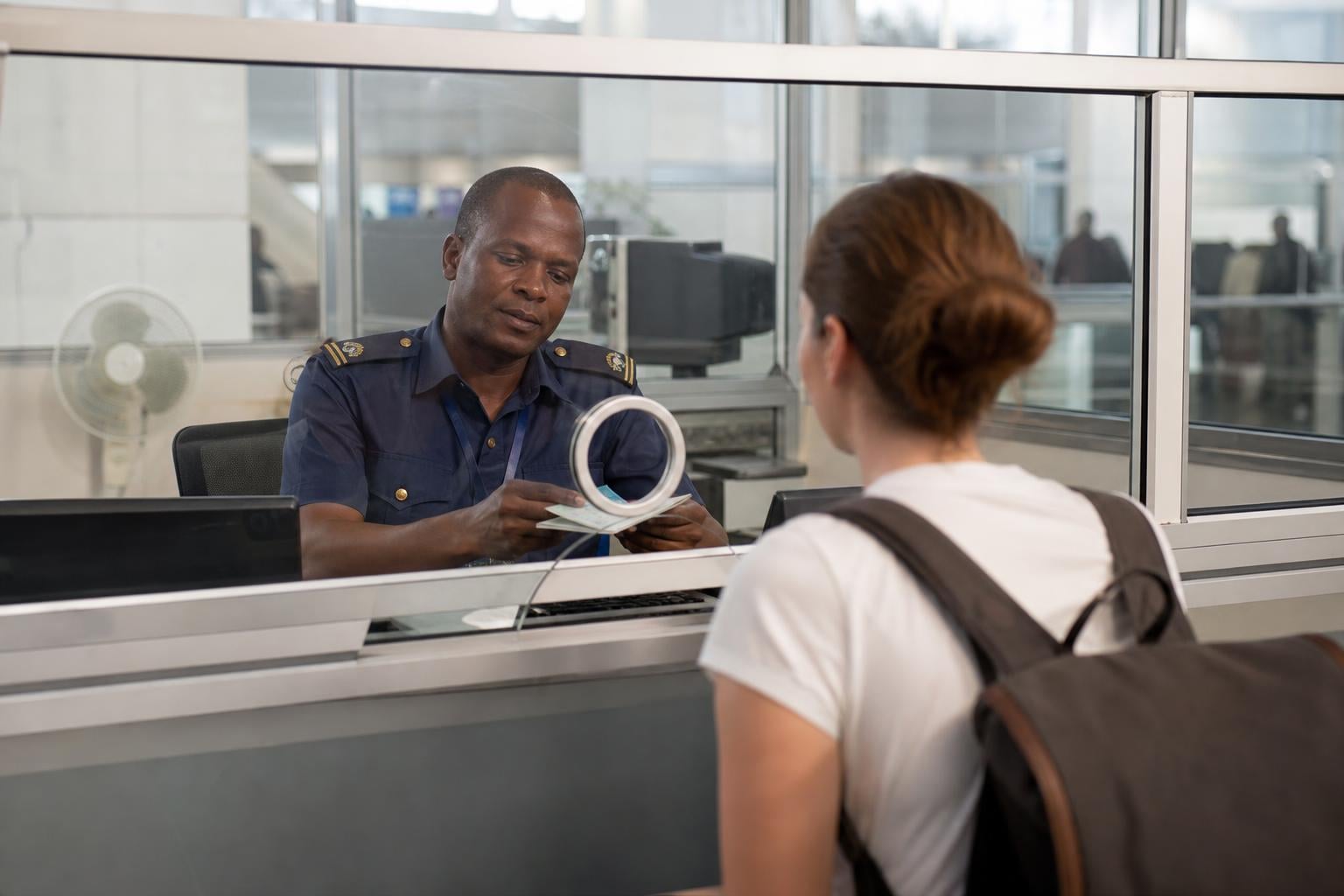
    Tanzania issues visas on arrival at Julius Nyerere International Airport (DAR), Kilimanjaro International Airport (JRO), Abeid Amani Karume International Airport in Zanzibar (ZNZ), major land borders like Namanga (the Kenya-Tanzania crossing used for Maasai Mara to Serengeti combinations), and seaports.

    Processing typically takes 15 to 60 minutes depending on how many flights have just landed. Peak season (June through October, and December) means longer waits.

    Cash is king at the border. You can technically pay with a Visa card, but travelers report the card system is frequently down. Bring crisp, unmarked US bills in $50 or $100 denominations, printed since 2013. Older or marked bills are routinely rejected.

    Visa Grant Notice

    When your eVisa is approved, you receive a Visa Grant Notice. This is your approval letter, but it is not a guaranteed entry pass. The immigration officer at your entry point can still refuse entry if you don’t meet other requirements (valid passport, return ticket, health documents). Print a hard copy and carry it with your passport.

    eVisa vs Visa on Arrival

    Tanzania Safari Visa: 2026 Guide, Fees, Requirements

    Feature

    eVisa

    Visa on Arrival

    Apply Before Travel

    Yes

    No

    Wait Time at Airport

    Minimal

    15–60 minutes

    Payment

    Online

    Cash preferred

    Risk of System Issues

    Yes

    No

    Recommended

    Yes

    Good Backup

    Entry Documents That Function Like Visas

    A Tanzania safari visa gets you through immigration. But other documents are equally non-negotiable, and missing them can stop you at the border just as effectively.

    Yellow Fever Vaccination Certificate

    If you’re flying directly from Europe or the United States, no yellow fever certificate is required. The requirement kicks in only if you’re arriving from (or transiting through) a country with yellow fever risk.

    Here’s the trap that catches multi-country safari travelers: Kenya, Ethiopia, and Rwanda are all classified as yellow fever risk countries. If you spend time in Kenya and then travel to Tanzania, you will need a Yellow Fever vaccination certificate to enter Tanzania. A transit of more than 12 hours through a high-risk country also triggers the requirement.

    This matters because many popular East Africa safari itineraries combine Kenya and Tanzania. If you’re doing the Maasai Mara before crossing to the Serengeti, get vaccinated before you leave home.

    The good news: the WHO now considers a single yellow fever vaccine dose valid for life. No boosters needed, and the certificate never expires.

    Zanzibar Mandatory Travel Insurance (ZIC)

    Since October 1, 2024, all non-resident visitors to Zanzibar must purchase mandatory travel insurance priced at $44 USD. This applies to every traveler, including children (ages 3 to 17 get a 50% discount at $22, and children under 3 are free). The policy is valid for up to three months.

    This is not optional, and your existing travel insurance policy will not satisfy the requirement. It can only be purchased through the official Visit Zanzibar portal.

    If your safari ends with a few days on the beach in Zanzibar (a very common itinerary pattern), budget for this on top of your visa fee. For a deeper look at all the costs involved, see this Zanzibar fees and budget guide.

    Developing story: During the 2025-2026 national budget presentation, Tanzania’s Finance Minister proposed extending mandatory travel insurance to all non-residents entering mainland Tanzania at the same $44 rate. This is not yet in effect, but it’s worth watching if you’re booking a trip for late 2026 or beyond.

    Passport Requirements

    Your passport must have at least six months of validity remaining from your date of entry, plus at least one blank page. You also need to show a return or onward ticket at the entry point. These are enforced. Immigration officers check.


    Multi-Country Visa Terms

    East Africa Tourist Visa (EATV)

    Tanzania Safari Visa: 2026 Guide, Fees, Requirements


    This is the single biggest source of confusion for safari travelers planning multi-country trips. The EATV costs $100 and covers Kenya, Uganda, and Rwanda. Tanzania is not included.

    That bears repeating: Tanzania requires its own separate visa regardless of whether you hold an EATV. If your trip includes the Serengeti, Ngorongoro Crater, Kilimanjaro, or Zanzibar, you need a Tanzania eVisa ($50 for most nationalities, $100 for US citizens) in addition to any EATV you’ve purchased.

    There’s another catch. The EATV remains valid only while you stay within the Kenya-Uganda-Rwanda bloc. If you fly from Nairobi to Dar es Salaam for a Tanzania safari, the EATV expires. You cannot re-enter Kenya, Uganda, or Rwanda on the same EATV after leaving the bloc. For a full breakdown of how these visas interact, see our East Africa visa guide.

    Kenya eTA

    Kenya replaced its traditional visa system with an electronic Travel Authorization (eTA) in January 2024. It costs $34 and is required for most nationalities. This is relevant if your East Africa trip starts in Nairobi before continuing to Tanzania.

    Uganda eVisa

    Uganda’s tourist visa costs $50 and is applied for online. Unlike Tanzania, Uganda requires yellow fever vaccination for all arriving travelers, regardless of where you’re coming from. If you’re combining a Uganda gorilla trek with a Tanzania safari, get the vaccine before leaving home. It satisfies both Uganda’s universal requirement and Tanzania’s conditional one.

    Tanzania Visa Exempt Countries

    Explain briefly that some nationalities do not require visas and link to the official exemption list instead of listing dozens of countries.

    Example:

    Some nationalities are exempt from Tanzania tourist visas under reciprocal agreements. Since this list changes periodically, always verify your status with Tanzania Immigration before travel.

    This captures searches for:

    • Tanzania visa exempt countries

    • Who needs a Tanzania visa

    Practical Terms Safari Travelers Ask About

    eVisa Processing Time

    Officially 3 to 10 business days. Realistically, plan for longer. Business days exclude weekends and Tanzanian public holidays. If you submit on a Friday, processing doesn’t start until Monday.

    Peak travel seasons (June through October and December) may cause additional delays. The single most common cause of processing delays is a non-compliant passport photo, specifically a wrong background color, glasses in the image, or low resolution. Double check your photo before submitting.

    eVisa System Outages

    The Tanzania immigration portal has experienced documented outages, including the March 2026 incident where the system went down without a clear timeline for restoration. Forum users describe access issues during peak periods as well. This is why carrying USD cash for visa on arrival is a genuine backup plan, not an afterthought.

    Visa Fees by Nationality

    Nationality

    Visa Type

    Cost

    Most countries

    Ordinary (Single Entry)

    $50

    United States

    Multiple Entry (mandatory)

    $100

    Transit travelers

    Transit Visa

    $30

    Referral countries

    Referral Visa

    $50 (plus advance clearance)

    Application ID

    When you submit an eVisa application, you receive an Application ID for tracking your status on the immigration portal. Save this number. You’ll need it to check progress and to reference if you contact the immigration department about delays.

    Arrival / Declaration Form

    At your entry point, you’ll fill out a physical arrival card. This is a standard immigration form asking for your accommodation details, flight information, and purpose of visit. Nothing complicated, but have your hotel or lodge name and address ready.

    Key Entry Points for Safari Travelers

    Kilimanjaro International Airport (JRO) is the primary gateway for northern circuit safaris covering Tarangire, Ngorongoro, and the Serengeti. Most safari travelers flying internationally arrive here.

    Julius Nyerere International Airport (DAR) in Dar es Salaam serves southern circuit safaris and travelers connecting to Zanzibar.

    Abeid Amani Karume International Airport (ZNZ) in Zanzibar handles direct international flights and domestic connections.

    Namanga Border is the main land crossing between Kenya and Tanzania, used by travelers combining the Maasai Mara with the Serengeti.


    Common Tanzania Safari Visa Mistakes

    Assuming the EATV covers Tanzania. It doesn’t. Only about two of the top-ranking pages on this topic even mention this distinction, which tells you how widespread the confusion is. Always get a separate Tanzania visa.

    Not knowing US citizens must get the $100 multiple entry visa. There is no $50 option for American passport holders visiting Tanzania for tourism. Period.

    Skipping the yellow fever vaccine for Kenya to Tanzania routing. If you’re doing a multi-country East Africa trip that touches Kenya before Tanzania, you need the certificate. Getting turned away at the Namanga border or JRO immigration for lack of a yellow fever card is entirely preventable.

    Forgetting Zanzibar insurance for safari and beach combos. The $44 ZIC insurance has been mandatory since October 2024. Your regular travel policy doesn’t count. For families traveling with kids, check the Zanzibar family travel guide for details on children’s rates and what to expect.

    Applying too close to departure during peak season. Three to ten business days is the official range, but forum users report waits of three to four weeks during high season. Submit your application at least a month out.

    Not bringing crisp USD cash as backup. Even if your eVisa is approved and printed, bring cash. Card machines fail. Bills must be post-2013, crisp, and unmarked.

    Not filing separate visa applications for children. Every passport holder, including minors, needs their own individual visa application. Listing children on a parent’s application does not satisfy this requirement.

    For a broader look at planning pitfalls beyond the visa, see this guide on costly safari booking mistakes.


    Frequently Asked Questions

    Do I need a visa for a Tanzania safari?

    Yes. Almost all foreign nationals need a visa to enter Tanzania. The type and cost depend on your nationality, but the requirement is nearly universal. A few countries are exempt, but for most travelers from North America, Europe, Asia, and Australasia, a Tanzania safari visa is mandatory.

    How much does a Tanzania safari visa cost?

    $50 USD for most nationalities (Ordinary/Single Entry Visa). US citizens pay $100 for a mandatory Multiple Entry Visa. Transit visas cost $30.

    Can I get a visa on arrival at Kilimanjaro Airport?

    Yes. Kilimanjaro International Airport (JRO) issues visas on arrival. Expect 15 to 60 minutes of processing time. Bring crisp US bills ($50 or $100 denominations, printed after 2013) because the card payment system is unreliable.

    Does the East Africa Tourist Visa cover Tanzania?

    No. The EATV covers Kenya, Uganda, and Rwanda only. Tanzania requires its own separate eVisa. This is the most common visa mistake among multi-country safari planners.

    Do I need a yellow fever vaccination for Tanzania?

    Only if you’re arriving from or transiting through a country with yellow fever risk. Direct flights from Europe or the US don’t trigger the requirement. But if your trip includes time in Kenya, Ethiopia, Rwanda, or Uganda before entering Tanzania, you need the certificate.

    Is Zanzibar insurance required for mainland-only safaris?

    No. The $44 mandatory Zanzibar travel insurance applies only to travelers entering the Zanzibar archipelago. If your safari stays on the mainland (Serengeti, Ngorongoro, Tarangire, etc.) and you skip Zanzibar, you don’t need it. A mainland insurance proposal is under consideration but not yet in effect.

    How long does the Tanzania eVisa take to process?

    Officially 3 to 10 business days. Most applicants receive a decision within 4 to 6 business days. During peak season or system outages, it can take longer. Apply at least 3 to 4 weeks before departure to be safe.

    Do children need their own Tanzania visa?

    Yes. Every passport holder, including minors, must have a separate visa application submitted. Children cannot be included on a parent’s application. The same fee applies: $50 for most nationalities, $100 for US citizens.


    Getting your Tanzania safari visa sorted is the first concrete step toward actually being on the ground in East Africa. Once the paperwork is handled, the focus shifts to the trip itself. If you’re still in the planning stages and want help designing a route that accounts for all the visa, permit, and logistics complexity, explore private safari options and routes to see what a well-organized itinerary looks like.

  • Safari Cost in Tanzania 2026: Prices, Fees & Glossary

    Safari Cost in Tanzania 2026: Prices, Fees & Glossary

    TL;DR

    A Tanzania safari in 2026 costs $250 to $1,500+ per person per day depending on accommodation tier, season, and group size. For a standard 7-day trip, expect to pay $1,800 to $3,500 for budget camping, $2,800 to $4,900 for mid-range lodges, or $5,500 to $10,500+ for luxury. Park fees alone eat up 25 to 35% of your total spend, and tips, visas, and insurance are almost never included in operator quotes.


    Safari pricing in Tanzania is famously opaque. You’ll get one quote for $3,000 and another for $8,000, and both operators will insist their price is fair. The problem isn’t dishonesty. It’s that the safari industry uses dozens of specialized terms, and no two operators package costs the same way.

    This guide works differently from a typical cost breakdown. It’s organized as a glossary, a decoder ring for every fee, term, and pricing concept you’ll encounter while planning a Tanzania safari. Each entry includes 2026 numbers and practical context so you can compare quotes with confidence.

    Considering a private safari? See private safari routes and costs for a detailed look at how pricing changes across different itineraries.

    Quick Answer: How Much Does a Tanzania Safari Cost?

    If you’re wondering how much to budget, here’s the short answer.

    Safari Type

    Typical Cost Per Person

    Best For

    Budget Camping

    $1,800–3,500 (7 days)

    Backpackers and budget travelers

    Mid-Range Lodge

    $2,800–4,900

    Most first-time visitors

    Luxury Safari

    $5,500–10,500+

    Premium experiences

    Fly-In Luxury

    $10,500–17,500+

    Maximum comfort and minimal driving

    Most travelers spend between $3,500 and $5,000 per person once tips, visas, travel insurance, and optional activities are included.

    The biggest factors affecting price are:

    – accommodation quality

    – number of travelers

    – season

    – park fees

    – whether the safari is private or shared

    Key Takeaways

    • Tanzania safari prices are best compared using PPPD (Per Person Per Day).

    • Park fees alone usually account for 25–35% of the total safari cost.

    • Mid-range safaris provide the best value for most travelers.

    • Green season can reduce total trip costs by 20–40%.

    • Booking directly with a licensed Tanzanian operator can lower costs by 15–30%.

    • Hidden costs usually include tips, visas, travel insurance, drinks, and optional activities.

    How Tanzania Safari Pricing Works

    Before jumping into definitions, it helps to understand the five components that make up every safari quote:

    1. Accommodation (the biggest variable, 35 to 50% of total cost)

    2. Park fees and government charges (fixed, non-negotiable, 25 to 35%)

    3. Vehicle and driver-guide (shared across passengers)

    4. Meals (usually included; drinks often excluded)

    5. Logistics (airport transfers, domestic flights, fuel surcharges)

    The reason quotes vary so wildly comes down to four factors: accommodation tier, booking channel, travel season, and group size. A couple booking a luxury fly-in safari through a London agency during peak season will pay five to ten times more per person than four friends sharing a budget camping vehicle in green season through a local Arusha operator.

    The single most important concept for comparing safari costs in Tanzania is PPPD, which stands for Per Person Per Day. Every quote should be converted to this unit before you compare anything. More on that below.

    For readers planning trips beyond Tanzania, our East Africa safari cost guide covers pricing across Kenya, Uganda, and Rwanda as well.


    Daily Cost Ranges by Tier (2026)

    Tier

    Per Person Per Day

    7-Day Total (Per Person)

    Budget camping (group join)

    $250 to $400

    $1,800 to $3,500

    Mid-range (lodge-based)

    $450 to $800

    $2,800 to $4,900

    Luxury (private lodge/tented camp)

    $850 to $1,500

    $5,500 to $10,500+

    Ultra-luxury / fly-in

    $1,500 to $2,500+

    $10,500 to $17,500+

    One insight that rarely appears in cost guides: the jump from budget to mid-range delivers the biggest quality increase per dollar spent. Going from $250 to $450 per day transforms the experience (private vehicle, better food, comfortable beds, knowledgeable guides). Going from $800 to $1,200 per day adds luxury touches, but the core wildlife experience is largely the same.

    What Is Included in Most Tanzania Safari Packages?

    Safari Cost in Tanzania 2026: Prices, Fees & Glossary

    One of the biggest reasons travelers struggle to compare quotes is that safari companies include different services.

    Most safari packages include:

    • accommodation

    • meals (usually Full Board)

    • professional driver-guide

    • safari vehicle

    • park entry fees

    • game drives

    • airport transfers

    • bottled drinking water

    Often NOT included:

    • international flights

    • visas

    • travel insurance

    • alcoholic drinks

    • tips

    • optional activities

    • Zanzibar extensions

    A package that appears cheaper may simply exclude expensive government fees.

    Glossary: Park Fees & Government Charges

    These are the fixed costs that no operator, no matter how clever, can reduce. The Tanzanian government sets them, and they apply equally whether you’re on a budget camping trip or staying in a $3,000-per-night suite.

    Park Entry Fee

    The daily charge per person to enter a national park or conservation area. Tanzania’s parks authority (TANAPA) organizes parks into three tiers:

    Park Tier

    Examples

    Adult Fee (per day)

    Premium

    Serengeti, Ngorongoro

    $70 to $83

    Mid-range

    Tarangire, Lake Manyara

    $53 to $59

    Standard

    Mikumi, Ruaha, Katavi

    $30 to $35

    For a standard 7-day Northern Circuit itinerary covering Tarangire (2 days), Ngorongoro (1 day), and Serengeti (3 days), park fees alone total roughly $500 to $600 per person. That’s before accommodation, transport, or anything else.

    TANAPA vs. NCAA vs. WMA

    This distinction matters for pricing but almost never appears in cost guides.

    TANAPA (Tanzania National Parks Authority) manages all national parks: Serengeti, Tarangire, Lake Manyara, Mikumi, Ruaha, and others. Their fees follow the tiered system above.

    NCAA (Ngorongoro Conservation Area Authority) operates independently of TANAPA. Ngorongoro is technically not a national park but a conservation area, which is why it has its own fee structure and additional charges like the crater descent fee.

    WMA (Wildlife Management Area) fees apply to community-managed buffer zones around parks. These are smaller charges ($20 to $50 per person per day) that fund local conservation and community development.

    When an operator quotes “park fees included,” ask which specific fees that covers. Some include TANAPA but exclude NCAA or WMA charges.

    Crater Service Fee (Ngorongoro)

    A one-time fee of $295 per vehicle to drive down into the Ngorongoro Crater floor. This is not a per-person charge, which means group size matters enormously here. For a couple, the crater descent adds nearly $150 per person. For a group of four, it’s about $74 each. Some operators list this fee separately from their main quote, which creates sticker shock at booking time.

    Concession Fee

    A nightly charge for staying at camps or lodges located inside park boundaries (as opposed to properties on park borders). In the Serengeti, concession fees run $71 per adult per night for foreign non-residents. These fees are typically included in your accommodation rate, but it’s worth confirming with your operator.

    Conservation Levy

    A broad term for supplementary fees that fund conservation programs. These vary by area and sometimes increase without much notice. Always check whether conservation levies are included in quoted park fees or added on top.

    Transit Fee

    Charged when you drive through a park without stopping for a full-day game drive. For example, if your itinerary passes through Lake Manyara National Park en route to Ngorongoro, you’ll pay a transit fee rather than a full entry fee. These typically run $15 to $30 per person.

    Vehicle Entry Fee

    A separate charge (on top of human entry fees) for bringing a vehicle into a park. Ranges from $10 to $50 per vehicle per day depending on the park and vehicle type.

    GePG / Control Number System

    Tanzania’s parks operate on a strictly cashless payment system. All fees require a government “Control Number” issued through the GePG (Government Electronic Payment Gateway). Self-drivers must pay via Visa or Mastercard at the gate. Cash is not accepted at any national park or conservation area. On organized safaris, your operator handles this process, but it’s worth knowing that payment delays at the GePG system can sometimes cause entry holdups.


    Glossary: Accommodation & Meal Terms

    Accommodation is where the safari cost in Tanzania varies most. The difference between a basic dome tent and a luxury tented suite with a plunge pool is enormous, and the terminology can be confusing.

    Budget Camping

    Basic tented accommodation, often with shared facilities. Campsites inside or adjacent to parks charge $30 to $50 per person per night for the campsite itself, with the operator providing tents, sleeping gear, and a cook. Total cost including everything: $250 to $400 PPPD.

    Tented Camp (Permanent)

    Fixed structures with canvas walls, proper beds, en-suite bathrooms, and often verandas facing the bush. These range from mid-range ($300 to $600 per night) to ultra-luxury ($1,500+ per night). Don’t confuse “tented camp” with “camping.” At the high end, these are essentially luxury hotel rooms wrapped in canvas.

    Mobile Tented Camp

    A camp that relocates seasonally to follow wildlife movements, particularly the Great Migration in the Serengeti. Mobile camps typically fall in the mid-range to luxury bracket. Their key advantage is positioning: they set up exactly where the action is.

    Lodge

    A permanent, built structure, usually with stone or timber construction, electricity, and full hotel-style amenities. Lodges range from functional mid-range properties ($200 to $400 per night) to architect-designed luxury lodges ($800 to $2,000+ per night). For a deeper look at what the luxury tier actually includes, check out this guide to luxury Tanzania safaris.

    Full Board (FB)

    All three meals included, plus tea and coffee. This is the standard meal plan on most safaris. Alcoholic beverages, premium soft drinks, and special dietary items are usually extra.

    All-Inclusive

    Meals plus all drinks (including alcohol), laundry, and sometimes activities like guided walks or night drives. Common at luxury properties. Always confirm exactly what “all-inclusive” covers, because the definition varies between lodges.

    Game Package

    A per-night rate that bundles accommodation, meals, park fees, and game drives into one price. Common at lodges and camps that handle their own game drives rather than relying on your safari operator’s vehicle.

    Single Supplement

    The extra charge a solo traveler pays for occupying a room or tent alone. Safari accommodation is priced per room assuming double occupancy. If you’re traveling solo, you’ll pay a supplement that ranges from 30% to 100% of the per-person rate. On a 7-day safari, single supplements can add $500 to $2,000 to your total. This is one of the most commonly overlooked costs for solo travelers.


    Glossary: Vehicle, Guide & Logistics Terms

    4×4 Land Cruiser

    The standard safari vehicle in Tanzania. Most operators use Toyota Land Cruisers with pop-up roofs for wildlife viewing. Vehicle and driver-guide costs typically run $200 to $350 per day, which is split among all passengers in the vehicle.

    Pop-Up Roof (Hatch Top)

    The roof section of the vehicle that lifts up, allowing passengers to stand and photograph wildlife from an elevated position. All proper safari vehicles in Tanzania have them. Some budget operators use converted minivans with smaller hatches, which provide a noticeably worse viewing experience.

    Driver-Guide

    Your guide drives the vehicle and leads game drives. In Tanzania, unlike some other countries, the driver and guide are the same person. Quality varies enormously. Experienced guides with years of training spot wildlife that inexperienced guides drive right past. The guide’s skill is arguably the single biggest factor in your safari experience, which is why the cheapest quote isn’t always the best value.

    Private Vehicle

    A dedicated vehicle for your group only, with your own driver-guide. This is the standard for mid-range and luxury safaris. You control the schedule, decide how long to spend at sightings, and can leave whenever you want.

    Shared Vehicle

    A vehicle shared with other travelers on a group-join safari. This is the primary cost-saving mechanism for budget travelers. Sharing a vehicle and guide across six to nine passengers can reduce per-person rates by 30 to 50% compared to a private safari. The trade-off: you don’t control the pace, and you may spend more or less time at sightings than you’d like.

    For a full comparison of these two approaches, read this group vs. private safari guide.

    Fly-In Safari

    Instead of driving between parks (which can mean 4 to 8 hours on rough roads), you take small bush planes between airstrips. This saves time and adds comfort but increases costs significantly. Domestic charter flights run $300 to $800 per person per leg. Scheduled bush flights on operators like Coastal Aviation are cheaper ($150 to $400 per leg) but run on fixed schedules.

    Transfer

    The drive between the airport and your first/last accommodation, or between two parks. “Airport transfer” is usually included in safari packages, but transfers between unrelated destinations (say, from a safari to a beach hotel) may not be.


    Glossary: Booking & Payment Terms

    PPPD (Per Person Per Day)

    The only honest comparison unit for safari pricing. A PPPD rate equals the total cost divided by the number of travelers, divided by the number of safari days. Always convert quotes to PPPD before comparing, because some operators quote total trip cost, others quote per-day, and some quote per-group. A “$3,000 safari” sounds cheap until you realize it’s per person for three days, which is $1,000 PPPD, firmly in luxury territory.

    Quote Normalization

    The process of converting different operators’ quotes into the same format for apples-to-apples comparison. When you receive a quote, extract: the total cost, what’s included (park fees? transfers? domestic flights?), what’s excluded, the number of days, and the number of people. Then calculate the PPPD. If one operator includes park fees and another doesn’t, the “cheaper” quote might actually cost more. Our guide on common safari booking mistakes covers the most frequent pitfalls when comparing quotes.

    Agent Markup

    International travel agents and booking platforms typically add 20 to 40% above what a local Tanzanian operator charges. That markup funds international marketing, commission structures, and administrative overhead. For larger international safari companies based in the US or UK, markups can reach 30 to 300% above local operator prices. Booking directly with a licensed Arusha-based operator removes that layer, potentially saving 15 to 30% on the same itinerary.

    TATO License

    A license issued by the Tanzania Association of Tour Operators. Any reputable operator should hold one. It indicates legal compliance and a baseline level of professionalism. Always verify TATO membership before sending a deposit.

    Deposit & Final Payment

    Most operators require a 25 to 30% deposit at booking, with the balance due 60 to 90 days before travel. Cancellation terms get stricter as the travel date approaches. Credit card payments often carry a 3 to 4% surcharge due to processing fees on international transactions.


    Glossary: Seasonal & Timing Terms

    Safari Cost in Tanzania 2026: Prices, Fees & Glossary

    Season is one of the biggest levers affecting safari cost in Tanzania. The same lodge, same room, same view can cost 40% less simply because you visited in April instead of August.

    Peak Season (July to October)

    The dry season. Best game viewing because animals concentrate around water sources, and vegetation is thinner. Also the most expensive and most crowded period. Lodge rates are at their highest, and popular properties book out 6 to 12 months in advance.

    High Season (January to February)

    Coincides with the calving season in the southern Serengeti (Ndutu area). Excellent for predator-prey interactions and baby animals. Prices are high but slightly below July to October levels.

    Green Season (Late March to May)

    Also called the “long rains.” This is when prices drop 20 to 40% compared to peak season, and visitor numbers plummet. Parks are lush and green, birdlife is spectacular, and many lodges offer promotional rates. The trade-off: some roads become difficult, a few camps close, and afternoon rain showers are common (though mornings are often clear). For budget-conscious travelers, green season offers the best value by far.

    Shoulder Season (June and November)

    The transitional months between peak and green seasons. Shoulder months offer a compelling balance: decent weather, lower crowds than peak, and prices 10 to 20% below high-season rates.

    Short Rains (November to December)

    A brief rainy period that’s less intense than the long rains. Some travelers avoid it, but November in the Serengeti can be excellent for migration viewing with fewer crowds. Prices dip modestly.

    For a month-by-month breakdown of when to visit, see this best time to visit East Africa seasonal guide.


    Costs Excluded from Most Safari Quotes

    This is where people get caught off guard. A quote that looks reasonable can balloon by $500 to $1,000+ per person once you add everything that’s excluded. Here’s what to budget for separately.

    Tipping

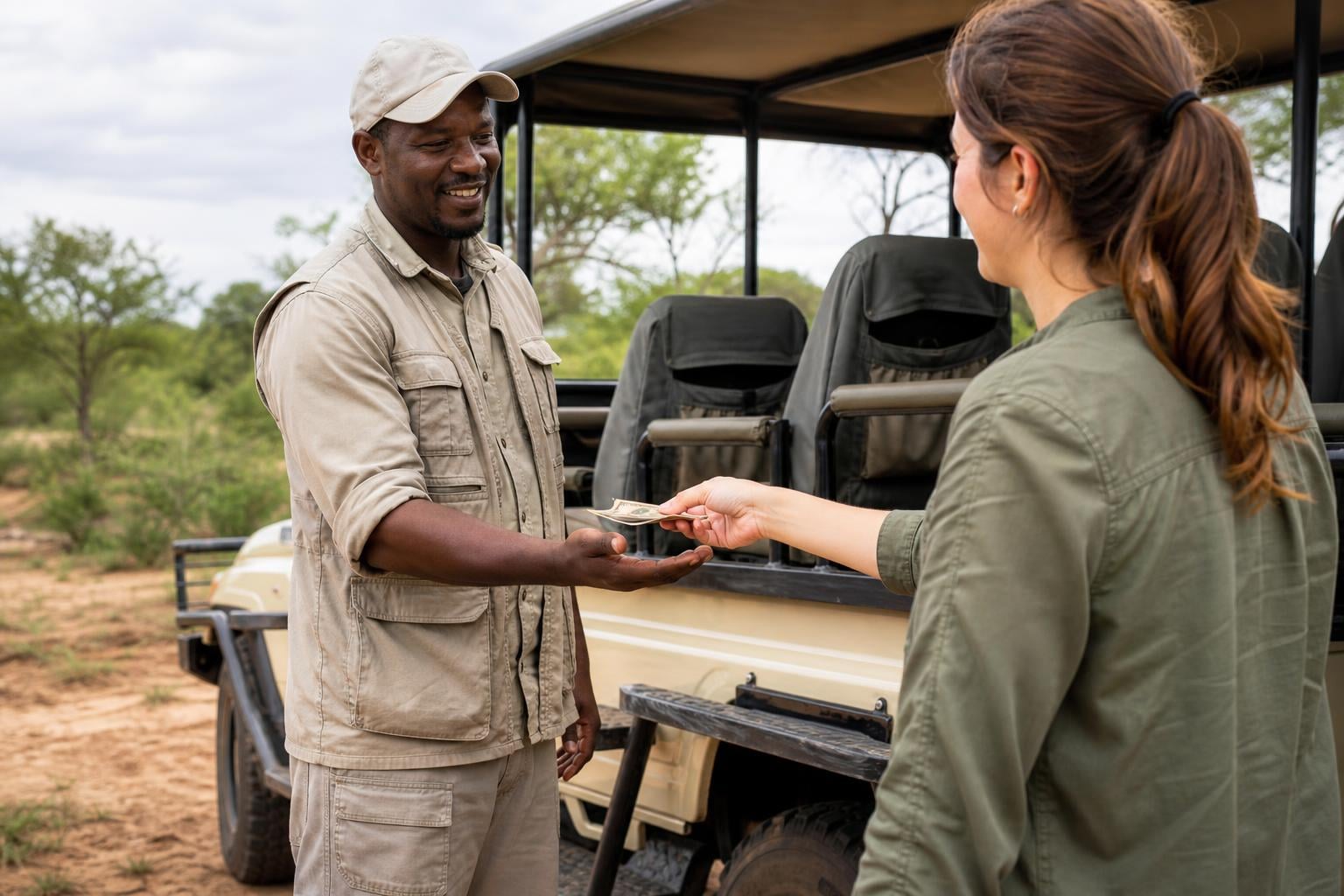
    Tips are never included in safari quotes, and they represent real money. Standard 2026 tipping rates: safari guide $50 per vehicle per day (shared among passengers), camp or lodge staff $10 to $15 per guest per day via a communal tip box.

    For a 7-day safari, budget $200 to $350 per person in tips.

    The tipping debate is real. Practitioners on TripAdvisor forums show wide disagreement about amounts. Some recommend $20 per day for the whole vehicle, others suggest $10 per person per day. Experienced travelers on forums advise tipping according to local wage levels, not norms from your home country. Outside North America, tipping is voluntary, not obligatory. The key is to see these as guidelines, not obligations. For more detailed guidance, read this safari tipping guide.

    Visa Fees

    Tanzania tourist visas cost $50 for most nationalities. US citizens pay $100. These are processed as e-visas before arrival. Details are covered in our Tanzania visa costs and rules guide.

    Travel Insurance

    Not optional. Comprehensive travel insurance covering emergency medical evacuation is essential. Medical flights from remote safari areas cost $20,000 to $50,000 without coverage. A good policy with evacuation coverage runs $100 to $300 for a two-week trip. This is one of the cheapest things on the list relative to the risk it covers.

    Zanzibar Mandatory Health Insurance

    Here’s a cost that almost no safari guide mentions: every visitor arriving in Zanzibar is required to purchase health insurance at the point of entry. This is a government requirement, not optional. You cannot proceed past the entry point without it. If you’re adding a Zanzibar beach extension to your safari, factor this in. For full details on Zanzibar costs, see our Zanzibar budget guide.

    Optional Activities

    Activity

    Typical Cost

    Hot air balloon safari (Serengeti)

    $550 to $650

    Walking safari

    $50 to $150

    Night game drive

    $50 to $100

    Cultural village visit

    $30 to $80

    Other Excluded Items

    Alcoholic beverages at lodges (often $5 to $15 per drink), laundry services ($10 to $20 per load), WiFi at remote camps (sometimes charged or unavailable), international flights, and personal shopping.


    How to Save on Safari Costs Without Sacrificing Quality

    Travel in Green Season

    The most straightforward savings lever. Lodge rates drop 20 to 40%, parks are less crowded, and many properties run promotions. If you can tolerate occasional rain and slightly more challenging road conditions, green season delivers exceptional value.

    Optimize Group Size

    Group size is one of the biggest cost levers available. Vehicle and guide costs are fixed whether there are two people in the car or six. A group of four typically pays 20 to 30% less per person than a couple. Sharing a vehicle with other travelers on a group-join departure cuts costs even further.

    Book Direct with a Local Operator

    Cutting out international middlemen saves 15 to 30% on the same itinerary. A licensed, Arusha-based operator with TATO membership and strong reviews provides the same (often better) service at lower cost, because you’re not funding a London or New York marketing budget.

    Mix Accommodation Tiers

    You don’t need luxury accommodation every night. Spend on the premium lodge for your Serengeti nights (where you’ll spend the most time) and choose mid-range options for transit nights or shorter stops. This “splurge-and-save” approach can reduce overall costs by 15 to 25% while preserving the highlight experiences.

    Target the Value Inflection Point

    As mentioned earlier, the biggest quality leap per dollar is from budget to mid-range. If your budget is tight, prioritize upgrading from basic camping to a mid-range lodge-based safari rather than stretching for luxury. The core wildlife experience at mid-range is outstanding.


    Sample Cost Scenarios (2026 Estimates)

    These all-in estimates include the safari package, tips, visa, travel insurance, and typical optional extras. International flights are excluded.

    Scenario

    Package Cost

    Add-Ons (tips, visa, insurance, extras)

    All-In Estimate

    5-day budget camping, 4 travelers, green season

    $1,250 to $1,800 pp

    $300 to $450 pp

    $1,550 to $2,250 pp

    7-day mid-range lodge, 2 travelers, shoulder season

    $3,200 to $4,500 pp

    $400 to $600 pp

    $3,600 to $5,100 pp

    10-day luxury fly-in, 2 travelers, peak season

    $8,500 to $15,000 pp

    $500 to $900 pp

    $9,000 to $15,900 pp

    7-day safari + 3-night Zanzibar extension, mid-range

    $4,000 to $5,500 pp

    $500 to $750 pp

    $4,500 to $6,250 pp

    For real itinerary templates with day-by-day cost breakdowns, see our safari itinerary ideas with costs.


    Tanzania vs. Other Safari Destinations

    Tanzania sits in the upper-middle range of African safari destinations. It’s generally 10 to 25% more expensive than comparable Kenya safaris, but 15 to 30% less than Botswana’s luxury offerings and 20 to 40% below South Africa’s premier private reserves. The higher Tanzania safari cost compared to Kenya reflects higher park fees, the Ngorongoro crater descent charge, and generally more remote logistics in the Serengeti ecosystem.

    For a detailed side-by-side breakdown, read our Tanzania vs. Kenya safari comparison.


    Start Planning Your Tanzania Safari

    Understanding what drives safari costs in Tanzania is the first step toward building a trip that matches your budget and expectations. Whether you’re drawn to budget camping under the stars or a luxury fly-in with private butlers, the core experience, watching lions hunt on the Serengeti plains, descending into Ngorongoro Crater, standing among thousands of wildebeest, is available at every tier.

    Ready to see what a custom itinerary looks like? Explore private Tanzania safari options with route-by-route pricing, or compare group vs. private safari costs to find the right fit.


    Frequently Asked Questions

    How much does a 7-day Tanzania safari cost in 2026?

    A 7-day safari costs $1,800 to $3,500 per person for budget camping, $2,800 to $4,900 for mid-range lodge-based trips, and $5,500 to $10,500+ for luxury options. These are package costs before tips, visa, and insurance, which typically add $400 to $600 per person.

    What are the biggest hidden costs on a Tanzania safari?

    Tipping ($200 to $350 per person for 7 days), the Ngorongoro Crater descent fee ($295 per vehicle), single supplements for solo travelers, alcoholic beverages at lodges, and travel insurance with medical evacuation coverage. The Zanzibar mandatory entry health insurance is another commonly missed cost for those adding a beach extension.

    Is it cheaper to book a Tanzania safari through a local operator?

    Yes. International agents and booking platforms add 20 to 40% markup, sometimes more. Booking directly with a licensed Arusha-based operator typically saves 15 to 30% on the same itinerary and accommodation. Always verify TATO membership and check review platforms before booking.

    What is the cheapest time of year for a Tanzania safari?

    The green season (late March through May) offers the lowest prices, with accommodation rates dropping 20 to 40% compared to peak season. Shoulder months like June and November also offer savings of 10 to 20% with generally better weather than the long rains.

    How much are Tanzania park fees in 2026?

    Premium parks like Serengeti charge $70 to $83 per adult per day. Mid-range parks like Tarangire and Lake Manyara charge $53 to $59. Standard parks like Mikumi run $30 to $35. Ngorongoro Conservation Area charges $82 per adult per day, plus a separate $295 vehicle fee to descend into the crater.

    Can I pay park fees in cash?

    No. Tanzania’s national parks operate on a completely cashless system through the GePG (Government Electronic Payment Gateway). Payments require a government Control Number, and self-drivers must pay by Visa or Mastercard at the gate. On organized safaris, your operator handles all park fee payments.

    How does group size affect Tanzania safari costs?

    Significantly. Vehicle and guide costs are fixed regardless of passenger count. A group of four pays 20 to 30% less per person than a couple for the same itinerary. Group-join safaris with six to nine passengers can reduce per-person rates by 30 to 50% compared to private vehicles.

    Should I tip on a Tanzania safari?

    Tipping is expected but not mandatory. Standard rates are around $50 per vehicle per day for the driver-guide (shared among passengers) and $10 to $15 per guest per day for lodge staff. Opinions vary widely among travelers. The consensus among experienced safari-goers is to tip according to the quality of service and local wage context rather than applying home-country norms.

  • Tanzania Safari Tipping Guide 2026: How Much to Tip

    Tanzania Safari Tipping Guide 2026: How Much to Tip

    TL;DR

    Budget $20 to $30 per person per day to cover tips for your safari guide, lodge staff, and incidental services in Tanzania. Bring crisp US dollar bills from 2009 or newer in small denominations. Tip your driver-guide directly at the end of the safari, and use the lodge tip box for camp staff. For Kilimanjaro climbs, budget $300 to $350 per climber for a 7-day route.


    Tipping anxiety is real. You’ve spent months planning a once-in-a-lifetime trip, and now you’re wondering whether you’ll accidentally insult your guide or overpay the wrong person. The good news: Tanzania safari tipping follows clear, well-established customs. Once you understand the system, the stress disappears.

    This guide defines every tipping term you’ll encounter, gives concrete dollar amounts for each role, and explains the cultural and economic context behind the practice. Whether you’re heading to the Serengeti, climbing Kilimanjaro, or adding a Zanzibar beach extension, you’ll know exactly how much cash to pack and who it goes to.

    For a broader view of what your entire trip will cost, see the Tanzania safari cost breakdown.

    Quick Answer: How Much Should You Tip on a Tanzania Safari?

    If you’re wondering how much to tip on a Tanzania safari, budget $20–30 per person per day for guides and lodge staff combined.

    Most travelers tip:

    Service

    Typical Tip

    Safari guide

    $10–20 per person/day (group) or $15–25 per person/day (private)

    Lodge tip box

    $5–15 per person/day

    Airport transfer

    $2–10

    Askari (night guard)

    $2–5

    Wildlife tracker

    $5

    Kilimanjaro climb

    $300–350 per climber for a 7-day trek

    Bring clean US dollar bills from Series 2009 or newer, carry plenty of $1, $5, $10 and $20 bills, and tip your safari guide on the final day while using the lodge tip box for camp staff.

    Tanzania Safari Tipping at a Glance

    Situation

    What Most Travelers Do

    Group safari

    Tip guide $10–20 per person/day

    Private safari

    Tip guide $15–25 per person/day

    Luxury lodge

    Use the communal tip box

    Camping safari

    Tip guide and cook separately

    Kilimanjaro climb

    Follow KPAP recommendations

    Zanzibar resort

    Tip the staff pool plus tour guides separately

    Cash currency

    USD preferred

    Best bill sizes

    $1, $5, $10, $20

    How Tipping Works in Tanzania: The Basics

    Tipping is customary in Tanzania but not mandatory. Nobody will chase you out of a lodge for skipping it. That said, tips are deeply woven into how the safari industry compensates its workers, and choosing not to tip has real consequences for the people who made your trip memorable.

    Safari guide base salaries in Tanzania typically range from $200 to $500 per month. Tips can represent 30 to 50 percent of a guide’s total earnings. That gap between base pay and livable income is not an accident. One operator explains candidly that staff actually prefer the tipping system because it allows them to earn a livable wage while staying below the tax threshold. If tips were folded into salaries, the operator would need to charge guests significantly more to cover deductions and overhead.

    Context matters here. Tanzania’s gross national income sits at roughly $2.49 per person per day, according to Expert Africa’s economic analysis. A $10 to $20 daily tip from a tourist far exceeds the national daily average. That’s not a reason to feel guilty. It’s a reason to understand that your tip carries real weight.

    Why Cash, Not Cards

    Tanzania Safari Tipping Guide 2026: How Much to Tip

    Tipping by card is not common on safari. Some lodges technically allow it, but card tips often pass through accounting systems and may not reach staff quickly. Cash remains the easiest and most direct method. This is true across the industry, from budget camping safaris to luxury tented camps.

    Key Tipping Terms: A Safari Glossary

    These are the terms that cause the most confusion. Understanding them before you arrive removes guesswork at the moment it matters.

    Askari

    The night guard at safari camps who protects the property from wildlife while guests sleep. Askaris work the least desirable shift, all night, every night, and they are almost never included in the lodge tip pool. Practitioners on forums report that tipping the askari $2 to $5 directly per night is a meaningful gesture that most travelers overlook entirely.

    Direct Tipping

    Handing a tip personally to a specific individual. This is the standard method for safari guides, driver-guides, and any staff member whose personal service you want to recognize. Use an envelope, say “Asante” (thank you in Swahili), and hand it over with your right hand. The left hand is considered impolite in Tanzanian culture.

    Driver-Guide

    The person who both drives and guides on a Tanzania safari. On most safaris, especially private ones, this is a single individual rather than two separate roles. They are the most important person you will tip and the one whose knowledge, driving skill, and bush instincts define your experience.

    Helping Porter

    A Kilimanjaro porter who carries an additional duty such as serving as your waiter, washing dishes, or servicing the toilet tent. Helping porters warrant a slightly larger tip than standard porters because of their extra workload.

    Kirunje

    This is a critical term that almost no tipping guide defines. Kirunje is the practice where extra porters show up at the Kilimanjaro tipping ceremony who did not actually work on your climb. They appear during the celebration hoping to receive a share of the tips. Reputable operators prevent this by using crew manifests and tip distribution reports, but it’s worth knowing the term so you can ask your operator about their safeguards. For more on Kilimanjaro-specific terminology, that resource covers the mountain vocabulary in depth.

    KPAP (Kilimanjaro Porters Assistance Project)

    The independent organization that advocates fair treatment of porters and is responsible for many of the improved working conditions on Mount Kilimanjaro. KPAP-compliant operators pay minimum wages, limit load weights, and require tip distribution reports so every crew member receives their fair share.

    Per Guest Per Day (PGPD)

    The standard unit used to calculate safari tips across East Africa. When a source says “$15 per guest per day,” it means each person in the vehicle or lodge tips that amount for each day of the safari. This is the framework the entire industry uses.

    Pooled Tips

    Tips distributed equally among all back-of-house staff. This is the standard model at lodges and tented camps. Kitchen workers, housekeepers, mechanics, gardeners, and other behind-the-scenes staff all receive an equal share from the communal tip box.

    Safari Cook

    On camping safaris, the dedicated cook who prepares all your meals in bush conditions. They are tipped separately from porters on Kilimanjaro climbs and separately from the driver-guide on camping safaris.

    Series 2009+ Rule

    Bring US dollar bills from Series 2009 or newer. The series year is printed below the portrait on the bill. Tanzanian banks and exchange bureaus refuse pre-2009 notes due to past counterfeiting issues. This catches travelers off guard constantly, and practitioners on Reddit confirm that even slightly worn older bills get rejected.

    Tip Box (Staff Tip Box)

    A shared tipping container, usually located at reception, that lodges and tented camps use to collect gratuities for the entire support team. Dropping your tip in the box rather than tipping individuals is the preferred method at most properties because it ensures fair distribution across the whole team.

    Tip Distribution Report

    A document each crew member signs after a Kilimanjaro climb, confirming they received their share of tips. KPAP-compliant operators review these reports after every climb to verify fairness. Ask your operator whether they use them.

    Tipping Ceremony

    On Kilimanjaro, the tipping ceremony is an important and often joyful custom that happens on the last night on the mountain or after descending. Amidst singing and dancing, climbers present their mountain crew with tips. It’s a communal celebration, not an awkward handoff.

    Who to Tip and How Much: Quick Reference Table

    The numbers below represent the widely accepted ranges across Tanzania’s safari industry. Your actual tip should reflect the quality of service, the length of your trip, and your own budget.

    Role

    Group Safari (per person/day)

    Private Safari (per person/day)

    Notes

    Safari guide / driver-guide

    $10–$20

    $15–$25

    Or $30–$50 per vehicle per day on private safaris

    Lodge / camp staff (tip box)

    $5–$15

    $5–$15

    Dropped in the staff tip box at reception

    Wildlife tracker / spotter

    $5

    $5

    At camps that employ dedicated trackers

    Night askari (camp guard)

    $2–$5

    $2–$5

    Tip directly, not through the tip box

    Personal butler (luxury camps)

    N/A

    $15

    Tip separately from the main tip box

    Transfer / airport driver

    $2–$10 per transfer

    $2–$10 per transfer

    Depends on distance and complexity

    Restaurant waiter (Arusha, etc.)

    10–15% of the bill

    10–15% of the bill

    At standalone restaurants in town

    Most travelers set aside $20 to $30 per person per day to comfortably cover guides, drivers, and lodge staff across their trip. For a 7-day safari, that translates to roughly $150 to $350 per person in total tipping cash.

    The distinction between group and private safaris matters here. Tipping norms shift depending on whether you’re sharing a vehicle with strangers or have a dedicated guide to yourself. For a deeper comparison, see the guide on private vs. group safari decisions.

    Typical Tanzania Safari Tipping Budget

    Below are realistic examples of how much travelers usually spend on tips.

    Trip Type

    Length

    Estimated Tips

    Budget group safari

    4 days

    $80–120

    Mid-range safari

    6 days

    $140–220

    Luxury private safari

    7 days

    $200–350

    Safari + Kilimanjaro

    14 days

    $500–700

    Kilimanjaro Tipping: A Separate System

    Tipping on Kilimanjaro operates differently from safari tipping. The mountain crew is larger (often 8 to 12 people for just two climbers), the amounts are standardized by KPAP guidelines, and the entire process culminates in the tipping ceremony.

    KPAP-Recommended Daily Rates

    Crew Role

    Tip Per Day (USD)

    Lead guide

    $20

    Assistant guide

    $12

    Cook

    $12

    Porter

    $6

    For a typical 7-day Machame Route climb with a crew of 10 (one guide, one assistant guide, one cook, and seven porters), budget approximately $700 to $900 in total tips. That works out to roughly $300 to $350 per climber.

    How the Ceremony Works

    On the final evening of the trek (or after descending to the gate), the crew gathers for the tipping ceremony. There’s singing, dancing, and genuine warmth. Climbers present tips to the lead guide, who distributes them to the team, or in some cases, climbers hand envelopes directly to each crew member.

    Watch for Kirunje

    As noted in the glossary above, kirunje is the practice where unauthorized porters appear at the tipping ceremony. The best defense is booking with an operator that maintains crew manifests and requires signed tip distribution reports. If you’re researching Kilimanjaro routes, the Machame route guide covers logistics and crew expectations in detail.

    Currency and Cash Rules

    Getting your cash right before departure is one of the simplest ways to reduce Tanzania safari tipping stress.

    What to Bring

    US dollars are the preferred tipping currency throughout Tanzania. Bring bills from Series 2009 or newer. The series year is printed on the front of the bill, just below the portrait. Older bills will be refused by banks, exchange counters, and often by lodge staff who know they can’t deposit them.

    Bills should be clean and uncreased. Torn, marked, or heavily wrinkled notes get rejected. This is not an exaggeration. Practitioners on travel forums report being turned away at multiple exchange points for bills with small pen marks.

    Denominations to Pack

    No competitor tipping guide provides a specific denomination breakdown. Here is a practical packing list for a 7-day safari:

    Denomination

    Quantity

    Purpose

    $1 bills

    10–15

    Luggage porters, small services

    $5 bills

    15–20

    Daily lodge tip box, transfer drivers, trackers

    $10 bills

    10–15

    Guide tips, larger lodge contributions

    $20 bills

    5–8

    Guide final tips, specialty roles

    Total cash to budget: $150 to $350 per person. If you’re also climbing Kilimanjaro, add another $300 to $350 per climber.

    Tanzanian shillings (TZS) are useful for small local purchases and tipping in towns, but USD remains standard for all safari and lodge tipping. There are no ATMs inside national parks, so get your cash sorted before entering the bush. For a complete gear and preparation checklist, the East Africa packing list covers what to bring beyond just cash.

    Right-Hand Etiquette

    Always hand tips with your right hand. In Tanzanian culture, the left hand is considered impolite for exchanges. A simple “Asante” as you hand over the envelope goes a long way.

    When and How to Tip

    Tanzania Safari Tipping Guide 2026: How Much to Tip


    Timing matters. Getting it wrong creates awkwardness that’s easy to avoid.

    End of Stay, Not Daily

    The standard practice is to tip your safari guide at the end of the safari, not after each game drive. If you’re staying at multiple lodges over a multi-day trip, tip the lodge staff tip box on your last morning at each property.

    The Envelope Method

    Place your tips in labeled envelopes (one for the guide, one for each tip box, one for any individual staff you want to recognize separately). This keeps things organized, especially on trips that span multiple camps. Some travelers label envelopes by day and role before even leaving home.

    Never Leave Cash on the Bed

    This is a common mistake. Do not leave cash on the bed when you leave your room or tent. Safari staff who find loose cash will assume it was forgotten and radio the driver or guide to return. It creates confusion and delays. Use the tip box or hand the envelope to a specific person.

    Ask About the Lodge Policy

    Some lodges prefer all tips go through the communal box. Others allow direct tipping of specific housekeepers or waitstaff. A quick question at check-in clears it up. For insights into how luxury Tanzania safari lodges handle these systems, that guide has useful detail.

    Common Tipping Mistakes to Avoid

    Tipping for Animal Sightings

    This is one of the most damaging mistakes a tourist can make, and it’s worth stating plainly. When guests give bigger tips for finding specific animals, it incentivizes guides to drive off-trail, crowd animals, and do whatever they can to help customers get “the perfect shot.” This is one of the biggest drivers of unethical safari behavior in Tanzania. Tip for professionalism, knowledge, and effort, not for whether a leopard happened to be in a tree.

    Overtipping to the Point of Economic Distortion

    Expert Africa makes a compelling argument that excessive tips can throw out the balance of the local economy. If a camp assistant ends up earning more than a park ranger thanks to massive tourist tips, it removes the incentive for rangers to pursue that harder, more critical work. One contributor on travel forums noted that many kids now say they want to be safari guides rather than teachers or doctors, not because they love wildlife but because “rich tourists will give me big tips.” Generosity is good. Reckless generosity has unintended consequences.

    Bringing Old or Worn US Bills

    Already covered, but worth repeating. Pre-2009 series bills and damaged notes will be refused. Check every bill before you leave home.

    Not Budgeting Enough Cash

    There are no ATMs in the Serengeti or Ngorongoro. If you run out of small bills on day three of a seven-day safari, you’re stuck. Pack more than you think you’ll need. Leftover cash converts easily at the airport. To avoid other common planning errors, the guide on costly safari booking mistakes is worth a read.

    Tipping Through One Person Without Transparency

    If you hand a lump sum to one staff member and ask them to distribute it, there’s no guarantee it reaches everyone fairly. Use the tip box for lodge staff, and tip your guide directly. On Kilimanjaro, insist on a tip distribution report.

    Zanzibar and Extension Tipping

    If your Tanzania safari includes a beach extension, tipping norms shift slightly.

    At Zanzibar beach resorts, the tip box system works the same way as safari lodges. Budget $10 to $15 per guest per day for the staff pool. Spice tour guides expect $5 to $10 per person. Dive and snorkel guides are typically tipped 10 to 15 percent of the excursion cost.

    For gorilla trekking extensions in Uganda or Rwanda, porters who carry your daypack on the trek are tipped $5 to $15 per porter. The trek guide receives $10 to $20 per person. These amounts are separate from any safari tipping. For more on what gorilla trekking in Uganda costs, that resource breaks down the full picture, including permit fees.

    Zanzibar-specific budgeting, including accommodation and activity pricing, is covered in the Zanzibar costs and budgets guide.

    The Ethics of Tanzania Safari Tipping

    Tipping in Tanzania is not just about generosity. It’s about understanding the economic system you’re participating in. A guide who earns $300 a month in base salary and supplements that with $150 to $250 in monthly tips is earning a solid livelihood by local standards. Your tip isn’t charity. It’s a meaningful part of a compensation structure that keeps safari costs accessible while rewarding good service.

    The best operators provide tipping guidance before your trip, use transparent distribution systems, and pay fair base wages. When choosing who to book with, ask about their tipping policies, whether they partner with organizations like KPAP, and how they ensure back-of-house staff benefit from guest generosity.

    Planning your Tanzania safari tipping in advance, packing the right denominations, and understanding who to tip and when will let you focus on what actually matters: the wildlife, the landscapes, and the people who bring it all together.

    Ready to start planning? Explore private Tanzania safari options to see how routes and costs come together.

    Frequently Asked Questions

    How much should I tip my Tanzania safari guide per day?

    The widely accepted range is $10 to $20 per person per day on a group safari and $15 to $25 per person per day on a private safari. Some travelers tip a flat $30 to $50 per vehicle per day on private trips. The high end is appropriate for exceptional service, not the baseline expectation.

    Do I tip in US dollars or Tanzanian shillings?

    US dollars are the standard tipping currency for safari guides, lodge staff, and Kilimanjaro crews. Bring bills from Series 2009 or newer in small denominations ($1, $5, $10, $20). Tanzanian shillings work for small tips in towns and local restaurants but are not the norm on safari.

    What is a tip box at a safari lodge?

    A tip box is a shared tipping container at lodge reception where guests deposit gratuities for the entire support team. The money is divided equally among kitchen staff, housekeepers, gardeners, mechanics, and other behind-the-scenes workers. It’s the fairest and most efficient way to tip lodge staff.

    How much should I budget for Kilimanjaro tips?

    For a 7-day climb with a crew of about 10, budget $700 to $900 in total tips (roughly $300 to $350 per climber). KPAP guidelines suggest $20 per day for the lead guide, $12 per day for assistant guides and cooks, and $6 per day for porters.

    Should I tip more if my guide finds rare animals?

    No. Tipping based on specific sightings incentivizes guides to drive off-trail, crowd animals, and prioritize spectacle over ethics. Tip for your guide’s professionalism, knowledge, safety awareness, and effort throughout the trip.

    When do I give tips on a multi-lodge safari?

    Tip the lodge staff tip box on your last morning at each property. Tip your safari driver-guide at the very end of the safari, on the final day. If you had different guides at different camps, tip each one when their service ends.

    What is kirunje on Kilimanjaro?

    Kirunje is the practice where unauthorized porters appear at the tipping ceremony hoping to receive a share of tips despite not having worked on your climb. Reputable operators prevent this by maintaining crew manifests and requiring signed tip distribution reports.

    Can I tip by credit card on safari?

    Technically some lodges allow it, but it’s uncommon and unreliable. Card tips may go through accounting systems and not reach staff quickly or directly. Cash remains the safest and most appreciated method across Tanzania’s safari industry.

  • Kilimanjaro Guides: 8 Keys to Choosing the Best (2026)

    Kilimanjaro Guides: 8 Keys to Choosing the Best (2026)

    TL;DR

    Every climber on Kilimanjaro is required by law to hire a licensed guide. The average summit success rate across all operators is roughly 65%, but that number jumps to 85–95% with experienced guides on longer routes. The difference comes down to guide certifications (look for Wilderness First Responder training, not just basic first aid), ethical porter treatment (verified by KPAP), and summit-night support ratios. Budget between $2,000 and $5,000 per person for a quality climb, and set aside $250–$400 in cash tips for your mountain crew.

    Quick Answer: How Do You Choose the Best Kilimanjaro Guide?

    The best Kilimanjaro guide is one who combines safety training, mountain experience, and ethical operating standards. Look for companies whose lead guides are Wilderness First Responder (WFR) certified, participate in the Kilimanjaro Porters Assistance Project (KPAP), maintain a 1:1 guide-to-climber ratio on summit night, recommend 7- to 9-day routes for better acclimatization, and clearly publish guide experience, pricing, and safety equipment. Avoid operators that compete mainly on the lowest price.

    Key Takeaways

    – Hiring a licensed guide is mandatory on every Kilimanjaro climb.

    – WFR certification is one of the strongest indicators of guide quality.

    – KPAP membership independently verifies porter welfare.

    – Longer routes (7–9 days) dramatically improve summit success.

    – The cheapest operators often cut costs through lower crew wages and reduced safety standards.

    – Summit-night guide ratios matter more than overall group size.

    – Expect to spend approximately $2,000–$5,000 for a reputable operator.

    – Experienced guides can improve summit success rates by more than 20 percentage points.

    At-a-Glance: How to Compare Kilimanjaro Guide Companies

    Evaluation Dimension

    What to Look For

    Red Flag

    Guide Certification

    WFR-certified lead guides

    Only basic KINAPA first aid

    Porter Welfare

    KPAP partner (independently audited)

    No KPAP mention; vague ethics claims

    Summit-Night Support

    1:1 guide-to-climber ratio

    1 guide for 6+ climbers

    Route Duration

    7+ day routes recommended

    Pushing 5-day itineraries

    Pricing

    $2,000–$5,000 pp with clear inclusions

    Under $1,500 all-in (corners being cut)

    Reviews

    Consistent 4.5+ across TripAdvisor, Google, Facebook

    Reviews only on operator’s own website

    Safety Equipment

    Pulse oximeters, supplemental O₂, radios

    No mention of medical equipment

    Experience Level

    Lead guides with 50–100+ summits

    No stated guide experience

    This table is the skeleton of every decision covered below. The rest of this article puts muscle on it.


    Do You Need a Guide on Kilimanjaro? (Yes, It’s the Law)

    TANAPA (the Tanzania National Parks Authority) enforces a nationwide policy requiring all trekkers on Mount Kilimanjaro to be accompanied by a licensed, certified guide. No exceptions for any route, any season, or any experience level. Solo “self-guided” Kilimanjaro climbs do not exist legally.

    The regulation serves three purposes. First, safety: altitude sickness kills people every year, and a trained guide catches warning signs before they become emergencies. Second, environmental protection: guides enforce park rules around waste, fire, and trail use. Third, local employment: the mountain supports thousands of Tanzanian families through guiding, portering, and cooking.

    If you’re not ready for a multi-day expedition but still want to experience Kilimanjaro’s lower slopes, there are day hike options that offer a taste of the mountain with less commitment.

    For a full summit attempt, the question is never whether to hire a guide. It’s which guide.


    What Kilimanjaro Guides Actually Do (Day by Day)

    Most people picture a guide as someone who walks in front of you and points at things. On Kilimanjaro, the guide’s real work is mostly invisible.

    Pre-Climb Briefing

    The day before your climb, your lead guide meets with you in Moshi or Arusha for a gear check, route overview, and health assessment. Good guides ask pointed questions about your training history, any medications you’re taking, and your previous altitude experience. They’re building a baseline they’ll compare against every day on the mountain.

    Daily Health Monitoring

    Each morning and evening, guides check pulse oximetry (blood oxygen saturation) and ask about sleep quality, appetite, headaches, and energy levels. This data tells them whether your body is acclimatizing on schedule.

    A Wilderness First Responder guide goes further. As one climbing forum contributor put it, “the best guides notice you didn’t finish dinner before you notice it yourself.” That kind of observation, probing why you’re not eating, catching a downward SpO₂ trend before you feel symptoms, is what separates a WFR-trained guide from one who simply walks beside you.

    Pacing and Acclimatization Decisions

    “Pole pole” (slowly, slowly) is the Swahili mantra on Kilimanjaro, but great guides do more than just walk slowly. They adjust pace dynamically based on how the group is responding. They decide when to add extra rest stops, when to extend time at a camp for better acclimatization, and when to push forward. These micro-decisions compound over a week-long climb and directly affect your summit success rate.

    Summit Night: The Critical 8–12 Hours

    Kilimanjaro Guides: 8 Keys to Choosing the Best (2026)

    Summit night is where guides earn their keep. You start around midnight, climbing in darkness at temperatures around -20°C, pushing through the thin air above 5,000 meters. This is when acute altitude sickness risk peaks.

    Some operators provide a 1:1 guide-to-climber ratio specifically for summit night, which means if one climber needs to turn back or be evacuated, every other climber still has a dedicated guide. Duma Explorer is one operator that maintains this 1:1 summit-day ratio, and it’s a structural advantage worth asking about when comparing companies.

    Emergency Response

    When things go wrong at altitude, they go wrong fast. Guides trained in wilderness medicine carry pulse oximeters, supplemental oxygen, comprehensive first aid kits, and VHF radios. Some top operators also carry Gamow bags (portable hyperbaric chambers that simulate lower altitude). Helicopter evacuation is available using Airbus AS 350 B3 helicopters that can land at altitudes up to 4,700 meters, but getting a climber down to that altitude often depends entirely on the guide’s quick decision-making.

    Understanding what you’ll eat on Kilimanjaro matters here too, because the cook is a critical member of the mountain crew. Good nutrition at altitude isn’t a luxury; it’s part of the safety system.

    Why Your Guide Matters More Than Your Fitness

    Many first-time climbers assume physical fitness is the biggest predictor of reaching Uhuru Peak. While preparation certainly helps, research and operator data consistently show that acclimatization strategy and guide decisions often have a greater influence on summit success.

    A professional guide controls pacing, hydration reminders, altitude monitoring, meal timing, rest breaks, and evacuation decisions. Even very fit climbers can develop Acute Mountain Sickness (AMS), while moderately fit hikers frequently reach the summit because their guides manage the climb conservatively.

    Think of fitness as your engine and your guide as the driver. A powerful engine with poor navigation still ends up in the wrong place.

    Guide Certifications That Matter

    Not all Kilimanjaro guide credentials are equal. Here’s what each one actually means for your safety.

    KINAPA/TANAPA License (Mandatory Baseline)

    A licensed Kilimanjaro guide is one who has been officially registered with KINAPA (Kilimanjaro National Park Authority). To obtain this license, guides typically undergo training covering park regulations, basic ecology, basic first aid, and client management. Every legal guide on the mountain has this. It’s the floor, not the ceiling.

    The critical gap: Tanzania’s national park regulations only require lead guides to hold a basic first aid certificate, with no requirement for wilderness-specific training. A standard first aider is trained to manage emergencies for 10–20 minutes until professional help arrives. On Kilimanjaro, professional help can be hours or even a full day away.

    Wilderness First Responder (The Real Differentiator)

    The most important voluntary certification for any Kilimanjaro guide is Wilderness First Responder (WFR). This internationally recognized 80-hour course prepares guides to manage medical emergencies in remote, high-altitude environments for 24 hours or longer in isolation.

    WFR is not legally required. The fact that some operators invest in it anyway tells you something important about their priorities. When evaluating companies, don’t just ask “Are your guides WFR-certified?” Ask “Are ALL your lead guides WFR-certified, or just some?”

    KPAP Partner Status (Ethics Verification)

    The Kilimanjaro Porters Assistance Project, established in 2003, is a legally registered Tanzanian NGO that monitors porter working conditions. Here’s the part most articles skip: KPAP assigns an undercover porter on each hike to evaluate treatment standards from the inside. After every climb, KPAP assesses the crew’s conditions and assigns a score. To remain a partner, operators must maintain a score of 85% or above.

    This secret-shopper system is genuinely rigorous. A company claiming to be a “KPAP partner” can be independently verified, unlike vague claims about “treating our porters well.”

    Red Flags to Watch For

    • No mention of any certification beyond KINAPA

    • Claims of “trained guides” with no specifics

    • No KPAP affiliation or porter welfare policy

    • No physical office in Moshi or Arusha (makes accountability difficult)

    • Reviews only on the operator’s own website

    For a broader understanding of staying safe during East Africa travel, see this safety guide.

    WFR vs Basic First Aid: What’s the Difference?

    Skill

    Basic First Aid

    Wilderness First Responder

    Training Length

    Usually 1–2 days

    Approximately 80 hours

    Remote Medicine

    Limited

    Extensive

    High Altitude Emergencies

    Minimal

    Comprehensive

    Patient Care Duration

    Minutes

    Up to 24+ hours

    Evacuation Planning

    Basic

    Advanced

    Medical Decision Making

    Limited

    Extensive

    For Kilimanjaro, WFR certification provides substantially better preparation for managing altitude-related emergencies where professional medical care may be many hours away.

    The Guide Career Ladder: Porter to Summit Leader

    Understanding how Kilimanjaro guides build their careers helps you appreciate what you’re paying for and ask better questions when evaluating companies.

    Most guides are Tanzanian locals who start as mountain porters, carrying gear up and down the slopes for years. From there, they may advance to personal porter (assigned to a single climber), then assistant guide, sometimes cook, and eventually pursue their KINAPA guiding certification. At companies like Thomson Safaris, guides like James have documented this full progression from porter to head guide over the course of a decade or more.

    This matters because a guide with 15+ years of experience and 100+ successful summits has encountered nearly every combination of weather, altitude sickness, group dynamics, and equipment failure that the mountain can produce. Experience compounds on Kilimanjaro. Each climb is different, and the edge cases (a sudden weather shift at Barafu Camp, a climber who hid symptoms for two days) are what separate a veteran guide from a competent but inexperienced one.

    When comparing operators, look for stated guide experience levels. The strongest companies will tell you their lead guides have 50–100+ summits each. Senior guides at top operators often exceed 200.

    The industry is also professionalizing rapidly. In 2026, TATO (the Tanzania Association of Tour Operators) launched a national capacity-building initiative that brought together over 2,428 registered driver guides and more than 1,159 mountain porters for updated training on international service standards. This is fresh context that signals the industry is raising its baseline, which makes choosing operators who’ve been above that baseline all along even more valuable.


    How to Evaluate a Kilimanjaro Guide Company

    Here’s an 8-point checklist you can use before committing money to any operator. Print it out or save it on your phone.

    1. KINAPA/TANAPA License

    Confirm the company is registered and licensed. This is table stakes, but some operators working through informal middlemen may not hold direct licenses.

    2. WFR Certification for Lead Guides

    Ask specifically: “How many of your lead guides hold active WFR certification?” The answer should be all of them, not “some” or “our senior guides.”

    3. KPAP Partner (Verified)

    Check the KPAP website for the operator’s name. Self-claimed ethical treatment is marketing. KPAP verification is accountability. Duma Explorer is a founding partner of KPAP, which signals something stronger than mere compliance.

    4. Published Guide-to-Climber Ratios

    This should be stated on the operator’s website, especially for summit night. A 1:1 ratio on summit night is the gold standard. If the company won’t publish their ratios, that tells you something.

    5. Transparent Pricing

    The company should clearly list what’s included and excluded. Park fees, crew wages, meals, camping equipment, rescue fees, airport transfers: all of it should be spelled out. More on pricing below.

    6. Minimum 7-Day Routes Recommended

    Each additional day above six days on the mountain increases summit success rates by 8–10%. An operator that eagerly sells 5-day climbs is prioritizing volume over your safety.

    Considering a Kilimanjaro climb? Compare routes, durations, and success rates to understand which itineraries give you the best chance of reaching the summit.

    7. Physical Office in Moshi or Arusha

    A local office means local accountability. It means the operator can be found if something goes wrong. Practitioners on Reddit consistently recommend booking with Tanzania-based operators for this reason, noting that local presence translates to faster problem resolution and more control over crew quality.

    8. Review Consistency Across Multiple Platforms

    Check TripAdvisor, Google, SafariBookings, and Facebook groups. An operator with glowing reviews on their own website but no presence on independent platforms is a warning sign. Look for consistent 4.5+ ratings across at least two or three platforms.

    Common Mistakes People Make When Choosing a Guide

    Many first-time climbers focus almost entirely on price. Unfortunately, this often leads to compromises that aren’t obvious until they’re already on the mountain.

    Common mistakes include:

    • Choosing the cheapest operator available

    • Booking a 5-day itinerary to save money

    • Ignoring guide certifications

    • Not asking about summit-night support

    • Assuming online reviews tell the whole story

    • Forgetting to verify KPAP partnership

    • Comparing only total price instead of inclusions

    Avoiding these mistakes greatly improves both safety and summit success.

    What Kilimanjaro Guides Cost (Full Pricing Breakdown)

    The pricing question is more nuanced than most articles acknowledge. Here’s how the money actually breaks down.

    The Fixed Chunk: Park Fees

    Park fees set by TANAPA usually make up 50–60% of the total payment. For a typical 7-day climb, park fees alone range between $900 and $1,300. Every operator pays these, and no one gets a discount. This means that when you see wildly different prices between operators, the difference lives in the remaining 40–50%.

    The Variable Chunk: Where Guide Quality Lives

    That remaining portion covers crew wages, food quality, camping equipment, safety gear, WFR training, transportation, and the operator’s margin. This is where guide quality, porter welfare, and safety equipment are funded.

    A quality trek typically falls in the $2,000 to $6,000 range, with budget options starting around $1,400 and luxury climbs exceeding $7,000. For most climbers, the realistic cost of a safe, well-organized expedition sits between $3,000 and $5,000 per person.

    For a deeper look at where every dollar goes, see this Kilimanjaro cost breakdown.

    Why Cheap Climbs Have a Hidden Cost

    When an operator charges under $1,500 all-in, something is being cut. Usually it’s crew wages. KPAP’s minimum wage standards require porters to earn at least 20,000 TZS/day, cooks and assistant guides 30,000 TZS/day, and lead guides 40,000 TZS/day. Budget operators frequently fail to meet these minimums.

    As KPAP has documented, the lower the cost of a climb, the higher the probability that an operator is not providing proper treatment standards, such as minimum salary and food. Well-meaning climbers inadvertently become part of the exploitation when they book on price alone.

    The price question isn’t just about personal value. It’s an ethics question.

    Group vs. Private Pricing

    Group climbs spread fixed costs across more people, bringing per-person prices down. For example, Duma Explorer’s group departures run from roughly $2,399 per person for a 7-day Machame climb to around $2,999 per person for an 8-day Lemosho, with maximum group sizes capped to maintain quality. Private climbs on similar routes start from approximately $1,999 (Machame) to $3,499 (Lemosho via Crater Camp) per person but offer more flexibility in dates and pacing.

    For context on how these costs fit into a broader Tanzania trip budget, safari and beach extensions add their own layer of planning.

    What Is Included in Most Kilimanjaro Guided Climbs?

    Usually Included

    Often Extra

    Park fees

    Flights

    Camping equipment

    Travel insurance

    Guides

    Visas

    Porters

    Tips

    Cook

    Personal gear rental

    Meals

    Hotel upgrades

    Transfers

    Alcoholic drinks

    How Much to Tip Your Kilimanjaro Guide

    Tipping is expected on Kilimanjaro and represents a significant portion of your crew’s income. KPAP recommends the following daily rates:

    Role

    Recommended Tip Per Day

    Lead guide

    $20

    Assistant guide

    $12

    Cook

    $12

    Porter

    $6

    For a typical 6–8 day climb, the recommended total tip per climber is $250–$400 for the entire mountain crew. A common rule of thumb: budget 10–15% of your total trip cost for tipping.

    How the Tipping Ceremony Works

    On the final day of your descent, your guide will organize a tipping ceremony at the last camp or at the park gate. Your crew gathers, there’s usually some singing and dancing, and you present the tips. Bring cash in U.S. dollars, ideally in small denominations ($1, $5, $10, $20). ATMs in Moshi and Arusha are not always reliable, so get your cash sorted before arriving.

    For broader context on tipping customs across East African adventures, this safari tipping guide covers amounts and etiquette for different types of trips.


    Crew Composition: Who’s on the Mountain With You

    Your “guide” is actually a full mountain team. For a climb with two people over seven days, a normal crew comprises one lead guide, one assistant guide, one cook, and six to seven porters. The general ratio is two to three porters per climber, plus one guide per two to three clients.

    Each porter is limited to carrying 20 kg of client gear (a TANAPA regulation), which is why you need multiple porters. They carry your camping equipment, food, water, cooking gear, and safety equipment. Each porter’s load is weighed at the gate to enforce the limit.

    The cook deserves special mention. At altitude, appetite drops and nausea increases. A skilled mountain cook who can prepare appealing, calorie-dense meals in a camp kitchen at 4,000+ meters is genuinely contributing to your summit chances.

    Who Makes Up a Typical Kilimanjaro Crew?

    Crew Member

    Primary Responsibility

    Lead Guide

    Navigation, safety, medical decisions

    Assistant Guide

    Client support and pacing

    Cook

    Meals and hydration

    Porters

    Carry camping equipment and luggage

    Waiter (some operators)

    Meal service and camp support

    Many climbers are surprised to learn that a group of two guests may be supported by eight to ten crew members.


    Route-Specific Guide Strategies

    Kilimanjaro Guides: 8 Keys to Choosing the Best (2026)

    How a guide manages your climb changes significantly based on which route you’re on. Here’s what to know.

    Machame Route (7 Days)

    The most popular route, with an approximately 85% success rate on a 7-day itinerary. Guides manage the “climb high, sleep low” profile carefully, especially on the descent from Lava Tower to Barranco Camp. The Barranco Wall scramble on Day 4 is where guide experience with nervous climbers matters most. Read the full Machame route breakdown for day-by-day details.

    Lemosho Route (8 Days)

    Around 90% success rate with an 8-day itinerary. The longer duration gives guides more acclimatization flexibility. Lemosho approaches from the west and joins the Machame route at Lava Tower, giving guides two extra days to monitor your body’s response before the critical push.

    Northern Circuit (9 Days)

    The highest success rate at roughly 95%. This is the longest route, circumnavigating the mountain and offering the most gradual acclimatization. Guides use the extra days to fine-tune pacing. Two groups on the same 9-day Northern Circuit can still have meaningfully different outcomes depending on operator quality, because how guides respond to altitude symptoms on Day 6 determines whether you summit on Day 8.

    Marangu Route (5–6 Days)

    The only route with hut accommodations instead of tents, and it has the lowest success rate at approximately 70%. Guides face a tougher challenge here because the shorter itinerary compresses acclimatization. A great guide will recommend the 6-day option over the 5-day one, even though it costs more.

    Rongai Route (7 Days)

    The only northern approach, with less traffic and drier conditions. Guides familiar with Rongai know that its gentler gradient can create a false sense of security. Climbers feel good for days, then hit the altitude wall suddenly. Experienced Rongai guides front-load their symptom monitoring for this reason.

    Seasonal weather patterns also shape guide strategy significantly. See the Kilimanjaro weather by zone guide for month-by-month conditions across the mountain’s five climate zones.

    Which Route Gives You the Best Chance of Reaching the Summit?

    Route

    Days

    Approx. Success Rate

    Difficulty

    Northern Circuit

    9

    95%

    Moderate

    Lemosho

    8

    90%

    Moderate

    Machame

    7

    85%

    Moderate

    Rongai

    7

    80–85%

    Moderate

    Marangu

    5–6

    65–70%

    Moderate to Challenging

    If maximizing summit success is your priority, choose a longer itinerary rather than a shorter one. Extra acclimatization days generally produce a larger improvement in success rates than most differences between routes.

    Questions to Ask Your Operator Before Booking

    Use this checklist in your first conversation with any Kilimanjaro operator. Their answers (or lack of answers) will tell you a lot.

    1. Are all your lead guides WFR-certified? When was their certification last renewed?

    2. What is your guide-to-climber ratio on summit night specifically?

    3. Are you a verified KPAP partner? What was your most recent score?

    4. What medical equipment do your guides carry? (Pulse oximeter, supplemental oxygen, Gamow bag, radio?)

    5. How many successful summits has your most experienced lead guide completed?

    6. What is your protocol if a climber needs to descend mid-climb?

    7. Can you provide a full cost breakdown showing park fees, crew costs, and inclusions separately?

    8. What is your minimum recommended route duration, and why?

    Operators who answer these confidently and specifically are the ones investing in their guides. Operators who deflect or give vague responses are worth crossing off your list.

    Ready to start planning? Explore Kilimanjaro route options and costs to find the right itinerary for your fitness level and schedule.


    Frequently Asked Questions

    Can I choose my specific guide?

    Most operators assign guides based on availability and route expertise. However, if you’ve researched a specific guide (some have their own following on social media), ask the operator. Repeat clients and referrals often can request a particular lead guide, especially with smaller companies.

    How many guides will be with me?

    The standard is one lead guide and one assistant guide for groups of two to four climbers. Larger groups add additional assistants. On summit night, the best operators increase this to a 1:1 ratio so that every climber has dedicated support during the most dangerous phase of the climb.

    What happens if I need to turn back?

    Your guide will assess the situation and may recommend descent. If you’re in a group with a 1:1 summit-night ratio, an assistant guide will escort you down while the rest of the group continues with their own guides. With lower ratios, one climber’s evacuation can compromise the entire group’s support.

    Do guides summit every time?

    No. Lead guides summit hundreds of times over their careers, and most are acclimatized to the altitude through sheer repetition. But they don’t summit on every single climb. If a client needs to descend, the lead guide often accompanies them. Some guides also rotate to manage fatigue over back-to-back climbs.

    What language do guides speak?

    Swahili is the first language for most Tanzanian guides, and English is the standard working language on the mountain. Communication is rarely a problem. Some operators also have guides who speak French, German, or Spanish, but you need to request this in advance.

    What gear should I bring?

    Your operator provides camping and cooking equipment. You’re responsible for personal gear: clothing layers, boots, sleeping bag (often available for rent), headlamp, water bottles, and snacks. A complete packing list for East Africa covers everything in detail, and if you want Kilimanjaro-specific gear guidance, check the Kilimanjaro training glossary to understand terms like “layering system” and “gaiters.”

    Is there a minimum experience level I should look for in a guide?

    Look for a lead guide with at least 50–100 successful summits. Senior guides at top operators have well over 100 each, and some exceed 200. Experience on your specific route matters too, so don’t hesitate to ask.

    Do I need travel insurance for Kilimanjaro?

    Yes, absolutely. Make sure your policy covers high-altitude trekking up to at least 6,000 meters and includes helicopter evacuation. Many standard travel insurance policies exclude altitude activities above 4,000 or 5,000 meters. Check the fine print before you book.


    Your guide is not a nice-to-have on Kilimanjaro. Your guide is the single biggest variable between standing on Uhuru Peak and turning around at Stella Point. Choose accordingly.

    Start your Kilimanjaro planning: See all climbing routes, pricing, and dates offered by Duma Explorer, with WFR-certified guides, 1:1 summit-day support, and KPAP founding partner status.

  • Where to Go Gorilla Trekking in 2026: Rwanda, Uganda, DRC

    Where to Go Gorilla Trekking in 2026: Rwanda, Uganda, DRC

    TLDR

    Mountain gorillas live in only three countries: Rwanda, Uganda, and the Democratic Republic of Congo. The best places to go gorilla trekking are Volcanoes National Park (Rwanda), Bwindi Impenetrable National Park (Uganda), and Mgahinga Gorilla National Park (Uganda). Rwanda is the simplest choice for short, high-end trips, while Uganda offers lower permit costs and deeper rainforest immersion. DRC’s Virunga is biologically extraordinary but carries serious advisory risk for most travelers in 2026.

    Quick Answer: Which Country Should You Choose for Gorilla Trekking?

    If you only need a simple recommendation:

    If you want…

    Choose

    The easiest trip with luxury lodges

    Rwanda (Volcanoes National Park)

    The best value for money

    Uganda (Bwindi Impenetrable National Park)

    The quietest trekking experience

    Uganda (Mgahinga Gorilla National Park)

    The longest gorilla encounter

    Uganda (Gorilla Habituation Experience)

    A short trip from an international airport

    Rwanda

    A longer East Africa safari itinerary

    Uganda

    The lowest travel risk in 2026

    Rwanda

    The cheapest permit

    Uganda

    For most first-time visitors, Rwanda is the easiest option, while Uganda offers the best overall value. The Democratic Republic of Congo is biologically exceptional but is not recommended for most leisure travelers because of current travel advisories.

    The Four Parks Where You Can Go Gorilla Trekking

    Mountain gorilla habitat covers roughly 792 square kilometers split across two ecosystems: the Virunga Massif (shared by Rwanda, Uganda, and DRC) and the Bwindi-Sarambwe area (shared by Uganda and DRC). No other place on earth has wild mountain gorillas.

    Four national parks issue permits:

    • Volcanoes National Park in Rwanda

    • Bwindi Impenetrable National Park in Uganda

    • Mgahinga Gorilla National Park in Uganda

    • Virunga National Park in DRC

    For most travelers, the practical decision is Rwanda versus Uganda. DRC’s Virunga belongs in the conversation biologically, but current government advisories make it a specialist-only choice. The sections below break down each destination, the terminology that shapes your decision, what permits actually cover, and which park fits your trip.

    Compare Rwanda vs Uganda in our full side-by-side gorilla trekking guide.

    Gorilla Trekking Locations at a Glance

    Country

    National Park

    Gorilla Population

    Best For

    Airport

    Rwanda

    Volcanoes

    Virunga population

    Luxury, short trips

    Kigali

    Uganda

    Bwindi

    Nearly half the world’s mountain gorillas

    Value, biodiversity

    Entebbe/Kisoro

    Uganda

    Mgahinga

    Virunga population

    Quiet trekking

    Kigali or Kisoro

    DRC

    Virunga

    Virunga population

    Specialist expeditions

    Goma

    How to Choose the Best Gorilla Trekking Destination

    Many travelers spend too much time comparing permit prices without considering travel time, hiking difficulty, and the type of trip they want.

    The best destination usually depends on five factors:

    Budget

    Uganda generally offers the lowest permit cost.

    Time Available

    Rwanda is ideal for two- or three-day trips because Volcanoes National Park is only a few hours from Kigali.

    Fitness

    Rwanda’s volcanic terrain is often considered easier than Bwindi’s dense rainforest.

    Wildlife Goals

    Uganda combines gorillas with chimpanzees, classic safaris, and birding.

    Luxury vs Adventure

    Luxury travelers usually prefer Rwanda, while adventure travelers often choose Uganda.

    Gorilla Trekking Glossary: Terms That Shape the Decision

    A handful of terms come up in every gorilla trekking conversation. Understanding them before choosing a park saves confusion later.

    Gorilla trekking (or gorilla tracking). A guided hike to locate a habituated gorilla family and observe it for a limited time. The two terms are used interchangeably across East Africa.

    Habituated gorilla family. A gorilla group gradually accustomed to limited human presence through years of careful, controlled exposure. Only habituated families receive tourist visitors. Rwanda typically has 12 habituated tourist groups. Bwindi has more.

    Gorilla permit. The official government authorization for a specific trek on a specific date. Rwanda issues permits through its RDB booking portal at US$1,500 for foreign adults. Uganda’s UWA listed permits at US$800 for foreign non-residents through June 2026 (verify UWA’s current tariff for dates after that).

    Permit-only price. The government fee for the trek day alone. This does not include lodging, meals, transport, porter fees, tips, or operator services. Practitioners on Reddit consistently flag this misunderstanding. One traveler in r/travel explained that Rwanda’s US$1,500 is “only the government permit,” not the cost of the trip. This distinction matters enough to highlight separately in the permit section below.

    One-hour rule. Standard gorilla trekking allows a maximum of roughly one hour observing the gorillas once contact is made.

    Eight-person rule. Conservation guidelines cap tourist visits at about eight visitors per gorilla group per day. Rwanda typically issues 96 permits daily: eight for each of its 12 habituated groups.

    Gorilla family allocation. The morning assignment of trekkers to a specific gorilla family. You can request an easier or harder trek. But gorillas are wild and they move. A commenter in r/FATSafari noted that requests carry weight but “there are no guarantees.”

    Sector. In Bwindi, a trekking area or trailhead such as Buhoma, Ruhija, Rushaga, or Nkuringo. Each offers different terrain, altitude, and lodge options. For a breakdown, see our guide to Bwindi’s gorilla trekking sectors.

    Gorilla habituation experience. A longer option available only in Uganda’s Bwindi. Instead of one hour, you spend up to four hours with a gorilla troop still being accustomed to human presence. UWA’s 2024-2026 tariff listed this at US$1,500 for foreign non-residents, matching Rwanda’s standard permit price but offering four times the gorilla time.

    Virunga Massif. The transboundary volcanic mountain ecosystem spanning Rwanda, Uganda, and DRC. Three of the four gorilla parks sit within it.

    Where to Go Gorilla Trekking: Quick Comparison

    Factor

    Rwanda: Volcanoes NP

    Uganda: Bwindi

    Uganda: Mgahinga

    DRC: Virunga

    Best for

    Short, polished, luxury trips

    Value, rainforest immersion, longer itineraries

    Quieter Virunga-style trek, golden monkeys

    Specialist travelers only

    Permit price

    US$1,500 (foreign adult)

    US$800 (FNR, 2024-2026; verify current)

    Same as Bwindi

    Varies; check park directly

    Trek feel

    Volcanic slopes, bamboo forest, streamlined

    Dense, humid, steep rainforest

    More open volcanic terrain

    Volcanic forest, 1-2.5 hrs hiking each way

    Logistics

    2-3 hours from Kigali

    8-10 hours from Entebbe; domestic flights available

    Southwestern Uganda or Kigali access

    Requires DRC entry; safety-driven logistics

    2026 U.S. advisory

    Level 3 (Volcanoes NP excluded from border zone)

    Level 4

    Level 4 (same as Bwindi)

    Level 4

    Minimum age

    15

    15

    15

    15

    For a closer look at how altitude differs between parks, see our gorilla trekking altitude guide.

    Best for Short, Polished Trips: Rwanda’s Volcanoes National Park

    Where to Go Gorilla Trekking in 2026: Rwanda, Uganda, DRC

    Rwanda is the most common answer when people ask where to go gorilla trekking, and for good reason. Volcanoes National Park sits just two to three hours from Kigali by road. The park protects montane ecosystems on the Virunga volcanic slopes, with a mix of evergreen and bamboo forest, grassland, and heath.

    The infrastructure is well organized. Morning briefings, group allocation, and ranger-guided hikes run smoothly. High-end lodges sit close to park headquarters. For travelers who want gorilla trekking as a focused two or three-day experience rather than a week-long expedition, Rwanda delivers that efficiently.

    Rwanda’s official foreign visitor permit costs US$1,500. The minimum age is 15. If you fail to track because of gorilla group movement, you may receive another chance or a full refund. Those who track all day but fail to locate a family receive a 75% refund.

    Here is a detail most guides miss: Rwanda is actively expanding Volcanoes National Park by 37.4 square kilometers, a 23% increase, with a US$300 million investment and a new 6,620-hectare buffer zone. That expansion directly grows mountain gorilla habitat.

    Safety note for Rwanda

    The U.S. State Department’s June 2026 advisory rates Rwanda at Level 3 (“Reconsider Travel”), but specifically states that Volcanoes National Park is not included in the 10-kilometer DRC-border “Do Not Travel” zone. The advisory recommends using RDB-sanctioned treks with licensed guides. Always check the current advisory before finalizing travel.

    Best for Value and Rainforest Immersion: Uganda’s Bwindi

    If the best place to go gorilla trekking for you depends on budget, biodiversity, or adventure, Bwindi is likely your answer.

    Bwindi is a UNESCO World Heritage Site covering over 32,000 hectares in southwestern Uganda. It contains more than 160 tree species, over 100 fern species, and a striking concentration of Albertine Rift endemics across habitats ranging from 1,160 to 2,706 meters. UNESCO’s assessment is direct: Bwindi is home to almost half the world’s mountain gorilla population.

    The trekking experience here differs from Rwanda. The forest is denser, more humid, and often steeper. Trails push through thick undergrowth. Some treks last an hour, others six or more. The word “impenetrable” in the park’s name is not marketing.

    Uganda’s official UWA tariff for July 2024 through June 2026 listed gorilla tracking permits at US$800 for foreign non-residents. That rate included the guide fee, park entrance for the day, and a community development contribution. Because that tariff period ended June 30, 2026, check UWA’s current pricing before booking.

    See Uganda gorilla trip pricing for a full cost breakdown.

    Bwindi also offers something Rwanda does not: the gorilla habituation experience. This lets a small group spend up to four hours with a gorilla family still being habituated. Under the 2024-2026 tariff, it was priced at US$1,500 for foreign non-residents, matching Rwanda’s one-hour permit but offering dramatically more time.

    Why Uganda beyond gorillas

    Uganda adds chimp trekking in Kibale, tree-climbing lions in Queen Elizabeth National Park, Murchison Falls, serious birding, and Lake Bunyonyi. Travelers who want a broader primate-and-wildlife itinerary find Uganda far more varied than a Rwanda-only trip. Practitioners on LinkedIn who specialize in East Africa ground operations consistently position Uganda as the stronger choice for longer, multi-experience journeys.

    Safety note for Uganda

    As of June 2026, the U.S. State Department rates Uganda at Level 4 (“Do Not Travel”) due to crime, health concerns including Ebola, terrorism, and unrest. This is a significant advisory level. Many experienced operators continue to run gorilla treks in Bwindi, but travelers should review the current advisory, consult their insurer, and make an informed decision.

    The Overlooked Option: Mgahinga Gorilla National Park

    Most guides discussing where to go gorilla trekking focus on Bwindi and Volcanoes while barely mentioning Mgahinga. That’s a gap worth filling.

    Mgahinga Gorilla National Park sits in Uganda’s portion of the Virunga Massif, the same volcanic ecosystem as Rwanda’s Volcanoes National Park. It is smaller and less visited, with a more open volcanic feel compared to Bwindi’s dense canopy. Experienced safari planners describe Mgahinga’s terrain as quieter, with a different mood from both Bwindi’s jungle intensity and Volcanoes’ organized flow.

    Travelers on Reddit have called Mgahinga a “secret tip” because it provides a Virunga-style ecosystem at Uganda permit pricing, with golden monkey trekking as an add-on. One user in r/AfricaTravel specifically recommended it over both Volcanoes and Bwindi for people who value a less obvious experience. That is anecdotal, not a guarantee, but it reflects a real pattern in traveler feedback.

    Mgahinga falls under Uganda’s permit system. Pricing and booking mirror Bwindi. The same Uganda advisory applies.

    What About DRC’s Virunga National Park?

    Any honest answer to where to go gorilla trekking must include Virunga. It is a UNESCO World Heritage Site spanning 790,000 hectares, with habitats from lowland swamps to Rwenzori snowfields above 5,000 meters. Treks are led by Virunga Rangers and local pisteurs, typically require one to two and a half hours of hiking each way, and visitors are provided surgical masks near the gorillas.

    The park’s official tourism site currently says Virunga is welcoming tourists. But the U.S. State Department rates DRC at Level 4 “Do Not Travel” due to crime, unrest, terrorism, kidnapping, and health risks, specifically highlighting active fighting in North and South Kivu. The UK FCDO advises against all travel to both provinces and warns that routes, borders, and airports can change at short notice.

    The correct position is not “Virunga is closed” and not “Virunga is fine.” It is: biologically extraordinary, but advisory risk is currently the deciding factor. For most leisure travelers, especially those based in the U.S. or UK, Virunga should not be the default recommendation in 2026.

    How Permits Work, and What They Do Not Include

    This section matters more than it might seem. The single biggest planning confusion is treating the permit price as the trip price.

    A gorilla permit covers the park entry, the guided trek, and approximately one hour with the gorillas. That’s it. It does not cover transport to the park, accommodation, meals, porter fees, tips, flights, visas, or travel insurance. For a complete look at Uganda permit booking rules, see our dedicated guide.

    Current permit prices

    • Rwanda (foreign adult): US$1,500 via RDB

    • Uganda (foreign non-resident, 2024-2026 tariff): US$800 via UWA (verify current tariff)

    • Uganda gorilla habituation (FNR, 2024-2026): US$1,500

    • Rwanda (foreign resident): US$500

    • East African citizens: US$200 (Rwanda) or 300,000 UGX (Uganda)

    Permit price vs. trip price

    The permit is one line item. A realistic gorilla trekking trip also includes round-trip international flights, in-country transport (driver, vehicle, fuel, or domestic flights), accommodation, all meals, porter fees (typically US$10-20 per trek), tips for guides and lodge staff, visa fees, and travel insurance.

    When travelers compare US$800 to US$1,500 and stop there, they miss the full picture. Overall trip costs can narrow depending on accommodation choices, travel routes, and whether gorillas are combined with other activities.

    Booking safely

    Reddit threads about gorilla trekking scams show real travelers losing money through unofficial channels. One r/travel poster asked why their operator quoted US$1,700 for a permit officially listed at US$1,500. Book through official RDB or UWA portals, or through a vetted operator who provides permit confirmation numbers, exact dates, and clear cancellation terms.

    Trek Difficulty, Group Assignment, and Fitness

    Where to Go Gorilla Trekking in 2026: Rwanda, Uganda, DRC

    Gorilla trekking is not a flat nature walk. But it is also not mountaineering. Difficulty varies by day, park, and where the gorillas happen to be.

    Rwanda is generally considered easier. The volcanic slopes tend to be more predictable, and treks often run shorter. Bwindi is physically harder: steeper terrain, denser vegetation, more mud. Mgahinga falls somewhere between.

    But gorillas move. A “short trek” can turn into five hours if the family relocated overnight. Conversely, some groups feed close to trailheads and the hike is done in 30 minutes. No guide can predict this with certainty. For a realistic assessment of what the day demands, read our gorilla trekking fitness guide.

    Hire a porter

    This advice comes up in nearly every experienced traveler discussion. Porters carry your daypack, help on muddy slopes, and provide a steadying hand on steep descents. The fee is modest, and it directly supports local communities. Travelers on Reddit and in luxury travel forums consistently recommend hiring one even if you are fit, both for comfort and because it channels income to people living near the parks.

    Rules and Responsible Gorilla Trekking

    Mountain gorillas improved from Critically Endangered to Endangered on the IUCN Red List in 2018 after decades of conservation work. Their population grew from about 680 individuals in 2008 to over 1,000 by 2018. That progress is real, but threats remain: poaching, civil unrest, and human-introduced diseases including respiratory infections and Ebola.

    Every rule exists to protect that recovery.

    • Minimum age: 15 years, across all parks

    • Group size: Maximum eight visitors per gorilla family per day

    • Time limit: Approximately one hour with the gorillas

    • Distance: Stay at least seven meters from the gorillas

    • Health: Do not trek if you are sick; gorillas are susceptible to human diseases

    • Behavior: No flash photography, keep voices low, no eating near gorillas, follow ranger instructions completely

    For detailed guidance, read our gorilla trekking safety rules.

    The ethics question surfaces in nearly every traveler forum. Some worry tourism feels intrusive. The counterargument, supported by conservation data, is that controlled tourism creates the economic incentive for habitat protection, funds anti-poaching patrols, and provides employment through guiding, portering, and lodge work. The community development contribution built into Uganda’s permit price reflects this model directly.

    Combining Gorillas with Tanzania, Kenya, Kilimanjaro, or Zanzibar

    Many travelers asking where to go gorilla trekking are actually planning a broader East Africa trip. Gorillas fit naturally into multi-country itineraries, but the sequencing matters. Permit dates, lodge availability, and flight routes lock the schedule, so the gorilla component should be planned alongside everything else rather than tacked on afterward.

    Common pairings include:

    • Tanzania safari plus Rwanda gorillas: Fly from the Serengeti or Arusha to Kigali, trek gorillas for two or three days, then continue to Zanzibar. Rwanda’s proximity to Kigali makes this efficient.

    • Tanzania safari plus Uganda gorillas: A longer route that opens up Bwindi, chimp trekking, and Uganda’s broader wildlife parks. Better value on permits, more adventure, more days needed.

    • Kilimanjaro plus safari plus gorillas: An ambitious East Africa trip combining a mountain climb, game drives, and primate trekking. Requires careful pacing and recovery days.

    • Safari plus gorillas plus Zanzibar: The classic wildlife-then-beach arc.

    Browse East Africa itinerary ideas with route options and cost context.

    If you are stitching together multiple countries, an experienced operator reduces coordination risk considerably. Permit timing, border logistics, domestic flights, and lodge bookings across Tanzania, Kenya, Uganda, and Rwanda require someone who handles those connections daily. Before you go, check our gorilla trekking packing list to make sure you have the right gear for mud, rain, and altitude.

    Rwanda vs Uganda: Which Is Better?

    Category

    Rwanda

    Uganda

    Permit Price

    Higher

    Lower

    Driving Time

    Short

    Long

    Luxury Lodges

    Excellent

    Excellent

    Hiking Difficulty

    Easier

    Harder

    Gorilla Time

    1 hour

    1 hour (4-hour habituation available)

    Safari Combination

    Limited

    Extensive

    Best Value

    No

    Yes

    Best for First Timers

    Yes

    Yes (if budget matters)

    What Is the Best Time of Year for Gorilla Trekking?

    Although gorilla trekking operates year-round, the dry seasons are generally the most popular.

    Season

    Conditions

    Recommendation

    June–September

    Drier trails, busiest season

    Excellent

    December–February

    Dry with pleasant weather

    Excellent

    March–May

    Wettest months

    Good but muddy

    October–November

    Short rains

    Good

    Many travelers assume gorilla trekking only happens during the dry season, but permits are available throughout the year.

    How to Decide: Matching the Park to Your Trip

    After weighing destinations, permits, difficulty, and rules, here is the simplest way to choose where to go gorilla trekking.

    You want the easiest, most polished experience: Rwanda’s Volcanoes National Park. Short drive from Kigali, top-tier lodges, streamlined operations. You pay more for the permit but save time and planning energy.

    You want better value and more adventure: Uganda’s Bwindi. Lower permit cost, denser rainforest, more habituated groups, and the option for a four-hour habituation experience.

    You want something quieter: Mgahinga. Virunga-style volcanic terrain, fewer visitors, golden monkey trekking, Uganda pricing.

    You want the broadest wildlife itinerary: Uganda, combined with chimp trekking, Queen Elizabeth, Murchison Falls, and birding.

    You are combining gorillas with a Tanzania or Kenya safari: Either Rwanda or Uganda works. Rwanda pairs more efficiently with shorter trips. Uganda pairs better with longer East Africa circuits.

    You have teens in the family: Both Rwanda and Uganda set the minimum age at 15.

    The hour with the gorillas is short. But for many travelers, it is the most memorable wildlife hour of their lives.

    See gorilla trekking costs broken down by permit, transport, lodging, and total trip budget.

    Is Gorilla Trekking Safe?

    Place after the Safety sections.

    Include:

    • Rangers carry firearms for wildlife protection.

    • Gorilla attacks are extremely rare.

    • Mountain gorillas are naturally calm.

    • Most risks come from hiking, slippery trails, altitude, and travel logistics rather than gorillas themselves.

    • Follow ranger instructions at all times.

    Frequently Asked Questions

    Where is the best place to go gorilla trekking?

    Rwanda’s Volcanoes National Park for short, luxury trips with simple logistics. Uganda’s Bwindi for value, rainforest immersion, and longer itineraries. Mgahinga for a quieter experience at Uganda pricing. DRC’s Virunga only for risk-tolerant travelers who have carefully reviewed current government advisories.

    Is Uganda or Rwanda better for gorilla trekking?

    Rwanda is easier and more polished. Uganda is usually better value and more varied. The right answer depends on budget, available time, fitness, and whether gorillas are a standalone trip or part of a bigger East Africa adventure.

    How much does a gorilla trekking permit cost?

    Rwanda’s official foreign visitor permit is US$1,500. Uganda’s was listed at US$800 for foreign non-residents through June 2026 (verify UWA’s current tariff). These are permit-only prices and do not include lodging, transport, meals, tips, or other trip costs.

    Can you go gorilla trekking in DRC?

    Virunga National Park’s official site says it is welcoming visitors. However, the U.S. State Department rates DRC at Level 4 “Do Not Travel,” and the UK FCDO advises against all travel to North and South Kivu. Most leisure travelers should choose Rwanda or Uganda instead.

    How old do you have to be to go gorilla trekking?

    The minimum age is 15 across all gorilla trekking parks.

    How long do you spend with the gorillas?

    Standard treks allow a maximum of approximately one hour once your group locates the gorilla family. Uganda’s gorilla habituation experience extends this to up to four hours.

    Does the gorilla permit include transport or accommodation?

    No. The permit covers park entry, the guided trek, and gorilla viewing time. Transport, lodging, meals, porter fees, tips, and everything else are separate costs.

    Should I hire a porter for gorilla trekking?

    Yes. Porters carry your daypack, help on steep and muddy terrain, and the fee (typically US$10-20) directly supports community members who live near the parks. Even fit hikers benefit from having one.

  • Family Safari Africa Packages 2026: A Parent’s Glossary

    Family Safari Africa Packages 2026: A Parent’s Glossary

    TLDR

    Family safari Africa packages vary wildly in what they include, what they cost, and whether they actually work for children. The right package depends on your youngest child’s age, whether the vehicle is private or shared, which fees are bundled into the quote, and how much downtime is built into the itinerary. This glossary breaks down every term parents encounter while comparing safari quotes, from park fees and concession fees to family suites and walking safari age limits.

    Why Safari Package Terms Matter for Families

    Two family safari packages can look identical on paper, both seven days in Tanzania, both listing Serengeti and Ngorongoro, and differ by thousands of dollars. The reason is usually buried in the language of the quote.

    One package includes park fees, a private vehicle, family suites, and internal flights. The other excludes all of those. Both say “family-friendly.” Both show a per-person price. But the experiences would be completely different for a family with young children.

    Practitioners on Reddit report that quote opacity is one of the biggest pain points when booking African safaris. Multiple threads in r/safaris warn travelers to confirm whether quotes include park fees, Ngorongoro crater fees, concession fees, vehicle type, and actual accommodation names before comparing prices.

    This glossary exists to fix that problem. It explains what each term in a family safari Africa package means, what it changes for your children, what it changes for the price, and what to ask before you book.

    Comparing private safari options and routes? Start with our private Tanzania safari guide for route breakdowns and cost context.

    Quick Answer

    If you’re comparing family safari Africa packages, prioritize these five factors before looking at price:

    Priority

    Why it Matters

    Youngest child’s age

    Determines which lodges, activities, and vehicles are suitable.

    Private vs shared vehicle

    The biggest difference in flexibility and overall family experience.

    Included fees

    Park fees, concession fees, crater fees, and flights can change total cost by thousands of dollars.

    Accommodation type

    Family suites and interconnecting rooms are much more practical than standard rooms.

    Itinerary pace

    Children enjoy safaris more with fewer hotel changes and regular downtime.

    Families often compare packages based on the headline price, but the better comparison is how much flexibility, safety, and child-friendly planning each package includes.

    What Is a Family Safari Package?

    A family safari package bundles some or all of the following: itinerary planning, guide, vehicle, accommodation, meals, park fees, transfers, domestic flights, permits, and age-appropriate activities. The word “package” can mean anything from a fixed group departure to a fully custom private itinerary.

    The critical distinction is this: a package labeled “family” should change the itinerary, not just the marketing. A genuine family safari Africa package adjusts pacing, room configurations, guide selection, drive length, and activity choices around children. If the only difference from an adult itinerary is a discounted child rate, that is not a family package. That is a regular safari with kids added.

    Types of packages families will encounter

    Private safari. Arranged only for your family with a dedicated vehicle and guide. You control the schedule.

    Shared safari (join-in safari). Unrelated travelers share a vehicle, guide, and schedule. Cheaper, but less flexible. Young children can slow down the group, and other guests may make your family feel rushed.

    Tailor-made (custom) safari. Built around your dates, children’s ages, interests, lodge preferences, pace, and budget. This is what most families comparing Africa safari packages should aim for if the budget allows.

    Small-group safari. A scheduled departure with a capped group size. Better than a large bus tour, but still less flexible than a private family trip.

    For a deeper comparison of how shared and private safaris differ in cost and experience, see our private vs. group safari guide.

    Family Safari Package Types at a Glance

    Package Type

    Best For

    Flexibility

    Budget

    Private Safari

    Families with young children

    Excellent

    $$$$

    Tailor-made Safari

    Families wanting customization

    Excellent

    $$$$

    Shared Safari

    Older children and budget travelers

    Low

    $$

    Small Group Safari

    Independent families

    Moderate

    $$$

    Fly-in Safari

    Families with limited vacation time

    High

    $$$$

    Drive-in Safari

    Budget-conscious families

    Moderate

    $$

    Start With Age: The Youngest-Child Rule

    Most family safari content talks about destinations first. That is backwards. The youngest traveler’s age should be the first planning filter because it determines vehicle choice, lodge eligibility, activity access, drive length, health planning, and cost.

    A safari that works beautifully for a 14-year-old can be miserable for a 4-year-old. Plan around the youngest child, then add experiences for older kids and adults on top.

    Family safari age-fit matrix

    Ages 0 to 4. Best with private vehicles, short game drives, lodge-based stays with pools, flexible meals, and a beach extension. Avoid shared vehicles, unfenced camps without strong family protocols, and itineraries with many one-night stays. Key terms to understand: private vehicle, fenced camp, family suite, child policy, downtime day.

    Ages 5 to 8. Short-to-medium game drives work well. Northern Tanzania circuits (Tarangire, Ngorongoro, Lake Manyara) or Kenya’s Maasai Mara can be paced for this age group with 2 to 3 bases, cultural activities, and pool time. Many families find ages 6 to 11 an especially rewarding window for safari, though younger children work fine with private pacing. Key terms: child rate, game drive, family tent, interconnecting room, bush breakfast.

    Ages 9 to 12. Longer wildlife days become feasible. Serengeti and the Mara open up. Balloon safaris may be possible (one major Serengeti operator lists a minimum age of 7 at $599 per person, excluding park fees). Walking safaris are only permitted for those above age 12 in Tanzania per TANAPA regulations. Key terms: fly-in safari, mobile camp, concession fee, walking safari.

    Ages 13 to 17. Migration-focused itineraries, photography, walking safaris, and multi-country add-ons become realistic. Gorilla trekking in Rwanda requires a minimum age of 15, with permits at $1,500 for foreign visitors, a one-hour viewing window, and groups capped at eight. Key terms: gorilla permit, private guide, conservancy, night drive.

    For families with teens interested in gorilla trekking, check the detailed breakdown of gorilla trekking age limits by country and park.

    Package Type Glossary

    Fly-in safari

    An itinerary using small aircraft (bush planes) to move between parks or camps. Saves hours of driving and avoids exhausting transfer days. The trade-offs: higher cost, strict luggage limits (usually soft-sided bags only, 15 to 20 kg), and fixed flight schedules. One family travel blogger who took young children across Tanzania specifically advised packing soft bags for internal flights because hard suitcases may not fit.

    Ask before booking: Are internal flights included in the quoted price? What is the weight limit per person, including carry-on?

    Drive-in safari

    An itinerary using road transfers between parks. Lower cost, more scenery, easier luggage handling. But long, bumpy transfer days can drain young children. For families with kids under 8, it helps to limit driving days to 3 to 4 hours when possible, or break long drives with lunch stops and short walks.

    Bush-and-beach package

    A safari paired with beach time, often Zanzibar, the Swahili Coast, Diani (Kenya), or similar. This is not filler. For families, beach time prevents burnout after early starts and bumpy roads. A Memphis Tours family guide suggests that 3 to 6 safari days may be enough for many families before adding beach or city time.

    For families planning a Zanzibar extension, our Zanzibar family travel glossary covers everything from kid-friendly beaches to food and activities.

    Migration safari

    An itinerary timed around the Great Wildebeest Migration, typically in Tanzania’s Serengeti or Kenya’s Maasai Mara. Migration safaris can involve remote mobile camps and longer drives. Best suited to families with children aged 9 and up who can handle variable conditions and early starts.

    Multi-generational safari

    A package designed for grandparents, parents, and children traveling together. Requires careful attention to room configurations, walking distances, medical access, pacing for different fitness levels, and enough private time for each generation.

    Accommodation Glossary

    Family Safari Africa Packages 2026: A Parent's Glossary

    A lodge that “accepts children” is not the same as a lodge that is good for families. The distinction matters enough to break down.

    Family suite

    A room, tent, or villa designed to sleep parents and children together or in connected spaces. Ask whether it is one room with extra beds, two separate bedrooms, interconnecting units, or a standalone villa. The layout affects sleep quality, privacy, and supervision.

    Interconnecting rooms

    Two rooms or tents with an internal connecting door. Useful for older children and teens. Critical for parents who do not want kids in a separate standalone tent at a camp where wildlife walks through at night.

    Fenced camp

    A camp with a physical barrier limiting wildlife from entering guest areas. More reassuring for families with younger children, though supervision is still needed. Common in parts of South Africa and some East African lodges.

    Unfenced camp

    A camp where wildlife can move freely through the property. Authentic and exciting, but families need strict escort rules, nighttime supervision, and a clear briefing on camp safety. An experienced family safari blogger notes that parents should check whether a property is fenced, has a pool, and has child-friendly safety features before booking.

    Mobile camp

    A temporary or semi-mobile camp that may move seasonally to follow wildlife patterns, especially migration routes. Excellent for wildlife positioning but sometimes fewer facilities than permanent lodges. Check for pool access, family tent availability, electricity, and minimum ages.

    Permanent tented camp

    A camp with canvas-style safari rooms fixed in place, usually with en-suite bathrooms, running water, and more comfort than mobile setups. A good middle ground between lodge comfort and safari atmosphere.

    Lodge

    A more permanent structure with rooms, pool, dining area, and fixed facilities. Often the easiest option for younger children because of the familiar hotel-like setup, reliable hot water, and on-site amenities.

    Junior ranger program

    A lodge-run child activity program involving animal tracks, scat identification, bird-watching, insect study, conservation lessons, and wildlife ID games. When well-run, this is a genuine signal that a property cares about family guests rather than merely tolerating them.

    The key question to ask any lodge: Does this property actively welcome children, or does it merely allow them? Properties that welcome children have family room configurations, flexible meal times, child-safe layouts, babysitting options, and guides comfortable with kids. Properties that merely allow children may have none of these.

    Vehicle and Guide Glossary

    For families, the guide and vehicle setup often matter more than the lodge category. A high-end lodge with rigid shared game drives may be worse for a six-year-old than a mid-range lodge with a flexible private guide.

    Private vehicle

    A vehicle reserved only for your family. This is often the single most important upgrade in a family safari Africa package. A private vehicle lets the family control drive length, return-to-camp timing, bathroom stops, snack breaks, and how long to stay at sightings.

    Practitioners on Reddit consistently frame private vehicles as essential for families with young kids. One discussion in r/FATFamilyTravel summarized the consensus: families with younger children work best with private vehicle game drives, camps that understand family travel, shorter drive options, and guides who are good with kids.

    Position: If the budget allows, families with children under 10 should usually prioritize a private vehicle before upgrading to a fancier lodge. The vehicle is the family’s control system for the entire trip.

    Shared vehicle

    A vehicle shared with other guests, typically at the lodge or on a group safari. Cheaper, but another family’s schedule dictates your day. A tired toddler cannot cut a shared game drive short without affecting everyone else.

    Pop-up roof vehicle

    A 4×4 with a roof that opens so passengers can stand for wildlife viewing. Standard in East Africa. Good visibility for kids, but remind them not to lean out or stand on seats unsafely.

    Open-sided vehicle

    A safari vehicle with open sides, common in Southern African private reserves. Excellent visibility but often carries stricter child age rules (some properties require age 6 or older).

    Driver-guide

    A guide who both drives and interprets wildlife, ecology, culture, and logistics. In East Africa, this is the standard setup. The guide’s personality and experience with children matters enormously. Ask your operator to match the family with a guide who enjoys working with kids.

    Game drive

    A guided wildlife-viewing drive, usually early morning or late afternoon. Young kids rarely need the longest possible drive. Shorter drives with high-quality sightings and downtime back at camp tend to produce better family experiences than marathon sessions.

    Full-day game drive

    A long wildlife day with a packed lunch, often used in Serengeti or Ngorongoro Crater. Great for older kids and teens, risky for toddlers unless the family is unusually road-hardy and the vehicle is private.

    Night drive

    A wildlife drive after dark, usually permitted in private conservancies or specific areas, not in all national parks. Exciting for older kids. Check age rules and whether the child can stay quiet and follow instructions in the dark.

    Activity Glossary

    Walking safari

    A guided safari on foot. TANAPA’s walking safari guidelines restrict participation to people above age 12, require armed park rangers and professional guides, and cap walking groups at four clients. Not for young children. Excellent for teens who want something more active than vehicle-based wildlife viewing.

    Balloon safari

    A hot-air balloon flight over a safari area, usually at sunrise. Expensive and early, but memorable. Age minimums vary by operator. One prominent Serengeti operator requires a minimum age of 7 on the date of flight.

    Gorilla trekking

    A guided trek to see habituated mountain gorillas. Rwanda sets the minimum age at 15, charges $1,500 per foreign visitor permit, limits viewing to one hour, and caps each gorilla group visit at eight people. Uganda gorilla permits are $800 for foreign non-residents per the Uganda Wildlife Authority’s current tariff. Only relevant for families with older teens.

    For details on permit booking and rules, see our Uganda gorilla permits guide.

    Cultural visit

    A visit to a local community, market, farm, village, or cultural site. Best when interactive and ethical, not staged or high-pressure. Useful for breaking up game-drive days and engaging younger children who may tire of sitting in a vehicle.

    Beach extension

    Coastal or island time added after the safari portion. In East Africa, this typically means Zanzibar or the Swahili Coast after a Tanzania safari, or Diani Beach after a Kenya safari. SafariBookings recommends combinations like Nyerere National Park plus Zanzibar as an 8-day family structure, with Zanzibar activities beyond the beach including spice tours, Stone Town, snorkeling, and dhow sailing.

    Cost and Quote Glossary

    This is where family safari Africa packages get confusing fast. Two seemingly similar quotes can differ by 30% or more depending on what is bundled and what is excluded.

    Park fee (conservation fee)

    A government fee for entering protected areas, usually charged per person per 24-hour period. TANAPA lists non-resident conservation fees of $70.80 for Serengeti National Park and $53.10 for Tarangire and Lake Manyara on its official tariff page. For a family of four spending multiple days across multiple parks, these fees add up quickly.

    Child rate

    A reduced rate for children, based on age bands that vary by park authority and property. TANAPA says children under 5 enter national parks free and child rates apply for ages 5 to 15. But child discounts are not always obvious in bundled quotes. Practitioners on Reddit note that operators often fold child costs into per-person totals, making it hard to see whether discounts were actually applied.

    Ask: Can you show me an itemized breakdown with child rates separated?

    Concession fee

    A fee tied to staying inside or using a protected area or concession zone. This can materially change a quote and is sometimes hidden in package totals. Ask explicitly whether it is included.

    Crater service fee

    A vehicle-related fee for descending into Ngorongoro Crater. This is separate from the Ngorongoro Conservation Area entry fee and can add a meaningful amount to Tanzania safari pricing. If your itinerary includes a crater game drive, confirm this fee is in the quote.

    Single supplement

    An added cost when one traveler occupies a room alone. Relevant for solo parents, families with odd rooming needs, grandparents on a multi-generational trip, or teens who want their own space.

    Full board

    Usually means breakfast, lunch, and dinner are included. Drinks, laundry, park fees, premium activities, and tips may still be excluded.

    All-inclusive

    A broader inclusion term, but not universal. Some “all-inclusive” properties include house wines, local beers, laundry, and select activities. Others exclude premium spirits, spa treatments, park fees, and special excursions. Always ask for specifics.

    Land-only price

    The package price excluding international flights. Most family safari packages in Africa are quoted land-only. Confirm separately whether domestic flights within the country are included.

    Private vehicle supplement

    An extra cost charged when a family books sole use of a vehicle. Some packages include a private vehicle by default. Others charge it as an add-on. For families, this is often the most important line item to clarify.

    For a full breakdown of safari cost components, see our East Africa safari cost guide.

    Common Mistakes Parents Make When Comparing Safari Packages

    Many first-time safari travelers unknowingly compare packages that include very different services.

    Common mistakes include:

    • Comparing prices before checking whether park fees are included

    • Assuming “family-friendly” automatically means private game drives

    • Booking shared vehicles with toddlers

    • Choosing too many one-night stays

    • Ignoring domestic flight baggage limits

    • Not confirming family room configurations

    • Forgetting to ask about medical evacuation coverage

    • Planning long driving days for young children

    Avoiding these mistakes usually saves more money than simply choosing the cheapest package.

    The Quote Transparency Test

    Before comparing any two family safari Africa packages, make sure each quote answers these questions:

    1. Are all park and conservation fees included?

    2. Are concession or camping fees included?

    3. Is the Ngorongoro Crater vehicle fee included (if applicable)?

    4. Is the safari vehicle private or shared?

    5. Are all accommodations named, not just described as “similar” or “equivalent”?

    6. Are rooms confirmed as family rooms, triples, or interconnecting, not merely requested?

    7. Are child rates applied, and can you see them itemized?

    8. Are internal flights included?

    9. Are airport transfers included?

    10. Are drinks, laundry, tips, visas, and insurance excluded?

    11. Is medical evacuation cover included or separately recommended?

    12. What is the cancellation policy?

    13. What happens if a child gets sick and the family misses a game drive or domestic flight?

    14. Are dietary needs handled?

    15. Is the itinerary paced for the youngest child?

    This is not a theoretical exercise. Reddit safari planning threads are full of travelers who received quotes that looked affordable until they realized park fees, crater fees, or a private vehicle were not included.

    To avoid the most common comparison mistakes, our guide to costly safari booking errors walks through real-world examples.

    Health, Safety, and Insurance Terms

    Family safari articles often bury medical logistics in disclaimers. For parents taking children to remote wildlife areas, these terms deserve the same attention as lodge selection and vehicle type.

    This glossary is not medical advice. Families should consult a travel medicine clinician for child-specific malaria prevention, vaccines, and medications.

    Malaria prophylaxis

    Prescription medicine taken to reduce malaria risk. The CDC states that malaria transmission occurs in all areas of Tanzania below 1,800 meters and recommends prescription malaria prevention for certain Tanzania itineraries. The CDC also notes that malaria is among the most serious life-threatening infections acquired by pediatric international travelers and that children are at particular risk without prophylaxis.

    Medical evacuation insurance

    Insurance covering emergency transportation from a remote area to a high-quality hospital. The CDC says medical evacuation can otherwise cost more than $100,000. The U.S. State Department adds that Tanzania’s ambulance services are unreliable throughout the country and that supplemental medical evacuation insurance is strongly recommended.

    For families, this is not optional. Safari camps are remote. The nearest well-equipped hospital may be hours away by road or require an emergency flight.

    For comprehensive coverage guidance, see our safari travel insurance guide.

    Yellow fever certificate

    Proof of yellow fever vaccination, sometimes required for entry depending on your travel route. Direct travel from the United States to Tanzania does not require yellow fever vaccine, but travel from countries with yellow fever risk (including airport transits over 12 hours) does.

    Wildlife briefing

    An orientation given at the start of a safari or upon arrival at a camp, covering animal safety, camp rules, escort protocols, and what to do if wildlife enters the camp area. For families, this briefing should include children old enough to understand basic instructions.

    Best Family Safari Package Types by Family Profile

    Family Safari Africa Packages 2026: A Parent's Glossary

    Families with toddlers or preschoolers

    Best setup: Short private safari, lodge-based, pool access, flexible meals, beach extension. Two to three bases maximum.

    Avoid: Long shared game drives, many one-night stays, unfenced camps without strong family protocols, early starts every single day.

    Families with kids aged 5 to 8

    Best setup: Private Northern Tanzania or Kenya safari with 2 to 3 bases, shorter game drives, cultural activities, junior ranger programs, pool time, and a beach add-on.

    Avoid: Overly ambitious migration chasing or itineraries that pack five parks into seven days.

    Families with kids aged 9 to 12

    Best setup: Serengeti and Mara become more feasible. Balloon safaris may be possible. Walking safaris open up at age 12. Longer wildlife days work if balanced with occasional downtime.

    Avoid: Too many passive lodge days when kids want action. This age group benefits from photography, tracking, and interactive wildlife experiences.

    Families with teens

    Best setup: Migration-focused itineraries, photography opportunities, walking safaris, multi-country extensions, gorilla or chimpanzee trekking if the teen is 15 or older.

    Avoid: Treating teens like small children. Build in autonomy, interest-based activities, and time with the guide to pursue their own wildlife curiosity.

    Multi-generational families

    Best setup: Private vehicle (essential for varying energy levels), slower pacing, accessible lodge rooms, shorter walking distances, optional activities so grandparents can rest while kids explore.

    Avoid: Remote camps with difficult access if anyone has mobility limitations. Medical evacuation planning becomes even more important.

    Ready to match your family’s ages and interests to the right East Africa route? Explore our breakdown of East Africa safari itineraries for route options across Tanzania, Kenya, Uganda, and Rwanda.

    Family Safari Package Comparison by Destination

    Destination

    Best Age

    Vehicle Style

    Beach Extension

    Overall Family Rating

    Tanzania

    All ages

    Mostly private

    Excellent

    ⭐⭐⭐⭐⭐

    Kenya

    5+

    Mostly private

    Excellent

    ⭐⭐⭐⭐⭐

    South Africa

    Young children

    Mixed

    Limited

    ⭐⭐⭐⭐

    Botswana

    Older children

    Private

    No

    ⭐⭐⭐⭐

    Uganda

    Teens

    Private

    No

    ⭐⭐⭐

    Rwanda

    Teens

    Private

    No

    ⭐⭐⭐

    East Africa vs. Southern Africa for Family Safari Packages

    Tanzania and Kenya

    Classic savannah wildlife, the Serengeti and Maasai Mara, and easy safari-plus-beach combinations (Tanzania plus Zanzibar, Kenya plus Diani). Private vehicle and guide itineraries are standard in East Africa. Families should plan for malaria prevention, longer road transfers on drive-in itineraries, and fee structures that require careful quote checking. Tanzania is the strongest destination for families wanting Serengeti, Ngorongoro, Tarangire, and a Zanzibar beach extension in one trip.

    South Africa

    Easier logistics, malaria-free reserve options (parts of the Eastern Cape, Madikwe), and lodge-based children’s programs. A good fit for a first safari with very young children. But many South African lodges have stricter age policies, often not allowing children under 6 or 8 on shared game drives, and some are not ideal for children under 12.

    Botswana

    Spectacular wilderness, water-based safari, and private concessions. Best suited to older children and teens because of higher price points, remote logistics, and camps with stricter age rules. A strong option for families willing to invest in a premium, uncrowded wildlife experience.

    Uganda and Rwanda

    Best for families with teens 15 and older who want gorilla trekking. More active hiking, higher permit costs, and limited availability. Works well as an add-on to a Tanzania or Kenya safari rather than a standalone family trip.

    For families weighing Tanzania against other options, our best time to visit East Africa guide helps align school holidays with wildlife seasons.

    Family Safari Planning Timeline

    Before Departure

    What to Do

    12 months

    Choose destination and travel season

    9 months

    Book safari and flights

    6 months

    Check passport validity

    4 months

    Visit travel clinic

    2 months

    Buy travel insurance

    1 month

    Confirm luggage rules

    1 week

    Reconfirm flights and transfers

    FAQs

    What is included in a family safari Africa package?

    Usually some combination of accommodation, meals, safari vehicle, driver-guide, park fees, transfers, and planning. But inclusions vary significantly. Always ask whether park fees, concession fees, domestic flights, drinks, laundry, tips, visas, and insurance are included. Two packages at the same headline price can have very different actual costs once exclusions are factored in.

    What is the best age for a family safari in Africa?

    There is no single best age. Ages 6 to 11 are often a sweet spot because children can follow instructions, stay engaged on game drives, and remember the experience. But toddlers work with private vehicles and flexible pacing, and teens unlock more active experiences like walking safaris, photography, and gorilla trekking. The key is matching the package to the age, not searching for a universal “right” age.

    Can toddlers go on safari?

    Yes, with the right setup. The package should use private vehicles, short drives, family-friendly lodges with pools, flexible meal times, and built-in downtime. Many East African operators accommodate young children on game drives without hard age limits, though individual lodge and activity rules vary. The trip will look different from an adult safari, and that is fine.

    Is a private vehicle worth it for a family safari?

    Almost always, especially with children under 10. A private vehicle lets the family control drive length, snack stops, bathroom breaks, return-to-camp timing, and sighting priorities. It turns a potentially stressful group experience into a flexible family adventure. If the budget forces a choice between a fancier lodge and a private vehicle, choose the vehicle.

    Do children pay park fees in Tanzania?

    TANAPA says children under 5 enter free and child rates apply for ages 5 to 15. Conservation fees are valid for 24 hours from the time of entry. Ask your operator to show how child rates are applied in the quote, because bundled per-person pricing can obscure whether discounts were actually factored in.

    Are walking safaris suitable for children?

    Not for young children. TANAPA restricts walking safaris in Tanzania national parks to people above age 12, requires armed park rangers and professional guides, and caps groups at four clients. For teens who meet the age requirement, walking safaris are one of the most engaging and memorable safari activities available.

    Do we need travel insurance for a family safari?

    Yes. At minimum, families should carry travel health insurance and medical evacuation insurance. Safari camps are in remote areas where the nearest quality hospital may require an emergency flight. The CDC notes that medical evacuation can cost more than $100,000 without insurance. Trip cancellation insurance is also worth considering given the cost of most Africa family safari packages.

    What is a bush-and-beach family safari?

    A package combining wildlife viewing with a coastal or island stay, usually to give children and parents recovery time after early starts, long drives, and intense wildlife days. In East Africa, this commonly means a Tanzania safari followed by time on Zanzibar or the Swahili Coast. Far from being a luxury add-on, beach time is often the difference between a family that finishes the trip energized and one that finishes it exhausted.

    Choosing the Right Family Safari Africa Package

    The best family safari package is not the cheapest or the most luxurious. It is the one that matches the youngest child’s attention span, uses a private vehicle for flexible pacing, builds in real downtime, and makes every fee transparent before the deposit is paid. Compare packages on those criteria, and the right choice tends to become clear.

    Planning a custom family safari in East Africa? Duma Explorer designs private, family-paced safaris across Tanzania, Kenya, Uganda, Rwanda, and Zanzibar, built around your children’s ages and your family’s priorities. Explore East Africa safari itineraries and costs to start shaping your trip.

  • 10 Romantic Destinations in Kenya (2026 Honeymoon Guide)

    10 Romantic Destinations in Kenya (2026 Honeymoon Guide)

    TL;DR

    Kenya is one of the strongest roDiani Beach and Tiwimantic destinations in East Africa because couples can combine wildlife safaris, Indian Ocean beaches, Swahili culture, and private conservancy stays in a single trip. The best romantic Kenya itinerary is usually two parts: 3 to 5 nights of safari followed by 3 to 5 nights of coast or island time. The most common mistake is cramming too many stops into one honeymoon, turning romance into logistics. This guide ranks 10 destinations by the kind of couple they suit best, with honest tradeoffs, current costs, and timing advice.


    Kenya is not one romantic destination. It is several very different romantic trips packed into a single country. Sunrise game drives in the Mara, barefoot beach walks in Diani, dhow sailing in Lamu, elephant photography below Kilimanjaro, sleeping under the stars in a Laikipia conservancy. The right choice depends less on “most romantic” rankings and more on your ideal rhythm as a couple: adventure, privacy, beach recovery, culture, wildlife density, or ease.

    Most couples planning a romantic trip to Kenya are deciding between safari, beach, or both. That decision shapes everything: budget, timing, logistics, and how the trip actually feels. For most first-timers, the strongest formula is one safari destination plus one coastal destination, connected by a short domestic flight. Every extra stop, repack, and gate fee can chip away at the honeymoon feeling.

    Planning a romantic East Africa trip is less about finding pretty places and more about sequencing them well. If you want help comparing routes across Kenya, Tanzania, or multi-country combinations, start with East Africa safari itineraries for a route-by-route breakdown.

    Quick Answer: What Is the Most Romantic Place in Kenya?

    For most couples, the best romantic destination in Kenya is a combination of one safari and one beach destination rather than a single location. The most popular itinerary is Maasai Mara for wildlife followed by Diani Beach or Tiwi for relaxation. Couples seeking culture should choose Lamu, while privacy-focused honeymooners often prefer Laikipia conservancies or Chale Island. The ideal trip lasts 10–14 days with only two or three destinations.

    Quick Comparison: Which Romantic Kenya Destination Fits You?

    Destination

    Best For

    Romance Style

    Cost Level

    Best Months

    Main Tradeoff

    Maasai Mara

    First safari, big wildlife

    Tented camps, sundowners, big cats

    High (fees double Jul to Dec)

    Jul to Oct for migration; Jan to Feb for value

    Crowds and cost in peak season

    Diani / Tiwi

    Beach after safari

    White sand, warm ocean, resorts

    Medium to high

    Jan to Feb, Jun to Oct

    Central Diani can feel busy

    Lamu / Shela

    Slow Swahili culture

    Dhows, carved doors, rooftop dinners

    Medium to high

    Jan to Feb, Jun to Oct

    Less resort polish; more logistics

    Watamu / Kilifi

    Snorkeling, low-key coast

    Marine park, reefs, small town feel

    Medium

    Jan to Feb, Jun to Oct

    Fewer large resort options

    Amboseli / Chyulu Hills

    Photography couples

    Elephants, Kilimanjaro, open plains

    Medium to high

    Dry months

    Kilimanjaro views not guaranteed

    Laikipia conservancies

    Privacy and conservation

    Star beds, rhinos, horseback safari

    High

    Year-round (avoid heavy rains)

    Expensive; fly-in logistics

    Samburu

    Offbeat northern adventure

    Dry landscapes, river camps, Special Five

    Medium to high

    Dry months

    Hot, remote, less conventional

    Naivasha / Hell’s Gate

    Active couples, short trips

    Cycling, cliffs, lake, Rift Valley

    Medium

    Jan to Feb, Jun to Oct

    Not a Big Five centerpiece

    Nairobi / Karen

    Soft landing before safari

    Boutique stays, giraffes, city safari

    Medium to high

    Year-round

    Traffic; not a core honeymoon stop

    Chale / Msambweni / south coast

    Secluded beach privacy

    Island feel, marine life, quiet

    Medium to high

    Jan to Feb, Jun to Oct

    Fewer restaurants, more isolated

    How to Choose a Romantic Destination in Kenya

    The comparison table above handles the quick scan. Here is how to think about it more carefully.

    Choose the Maasai Mara if wildlife is the main reason you are going to Kenya. Choose Diani or Tiwi if beach recovery after safari matters most. Choose Lamu if mood, culture, and history matter more than snorkeling. Choose Watamu if snorkeling matters more than nightlife. Choose Laikipia if privacy and conservation outweigh checking off the obvious. Choose Amboseli if you want elephants and Kilimanjaro. Choose Samburu if you want something less predictable.

    Use Naivasha or Nairobi as smart add-ons, not as the emotional centerpiece.

    The single biggest planning mistake for romantic trips in Kenya is over-scheduling. A LinkedIn safari planning practitioner warned that travelers consistently underestimate the distances, weather conditions, and domestic flight schedules between the Mara, Amboseli, and the coast. Every additional flight or road transfer can make a honeymoon feel like a business trip.

    If you are also weighing whether to do Kenya, Tanzania, or both, that is a different but related decision. A Kenya vs Tanzania comparison can help narrow it down.

    How We Ranked These Romantic Destinations

    Rather than simply listing Kenya’s most famous places, we evaluated each destination using criteria that matter specifically for couples and honeymoon travelers.

    We considered:

    • Romantic atmosphere

    • Wildlife quality

    • Privacy

    • Luxury accommodation

    • Beach quality

    • Cultural experiences

    • Ease of travel

    • Crowd levels

    • Value for money

    • Honeymoon suitability

    No destination scores highest in every category. Instead, each excels for a different type of couple.

    Best Romantic Destination by Couple Type

    If you are…

    Best Destination

    First-time visitors

    Maasai Mara + Diani

    Luxury honeymooners

    Laikipia

    Adventure lovers

    Samburu

    Beach lovers

    Diani

    Divers

    Watamu

    Culture lovers

    Lamu

    Photographers

    Amboseli

    Short trip

    Naivasha

    Privacy seekers

    Chale Island

    Anniversary trip

    Mara Conservancy + Chale Island

    1. Maasai Mara

    Best for: First-time safari couples who want big wildlife drama, big cats, and the classic Africa feeling.

    The Maasai Mara is the most obvious romantic safari choice in Kenya, and for good reason. It compresses enormous wildlife density into a compact reserve. UNESCO’s tentative listing notes the reserve covers 1,510 km² and forms the northern section of the wider Mara-Serengeti ecosystem, home to assemblages including over 2,595 elephants, 37,281 wildebeest, and the famous annual migration.

    Why it is romantic:

    • Sunrise and golden-hour game drives through predator-rich grasslands

    • Tented suites with private decks overlooking the savannah

    • Sundowners with expansive views

    • Candlelit bush dinners arranged by lodges and camps

    • Hot-air balloon safari at dawn

    • Big-cat sightings that genuinely change how couples talk about a trip afterward

    Cost notes:

    Non-resident adult entry fees are US$100 per person per day from January to June and US$200 per person per day from July to December. Vehicle entry charges are separate, and balloon safaris add a landing fee on top of the operator’s rate. These are per-person, per-day charges, so a four-night Mara safari for two during peak season means over US$1,600 in park fees alone before accommodation.

    Best time to go: July to October for migration drama. January to February for strong wildlife with less crowding and lower fees.

    Don’t choose it if: You want to sleep in every morning or you are on a tight budget during July to December. Safari days often start around 5 a.m., and peak-season Mara is expensive.

    Pairs well with: Diani or Tiwi for a classic safari-then-beach honeymoon, Lamu for safari plus Swahili culture, or Laikipia for a deeper conservation pairing.

    A Reddit safari thread notes the Mara is compact and predator-rich, but migration season can bring real crowding, especially near river crossings. Private conservancies bordering the reserve often offer lower vehicle density and more flexible activities at higher nightly rates, which is a tradeoff worth considering for couples who prize intimacy over pure volume.


    2. Diani Beach and Tiwi

    10 Romantic Destinations in Kenya (2026 Honeymoon Guide)

    Best for: Barefoot beach recovery after safari, with white sand, warm water, and Indian Ocean sunsets.

    Kenya’s tourism board describes Diani as 17 km of soft white sand, and it has been named Africa’s best beach destination multiple years running. It is the most popular post-safari beach destination in Kenya, and for couples who want infrastructure, restaurants, water sports, and resort-style service, it delivers.

    Why it is romantic:

    • Long beach walks on white sand

    • Resort spas and ocean-view suites

    • Sunset dhow or boat trips

    • Snorkeling and diving excursions

    • Easy recovery rhythm after intense safari days

    Cost notes:

    Practitioners on Reddit put private beach bungalows or boutique stays around US$100 to US$200 per night, high-end villas from US$250 and up, local meals around US$3 to US$7, and activities such as snorkeling or dhow trips often around US$20 to US$50 per person. These are user-reported budget signals, not guaranteed rates.

    Best time to go: January to February and June to October, avoiding the heavier rains from late March through May.

    Don’t choose it if: You want a secluded, quiet beach. Reddit users praise Diani’s beauty but warn that central areas can have persistent beach vendors and a busier resort atmosphere. One user bluntly noted visible sex tourism as a drawback.

    Pairs well with: Maasai Mara for the classic combination; Shimba Hills as a short day excursion from Diani.

    The key to a romantic Diani trip is micro-location. If you want Diani’s look without the bustle, consider Tiwi (one Reddit user called it “super quiet and perfect for honeymoon privacy”), Kinondo to the south, or Msambweni further down the coast.


    3. Lamu and Shela

    Best for: Couples who want slow Swahili culture, dhow sailing, and architecture instead of resort-style beach.

    Lamu Old Town is the oldest and best-preserved Swahili settlement in East Africa, continuously inhabited for over 700 years. UNESCO highlights its coral-stone and mangrove-timber architecture, narrow streets, carved wooden doors, and layered Swahili, Arabic, Persian, Indian, and European influences. This is not a beach resort destination. It is a mood destination.

    Why it is romantic:

    • Sunset dhow sailing

    • Car-free or low-car island atmosphere

    • Rooftop dinners above narrow streets

    • Shela beach walks in relative quiet

    • Strong sense of place that most resort beaches cannot match

    Cost notes:

    Boutique stays range from around US$100 to US$200 per night, with high-end private villas from US$250 and up. Getting to Lamu usually requires a domestic flight, adding cost and logistics. Learn more about the Swahili Coast traditions that shape Lamu’s character.

    Best time to go: January to February and June to October.

    Don’t choose it if: Your idea of romance is a polished full-service resort with easy snorkeling and nightlife. Lamu is more conservative than resort areas, and couples should dress respectfully away from the beach. Walkways, boats, and stairs can also be inconvenient for travelers with mobility concerns.

    Pairs well with: Maasai Mara for an adventurous cultural honeymoon, or Watamu for a coast-only trip that blends snorkeling with Swahili atmosphere.

    Reddit users repeatedly distinguish Lamu from Diani: Lamu is “completely different,” with a “stepping back in time” quality. Tripadvisor forum contributors agree, noting that Lamu’s draw is its uniqueness as a living Swahili settlement, not its beach amenities.


    4. Watamu and Kilifi

    Best for: Snorkeling couples who want marine life, coral reefs, and a quieter north-coast feel.

    Watamu Marine National Park is one of Kenya’s oldest marine protected areas, with a non-resident adult entry fee of US$25. The wider Watamu and Kilifi stretch gives couples a beach experience that is less developed than Diani and less culturally intense than Lamu.

    Why it is romantic:

    • Snorkeling in protected marine areas with coral reefs

    • Mangrove boat trips

    • Smaller beach-town atmosphere

    • Eco-lodge stays rather than big resort chains

    • Kilifi adds a bohemian, local-feeling counterpoint

    Cost notes:

    Activity prices for snorkeling, dhow trips, and cooking classes often fall around US$20 to US$50 per person based on user reports. Accommodation costs tend to be lower than Diani’s top-end resorts.

    Best time to go: January to February and June to October, though snorkeling quality varies with tides, wind, and season.

    Don’t choose it if: You want nightlife, extensive water-sports options, or the polish of a major resort zone. Kilifi can feel rough around the edges, which is either a feature or a drawback depending on the couple.

    Pairs well with: Lamu for a coast-only honeymoon, or Maasai Mara for a safari-plus-reef combination.

    One Reddit commenter called Watamu and Kilifi the “best combo” for authentic, private, and affordable coast travel. This is arguably the most underrated romantic destination in Kenya for couples who care about ocean life.


    5. Amboseli and Chyulu Hills

    Best for: Photography couples who want elephants with Kilimanjaro in the background.

    Kenya Wildlife Service describes Amboseli as one of Africa’s premier destinations for close encounters with large elephant herds, set against wetlands, savannah, and the Lake Amboseli basin. The non-resident adult fee is US$90.

    Why it is romantic:

    • Sunrise elephant photography with Kilimanjaro rising behind the herds

    • Wide-open plains and dramatic light

    • Sundowners with mountain views

    • Quieter, more intimate lodges in surrounding conservancy areas

    • Strong contrast with beach time afterward

    Cost notes:

    Amboseli’s daily non-resident adult fee is US$90. Chyulu Hills and nearby private conservancy costs tend to be driven more by lodge rates than public park fees. Couples should factor in the cost of getting there (bush plane or long road transfer).

    Best time to go: Dry months for clearest Kilimanjaro views and best wildlife concentrations near water sources. Early mornings offer the best light and the highest chance of a clear mountain.

    Don’t choose it if: You only have 7 days total for a Kenya trip. Adding Amboseli to a Mara-plus-beach itinerary can feel rushed. Kilimanjaro cloud cover is common, so the iconic view is never guaranteed.

    Pairs well with: The coast (Diani or Watamu) for a photography-and-beach combination, or Tanzania’s Serengeti if the couple has enough time for a cross-border trip.

    Tripadvisor honeymoon advice suggests couples consider Amboseli as a more cost-conscious safari alternative to peak-season Mara, especially when combining with coastal parks like Tsavo.


    6. Laikipia Conservancies

    Best for: Privacy-first luxury couples who care about conservation and want to avoid crowds.

    Laikipia is Kenya’s premium private conservancy region. Ol Pejeta is home to the last two remaining northern white rhinos and the largest black rhino sanctuary in East Africa. Lewa Wildlife Conservancy has helped raise Kenya’s black rhino numbers from fewer than 300 in the 1980s to more than 1,000 today. Loisaba covers 58,000 acres of northern Laikipia, focused on conservation and sustainable tourism.

    Why it is romantic:

    • Star beds and sleep-out experiences

    • Low vehicle density compared to national reserves

    • Rhino conservation encounters

    • Horseback and walking safari options at some properties

    • A “special occasion” energy that feels exclusive without being pretentious

    Cost notes:

    Laikipia costs are driven by lodge and conservancy rates rather than public park entry fees. Charter or scheduled flights, private vehicle arrangements, and all-inclusive lodge pricing push costs higher than simple road-based safari circuits. For a broader look at what drives safari pricing, see this safari cost guide.

    Best time to go: Year-round, though avoiding heavy rain months reduces road-condition risk.

    Don’t choose it if: Budget is tight, or you only have 5 to 7 total days. Wildlife can be more spread out than in the Mara, and fly-in logistics add time and cost.

    Pairs well with: Maasai Mara for a two-part conservation safari, or the coast for a safari-then-beach rhythm.

    Reddit safari users recommend Lewa and Ol Pejeta for rhino conservation and northern species like Grevy’s zebra. A luxury travel advisor on LinkedIn highlighted Ol Pejeta’s guiding quality, bush dinners, and cultural storytelling as standout experiences. This is the “grown-up luxury” romantic safari option.


    7. Samburu

    Best for: Adventurous couples who want a less conventional safari in northern Kenya’s dry landscapes.

    Samburu National Reserve covers about 165 km² of rugged terrain along the Ewaso Nyiro River, roughly 320 km north of Nairobi. It is known for the “Samburu Special Five,” species found nowhere else in Kenya’s popular safari circuit: Grevy’s zebra, reticulated giraffe, Beisa oryx, gerenuk, and Somali ostrich.

    Why it is romantic:

    • Dry-country landscapes that feel raw and unfiltered

    • Riverbank camps with elephants coming to drink

    • The Special Five wildlife checklist for couples who enjoy checking off something different

    • Cultural encounters with Samburu communities when done ethically

    • Strong contrast to the green grasslands of the Mara

    Cost notes:

    Costs depend on whether couples drive or fly and whether they stay in reserve lodges or higher-end riverfront properties. Public reserve fees vary by county management.

    Best time to go: Dry months, when wildlife concentrates near the river.

    Don’t choose it if: You expect lush green scenery, easy logistics, or the conventional safari experience. Samburu is hotter and drier than many couples anticipate. One Reddit traveler said a Nairobi host with years of guiding experience recommended Samburu over Amboseli for distinctiveness, but warned that some campsite facilities were basic.

    Pairs well with: Laikipia for a northern Kenya conservation loop, or Diani for a dramatic landscape-then-beach contrast.


    8. Lake Naivasha and Hell’s Gate

    Best for: Active couples with limited time who want cycling, hiking, and Rift Valley scenery close to Nairobi.

    The South Rift circuit, including Naivasha, Nakuru, and Narok, is road-trip accessible from Nairobi. KWS regulations list Hell’s Gate in a category with a non-resident adult fee of US$50.

    Why it is romantic:

    • Boat rides on Lake Naivasha

    • Cycling through Hell’s Gate’s dramatic cliff landscapes

    • Rift Valley viewpoints

    • Lakeside lodges with quieter surroundings

    • A natural buffer day between a long international flight and bush-plane safari

    Cost notes:

    Hell’s Gate non-resident adult fee is US$50. Boat rides, cycling rentals, and guide fees vary locally.

    Best time to go: January to February and June to October.

    Don’t choose it if: You want a Big Five centerpiece. Romance here is more outdoorsy than luxurious, and weekends can be busier with domestic travelers. Best used as a one- or two-night add-on, not the emotional core of a honeymoon.

    Pairs well with: Maasai Mara for a Nairobi-to-Naivasha-to-Mara road trip, or as a standalone short escape for couples with only a few days.


    9. Nairobi and Karen

    Best for: A smooth first or last night that prevents jet lag from crashing into safari logistics.

    The Knot’s Kenya honeymoon guide recommends spending a couple of nights in Nairobi at the start to ease into the trip, specifically mentioning Karen-area activities like the Giraffe Centre, artisan shopping, and galleries. Nairobi National Park, Kenya’s first (gazetted in 1946), has a non-resident adult entry fee of US$80.

    Why it is romantic:

    • Boutique hotel first night to recover from a long flight

    • Feeding giraffes at the Giraffe Centre

    • Sunrise game drive in Nairobi National Park, with lions and rhinos against a city skyline

    • Karen Blixen area for coffee, crafts, and greenery

    • A calm buffer before bush-plane travel

    Cost notes:

    Nairobi National Park: US$80 non-resident adult. Accommodation ranges from practical airport hotels to high-end boutique stays in Karen or Langata.

    Best time to go: Year-round.

    Don’t choose it if: You think of Nairobi as the main event. It should usually be one or two nights, not the core of the itinerary. Traffic can be heavy, and the city is a transit hub, not a beach or safari destination.

    Pairs well with: Everything. It is the natural gateway to Mara, Amboseli, Laikipia, and domestic flights to the coast.


    10. Chale Island, Msambweni, and the Quieter South Coast

    Best for: High-privacy beach escape for couples who want to do nothing beautifully.

    Magical Kenya lists Chale Island Reef among its top places for marine life exploration. The wider coastal circuit from Lamu to Diani includes these quieter pockets that sit outside the busier central Diani zone.

    Why it is romantic:

    • Secluded beach settings with fewer people

    • Marine life excursions and sandbar walks

    • Island or semi-island atmosphere

    • Fewer nightlife distractions, which is the point

    • A good option for couples who like the Diani coastline but want more space

    Cost notes:

    Costs are accommodation-led and can be higher than central beach stays because privacy is part of what you are paying for. Boat transfers and marine excursions may add to the budget.

    Best time to go: January to February and June to October.

    Don’t choose it if: You want restaurant variety, nightlife, or activities every day. Some south-coast options can feel genuinely isolated. Best for couples who actually want quiet, not couples who think they want quiet but get restless by day two.

    Pairs well with: A couple of nights in central Diani for the contrast, or Maasai Mara for a safari-then-seclusion rhythm.

    Reddit and Tripadvisor coastal discussions consistently show demand for quieter alternatives to central Diani. If Diani sounds right but too busy, the south coast is where to look.


    Best Kenya Romantic Itinerary Ideas

    10 Romantic Destinations in Kenya (2026 Honeymoon Guide)

    The strongest romantic Kenya trips pair one safari destination with one place to rest. Here are six practical combinations.

    Classic first-time honeymoon: Mara plus Diani or Tiwi
    1 night Nairobi, 3 to 4 nights Maasai Mara, 4 to 5 nights Diani or Tiwi. This is the most popular romantic itinerary in Kenya because it delivers high emotional contrast with simple logistics.

    Culture-forward honeymoon: Mara plus Lamu
    1 night Nairobi, 3 to 4 nights Mara, 4 nights Lamu or Shela. Best for couples who want a trip that feels distinctive and memory-rich rather than resort-standard.

    Privacy-first luxury: Laikipia plus Mara conservancy
    1 night Nairobi, 3 nights Laikipia, 3 to 4 nights Mara conservancy, optional coast. For conservation-minded couples with a higher budget who want low vehicle density and star-bed experiences.

    Photography route: Amboseli plus Mara plus beach
    1 night Nairobi, 2 to 3 nights Amboseli or Chyulu Hills, 3 nights Mara, 3 to 4 nights coast. Only attempt this if you have at least 12 days. Otherwise it risks feeling rushed.

    Low-key coast honeymoon: Watamu plus Kilifi plus Lamu
    Fly to Malindi or Watamu, 3 nights Watamu, 2 nights Kilifi, 3 nights Lamu. For couples who care more about coast, culture, and reef than Big Five safari.

    Short romantic trip: Nairobi plus Naivasha plus Mara
    1 night Nairobi, 2 nights Naivasha or Hell’s Gate, 3 nights Mara. Best for 7- to 8-day trips without coast logistics.

    If you are also considering Zanzibar as a beach extension instead of (or in addition to) Kenya’s coast, a Zanzibar honeymoon guide can help you compare the two.

    Getting Around Kenya as a Couple

    Travel time between destinations often has a bigger impact on a honeymoon than the destinations themselves.

    Domestic flights

    Most safari-and-beach itineraries use scheduled bush flights between Nairobi, Maasai Mara, Diani, Watamu, or Lamu. Flights save several hours compared to driving and reduce travel fatigue.

    Road transfers

    Road travel is practical for destinations such as Lake Naivasha, Amboseli, and Hell’s Gate but can take longer than many first-time visitors expect.

    Bush-plane baggage limits

    Most safari flights allow approximately 15 kg (33 lb) in soft-sided luggage, including carry-on bags. Pack light if combining safari and beach destinations.

    Best Time to Visit Romantic Destinations in Kenya

    The best time depends on the kind of romance you want.

    July to October is peak season, famous for the Great Migration river crossings in the Mara. It is also the most expensive window, with Mara entry fees at US$200 per person per day and higher lodge demand. Crowds are real.

    January to February can be excellent for couples who want strong safari conditions with less peak-season pressure. Wildlife viewing is often good, and costs are lower.

    June to October is generally strong for both safari and coast. The coast is drier and more comfortable during this stretch.

    Late March through May brings heavier rains, especially on the coast, where NEMA’s environmental reporting shows rainfall peaking roughly from late March to early June. Safari roads can become difficult, and some lodges close. Risk-averse couples should avoid this window.

    November can be a smart value month, but it carries some rain risk. Reddit safari users report good November conditions and fewer crowds in some years, while acknowledging that weather can be unpredictable.

    Kenya is not one climate zone. The coast is warm and humid, the central highlands cool and humid, and the north hot and dry. For a deeper month-by-month breakdown, see the best time to visit East Africa guide.


    What Couples Should Know Before Booking

    You need a Kenya eTA before travel. Kenya’s Directorate of Immigration states that all visitors, including infants and children, must have an approved Electronic Travel Authorization before the start of their journey. The Standard eTA costs US$30. Be careful to use the official eTA website and avoid imitator sites that charge inflated fees. For multi-country trips, check the East Africa visa guide for entry rules across Kenya, Tanzania, Uganda, and Rwanda.

    Park fees add up fast. A couple spending four nights in the Mara during July to December will pay over US$1,600 in park fees alone. Conservancy fees, vehicle entry charges, and balloon landing fees are separate. Knowing these numbers before you book prevents budget shock.

    Safari is not a sleep-in vacation. The Knot warns that safari days can start around 5 a.m. One honeymooner on LinkedIn described the Mara and Serengeti game-drive rhythm as both “exhausting and exhilarating.” If you want mornings to yourselves, build beach days into the back half of your trip.

    Health planning matters. The CDC states malaria is present in Kenya below 2,500 meters, including game parks and Nairobi. Couples should consult a travel clinician about prophylaxis options before departure.

    Tipping is expected. Safari guides, lodge staff, drivers, and porters rely partly on tips. Budget for this from the start. A safari tipping guide can help you understand the norms.

    Bush-plane luggage limits are strict. Most domestic safari flights restrict baggage to 15 kg in soft-sided bags. Hard suitcases usually cannot fly. This affects packing for a trip that includes both safari and beach.

    Don’t overpack your itinerary. Two or three destinations in 10 to 14 days is plenty. Four or more destinations in the same window turns a romantic trip into a relay race of airports and repacking.


    The Most Romantic Destination in Kenya Is the Right One for You

    There is no single most romantic destination in Kenya. There is the right one for your relationship and travel style.

    If you want wildlife drama, go to the Mara. If you want beach beauty, go to Diani or Tiwi. If you want atmosphere and culture, go to Lamu. If you want privacy and conservation, go to Laikipia. If you want underwater beauty, go to Watamu. If you want elephants and Kilimanjaro, go to Amboseli. If you want something nobody else at home has done, go to Samburu.

    For most couples, the strongest Kenya romantic trip is a two-part itinerary: a few days of safari intensity followed by a few days of coastal recovery. The mistake to avoid is treating the trip like a checklist. Romance needs rhythm, not just destinations.

    Duma Explorer designs private East Africa safaris and beach add-ons across Kenya, Tanzania, Uganda, Rwanda, Zanzibar, and the Swahili Coast. If you want one team to handle lodge selection, domestic flights, park fees, permits, and in-country logistics so the trip feels like a honeymoon instead of a project, start with the Kenya safari planning guide.


    Frequently Asked Questions

    What is the most romantic destination in Kenya?

    It depends on the couple. For classic safari romance, Maasai Mara. For beach, Diani or Tiwi. For cultural atmosphere, Lamu. For privacy and conservation, Laikipia conservancies. The best romantic trip usually combines two of these.

    Is Kenya good for a honeymoon?

    Yes, especially for couples who enjoy early mornings, nature, and some adventure. Kenya works best for honeymooners who want safari plus beach, not for couples who only want a lazy resort week. Safari days start early, and transfers between destinations require planning.

    How many days do couples need in Kenya?

    At least 7 days, though 10 to 14 is better. A strong honeymoon rhythm is 1 night in Nairobi, 3 to 4 nights on safari, and 4 to 5 nights on the coast. Short trips of 7 to 8 days work best without coast logistics.

    Which is better for couples, Diani or Lamu?

    Diani is better for white sand, resorts, water sports, and easy beach logistics. Lamu is better for culture, dhow sailing, architecture, and slow travel. They are fundamentally different experiences, and choosing between them is really about what kind of romance you want.

    Is Maasai Mara worth it for honeymooners?

    Yes, if wildlife is the priority. Couples should budget for high park fees (US$200 per person per day from July to December), early morning starts, and possible peak-season crowding. Staying in a private conservancy bordering the reserve often feels more romantic due to lower vehicle density.

    Can you combine Kenya and Zanzibar for a honeymoon?

    Yes. Kenya safari followed by a Zanzibar beach extension is a popular combination. Keep the route simple: one safari destination plus one beach destination, connected by flights. Adding too many stops defeats the purpose.

    What is the best month for a romantic Kenya trip?

    July to October for migration drama (highest cost and crowds). January to February for safari value and good beach weather. June to October for a strong safari-and-coast balance. Avoid late March through May if heavy rain concerns you.

    Do travelers need a visa for Kenya?

    Travelers need an approved Kenya eTA (Electronic Travel Authorization) before departure. The standard fee is US$30. Kenya’s immigration authority warns against using unofficial websites that charge extra.

    Is Kenya or Tanzania better for a honeymoon?

    Kenya is generally better for couples who want easier safari logistics, excellent domestic flight connections, and a wide choice of beach extensions. Tanzania may suit travelers prioritizing the Serengeti or Ngorongoro Crater. Many couples combine both countries.

    Is Kenya safe for honeymooners?

    Most honeymoon itineraries focus on established safari parks, conservancies, and coastal resort areas where tourism infrastructure is well developed. Couples should follow local travel advice, use reputable tour operators, avoid isolated urban areas after dark, and take standard travel precautions.

    How far in advance should you book a Kenya honeymoon?

    Luxury safari camps and private conservancies often sell out 6–12 months in advance for travel during July through October. Booking early provides the widest choice of lodges and flight schedules.

    What should couples pack for a Kenya honeymoon?

    Pack lightweight neutral clothing, comfortable walking shoes, sunscreen, insect repellent, a light jacket for early morning game drives, swimwear for the coast, and a soft-sided duffel bag if using bush flights.

  • Tanzania Safari Safety Guide 2026: Rules, Risks & Tips

    Tanzania Safari Safety Guide 2026: Rules, Risks & Tips

    TL;DR

    Tanzania welcomed over 2.1 million international visitors in 2024 and remains one of Africa’s safest safari destinations, though the U.S. raised its travel advisory to Level 3 in October 2025. The actual safari parks sit hundreds of kilometers from cited risk zones. Your biggest health threat on safari is malaria, not wildlife. Understanding guide certifications, park rules, insurance layers, and operator vetting criteria is the difference between a well-prepared trip and an anxious one.


    The U.S. State Department’s Level 3 “Reconsider Travel” advisory for Tanzania, issued October 31, 2025, understandably alarms people mid-booking. It cites unrest, crime, terrorism, and the targeting of LGBTQ+ travelers. Read that cold, and you might cancel your trip.

    But context matters. The advisory singles out the Mtwara Region on the far southern coast near Mozambique as the primary terrorism concern. The Serengeti, Ngorongoro Crater, Tarangire, and Lake Manyara, the parks that define a classic Tanzania safari, sit hundreds of kilometers to the north and west. Tanzania hosted a record-breaking 2.1 million international tourists in 2024, and safari circuits operated normally even during the brief post-election disturbances in late October 2025.

    None of this means Tanzania safari safety is something to take on faith. It means you need the right vocabulary to separate real risks from headline noise, to vet operators intelligently, and to make decisions based on specifics rather than fear.

    That’s what this guide provides: a glossary of the safety terms, certifications, regulations, and protocols that actually determine how safe your safari will be, plus practical checklists you can act on today.

    Planning a private safari and want to understand your options first? Check out this guide to private safari routes and costs.

    Quick Answer: Is Tanzania Safe for Safari Travelers?

    Yes. Tanzania remains one of Africa’s safest safari destinations when you travel with a licensed safari operator and follow park regulations. Most safety concerns affecting tourists are related to malaria, road travel, petty theft in cities, and avoidable rule violations around wildlife—not attacks by wild animals. The Northern Safari Circuit, including Serengeti National Park, Ngorongoro Conservation Area, Tarangire National Park, and Lake Manyara National Park, is far from the regions highlighted in most international travel advisories.

    For most visitors, safari safety comes down to four essentials:

    – Book a licensed operator with certified guides.

    – Take malaria prevention seriously.

    – Carry comprehensive travel insurance with evacuation coverage.

    – Follow TANAPA wildlife rules at all times.


    Tanzania Safari Safety at a Glance

    Category

    Risk Level

    Notes

    Wildlife encounters

    Low

    Safe when guide instructions are followed

    Malaria

    Moderate

    Biggest health risk

    Violent crime in safari parks

    Very Low

    Extremely uncommon

    Petty theft in cities

    Moderate

    Use normal travel precautions

    Road travel

    Moderate

    Long-distance driving carries the greatest transportation risk

    Terrorism in safari parks

    Very Low

    Risk areas are far from Northern Safari Circuit

    Walking safaris

    Low

    Only with certified armed guides

    Solo travelers

    Low

    Safe with reputable operators

    Families

    Very Low

    Family safaris are common

    Female travelers

    Low

    Standard travel awareness recommended

    The Safety Terms That Actually Matter: A–Z Glossary

    AMREF Flying Doctors

    East Africa’s primary air ambulance service, operating fixed-wing aircraft out of Wilson Airport in Nairobi for over 60 years. For roughly $40 per person for a 30-day membership, AMREF will evacuate you from a remote safari location to a hospital in Nairobi during a medical emergency.

    Why it matters for Tanzania safari safety: Safari camps can be hours from the nearest hospital by road. Air evacuation closes that gap from half a day to under two hours. But AMREF membership is transport only. It does not cover hospital treatment, surgery, or repatriation to your home country. Think of it as one piece of a three-part insurance puzzle (more on that below).

    Concession Area

    A private wildlife area adjacent to or within a national park, leased to a single operator or a small number of operators. Concessions typically allow walking safaris, night drives, and off-road driving, activities restricted in public TANAPA parks.

    Safety implications: Fewer vehicles and more exclusive access mean a different risk profile. Walking safaris in concessions require armed ranger escorts. The tradeoff is lower crowd density but higher dependence on your operator’s protocols. If you’re considering these more remote experiences, understanding how to choose a remote operator matters.

    Drone Ban

    TANAPA prohibits drones inside all national parks and conservation areas. No exceptions for tourists. Violation means confiscation of equipment and fines.

    Why it exists: Drones disturb wildlife, particularly birds of prey and large mammals with calves. They can trigger stampedes. Beyond the ecological argument, a drone falling near a hippo pool or elephant herd creates a genuine safety hazard for everyone nearby.

    EcoTraining

    A professional safari guide training provider offering FGASA-accredited programs across Africa. Course lengths range from 28 days for a Trails Guide or Safari Guide certification to 55 days for the Apprentice Field Guide Level 1 (NQF2). When an operator invests in EcoTraining for its guides, it signals commitment to wildlife interpretation skills and emergency preparedness that go well beyond basic licensing.

    FGASA (Field Guides Association of Southern Africa)

    The industry benchmark for safari guide certification across Africa. Levels range from Nature Site Guide through Advanced Field Guide. Originally a Southern African standard, FGASA is now recognized in Tanzania, Kenya, Rwanda, Uganda, and several other countries.

    Why this matters for your safety: FGASA-certified guides must demonstrate first aid competence. As FGASA’s own training materials state, guides are responsible for guest well-being, and unforeseen accidents or medical emergencies, from wildlife encounters to injuries, require immediate first aid skills until professional help arrives. A 55-day NQF2 program is a serious commitment. Ask your operator whether their guides hold FGASA credentials.

    Game Drive Safety Rules (TANAPA)

    Tanzania National Parks Authority enforces specific rules that directly affect your safety on every game drive:

    • Vehicle hours: Driving in parks is allowed between 6:00 AM and 6:00 PM. Night drives require a special permit and are only available in select areas.

    • Speed limits: Maximum 50 km/h in parks, 25 km/h inside the Ngorongoro Crater. Recommended game-viewing speed is 25 km/h.

    • Vehicle exit: You must not exit your vehicle within 200 meters of any wild animal. Outside that radius, you should stay within 25 meters of your car. Leaving the vehicle is only permitted at designated stopping points or picnic sites.

    • No feeding animals. No loud noise, horns, or music.

    • No off-road driving in public parks.

    These aren’t suggestions. TANAPA recorded 23 wildlife-related tourist injuries in 2025, primarily in cases where visitors violated safety guidelines. In 2022, an encounter with an elephant ended fatally, and attacks by lions and buffaloes have also been reported. Rare, but real, and almost always tied to rule-breaking.

    Level 3 Travel Advisory (U.S.)

    As of October 31, 2025, the U.S. State Department classifies Tanzania at Level 3: “Reconsider Travel.” The four stated reasons are unrest, crime, terrorism, and targeting of LGBTQ+ travelers.

    Critical context: Level 3 is not a travel ban (that’s Level 4: “Do Not Travel”). The terrorism risk is concentrated in the Mtwara Region, far from safari circuits. The unrest reference relates to isolated post-election protests that were swiftly contained. Tanzania’s Ministry of Natural Resources and Tourism issued an official advisory confirming that peace, stability, and normalcy were fully restored.

    Practitioners on Reddit and TripAdvisor forums consistently report that the safari experience itself feels remarkably safe. One common sentiment across these discussions: the meaningful risk for most safari and beach travelers is opportunistic urban crime, not anything that happens inside the parks.

    LGBTQ+ Safety

    Same-sex acts are illegal in Tanzania and Zanzibar, with severe penalties on the books. The October 2025 U.S. advisory specifically warns that LGBTQ+ travelers “have been arrested, targeted, and harassed.”

    Practical reality: Many LGBTQ+ travelers visit Tanzania each year without incident. But the legal and social risk is genuinely higher than in most safari destinations. Discretion is advised, particularly regarding public displays of affection. Private lodges and camps in the bush are generally more insulated than cities. This isn’t a risk to dismiss, but it’s also not a blanket reason to avoid the country if you plan accordingly.

    Malaria Prophylaxis

    Tanzania Safari Safety Guide 2026: Rules, Risks & Tips

    Tanzania is a malaria zone below 1,800 meters elevation, which includes virtually all safari parks. The biggest Tanzania safari safety risk is malaria, not wildlife. Prophylactic medication (Malarone, doxycycline, or mefloquine) is strongly recommended. Combine medication with DEET-based repellent, long sleeves at dusk, and sleeping under treated bed nets.

    Visit a travel clinic 4 to 6 weeks before departure. This timing matters because some medications require lead time, and you’ll likely need other vaccinations too. For more on health precautions relevant to East Africa, see this malaria risks and prevention guide.

    Mandatory Travel Insurance (Tanzania Mainland)

    Starting in 2025, Tanzania requires all foreign visitors (excluding EAC and SADC citizens) to purchase travel insurance upon entry under the Insurance Act, Chapter 394. The cost is approximately $44, paid in Tanzanian shillings. It covers emergency medical treatment, baggage loss, rescue services, and repatriation for up to 92 days.

    The catch: This mandatory policy is a baseline, not a replacement for comprehensive coverage. It won’t cover a $50,000 air evacuation or a $80,000 hospital stay in Nairobi. If you’re also climbing Kilimanjaro, note that high-altitude trekking to nearly 6,000 meters is a specialist activity that most generic policies exclude. For a deeper look at what real coverage looks like, see this safari travel insurance guide.

    Night Escort

    Lodge and camp staff, often Maasai askaris (guards), who walk guests between their room or tent and common areas after dark. This is standard at camps inside national parks where wildlife roams freely through the property.

    Night escorts are not ceremonial. Hippos graze on lawns. Elephants drink from pools. Buffalo wander through unfenced camps. The escorts carry flashlights, know the animals’ patterns, and keep you on safe paths. If your lodge offers this service, use it every time.

    Safari camps and lodges also maintain 24/7 radio communications, controlled or monitored perimeters, and emergency call systems. For travelers evaluating luxury lodges and tented camps, these security features are worth asking about during the booking process.

    Park Fees

    Daily entry fees paid to TANAPA for each national park. These fees fund ranger patrols, anti-poaching units, road maintenance, and safety infrastructure. Well-funded parks have better safety records, more ranger presence, and better-maintained roads. Understanding how park fees fit into overall costs helps you see where your money goes.

    Radio Communication

    Safari vehicles and camps maintain VHF/HF radio networks for real-time coordination. These serve three safety functions: wildlife alerts (predator sightings, dangerous animal movements), emergency response coordination, and communication with park headquarters. When vetting an operator, ask about their communications setup. A vehicle without a working radio in a remote park is an unnecessary risk.

    STEP (Smart Traveler Enrollment Program)

    A free service from the U.S. State Department that lets American citizens register their trip abroad. STEP sends you safety alerts for your destination and helps the nearest embassy locate you during an emergency. Registration takes five minutes and costs nothing. There’s no reason not to do it.

    TANAPA (Tanzania National Parks Authority)

    The government body managing Tanzania’s 22 national parks. TANAPA sets and enforces all safety regulations: speed limits, vehicle standards, guide licensing requirements, permitted hours, and wildlife interaction rules. Every park entry fee you pay goes through TANAPA.

    Tourism Police

    Dedicated police units patrolling the Northern Safari Circuit 24 hours a day, 7 days a week. They cover the Serengeti, Ngorongoro, Tarangire, and Lake Manyara. Armed robbery incidents on safari routes decreased 15% in 2025 according to Tanzania Tourism Association data. The tourism police are a big part of why the parks themselves feel so secure compared to urban areas.

    Travel Insurance (Comprehensive, Three-Layer Framework)

    This is one of the most important Tanzania safari safety concepts, and the one most travelers get wrong. A single policy rarely covers everything. The recommended approach uses three layers:

    Layer 1: AMREF Flying Doctors membership (~$40). Covers emergency air evacuation from the bush to a Nairobi hospital.

    Layer 2: Comprehensive travel medical insurance. Covers hospital treatment, surgery, and specialist care. Aim for $100,000+ in medical coverage and $250,000+ in evacuation/repatriation benefits.

    Layer 3: Trip protection. Covers cancellation, interruption, delays, and baggage loss.

    The cost of being uninsured: A medical emergency on safari without proper insurance can unfold like this: emergency air evacuation from a bush camp runs $10,000 to $50,000, hospital treatment in Nairobi $15,000 to $80,000, and aeromedical repatriation to your home country $50,000 to $100,000. Total exposure: $75,000 to $230,000. The three layers combined cost a few hundred dollars.

    Travelife Certified

    A sustainability certification that also covers safety management practices, staff training, and guest welfare protocols. It’s rare among Tanzania operators. When you see it, it means the company has submitted to third-party auditing of how they treat guests, staff, and the environment.

    Vehicle Safety Standards

    Reputable operators use purpose-built 4×4 safari vehicles with pop-up roofs, reinforced seating, seat belts, spare tires, first aid kits, and fire extinguishers. Vehicle maintenance is a top differentiator between budget and quality operators. A breakdown in a remote area of the Serengeti isn’t just inconvenient; it’s a safety event. When comparing private safari operators, vehicle condition and maintenance schedules should be on your checklist.

    Walking Safari

    On-foot game viewing in designated areas, guided by armed, certified rangers. Walking safaris offer an immersive experience but carry higher risk than vehicle-based drives. TANAPA only permits them in specific zones with trained guides and armed escorts. Participants must follow ranger instructions exactly, without exception. Walking safaris are safe when run correctly, but “correctly” means the operator controls every step of the experience.

    If you’re adding gorilla trekking in Uganda or Rwanda to your trip, the safety rules for gorilla trekking follow a similar logic of controlled, guided wildlife encounters on foot.

    Wilderness First Responder (WFR)

    An advanced 80-hour wilderness medicine certification that trains guides to manage emergencies far from hospitals: wound care, fracture stabilization, anaphylaxis, altitude sickness, and evacuation decision-making. WFR is uncommon among Tanzania safari guides. When an operator’s guides hold this certification, it’s a strong safety differentiator, particularly for Kilimanjaro climbs and walking safaris where professional medical help may be hours away.

    Yellow Fever Vaccination

    Required if arriving from an endemic country. The WHO classifies Tanzania as a yellow fever risk area. Certificate validity is now lifetime under updated WHO guidance. Many operators and travel doctors recommend vaccination regardless of your origin country, both for your protection and to avoid entry complications.

    ZIC (Zanzibar Insurance Corporation)

    Since October 2024, all foreign visitors to Zanzibar (excluding residents) must purchase mandatory inbound travel insurance from Zanzibar Insurance Corporation. This is separate from the mainland Tanzania policy. Coverage lasts up to 92 days. Like the mainland requirement, it should be treated as a floor, not a ceiling, for your insurance coverage.


    Seasonal Safety Factors

    Timing affects Tanzania safari safety beyond just wildlife visibility. The rainy seasons (long rains in April and May, short rains in November) make roads muddy and river crossings difficult. Some camps close entirely. The dry season (June through October, plus January through March) provides safer driving conditions, more predictable logistics, and better wildlife viewing since animals concentrate around water sources.

    If you’re still deciding when to go, the best time to visit guide breaks down month-by-month conditions across East Africa.

    Weather-Related Safety Risks

    Tanzania Safari Safety Guide 2026: Rules, Risks & Tips

    Many travelers focus on wildlife while overlooking weather-related hazards that affect safari logistics.

    During the Dry Season

    • Dust can irritate eyes and lungs.

    • Morning temperatures can fall below 10°C in Ngorongoro.

    • Dehydration becomes more common.

    • Wildlife concentrates near water, making viewing easier but requiring stricter guide discipline.

    During the Rainy Season

    • Roads become slippery and occasionally impassable.

    • Flash flooding can delay transfers.

    • Mosquito populations increase.

    • Some remote camps close temporarily.

    Although safaris operate year-round, travelers should prepare differently depending on the season.

    Urban Safety: Arusha, Dar es Salaam, and Stone Town

    Most travelers pass through at least one Tanzanian city before reaching the parks. Urban crime, particularly petty theft and opportunistic robbery, represents the most realistic safety concern for tourists. Practitioners on TripAdvisor forums and Reddit consistently emphasize a few ground rules:

    • Don’t walk with visible jewelry, cameras, or phones in crowded areas.

    • Use registered taxis or ride-hailing apps rather than hailing random vehicles.

    • Avoid walking alone after dark in Arusha, Dar es Salaam, and Stone Town.

    • Keep copies of your passport separate from the original.

    • Use hotel safes for valuables you don’t need on your person.

    The Northern Safari Circuit towns (Arusha, Karatu) have tourism police and a strong infrastructure geared toward traveler safety. Dar es Salaam requires more street awareness, as any large city does.

    Medical Facilities Near Tanzania Safari Parks

    Knowing where medical care is available provides additional peace of mind.

    Location

    Medical Resources

    Arusha

    Largest concentration of international-standard hospitals serving safari travelers

    Karatu

    Regional clinics for initial stabilization

    Serengeti camps

    First aid and radio evacuation only

    Ngorongoro

    Ranger stations and emergency coordination

    Zanzibar

    Several private hospitals and clinics

    For serious emergencies, evacuation to Nairobi through AMREF Flying Doctors remains the standard protocol.


    Your Pre-Safari Safety Checklist

    1. Visit a travel clinic 4 to 6 weeks before departure. Get malaria prophylaxis, yellow fever vaccination (if needed), and any other recommended shots (typhoid, hepatitis A/B, tetanus).

    2. Purchase three layers of insurance. AMREF Flying Doctors membership, comprehensive travel medical insurance, and trip protection. Do not rely on Tanzania’s mandatory $44 policy alone.

    3. Register with STEP (for U.S. citizens) or your country’s equivalent program.

    4. Save the AMREF emergency hotline number in your phone and on paper.

    5. Confirm your operator’s licensing and certifications. Ask about TANAPA licensing, guide credentials, vehicle maintenance, and radio equipment.

    6. Review TANAPA park rules so you know the speed limits, vehicle exit rules, and prohibited behaviors before your first game drive.

    7. Pack appropriately. Long sleeves and pants for dusk (malaria prevention), sturdy shoes, sunscreen, and a basic first aid kit. For a complete list, see this Tanzania safari packing guide.

    8. Carry photocopies of all documents (passport, insurance cards, vaccination certificates) separate from originals.


    Questions to Ask Your Safari Operator About Safety

    These questions separate serious operators from those cutting corners. Don’t feel awkward asking them. Good operators welcome the scrutiny.

    1. What guide certifications does your team hold? Look for FGASA, WFR, EcoTraining, or equivalent credentials.

    2. What is your emergency protocol? A clear answer should cover radio procedures, nearest medical facilities, AMREF coordination, and evacuation routes.

    3. Are your vehicles equipped with first aid kits, fire extinguishers, and working radios?

    4. Do you carry AMREF Flying Doctors coverage or coordinate air evacuation?

    5. What sustainability or safety certifications does your company hold? Travelife, KPAP, or similar third-party audits indicate operational standards beyond the minimum.

    6. What is your vehicle maintenance schedule? Reputable operators service vehicles on fixed intervals, not just when something breaks.

    7. How do you handle medical emergencies in remote areas? The answer reveals whether they’ve actually thought through worst-case scenarios.

    Avoiding common safari booking mistakes starts with asking these questions before you put down a deposit, not after.


    Solo, Family, and Couple-Specific Considerations

    Solo travelers: Tanzania safari safety for solo visitors is strong, particularly on group departures or with a private guide. The main concern is urban crime. Stick to reputable accommodations, use vetted transfers, and avoid walking alone at night in cities.

    Families: Children under five are restricted from some parks and most walking safaris. Family-friendly lodges often have fenced perimeters, family suites near common areas (reducing nighttime walks), and guides experienced with younger travelers.

    Couples and honeymooners: The vast majority of honeymoon safaris go smoothly. The main consideration is LGBTQ+ travelers, who face legal risk (see the glossary entry above). Private camps and lodges offer more privacy and insulation than budget hotels in cities.


    Frequently Asked Questions

    Is Tanzania safe for tourists in 2025?

    Yes, for the vast majority of visitors. Tanzania welcomed over 2.1 million international tourists in 2024. The U.S. Level 3 advisory reflects country-wide risk factors, but safari zones (the Northern Circuit, southern parks, Zanzibar) operate hundreds of kilometers from cited risk areas like Mtwara. On safari, you’re in a controlled environment with trained guides, tourism police, and established safety protocols. Urban areas require standard precautions against petty crime.

    What is the biggest safety risk on a Tanzania safari?

    Malaria, not wildlife. Tanzania is a malaria zone below 1,800 meters, and all major safari parks fall within that range. Prophylactic medication, DEET repellent, long sleeves at dusk, and bed nets are essential. Wildlife incidents do occur (TANAPA recorded 23 tourist injuries in 2025), but these almost always involve violations of park rules like exiting a vehicle near animals.

    Do I need travel insurance for a Tanzania safari?

    Tanzania now requires foreign visitors to purchase a $44 insurance policy upon entry. But this mandatory policy covers only basic emergencies. For real protection, use a three-layer approach: AMREF Flying Doctors for bush evacuation (~$40), comprehensive travel medical insurance ($100K+ coverage), and trip protection for cancellations and delays. Without these, a medical emergency could cost $75,000 to $230,000 out of pocket.

    How do I know if a safari operator is safe?

    Ask about guide certifications (FGASA, WFR, EcoTraining), vehicle maintenance schedules, radio communication systems, emergency protocols, and third-party certifications (Travelife, KPAP). Check independent review platforms like TripAdvisor and SafariBookings. An operator who can’t clearly articulate their emergency procedures is one to avoid.

    Are walking safaris dangerous?

    Walking safaris carry more risk than vehicle-based game drives, but they’re safe when conducted properly: in designated areas, with armed and certified ranger escorts, following strict protocols. Participants must follow ranger instructions without deviation. The experience is controlled and intentional, not a casual stroll through the bush.

    Is Zanzibar safe for tourists?

    Zanzibar is generally safe but requires the same urban precautions as mainland cities, particularly in Stone Town after dark. Since October 2024, all foreign visitors must purchase mandatory travel insurance from the Zanzibar Insurance Corporation, separate from the mainland policy. LGBTQ+ travelers should exercise particular discretion, as Zanzibar has its own legal code with severe penalties.

    Should I cancel my safari because of the Level 3 advisory?

    A Level 3 advisory means “Reconsider Travel,” not “Do Not Travel” (that’s Level 4). The advisory reflects the entire country, including regions no tourist would visit. Safari operators, lodges, and parks on the Northern Circuit continue operating normally. The decision is personal, but millions of visitors travel safely through Tanzania’s safari circuits every year, including during and after the events that triggered the advisory.

    Can I use a drone on safari in Tanzania?

    No. TANAPA prohibits drones inside all national parks and conservation areas. Violation results in confiscation and fines. Drones disturb wildlife and create genuine safety hazards around large animals.


    Ready to start planning a Tanzania safari with an operator that takes safety seriously? Explore custom safari itineraries and costs to see what a well-organized trip looks like from start to finish.

  • Accessible Tours for Seniors 2026: East Africa Safari Guide

    Accessible Tours for Seniors 2026: East Africa Safari Guide

    TL;DR

    Accessible tours for seniors are trips designed around mobility, comfort, pacing, health needs, and support, not age alone. They range from gently paced itineraries for active retirees to fully wheelchair-accessible trips with adapted vehicles and verified step-free routes. For East Africa safaris, accessibility depends more on itinerary design, vehicle entry, lodge layout, and guide flexibility than on walking distance. Always ask for specific details and photos rather than accepting vague “senior-friendly” labels.

    Quick Answer: Are Accessible Senior Safaris Worth It?

    Accessible tours for seniors can make East African safaris comfortable and realistic for many older travelers, including those with arthritis, joint replacements, reduced stamina, mobility limitations, or wheelchair needs. The best safari is usually a private itinerary with shorter travel days, flexible game drives, accessible lodging, and verified vehicle access rather than the cheapest group tour. Accessibility depends on planning, not age.

    Best Accessible Safari Options by Traveler Type

    Traveler Type

    Best Choice

    Active retirees

    Standard private safari

    Arthritis or back pain

    Fly-in safari with shorter drives

    Cane or walker user

    Mobility-friendly private safari

    Wheelchair user (transfer possible)

    Wheelchair-assisted safari

    Full-time wheelchair user

    Fully accessible custom safari

    First safari

    Northern Tanzania Circuit with longer lodge stays

    Accessible Tours for Seniors: What the Term Means and How to Choose the Right Trip

    Accessible tours for seniors are guided trips designed to reduce physical, logistical, sensory, and health-related barriers for older travelers. They may include slower pacing, private transport, shorter walking distances, step-free rooms, walk-in showers, easier vehicle access, flexible schedules, dietary support, medication planning, and emergency backup.

    One critical clarification up front: “accessible” does not automatically mean “wheelchair-accessible.” Many tours marketed as senior-friendly are suitable only for travelers who can walk short distances and climb into a vehicle with assistance. True wheelchair-accessible tours require confirmed vehicle adaptations, step-free routes throughout, appropriate room dimensions, and accessible bathrooms. These are different standards, and confusing them causes real problems for real travelers.

    For East Africa safaris, an accessible senior tour typically means a private or highly flexible safari with shorter transfer days, comfortable 4×4 vehicles, lodges chosen for easy movement, rooms close to dining areas, and game drives paced around the traveler rather than a fixed group schedule.

    If you are exploring private safari options with flexible pacing, see private Tanzania safari routes for an overview of how custom planning works.

    Why Accessible Senior Travel Is a Growing Priority

    This is not a special accommodation for a small group. The UN reports that the number of people aged 60 or over has grown from about 541 million in 1995 to 1.2 billion in 2025, projected to reach 2.1 billion by 2050. The market for accessible tours for seniors is expanding because the traveling population itself is aging.

    WHO estimates that 1.3 billion people, roughly 16% of the global population, experience significant disability. Disability prevalence increases with age, and WHO’s framework defines disability not as a fixed personal trait but as the interaction between a person’s condition and environmental barriers like inaccessible transport, buildings, and limited support. This matters because the same senior traveler might be “disabled” by a poorly planned itinerary with steep stairs and rushed transfers, yet fully comfortable on a private safari with easier vehicle entry, a room near dining, and a flexible guide.

    UNWTO’s accessible tourism framework treats accessibility as a “Tourism for All” concept that benefits people with disabilities, seniors, families, and other travelers with temporary or situational needs. Accessibility is mainstream trip design, not charity.

    Key Terms: Accessible vs. Senior-Friendly vs. Wheelchair-Accessible

    One of the biggest problems in marketing for accessible senior tours is vague language. “Accessible,” “senior-friendly,” and “comfortable” are used interchangeably when they should not be. Here is what each term actually means.

    Term

    What it means

    What to verify

    Accessible tour

    A tour designed so people with mobility, sensory, stamina, or health needs can participate with fewer barriers.

    Ask what specifically is accessible: vehicle, lodge, bathroom, paths, dining, transfers, activities, emergency support.

    Senior-friendly tour

    A trip paced and planned for older adults, with comfort and flexibility.

    May include relaxed starts, shorter drives, and better hotels. May not be wheelchair-accessible.

    Mobility-friendly tour

    A tour that reduces walking, stairs, rough paths, and difficult transfers.

    Good for cane, walker, hip/knee issues, or reduced stamina. Confirm vehicle step height and lodge paths.

    Wheelchair-accessible tour

    A tour designed for wheelchair users with adapted vehicles and verified accessible rooms.

    Requires specifics: ramp or lift, door widths, turning space, roll-in shower, grab bars, path surfaces.

    Low-impact tour

    A trip with reduced physical demands.

    Safaris are often low-impact because viewing is vehicle-based, but rough roads and long days can still be tiring.

    Private tour

    A tour reserved for one traveler, couple, family, or group.

    Often the best choice for seniors because the guide adjusts stops, pace, start times, and rest breaks.

    Fly-in safari

    A safari using light aircraft to reduce long road transfers.

    Helpful for fatigue, back, or joint issues. Check luggage limits and boarding steps.

    Step-free access

    A route without stairs or raised thresholds.

    Confirm the full route: room, dining, lounge, vehicle pickup, pathways, and bathroom.

    Walk-in shower

    A shower entered without stepping over a bathtub.

    Good for many seniors, but not the same as a roll-in shower (which has no curb).

    Roll-in shower

    A shower designed for wheelchair entry, usually with no lip.

    Essential for many wheelchair users. Ask for photos.

    Medical evacuation insurance

    Insurance covering emergency transport to appropriate medical care.

    Particularly important for remote safari destinations.

    Safari fatigue

    Cumulative tiredness from early starts, rough roads, long transfers, dust, heat, and constant sensory attention.

    Build in rest half-days and avoid overpacked itineraries.

    Practitioners on LinkedIn who specialize in accessible travel emphasize that accessibility is not only about ramps. For many travelers, uncertainty is itself a barrier: Can I enter independently? Will staff know how to assist? Is the information online accurate? Accurate access information and trained staff matter as much as physical infrastructure.

    Four Levels of Accessibility for Senior Tours

    Not every senior traveler needs the same level of support. This framework helps match the tour to the traveler.

    Level 1: Comfort-Accessible

    Best for: Active older travelers who walk independently but want comfort, flexibility, and a slower pace.

    What it looks like: private or flexible itinerary, comfortable lodges, shorter game drives if desired, rooms close to main areas, fewer one-night stays, luggage assistance, and a guide who adjusts pace.

    Not enough for travelers who need step-free access or wheelchair support.

    Level 2: Mobility-Friendly

    Best for: Travelers with a cane, walker, hip or knee replacement, arthritis, balance issues, back pain, or reduced stamina.

    What it looks like: minimal stairs, ground-level rooms, walk-in showers, vehicle step stool, front or middle-row seating, private vehicle, frequent rest stops, shorter transfer days or fly-in sections.

    “Mobility-friendly” still typically requires walking short distances and climbing into a safari vehicle with some assistance.

    Level 3: Wheelchair-Assisted

    Best for: Travelers who use a wheelchair for distance but can transfer, stand briefly, or climb a few steps with help.

    What it looks like: confirmed transfer ability, vehicle seat access with step support, wheelchair storage, step-free lodge routes where possible, staff briefed before arrival on specific needs.

    A practitioner on Reddit planning a safari for an ambulatory wheelchair user captured the nuance well: the traveler could walk short distances with a cane, use a walker for up to about a mile, and climb vehicle steps, but many smaller safari camps were simply not structurally accessible.

    Level 4: Fully Wheelchair-Accessible

    Best for: Travelers who cannot climb vehicle steps, cannot transfer easily, or require wheelchair access throughout.

    What it looks like: adapted vehicle with ramp or lift, secure tie-downs, verified door widths and turning radius, true roll-in shower, grab bars, step-free routes to room, dining, lounge, and viewing areas, detailed photos or measurements confirmed in writing.

    Do not accept “accessible room available” without details and photos. A wheelchair user and chronic-conditions advocate on LinkedIn put it directly: one of the biggest barriers to visiting places is the lack of easy-to-find, relevant access information. If people cannot find reliable details, they may not visit at all.

    How to Know Whether You Can Do a Safari

    You can probably enjoy a safari if you:

    • Can sit comfortably for several hours

    • Can enter a safari vehicle with assistance

    • Can manage uneven lodge paths

    • Can tolerate early mornings

    • Can handle occasional bumpy roads

    You may need additional planning if you:

    • Cannot transfer independently

    • Require oxygen

    • Need dialysis

    • Need daily nursing care

    • Require powered mobility equipment

    • Need a roll-in shower

    A safari should always be matched to your actual mobility and medical needs rather than your age.

    The Accessibility Chain: Why One Weak Link Breaks the Trip

    A tour is only as accessible as its weakest step. A beautiful lodge cannot rescue an inaccessible airport transfer or a bathroom that does not work. This concept, called the accessibility chain, is the single most useful framework for evaluating accessible tours for seniors.

    For a senior East Africa safari, the chain has ten links:

    1. Pre-trip communication. Does the operator ask about mobility, health, stamina, medications, dietary needs, hearing or vision needs, and preferred pace? Do they document those needs for guides and lodges?

    2. Flights and airport support. Has wheelchair assistance been requested? Are mobility devices documented with the airline? Are medications and devices packed in carry-on? U.S. travelers with disabilities can contact TSA Cares for screening support. The U.S. DOT also publishes air passenger disability rights that cover mobility-device handling and boarding assistance.

    3. Arrival and transfers. Meet-and-greet support, easy vehicle boarding, a short transfer after a long-haul flight, and an overnight recovery before the safari begins.

    4. Safari vehicle. Step height, grab handles, seat comfort, suspension, seat belts, legroom, dust exposure, and the ability to stop when needed.

    5. Pacing. Two-night minimums where possible. No strings of one-night stays. Late-start or rest half-days built into the schedule.

    6. Lodging. Ground-floor room, flat firm pathways, room near dining, good lighting at night, staff assistance without pressure or embarrassment.

    7. Bathroom access. Walk-in shower or roll-in shower, grab bars, non-slip floor, raised toilet, shower stool, no lip at shower entry.

    8. Activities. Game drives, cultural visits, birding, boat safaris. Match the activity to stamina and mobility, not age alone.

    9. Medical and emergency support. Pre-travel medical advice, medication plan, hydration, evacuation coverage, nearest medical facility, and a communication plan. For a deeper look at emergency and safety planning, see the East Africa safety glossary.

    10. Return logistics. Avoid ending with a punishing all-day transfer before an international flight. Build in a buffer night.

    Common Accessibility Challenges on East African Safaris

    Accessible Tours for Seniors 2026: East Africa Safari Guide

    Challenge

    Why It Matters

    Possible Solution

    High vehicle steps

    Difficult entry

    Step stool or adapted vehicle

    Gravel pathways

    Hard for walkers

    Ground-floor lodge

    Long transfer days

    Fatigue

    Fly-in safari

    Limited public toilets

    Medical concerns

    Flexible private guide

    Uneven camp lighting

    Fall risk

    Room near dining

    Dust

    Respiratory issues

    Buff and medication

    How Accessible Safari Planning Works in East Africa

    Safaris are often more accessible than people expect. Wildlife viewing is largely vehicle-based. If a traveler can sit in a 4×4 for a few hours, a safari may be realistic even when city walking tours or mountain trekking would not be. The typical safari day involves morning game drives, brunch, a siesta, afternoon drives, and dinner. That rhythm can suit many older travelers well.

    The challenge is not usually walking. It is road fatigue, steps into vehicles, limited restroom stops, early mornings, dust, heat, and overpacked itineraries.

    Safari Fatigue Is Real

    Practitioners on Reddit warn that many first-time Tanzania itineraries try to include too many parks because they look impressive on paper. The result is exhaustion by day four or five from early starts, long drives, rough roads, and constant sensory intensity. One experienced traveler recommended building in slower afternoons and warned that frequent transfers reduce real wildlife-viewing time.

    For senior travelers, a better safari is usually not the one with the most parks. It is the one with the fewest stressful transitions. A practical pacing rule: at least two nights per safari area when possible, and one slower half-day after several intensive days.

    Vehicle Access Can Make or Break the Trip

    A Reddit post about planning a Tanzania safari for a parent or grandparent recommended requesting front or middle-row seats, confirming a step stool, avoiding rough rear seats, checking for walk-in showers and flat pathways, and considering a charter flight between rougher transfer sections for travelers with back or joint issues.

    Vehicle questions to ask before booking:

    • How high is the first step?

    • Is there a step stool?

    • Can the traveler sit in the front or middle row?

    • Is there enough legroom?

    • Can the guide stop whenever needed for rest or restrooms?

    • Is the roof pop-up or open-sided?

    • Is there space for a folded wheelchair or walker?

    Restroom Planning Is Part of Accessibility

    Many safari articles avoid this topic. Contributors on TripAdvisor warn that restrooms may be limited during game drives, with more availability at picnic sites or crater locations than in the open bush. Comfort stops are not a luxury detail. For many older travelers, restroom timing determines whether a game drive feels relaxed or stressful.

    Lodge Accessibility Must Be Verified, Not Assumed

    Ask for current photos of the actual room, bathroom, shower entry, path to dining, and vehicle step. A lodge can honestly describe itself as “easy access” while still having a shower lip, gravel path, low lighting, or a room too far from dining for a traveler with limited stamina.

    Key questions: Is the room ground-level? How far is it from dining? Is the route paved, packed dirt, gravel, or sand? Is the path lit at night? Walk-in shower or roll-in? Grab bars? Can the property guarantee a room closest to the main area?

    Best Safari Planning Choices for Seniors

    Private vs. Group Safari

    A private safari gives the traveler control over start times, bathroom breaks, game drive duration, seating, pace, and rest time. Forum advice on TripAdvisor for senior Tanzania safari planners specifically recommends private safaris because they allow travelers to set their own pace and decide when to start and finish each day.

    Small-group tours can work for active seniors, but the group moves as a group. That means pressure to keep up. For travelers who need frequent stops, medical flexibility, or a non-standard schedule, group pacing often does not work.

    For a detailed comparison, see private vs. group safari costs.

    Fly-In vs. Drive-In Safari

    A fly-in safari uses light aircraft to skip long, bumpy road transfers. Reddit discussions describe fly-in lodge-based safaris as smoother and less tiring, while private driver-guided safaris offer more control but involve more overland driving. The tradeoff is real. Small planes may have luggage limits (often 15 kg soft bags), boarding steps, and mobility-device constraints. The right choice depends on the traveler.

    Best Parks for Accessible Senior Safaris

    Famous parks are not automatically easier.

    Ngorongoro Crater can be high-reward because wildlife density is concentrated. The crater area is home to over 25,000 large animals including the Big Five. Game drives cover a relatively compact area. But crater rim altitude (over 2,200 meters), cool mornings, and the steep descent road should be planned for.

    Serengeti National Park is extraordinary but enormous, covering 1.5 million hectares and hosting the annual migration of over 1.5 million wildebeest. Lodge location matters hugely. A lodge in the wrong part of the Serengeti for the season means long transfer drives to reach the wildlife.

    Season also affects comfort. Heat, rain, road conditions, and wildlife movement all shift by month, which is covered in the best time to visit East Africa guide.

    Safari Is Different from Trekking

    If you are considering combining a safari with gorilla trekking in Uganda or Rwanda, know that trekking is a completely different physical category involving steep, muddy trails at altitude, sometimes for several hours. Before adding it to an accessible itinerary, read about gorilla trekking fitness requirements.

    Medical Preparation for Senior Travelers

    Accessible Tours for Seniors 2026: East Africa Safari Guide

    Health planning belongs at the center of accessible tour preparation, not as an afterthought at the bottom of the page.

    The CDC advises older adults to schedule an appointment with a healthcare provider or travel health specialist at least 4 to 6 weeks before departure. This visit should cover chronic conditions, planned activities, all medications, and destination-specific health risks. The CDC also recommends considering travel insurance that includes healthcare abroad and emergency evacuation coverage, particularly for remote areas.

    The numbers show why this matters: 6 in 10 U.S. adults have a chronic illness, and 4 in 10 have two or more, with the highest prevalence among adults 65 and older. Carrying medications in hand luggage with extra supply for unexpected delays is strongly recommended.

    For Tanzania specifically, malaria chemoprophylaxis is recommended, and yellow fever vaccination requirements depend on travel routing. Direct travel from the United States does not require yellow fever vaccination, but travelers arriving from countries with yellow fever transmission risk may need proof.

    A medical preparation checklist for accessible senior tours:

    • Travel clinic visit 4 to 6 weeks before departure

    • Malaria prophylaxis prescription

    • Medication letter from your doctor

    • Extra medication supply in carry-on

    • Medical evacuation insurance, especially for remote safari areas

    • Pre-existing condition coverage review

    • CPAP battery and power confirmation if needed

    • Emergency contact plan

    For travel insurance guidance, including what evacuation coverage means for safari destinations, see safari travel insurance explained.

    Questions to Ask Before Booking an Accessible Senior Tour

    Save this checklist. These questions separate genuine accessible tour planning from marketing language.

    About mobility and stamina: How far can the traveler comfortably walk on uneven ground? Can they climb 1 to 3 vehicle steps? Do they use a cane, walker, wheelchair, scooter, or other assistance? Do they need rest every few hours?

    About the vehicle: What vehicle type is used, and how high is the first step? Is a step stool available? Can the traveler sit in the front or middle row? Is the vehicle private? Can the guide stop whenever needed?

    About lodging: Is the room ground-floor, and how far from dining? Is the route flat, firm, and lit at night? Are there steps, thresholds, gravel, sand, or uneven surfaces?

    About the bathroom: Walk-in shower or roll-in shower? Grab bars? Shower stool? Non-slip floor? Raised toilet? Can the operator send bathroom photos?

    About medical support: Where is the nearest clinic or evacuation point? Can medications be refrigerated? Is power available for CPAP or medical device charging? Can dietary needs be accommodated?

    About the itinerary: How many transfer days? How long are the longest drives? Are there midday breaks? Can game drives be shortened? Is there a recovery night after arrival and a buffer before the flight home?

    Do not tell an operator only “limited mobility.” Give exact functional details: walking distance, stairs, transfer ability, shower needs, wheelchair or scooter dimensions, battery type, and whether the traveler can board a safari vehicle independently.

    For additional packing considerations, the East Africa packing list covers medications, layers, sun protection, and gear essentials.

    Red Flags in Accessible Tour Marketing

    Watch for these warning signs:

    • “Accessible” with no details. If the operator cannot specify what is accessible, the word is decorative.

    • No photos of bathrooms, pathways, or vehicle entry. Visual proof matters.

    • The operator cannot say how high the vehicle step is. That suggests they have not thought about it.

    • “Ground floor” room that still has stairs or uneven paths. Ground floor does not always mean step-free.

    • “Walk-in shower” with a lip or slippery floor. A walk-in shower is not a roll-in shower.

    • “Private guide” but shared vehicle. Clarify whether the vehicle is also private.

    • Too many one-night stays. Constant packing and moving is exhausting for seniors.

    • No rest days or late-start options. Rigid early-morning schedules do not suit accessible pacing.

    • No plan for medications, CPAP, dietary needs, or emergency evacuation.

    • “We handle seniors all the time” without asking about specific needs. Good operators ask detailed questions. Great ones put the answers in writing.

    • Wheelchair users told “staff can carry you” instead of being offered structural access. That is not accessibility.

    Does Accessibility Change Safari Cost?

    Often, yes. Private vehicles, fly-in transfers, better-located rooms, longer stays, and higher-comfort lodges can raise the budget compared to a shared group safari. That said, the most important accessibility upgrade (a private guide who adjusts the pace) is often already part of a custom safari rather than an expensive add-on.

    Understanding what drives pricing helps set realistic expectations. The East Africa safari cost guide breaks down costs across lodge tiers, transfer methods, and itinerary lengths.

    Accessible Safari Planning Scenarios

    These examples show how accessible tours for seniors work differently depending on the traveler.

    Active senior couple wanting comfort and wildlife. Private 4×4 with a flexible guide. Two nights per lodge. Shorter game drives with midday rest. Room near dining with walk-in shower. Optional cultural visit or birding afternoon.

    Parent with knee replacement traveling with adult children. Fly-in section to reduce rough transfers. Front-row vehicle seat with step stool. Ground-floor room confirmed in writing. Bathroom photos reviewed before booking. Private guide who can adjust the schedule daily.

    Ambulatory wheelchair user on first safari. Confirmed vehicle entry ability with step support. Wheelchair storage in vehicle. Step-free lodge routes verified with photos. Written accessibility confirmation from each property. Itinerary built around fewer parks and longer stays.

    Duma Explorer designs custom and private safaris in East Africa, with planning that includes itinerary design, lodge and camp selection, in-country logistics, transfers, domestic flights, permits, and guiding. For travelers with specific accessibility needs, that kind of detail-level planning is where the difference is made.

    Compare East Africa safari itineraries for routes, costs, and pacing options suited to different traveler needs.

    Accessibility Planning Timeline

    Before Departure

    What To Do

    6 months

    Choose itinerary

    4–6 months

    Book accessible rooms

    3 months

    Confirm vehicle access

    6 weeks

    Visit travel clinic

    1 month

    Review medications

    2 weeks

    Confirm accessibility requests

    Departure week

    Pack medications and documents

    FAQ

    Are accessible tours for seniors only for wheelchair users?

    No. They help older travelers with stamina limits, arthritis, balance issues, hearing or vision needs, medication schedules, dietary requirements, or a preference for slower pacing. UNWTO identifies seniors as a major beneficiary group of accessible tourism even though not all seniors have disabilities.

    Is a Tanzania safari suitable for seniors?

    Often yes, if planned well. Safari is mostly vehicle-based, so it requires less walking than city touring or trekking. But long bumpy drives, early starts, heat, dust, and limited restrooms must be planned around. The itinerary design matters more than the destination itself.

    Is a private safari better for senior travelers?

    Usually. A private safari allows flexible start times, shorter drives, rest stops, room for mobility aids, and a guide who adapts to the traveler’s energy. Forum advice from experienced safari planners consistently recommends private safaris for older adults.

    Does “senior-friendly” mean wheelchair-accessible?

    No. Senior-friendly typically means slower pacing and comfortable lodging. Wheelchair-accessible should mean verified step-free access, suitable bathrooms, vehicle adaptations, and enough space for the traveler’s mobility equipment. Never treat these terms as interchangeable.

    What health preparation should older travelers do before a safari?

    The CDC recommends meeting a healthcare provider or travel health specialist 4 to 6 weeks before departure, discussing chronic conditions and medications, carrying medication in hand luggage with extra supply, and considering travel insurance with emergency evacuation coverage for remote areas.

    How do I know if a tour operator is genuinely offering accessible senior tours?

    Ask for specific details. Request photos of the vehicle step, bathroom, shower entry, pathway to dining, and room location. Ask about door widths, grab bars, step heights, and transfer distances. If the operator cannot provide specifics or asks no questions about the traveler’s actual needs, the “accessible” label may not mean much.

    Should seniors choose a fly-in safari over a drive-in safari?

    A fly-in safari reduces road fatigue and long bumpy transfers, which helps travelers with back, hip, knee, or stamina issues. But small aircraft boarding, luggage limits, and mobility-device handling should be confirmed first. The right choice depends on the traveler’s specific needs, not a universal rule.

    What is the accessibility chain?

    The accessibility chain is the idea that a trip is only as accessible as its weakest step. If the lodge is perfect but the vehicle is impossible to board, or the bathroom does not work, the whole trip suffers. Good accessible tour planning checks every link: flights, transfers, vehicles, lodging, bathrooms, activities, medical support, and return logistics.