TL;DR
An African honeymoon itinerary typically combines 6 to 8 nights of safari with 3 to 5 nights of beach or island relaxation, creating a 10 to 14 night trip. A common Tanzania route includes Tarangire, Ngorongoro Crater, and the Serengeti followed by Zanzibar. But Tanzania’s northern circuit is only one option. Couples looking for fewer crowds can route through southern Tanzania (Nyerere and Ruaha national parks) before heading to Zanzibar, while those weighing Kenya against Tanzania should compare wildlife density, costs, and beach logistics. The exact itinerary depends on travel season, safari style, budget, flight connections, and whether you prioritize wildlife, privacy, beaches, or special experiences.
If you want to see how these terms come together in an actual trip plan, explore a 14 day Tanzania itinerary that combines safari and Zanzibar.
What Is an African Honeymoon Itinerary?
An African honeymoon itinerary is a day by day travel plan that combines safari experiences, romantic accommodations, transportation, and relaxation. The classic format is a “bush and beach” honeymoon: several nights in wildlife areas followed by several nights on the coast or an island.
For a Tanzania honeymoon, a typical itinerary might include Tarangire National Park, the Ngorongoro Crater, the Serengeti, and Zanzibar. Tanzania National Parks currently describes June through October as the dry season, November through December as the short rain period, and March through May as the long rain period, so the best itinerary depends heavily on the month you travel.
This glossary explains the safari, accommodation, destination, wildlife, season, and logistics terms couples are most likely to encounter when researching an African honeymoon itinerary.
Quick answer: For most first time safari honeymooners, a 10 to 14 night itinerary provides enough time for several safari areas without making the trip feel rushed. A common structure is 6 to 8 safari nights followed by 3 to 5 nights at a beach destination such as Zanzibar.
Looking for a custom honeymoon route? Build a private Tanzania honeymoon safari.
African Honeymoon Itinerary at a Glance
| Itinerary length | Typical structure | Best for |
|---|---|---|
| 7 nights | 4 to 5 safari nights + 2 to 3 beach nights | Couples with limited vacation time |
| 10 nights | 6 to 7 safari nights + 3 to 4 beach nights | First time safari honeymooners |
| 12 nights | 7 to 8 safari nights + 4 to 5 beach nights | Couples wanting a slower pace |
| 14 nights | 8 to 9 safari nights + 5 to 6 beach nights | Couples who want more wildlife, relaxation, or a second destination |
| 14+ nights | Safari + beach + optional second country or special experience | Couples with more time and a larger budget |
The basic planning formula
Safari nights + transfer/recovery time + beach nights = total honeymoon length
For example:
7 safari nights + 1 transfer/recovery night + 4 Zanzibar nights = 12 nights
The longer the trip, the more important pacing becomes. Adding destinations can create more flights and transfers, so a longer honeymoon does not automatically mean a better itinerary.
10 Must Know African Honeymoon Terms at a Glance
| Term | One line definition | Why it matters for a honeymoon |
|---|---|---|
| Bush and Beach | A trip combining safari with a coastal or island stay | Creates a balance between adventure and relaxation |
| Fly in Safari | Traveling between safari areas by small aircraft | Saves road transfer time but usually requires soft luggage |
| Game Drive | A guided vehicle excursion to observe wildlife | The primary safari activity |
| Big Five | Lion, leopard, elephant, buffalo, and rhinoceros | A common wildlife sighting goal |
| Great Migration | Annual movement of wildebeest and other wildlife through the Serengeti Mara ecosystem | Can influence where and when you travel |
| Sundowner | A sunset drink or stop during a safari | A popular romantic safari experience |
| Tented Camp | Canvas based safari accommodation that can range from basic to luxury | Offers a more immersive bush experience |
| Star Bed | An elevated open air sleeping setup designed for sleeping under the stars | A popular special occasion accommodation option |
| Park Fees | Charges associated with entering protected areas | May be included in your safari package or charged separately |
| Honeymoon Special | A property or operator offer for honeymoon travelers | May include upgrades, amenities, or other benefits |
How to Build an African Honeymoon Itinerary
Building an African honeymoon itinerary starts with five decisions: how many nights you have, which country or region you want to visit, when you are traveling, how much time you want to spend on safari, and whether you want to finish with a beach stay.
Step 1: Choose the total trip length
For many couples, 10 to 14 nights provides enough time for multiple safari areas plus a few days of relaxation.
A shorter honeymoon usually benefits from fewer destinations and more fly in transfers. A longer honeymoon can accommodate additional parks, a beach extension, or a second country.
Step 2: Decide how many safari nights you want
A practical starting point is 5 to 8 safari nights.
For example:
- 5 nights: short safari with fewer locations
- 6 to 7 nights: classic Tanzania safari (northern circuit)
- 8 to 10 nights: slower safari with more than one ecosystem, or a southern Tanzania route through Nyerere and Ruaha
- 10+ nights: safari heavy trip or multi country itinerary
Step 3: Choose the safari route
In northern Tanzania, common stops include Tarangire, Lake Manyara, Ngorongoro, and Serengeti. The right combination depends on the season and the wildlife experiences you want.
Couples with more time (or who have already visited the north) should consider Tanzania’s southern circuit. Nyerere National Park and Ruaha National Park offer exceptional wildlife density with a fraction of the visitor numbers. More on these parks below.
TANAPA’s current planning guidance recommends matching the park and season to your interests, with dry season conditions generally favoring easier wildlife viewing and green season travel offering greener scenery and fewer crowds.
Step 4: Choose road travel, flights, or a combination
Use road transfers when destinations are relatively close and you want to see more of the surroundings. Consider bush flights when a long road transfer would consume too much of your honeymoon.
A hybrid itinerary can combine both approaches. For southern Tanzania itineraries, fly in safaris are almost always necessary because the distances between Dar es Salaam and parks like Ruaha are too great for practical road travel.
Step 5: Add the recovery and beach portion
After several early morning game drives, many couples prefer to slow the pace.
Zanzibar is one option, but it is not the only one. Depending on your route, you can consider the Tanzanian coast, Saadani National Park, Kenya’s coast, or another Indian Ocean destination. Southern Tanzania itineraries connect particularly well to Zanzibar because flights from Nyerere route through Dar es Salaam, which is a short hop from the archipelago.
For more on the Zanzibar portion of your trip, see the Zanzibar honeymoon extension glossary.
Step 6: Leave room for downtime
Avoid treating every day as a sightseeing day.
Two night stays allow you to settle into a property, while a rest day can create space for a pool, spa treatment, private dinner, or simply enjoying the lodge.
Sample 12 Night African Honeymoon Itinerary
A 12 night Tanzania and Zanzibar honeymoon can balance wildlife, scenery, romantic accommodations, and beach time without changing hotels every night.
| Day | Destination | Suggested focus |
|---|---|---|
| 1 | Arusha | Arrival and honeymoon recovery |
| 2 | Tarangire | First game drive |
| 3 | Tarangire | Full safari day |
| 4 | Ngorongoro area | Transfer and crater area experience |
| 5 | Ngorongoro Crater | Crater game drive |
| 6 | Serengeti | Transfer and afternoon game drive |
| 7 | Serengeti | Full day safari |
| 8 | Serengeti | Second full safari day |
| 9 | Zanzibar | Fly to the coast and relax |
| 10 | Zanzibar | Beach and resort day |
| 11 | Zanzibar | Optional dhow cruise or excursion |
| 12 | Zanzibar | Private dinner, spa, or free day |
| 13 | Zanzibar | Departure |
How to customize this itinerary
Couples who prioritize wildlife can add another Serengeti night or swap one Serengeti night for a different region of the park (central Serengeti for year round game, northern Serengeti for Migration crossings).
Couples who prioritize relaxation can add another Zanzibar night.
Couples traveling during a specific Migration period can adjust the safari portion around current wildlife movements.
Couples who want a more adventurous honeymoon can replace one safari stop with an additional activity such as gorilla trekking, depending on the country and available connections.
Couples wanting fewer crowds and a wilder feel can swap the entire northern circuit for a southern Tanzania route: fly into Nyerere National Park for 3 to 4 nights, continue to Ruaha for 3 nights, then fly to Zanzibar for the beach portion.
The itinerary should be treated as a framework rather than a fixed route because seasonal wildlife movements, lodge availability, flight schedules, and park regulations can change.
Trip Structure Terms
These are the itinerary formats you’ll see most often when researching an African honeymoon itinerary. Understanding the differences helps you choose a trip shape that fits your travel style and available time.
Bush and Beach
A bush and beach itinerary blends big game safari with time on a tropical coast. You spend the first portion of the trip in wildlife areas (the “bush”), then transfer to a beach destination for the second half.
This is the single most important itinerary archetype for African honeymoons. According to Travel Noire’s 2026 reporting, Fora’s trend data confirmed that couples are increasingly choosing bush and beach honeymoons in Africa, with interest spanning travelers of all ages. The most common version pairs Tanzania’s Northern Circuit safari parks with a Zanzibar beach extension.
Why it matters for honeymoons: The structure creates a natural rhythm. You get the adrenaline and wonder of wildlife first, then decompress on the coast. Most couples spend 6 to 7 nights on safari followed by 3 to 5 nights at the beach. For a deeper look at how this combination works, see the safari and Zanzibar honeymoon guide.
Fly in Safari
A fly in safari uses small aircraft to travel between locations. Some camps are so remote that road access is impractical or impossible, and flying is the only realistic option.
Honeymoon context: Flying between parks maximizes your time actually on safari rather than sitting in a vehicle on long transfer roads. If your honeymoon is 10 days or shorter, fly in transfers can add a full extra day of wildlife viewing. The trade off is a strict baggage limit, typically 15 kg per person in soft sided bags only. No hard shell suitcases. This is especially relevant for southern Tanzania itineraries, where Nyerere and Ruaha are best accessed by air.
Road Safari (Driving Safari)
A road safari means all travel and game viewing happens from a private vehicle with a dedicated guide. If you have two weeks or more, driving at a slower pace lets you see more of the country between parks.
Honeymoon context: Road safaris cost less than fly in options and offer more flexibility for spontaneous stops. The downside is longer transfer days, which can eat into relaxation time. Many honeymoon itineraries use a hybrid approach: driving between nearby parks and flying for the longer legs.
Multi Country Itinerary
An African honeymoon itinerary that spans two or more countries. Common combinations include Tanzania safari plus Zanzibar beach, Kenya and Tanzania together, or a safari paired with gorilla trekking in Uganda or Rwanda.
Honeymoon context: Multi country trips require coordination of visas, domestic flights, and cross border logistics. Working with an operator experienced in multi destination planning simplifies this considerably. For couples considering adding gorilla trekking, it typically adds 2 to 3 days to the total trip.
Private Safari
A trip where the couple has their own dedicated vehicle and guide rather than sharing with other travelers. This is the standard for honeymoon safaris and the format most specialist operators recommend.
Why it matters: Private means you control the pace. Want to linger at a leopard sighting for an hour? Done. Prefer a later start one morning? Your guide adjusts. Practitioners on Reddit report that private guiding transforms the honeymoon experience because the day revolves entirely around you, with no negotiating stops or pace with strangers.
For a comparison of costs and trade offs, see the private versus group safari guide.
Circuit
A circuit refers to a geographic cluster of parks that form a logical routing loop. Tanzania’s Northern Circuit (Arusha, Tarangire, Ngorongoro Crater, Serengeti) is the most popular honeymoon safari circuit in East Africa. Tanzania’s Southern Circuit (Nyerere and Ruaha) is the main alternative for couples seeking solitude.
Accommodation Terms
Safari accommodation terminology is one of the biggest sources of confusion for honeymoon couples. “Tented camp” sounds rustic until you see one with a freestanding bathtub and a private plunge pool.
Tented Camp
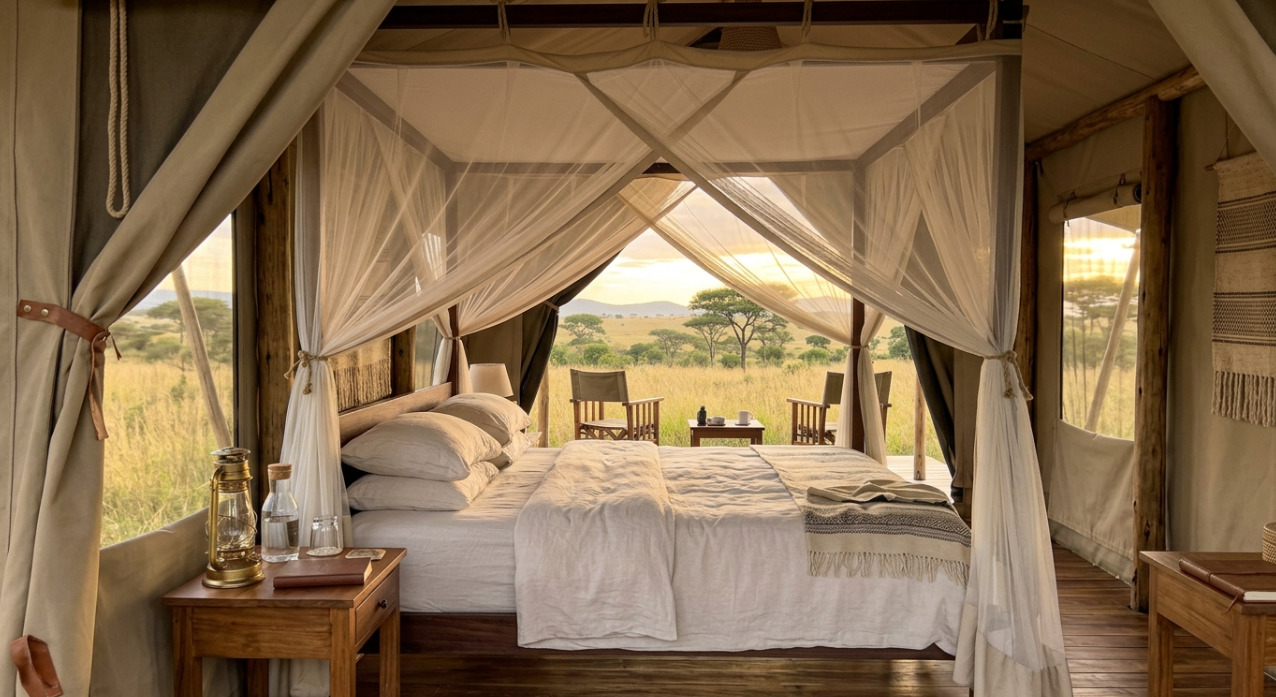
Safari accommodation made up of canvas tents, often on raised wooden platforms. Tented camps range from basic to ultra luxurious. At the high end, these are permanent structures with hardwood floors, en suite bathrooms, outdoor showers, and king size beds.
Honeymoon relevance: Many couples assume “tent” means camping. It doesn’t. The best honeymoon tented camps are among the most romantic accommodations in the world, combining wilderness immersion with genuine comfort. You fall asleep to the sounds of the bush, not to the sound of a generator.
Mobile Camp
Mobile camps move with the seasons and the wildlife. They’re set up in remote locations for a few weeks, then packed up and repositioned to follow the herds during the Great Migration.
Honeymoon relevance: If your trip coincides with the Migration, a mobile camp puts you closer to the action than any permanent lodge can. The experience feels exclusive and raw, though comfort levels are typically a step below the top fixed camps.
Lodge
A permanent structure, usually built from stone, wood, or concrete, inside or adjacent to a national park. Lodges typically include restaurants, swimming pools, and sometimes spa facilities.
Honeymoon relevance: Lodges offer the most predictable comfort level. For couples who want guaranteed amenities (reliable Wi Fi, a proper pool, air conditioning), lodges are the safer bet. The trade off is that lodges can feel more hotel like and less immersive than tented camps.
For ideas on where to stay, browse the romantic safari lodges in Tanzania.
Star Bed / Sleep Out
An open air sleeping platform, elevated and protected by mosquito netting, that allows guests to sleep under the stars while safely out of reach of wildlife. Some properties roll out a proper bed on a raised deck; others have purpose built tree houses.
Honeymoon relevance: Star beds are one of the most requested honeymoon upgrades in Africa. Falling asleep watching the Milky Way stretch across an unpolluted sky, with hyenas calling in the distance, is genuinely unforgettable. These are typically offered as a one night add on, not the primary accommodation.
Honeymoon Suite / Honeymoon Tent
Many safari properties offer dedicated honeymoon accommodations with extras like private decks, plunge pools, bush dinners for two, in room massages, and stargazing setups.
Practical tip: Always tell your operator and your lodges that you’re on a honeymoon. Many properties prepare complimentary surprises (champagne, flower arrangements, room upgrades) for couples who mention it at booking.
Full Board vs. All Inclusive
Full board includes all meals. All inclusive includes meals plus house drinks (wine, beer, spirits, soft drinks) and often shared safari activities with in house guides.
Honeymoon relevance: Most luxury safari camps are all inclusive, meaning your daily cost covers nearly everything. Beach hotels in Zanzibar, however, are often room only or half board. This price structure difference catches many couples off guard when comparing safari costs to beach costs.
Destination and Geography Terms
Northern Circuit (Tanzania)
The classic Tanzanian honeymoon safari route: Arusha (gateway city) to Tarangire National Park, Ngorongoro Crater, and the Serengeti. This is the backbone of most African honeymoon itineraries that focus on Tanzania.
Some itineraries also include Lake Manyara National Park as a half day or overnight stop between Tarangire and Ngorongoro.
Lake Manyara National Park
A compact park at the base of the Great Rift Valley escarpment, known for tree climbing lions, large flamingo flocks along the alkaline lake shore, and dense groundwater forest near the park entrance. Lake Manyara covers roughly 330 square kilometers, with the lake itself taking up about two thirds of the park area.
Honeymoon relevance: Lake Manyara works best as a half day game drive on a transfer day between Tarangire and Ngorongoro. It’s too small to justify a full two night stay for most couples, but the dramatic escarpment views and the birdlife along the lake shore make it a worthwhile addition if your route passes through. The park is sometimes dropped from tight itineraries to give more time in the Serengeti, so discuss with your operator whether it fits your schedule.
Serengeti
Tanzania’s flagship national park and the hub of the Great Migration. The Serengeti was named World’s Leading National Park 2025 by the World Travel Awards, and Tanzania itself earned the title of World’s Leading Safari Destination 2025.
The Serengeti is enormous (roughly 14,750 square kilometers), and where you stay within it matters as much as whether you visit. The park divides into several distinct regions, and the best choice depends on your travel dates and what you want to see.
For detailed planning, see the Serengeti safari guide.
Central Serengeti (Seronera)
The heart of the park, centered around the Seronera Valley. Central Serengeti offers year round resident wildlife, including large lion prides, leopards in the riverine forests along the Seronera River, and healthy populations of elephant, giraffe, and buffalo. The area is the most accessible part of the Serengeti, with the park’s main airstrip located here.
Honeymoon relevance: Central Serengeti is the safest bet for couples traveling outside Migration season because the resident game is excellent regardless of the month. The downside is that Seronera is also the busiest part of the park, with more vehicles around sightings. For a honeymoon, consider staying at a camp slightly outside the Seronera core or in a private concession bordering the central plains to get the wildlife without the crowds.
Northern Serengeti (Kogatende / Lamai)
The remote northern section of the park, bordering Kenya’s Maasai Mara. This is where the Great Migration’s famous Mara River crossings take place, typically between July and October. The northern Serengeti has far fewer camps and visitors than the central or southern areas.
Honeymoon relevance: If your honeymoon falls between July and October and witnessing river crossings is a priority, the northern Serengeti is where you want to be. Access is almost exclusively by bush flight (roughly 45 minutes from Seronera or 90 minutes from Arusha), which adds cost but also adds exclusivity. Camps in the Kogatende and Lamai areas are small, often just 6 to 10 tents, creating the intimate atmosphere that suits honeymoons. Book 12 to 18 months ahead for this region during peak Migration.
Ngorongoro Crater
A UNESCO listed volcanic caldera in northern Tanzania with exceptional wildlife density. The crater floor is roughly 260 square kilometers and home to approximately 25,000 animals, including the Big Five.
Honeymoon relevance: Ngorongoro offers near guaranteed Big Five sightings in a single game drive, making it one of the most reliable and visually stunning safari stops. Most Northern Circuit honeymoon itineraries include one to two nights here. For lodge recommendations, see the best Ngorongoro honeymoon lodges.
Nyerere National Park
Formerly the southern section of the Selous Game Reserve, Nyerere National Park is Africa’s largest national park at over 30,000 square kilometers. It sits in southern Tanzania and offers boat safaris on the Rufiji River, walking safaris, and traditional game drives, a combination of activities that no northern circuit park can match.
Honeymoon relevance: Nyerere is the top pick for honeymoon couples who want a wilder, more private safari experience. Visitor numbers are a tiny fraction of what the Serengeti sees. Camps here are typically small and high end, with the Rufiji River providing a stunning backdrop. Boat safaris at sunset, watching hippos and crocodiles while sipping something cold, are genuinely romantic in a way that a crowded game drive loop cannot replicate. The trade off is that Nyerere requires a fly in from Dar es Salaam (roughly 75 minutes), and the park’s enormous size means wildlife is more spread out than in the Ngorongoro Crater.
Ruaha National Park
Tanzania’s largest national park by terrestrial area (roughly 20,226 square kilometers), located in the central south of the country. Ruaha is known for large lion and elephant populations, significant wild dog packs, and the dramatic baobab studded landscape along the Great Ruaha River.
Honeymoon relevance: Ruaha receives fewer than 20,000 visitors per year, compared to the Serengeti’s hundreds of thousands. That solitude is the appeal. Practitioners on safari forums consistently describe Ruaha as “the Serengeti 30 years ago” because you can spend an entire game drive without seeing another vehicle. For honeymoon couples, this translates to a feeling of having the African bush entirely to yourselves. The park pairs naturally with Nyerere in a southern Tanzania itinerary (3 to 4 nights in each park, then fly to Zanzibar). The main limitation is accessibility: Ruaha requires a bush flight from Dar es Salaam or Dodoma, and camp options are fewer than in the north.
Southern Tanzania and Zanzibar
A southern Tanzania and Zanzibar honeymoon itinerary is the main alternative to the classic northern circuit route. Instead of Tarangire, Ngorongoro, and Serengeti, couples fly into Nyerere and Ruaha from Dar es Salaam, then connect to Zanzibar for the beach portion.
This route works particularly well because the Dar es Salaam flight hub connects easily to both southern parks and to Zanzibar, meaning the logistics are simpler than they might appear on a map. A typical structure is:
- 3 to 4 nights in Nyerere (boat safari, walking safari, game drives)
- 3 nights in Ruaha (game drives, walking safari)
- 4 to 5 nights in Zanzibar (beach, Stone Town, dhow cruise)
The total comes to 10 to 12 nights, which matches the classic northern circuit length.
Who should consider this route: Couples who have visited the northern circuit before, couples who prioritize privacy and exclusivity over guaranteed Big Five sighting density, and couples traveling during the dry season (June to October) when southern parks are at their best and the northern parks are at their most crowded.
For more on planning a southern circuit safari, the dedicated guide covers logistics, costs, and seasonal timing.
Zanzibar / Stone Town
The Indian Ocean archipelago off Tanzania’s coast. Stone Town is the historic capital, a UNESCO World Heritage site with narrow streets, spice markets, and carved wooden doors.
The best time to visit Zanzibar is during the dry season from June to October, which coincides with safari high season in Tanzania, making the archipelago the most popular post safari honeymoon choice.
For planning your beach days, explore Zanzibar excursions and day trips.
Swahili Coast
The mainland coastal stretch of Tanzania, including towns like Pangani and Saadani National Park. This is a less crowded, more off the beaten path alternative to Zanzibar for the beach portion of a bush and beach honeymoon.
Honeymoon relevance: The Swahili Coast works well for couples who want a quieter, more authentic coastal experience. Saadani is the only national park in East Africa that borders the Indian Ocean, meaning you can combine beach time with wildlife sightings.
Maasai Mara
Kenya’s premier safari reserve, sharing an unfenced border with the Serengeti. The Mara is where the Great Migration’s dramatic river crossings typically occur between July and October.
Honeymoon relevance: Some couples combine the Serengeti with the Maasai Mara for a cross border honeymoon that follows the Migration from both sides. This adds complexity but delivers an extraordinary wildlife narrative.
National Park vs. Conservancy vs. Concession vs. Private Game Reserve
These terms describe different types of protected wildlife areas, and the distinction matters for your honeymoon experience:
| Type | What It Means | Honeymoon Impact |
|---|---|---|
| National Park | Government managed protected area with strict regulations | Most visitors, most wildlife, most rules (no off road driving, no night drives) |
| Conservancy | Community managed area adjacent to a park | Fewer vehicles, more activities allowed (walking safaris, night drives) |
| Concession | A private area leased within a national park’s ecosystem | Low traffic, exclusive feeling, premium pricing |
| Private Game Reserve | A standalone, privately owned wildlife area | Fewest restrictions, most intimate, often the most expensive |
As Zicasso’s comparison explains, concessions offer animals increased privacy and freedom due to lower traffic. For honeymoon couples, the exclusivity of a concession or conservancy often justifies the higher cost.
Tanzania vs Kenya Honeymoon
This is one of the most common decisions couples face when planning an African honeymoon itinerary. Both countries deliver world class safari experiences, but they suit different priorities.
Wildlife and Parks
Tanzania has more total protected land and the Serengeti, Ngorongoro Crater, and Migration calving season in the south. Kenya has the Maasai Mara, famous for the Migration’s river crossings, plus smaller parks like Amboseli (known for elephant herds against the backdrop of Mount Kilimanjaro).
Tanzania’s parks tend to feel wilder and less developed. Kenya’s conservancy system, especially in the Mara, allows activities like walking safaris and night drives that Tanzania’s national parks generally do not permit.
Beach Component
Tanzania wins this comparison easily. Zanzibar is a 60 to 90 minute flight from both the northern and southern safari circuits, with dozens of high end beach properties purpose built for honeymooners. Kenya’s coast (Diani Beach, Lamu) is lovely but requires a longer domestic flight from the Mara, and the range of luxury honeymoon resorts is smaller.
Cost
Tanzania is generally more expensive for safari, particularly in the Serengeti during peak season. Kenya’s conservancy model can deliver a more intimate experience at a comparable or sometimes lower price point. However, when you factor in the Zanzibar beach extension (which is relatively affordable), a complete Tanzania bush and beach honeymoon often comes out similar in total cost to a Kenya safari plus a separate beach destination.
The Practical Answer
Most first time honeymoon couples choose Tanzania because the northern circuit plus Zanzibar combination is the most seamless bush and beach itinerary in Africa. Couples who specifically want river crossings during July to October, or who want walking safaris and night drives as part of their standard safari, should seriously consider Kenya or a Kenya/Tanzania combination.
For a detailed side by side breakdown, see the Tanzania vs Kenya honeymoon glossary.
Wildlife and Experience Terms
Game Drive
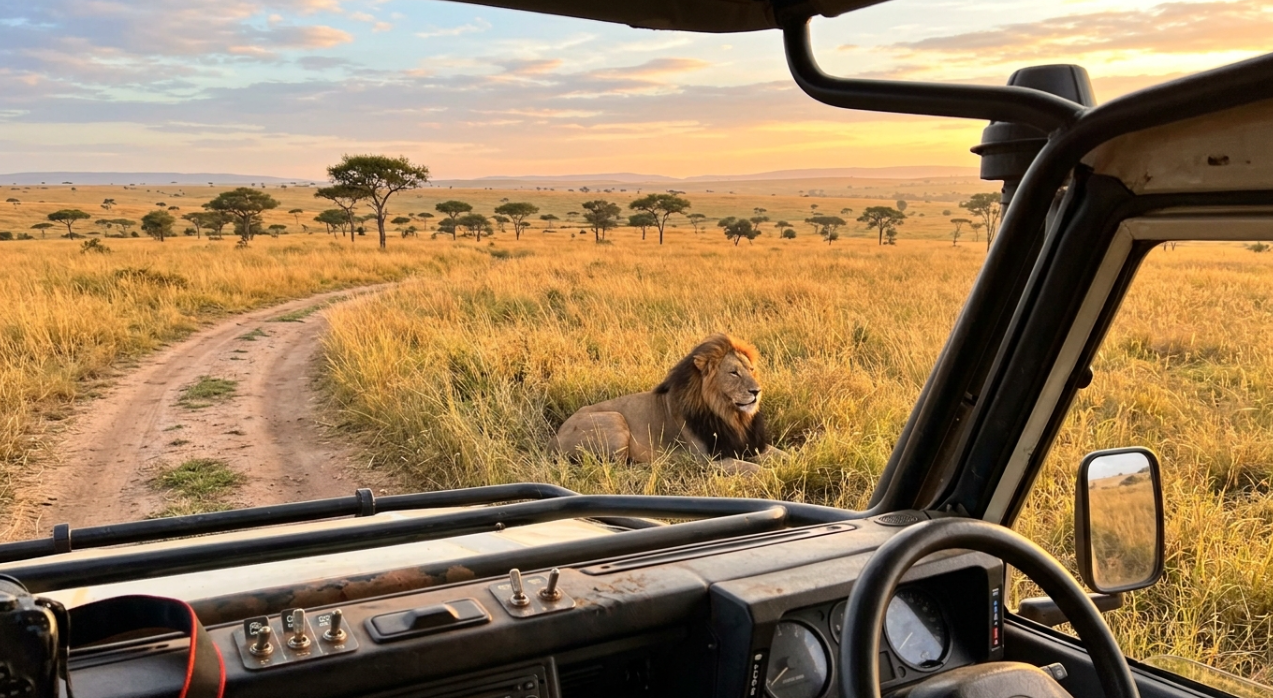
A guided vehicle excursion to observe wildlife, typically conducted in the early morning (6:00 to 6:30 AM departure) and late afternoon (3:30 to 4:00 PM departure). “Game” in the safari context simply means wildlife.
Honeymoon reality check: A safari honeymoon is not passive travel. Game drives are early. Days have rhythm. If you’re expecting to sleep until 10 AM every day, a safari will be a rude awakening. The payoff is watching a pride of lions in golden morning light, which is worth every early alarm.
Big Five
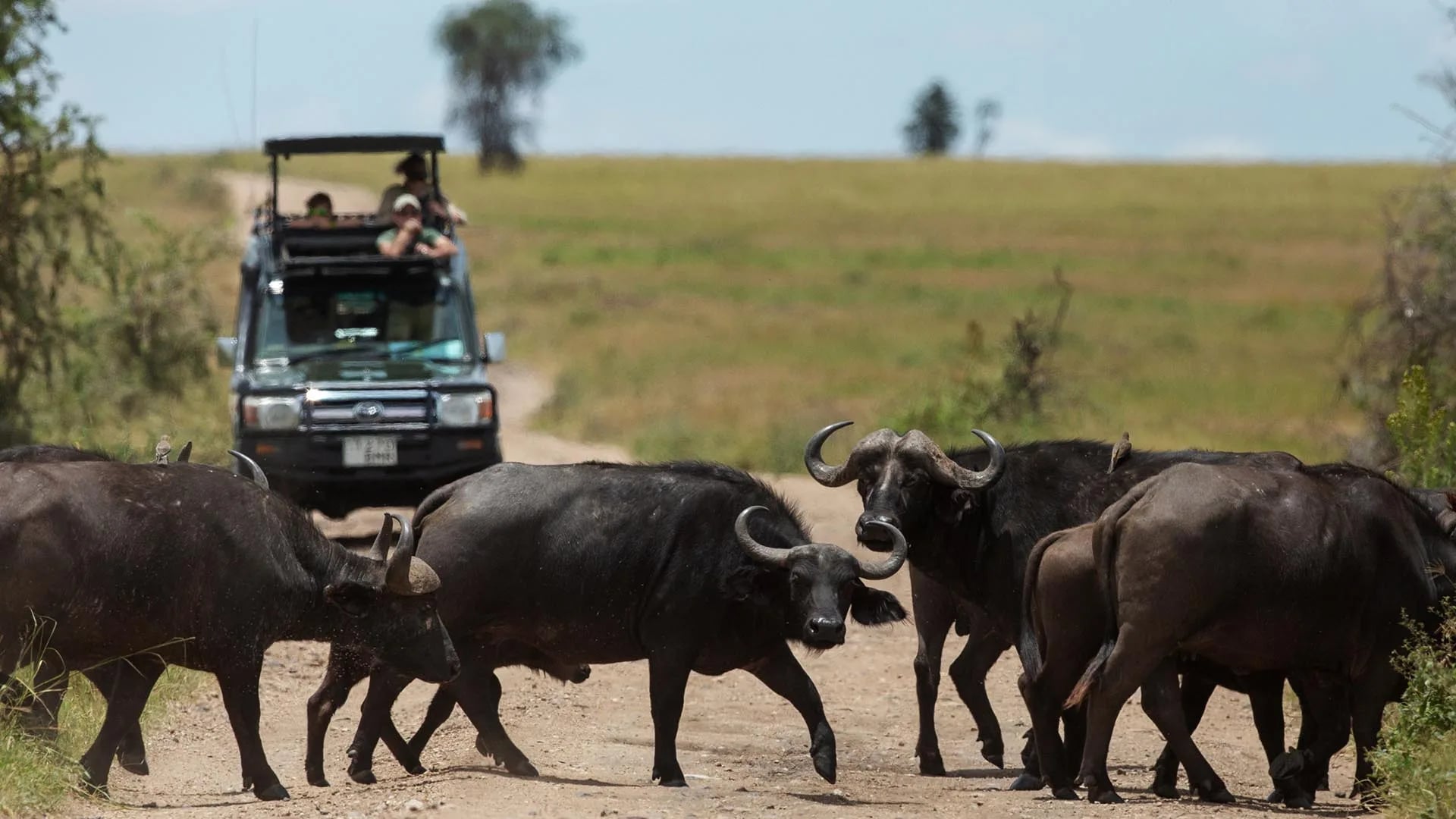
Lion, leopard, elephant, Cape buffalo, and rhinoceros. Originally the term referred to the most dangerous animals to hunt on foot. Today, they’re the iconic symbols of African wildlife and the sightings most visitors hope for.
Great Migration
The annual cycle of roughly 1.5 million wildebeest and hundreds of thousands of zebra moving through the Serengeti Mara ecosystem. The Migration follows the rains and fresh grazing in a roughly clockwise loop throughout the year.
Where the herds are determines which part of the Serengeti to stay in. During January and February, the herds concentrate in the southern Serengeti for calving. By June and July, they move through the central and western corridors. From August through October, they push into the northern Serengeti and across the Mara River. Understanding this cycle is essential for choosing the right Serengeti camp location for your honeymoon dates.
Calving Season
Late December to February in the southern Serengeti (Ndutu area), when wildebeest give birth in enormous numbers. Predator activity peaks as lions, cheetahs, and hyenas hunt vulnerable calves.
Honeymoon relevance: Calving season coincides with the green season (lower prices) and delivers some of the most dramatic predator prey action of the year. It’s an excellent time for a honeymoon if you don’t mind occasional afternoon showers.
River Crossing
The dramatic phase of the Great Migration when herds cross the Mara River, typically between July and October. Thousands of wildebeest plunge into crocodile infested waters in a chaotic, primal scene.
Honeymoon planning tip: An expert who has planned over 500 honeymoon safaris recommends booking 12 to 18 months in advance for Migration season, especially if you want to witness the crossings from the northern Serengeti.
Sundowner
A drink enjoyed at sunset during a scenic stop on your game drive. Your guide parks the vehicle at a beautiful overlook, sets up a small bar, and you watch the sun drop below the horizon with a gin and tonic in hand.
Honeymoon relevance: This is one of the most romantic traditions in African travel. Some camps arrange private sundowners in particularly scenic locations for honeymoon couples. Ask your operator about this.
Boma
A Swahili word for a fenced gathering space. On safari, a boma typically refers to an open air enclosure where camps set up communal bonfire dinners under the stars.
Honeymoon relevance: Boma dinners are among the most atmospheric dining experiences in Africa. Some camps arrange private boma dinners for two, complete with lanterns, a personal chef, and the sounds of the African night.
Hot Air Balloon Safari
A sunrise balloon flight over the Serengeti (or Maasai Mara), drifting silently above herds of wildlife, followed by a champagne bush breakfast on landing.
Practical detail: Balloon safaris typically cost $500 to $600 per person and require an early morning departure (often before dawn). They’re worth the investment for a honeymoon.
Dhow Cruise
A sailing excursion on a traditional wooden vessel, most commonly offered in Zanzibar. Sunset dhow cruises along the Stone Town waterfront are a signature honeymoon activity on the island.
Gorilla Trekking
A guided hike through montane forest in Uganda or Rwanda to spend approximately one hour with a habituated mountain gorilla family. This is a premium add on for adventurous honeymoon couples.
Honeymoon relevance: Gorilla trekking adds 2 to 3 days and significant cost (permits alone run $700 in Uganda, $1,500 in Rwanda), but couples who include it consistently rank it as a life changing experience. Details on gorilla trekking itinerary planning can help you decide.
Walking Safari
A guided walk through the bush on foot, accompanied by an armed ranger and a qualified walking guide. Walking safaris are allowed in conservancies, some concessions, and in parks like Nyerere and Ruaha in southern Tanzania, but generally not in Tanzania’s northern circuit national parks.
Night Drive
A game drive conducted after dark using a spotlight to find nocturnal animals like aardvarks, bush babies, civets, and hunting leopards. Night drives are permitted in conservancies and private reserves but typically not in national parks. Nyerere is one of the few Tanzanian national parks where night drives are possible in certain zones.
Timing and Season Terms
Understanding seasonality is critical for any African honeymoon itinerary. When you travel determines what you see, what you pay, and how many other visitors share the experience.
Dry Season / High Season
The dry months of the African winter, primarily June through October in East Africa. Vegetation thins out, water sources shrink, and animals concentrate around remaining water, making them easier to spot.
Trade off: Best wildlife viewing, highest prices, and peak visitor numbers. Popular camps and lodges book out months in advance for this period.
Green Season / Low Season
Roughly November through May, with variations by country. Lower prices, lush green landscapes, newborn animals, dramatic storm light for photography, and fewer tourists.
Honeymoon relevance: Green season honeymoons can save 20 to 40% on accommodation costs. The rain is rarely all day; it typically falls in short afternoon bursts. An expert safari planner recommends that couples consider shoulder months to balance value with conditions.
Shoulder Season
The transitional weeks between high and low seasons. In East Africa, this typically means May through early June and late October through mid November. Smaller crowds, moderate pricing, and often excellent wildlife viewing.
For month by month guidance, see the best time for safari in Tanzania.
Long Rains / Short Rains
Tanzania has two distinct rainy periods. The long rains fall from March through May and are best avoided for safari (some camps close entirely). The short rains arrive in November and December and are usually manageable, with mornings often clear.
Month by Month Honeymoon Season Summary
| Month(s) | Season | Honeymoon Suitability | Key Events |
|---|---|---|---|
| Jan to Feb | Green (calving) | Excellent value; dramatic wildlife | Wildebeest calving in southern Serengeti |
| Mar to May | Long rains | Avoid for safari; Zanzibar only possible | Some camps closed; heavy rain |
| Jun to Jul | Early dry | Great conditions; prices rising | Migration moves north; good all around |
| Aug to Oct | Peak dry | Best game viewing; highest prices | River crossings; book far ahead |
| Nov to Dec | Short rains | Good value; green and beautiful | Migration returns south; afternoon showers |
Logistics and Planning Terms
Park Fees
Daily per person charges levied by national park authorities for entering protected areas. In Tanzania and Kenya, these fees can run $50 to $100+ per person per day, with premium parks like the Serengeti and Ngorongoro at the higher end.
Honeymoon relevance: Park fees are usually included in safari packages, but always verify. They represent a significant portion of your total trip cost. For a full breakdown, review the Tanzania safari cost guide.
Bush Flight / Domestic Flight
Internal flights between safari parks and to Zanzibar, operating from major hubs like Arusha or Dar es Salaam and landing on bush airstrips inside or near national parks. These are small aircraft, often carrying 4 to 12 passengers.
Practical detail: Bush flights transform logistics but come with constraints. Weight limits are strict (usually 15 kg including hand luggage), and schedules are fixed. Weather delays happen. For southern Tanzania itineraries, bush flights from Dar es Salaam to Nyerere or Ruaha are the standard (and only practical) mode of access.
Soft Bag
A flexible, fabric sided duffel bag required for bush flights. Hard shell suitcases are not permitted because they can’t be compressed to fit into small aircraft cargo holds. Most safari operators will tell you the specific weight limit at booking.
Transfer
Any ground transportation connection: airport pickups, inter camp drives, or bush to coast connections. Transfers are often included in safari packages but add transit time to your day.
Honeymoon tip: Long transfer days (4+ hours of driving) can drain the romance. When reviewing an African honeymoon itinerary, check how much time is spent in transit versus actually at your destinations.
Honeymoon Special / Bride Discount
Many safari lodges and beach properties in Africa offer honeymoon promotions: free nights, 50% bride discounts (the second person stays at half price), room upgrades, complimentary spa treatments, or private dining experiences. These specials can reduce total costs by 15 to 25%.
Always tell your operator you’re on a honeymoon, and always ask about current promotions. This is one of the easiest ways to improve your trip without increasing your budget.
Visa
Most visitors to Tanzania can obtain an e visa or visa on arrival. Requirements vary by nationality. For Tanzania visa details, check the current rules well before travel. Multi country honeymoons may require multiple visas.
Travel Insurance
Comprehensive travel insurance with medical evacuation coverage is essential for an African honeymoon. Safari destinations are often remote, and evacuation to a major hospital can cost $50,000 or more without insurance.
Read the full breakdown in the safari travel insurance guide.
Tipping
Tipping is customary and expected in East Africa. Safari guides, camp staff, porters, and drivers all receive tips. Most operators provide tipping guidelines, but as a rough framework, $15 to $25 per couple per day for a safari guide and $10 to $15 per couple per day for camp staff is common.
Which African Honeymoon Terms Matter Most?
You do not need to understand every safari term before planning your honeymoon. Start with the terms that affect your itinerary, budget, and experience.
| If you care most about… | Pay attention to these terms |
|---|---|
| Saving travel time | Fly in safari, bush flight, transfer |
| Maximum privacy | Private safari, concession, private game reserve, Nyerere, Ruaha |
| Luxury accommodation | Tented camp, honeymoon suite, lodge, star bed |
| Wildlife viewing | Game drive, Big Five, Great Migration, calving season |
| Fewer crowds | Conservancy, concession, shoulder season, green season, southern Tanzania |
| Beach relaxation | Bush and beach, Zanzibar, Swahili Coast, dhow cruise |
| Romantic experiences | Sundowner, boma, star bed, private dinner |
| Lower costs | Green season, shoulder season, road safari, honeymoon special |
| Migration viewing | Great Migration, river crossing, calving season, central Serengeti, northern Serengeti |
| Adventure | Walking safari, night drive, gorilla trekking, balloon safari |
The three terms to understand before booking
If you only research three concepts, start with season, safari style, and accommodation type.
Your travel season influences wildlife conditions and pricing. Your safari style determines how much time you spend driving versus flying. Your accommodation choice determines much of the honeymoon’s atmosphere, privacy, and nightly cost.
How Much Does an African Honeymoon Cost?
Cost is the question behind every other question when planning an African honeymoon itinerary. Here are the ranges from industry data:
| Trip Tier | Duration | Approximate Cost per Couple |
|---|---|---|
| Mid range (four star) | 7 nights | $10,000 to $14,000 |
| Premium (five star) | 7 nights | $14,000 to $18,000 |
| Extended premium | 10 to 14 nights | $18,000 to $25,000+ |
| Value entry point (South Africa) | 7 nights | From $10,000 |
| Tanzania focused | 10 nights | From $16,000 |
| Southern Tanzania + Zanzibar | 10 to 12 nights | $15,000 to $22,000 |
These ranges are all inclusive of accommodations, meals, drinks, game drives, and internal transfers. International flights are typically additional.
Southern Tanzania itineraries (Nyerere and Ruaha) can fall on either side of the northern circuit in terms of cost. The parks have lower fees than the Serengeti and Ngorongoro, but the fly in access adds expense. Net result: pricing is roughly comparable for similar comfort levels.
For specific pricing on Tanzania private safaris, which start from approximately $2,000 per person for a 5 day Northern Circuit and reach approximately $6,000 per person for a 13 day Mountains, Safari and Beach itinerary, see the Tanzania safari itinerary costs page.
Pacing Your African Honeymoon Itinerary
An experienced safari planner who has designed over 500 honeymoon trips recommends spending six to eight days in a country with more than one habitat to explore. That same expert emphasizes that owner run boutique camps with a limited number of tents create the intimate atmosphere honeymooners need, and that adults only camps provide enhanced privacy.
The most popular structure, confirmed across multiple sources: 6 to 7 nights on safari across Tarangire, Ngorongoro Crater, and Serengeti, followed by 3 to 5 nights in Zanzibar. The total of 10 days is the sweet spot for most couples.
A few pacing principles that practitioners consistently highlight:
- Don’t move camps every night. Two night stays allow you to settle in and enjoy morning and afternoon game drives without repacking.
- Build in a rest day. After 3 to 4 days of early morning game drives, a pool day or spa treatment at the lodge keeps the trip feeling like a honeymoon, not an expedition.
- End at the beach. Starting with safari and finishing with Zanzibar gives you the best decompression arc. The reverse (beach first, safari second) ends the trip with early alarms.
- Match the Serengeti region to your dates. Central Serengeti for year round game, northern Serengeti for July to October crossings, southern Serengeti for January to February calving. Staying in the wrong region for your dates means missing the wildlife spectacle entirely.
Duma Explorer designs custom bush and beach honeymoon routes across East Africa, from Tanzania only itineraries to multi country trips that include Kenya, Uganda, or Rwanda.
Design your honeymoon itinerary with a step by step planning guide.
Frequently Asked Questions
How many days do you need for an African honeymoon?
Most couples travel 10 to 14 nights. The most popular structure is 10 days: 6 to 7 nights on safari plus 3 to 4 nights on the beach. Shorter trips of 7 nights work but require fly in transfers to avoid losing days to road travel. Longer trips of 14+ nights allow for add ons like gorilla trekking or a second country.
Is a tented camp comfortable enough for a honeymoon?
Yes, and often more so than a lodge. High end tented camps in the Serengeti and Maasai Mara feature king beds, en suite bathrooms, freestanding bathtubs, and private verandas. The canvas walls add atmosphere without sacrificing comfort. Many of Africa’s most celebrated honeymoon properties are tented camps, not lodges.
When is the best time for an African honeymoon safari?
June through October offers the best wildlife viewing and the driest weather, but also the highest prices. January and February provide excellent value with dramatic calving season wildlife in the southern Serengeti. Shoulder months (late May, early June, late October, November) balance good conditions with lower costs. For a deeper breakdown, see the best time for a Tanzania honeymoon.
What does “bush and beach” mean?
Bush and beach is an itinerary format that combines a safari (“bush”) with a coastal or island stay (“beach”). For most African honeymoon itineraries, this means game drives in Tanzania’s national parks followed by relaxation in Zanzibar. The format provides both adventure and downtime within a single trip.
What’s the difference between a fly in and road safari for couples?
Fly in safaris save time and access remote camps, but come with strict 15 kg soft bag luggage limits and fixed flight schedules. Road safaris cost less and offer more flexibility, but involve longer travel days. Many honeymoon itineraries combine both: driving between nearby parks and flying for the longer connections.
Should we consider southern Tanzania instead of the northern circuit?
Southern Tanzania (Nyerere and Ruaha) is worth serious consideration if you prioritize solitude and a wilder atmosphere. You’ll see fewer tourists, experience more diverse safari activities (boat safaris, walking safaris), and enjoy an easy connection to Zanzibar through Dar es Salaam. The northern circuit offers higher wildlife density and the iconic Ngorongoro Crater experience. Neither choice is wrong, but they deliver different moods.
Is Kenya or Tanzania better for a honeymoon?
Tanzania is the more popular choice because the northern circuit plus Zanzibar combination creates the most seamless bush and beach honeymoon in Africa. Kenya’s conservancy system offers excellent walking safaris and night drives that Tanzania’s national parks generally do not allow. For river crossings during the Migration (July to October), Kenya’s Maasai Mara and Tanzania’s northern Serengeti are equally strong options. Most first timers choose Tanzania; repeat visitors or those wanting specific experiences lean toward Kenya or a combination.
Should you book through a specialist operator?
For a multi stop African honeymoon with bush flights, park fees, lodge bookings, and potentially multiple countries, working with a specialist operator is strongly advisable. Operators handle logistics that would take dozens of hours to coordinate independently: permits, transfers, seasonal timing, lodge availability, and honeymoon specials. They also have relationships with properties that can unlock upgrades and priority bookings during peak season.
How far in advance should you book an African honeymoon?
For travel during the dry season (June to October) or to coincide with the Great Migration, 12 to 18 months is recommended. Popular camps have limited capacity, sometimes only 6 to 10 tents, and fill early. For green season travel, 6 to 9 months is usually sufficient.
Start planning your African honeymoon with full package details and pricing.
Leave a Reply