Blog

  • Gorilla Trekking Rwanda vs Uganda (2026): Which Is Best?

    Gorilla Trekking Rwanda vs Uganda (2026): Which Is Best?

    TL;DR

    Uganda and Rwanda both offer life-changing mountain gorilla encounters with roughly 98% sighting success, but they serve different travelers. Uganda charges $800 per permit ($600 in low season) and offers more gorilla families, tougher jungle terrain, and the only 4-hour habituation experience in the world. Rwanda charges $1,500 with no discounts but provides easier treks, shorter transfers from Kigali, and a polished luxury experience. For solo travelers on short trips, Rwanda can actually work out cheaper when you factor in total logistics costs.

    Direct Answer: Rwanda vs Uganda Gorilla Trekking

    If you’re deciding between gorilla trekking in Rwanda or Uganda, the best choice depends on your budget, available time, and preferred travel style.

    Traveler Type

    Best Choice

    Budget travelers

    Uganda

    Luxury travelers

    Rwanda

    Short trips (2–3 days)

    Rwanda

    Adventure seekers

    Uganda

    Photography-focused travelers

    Rwanda

    Longer East Africa itineraries

    Uganda

    Gorilla habituation experience

    Uganda

    Easier trekking conditions

    Rwanda

    Solo travelers

    Rwanda or Uganda via Kigali

    Best overall value

    Uganda

    For most travelers, Uganda offers the strongest value thanks to permits costing nearly half the price of Rwanda’s while providing equally high gorilla sighting success rates. Rwanda becomes attractive when minimizing travel time is more important than minimizing costs.


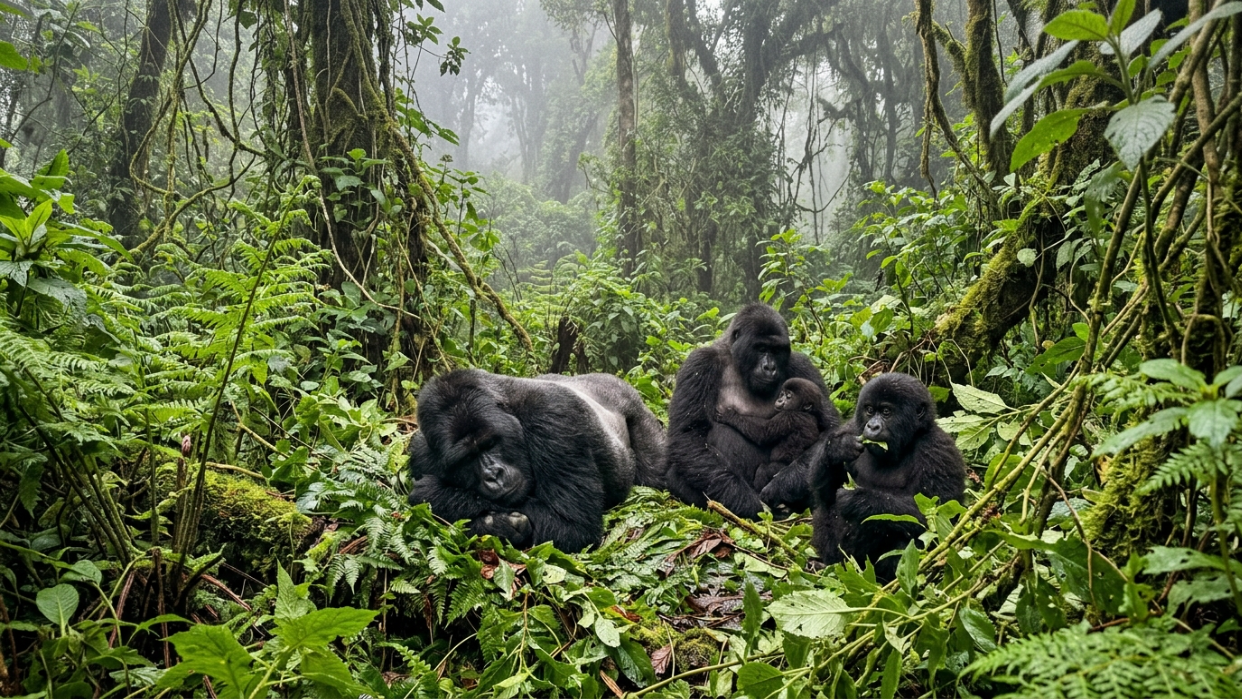
    Only about 1,063 mountain gorillas remain on Earth. They live in two places: the Virunga Massif (a volcanic range spanning Rwanda, Uganda, and the DRC) and Uganda’s Bwindi Impenetrable National Park. Both Rwanda and Uganda grant visitors a one-hour audience with habituated gorilla families, and both deliver near-identical sighting rates. The gorillas don’t care which country you’ve paid. Your job is to figure out which country fits your budget, your timeline, and the kind of experience you want.

    This guide breaks down every term, cost, and logistical detail you need to make that decision. No sales pitch, just the real numbers and the practical nuances that operator marketing pages tend to skip.

    Planning a gorilla trek as part of a broader East Africa trip? Our Uganda gorilla safari guide covers packages and pricing in detail.


    Quick Comparison Table: Rwanda vs Uganda at a Glance

    Factor

    Uganda (Bwindi / Mgahinga)

    Rwanda (Volcanoes NP)

    Permit price (foreign non-resident)

    $800 ($600 in low season)

    $1,500 (no discounts)

    Habituated gorilla families

    19+ (16 in Bwindi, 1+ in Mgahinga)

    12

    Daily permits available

    ~128

    96

    Trek duration

    2 to 8 hours

    30 minutes to 4 hours

    Terrain

    Dense, steep rainforest

    Open bamboo and volcanic hills

    Time with gorillas

    1 hour (or 4 hours with habituation permit)

    1 hour

    Drive from nearest international airport

    9-10 hrs from Entebbe (or 4-5 hrs from Kigali)

    2.5 hrs from Kigali

    Permit authority

    Uganda Wildlife Authority (UWA)

    Rwanda Development Board (RDB)

    Low-season discount

    Yes: $600 in April, May, November

    None

    Accommodation range

    Budget to ultra-luxury

    Skews four-star and five-star

    Habituation experience

    Yes ($1,500, 4 hours)

    Not available

    Rwanda vs Uganda: The 30-Second Verdict

    Choose Uganda if your goal is maximizing value. You’ll spend less on permits, have access to more gorilla families, and can participate in the Gorilla Habituation Experience.

    Choose Rwanda if convenience matters most. Volcanoes National Park is just 2.5 hours from Kigali International Airport, making it possible to complete a gorilla trek on a short East Africa itinerary.

    The gorilla encounter itself is nearly identical in both countries. The biggest differences are cost, logistics, terrain, and accommodation style.

    The Parks and Where the Gorillas Live

    Virunga Massif

    The Virunga Massif is the volcanic mountain chain that straddles three countries: Rwanda, Uganda, and the Democratic Republic of Congo. It holds roughly 604 mountain gorillas. This is where Volcanoes National Park (Rwanda) and Mgahinga Gorilla National Park (Uganda) sit. The peaks here rise above 4,000 meters, draped in bamboo forest and afro-alpine moorland.

    Bwindi Impenetrable National Park (Uganda)

    Bwindi is a UNESCO World Heritage Site in southwestern Uganda, home to roughly 459 mountain gorillas, the other major population outside the Virunga Massif. The park lives up to its name. The vegetation is thick, tangled, and genuinely difficult to move through. Treks here range from 2 to 8 hours depending on where the gorillas have wandered.

    Bwindi is divided into four trekking sectors, each with its own character and gorilla families: Buhoma, Ruhija, Rushaga, and Nkuringo. Your assigned sector determines your meeting point, your border crossing if coming from Rwanda, and the difficulty of your hike. For a deep look at sector-by-sector logistics, see our Bwindi gorilla trekking guide.

    Volcanoes National Park (Rwanda)
    Gorilla Trekking Rwanda vs Uganda (2026): Which Is Best?


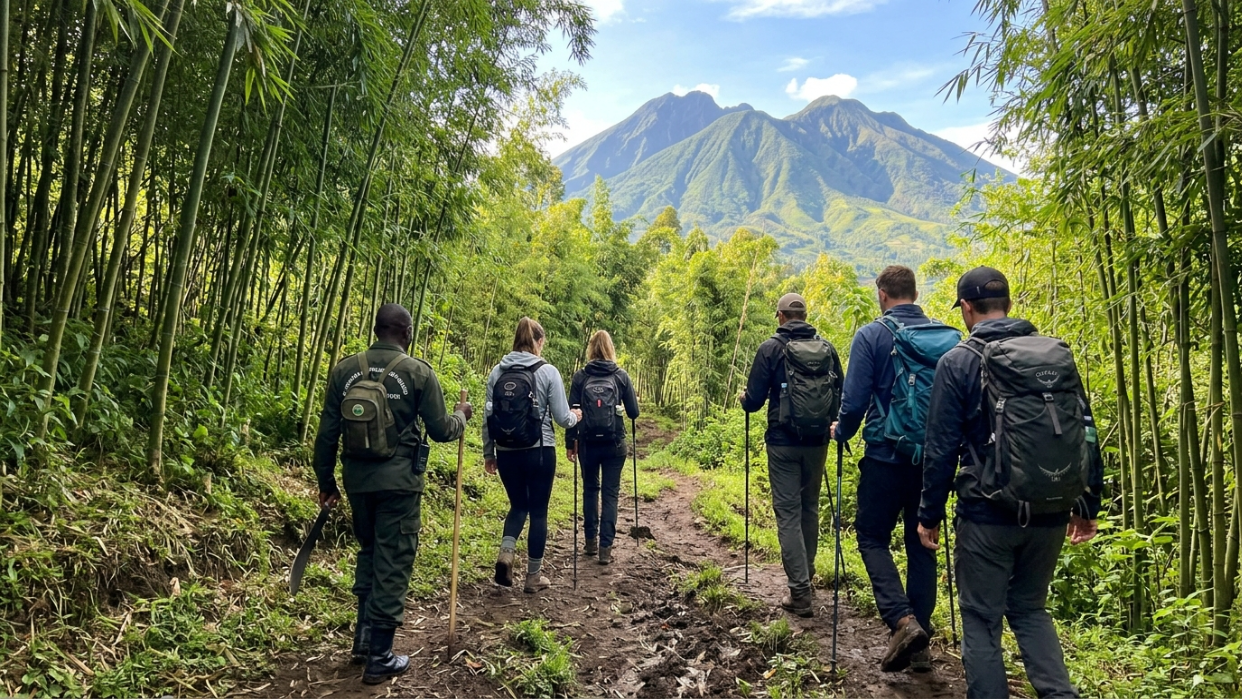
    Rwanda’s sole gorilla trekking destination covers about 160 square kilometers of volcanic terrain in the northwest. Unlike Bwindi’s dense jungle, Volcanoes features rolling hills, open meadows, and bamboo forests that make for more straightforward hiking. Treks typically run 30 minutes to 4 hours. The park is home to 12 habituated gorilla families.

    Mgahinga Gorilla National Park (Uganda)

    Uganda’s smaller, lesser-known gorilla park sits on the Ugandan side of the Virunga Massif. It has just one habituated gorilla family (the Nyakagezi group), which occasionally crosses into Rwanda or the DRC. Mgahinga offers a quieter experience with far fewer tourists, though permit availability is limited.

    Silverback

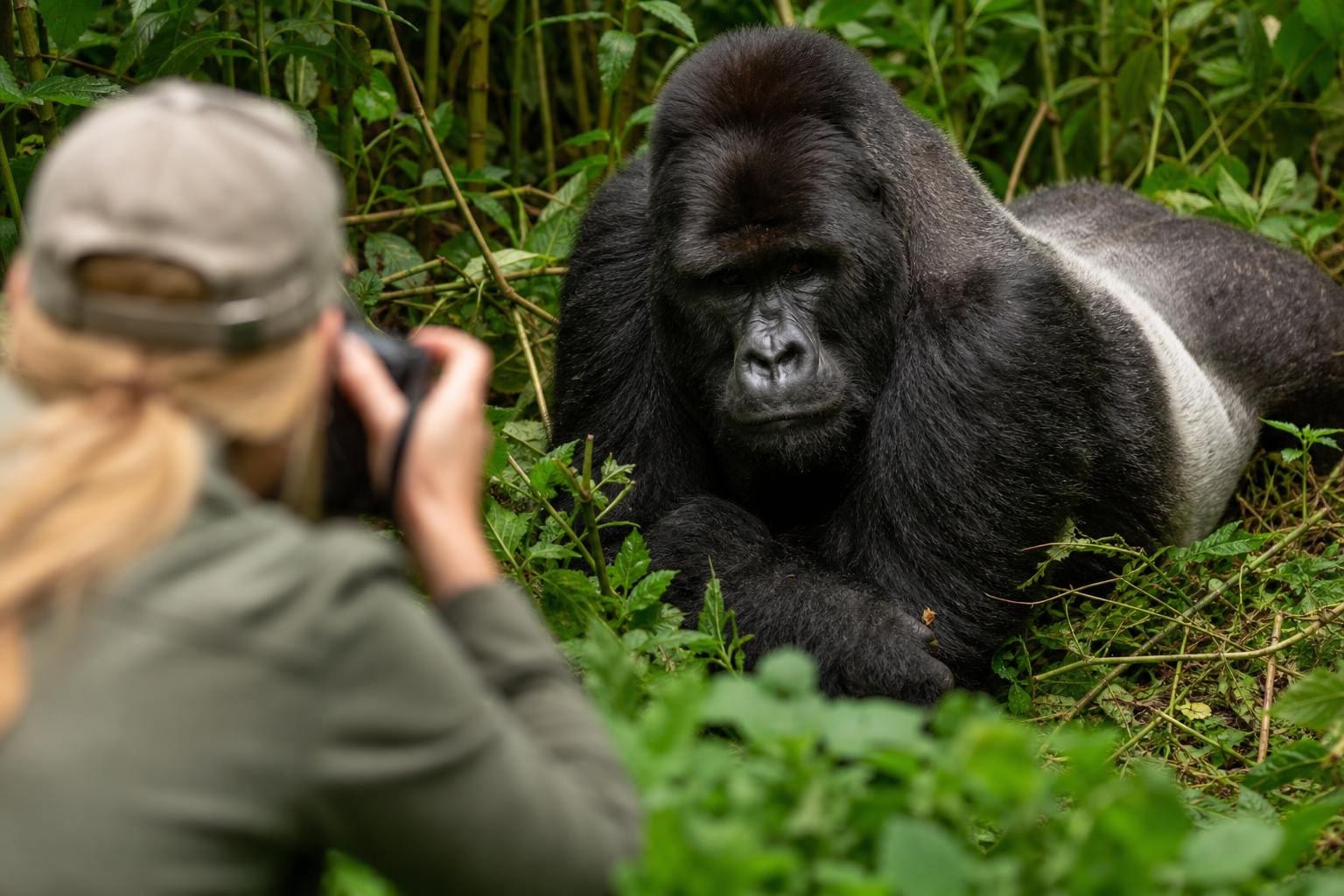
    The silverback is the dominant adult male gorilla in each family group, named for the distinctive silver-gray hair that develops on his back with maturity. He’s the leader, the protector, and usually the most photographed member of the group. Every habituated family has at least one silverback, and encountering him up close is the emotional centerpiece of most treks.


    Permits and Booking: The 2026 Numbers

    Gorilla Trekking Permit

    This is the legal document you need to visit a habituated gorilla family. One permit, one trek, one hour with the gorillas. Prices vary by country and residency status.

    Category

    Uganda

    Rwanda

    Foreign non-resident

    $800

    $1,500

    Low-season (Apr, May, Nov)

    $600

    No discount

    Foreign resident

    $700

    $500

    East African citizen

    ~$80 (UGX 300,000)

    $200

    The price gap is the first thing everyone notices when comparing gorilla trekking Rwanda vs Uganda. Rwanda’s $1,500 price tag is nearly double Uganda’s standard rate and more than double the low-season price. That said, as you’ll see in the logistics section, permit price alone doesn’t tell the full cost story.

    For a detailed breakdown of Uganda permit costs and the booking process, read our gorilla trekking permits guide.

    Uganda Wildlife Authority (UWA)

    The UWA manages all gorilla permits in Uganda. An important policy change took effect in March 2026: the previous 7-day reservation window has been eliminated. All permits must now be paid in full at the time of booking. No more holding permits without confirmed payment. This means you can’t tentatively reserve a spot and decide later. If you want the date, you pay for the date.

    Most travelers book Uganda permits through a licensed tour operator rather than directly with UWA, which simplifies the process considerably.

    Rwanda Development Board (RDB)

    The RDB handles gorilla permits in Rwanda, with online booking available through the Irembo platform. The process is more streamlined than Uganda’s, partly because Rwanda has built a slick digital infrastructure around its tourism industry. Permits can sell out months in advance during peak season (June through September), so early booking matters for both countries.

    Gorilla Habituation Experience (GHEX)

    This is Uganda’s ace card and a term worth understanding. A standard gorilla trek gives you one hour with a fully habituated family. The Gorilla Habituation Experience, available only in Bwindi, lets you spend four hours with a semi-habituated group for $1,500.

    Here’s the math that most comparison articles miss: Uganda’s habituation permit costs the same as a standard Rwanda permit, but gives you four times the contact. You’re essentially joining the ongoing process of teaching wild gorillas to tolerate human presence. It’s more unpredictable, more physically demanding, and far more intimate than a standard trek.

    If you have the fitness for it, the GHEX is arguably the best value proposition in gorilla tourism. Only a handful of permits are issued per day.

    Gorilla Trekking Success Rates: Rwanda vs Uganda

    One of the most common misconceptions is that one country offers better gorilla sightings than the other.

    In reality, both Uganda and Rwanda report sighting success rates close to 98%.

    Several factors contribute to this exceptionally high success rate:

    • Gorilla families are monitored daily by trackers

    • Rangers locate groups before visitors begin trekking

    • Habituated families stay within known territories

    • Trekking groups receive real-time updates from trackers

    Gorilla Sighting Comparison

    Metric

    Uganda

    Rwanda

    Sighting success rate

    ~98%

    ~98%

    Habituated families

    19+

    12

    Advance trackers used

    Yes

    Yes

    Daily monitoring

    Yes

    Yes

    For travelers concerned about missing the gorillas, neither destination has a meaningful advantage.


    The Trek Experience: What Each Country Feels Like

    Habituated Gorilla Group

    A habituated group is a gorilla family that has been gradually conditioned over several years to accept the close presence of humans without stress. Only habituated groups are open to tourist visits. This process takes two to three years of daily approach by park rangers.

    Uganda has more of them (19+) than Rwanda (12), which translates to more daily permits: roughly 128 in Bwindi versus 96 in Volcanoes. More availability generally means easier permit access, especially during peak season.

    The Eight-Person Rule

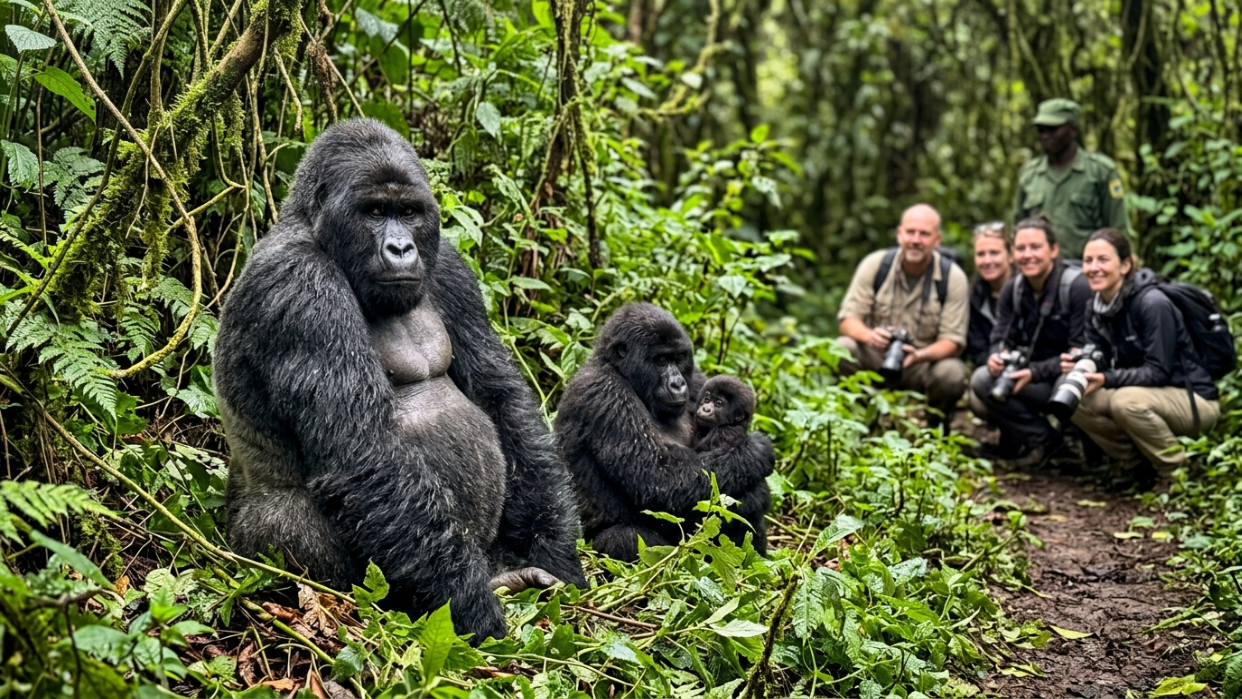
    No more than eight visitors per day are allowed to see each habituated gorilla family. This is standard in both countries. It exists to minimize stress on the gorillas and maintain the quality of the encounter. Combined with the one-hour viewing limit, these rules mean your gorilla time is exclusive but brief, so preparation matters.

    The One-Hour Rule

    Once your group reaches the gorillas, your clock starts. You get exactly 60 minutes. Rangers enforce this strictly. It sounds short, but most trekkers report it feels longer than expected because the encounters are so absorbing. For a full rundown of what these rules look like in practice, our gorilla trekking safety guide covers the details.

    Trekking Sector (Bwindi)

    Bwindi’s four sectors matter more than most people realize before they book:

    • Buhoma (northwest): The original trekking sector. Moderate terrain, well-established trails.

    • Ruhija (east): Higher elevation, more challenging terrain. Good birding.

    • Rushaga (south): The most gorilla families, relatively gentle slopes.

    • Nkuringo (south): Known for steep descents and ascents. Physically the most demanding.

    Your assigned sector determines your starting point, your accommodation options, and (if you’re coming from Kigali) which border crossing you’ll use.

    Terrain Comparison
    Gorilla Trekking Rwanda vs Uganda (2026): Which Is Best?


    This is where the gorilla trekking Rwanda vs Uganda difference gets visceral.

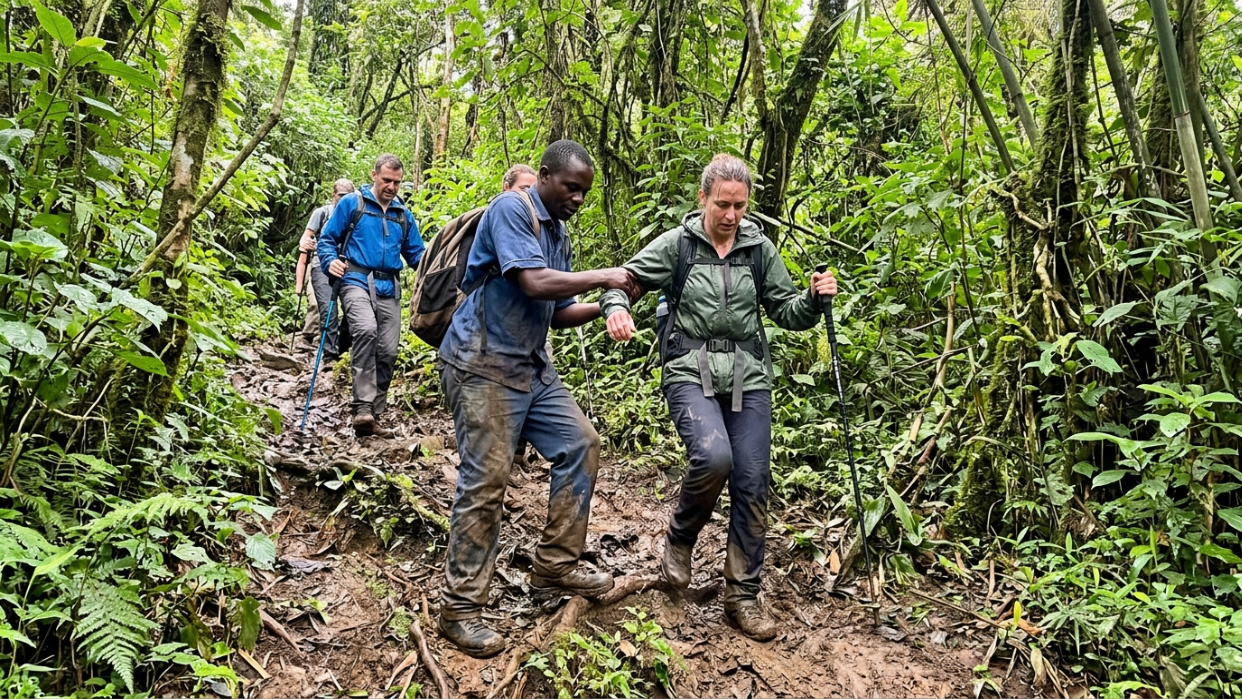
    Bwindi is a thick tropical rainforest with dense undergrowth. The park genuinely earns the word “impenetrable.” You may spend hours pushing through vegetation on narrow trails, climbing steep ridges, and navigating muddy slopes. Treks last anywhere from 2 to 8 hours depending on where the gorillas are that morning.

    Volcanoes National Park offers more open terrain: bamboo forests, volcanic meadows, clearer sightlines. Most treks finish within 4 hours, and many take under 2. The hiking is still real exercise (you’re on a volcano) but it’s less grueling than Bwindi.

    Wondering if you’re fit enough? Our gorilla trekking fitness guide gives honest benchmarks.

    Trek Difficulty Comparison

    Not all gorilla treks are equally challenging.

    The location of the gorilla family on a particular day largely determines difficulty, but general trends exist.

    Difficulty Level

    Uganda

    Rwanda

    Easy

    Some Rushaga groups

    Several Volcanoes groups

    Moderate

    Buhoma, Ruhija

    Most treks

    Difficult

    Nkuringo sectors

    High-elevation volcano slopes

    Typical trek duration

    2–8 hours

    30 mins–4 hours

    For first-time hikers or older travelers, Rwanda generally provides a more accessible trekking experience.

    Photography Differences

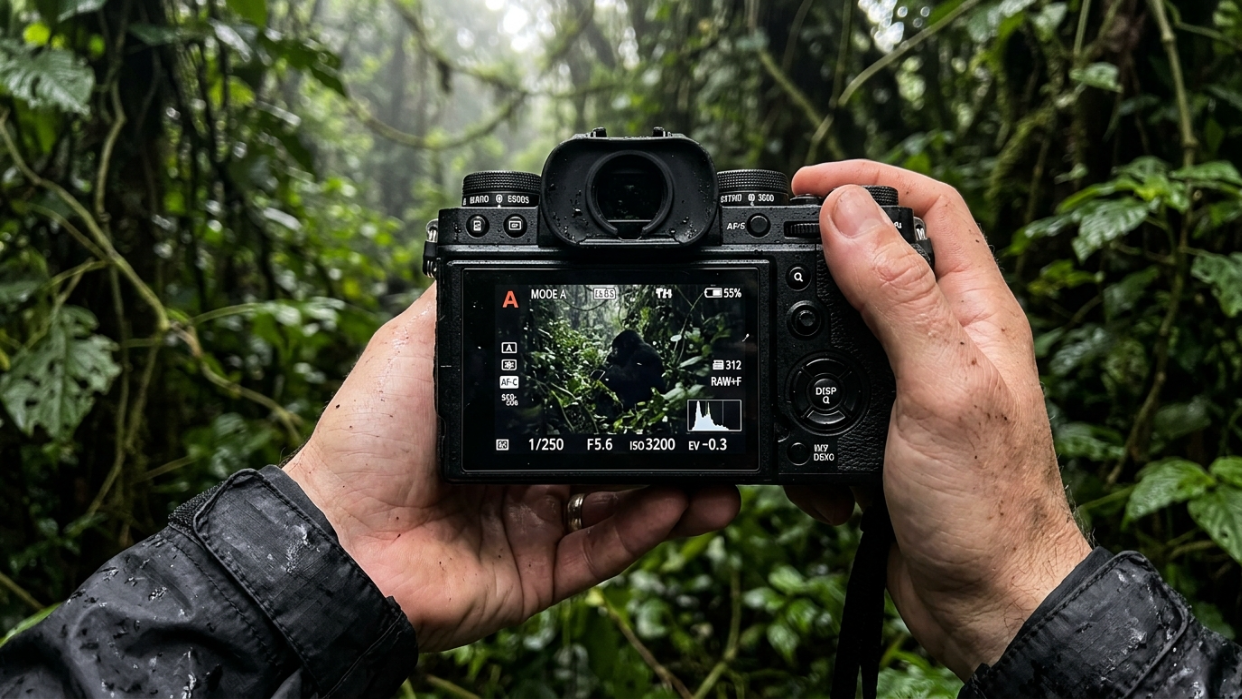
    The terrain gap directly affects your photos. Practitioners note that Volcanoes’ more open canopy means better natural light and easier shooting conditions. Bwindi’s dense forest creates challenging light but potentially more dramatic, atmospheric images. One safari guide noted that a professional photographer he recently led through Bwindi said the dense forest required more technical skill but produced images with a mood you simply can’t replicate in Volcanoes.

    For gear recommendations and camera settings specific to gorilla encounters, see our gorilla trekking photography guide.

    Porter

    In both countries, you can hire a porter at the trailhead to carry your daypack and help you on steep sections. Porters are not included in your permit fee; they’re an additional cost (typically $15-20). Hiring one is strongly recommended, especially in Bwindi. Beyond the practical benefit, porter fees go directly to local community members, making this one of the most immediate ways your trip supports conservation economies.

    Advance Tracker

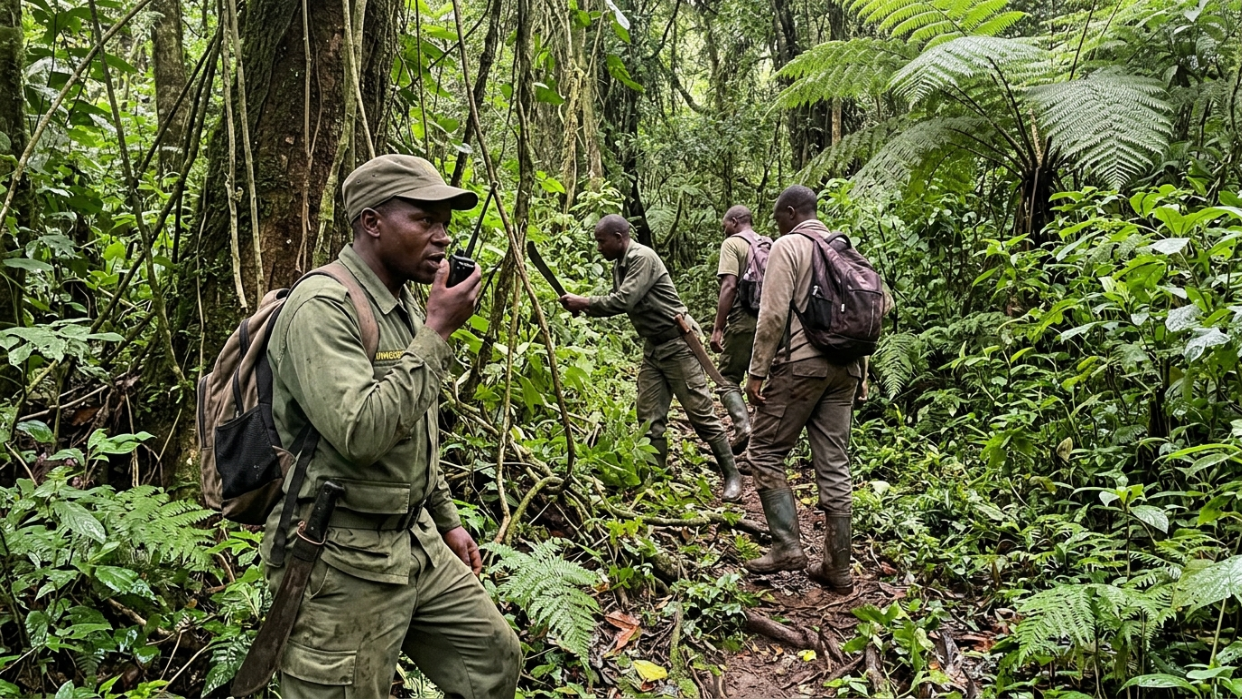
    Before your trekking group even sets out, rangers called advance trackers head into the forest at dawn to locate the gorilla family you’ve been assigned. By the time you start walking, they’ve radioed back the gorillas’ position. This system dramatically reduces search time and is used in both countries.


    Logistics and Access: Getting There

    The Rwanda Advantage

    Volcanoes National Park is about a 2.5-hour drive from Kigali International Airport. You can land in the morning and be at your lodge before lunch. For travelers on tight schedules, or those adding gorilla trekking to a Kenya or Tanzania safari, this convenience is hard to beat.

    The Uganda Challenge

    Bwindi Impenetrable National Park is in Uganda’s far southwest. From Entebbe International Airport, you’re looking at a 9 to 10 hour drive, or a 1-hour domestic flight to Kihihi or Kisoro airstrip. Either way, you need an extra travel day compared to Rwanda.

    The Kigali Shortcut

    This is the logistics hack that experienced East Africa travelers swear by. Instead of driving 9 hours from Entebbe, you fly into Kigali and drive to Bwindi. The road takes 4 to 5 hours depending on your trekking sector. You get Uganda’s $800 permit with Rwanda’s easy airport access.

    Practitioners on travel forums confirm the math works. Forum users on TripAdvisor have noted that RwandAir from London to Kigali is often cheaper than most carriers to Entebbe, and from Kigali it’s about 3 hours to the southern gorilla sites near Kisoro, or roughly 4.5 hours to Buhoma.

    Your border crossing depends on your assigned Bwindi sector:

    • Cyanika Border: Preferred for Rushaga and Nkuringo sectors. Quieter, more scenic, routes through Kisoro town.

    • Katuna (Gatuna) Border: The busiest crossing, best for Buhoma and Ruhija sectors.

    The Time Zone Trap

    One of the most common mistakes on the Kigali-to-Bwindi route: forgetting the time difference. Rwanda runs on Central Africa Time (CAT). Uganda runs on East Africa Time (EAT). Uganda is one hour ahead. If your trekking briefing is at 7:30 AM Uganda time and you’ve set your alarm on Rwanda time, you’re showing up an hour late. Set your phone to update automatically when you cross the border.

    East African Tourist Visa (EATV)

    For $100, this 90-day multiple-entry visa covers Uganda, Rwanda, and Kenya. It’s the key that makes the Kigali Shortcut and multi-country itineraries seamless. Apply through any of the three countries’ immigration portals before departure. If you’re combining gorilla trekking with a Serengeti safari or Maasai Mara visit, the EATV saves both money and paperwork.

    Sample Trip Costs: Rwanda vs Uganda

    Permit prices tell only part of the story.

    The total cost of a gorilla trekking trip depends on transportation, accommodation, and trip length.

    Example Cost Comparison (Solo Traveler)

    Expense

    Uganda

    Rwanda

    Permit

    $800

    $1,500

    Transfers

    $250–500

    $50–150

    Accommodation (2 nights)

    $150–500

    $250–800

    Estimated Total

    $1,200–1,800

    $1,800–2,500

    Example Cost Comparison (Couple)

    Expense

    Uganda

    Rwanda

    Permit Cost (2 people)

    $1,600

    $3,000

    Shared Transport

    Lower per person

    Lower per person

    Estimated Savings Choosing Uganda

    $1,000+

    —

    For a broader look at connecting multiple countries, our guide on fitting multiple experiences into one East Africa trip walks through the planning.


    Seasonality: When to Go

    Peak Season

    June through September is the primary dry season across both Bwindi and Volcanoes. Weather is best, trails are driest, and permits sell out fastest. The short dry season from December to February also offers good conditions with slightly fewer crowds.

    Low Season (Green Season)

    April, May, and November bring heavier rain. Trails get muddier, especially in Bwindi. But Uganda drops permit prices to $600 during these months, saving $200 per person. Rwanda offers no seasonal discounts.

    The gorillas don’t migrate. They’re there year-round. Rain makes the trek harder, not the sighting less likely. Budget-conscious travelers who don’t mind wet boots will find the low season rewarding.

    Best Time for Gorilla Trekking

    While gorilla trekking operates year-round, certain months offer better hiking conditions.

    Gorilla Trekking Seasons

    Season

    Months

    Conditions

    Peak Dry Season

    June–September

    Best weather

    Short Dry Season

    December–February

    Excellent conditions

    Green Season

    March–May

    Wet but quieter

    Short Rainy Season

    October–November

    Moderate rainfall

    The gorillas remain in the parks throughout the year, so weather affects trail conditions far more than viewing opportunities.


    Culture and Conservation

    Kwita Izina

    Rwanda’s annual gorilla naming ceremony, Kwita Izina, is one of Africa’s most meaningful conservation events. At the 2025 ceremony, 40 baby mountain gorillas received official names. Since the tradition began over two decades ago, 397 gorillas have been named. The event draws global attention to gorilla conservation and has become a cornerstone of Rwanda’s national identity.

    The Conservation Success Story

    In the early 1980s, fewer than 254 mountain gorillas survived. Poaching, habitat loss, and regional conflict had pushed the species to the edge. As of 2024, the population has grown to approximately 1,063 individuals, a recovery that ranks among conservation’s greatest achievements.

    Tourism revenue drives much of this progress. In Uganda, 75% of each $800 permit goes directly to gorilla conservation, 15% to the government, and 10% to local communities surrounding the parks. This revenue-sharing model gives communities a direct financial stake in protecting gorillas rather than poaching them.

    A new census is underway: researchers are currently conducting the 2025 Bwindi-Sarambwe mountain gorilla census, with two sweeps planned (the second scheduled for October) to ensure no gorillas are missed.

    Two Different Tourism Philosophies

    Rwanda and Uganda have made deliberate, different strategic choices. Rwanda pursues a high-value, low-volume model. The $1,500 permit price is intentional: fewer visitors, higher spending per head, luxury-tier accommodations. Rwanda’s safari lodges skew four and five stars. Uganda markets itself as the more accessible, adventure-forward option. Budget lodges exist alongside luxury camps, and the lower permit prices attract a wider range of travelers.

    Neither approach is better. They reflect different visions for conservation tourism, and they produce genuinely different travel experiences.


    The Total-Cost Question Most Articles Get Wrong

    Here’s a nuance almost every gorilla trekking Rwanda vs Uganda comparison misses. The standard advice says Uganda is always cheaper because the permit costs less. That’s true if you’re looking only at the permit. But total trip cost depends on your circumstances.

    Practitioners on TripAdvisor forums have flagged this repeatedly. One experienced traveler put it plainly: a friend planning a quick solo gorilla trek found that once he factored in the logistics and transfer costs of getting to Bwindi from Entebbe, it was cheaper to go to Rwanda and pay the higher permit fee. Solo travelers absorb 100% of vehicle and driver costs that couples and groups split. Rwanda’s shorter transfer from Kigali means fewer hotel nights and cheaper ground transport.

    The takeaway: for solo travelers on 2-3 day trips, Rwanda can match or beat Uganda on total cost. For couples, groups, or anyone building a longer East Africa itinerary, Uganda’s lower permit price compounds into significant savings. For a broader breakdown of what East Africa trips actually cost, our safari cost guide has detailed numbers.


    Decision Framework: Which Country Fits You?

    Choose Uganda if:

    • Budget is a priority ($800 standard, $600 low season)

    • You want the Gorilla Habituation Experience (4 hours for $1,500)

    • You prefer a rugged, jungle-immersion trek

    • You’re combining gorilla trekking with Queen Elizabeth National Park, Kibale chimpanzee tracking, or other Uganda wildlife experiences

    • You’re traveling as a couple or group (transfer costs spread across multiple people)

    • Peak-season permit availability matters (128 daily vs 96)

    Choose Rwanda if:

    • You have limited time (2.5 hours from Kigali airport to the park)

    • You prefer easier terrain and shorter treks

    • Luxury accommodation is important

    • You’re adding gorilla trekking onto a Kenya or Tanzania safari

    • You’re traveling solo on a short trip (total cost may be comparable to Uganda)

    • You want a streamlined, polished experience from airport to gorilla

    Consider Both if:

    • You want to use the Kigali Shortcut: fly into Kigali, drive to Bwindi for Uganda’s $800 trek, then loop back for a second trek in Volcanoes National Park

    • You have the East African Tourist Visa, which makes cross-border movement seamless

    • You want to compare the dense rainforest experience with the open volcanic terrain in a single trip

    Ready to start planning? Explore Uganda gorilla trek options or get in touch to design a trip that covers both countries.


    Frequently Asked Questions

    Is gorilla trekking better in Rwanda or Uganda?

    Neither is objectively better. Rwanda offers easier access, shorter treks, and a luxury-leaning experience. Uganda offers lower permit costs, tougher jungle terrain, more gorilla families, and the exclusive Gorilla Habituation Experience. The best choice depends on your budget, physical fitness, available time, and travel style.

    How much does a gorilla trekking permit cost in 2026?

    Uganda charges $800 per person for foreign non-residents, dropping to $600 during the low season (April, May, November). Rwanda charges $1,500 year-round with no seasonal discounts. Uganda’s Gorilla Habituation Experience costs $1,500 for a 4-hour visit.

    Can I fly into Kigali and trek in Uganda?

    Yes, and many experienced travelers recommend this route. Flying into Kigali and driving to Bwindi takes 4-5 hours, compared to 9-10 hours from Entebbe. You’ll need to cross the Uganda-Rwanda border (Cyanika for southern Bwindi sectors, Katuna for northern ones) and remember that Uganda is one hour ahead of Rwanda.

    How far in advance should I book gorilla trekking permits?

    For peak season (June through September and December through February), book at least 3-6 months ahead. Uganda’s new March 2026 policy requires full payment at time of booking, so you can no longer hold a reservation without paying. Rwanda permits also sell out months in advance during busy periods.

    What is the Gorilla Habituation Experience?

    Available only in Bwindi Impenetrable National Park, Uganda, the Gorilla Habituation Experience lets you spend 4 hours with a semi-habituated gorilla group for $1,500. You participate in the ongoing process of acclimating wild gorillas to human presence. It’s more physically demanding and less predictable than a standard trek, but the extended time with the gorillas is unmatched.

    Do I need a visa to trek gorillas in both countries?

    The East African Tourist Visa ($100) covers Uganda, Rwanda, and Kenya with 90-day multiple-entry access. It’s the simplest option for anyone visiting more than one of these countries. Apply online before departure through any of the three countries’ immigration websites.

    How fit do I need to be for gorilla trekking?

    In Rwanda, moderate fitness is sufficient for most treks (30 minutes to 4 hours on volcanic terrain). In Uganda, particularly in Bwindi’s Nkuringo sector, expect steep climbs through dense undergrowth for up to 8 hours. A porter is available in both countries to carry your gear and assist on difficult sections. Our gorilla trekking fitness guide provides honest physical benchmarks for each park.

    Is there an age limit for gorilla trekking?

    Yes. Both Uganda and Rwanda require trekkers to be at least 15 years old. There are no upper age limits, but physical fitness matters, particularly in Bwindi. Our gorilla trekking age limit guide covers family planning considerations in detail.

    Is gorilla trekking safe in Rwanda and Uganda?

    Yes. Gorilla trekking is conducted under strict supervision by armed park rangers and trained guides. Both countries have operated regulated gorilla tourism programs for decades with strong safety records.

    Why is Rwanda gorilla trekking more expensive?

    Rwanda intentionally follows a high-value, low-volume tourism model. The higher permit fee helps limit visitor numbers while generating conservation revenue.

    Can seniors do gorilla trekking?

    Many travelers in their 60s and 70s successfully complete gorilla treks each year. Rwanda is generally easier for seniors due to shorter access times and less demanding terrain.

    Is Uganda or Rwanda better for first-time visitors?

    Rwanda is often easier for first-time visitors because of shorter transfers, more straightforward logistics, and generally easier trekking conditions.

  • East Africa Visa 2026: EATV, Tanzania eVisa, Costs & Rules

    East Africa Visa 2026: EATV, Tanzania eVisa, Costs & Rules

    TL;DR

    “East Africa visa” is not a single document. It refers to multiple distinct entry permits across Kenya, Uganda, Rwanda, and Tanzania. The East Africa Tourist Visa (EATV) covers Kenya, Uganda, and Rwanda for $100, but Tanzania requires its own separate eVisa. The biggest mistake travelers make is assuming the EATV covers Tanzania. It does not.

    East Africa Visa Requirements at a Glance

    If you’re traveling to East Africa in 2026:

    Itinerary

    Visa Needed

    Kenya only

    Kenya eTA

    Tanzania only

    Tanzania eVisa

    Uganda only

    Uganda eVisa

    Rwanda only

    Rwanda Visa or Visa on Arrival

    Kenya + Uganda + Rwanda

    East Africa Tourist Visa (EATV)

    Kenya + Tanzania

    Kenya eTA + Tanzania eVisa

    Uganda + Tanzania

    Uganda eVisa + Tanzania eVisa

    Kenya + Uganda + Rwanda + Tanzania

    EATV + Tanzania eVisa

    Zanzibar trip

    Tanzania eVisa + Zanzibar Insurance

    Key takeaway:

    – The East Africa Tourist Visa covers Kenya, Uganda, and Rwanda only.

    – Tanzania always requires its own visa.

    – Zanzibar additionally requires mandatory travel insurance.

    – Uganda requires a Yellow Fever Certificate for all travelers over age one.

    This is the visa combination most travelers need when planning a multi-country East Africa safari.

    What “East Africa Visa” Actually Means

    The phrase “East Africa visa” creates more confusion than almost any other term in travel planning. Some people use it to describe a specific joint visa product. Others treat it as a catch-all for any entry permit in the region. Both uses are common, and neither is wrong, which is exactly the problem.

    Here is the reality. There are five distinct entry documents you may need for an East Africa trip:

    1. East Africa Tourist Visa (EATV) covering Kenya, Uganda, and Rwanda

    2. Kenya eTA (Electronic Travel Authorization)

    3. Tanzania eVisa

    4. Uganda eVisa

    5. Rwanda visa (available on arrival)

    Plus two additional requirements that function like entry documents: the Zanzibar Mandatory Travel Insurance and a Yellow Fever Vaccination Certificate.

    The single most important thing to understand: Tanzania is not part of the EATV. If your trip includes the Serengeti, Ngorongoro Crater, Kilimanjaro, or Zanzibar, you need a separate Tanzania eVisa regardless of whether you hold an EATV. This catches travelers off guard constantly, and it’s the fact this glossary exists to make unmissable.

    If you’re planning a multi-country East Africa safari, understanding these permits is the first step before booking anything else.

    East Africa Visa Cost Comparison

    Travel Route

    Cheapest Option

    Total Cost

    Kenya only

    Kenya eTA

    $30

    Uganda only

    Uganda eVisa

    $50

    Rwanda only

    Rwanda Visa

    $50

    Tanzania only

    Tanzania eVisa

    $50

    Kenya + Uganda

    Individual permits

    $80

    Kenya + Rwanda

    Individual permits

    $80

    Uganda + Rwanda

    Individual permits

    $100

    Kenya + Uganda + Rwanda

    EATV

    $100

    Kenya + Tanzania

    Kenya eTA + Tanzania eVisa

    $80

    Uganda + Tanzania

    Uganda eVisa + Tanzania eVisa

    $100

    Kenya + Uganda + Rwanda + Tanzania

    EATV + Tanzania eVisa

    $150

    East Africa Tourist Visa (EATV)

    East Africa Visa 2026: EATV, Tanzania eVisa, Costs & Rules


    The East Africa Tourist Visa is a joint visa that allows travel between Kenya, Uganda, and Rwanda on a single document. It was created to encourage multi-country tourism across these three nations.

    Cost: $100 USD

    Validity: 90 days, multiple entry within the bloc

    Countries covered: Kenya, Uganda, and Rwanda only

    Countries NOT covered: Tanzania, Burundi, South Sudan, or any other neighboring state

    The First-Entry Rule

    When you apply for an EATV, you submit your application through the immigration portal of whichever country you will enter first. This is not optional. If you plan to start in Uganda for gorilla trekking and then fly to Kenya for a Maasai Mara safari, you must apply through Uganda’s portal and physically enter Uganda first.

    Failure to follow this sequence can result in denial of entry or additional immigration scrutiny. This rule has direct implications for how you design your itinerary. Practitioners on travel forums regularly flag this as a planning constraint that catches people mid-trip.

    For travelers combining multiple experiences into one East Africa trip, the first-entry rule means visa applications and flight bookings need to be coordinated together.

    The Exit Invalidation Rule

    The EATV remains valid only while you stay within the Kenya-Uganda-Rwanda bloc. If you leave the region (say, by flying from Nairobi to Dar es Salaam for a Tanzania safari), the EATV dies. You cannot re-enter Kenya, Uganda, or Rwanda on that same visa, even if you’re still within the 90-day window. You would need either a new EATV or individual country visas for the return leg.

    This matters enormously for travelers doing a Kenya-Tanzania or Uganda-Tanzania combination. The moment you step into Tanzania, your EATV is invalidated.

    When the EATV Makes Financial Sense

    The math is straightforward. If you’re visiting all three EATV countries, the $100 joint visa saves you money compared to buying individual visas: a Kenya eTA ($30) plus Uganda eVisa ($50) plus Rwanda visa ($50) totals $130.

    But if you’re only visiting two of the three countries, individual visas may be cheaper. Kenya plus Uganda individually costs $80, which is $20 less than the EATV.

    How to Apply

    Apply through the official immigration portal of your first-entry country:

    Processing typically takes 3 to 7 working days, though applying at least two weeks before departure is recommended. You will need a valid passport with at least six months of remaining validity, a passport-sized photo, proof of travel plans, and payment.

    Tanzania eVisa

    Since Tanzania is the most common destination for safari travelers heading to the Serengeti, Ngorongoro, and Kilimanjaro, this section deserves careful attention.

    Tanzania operates its own eVisa system completely independent of the EATV. You can apply through the official portal before travel or obtain a visa on arrival at any international entry point.

    Ordinary visa: $50 USD, valid for up to 90 days, single entry

    Multiple-entry visa: $100 USD, valid for 1 year

    The US Citizen Rule

    This trips up American travelers every time. US passport holders are not eligible for the ordinary (single-entry) visa. American nationals must apply for the multiple-entry visa at $100, even if they plan to enter Tanzania only once. This is not a suggestion; it is a hard rule enforced at immigration.

    Processing Times

    The official processing window is up to 10 working days. In practice, approval sometimes arrives only shortly before departure, on the day of travel, or even while you’re in transit. For travelers doing Tanzania safari planning, applying at least three weeks before your trip removes significant stress.

    Visa on Arrival

    Unlike Kenya or Uganda, Tanzania still allows visa on arrival at international airports and border crossings. You pay the same fees ($50 ordinary, $100 multiple-entry) in cash. The eVisa is strongly recommended to avoid long queues and potential complications, but the on-arrival option remains a backup.

    Zanzibar Coverage

    Although Zanzibar is semi-autonomous, your Tanzanian visa covers both the mainland and the Zanzibar archipelago. No separate visa is needed for Zanzibar.

    Zanzibar Mandatory Travel Insurance

    East Africa Visa 2026: EATV, Tanzania eVisa, Costs & Rules


    This is the requirement that blindsides travelers most often. Since October 1, 2024, all tourists arriving in Zanzibar must carry mandatory travel insurance purchased through the official Zanzibar scheme. This applies even if you already hold comprehensive international travel insurance from your home country.

    Cost: $44 USD for adults, $22 for children ages 3 to 17, free for children under 3

    Validity: Up to 92 days (approximately three months)

    Coverage: Emergency medical expenses (including epidemics and pandemics) up to $50,000, plus evacuation and repatriation

    Where to buy: The official portal at visitzanzibar.go.tz

    Enforcement: Your insurance is checked on arrival in Zanzibar. Without it, you may not be allowed to enter.

    This is separate from and additional to your Tanzania eVisa. Budget for both. For more on travel logistics for the archipelago, the Zanzibar safety and travel terms glossary covers what to expect on the ground.

    Tanzania Mainland Insurance Expansion

    Tanzania has announced plans to extend mandatory travel insurance to the mainland as well, set to take effect in the 2025/2026 fiscal year. Under this policy, every international traveler entering the country would pay a non-refundable insurance fee of $44 USD. This is worth monitoring if you are booking travel for late 2025 or beyond.

    Kenya eTA (Electronic Travel Authorization)

    Kenya no longer issues visas. As of January 5, 2024, the country replaced its entire visa system with an Electronic Travel Authorization (eTA). The old eVisa portal (evisa.go.ke) is defunct. Many travelers still search for “Kenya visa,” but the correct term and document is now the eTA.

    Cost: $30 USD

    Validity: The standard eTA covers a 90-day stay. The multiple-entry eTA, also $30, allows unlimited entries over up to 5 years with 90-day stays each time, which is exceptional value for frequent travelers.

    Processing: Three working days, though it can take longer in some cases

    Official portal: etakenya.go.ke only

    Apply exclusively at the official portal. Third-party sites charge extra fees, and some do not actually submit applications. There is no visa on arrival option in Kenya anymore. The digital eTA has entirely replaced it.

    Who Is Exempt

    Citizens of East African Community member states (Burundi, DR Congo, Rwanda, South Sudan, Tanzania, and Uganda) do not need an eTA for stays up to 180 days. Kenya has also expanded exemptions to include most African nationals. Citizens of all African Union member states are now exempt, with the exception of Libya and Somalia.

    For travelers combining a Kenya safari with time in Tanzania, the Kenya safari glossary breaks down itinerary terms and planning details.

    Uganda eVisa

    Uganda requires an electronic visa for most foreign nationals. The e-Visa system has replaced the traditional visa-on-arrival process, and there is no on-arrival option in 2026. You must apply online before travel.

    Cost: $50 USD for a single-entry visa

    Validity: Up to 90 days from the date of approval

    Official portal: visas.immigration.go.ug

    Scam Warning

    The Uganda government has explicitly warned about fake visa websites that charge inflated fees. All applications must go through the official portal listed above. Fake sites fraudulently charge between $110 and $200 for a visa that officially costs $50. Any website other than the official portal should be treated as an attempt to defraud you.

    Extensions

    Uganda allows extensions of single-entry visas either online or in person at DCIC (Directorate of Citizenship and Immigration Control) offices. Travelers can extend for up to 60 additional days, and the total stay can reach 6 months.

    Yellow Fever Requirement

    All passengers over the age of one year must present a valid yellow fever vaccination certificate to enter Uganda, regardless of country of origin. This is stricter than Kenya or Tanzania, which only require the certificate from travelers coming from endemic zones. More on this below.

    The most popular reason to visit Uganda is gorilla trekking. For details on gorilla trekking permits and costs, including how permits are booked and what they include, that guide covers the full picture.

    Rwanda Visa

    Rwanda has one of the most open visa policies in Africa. Since January 1, 2018, citizens of all countries can obtain a visa on arrival without prior application.

    Single-entry visa: $50 USD, valid for 30 days

    Multiple-entry visa: $70 USD, valid for 90 days

    Waiver countries: Citizens of African Union, Commonwealth, and La Francophonie member states receive free visas for 30-day stays

    US citizens: Eligible for a long-term visitor visa (V12) valid for up to 10 years at $160 USD

    For those who prefer to apply in advance, the Irembo portal (irembo.gov.rw) processes most applications within 2 to 8 days.

    Overstay Penalties

    Rwanda enforces strict consequences for overstaying. Fines run $10 per day, and repeated violations can lead to entry restrictions. Keeping track of your stay dates matters.

    Yellow Fever Vaccination Certificate

    This is not a visa, but it functions like one at East African borders. Without it, you can be denied entry regardless of what other documents you hold.

    Uganda: Mandatory for ALL travelers over age one, no exceptions, no matter where you’re coming from.

    Kenya: Required for travelers arriving from countries where yellow fever is endemic. If you fly directly from the US or Europe to Kenya with no layovers in endemic zones, you typically won’t need it for Kenya alone.

    Tanzania (the transit trap): Transit passengers spending more than 12 hours in a country with endemic yellow fever need the certificate to enter Tanzania. Critically, if you have been in Kenya and then travel to Tanzania, you will need a Yellow Fever vaccination certificate to enter Tanzania. This catches multi-country travelers who skip the vaccine because their home country doesn’t require it.

    Validity: The WHO now considers the yellow fever vaccine valid for life. A single dose provides permanent protection and permanent certificate validity.

    For anyone doing a multi-country East Africa trip that includes Uganda at any point, get the vaccine. It simplifies every border crossing.

    Transit Visas and Transit eTAs

    If you’re transiting through an East African country (connecting flights, brief layovers), separate rules apply.

    Kenya transit eTA: Required if your layover involves leaving the airport or exceeds certain time thresholds. Applied for through the same etakenya.go.ke portal.

    Tanzania transit visa: Costs approximately $30 USD and can be obtained on arrival.

    If your itinerary involves a connection through Nairobi or Dar es Salaam, confirm whether your layover length and airport movement trigger a transit permit requirement. Airlines sometimes check this at boarding.

    Quick-Reference Comparison Table

    Permit

    Countries

    Cost (USD)

    Validity

    Official Portal

    Visa on Arrival?

    EATV

    Kenya, Uganda, Rwanda

    $100

    90 days, multi-entry within bloc

    First-entry country portal

    No

    Kenya eTA

    Kenya

    ~$30

    90 days (multi-entry up to 5 yrs)

    etakenya.go.ke

    No

    Tanzania eVisa

    Tanzania + Zanzibar

    $50 single / $100 multiple

    90 days / 1 year

    visa.immigration.go.tz

    Yes

    Uganda eVisa

    Uganda

    $50

    90 days

    visas.immigration.go.ug

    No

    Rwanda Visa

    Rwanda

    $50 single / $70 multiple

    30 days / 90 days

    irembo.gov.rw

    Yes (all nationalities)

    Zanzibar Insurance

    Zanzibar archipelago

    $44 adult / $22 child

    ~92 days

    visitzanzibar.go.tz

    Purchasable on arrival (risky)

    How to Sequence Visas for a Multi-Country Trip

    Understanding which East Africa visa documents you need is one thing. Applying for them in the right order is another.

    If visiting Kenya, Uganda, and Rwanda (no Tanzania): The EATV at $100 is your best option. Apply through the portal of whichever country you enter first, and structure your itinerary accordingly.

    If visiting Tanzania plus one or two EATV countries: You need a Tanzania eVisa AND either an EATV or individual country visas. Remember, entering Tanzania invalidates your EATV. If you plan to return to Kenya or Uganda after Tanzania, you will need new entry documents for those countries.

    If visiting only Tanzania (including Zanzibar): You need just the Tanzania eVisa, plus Zanzibar insurance if your trip includes the archipelago.

    If visiting only two EATV countries: Do the math. Individual visas for Kenya plus Uganda total $80, which is cheaper than the $100 EATV. The EATV only saves money when all three countries are on the itinerary.

    For help designing a trip that accounts for all of this, East Africa safari itineraries walks through common multi-country routes with cost context.

    East Africa Visa Application Timeline

    For a smooth trip, use this timeline:

    Time Before Departure

    Task

    6 weeks

    Confirm itinerary

    4 weeks

    Get Yellow Fever vaccine if needed

    3 weeks

    Apply for Tanzania eVisa

    2 weeks

    Apply for EATV or Uganda eVisa

    1 week

    Apply for Kenya eTA

    3 days

    Purchase Zanzibar Insurance

    Departure Day

    Carry printed copies of all approvals

    Frequently Asked Questions

    Is the East Africa visa valid for Tanzania?

    No. The East Africa Tourist Visa (EATV) covers Kenya, Uganda, and Rwanda only. Tanzania requires its own separate eVisa ($50 for most nationalities, $100 for US citizens). This is the most common misunderstanding about the East Africa visa.

    How much does an East Africa visa cost?

    The EATV costs $100 and covers Kenya, Uganda, and Rwanda. Individual country visas vary: Kenya eTA is $30, Uganda eVisa is $50, Tanzania eVisa ranges from $50 to $100, and Rwanda is $50 for a single entry. The total cost depends on which countries you visit and whether you use the joint EATV or apply individually.

    Can I get a visa on arrival in East Africa?

    It depends on the country. Rwanda offers visa on arrival to all nationalities. Tanzania still allows visa on arrival at international airports. Kenya and Uganda do not offer visa on arrival; both require online applications (eTA and eVisa, respectively) before travel.

    Do I need a yellow fever certificate for East Africa?

    Uganda requires it from all travelers over age one, regardless of origin. Kenya and Tanzania require it from travelers arriving from or transiting through yellow fever endemic zones. If you visit Kenya and then fly to Tanzania, you will need the certificate for Tanzania entry. The safest approach for any multi-country trip: get vaccinated.

    How far in advance should I apply for my East Africa visa documents?

    Apply at least three weeks before departure for Tanzania (processing can take up to 10 business days and sometimes runs to the wire). Kenya’s eTA typically processes in three business days. Uganda’s eVisa and the EATV take 3 to 7 working days. Rwanda’s eVisa processes in 2 to 8 days, though visa on arrival is available as a backup.

    What happens if my Tanzania eVisa isn’t approved before my flight?

    Tanzania still allows visa on arrival, so you can obtain one at the airport for $50 (or $100 for US citizens) in cash. This is a viable fallback, though it means waiting in a potentially long queue. Applying early is the better strategy.

    Is Zanzibar travel insurance really mandatory even if I have my own?

    Yes. The Zanzibar mandatory insurance scheme applies to all incoming tourists regardless of existing coverage. It costs $44 for adults and is checked at immigration on arrival. Without it, you risk being denied entry to the archipelago.

    What is the difference between a Kenya eTA and a Kenya visa?

    They are the same thing in practice, but Kenya officially replaced its visa system with the eTA in January 2024. There are no more Kenya visas. All travelers (except exempt nationalities) must obtain an eTA through etakenya.go.ke before arrival.

  • East Africa Best Time to Visit (2026): Season-by-Season

    TL;DR

    The best time to visit East Africa depends on what you want to do, but June through October is the safest all-purpose window for safaris, Kilimanjaro climbs, gorilla trekking, and beach holidays. January and February offer a second excellent window with fewer crowds. April and May are the wettest months and best avoided unless you’re on a tight budget. East Africa’s seasons are defined by rainfall, not temperature, and understanding terms like “long rains,” “shoulder season,” and “calving season” is the key to planning the right trip.

    Direct Answer: Best Time to Visit East Africa

    If you’re looking for the best overall time to visit East Africa, choose June through October. This period offers:

    – Peak wildlife viewing in Kenya and Tanzania

    – Excellent Great Migration river crossing opportunities

    – Ideal conditions for climbing Kilimanjaro

    – Dry trails for gorilla trekking in Uganda and Rwanda

    – Sunny beach weather in Zanzibar

    For travelers seeking fewer crowds and lower prices, January through February is the best alternative, especially for Serengeti calving season safaris and Kilimanjaro climbs.

    Travel Goal

    Best Months

    Overall East Africa Trip

    June–October

    Great Migration Crossings

    July–September

    Serengeti Calving Season

    January–March

    Kilimanjaro Climbing

    January–February, June–October

    Gorilla Trekking

    June–September, December–February

    Zanzibar Beaches

    June–October, January–February

    Budget Travel

    November, Early June

    Most travelers researching the best time to visit East Africa run into the same problem. Every guide throws around terms like “Masika,” “green season,” “shoulder month,” and “crossing season” without stopping to explain what they actually mean or how they connect to each other. The result is confusion, especially for anyone trying to stitch together a multi-country trip that combines safaris, a Kilimanjaro climb, gorilla trekking, or beach time in Zanzibar.

    This glossary fixes that. Every timing-related term you’ll encounter while planning an East Africa trip is defined below, with exact month windows, the activities each term applies to, and what it actually means for your booking decisions.

    If you’re already thinking about routes, costs, and logistics, start with East Africa safari itineraries to see how these seasonal windows translate into real trip plans.


    Season Foundations: How East Africa’s Climate Actually Works

    Why There’s No “Summer” or “Winter”

    East Africa sits on the equator. Nairobi, Arusha, Kampala, and Kigali all fall within a few degrees of latitude zero. The practical consequence: temperatures barely change throughout the year. Daytime highs hover between 25°C and 30°C in most safari destinations, and the sun rises and sets at roughly the same time every day.

    Seasons in East Africa are defined entirely by rainfall. When someone asks about the best time for East Africa, they’re really asking: when does it rain, and how does that rain affect wildlife, roads, and access?

    ITCZ (Inter-Tropical Convergence Zone)

    This is the atmospheric engine behind everything. The ITCZ is a band of low pressure near the equator where trade winds from the northern and southern hemispheres collide, creating rising air and heavy rainfall. As this band migrates north and south with the sun’s position, it passes over East Africa twice a year, producing two distinct rainy seasons.

    Why it matters for your trip: The double pass of the ITCZ is the reason East Africa has two wet periods and two dry periods, not the single wet/dry cycle you find in southern Africa. Every seasonal term below traces back to this pattern.


    Dry Season (Long): June to October

    East Africa Best Time to Visit (2026): Season-by-Season


    The long dry season is the backbone of East Africa’s high season. Rainfall drops to near zero across Kenya, Tanzania, Uganda, and Rwanda. Vegetation thins out, water sources shrink, and animals concentrate around rivers and permanent waterholes. Predators exploit this, frequently ambushing prey at drinking spots, which makes for exceptional wildlife viewing.

    Applies to: Safaris (all countries), Kilimanjaro climbs, gorilla trekking, Zanzibar beach holidays.

    What this means for your trip: This is the single best all-purpose window for an East Africa visit. Every major activity aligns. The trade-off is that everyone knows this, so prices are highest and popular camps book out months in advance.

    Dry Season (Short): January to February

    A brief dry spell between the two rainy seasons. January and February are warm, sunny, and surprisingly good for wildlife. In the southern Serengeti and Ndutu area, this overlaps with the wildebeest calving season, creating some of the most dramatic safari viewing of the year.

    Applies to: Calving-season safaris, Kilimanjaro climbs, gorilla trekking, Zanzibar (hot but clear).

    What this means for your trip: January and February are the underrated second window. Crowds are lighter than July through September. Kilimanjaro is warmer at altitude, making for more comfortable nights. Gorilla permits are easier to secure. Practitioners on travel forums frequently call this the “insider’s window” because it delivers near-peak experiences without peak-season congestion.

    Long Rains (Masika): Mid-March to May

    “Masika” is the Swahili term for the long rains. This is the heaviest sustained rainfall East Africa receives, typically starting in mid-March and running through May. April is the wettest month across most of Kenya and Tanzania. Some bush roads become impassable, and a number of safari lodges close entirely during this period.

    Applies to: All activities are affected. April and May should be avoided for first-time visitors to East Africa, as conditions are genuinely difficult.

    What this means for your trip: This is the one window where the recommendation is clear. Unless you have a specific reason (birding, budget, or returning to a park you already know well), skip April and May.

    Short Rains (Vuli): November to December

    The Swahili “Vuli” refers to the shorter, lighter rainy season. Rain tends to fall in brief afternoon showers rather than all-day downpours. The bush greens up quickly, migratory birds arrive, and the air clears of dust.

    Applies to: Safari (still viable, especially early November and late December), birding, budget travelers.

    What this means for your trip: November is genuinely underrated. Visitor numbers drop, lodge rates fall, and wildlife doesn’t disappear just because it rained for an hour after lunch. Late December picks up again due to holiday travel, but early November can be a sweet spot.

    Green Season: An Alternate Name for the Wet Months

    East Africa Best Time to Visit (2026): Season-by-Season


    “Green season” is a marketing term used by lodges and operators to rebrand the rainy months (primarily March through May, sometimes extended to include November). The name isn’t dishonest. The rains do transform dry, dust-colored parks into vivid green spaces, and the photographic quality of light improves dramatically with cloud texture and washed air.

    Why it exists as a separate term: Lodges want to attract visitors year-round, so they emphasize the genuine benefits of wet-season travel: lush scenery, newborn animals, migratory birds in breeding plumage, and far fewer vehicles at each sighting.

    What this means for your trip: Green season pricing can be 30 to 50 percent lower than peak season. Wildlife concentrations in certain areas (southern Serengeti during calving, Ngorongoro Crater year-round) remain excellent. But road conditions and unpredictable downpours require flexibility. This is a strong option for repeat visitors or photographers willing to trade convenience for atmosphere.

    Shoulder Season: June and October

    Shoulder months sit at the edges of the long dry season. June marks the transition from wet to dry. October marks the transition from dry to the short rains. Both months consistently deliver strong wildlife viewing with meaningfully lower prices and fewer tourists than the July-through-September peak.

    What this means for your trip: Multiple experienced safari guides and operators describe shoulder months as the best value-to-experience ratio in East Africa. Game viewing is excellent (vegetation is still thinning in June, water sources are at their lowest in October), and you’ll share sightings with far fewer vehicles. If your dates are flexible, targeting June or October is the smartest move for a first safari.

    High Season

    High season in East Africa typically refers to two windows: July through September (the peak of the long dry season and the Mara River crossing period) and the last two weeks of December through early January (holiday travel plus the start of calving season). Lodges charge top rates, popular camps sell out, and the Masai Mara and northern Serengeti can feel crowded at river crossing points.

    For a detailed breakdown of how seasonality affects costs, see East Africa safari prices explained.

    Low Season

    Low season corresponds to the long rains (April through May) and, to a lesser extent, November. Lodge rates drop significantly. Some properties close altogether, particularly in remote areas where road access becomes unreliable. The cheapest time to go on safari is April through May, but conditions are challenging enough that most travelers are better served by a shoulder month.


    Wildlife and Migration Terms

    Great Migration

    The Great Migration is the continuous, year-round circular movement of roughly 1.5 million wildebeest, 400,000 zebra, and 200,000 gazelle through the Serengeti-Mara ecosystem. It is not a single event with a start date and end date. The herds follow rainfall and fresh grazing in a roughly clockwise loop, and the exact timing shifts by two to four weeks every year depending on when and where rain falls.

    This is the single most important concept to grasp when planning the best time for East Africa safaris: there is no single “migration month.” There is a migration location for every month, and being in the right place matters more than being in the right month.

    For a complete month-by-month breakdown, read the full wildebeest migration guide.

    Calving Season: January to March

    Over 500,000 wildebeest calves are born in a concentrated six-to-eight-week burst on the short-grass plains of the southern Serengeti and Ndutu area. At its peak, thousands of calves are born daily. This massive pulse of vulnerable newborns draws lions, cheetahs, hyenas, and jackals into the open, creating some of the most intense predator-prey interactions visible anywhere on Earth.

    What this means for your trip: Calving season is the best time for East Africa safari photography if predator action is your priority. The southern Serengeti plains are flat and open, giving unobstructed sightlines. Ndutu-area camps book out quickly for January and February, so plan 6 to 12 months ahead.

    Western Corridor Movement: April to June

    After calving, the herds begin moving northwest toward the Western Corridor of the Serengeti, massing around the Grumeti River. The first river crossings of the year happen here, typically in June. June is notable because it represents excellent value: the migration is present, the dry season is beginning, and prices haven’t yet hit their July-through-September peak.

    River Crossing Season: July to September

    This is what most people picture when they think of the Great Migration: hundreds of thousands of wildebeest plunging into crocodile-filled rivers. The major crossings occur at the Mara River in the northern Serengeti and Kenya’s Masai Mara, with August often considered the peak crossing month. September continues to produce crossings along with very strong predator sightings as weakened animals become easy targets.

    Critical caveat: No operator can guarantee you’ll witness a crossing on a specific date. Crossings are triggered by herd pressure, water levels, and unpredictable group behavior. The herds sometimes approach a crossing point, stand at the edge for hours, then turn around and walk away. Spending three to four days in the crossing zone during July through September gives you strong odds, but guarantees don’t exist.

    Resident Wildlife

    Not all East African wildlife migrates. Parks like Ngorongoro Crater, Tarangire (outside migration months), Lake Manyara, and Queen Elizabeth in Uganda support large populations of resident animals year-round. The Big Five are present in Ngorongoro Crater every day of the year regardless of season.

    What this means for your trip: If migration timing doesn’t work for your schedule, a safari focused on resident wildlife parks still delivers exceptional viewing. This is especially relevant for travelers visiting during the short rains or early green season.


    Activity-Specific Timing Windows

    Safari Season (Tanzania)

    The best time for a Tanzania safari is during the dry seasons: June to October and January to February. The northern circuit (Tarangire, Ngorongoro, Serengeti) is the most popular route and works well in both windows. The southern circuit (Selous/Nyerere, Ruaha) follows a slightly different pattern, with the best viewing from June through November.

    Thick vegetation conceals wildlife during wetter months, while sparser, drier conditions make animals easier to spot. Animals also gather around shrinking water sources, concentrating sightings.

    Explore Tanzania safari itineraries and costs to see how these seasonal windows shape real routes.

    Safari Season (Kenya)

    Kenya’s prime safari window mirrors Tanzania’s: July through October for the Masai Mara (overlapping with river crossings), and January through February as a secondary window. Amboseli is best from June through October for clear views of Kilimanjaro behind elephant herds. Laikipia and the northern conservancies work well year-round due to their private management structures.

    For detailed Mara planning, see the Maasai Mara safari guide.

    Kilimanjaro Climbing Season

    Two climbing windows align with the two dry seasons. The long dry (June through October) is the most popular, with clear skies and the best summit views, but trails are busier. The short dry (January through early March) is warmer at altitude, which means more comfortable nights in camp and fewer climbers on the mountain.

    Both windows offer strong summit success rates. The choice between them often comes down to personal preference: do you want cooler, drier conditions with more company (June through October), or warmer nights with quieter trails (January through February)?

    For a detailed month-by-month breakdown, read the Kilimanjaro climbing timing guide.

    Gorilla Trekking Season (Uganda and Rwanda)

    The best time for gorilla trekking is generally the dry seasons: June through September and December through February, when forest trails are firmest and weather is most predictable. But mountain gorillas can be tracked year-round because their movements aren’t driven by seasons. They live in montane forests at 2,000 to 4,000 meters elevation and move based on food availability, not rainfall patterns.

    Here’s a counter-intuitive detail that most guides miss: during the wet season, bamboo shoots on the lower slopes are at their peak. Gorilla families tend to stay in these bamboo forests at lower elevations, which often means your hike is only one to one and a half hours rather than the three to four hours common during dry months. Practitioners on safari forums report that some of their best gorilla encounters happened during “off-peak” wet months precisely because of this shorter approach.

    Permit timing matters more than weather. Popular gorilla families sell out 12 to 18 months in advance, especially for June through September. Book permits before finalizing flights.

    For permit logistics and pricing, see the Bwindi gorilla trekking guide.

    Zanzibar Beach Season

    The best time to visit Zanzibar is June through October, when the island has cool, dry weather and ideal beach conditions. January and February are a strong alternative if you prefer hotter temperatures (averaging 34°C) and fewer tourists. April and May are firmly low season, with persistent rain and many beachfront lodges closing.

    For divers and snorkelers, March, October, and November offer the best underwater visibility with warm seas and little wind.

    Safari-beach combo timing: The June through October Zanzibar window aligns perfectly with Tanzania’s peak safari season and the Great Migration crossing period. Combining a week-long Serengeti safari with a few days on Zanzibar is one of the most popular East Africa itineraries for good reason. Read the Zanzibar month-by-month guide for more detail.

    Birding Season

    Tanzania alone has over 1,000 bird species, making it a year-round birding destination. But the best birding runs from November through April, exactly opposite of peak safari season. Approximately 160 migratory species arrive from Europe and northern Asia during December through February, and wet-season residents display breeding plumage during the rains. The green, rain-washed environment also creates dramatically better conditions for bird photography.

    For park-specific recommendations, see the Tanzania birding guide.


    Planning and Budget Terms

    Peak Season Rates

    Expect lodge and camp rates to be 20 to 50 percent higher during July through September and the last two weeks of December compared to the rest of the year. Some exclusive camps charge holiday surcharges on top of already elevated high-season pricing. Domestic flights within Tanzania and Kenya also become more expensive and less available during peak months.

    Low Season Rates

    April and May offer the lowest accommodation rates across East Africa. Some lodges discount by 30 to 50 percent. Others close entirely, especially in areas with poor road access during heavy rain. November sometimes qualifies for shoulder or low-season rates depending on the property.

    Booking Window

    For peak-season migration safaris (July through September in the northern Serengeti or Masai Mara), book 6 to 12 months in advance. The best camps have limited capacity and fill quickly. For gorilla trekking permits in Uganda and Rwanda, 12 to 18 months of lead time is wise, particularly for the most sought-after gorilla families. Kilimanjaro climbs during peak months (January, February, July, August) also benefit from early booking to secure preferred routes and dates.


    Regional Exceptions Worth Knowing

    Kidepo Valley’s Inverted Season (Northern Uganda)

    Virtually all of East Africa follows the two-rainy-season pattern described above. The major exception is northern Uganda. Kidepo Valley National Park has only one rainy season, starting in April and peaking in July and August with sudden afternoon thunderstorms. This is the opposite of the rest of East Africa, where July and August are bone dry. If you’re combining a Kidepo visit with other East African destinations, plan accordingly. More on Uganda’s parks and logistics is available in the Uganda destinations guide.

    Climate Change and Shifting Patterns

    Seasons in East Africa are becoming less predictable. The long and short rains in Kenya and Tanzania are no longer as regular as they once were. Rains arrive late or early, which throws the wildebeest migration calendar out of sync and makes rigid trip planning riskier. Experienced operators monitor real-time rainfall data and adjust itineraries based on current herd locations rather than relying solely on historical averages. This flexibility is one of the strongest arguments for working with an operator who has boots on the ground in East Africa rather than booking entirely on your own.


    Multi-Activity Overlap: When Everything Aligns

    For travelers planning to combine multiple experiences, the best time for East Africa depends on which activities you want to stack. Here’s how the windows overlap:

    June through October is the universal sweet spot. Safaris in Tanzania and Kenya are at their peak. Kilimanjaro conditions are ideal. Gorilla trekking trails are dry. Zanzibar weather is perfect. Every major East Africa experience works in this window.

    January through February is the smart alternative. Calving season offers world-class safari viewing in the southern Serengeti. Kilimanjaro is warmer and quieter. Gorilla permits are more available. Zanzibar is hot but sunny. Crowds are a fraction of what you’ll find in August.

    April and May should be avoided for all activities unless budget is the primary concern and you accept meaningful rain risk.

    November is the wild card. Visitor numbers are low, some lodges offer shoulder-season rates, the migration is still active as herds move south, and migratory birds are arriving. It’s not the safest recommendation for a first-timer, but repeat visitors and flexible travelers can find real value here.

    For help combining these windows into a single cohesive itinerary, read how to fit multiple experiences into one trip.

    Month-by-Month Guide to East Africa

    This section will target dozens of long-tail searches.

    January

    • Excellent safari conditions

    • Serengeti calving season begins

    • Great weather in Zanzibar

    • Ideal Kilimanjaro climbing conditions

    • Moderate crowds

    February

    • Peak calving season

    • Strong predator sightings

    • Excellent beach weather

    • One of the best overall months

    March

    • Transition month

    • Increasing rainfall

    • Good safari value before long rains

    April

    • Peak long rains

    • Lowest prices

    • Challenging road conditions

    May

    • Continued heavy rainfall

    • Best budget deals

    • Limited lodge availability due to seasonal closures

    June

    • Dry season begins

    • Excellent safari conditions

    • Lower crowds than July and August

    July

    • Peak safari season

    • Great Migration reaches northern Serengeti

    • Strong Kilimanjaro conditions

    August

    • Peak river crossing season

    • Highest visitor numbers

    • Best overall wildlife viewing

    September

    • Continued migration activity

    • Excellent weather across East Africa

    • Often considered the best all-around month

    October

    • Excellent wildlife viewing

    • Fewer tourists

    • Outstanding shoulder-season value

    November

    • Short rains begin

    • Lower prices

    • Excellent birding opportunities

    December

    • Short rains taper off

    • Holiday crowds increase

    • Good safari and beach conditions

    Best Time to Visit East Africa by Travel Style

    Traveler Type

    Best Months

    First-Time Visitors

    June–October

    Luxury Safari Travelers

    July–September

    Budget Travelers

    November, Early June

    Wildlife Photographers

    January–March, July–September

    Birdwatchers

    November–April

    Honeymooners

    June–October, January–February

    Families

    June–August

    Repeat Safari Visitors

    October, November

    Best Time to Visit Each East African Country

    Kenya

    Best months: July–October and January–February.

    Highlights:

    • Masai Mara migration

    • Amboseli elephant viewing

    • Clear views of Mount Kilimanjaro

    Tanzania

    Best months: June–October and January–March.

    Highlights:

    • Serengeti migration

    • Ngorongoro Crater wildlife

    • Zanzibar beach extensions

    Uganda

    Best months: June–September and December–February.

    Highlights:

    • Gorilla trekking

    • Chimpanzee tracking

    • Queen Elizabeth National Park safaris

    Rwanda

    Best months: June–September and December–February.

    Highlights:

    • Gorilla trekking

    • Volcanoes National Park

    • Kigali city visits

    Frequently Asked Questions

    What is the single best month to visit East Africa?

    If forced to pick one month, September offers the strongest combination of factors. The Mara River crossings are still happening, predator activity is high as weakened animals fall behind the herds, Kilimanjaro has clear skies, gorilla trails are dry, and prices begin easing from the August peak. October is a close second with even lower prices.

    Is it worth visiting East Africa during the rainy season?

    It depends on which rainy season. The short rains (November through December) are manageable, with brief afternoon showers that rarely ruin a full game drive. The long rains (April through May) are genuinely difficult, with sustained downpours that close roads and reduce visibility. For budget-conscious travelers willing to accept some rain, November is a far better bet than April.

    How far in advance should I book an East Africa trip?

    For a July through September safari or a peak-season Kilimanjaro climb, 6 to 12 months is the standard recommendation. For gorilla trekking permits, 12 to 18 months provides the best selection. Shoulder-season travel (June, October) requires less lead time, but popular lodges still fill up 4 to 6 months out.

    Can I see the Great Migration any time of year?

    Yes. The migration is a continuous loop, and wildebeest are always somewhere in the Serengeti-Mara ecosystem. The key is being in the right location for the right month. Calving happens in the south (January through March), the Western Corridor fills in April through June, river crossings occur in the north (July through September), and the herds return south from October through December.

    What’s the best time for East Africa on a budget?

    November and the first half of June offer the best balance of low prices and good conditions. April and May have the cheapest rates, but conditions are poor enough that the savings often aren’t worth it. Lodge rates during shoulder months can be 20 to 30 percent below peak-season pricing with minimal sacrifice in experience quality.

    Does climate change really affect trip planning?

    It does. Weather patterns across East Africa have become less predictable in recent years. The long rains sometimes arrive in February or extend into June. The short rains occasionally fail entirely. This means fixed-date plans carry more risk than they used to, and working with an operator who tracks conditions in real time and can adjust your route accordingly has become more important, not less.

    Is East Africa safe to visit year-round?

    From a safety standpoint, yes. The seasonal considerations are about comfort, wildlife viewing quality, and road access, not personal safety. Political stability varies by region (always check current travel advisories for specific countries), but the major safari circuits in Tanzania, Kenya, Uganda, and Rwanda operate safely throughout the year.

    When should I visit East Africa to avoid crowds?

    The quietest months with good conditions are June (early dry season, before European summer holidays drive numbers up), October (end of dry season, just before the short rains), and January through mid-February (short dry season, between the holiday rush and spring break). April and May are the quietest of all, but for the wrong reasons.

    Is June or October better for an East Africa safari?

    Both are excellent shoulder-season months. June offers greener landscapes after the rains, while October provides excellent wildlife concentrations around remaining water sources. October is usually slightly warmer and drier.

    What is the cheapest month to visit East Africa?

    April is typically the cheapest month due to heavy rainfall and reduced visitor demand. Many lodges offer discounts of 30–50% compared to peak-season rates.

    What is the best month to see the Great Migration river crossings?

    August is generally considered the best month for Mara River crossings, although crossings can occur from July through September depending on rainfall patterns.

    What is the hottest month in East Africa?

    February is typically the hottest month across much of East Africa, particularly in lowland areas and coastal destinations like Zanzibar.

    What is the worst time to visit East Africa?

    April is usually considered the most challenging month because it coincides with the peak of the long rains, leading to muddy roads, reduced visibility, and occasional lodge closures.


    Ready to turn this timing knowledge into an actual trip plan? Explore East Africa safari itineraries, routes, and costs to see how these seasonal windows shape real multi-destination adventures.

  • East Africa Packing List: 2026 Guide to Rules & Gear

    TL;DR

    An East Africa packing list covers four distinct activities (safari, Kilimanjaro, gorilla trekking, and beach), each with specific gear rules and legal requirements. Bush planes enforce a strict 15 kg luggage limit and require soft-sided duffel bags. Tanzania, Kenya, Rwanda, and Uganda all ban single-use plastic bags, and camouflage clothing is illegal in several countries. This glossary defines the 40+ terms and rules you’ll encounter while building your packing list, so you understand the reasoning behind every item.

    Quick Answer: What Should Be on an East Africa Packing List in 2026?

    An East Africa packing list in 2026 must account for four activity types—safari, gorilla trekking, Kilimanjaro climbing, and beach travel—each with different gear requirements and strict logistics rules. The most important constraints are a 15 kg bush plane luggage limit, a ban on single-use plastic bags, and camouflage clothing restrictions in several countries. Most travelers should pack lightweight, neutral-colored, moisture-wicking clothing, a soft-sided duffel bag, trekking gear (boots, gloves, rain protection), and activity-specific items like headlamps, binoculars, and reef-safe sunscreen.


    Most East Africa trips aren’t single-activity vacations. You might spend five days on a game drive in the Serengeti, fly to Uganda for gorilla trekking, climb Kilimanjaro, then decompress on a Zanzibar beach. Each leg of that trip comes with its own packing vocabulary, weight restrictions, and legal rules that standard packing checklists mention but rarely explain.

    This glossary exists to fill that gap. Instead of another list telling you what to pack, it defines the terms and explains why each item, rule, or concept matters. Think of it as the decoder ring you read alongside any East Africa packing list.

    Terms are grouped by category rather than alphabetically, so you can scan by activity.

    If you’re planning a multi-activity East Africa trip, this glossary will make every other packing resource you read more useful.


    Luggage and Weight Rules

    Soft-Sided Duffel Bag

    A flexible canvas or nylon bag (typically 80 to 90 liters) with no rigid internal frame. This is the single most important item on your East Africa packing list, and the one people most often get wrong.

    Safari guides consistently report that guests arrive with hard-shell suitcases, only to discover the pilot can’t fit them into the cargo hold of a bush plane. The luggage compartments on Cessna Caravans and similar light aircraft are small, oddly shaped, and require bags that can be squeezed and folded. A rigid suitcase simply won’t go in.

    Beyond flights, soft duffels fit more easily into the back of safari vehicles, where space is shared among multiple guests.

    Bush Plane Weight Limit (The 15 kg Rule)

    East Africa Packing List: 2026 Guide to Rules & Gear

    Light aircraft flights within Kenya, Tanzania, Uganda, and Rwanda enforce a combined luggage weight of 15 kg (33 lbs). That includes your main duffel and your daypack. Southern Africa is more generous at 20 kg, but East Africa holds firm at 15.

    This is the constraint that forces every other packing decision. It’s why cotton gets replaced by moisture-wicking synthetics (lighter), why you bring three shirts instead of seven (camp laundry), and why hard-shell suitcases are out.

    Weigh your packed duffel at home before departure. Airlines and charter operators do weigh bags at check-in, and overage fees apply.

    Packing Cubes

    Reusable fabric organizers that compartmentalize clothing inside your duffel. They serve two purposes in East Africa. First, they keep a soft bag organized when there’s no rigid structure. Second, they replace plastic zip-lock bags for organization in countries where single-use plastics are banned.

    Good packing cubes compress clothing, which helps you stay under the 15 kg limit. They’re not optional here; they’re a practical necessity.

    Daypack

    A small backpack (20 to 30 liters) carried on your person during activities. You’ll use it on gorilla treks, walking safaris, Kilimanjaro summit night, and beach day trips. It carries water, snacks, camera gear, rain layers, and sunscreen.

    For gorilla trekking, aim to keep your loaded daypack under 3 kg. You’ll be grabbing vegetation on steep slopes and scrambling through dense forest, so every extra kilogram matters. Many trekkers hire a porter on-site to carry it for them.

    Luggage Storage

    Most operators in Arusha and Nairobi will store excess luggage while you’re on safari or climbing Kilimanjaro. If your East Africa trip combines multiple activities, pack a separate bag with beach clothes or city wear and leave it at the hotel or operator’s office. This lets you travel with just the duffel and daypack during the bush and mountain phases.

    Dry Bag

    A waterproof roll-top bag (typically 5 to 15 liters) used to protect electronics, passports, and documents. Essential during gorilla trekking in Bwindi or Volcanoes National Park, where rain can arrive without warning. Also useful on dhow trips in Zanzibar and during river crossings on walking safaris.


    Clothing Rules and Color Science

    Neutral Earth Tones

    Colors like khaki, tan, olive, sage, and light brown. These are the foundation of any East Africa packing list wardrobe, and the reasons go beyond aesthetics.

    Tsetse flies have color vision. Research shows they’re most attracted to blue and black, followed by red, green, and yellow. Neutral earth tones sit outside their preference range. The CDC recommends neutral-colored clothing in tsetse-prone areas for exactly this reason.

    Neutral tones also make you less conspicuous to wildlife on walking safaris and game drives. And they satisfy modesty norms in Muslim-majority areas like Zanzibar, where khaki and olive fit Stone Town’s relaxed aesthetic. One wardrobe, three functions.

    Tsetse Fly

    A biting fly found across much of sub-Saharan Africa, particularly in woodland and savanna habitats. Tsetse bites are painful and can transmit trypanosomiasis (sleeping sickness), though the risk to tourists is low.

    The color advice matters, but practitioners on travel forums add important nuance. One traveler on Fodor’s reported that tsetse flies followed their vehicle regardless of the colors anyone was wearing, noting the flies seemed to track movement and dust clouds more than clothing. This matches the science: color is one attractant among several, including movement, heat, and carbon dioxide. Wearing neutral tones reduces your attractiveness to tsetse flies, but it doesn’t make you invisible to them. Combine clothing choices with DEET-based repellent for the best protection.

    Camouflage Clothing Ban

    Wearing camouflage-patterned clothing is illegal in Tanzania and restricted in several other East African countries. Unless you’re military personnel on official business, camo patterns can get you stopped by authorities. This applies to jackets, pants, hats, bags, and even backpack straps with camo accents.

    The rule is strictly enforced. Leave anything resembling military wear at home. This includes “hunting camo” patterns that are popular in outdoor retailers.

    Layering System (Safari)

    A method of dressing in multiple thin layers rather than one heavy garment. East African temperatures can swing 20°C (36°F) in a single day. Early morning game drives start in near-darkness at 6:00 AM, when temperatures in Tanzania’s highlands can sit below 10°C (50°F). By noon, you’re at 30°C (86°F) or higher.

    A typical safari layering outfit: a lightweight base t-shirt, a long-sleeved button-up shirt, and a fleece or softshell jacket. You peel off layers as the day warms and add them back at sunset.

    That said, layering advice can be overdone. Practitioners on the Rick Steves forum point out that they packed fleeces for a safari in Ruaha and never wore them, finding long-sleeve cotton shirts perfectly comfortable in the cool mornings. The right layers depend on your specific parks and travel dates, so check conditions for your itinerary rather than defaulting to heavy warmth.

    Moisture-Wicking Fabric

    Synthetic materials (polyester, nylon, merino wool blends) that pull sweat away from your skin and dry quickly. On active days like gorilla treks or walking safaris, cotton absorbs moisture, gets heavy, and stays wet. Synthetics dry in hours, weigh less, and reduce chafing.

    For a 15 kg weight limit, every gram matters. Three synthetic shirts weigh roughly the same as two cotton ones and can be washed and dried overnight at camp.

    Modest Dress Code (Zanzibar and Muslim-Majority Areas)

    Clothing that covers shoulders and knees when you’re away from the beach. Zanzibar’s culture is rooted in Islam, and showing too much skin in Stone Town, local markets, or villages is considered disrespectful.

    For women, this means maxi dresses, knee-length shorts, or modest skirts paired with tops that cover the shoulders. For men, long pants (even lightweight ones) and shirts with sleeves. Swimwear is fine at beach resorts but not appropriate even a block inland.

    Here’s a useful packing strategy most East Africa packing lists miss: if you’re arriving from a Tanzania safari, your safari wardrobe does double duty. The neutral-toned long-sleeved shirts and lightweight trousers you wore on game drives work perfectly as modest town clothing in Zanzibar. No need to pack a separate city wardrobe.

    For deeper context on Zanzibar cultural etiquette, including dress norms at specific sites, the full guide covers what to expect.

    Kanga / Sarong

    A traditional East African cloth, roughly 1.5 by 1 meter, often printed with Swahili proverbs. A kanga is one of the most versatile items you can pack. It works as a modesty wrap for entering mosques or villages, a sun cover on boats, a beach towel, a picnic blanket, a pillow cover on long drives, and an emergency headscarf.

    You can buy one locally (they’re inexpensive and sold everywhere in Zanzibar and mainland Tanzania), but having one from day one saves scrambling. It weighs almost nothing, which matters under the 15 kg rule.


    Safari-Specific Gear Terms

    Buff / Neck Gaiter

    A seamless tube of stretchy fabric worn around the neck. When your safari vehicle hits a dusty stretch of road, you pull it up over your nose and mouth. Many experienced safari travelers call this the single most underrated item on any East Africa packing list.

    Dust on unpaved park roads can be intense, especially during dry season. A buff also provides sun protection for your neck during long drives and doubles as a sleep mask or headband. It weighs under 50 grams and packs flat.

    Binoculars

    Optics for spotting wildlife at distance. Many animals are first spotted by your guide at 200 to 500 meters, and even in closer encounters, binoculars reveal behavior details, plumage patterns, and facial expressions you’d miss with the naked eye.

    Some lodges lend binoculars to guests, but quality varies. If birding or photography matters to you, bring your own. A compact 8×42 or 10×42 pair balances magnification with weight. Check whether your pair fits inside your daypack rather than hanging from a neck strap all day.

    Safari Hat (Wide-Brimmed)

    A hat with at least a 7 cm (3-inch) brim and a chin/wind strap. Pop-up safari vehicles have no roof shade, and equatorial sun is intense even through clouds. Look for UPF 50+ rated fabric. The wind strap matters because open vehicles at speed will send an unstrapped hat into the bush immediately.

    Headlamp

    A hands-free light worn on the forehead. Headlamps beat flashlights in camp because you need both hands free to navigate tent zippers, uneven paths, and dining areas after dark. Many safari camps cut generator power by 10:00 PM, and walking paths between tents are unlit.

    A headlamp with a red-light mode is ideal. Red light preserves your night vision and is less disruptive to wildlife.

    Polarized Sunglasses

    Sunglasses with polarized lenses reduce glare from dusty roads, water surfaces, and open plains. Standard tinted lenses dim everything; polarized lenses specifically cut reflected light, which makes spotting animals in bright conditions much easier. They’re also essential for driving comfort on all-day game drives.

    Camera with Telephoto/Zoom Lens

    A camera with at least 200mm focal length (300mm or more is better). Phone cameras have improved dramatically, but they can’t resolve a leopard in a tree at 100 meters. If photography is a priority, a mirrorless or DSLR body with a 100-400mm zoom is the standard safari setup.

    Weight matters here. A full professional rig with multiple lenses can eat half your 15 kg allowance. Many photographers compromise with a single superzoom lens (like an 18-400mm or 100-400mm) and leave the rest at home. For gorilla trekking photography specifically, our gorilla photography gear guide covers settings and rules in detail.

    Laundry Service (Camp/Lodge)

    Most safari camps and lodges offer same-day or next-day laundry service, which is why experienced travelers pack fewer clothes than they think they need. Items are typically hand-washed and line-dried. One important caveat from safari insiders: don’t bring your favorite clothing items. Camp laundry staff wash everything the same way, and you have no control over drying methods. If a garment needs specific care, leave it at home.

    There’s also a cultural note that catches many travelers off guard. Most camps will not launder men’s or women’s underwear. Pack enough pairs for your trip or plan to hand-wash your own.

    Planning a Tanzania safari? Our private safari guide covers routes, costs, and what’s typically included.


    Kilimanjaro-Specific Gear Terms

    Layering System (Alpine Version)

    The safari layering concept taken to extremes. On Kilimanjaro, you pass through five climate zones, from tropical rainforest at the base to arctic conditions at the summit. The alpine layering system has three components:

    Base layer: Moisture-wicking thermal underwear (merino wool or synthetic). Keeps sweat off your skin.

    Insulating layer: Fleece jacket or down puffy. Traps body heat. Down is lighter but useless when wet; synthetic insulation works in rain.

    Shell layer: Waterproof, windproof jacket and pants. Blocks rain, sleet, and summit-night wind.

    You’ll wear all three on summit night and strip down to a base layer by midday in the lower zones. For a route-by-route breakdown of what to expect, see the Kilimanjaro route comparison.

    Summit-Night Gear

    The specific items needed for the midnight-to-dawn push from high camp (around 4,600 m) to Uhuru Peak (5,895 m). Temperatures can drop below minus 20°C with wind chill. Your East Africa packing list suddenly looks more like a polar expedition checklist: thermal base layers, insulated pants, down jacket, balaclava, ski gloves or heavy mittens, hand warmers, and a headlamp with fresh batteries (cold drains them fast).

    Trekking Poles

    Adjustable poles (usually aluminum or carbon fiber) that redistribute weight from your legs to your arms. On Kilimanjaro, they matter most during two phases: the steep descent from the summit (where they save your knees from thousands of meters of downhill pounding) and scree sections where footing is unstable.

    Poles can usually be rented in Arusha or from your operator, but rental quality varies. If you already own a pair, bring them.

    Sleeping Bag Rating

    The temperature at which a sleeping bag keeps you warm. Kilimanjaro camps sit between 2,700 m and 4,600 m, where overnight temperatures routinely reach minus 10°C to minus 15°C. A sleeping bag rated to minus 15°C or minus 20°C is the standard recommendation. Four-season bags are minimum; anything rated only to 0°C will leave you miserable.

    Some operators rent sleeping bags. Ask about the specific temperature rating before relying on a rental.

    Gaiters (Kilimanjaro)

    Fabric sleeves that wrap around your lower leg from ankle to just below the knee. On Kilimanjaro, they serve two purposes: keeping volcanic scree out of your boots during summit approach and blocking snow/slush on the descent. They’re most useful on the Machame and Lemosho routes where scree fields are extensive.

    Porter Weight Limit (KINAPA 20 kg Rule)

    Kilimanjaro National Park Authority (KINAPA) limits each porter to carrying 20 kg, including the porter’s own gear. This means your personal bag carried by porters should stay around 13 to 15 kg. Everything you need for six to nine days on the mountain (sleeping bag, warm layers, toiletries, extra clothes) has to fit within that limit.

    Check out the full Kilimanjaro packing list for a detailed gear checklist organized by weight priority.


    Gorilla Trekking Gear Terms

    Gardening Gloves

    Standard thick gardening gloves with rubber-coated palms, available at any hardware store. This is the sleeper item on the gorilla trekking packing list, and experienced trekkers on Reddit consistently call them one of the most underrated things they packed.

    Here’s why: gorilla trekking involves grabbing branches and vines to pull yourself up steep, slippery slopes through dense vegetation. Many of those plants have thorns, stinging nettles, or rough bark. Gardening gloves are designed for exactly this kind of hand protection. Bring cheap ones you don’t mind getting muddy or torn.

    Gaiters (Gorilla Trekking)

    Leg coverings that protect against mud, thorns, and biting ants. The gorilla trekking version is lighter than Kilimanjaro gaiters, focused on keeping debris out of your boots rather than blocking snow.

    The necessity is debated among trekkers. On TripAdvisor forums, some trekkers report never putting theirs on, while others say they were essential on muddy treks from Buhoma in Bwindi. The terrain varies by starting point, season, and gorilla group location. Some lodges lend gaiters. The safest bet: bring lightweight ones and decide on the trailhead.

    For Bwindi-specific conditions, the Bwindi gorilla trekking guide covers what to expect from different starting points.

    Waterproof Hiking Boots (Broken-In)

    High-ankle waterproof boots with aggressive tread. The “broken-in” part is critical. Gorilla trekking terrain can be steep, muddy, and slippery, with treks lasting anywhere from two to eight hours over rough ground. New boots cause blisters. Boots you’ve worn for at least 30 to 50 km before departure won’t.

    High-ankle support matters because the terrain is uneven and you’ll be stepping over roots, rocks, and mud channels where ankle rolls are common. TripAdvisor forum users who trekked from Buhoma specifically recommend boots over trail shoes, noting the steep, rugged off-trail sections.

    Face Mask (Gorilla Trekking Rule)

    A surgical or cloth face mask worn during the one-hour viewing period near the gorillas. Mountain gorillas are susceptible to human respiratory diseases. Even a common cold can be fatal to them. Both the Uganda Wildlife Authority and Rwanda Development Board require masks during close encounters.

    Bring your own. Don’t assume they’ll be provided at the trailhead.

    Flash Photography Ban

    The use of camera flash is explicitly banned during gorilla encounters. It startles the animals and can provoke defensive behavior. The Uganda Wildlife Authority and Rwanda enforce this strictly.

    Turn off your flash before you leave the trailhead. Check your phone settings too, because many phones have auto-flash enabled by default and will fire in the dim forest canopy. This applies to video lights as well.

    Gorilla Trekking Porter

    A local guide hired at the trailhead (typically $15 to $20 per day) to carry your daypack and help you navigate difficult terrain. Porters are not mandatory, but they are strongly recommended. They stabilize you on steep descents, carry your bag so your hands are free for grabbing vegetation, and their income supports local communities directly.

    Daypack Weight Target (Under 3 kg)

    The recommended loaded weight for your gorilla trekking daypack. Contents should include water (1 to 1.5 liters), rain jacket, snacks, camera, and gardening gloves. Anything heavier, and you’ll fatigue faster on steep terrain. If your pack exceeds this, hand it to your porter.


    Beach and Zanzibar Packing Terms

    East Africa Packing List: 2026 Guide to Rules & Gear

    Reef-Safe Sunscreen

    Sunscreen formulated without oxybenzone or octinoxate, two chemicals that damage coral reefs. Zanzibar’s reefs are among the most accessible in East Africa, and snorkeling is a major draw. Look for SPF 50+ mineral-based formulas using zinc oxide or titanium dioxide as the active ingredient.

    This matters beyond personal virtue. Coral bleaching is visible in heavily snorkeled areas, and chemical sunscreens accelerate the damage. Some marine parks are beginning to restrict non-reef-safe products.

    Water Shoes

    Lightweight shoes with hard rubber soles, worn in the water. Zanzibar’s coastline includes coral rock, sea urchins, and sharp shells in tidal areas. Walking barefoot from your beach towel to the water’s edge can mean a painful cut. Water shoes with drainage holes work for wading, tide pools, and rocky beach entries.

    Cover-Up / Kaftan

    A loose, flowing garment worn over swimwear for the transition from beach to town. In Zanzibar, the boundary between resort and village can be just a few meters. A cover-up lets you walk from the beach to a restaurant or taxi without needing to fully change, while respecting local modesty expectations.

    Rash Guard

    A fitted UV-protective swim shirt, typically SPF/UPF 50+. Useful for snorkeling, kayaking, and long beach days. It reduces sunscreen consumption (relevant when you’re packing reef-safe formula, which tends to come in smaller bottles) and prevents the sunburn-while-snorkeling problem where your back gets scorched while you’re face-down watching fish.

    For a complete breakdown, the Zanzibar packing list covers beach essentials and town clothing in detail.


    Environmental Rules and Documents

    Plastic Bag Ban

    Tanzania, Kenya, Rwanda, and Uganda all ban single-use plastic bags. Tanzania’s ban took effect on June 1, 2019, and covers all plastic bags regardless of thickness, including cling film and plastic wrap. Rwanda’s ban is even stricter: plastic shopping bags can be confiscated at the airport during entry inspection.

    Exemptions exist for medicine packaging, items in sealed plastic preserving their quality, and zip-lock bags for personal hygiene kits or documents (in Tanzania, on the condition they are not discarded in the country). But the safest approach: leave plastic bags at home and use packing cubes, reusable silicone bags, and cloth pouches instead.

    This is one of the most under-discussed rules on any East Africa packing list, and getting caught with a bag of plastic bags at Kigali airport is an unpleasant way to start a trip.

    Yellow Fever Vaccination Certificate

    An International Certificate of Vaccination (the “yellow card”) proving you’ve received the yellow fever vaccine. Required for entry into Tanzania and several other East African countries if you’re arriving from or transiting through a yellow fever endemic country. Some travelers flying from the US or Europe through Nairobi or Addis Ababa have been asked for the certificate at Tanzanian immigration.

    Get vaccinated at least 10 days before travel. The vaccine is valid for life under current WHO guidance.

    Passport Validity Rule

    Your passport must be valid for at least six months beyond your planned travel dates and have at least two blank pages for stamps. This is standard across Tanzania, Kenya, Uganda, and Rwanda. Airlines check this at the departure gate, and immigration officers check again on arrival. An expired-too-soon passport means you don’t board the plane.

    US Dollar Bill Date Rule

    US dollar bills must be from the 2009 series or later. Older bills are routinely rejected by banks, exchange bureaus, and businesses across East Africa due to concerns about counterfeiting. This catches many travelers off guard.

    Request newer bills from your bank before departure. Bring small denominations ($1, $5, $10) for tipping and larger bills ($50, $100) for better exchange rates. Larger denominations typically receive more favorable rates at exchange bureaus.

    For more practical rules like these, the East Africa travel tips glossary covers visa processes, money, and logistics.

    Travel Insurance

    Mandatory for entry to Zanzibar and strongly recommended for all East Africa travel. Your policy should cover medical evacuation (helicopter extraction from Kilimanjaro or remote safari areas), trip cancellation, lost luggage, and adventure activities. Standard travel insurance often excludes altitudes above 4,000 m or trekking, so read the fine print.

    Tanzania E-Visa

    Tanzania’s electronic visa system, applied for online before travel. Processing takes up to 10 business days, though most approvals come faster. Apply at least three weeks before departure. You’ll need a passport scan, passport photo, return flight itinerary, and accommodation details.


    Health and Safety Packing Terms

    Malaria Prophylaxis

    Prescription medication taken before, during, and after travel to prevent malaria infection. Uganda, Rwanda, and low-altitude areas of Tanzania and Kenya are high-risk zones. The two most commonly prescribed options are Malarone (atovaquone-proguarone) and doxycycline.

    Consult a travel clinic or GP at least four to six weeks before departure. Each medication has different side effects, dosing schedules, and costs. Your doctor can recommend the best option based on your health history and itinerary.

    DEET / Picaridin

    The two most effective active ingredients in insect repellent. DEET (concentration of 25 to 50%) has decades of proven efficacy. Picaridin (20%) is a newer alternative that’s less oily and doesn’t damage synthetic fabrics or plastics like DEET can.

    Apply repellent to exposed skin during dawn and dusk, when mosquitoes are most active. On safari, apply before the afternoon game drive. Reapply after swimming.

    Permethrin-Treated Clothing

    Clothing pre-treated with permethrin, an insecticide that kills or repels mosquitoes, ticks, and other insects on contact. You can buy pre-treated clothing or apply permethrin spray to your own garments before the trip. Treatment lasts through roughly six washes.

    This is passive protection. You wear the clothing and it works without reapplication, unlike DEET or picaridin. Combining permethrin-treated clothing with DEET on exposed skin is the most effective mosquito defense strategy available.

    Basic First-Aid Kit

    A small personal medical kit supplementing what lodges and guides carry. Contents should include: blister plasters (moleskin), antiseptic wipes, adhesive bandages, anti-diarrheal medication (loperamide), oral rehydration salts, basic painkillers (ibuprofen, paracetamol), antihistamine tablets, and any personal prescriptions.

    Most safari camps have basic first-aid supplies. Kilimanjaro guides carry more comprehensive kits. But having your own means you’re not dependent on someone else’s supply for minor issues.

    Electrolyte Packets

    Single-serving powder packets mixed with water to replace sodium, potassium, and other minerals lost through sweat. Essential for two East Africa scenarios: high-altitude trekking on Kilimanjaro (where dehydration accelerates altitude sickness) and hot safari days where you’re sweating for hours in an open vehicle.

    Plain water alone doesn’t replace electrolytes. Two to three packets per day during active phases keeps hydration balanced.


    The Safari-to-Beach Crossover Strategy

    This concept doesn’t appear on other East Africa packing lists, but it’s one of the most practical packing strategies for multi-activity trips.

    Your safari wardrobe of neutral-toned long-sleeved shirts and lightweight trousers works directly as modest town clothing in Zanzibar. Olive, khaki, and tan all fit Stone Town’s aesthetic, and the shoulder and knee coverage satisfies local modesty expectations. You don’t need to pack a separate “city” wardrobe.

    The only additions for the beach leg are a swimsuit, reef-safe sunscreen, water shoes, and a cover-up or sarong. Everything else you already have. This crossover thinking is how experienced multi-activity travelers stay under 15 kg while covering a three-week trip spanning savanna, rainforest, and coastline.

    Once you know what to pack, the next step is building your itinerary. Our East Africa safari itinerary guide covers routes, costs, and timing.


    What to Leave Behind

    A quick reference of items that waste space, break rules, or cause problems:

    • Hard-shell suitcases (won’t fit in bush planes or safari vehicles)

    • Camouflage clothing (illegal in Tanzania)

    • Plastic bags (banned in Tanzania, Kenya, Rwanda, Uganda)

    • Blue or black clothing (attracts tsetse flies)

    • White clothing (shows every speck of red African dust within hours)

    • Favorite or delicate garments (camp laundry is rough on clothes)

    • Cotton-heavy wardrobes (heavy when wet, slow to dry)

    • Full-size toiletries (transfer into travel bottles, save weight)

    • Jewelry or valuables (unnecessary risk, no practical purpose)

    • More than two pairs of shoes (boots plus sandals covers everything)


    Frequently Asked Questions

    How strict is the 15 kg luggage limit on bush planes in East Africa?

    Very strict. Pilots weigh your bags at check-in, and overweight luggage can be left behind for the next available flight. Some charter companies allow 20 kg on larger aircraft, but the standard across Kenya, Tanzania, Uganda, and Rwanda is 15 kg total (main bag plus daypack). Plan your East Africa packing list around this number from the start.

    Can I bring zip-lock bags to Tanzania despite the plastic ban?

    Tanzania’s ban exempts zip-lock bags used for personal hygiene kits or documents, provided they are not discarded in the country. However, enforcement at airports can be inconsistent, and a bag full of zip-lock bags might draw unwanted attention. The practical advice: bring a few small zip-locks for essential purposes and replace the rest with reusable silicone bags or packing cubes.

    Do I really need gardening gloves for gorilla trekking?

    Experienced trekkers overwhelmingly say yes. You’ll grab thorny branches and stinging nettles to steady yourself on steep slopes. Leather or rubber-coated gardening gloves cost a few dollars, weigh almost nothing, and prevent painful stings and scratches that can affect the rest of your trip. Bring a cheap pair you’re happy to discard afterward.

    How many outfits should I pack for a two-week East Africa trip?

    Three to four complete outfits is the standard recommendation for safari and trekking phases. Camp laundry services wash and return clothes within 24 hours, so you’re always cycling through clean clothes. Add one swimsuit and one cover-up for the beach. This keeps you well under 15 kg.

    Are tsetse fly bites dangerous?

    The bite itself is painful but not usually dangerous. Tsetse flies can transmit trypanosomiasis (sleeping sickness), but the risk to short-term tourists is very low. Wearing neutral colors, applying DEET repellent, and using permethrin-treated clothing all reduce bite frequency, though no method eliminates bites entirely in tsetse-heavy areas.

    Should I buy safari clothing before the trip or in East Africa?

    Buy technical items (moisture-wicking shirts, hiking boots, rain shells) at home where you can test fit and quality. Kangas, sarongs, and casual cotton clothing are cheaper and better quality when purchased locally in Tanzania or Zanzibar. Gardening gloves and basic supplies are also easily found at markets in Arusha or Kampala.

    Do I need gaiters for both Kilimanjaro and gorilla trekking?

    They serve different purposes. Kilimanjaro gaiters block volcanic scree and snow on summit day. Gorilla trekking gaiters protect against mud, thorns, and biting ants. If your trip includes both, lightweight gaiters that cover both use cases work fine. If you’re only doing one activity, they’re more essential for Kilimanjaro summit day and optional (but recommended) for gorilla trekking.

    What’s the best way to organize a multi-activity East Africa packing list?

    Start with the 15 kg bush plane limit as your ceiling. Pack your safari wardrobe first (it doubles as Zanzibar town wear). Add gorilla trekking specifics (gloves, gaiters, long sleeves). Then add Kilimanjaro layers if climbing. Use packing cubes to separate activity-specific items. Store non-essential items in luggage storage in Arusha or Nairobi between trip phases.

    Ready to start planning? Explore Uganda gorilla safari trips or browse East Africa safari costs to match your packing list to your itinerary.

  • East Africa Safety 2026: A Traveler’s Guide & Glossary

    TL;DR

    East Africa safety is not one thing. It varies by activity (safari, mountain climb, gorilla trek, city visit) rather than by country. This glossary defines every safety-related term you’ll encounter while planning a trip across Tanzania, Kenya, Uganda, and Rwanda, from medical preparedness and guide certifications to wildlife encounter protocols and altitude sickness vocabulary. Understanding these terms is the single best way to evaluate operators, prepare properly, and travel with confidence.

    Quick Answer: Is East Africa Safe to Travel in 2026?

    East Africa is generally safe for tourists in 2026 when visiting established safari circuits and using licensed operators. Countries like Tanzania, Kenya, and Rwanda have well-regulated tourism zones with strong guide systems and low crime in national parks. The main risks are activity-specific—not country-wide—and include malaria, altitude sickness on Kilimanjaro, and wildlife safety during safaris or gorilla trekking. Urban areas require normal big-city precautions, while remote trekking requires trained guides and proper medical evacuation insurance.


    Safety in East Africa is a vocabulary problem. Operators talk about WFR-certified guides, FGASA credentials, acclimatization protocols, and Gamow bags. Park authorities publish rules about 7-meter distance minimums and group size caps. The CDC issues travel advisories with numbered levels. If you don’t know what any of that means, you can’t tell the difference between a serious operator and one that just sounds serious.

    This glossary fixes that. Every term is organized by the type of trip it applies to, defined in plain language, and connected to why it matters for your safety. Whether you’re planning safari itineraries across the Serengeti, climbing Kilimanjaro, tracking gorillas in Bwindi, or spending a few days in Arusha or Nairobi, the terms below will help you prepare and ask the right questions.

    One critical framing point before we start: East Africa safety is itinerary-specific, not country-wide. Tanzania’s overall U.S. travel advisory sits at Level 3, yet the Serengeti, Ngorongoro Crater, and Kilimanjaro National Park have high security, strong guide presence, and millions of visitors. Tanzania recorded 2.14 million international arrivals in 2024. The advisory level reflects conditions in specific border regions, not the safari circuits that sit hundreds of kilometers from any flashpoints.

    Keep that distinction in mind as you read through each section below.


    Travel Advisory and Entry Terms

    U.S. State Department Advisory Levels (1 through 4)

    The U.S. State Department assigns every country a travel advisory level from 1 to 4:

    • Level 1: Exercise normal precautions

    • Level 2: Exercise increased caution

    • Level 3: Reconsider travel

    • Level 4: Do not travel

    Why it matters: These levels apply to entire countries, but risk within a country varies enormously by region. Safari zones, national parks, and established tourist circuits consistently remain low-risk even when a country carries a Level 2 or 3 advisory. When evaluating East Africa safety, check both the advisory level and the specific regions cited in the advisory text. The State Department’s country information pages break down which areas drive the rating.

    eTA, eVisa, and East African Tourist Visa

    An eTA (Electronic Travel Authorization) or eVisa is the digital permit most East African countries now require before arrival. Tanzania, Kenya, Uganda, and Rwanda each have their own online application portals.

    The East African Tourist Visa is a multi-country visa valid for Uganda, Rwanda, and Kenya that allows movement between all three countries on a single permit. It costs $100 and is valid for 90 days.

    Why it matters: Entry requirements change frequently. Arriving without proper documentation creates immediate problems at immigration. Confirm current requirements through your operator or the destination country’s immigration website at least 60 days before travel.

    Yellow Fever Certificate

    A yellow fever vaccination certificate is mandatory for entry into most East African countries. Some nations require it for all travelers; others require it only for travelers arriving from countries with yellow fever transmission risk.

    The CDC notes that the booster requirement was eliminated from the International Health Regulations in 2016. A completed primary vaccination certificate is now valid for life.

    Why it matters: Without this certificate, you may be denied entry or vaccinated on the spot at the airport. Get vaccinated at least 10 days before travel, as the certificate becomes valid only after that window.

    PHEIC (Public Health Emergency of International Concern)

    A PHEIC is the highest level of alarm the World Health Organization can declare. It signals that a health event constitutes a public health risk to other countries through international spread and potentially requires a coordinated international response.

    Current context (May 2026): On May 17, 2026, the WHO declared a PHEIC related to the Ebola outbreak in the Democratic Republic of the Congo and Uganda. As of May 16, 2026, 246 suspected cases and 80 deaths had been reported in DRC’s Ituri Province.

    The U.S. State Department raised Uganda to Level 4 (Do Not Travel) and Rwanda to Level 3 (Reconsider Travel). Tanzania has tightened border checks and increased monitoring at airports and seaports. Kenya and Tanzania have announced health-screening and traveler-form requirements for some arrivals from or via the DRC and Uganda.

    What this means for travelers: The outbreak is concentrated in eastern DRC, with cases in Uganda. Tanzania’s safari circuits and Kilimanjaro are not directly affected, and safari operations in Kenya and Tanzania continue normally. However, this situation is evolving. Check the CDC and State Department advisories before booking, and work with an operator that has real-time ground intelligence. Gorilla trekking plans in Uganda require particular scrutiny right now.

    Smart Traveler Enrollment Program (STEP)

    STEP is a free service from the U.S. State Department that lets American citizens register their trip with the nearest embassy or consulate. Enrolled travelers receive security alerts, travel warnings, and emergency contact from the embassy if a crisis occurs.

    Why it matters: Registration takes five minutes and can be the difference between receiving timely evacuation information and missing it entirely. Enroll at step.state.gov before departure.


    Health and Medical Preparedness Terms

    Malaria Prophylaxis

    Preventive medication taken before, during, and after travel to malaria-endemic areas. Common options include atovaquone-proguanil (Malarone), doxycycline, and mefloquine. Each has different dosing schedules, side effects, and costs.

    Malaria is present throughout East Africa at lower elevations. The CDC Yellow Book 2026 advises that a pre-travel consultation with a travel medicine specialist is essential. This is non-negotiable for East Africa travel safety, even for short trips.

    Why it matters: Malaria kills. Prophylaxis dramatically reduces infection risk but must be combined with insect repellent (DEET 30%+), long sleeves at dusk and dawn, and sleeping under treated mosquito nets. No single measure is sufficient alone.

    Recommended Vaccinations

    Beyond yellow fever, the CDC recommends the following for East Africa travelers:

    • Typhoid (especially if eating street food or visiting smaller towns)

    • Hepatitis A and B

    • Tetanus/diphtheria booster (if not current)

    • Meningitis (particularly for extended travel or during outbreaks)

    • Rabies (for travelers who will have significant animal exposure or visit remote areas far from medical care)

    Schedule vaccinations at least 4 to 6 weeks before departure. Some require multiple doses.

    Travelers’ Diarrhea

    The most common health issue for visitors to East Africa. Caused by consuming contaminated food or water. Symptoms range from mild inconvenience to debilitating illness that can disrupt an entire trip.

    Prevention: Drink only bottled or purified water. Avoid ice in drinks unless you’re confident in the source. Eat freshly cooked food. Peel your own fruit. Carry oral rehydration salts and a course of antibiotics prescribed by your travel medicine provider.

    Travel Insurance with Medical Evacuation

    A travel insurance policy that covers emergency medical treatment and, critically, medical evacuation by air ambulance. Standard health insurance from your home country almost never covers care or evacuation in East Africa.

    Why it matters: Many safari lodges and camps are hours from the nearest hospital. On Kilimanjaro, medical facilities on the mountain are extremely limited. A medical evacuation from a remote location can cost $50,000 to $100,000+ without insurance. Every reputable operator will tell you this coverage is essential, not optional.

    Flying Doctor Service

    Emergency air ambulance services that operate across East Africa, most notably AMREF Flying Doctors in Kenya and partners in Tanzania. Many lodges and camps maintain partnerships with flying doctor services for rapid evacuation of critically ill or injured guests.

    Why it matters: In remote safari locations, the flying doctor may be the fastest path to a hospital. Some travel insurance policies include flying doctor membership as part of the package. Confirm this coverage before departure.

    Most Common Safety Risks for East Africa Travelers (Ranked)

    Understanding real-world risk is more useful than general fear-based assumptions.

    1. Malaria infection

    • Present in low-altitude regions

    • Preventable with prophylaxis and mosquito protection

    2. Altitude sickness (Kilimanjaro)

    • Affects most climbers to some degree

    • Preventable with slow ascent and acclimatization

    3. Vehicle-related safari incidents

    • Rare but possible due to wildlife proximity or driving conditions

    • Mitigated by licensed operators and experienced guides

    4. Petty theft in cities

    • Most common urban risk (phones, wallets, bags)

    • Prevented with basic awareness

    5. Wildlife encounters outside vehicles

    • Extremely rare in regulated parks

    • Controlled through strict guide protocols


    Safari Safety Terms

    FGASA Certification (Field Guides Association of Southern Africa)

    East Africa Safety 2026: A Traveler's Guide & Glossary

    FGASA is the leading professional certification body for field guides in Africa. It operates a tiered qualification system:

    • NQF2 / Level 1 (Nature Site Guide): The entry-level professional qualification. A 55-day intensive course covering ecology, animal behavior, guest safety, firearm handling, first aid, and interpretation skills. This qualifies a guide to lead guests at a specific site or reserve.

    • Level 2 (Advanced Field Guide): Deeper ecological knowledge, advanced tracking, and greater interpretive ability.

    • Professional Trails Guide: The highest level, authorizing a guide to lead walking safaris in big-game areas.

    Why it matters for your safety: A FGASA-certified guide has formal training in animal behavior, threat assessment, and emergency response. When evaluating an operator, ask whether their guides hold FGASA or equivalent certifications. Guides who read animal body language correctly keep you out of dangerous situations before they develop.

    Game Drive Safety Protocol

    The set of rules that govern behavior during a vehicle-based game drive in a national park or reserve. Standard protocol includes:

    • Stay in the vehicle at all times unless the guide explicitly says you can exit

    • Keep arms and legs inside the vehicle

    • Speak in low tones near wildlife

    • Never stand up suddenly or make loud noises

    • If you need a bathroom break, ask the guide to take you to a designated safe spot

    • Never wander off into the bush on your own

    Professional guides navigate wildlife encounters with deep understanding of animal behavior. They position vehicles for optimal viewing while maintaining safe distances. The guide’s instructions override your instincts, every time.

    Walking Safari Safety Briefing

    Before any walking safari in big-game territory, guides conduct a thorough safety briefing covering formation (single file, specific walking order), hand signals, what to do if you encounter dangerous animals, and emergency procedures.

    Routes are carefully chosen to minimize risk. Guides are armed on walking safaris as a precaution, though discharging a firearm is an absolute last resort. Walking safaris are well-controlled experiences, not reckless adventures.

    Why it matters: Walking safaris offer an entirely different experience from a vehicle, but they carry higher inherent risk. The safety briefing is not a formality. Pay attention, follow instructions exactly, and trust your guide’s judgment about when to move, stop, or retreat.

    Unfenced Camp Protocol

    Most safari camps in East Africa are unfenced, meaning wildlife can move freely through the property. This is by design: fencing disrupts migration corridors and animal behavior. Safety is maintained through trained staff, 24-hour security patrols, and strict guest protocols.

    Guests are never expected to navigate camps alone after dark. A staff member escorts you between your tent and common areas at night (see “Night Escort” below). Most wild animals avoid human activity naturally and are rarely interested in entering guest areas.

    Night Escort

    The practice of having a camp staff member or askari (security guard) walk you to and from your tent after dark. At unfenced camps, this is standard procedure, not a sign of unusual danger.

    Why it matters: Hippos, elephants, buffalo, and hyenas can pass through camp at night. Your escort carries a flashlight and knows how to handle encounters. Never walk to your tent alone after dark in an unfenced camp, even if it’s 50 meters away.

    If you’re considering private safari options, ask your operator about the specific camps on your itinerary and their security protocols.


    Mountain Safety Terms (Kilimanjaro)

    Kilimanjaro is the most popular high-altitude trek in Africa, and altitude sickness is its most serious risk. Understanding this vocabulary is essential for anyone planning a climb. For a deeper look at training terminology, we have a companion glossary.

    AMS (Acute Mountain Sickness)

    The most common form of altitude illness. Symptoms include headache, nausea, fatigue, dizziness, and loss of appetite. AMS typically begins above 2,500 meters and affects the majority of Kilimanjaro climbers to some degree.

    Mild AMS is manageable with rest, hydration, and slower ascent. Moderate to severe AMS requires descent. Ignoring worsening symptoms is how people die on Kilimanjaro.

    HAPE (High Altitude Pulmonary Edema)

    A life-threatening condition where fluid accumulates in the lungs due to altitude. Symptoms include severe breathlessness at rest, persistent cough (sometimes with pink frothy sputum), extreme fatigue, and chest tightness. HAPE can develop from untreated AMS or appear suddenly.

    Immediate descent is mandatory. Supplemental oxygen is a temporary measure, not a cure. HAPE is fatal without treatment.

    HACE (High Altitude Cerebral Edema)

    The most severe form of altitude illness, involving swelling of the brain. Symptoms include severe headache unresponsive to medication, ataxia (inability to walk in a straight line, staggering), confusion, hallucinations, and loss of consciousness.

    HACE is a medical emergency. Like HAPE, it requires immediate descent. The presence of ataxia (have the climber walk heel-to-toe in a straight line) is the most reliable field test.

    Acclimatization (“Climb High, Sleep Low”)

    The process of gradually adapting your body to higher altitude by ascending slowly and spending nights at lower elevations than your highest point that day. This is the single most important factor in preventing altitude sickness on Kilimanjaro.

    Longer itineraries (7 to 9 days) provide better acclimatization than shorter ones. Routes with built-in “climb high, sleep low” profiles, like the Lemosho, have higher success rates by route and days. The cheapest climb is not the safest climb if it sacrifices acclimatization days.

    Pulse Oximetry

    The measurement of blood oxygen saturation (SpO2) using a small clip device placed on the fingertip. On Kilimanjaro, guides from reputable operators check pulse oximetry readings twice daily (morning and evening) at every camp.

    Normal sea-level readings are 95 to 100%. At altitude, readings naturally drop. On Kilimanjaro, readings below approximately 80% at altitude warrant immediate attention and potential descent. Pulse oximetry is not diagnostic on its own but is a critical early warning tool when combined with symptom assessment.

    Why it matters: If your operator doesn’t mention health monitoring protocols that include pulse oximetry, that’s a red flag. Ask specifically.

    Gamow Bag (Portable Hyperbaric Chamber)

    A sealed, inflatable bag that simulates descent of 1,500 to 3,000 meters by increasing air pressure around the patient. The climber is placed inside, and the bag is pumped to higher pressure. It’s used as a temporary emergency measure for severe altitude sickness when immediate physical descent isn’t possible (due to darkness, weather, or terrain).

    Some operators carry a Gamow bag and medical oxygen at high-altitude camps. Many do not. This is another concrete question to ask when vetting operators.

    Wilderness First Responder (WFR)

    The gold standard certification in wilderness medicine for outdoor professionals. The 70 to 80 hour course, issued by NOLS (National Outdoor Leadership School) or WMA (Wilderness Medical Associates), prepares guides to manage medical emergencies where advanced care may be hours or days away.

    WFR training covers patient assessment, wound management, spinal injuries, anaphylaxis, altitude illness, evacuation decision-making, and improvised treatment in the field.

    Why it matters for Kilimanjaro safety: A WFR-certified guide knows when mild AMS is becoming HAPE. They know when to push fluids versus when to start descent. They can stabilize a patient and coordinate evacuation. Budget operators often skip this training because it’s expensive and time-consuming. Ask your operator whether their summit guides hold WFR certification.

    Kilimanjaro SAR (Search and Rescue)

    The Kilimanjaro Search and Rescue team operates the helicopter rescue service on the mountain. Park authorities can be reached at +255 27 275 3767 or +255 27 205 0033.

    There is no charge for the initial rescue and medical attention provided by Kilimanjaro SAR. However, helicopter evacuation availability depends heavily on weather (wind, cloud cover, visibility), and the service cannot guarantee response in all conditions.

    Helicopter Evacuation (Kilimanjaro)

    Helicopter evacuation is possible on Kilimanjaro but is not guaranteed. Weather conditions at high altitude frequently prevent helicopter access for hours or even days. This is why the guide’s decision to begin physical descent must never be delayed in hopes of a helicopter.

    Why it matters: Travel insurance with helicopter evacuation coverage is essential for any Kilimanjaro climb. But insurance doesn’t control the weather. The guide’s willingness to make hard calls about descent, regardless of summit ambitions, is your most important safety mechanism.

    Western Breach

    A direct, steep route to the summit crater of Kilimanjaro known for rockfall danger. Several fatalities have occurred on this section due to falling rocks, particularly at higher points of the breach wall.

    Why it matters: Some operators still route climbers through the Western Breach. Responsible operators avoid it while still offering summit experiences (including Crater Camp) via safer ascent paths like the Barafu route. When comparing Kilimanjaro routes, ask explicitly whether the Western Breach is part of the itinerary.


    Gorilla Trekking Safety Terms

    Gorilla trekking in Uganda and Rwanda has its own distinct safety vocabulary, driven by the need to protect critically endangered mountain gorillas from human disease. For a full breakdown, see our gorilla trekking safety rules guide.

    7-Meter and 10-Meter Distance Rule

    The minimum distance visitors must maintain from mountain gorillas during a trek. Rwanda’s Volcanoes National Park enforces a 7-meter minimum. Uganda’s Bwindi and Mgahinga parks enforce a 10-meter minimum.

    These rules exist to protect the gorillas, not you. Mountain gorillas share approximately 98% of human DNA, making them highly susceptible to human respiratory viruses. According to IUCN best-practice guidelines, 7 meters has historically been the minimum, with recommendations to increase it and add surgical masks when within 10 meters.

    Practical tip: Adopt Uganda’s 10-meter standard as your personal rule regardless of which country you visit. If a gorilla approaches you within the minimum distance (they sometimes do), stay still and let the guide manage the situation.

    One-Hour Viewing Window

    Both Uganda and Rwanda limit visitor viewing time to a maximum of one hour per gorilla family per day. The clock starts when the guide confirms you’ve located the family, not when you begin hiking.

    This limit reduces stress on the gorillas and limits disease transmission exposure. Your guide will enforce it strictly.

    Group Size Cap (8 Visitors Per Family)

    No more than 8 visitors are permitted per gorilla family per day, across both Uganda and Rwanda. This cap controls human impact on habituated gorilla groups and creates the exclusivity that makes gorilla trekking permits scarce and valuable.

    Rwanda limits total daily permits across Volcanoes National Park to 96 (12 habituated families x 8 visitors). Uganda has more families available across Bwindi’s four sectors and Mgahinga.

    Minimum Age (15 Years)

    The minimum age for gorilla trekking is 15 years, enforced without exception across Uganda, Rwanda, and the DRC. No waivers, no exceptions.

    Why it matters: Children under 15 are considered higher disease transmission risks and less predictable around wildlife. If you’re traveling with younger children, they cannot join the trek. Plan alternative activities for them on trekking day.

    Gorilla Habituation Experience

    Available only in Uganda’s Bwindi Impenetrable Forest, the habituation experience allows visitors to spend up to four hours with a semi-habituated gorilla family. These are families still in the process of becoming accustomed to human presence.

    The same strict safety protocols apply, but the experience is more immersive and physically demanding, as semi-habituated gorillas may move more unpredictably through dense forest. It costs more than a standard trek and is limited to 4 visitors per group.

    For practical planning details, see our Bwindi gorilla trekking guide.

    Mock Charge Protocol

    Mountain gorillas, particularly silverbacks, occasionally perform a mock charge. This is a bluff display of dominance, not an actual attack. The gorilla may rush toward you, beat its chest, and make loud vocalizations.

    What to do: Do not panic. Do not run. Drop to a low, submissive posture, avert your gaze (direct eye contact is interpreted as a challenge), and stay completely still. Follow your guide’s instructions. Gorillas are fundamentally shy animals, and mock charges are rare with habituated families.

    Surgical Mask Recommendation

    IUCN best-practice guidelines recommend wearing a surgical mask when within 10 meters of mountain gorillas to reduce the risk of transmitting respiratory infections. Both Uganda and Rwanda now enforce or strongly encourage mask-wearing during gorilla encounters.

    Why it matters: A common cold that barely affects you can be fatal to a gorilla. This rule protects the species, not the visitor.

    Gorilla Permit Costs (2025 to 2026)

    • Rwanda (Volcanoes National Park): Approximately $1,500 USD per person

    • Uganda (Bwindi / Mgahinga): Approximately $800 USD per person

    These prices include park entry. Permits are non-transferable and date-specific. Booking months in advance is standard practice, especially for peak season (June through September, December through February).


    Urban and Transit Safety Terms

    East Africa Safety 2026: A Traveler's Guide & Glossary

    Flycatcher (Arusha Tout)

    A local term for aggressive street touts in Arusha, Tanzania, who approach tourists to sell safari packages, souvenirs, or services. They may swarm your vehicle at traffic lights or follow you on foot through town.

    Flycatchers are annoying, not dangerous. The appropriate response is a firm “no, thank you” without engaging further. Do not book a safari from someone you meet on the street in Arusha. Scams are common, and there’s no recourse once you’ve paid cash to an unlicensed tout.

    Street Safari Scams

    Unlicensed operators or individuals who sell safari packages on the street, typically at suspiciously low prices. Common patterns include collecting full payment upfront and delivering substandard vehicles, unqualified guides, and missing park fee payments (which means you get turned away at the gate).

    Prevention: Book with a licensed, verifiable operator before you arrive. If a price seems too good to be true, it is.

    Ride-Hail Apps (Uber, Bolt)

    Ride-hail apps are available in Nairobi, Dar es Salaam, Kampala, and Kigali. They provide metered, trackable transportation that eliminates fare negotiation and provides a record of your trip.

    Why it matters for urban East Africa safety: Ride apps are consistently safer than hailing random taxis on the street, especially at night or when you don’t know the local fare structure. Use them.

    Hotel-Arranged Transport

    Most hotels and lodges in East African cities will arrange airport transfers and local transport through trusted drivers. This costs more than a street taxi but provides accountability.

    Practical tip: For your first arrival in a new city, arrange airport pickup through your hotel or operator. Once you’re oriented, ride-hail apps work well for subsequent trips.

    Common Urban Crime Patterns

    Petty theft and pickpocketing are the most common crimes affecting tourists in East African cities. Crowded markets, public transport, and nightlife districts carry the highest risk. Violent crime against tourists is rare.

    Standard precautions apply: avoid walking alone at night, keep valuables secured and out of sight, use front pockets or a money belt, don’t flash expensive cameras or phones in busy areas, and maintain awareness of your surroundings. These are the same precautions you’d follow in any major city worldwide.

    For coastal travel, our Zanzibar safety glossary covers beach-specific and Stone Town safety terms.


    Operator Safety Credentials

    This section defines the certifications and credentials that distinguish operators with genuine safety cultures from those making empty claims. Every term here represents something you can verify before booking.

    KPAP (Kilimanjaro Porters Assistance Project)

    A nonprofit organization that advocates for fair treatment of porters on Kilimanjaro. KPAP partner operators commit to verifiable standards: fair wages, proper equipment (warm clothing, sleeping bags, shelter), weight limits on loads (20 kg maximum), and adequate food.

    Why it matters: Porter welfare is a safety issue. Overloaded, underfed, poorly equipped porters cut corners that affect climber safety, from rushing camp setup to being unable to assist in emergencies. KPAP partnership is verifiable through their public database. Duma Explorer is a KPAP founding partner.

    Travelife Certified

    An international sustainability certification for travel companies. Travelife evaluates environmental practices, labor conditions, community impact, and supply chain management through independent audits.

    Why it matters: Travelife certification indicates an operator that submits to external accountability. It’s particularly rare among Tanzania-based operators, which makes it a meaningful differentiator.

    EcoTraining

    A professional wildlife training institution that offers courses in field guiding, wildlife tracking, and conservation. EcoTraining programs develop the skills guides need to interpret wildlife behavior, assess risk in the field, and manage guest safety during close animal encounters.

    Why it matters: An operator that invests in ongoing guide training through programs like EcoTraining is investing in the competence that keeps you safe. Ask whether your safari guide has completed recent professional development.

    Duma Explorer’s safari guides complete EcoTraining programs, and the company is rolling out FGASA Level 1 certification for its safari guide team. Its Kilimanjaro guides hold Wilderness First Responder certification.

    Licensed vs. Unlicensed Operator

    In Tanzania, legitimate safari and mountain climbing operators must hold a license from TALA (Tanzania Association of Tour Operators, formerly TANAPA licensing) and be registered with the relevant national authorities. Licensed operators carry mandatory insurance, maintain vehicle safety standards, and are subject to regulatory oversight.

    Unlicensed operators have none of these obligations. They’re the ones selling $500 Kilimanjaro climbs or $50-per-day safaris. The savings come directly from safety: uninsured vehicles, untrained guides, no emergency protocols, and underpaid crew.

    How to verify: Ask for the operator’s TALA membership number. Check it against published member lists. Any legitimate operator will provide this without hesitation.

    Guide-to-Climber Ratio (Summit Day)

    The number of guides assigned per climber during Kilimanjaro’s summit night push, typically starting around midnight for a 6 to 8 hour ascent. Budget operators may assign one guide to four or more climbers. This means if one climber develops altitude sickness, the single guide must either abandon the sick climber or leave the others unsupervised on a dark, steep, subzero summit trail.

    A 1:1 guide-to-climber ratio on summit day means every climber has a dedicated guide who can monitor their condition, adjust their pace, and initiate descent immediately if needed. This is the standard that separates operators who prioritize safety from those who prioritize margins.

    Red Flags When Choosing a Safari or Trek Operator

    Avoid operators that show any of the following warning signs:

    No licensing or certification proof

    If they cannot provide a TALA license or equivalent registration, do not book.

    Extremely low pricing

    Prices significantly below market average often mean:

    • Unqualified guides

    • No insurance coverage

    • Poor equipment and safety standards

    No mention of safety protocols

    Reputable operators clearly discuss:

    • Evacuation plans

    • Medical equipment

    • Guide certifications

    • Insurance requirements

    Cash-only or pressure sales tactics

    Street bookings or urgency-based discounts are common scam patterns in tourist hubs like Arusha.

    No clear itinerary or camp details

    Vague descriptions usually indicate lack of operational control.


    How Safe Are East Africa’s Main Safari Zones?

    To put all of these terms in perspective: the primary safari regions across East Africa, including the Serengeti, Ngorongoro Crater, Tarangire, Lake Manyara, Masai Mara, and Amboseli, have high security, strong guide presence, and structured lodge operations. These are well-developed tourism ecosystems with decades of operational experience.

    Countries like Tanzania, Kenya, and Rwanda operate highly regulated safari systems with controlled wildlife management. The CDC describes health and safety issues on African safaris as “mostly predictable and largely avoidable” with proper preparation.

    Safety depends on location, season, and behavior. Safari ecosystems are generally low-crime environments. Urban centers require standard metropolitan awareness. Mountains require altitude preparation. Gorilla treks require disease prevention protocols. Each activity has its own risk profile and its own safety vocabulary, which is exactly what this glossary exists to teach.

    Safety Overview by Country (2026 Snapshot)

    While safety depends more on activity than geography, travelers often compare countries before planning. Here is a practical breakdown of risk context:

    Tanzania

    • Safest for safari circuits (Serengeti, Ngorongoro, Kilimanjaro)

    • Low crime in parks, high tourism infrastructure

    • Urban caution needed in Dar es Salaam and Arusha

    Kenya

    • Strong safari safety infrastructure (Masai Mara, Amboseli)

    • Nairobi requires urban awareness (petty theft, traffic safety)

    • Highly developed tourism ecosystem

    Rwanda

    • One of the safest countries in Africa for tourists

    • Extremely organized gorilla trekking system

    • Strict enforcement of park rules

    Uganda

    • Safe for gorilla trekking and safaris with guides

    • Higher variability in infrastructure outside tourist zones

    • Current health advisories may affect travel planning (check updates)

    If you’re ready to move from research to planning, explore East Africa trip options that combine these experiences into a single, well-coordinated itinerary.

    Best Time to Visit East Africa for Safer Travel Conditions

    June to October (Dry Season)

    • Best wildlife visibility

    • Lower malaria risk in some regions

    • Easier road access in parks

    December to February

    • Good for Kilimanjaro climbs

    • Peak gorilla trekking season

    March to May (Rainy Season)

    • Fewer tourists but harder travel conditions

    • Higher risk of road delays and muddy terrain

    Final Takeaway: How to Stay Safe in East Africa

    East Africa is safest when travelers understand that risk is not defined by country, but by activity. Safaris in regulated parks, guided mountain climbs, and organized gorilla trekking are all highly controlled experiences with strong safety systems in place. The most important factors are choosing licensed operators, following guide instructions, preparing for altitude or disease risks, and using proper travel insurance with medical evacuation coverage.

    Frequently Asked Questions

    Is East Africa safe for tourists in 2026?

    Yes, with appropriate preparation. Safari zones, national parks, and established tourist circuits across Tanzania, Kenya, and Rwanda remain safe and fully operational. The main variable right now is the Ebola outbreak affecting eastern DRC and Uganda, which has led to elevated travel advisories for those countries. Tanzania and Kenya have increased border health screening but are not directly affected. Check current CDC and State Department advisories before finalizing plans.

    What vaccinations do I need for East Africa?

    Yellow fever vaccination is mandatory for entry into most East African countries. The CDC also recommends typhoid, hepatitis A and B, tetanus/diphtheria booster, meningitis, and rabies (for remote travel). Malaria prophylaxis is essential throughout the region. Schedule a pre-travel consultation with a travel medicine specialist at least 4 to 6 weeks before departure.

    How do I know if a Kilimanjaro operator is safe?

    Ask five specific questions. Do your guides hold Wilderness First Responder (WFR) certification? Do you carry supplemental oxygen and a Gamow bag at high-altitude camps? What is your guide-to-climber ratio on summit day? Are you a KPAP partner? Do you use the Western Breach route? The answers will tell you more than any marketing copy.

    Is gorilla trekking safe?

    Gorilla trekking with habituated families is a well-controlled, low-risk activity when conducted through licensed operators following park authority rules. Mountain gorillas are shy, not aggressive. The safety rules (distance minimums, group size caps, masks, one-hour viewing limits) primarily exist to protect the gorillas from human disease, not the other way around. Follow your guide’s instructions and the risk to you is minimal.

    Do I need travel insurance for East Africa?

    Absolutely, and it must include medical evacuation coverage. Standard health insurance from your home country almost certainly won’t cover treatment or evacuation in East Africa. A medical evacuation from a remote safari location or Kilimanjaro can cost $50,000 to $100,000+ without insurance. This is not optional.

    What is the biggest safety risk on Kilimanjaro?

    Altitude sickness. It affects most climbers to some degree and can progress from mild AMS to life-threatening HAPE or HACE. The most effective prevention is choosing a longer itinerary (7 to 9 days) that allows proper acclimatization. The most important safety mechanism is a guide who monitors your health daily and will enforce descent when necessary, regardless of summit ambitions.

    Are Arusha and Nairobi safe for tourists?

    Both cities are safe for tourists who exercise standard urban precautions: avoid walking alone at night, secure valuables, use ride-hail apps or hotel-arranged transport, and stay alert in crowded areas. Petty theft and pickpocketing are the primary risks. Violent crime against tourists is rare. The “flycatcher” touts in Arusha are persistent but not dangerous.

    How does East Africa safety compare to other popular safari destinations?

    East Africa’s safari zones are comparable in safety to southern African destinations like Botswana and Namibia. All operate with professional guiding, structured security, and decades of tourism management. The key difference is that East Africa offers a wider range of activities (safari, high-altitude climbing, gorilla trekking, beach travel) across multiple countries, which means travelers need to prepare for a wider range of activity-specific safety considerations rather than a single type of trip.

  • Zanzibar Family Travel: 2026 A–Z Glossary for Parents

    TL;DR

    Zanzibar works well for families, but it’s not a standard beach destination. Tides can pull the ocean over a kilometer from shore on the east coast, mandatory government insurance kicked in October 2024, and malaria prophylaxis still matters for kids. This glossary covers every term parents need to understand, from which coast to pick to what reef shoes are for, so you can plan with confidence instead of guesswork.


    Planning Zanzibar family travel means learning a vocabulary you probably don’t encounter at other beach destinations. Tidal cycles that empty entire coastlines. A brand-new insurance mandate. Cultural dress codes. Swahili phrases your kids will actually use. These aren’t obstacles, they’re the things that make Zanzibar different from Cancún or Bali, and the things that trip up families who don’t know about them ahead of time.

    This glossary exists to close that gap. It covers the terms, places, and concepts specific to traveling in Zanzibar with children, organized alphabetically so you can scan it quickly or bookmark it for later reference. Whether you’re combining Zanzibar with a Tanzania family safari or flying direct for a beach week, these definitions will sharpen your planning.

    Zanzibar is an archipelago off the coast of mainland Tanzania. The main island is called Unguja, and that’s where nearly all family tourism happens. It’s predominantly Muslim, culturally Swahili, and shaped by African, Arab, and Indian influences. Understanding even a handful of its unique terms makes the difference between a frustrating trip and a great one.

    Zanzibar Family Travel: Quick Answer for Parents

    Zanzibar is one of the best beach destinations in East Africa for families, especially when paired with a Tanzania safari. The best beaches for kids are Nungwi and Kendwa on the north coast because tides are minimal and swimming is possible all day.

    Families should know four things before booking:

    – East coast beaches experience dramatic tides that can move the ocean over a kilometer away at low tide

    – Zanzibar requires mandatory ZIC travel insurance for foreign visitors

    – Most doctors still recommend malaria prophylaxis for children

    – Stone Town is culturally conservative, so modest clothing matters outside resorts

    For most families, the ideal Zanzibar itinerary is:

    Family Type

    Recommended Stay

    Zanzibar only

    5–7 days

    Safari + Zanzibar combo

    10–14 days

    Families with toddlers

    North coast only

    Families with teens

    North or east coast

    The best time for Zanzibar family travel is June through October, followed by December through February.


    A

    Abeid Amani Karume International Airport (ZNZ)

    The main airport on Unguja island, located just south of Zanzibar City. Domestic flights connect here from Arusha, Dar es Salaam, and the Serengeti, making it the arrival point for families combining a mainland safari with beach time. The terminal is small and straightforward. Immigration lines can be slow during peak season (July through September), so budget extra time if traveling with restless kids.

    Age Brackets (What Works When)

    Most Zanzibar guides say the island is “great for all ages” and leave it there. That’s not helpful. Here’s a more honest breakdown:

    Ages 0 to 2: Zanzibar is doable but not ideal. The malaria risk, while below 1%, still exists, and some travel health specialists (including Expert Africa) actively discourage Zanzibar holidays with toddlers for this reason. If you go, stick to the north coast where swimming is reliable and mosquito nets are standard at resorts.

    Ages 3 to 5: Beaches, tortoises, and monkeys are the sweet spot. Short attention spans mean half-day activities (spice tours, Prison Island) work better than full-day excursions. Carriers beat strollers everywhere on this island.

    Ages 6 to 10: The best age range for Zanzibar. Kids this age can snorkel at Mnemba Atoll, handle a dhow cruise without getting seasick, and actually absorb a spice tour. Plan 10 to 14 days if pairing with a safari.

    Ages 11 and up: Teenagers get more from diving courses, kitesurfing lessons on the east coast, and the independence of exploring Stone Town’s alleys. Longer stays of two to three weeks work well.


    B

    Bush-to-Beach

    The most common travel pattern for families visiting East Africa: do a mainland safari first, then fly to Zanzibar to decompress. Most families spend five to six nights on safari (typically the Serengeti and Ngorongoro Crater) followed by four to five beach nights. The pace works because wild, early-morning game drives are exhausting for kids, and Zanzibar provides the reset everyone needs.

    For families considering a broader trip that combines multiple East Africa experiences, the bush-to-beach structure is the foundation most itineraries build on. A well-paced family trip usually runs 10 to 12 days total.


    C

    Changuu Island (Prison Island)

    Zanzibar Family Travel: 2026 A–Z Glossary for Parents

    A small island roughly 20 minutes by boat from Stone Town. The main draw for families is the colony of Aldabra giant tortoises, some over 100 years old. Kids can feed and touch them under supervision. The surrounding waters are calm enough for short swims and easy snorkeling. It’s a half-day trip and one of the most reliable family activities on the island regardless of your children’s ages.

    Chumbe Island Coral Park

    A UNESCO-recognized marine sanctuary off Zanzibar’s southwest coast. The coral reef here is pristine, but the experience skews older: snorkeling is the primary activity, and the island limits visitor numbers. Best suited for families with children aged 8 and up who are comfortable swimmers. Younger kids may find it boring, and there’s limited shade or play space on shore.


    D

    Daladala

    Zanzibar’s shared minibus system. Daladalas are the cheapest way to get around the island, but they’re crowded, lack child safety features, and run on unpredictable schedules. Practitioners on Reddit’s r/zanzibar community frequently confirm that these buses are impractical with small children. Taxis or pre-arranged private transfers are the better choice for families. Your hotel or tour operator can arrange these.

    Dhow

    A traditional wooden sailing vessel with a triangular sail. Sunset dhow cruises are a popular family activity, usually departing from Nungwi or Stone Town. The boats are beautiful but basic. Always confirm that life jackets are available for children before boarding. Some operators provide them automatically; others don’t carry child-sized ones at all.

    Dry Season

    Zanzibar has two dry windows: June through October (cooler temperatures, calm seas) and December through February (hotter, still mostly sunny). Both are good for families. The June-to-October window is often considered best for active kids because the cooler weather makes outdoor activities more comfortable. For detailed month-by-month conditions, the Zanzibar timing guide breaks this down further.


    E

    East Coast (Matemwe, Pongwe, Paje, Jambiani)

    The east coast of Unguja sits on a very shallow, flat continental shelf. This means even a small vertical drop in the ocean’s height causes the water to retreat horizontally across the sand for a vast distance. On beaches like Chwaka and Charave, the seabed gets exposed for as far as 1.5 to 2 kilometers from the coastline at low tide.

    This is the single biggest source of frustration for families who don’t understand Zanzibar’s tidal patterns. One widely cited observation puts it bluntly: “most bad Zanzibar reviews are ‘the beach disappeared.’” But low tide on the east coast has its own appeal. Exposed sandbars and reef pools are perfect for exploring on foot, and families with young children often find them endlessly entertaining. The key is knowing what you’re signing up for.

    If your kids demand swimmable water at any hour, choose the north coast instead. If you’re happy planning beach time around the tide schedule, the east coast offers quieter beaches and better value accommodations.


    F

    Fly-in Safari

    A safari where you fly between parks on small bush planes rather than driving. For families doing the bush-to-beach combination, a fly-in safari means less time on bumpy roads and more time in game-viewing areas. From the Serengeti, a direct flight to Zanzibar takes roughly 90 minutes. This is usually the most practical connection for families with young children.

    Forodhani Gardens

    A waterfront park in Stone Town that transforms into an open-air night market after sunset. Vendors cook Zanzibar pizza on hot griddles, grill seafood skewers under lanterns, and press fresh sugarcane juice. It’s a sensory spectacle that kids love. Keep children close in the crowds, though, as the market gets packed and there are no guardrails near the water. For more on what to eat and where, the Zanzibar food guide covers the full range of options.


    G–H

    Hakuna Matata

    Swahili for “no worries.” Your kids already know this from The Lion King. What they might not know is that people in Zanzibar actually say it, frequently and sincerely. It’s a useful cultural bridge for children.

    Health Precautions

    Three things matter most for family travelers:

    Malaria prophylaxis: Zanzibar has made major progress against malaria, with rates below 1% in recent years. But most travel clinics still recommend antimalarial medication for children. Consult your pediatrician or a travel medicine specialist before departure, not after.

    Vaccines: The CDC recommends being current on routine vaccinations and considering hepatitis A and typhoid shots for travelers to Zanzibar.

    Medical facilities: The main hospitals are in Zanzibar Town. They can handle basic emergencies, but for anything serious, evacuation to Dar es Salaam or Nairobi may be required. This is one reason the new ZIC insurance (see below) matters. For a deeper look at Zanzibar safety considerations, including water quality and sun protection, there’s a separate guide worth reading.


    J

    Jozani Chwaka Bay National Park

    Zanzibar’s only national park, located in the center-south of Unguja. The main attraction is the endemic red colobus monkey, a species found nowhere else on Earth. The monkeys often hang low enough on branches that children can lock eyes with them from the trail. Walking paths are short and manageable, making this suitable for families with young children. A carrier works better than a stroller here, though the main boardwalk section is flat.

    The Zanzibar Butterfly Centre sits near the park entrance and makes a natural add-on. It houses dozens of colorful butterfly species and gives kids a close-up look at the lifecycle from caterpillar to adult.


    K

    Karibu

    Swahili for “welcome.” You’ll hear it constantly, from hotel staff, shopkeepers, and strangers on the street. It’s one of several phrases worth teaching your kids before arrival (see the Swahili Phrases section below).

    Kendwa Beach

    A north coast beach with minimal tidal impact. Unlike many beaches in Zanzibar, Kendwa doesn’t experience extreme tides, making it safe for children to swim at any time of day. It’s quieter and more resort-oriented than neighboring Nungwi, which some families prefer. The trade-off is fewer restaurants and shops within walking distance.

    Kids’ Club

    On-site supervised childcare programs available at some of the larger Zanzibar resorts. These typically accept children ages 3 to 12 and run structured activities (crafts, beach games, local storytelling) for a few hours each day. They’re not available at boutique or family-run properties. Practitioners on TripAdvisor forums note this as a real planning decision: kids’ clubs offer parent downtime, while smaller properties tend to provide a more intimate, family-run atmosphere where kids interact with local staff and culture more directly.

    Kizimkazi

    A village on Zanzibar’s southern tip, famous for dolphin-watching boat trips. Morning departures offer the best chances of spotting bottlenose and humpback dolphins. The boat ride can be bouncy, so this works better for children aged 6 and up. Some operators allow swimming with dolphins, but the experience is unregulated, and the ethical considerations are worth discussing with older kids beforehand.


    L

    Long Rains (Masika)

    The heavy rainy season running from March through May. Roads flood, some hotels close, and beach days are unreliable. Not recommended for family beach trips. If your travel dates fall here, consider shifting to the mainland safari portion of your trip instead, or rescheduling entirely.


    M

    Malaria Prophylaxis

    Preventive medication taken before, during, and after travel to reduce malaria risk. Even though Zanzibar’s malaria rates are under 1%, most travel health professionals still recommend prophylaxis for children. Common options include atovaquone-proguanil (Malarone) and doxycycline, though the latter isn’t suitable for young children. Start the conversation with your doctor at least six weeks before departure.

    Mnemba Atoll

    A protected marine area off Zanzibar’s northeast coast. The shallow, clear waters make it one of the best snorkeling spots for families. Children aged 6 and up who are comfortable in the water can safely spot colorful fish, sea turtles, and coral without going deep. Access is by boat only. Check conditions before booking because wind and current can make the crossing rough during the short rains.

    For a broader overview of Zanzibar snorkeling spots, including options for beginners and younger kids, there’s a full guide available.

    Modest Dress

    Zanzibar is approximately 99% Muslim. Dressing modestly, particularly covering shoulders and knees, is expected in Stone Town, villages, and cultural sites. Swimwear belongs at the beach and pool only. This applies to children too, though locals are generally understanding with very young kids. Packing a light sarong or cover-up for each family member solves most situations. The Stone Town travel guide covers cultural etiquette in more detail.


    N

    Neap Tide

    A tide cycle that occurs around the quarter moons (first quarter and third quarter). Neap tides produce a smaller range between high and low water, which means beaches stay more usable throughout the day. If you’re staying on the east coast, timing your visit around neap tides gives your family longer swimming windows. A lunar calendar is the simplest planning tool.

    North Coast (Nungwi, Kendwa)

    The north coast has a steeper underwater drop-off than the rest of the island. While the tide still rises and falls, the horizontal change is minimal. You can almost always swim here regardless of the time of day. This makes the north coast the default recommendation for families who want predictable, hassle-free beach access.

    Best Zanzibar Areas for Families

    Area

    Best For

    Tide Impact

    Family Vibe

    Best Ages

    Nungwi

    Easy swimming

    Very low

    Lively

    All ages

    Kendwa

    Relaxed resorts

    Very low

    Quiet

    Toddlers + young kids

    Matemwe

    Snorkeling access

    High

    Peaceful

    Ages 6+

    Paje

    Kitesurfing

    Very high

    Active/social

    Teens

    Jambiani

    Quiet beach walks

    High

    Local feel

    Ages 5+

    Stone Town

    Culture/history

    None

    Urban

    Ages 8+

    If your priority is easy beach access for young children, choose Nungwi or Kendwa. If you prefer quieter beaches and don’t mind planning around tides, the east coast offers better value and fewer crowds.

    Nungwi Beach

    Located at the northern tip of Unguja. Calm, shallow areas make it safe for small children. Unlike other beaches on the island, Nungwi is less affected by tides, allowing families to enjoy swimming throughout the day. It’s the busiest beach area in Zanzibar, with restaurants, shops, and resort infrastructure clustered nearby. More lively than Kendwa, which sits just to its south.


    R

    Red Colobus Monkey

    An endemic primate found only in Zanzibar’s Jozani Forest. Their rust-colored fur and expressive faces make them a highlight for children. They often come close to the walking trails, sometimes within arm’s reach. Guides will remind your family not to touch them (they can carry diseases transmissible to humans), but the proximity alone makes this one of the most memorable wildlife encounters on the island.

    Reef Shoes (Water Shoes)

    Closed-toe water shoes that protect feet from sea urchin spines, coral fragments, and sharp rocks. These are essential for children on the east coast’s tidal flats. Pack them from home because quality options are limited on the island. The Zanzibar packing list covers other items families should bring.


    S

    Semi-Diurnal Tide

    The tidal pattern in Zanzibar. It means there are two high tides and two low tides every 24 hours, roughly six hours apart. On the east coast, this cycle can shift the shoreline by hundreds of meters. Understanding this pattern is the single most useful piece of beach-planning knowledge for Zanzibar family travel. Check your hotel’s tide chart (most display one in the lobby) to plan swimming and beach time each day.

    Short Rains (Vuli)

    A period of brief afternoon showers running from November through December. Travel is possible during this window, and hotel rates are often lower. Expect occasional disruptions to beach plans, but mornings are usually clear.

    Spice Tour

    A guided visit to a working spice farm, usually lasting half a day. Kids chew sugarcane, smell cinnamon bark, and wear crowns woven from palm leaves. Cloves taste sharp like toothpaste, nutmeg smells like Christmas, and turmeric stains little fingers bright yellow. It’s tactile, interactive, and works for ages 3 and up.

    Spring Tide

    The opposite of a neap tide. Spring tides occur around full and new moons and bring the biggest range between high and low water. On the east coast, this means the most dramatic water retreat. If you’re staying in Paje or Jambiani, check the lunar calendar and plan accordingly. Spring tides create the most impressive reef walks but also the longest waits for swimmable water.

    Stone Town

    The UNESCO World Heritage historic core of Zanzibar City, on the island’s west coast. Narrow alleys, carved wooden doors, spice markets, and centuries of layered architecture. Strollers are completely impractical here (cobblestones, stairs, tight passages), so bring a carrier for young children. A morning walking tour followed by lunch and Forodhani Gardens in the evening makes a solid family day.

    Swahili Phrases for Families

    A handful of Swahili words go a long way in Zanzibar, and kids pick them up fast:

    • Jambo — Hello

    • Karibu — Welcome

    • Asante sana — Thank you very much

    • Rafiki — Friend

    • Hakuna matata — No worries

    • Pole pole — Slowly, slowly (you’ll hear this on every nature walk)

    Teaching these to children before arrival creates immediate connection with locals and gives kids a sense of participation in the culture around them.


    T

    Taarab

    Traditional Swahili music that blends African, Arab, and Indian influences. Older kids may encounter it at Stone Town cultural events or hotel performances. It’s an acquired taste, but the instruments (oud, violin, qanun) are visually interesting, and some performances include dancing.

    Tidal Literacy: Why It Matters for Families

    This isn’t a single glossary term, but it’s the most important concept in this entire guide. Zanzibar’s tidal behavior is the number one source of bad reviews and trip disappointment, and it’s almost entirely avoidable with basic knowledge.

    Here’s what you need to know: Zanzibar experiences semi-diurnal tides (two highs and two lows daily). On the north coast, the water stays close to shore throughout the cycle. On the east coast, the water can retreat over a kilometer. Spring tides (full and new moons) amplify this effect. Neap tides (quarter moons) reduce it.

    One source puts it simply: “If you’re traveling with kids who demand the sea now, choose north.” If you’re flexible, the east coast’s exposed sandbars and tidal pools offer a different kind of magic. Either way, understanding tides before you book your hotel is the single biggest factor in Zanzibar family travel satisfaction.


    Z

    Zanzibar Insurance Corporation (ZIC)

    Since October 1, 2024, all foreign non-residents traveling to Zanzibar must purchase mandatory inbound travel insurance from the Zanzibar Insurance Corporation before arrival. This is required regardless of any other travel insurance you carry.

    Pricing:

    • Adults: $44 USD

    • Children ages 3 to 17: $22 USD (50% discount)

    • Children under 3: Free

    • A family package is available

    Coverage: Emergency medical treatment up to $50,000 USD. Validity up to 92 days.

    Practical note: Multiple travelers on Reddit have reported the online portal being unreliable, with one user stating “the site to do it online is not working, I’ve been trying to submit application for 2 days now.” Apply well in advance, not the night before departure. If the portal fails, some travelers have completed the purchase on arrival, but this adds unpredictable time to an already slow immigration process.

    This cost should be factored into your trip budget. For a full breakdown of what a Zanzibar trip costs, the Zanzibar budget guide includes fees, accommodation ranges, and activity pricing.

    Zanzibar Pizza

    A street-food specialty found at Forodhani Gardens and night markets across the island. Thin dough is filled with combinations of meat, egg, cheese, vegetables, or Nutella, then folded and cooked on a hot griddle. It’s closer to a stuffed crepe than an Italian pizza. The Nutella-banana version is a guaranteed kid favorite.


    Quick-Reference: What to Pack for Kids in Zanzibar

    Zanzibar Family Travel: 2026 A–Z Glossary for Parents
    • Reef shoes (essential for east coast beaches)

    • Child-safe insect repellent with DEET or picaridin

    • Reef-safe sunscreen (SPF 50+)

    • A baby carrier or sling (not a stroller)

    • Light long-sleeve shirts and pants for evenings and mosque visits

    • A sarong or cover-up for each family member

    • Malaria prophylaxis (prescribed by your doctor)

    • A waterproof phone case for boat trips

    Sample Zanzibar Family Itineraries

    5-Day Zanzibar Family Trip

    • Day 1: Arrive and relax at north coast resort

    • Day 2: Beach day + sunset dhow cruise

    • Day 3: Jozani Forest + spice tour

    • Day 4: Prison Island + Stone Town

    • Day 5: Departure

    10-Day Safari + Zanzibar Family Trip

    • Days 1–5: Tanzania safari (Serengeti + Ngorongoro)

    • Day 6: Fly to Zanzibar

    • Days 7–9: Beach stay in Nungwi or Kendwa

    • Day 10: Stone Town + departure

    Zanzibar With Toddlers

    Families with children under 5 usually have the smoothest experience staying entirely on the north coast and limiting activities to half-day excursions.

    Frequently Asked Questions

    Is Zanzibar safe for families with young children?

    Zanzibar is one of East Africa’s safest and most culturally welcoming destinations for families. Crime against tourists is rare, particularly in resort areas. The main risks are health-related (malaria, sun exposure, waterborne illness) rather than security-related. A Zanzibar-based mom blogger described the island as feeling like “a village that helps raise your child,” noting she felt supported and never unsafe even when traveling solo with kids.

    Which Zanzibar beach is best for families?

    Nungwi and Kendwa on the north coast. Both have minimal tidal variation, meaning children can swim at virtually any time of day. The east coast beaches (Paje, Matemwe, Jambiani) are beautiful but experience dramatic tidal shifts that can leave the water over a kilometer from shore at low tide. Choose the north coast if predictable swimming matters to your family.

    What is the best time of year for Zanzibar family travel?

    June through October offers the best combination of dry weather, calm seas, and cooler temperatures. December through February is the second-best window (hotter, but still mostly dry). Avoid March through May, when heavy rains make beach days unreliable and some hotels close entirely.

    Do I need the ZIC insurance for my children?

    Yes. All foreign visitors to Zanzibar need ZIC insurance as of October 2024. Children aged 3 to 17 receive a 50% discount ($22 instead of $44). Children under 3 are exempt. The insurance is mandatory regardless of any other travel insurance policies you hold.

    Can I use a stroller in Zanzibar?

    In resort areas and on flat beaches, a lightweight stroller works. In Stone Town, it’s useless. The narrow alleys, cobblestones, and constant stairs make wheeled anything a liability. A baby carrier or sling is the practical choice for sightseeing, nature walks, and market visits.

    How do I combine a safari with Zanzibar for a family trip?

    The standard approach is to fly from a mainland safari destination (usually the Serengeti or Arusha) to Zanzibar. Most families spend five to six nights on safari followed by four to five beach nights, for a total trip length of 10 to 12 days. Safari first, beach second works better than the reverse because the transition from high-energy game drives to slow beach days feels natural.

    If you’re planning both legs, the safari-or-beach comparison guide helps clarify how to split your time.

    What activities work for children under 6 in Zanzibar?

    Prison Island (giant tortoises), Jozani Forest (red colobus monkeys), spice farm tours, and beach time on the north coast are the core activities for younger children. Keep excursions to half-day lengths. Dhow cruises and snorkeling work better for ages 6 and up.

    Is malaria a serious risk in Zanzibar?

    Zanzibar’s malaria prevalence has dropped below 1%, which is a significant improvement from a decade ago. However, most travel medicine clinics still recommend prophylaxis for children visiting the island. The risk is low but not zero, and the consequences of malaria in young children can be severe. Talk to your pediatrician.


    Planning a family trip that combines Tanzania’s wildlife with Zanzibar’s coast? Explore East Africa safari itineraries to see how the pieces fit together, or start with the Tanzania family safari guide for park-by-park recommendations designed around traveling with kids.

  • Zanzibar Culture: 35+ Terms, Traditions & Etiquette (2026)

    Zanzibar Culture: 35+ Terms, Traditions & Etiquette (2026)

    TL;DR

    Zanzibar culture is a thousand-year fusion of African, Arab, Persian, and Indian influences centered on the Swahili coast. This glossary covers 35+ cultural terms you’ll encounter, from greetings like “shikamoo” to traditions like taarab music and the kanga cloth’s hidden messages. It also includes practical etiquette for visiting an island that is over 95% Muslim, where greetings matter deeply and the right hand is the only polite hand.

    Why Zanzibar Culture Feels Unlike Anywhere Else

    The word “Swahili” comes from the Arabic sawāḥil, meaning “coasts.” That single etymology captures the whole story. Zanzibar was never just one thing. For over a millennium, African Bantu traditions blended with Arab, Persian, Indian, and eventually European influences along these shores, producing a culture that is simultaneously familiar and foreign to nearly every visitor who steps off the ferry in Stone Town.

    Today the archipelago sits as a semi-autonomous region of Tanzania, with Afro-Shirazi communities making up roughly half the population. The main industries are spices, tourism, and raffia. But what draws people culturally is the living, breathing Swahili civilization that still shapes daily life: the call to prayer echoing through coral-stone alleyways, the smell of clove and cardamom in morning tea, the proverb stitched across a woman’s kanga cloth.

    This glossary organizes the key terms, customs, and practices of Zanzibar culture into thematic sections. Whether you’re planning a trip or simply curious, it’s designed to work as both a quick-reference lookup and a deeper read.

    Planning to visit? Our Zanzibar cost and budget guide covers what to expect financially.

    Zanzibar Culture Quick Answer

    Zanzibar culture is a blend of African, Arab, Persian, and Indian traditions shaped by over 1,000 years of Indian Ocean trade. The islands are predominantly Muslim, and daily life is influenced by Swahili language, Islamic customs, spice farming, taarab music, coral-stone architecture, and strong social etiquette around greetings, modest dress, and hospitality.

    Visitors should know:

    – Greetings are culturally important

    – Modest clothing is expected outside beaches

    – The right hand is used for eating and greeting

    – Swahili phrases earn strong local respect

    – Stone Town is the cultural center of the islands

    – Festivals like Mwaka Kogwa and Sauti za Busara showcase traditional heritage

    Key cultural symbols include kangas, dhow boats, taarab music, carved Zanzibar doors, and spice markets.

    Language and Greetings

    Kiswahili (Swahili)

    “Kiswahili” is the name of the language in the language itself. “Swahili” is the English equivalent. Now spoken by over 200 million people across East Africa, its roots are coastal. The grammar is Bantu African, but the vocabulary carries a significant number of loanwords from Arabic, Portuguese, English, and German, reflecting every wave of contact the coast has absorbed.

    Jambo

    The most recognized Swahili greeting worldwide, but here’s a distinction that matters: “Jambo” literally means “thing” or “issue” and is most commonly used as a greeting for tourists. Locals notice when someone speaks “tourist Swahili.” The more authentic singular greeting is Hujambo? (“Do you have any issues?”), with Hamjambo? for addressing multiple people. Using the real version earns visible respect.

    Shikamoo

    A respectful greeting reserved for elders or people you wish to honor. The response is Marahaba. Using “shikamoo” with an older person in a village will likely get you a warm smile and a longer conversation.

    Karibu

    Means both “welcome” and “you’re welcome.” You’ll hear it constantly, from hotel staff to market vendors to families sitting outside their homes. It reflects Zanzibar’s deep culture of hospitality.

    Pole Pole

    “Slowly, slowly.” This is the unofficial motto of life in Zanzibar. It’s not laziness. It’s a philosophy. Rushing is considered rude and pointless. The related proverb, haraka haraka haina baraka (“hurry hurry has no blessing”), reinforces the same idea.

    Hakuna Matata

    “No worries.” Widely known from pop culture, but a more natural local alternative is hamna shida, meaning “you don’t have a problem.” Using that version signals you’ve done your homework.

    Methali

    Swahili proverbs. These aren’t just sayings but cultural touchstones, poetic reminders of values, behavior, and the rhythm of life. You’ll encounter them in conversation, on walls, and printed on fabric. A few worth knowing:

    • Mgeni siku mbili; siku ya tatu mpe jembe (“A guest for two days; on the third, give them a hoe.”)

    • Mwacha mila ni mtumwa (“He who abandons his culture is a slave.”)

    Asante / Asante Sana

    “Thank you” and “thank you very much.” Use them often. Gratitude is currency in Zanzibar’s social life.

    Swahili

    English

    When to Use

    Jambo

    Hello

    General tourist greeting

    Habari?

    How are you?

    After initial greeting

    Asante

    Thank you

    After receiving anything

    Tafadhali

    Please

    Ordering, requesting

    Karibu

    Welcome / You’re welcome

    Greeting or responding to thanks

    Pole pole

    Slowly, slowly

    Embrace the pace

    Sawa sawa

    OK / Alright

    Agreement

    Samahani

    Excuse me / Sorry

    Apology or getting attention

    Ndiyo / Hapana

    Yes / No

    Basic replies

    Kwaheri

    Goodbye

    Departing

    For broader travel vocabulary across the region, see our East Africa travel tips glossary.

    Zanzibar Culture at a Glance

    Category

    Key Details

    Main Culture

    Swahili

    Dominant Religion

    Islam (95%+ Muslim)

    Main Language

    Kiswahili (Swahili)

    Cultural Influences

    African, Arab, Persian, Indian

    Famous Music

    Taarab

    Traditional Clothing

    Kanga, Kanzu, Kikoy

    Cultural Center

    Stone Town

    UNESCO Site

    Stone Town

    Famous Festivals

    Mwaka Kogwa, Sauti za Busara

    Traditional Food

    Pilau, Urojo, Zanzibar Pizza

    Important Etiquette

    Modest dress, right-hand use, greetings

    Historical Trade

    Spice and Indian Ocean trade

    Music and Arts

    Taarab

    Zanzibar’s signature musical genre and one of the most distinctive sounds in East Africa. The word comes from the Arabic tarab (طرب), meaning “delight with music.” Taarab originated in the late 19th century under the patronage of Sultan Seyyid Barghash bin Said (r. 1870–1888), who sent a musician named Mohammed Ibrahim to Egypt to study classical Arab music. Upon his return, Ibrahim established Zanzibar’s first taarab orchestra.

    The result is a marriage of Arabic melody, Indian instrumentation, and Swahili poetry. It is both elegant and emotionally powerful.

    What many visitors don’t realize is that taarab historically served as a feminist vehicle. Many songs are crafted with layered meanings, and taarab provided a space for women, particularly in private gatherings, to express personal feelings through metaphor and innuendo. The first famous female taarab singer was Siti bint Saad, who in 1928 became the first East African musician to make commercial recordings. Decades later, the fierce and charismatic Bi Kidude became a cultural icon whose voice captivated audiences until her passing in 2013.

    Today you can hear live taarab at cultural events, in community centers, or at the Dhow Countries Music Academy in Stone Town.

    Kidumbak

    The grassroots counterpart to taarab. Kidumbak ensembles grew popular among working-class Zanzibaris, featuring two small drums, bass, violins, and dancers using claves and maracas. Where taarab is orchestral and formal, kidumbak is raw and communal.

    Ngoma

    Traditional dances using intricate drumming and energetic movements. Ngoma reflects the communal spirit of Zanzibar culture. The term itself simply means “drum” or “dance” in Swahili, but in practice it refers to a whole performance tradition that predates any of the island’s foreign influences.

    Dhow Countries Music Academy (DCMA)

    Founded in 2002, DCMA was the first school to teach taarab at a time when there was no formal music education in Zanzibar’s public schools. Students can enroll in full-time certificate or diploma programs for free. The academy is central to keeping Zanzibar’s musical traditions alive for a new generation.

    Ikhwani Safaa Musical Club

    Established in 1905, Ikhwani Safaa is one of the oldest surviving taarab groups in the world. It remains active in promoting traditional music and occasionally hosts public performances in Stone Town.

    Dress and Fabric

    Kanga (Khanga)

    If Zanzibar culture had a single signature object, the kanga would be a strong contender. These brightly printed rectangular cotton textiles measure approximately 45 by 65 inches and feature three distinct parts: the pindo (wide border), the mji (central motif), and the jina (a Swahili proverb or message).

    The name comes from the guinea fowl. The earliest kanga patterns were covered in small dots resembling the bird’s speckled plumage, and “kanga” is Swahili for guinea hen.

    But the truly fascinating dimension is communicative. Kangas have been called East Africa’s original “social media.” Women often buy a specific kanga to send a message to someone without speaking. The proverb printed on the cloth might convey a religious thought, a political stance, or a piece of pointed wisdom directed at a neighbor, a husband, or a rival. Women in Zanzibar have been known to “debate” by wearing opposing proverbs, a cultural practice sometimes called “kanga wars,” where fabric speaks louder than words.

    Jina

    The Swahili proverb or message printed on a kanga. This is the element that transforms a piece of cloth into a communication tool. Ask a vendor to translate the jina before you buy; the message you wear carries meaning.

    Kanzu

    The traditional men’s garment: a long white tunic, often paired with a kofia (embroidered cap). You’ll see kanzus everywhere in Zanzibar, especially on Fridays and during religious celebrations.

    Kitenge

    The kanga’s more versatile cousin. Kitenge fabric carries no text, just bold patterns and vivid colors. It’s thicker and more structured, commonly tailored into dresses, shirts, suits, and even handbags.

    Kikoy

    A traditional wrap cloth, similar in size to a kanga but typically used by men. Kikoys are commonly worn around the waist for casual daily wear and increasingly popular as a souvenir textile.

    For guidance on what to wear and pack when visiting, check the Zanzibar packing list.

    Architecture and Heritage Sites

    Stone Town (Mji Mkongwe)

    The historic heart of Zanzibar and a UNESCO World Heritage Site since 2000. With over 1,700 historic buildings, Stone Town retains its urban fabric virtually intact. Its architecture, mostly dating to the 19th century, reflects the diverse influences underlying Swahili culture: African coral-stone construction, Omani arches, Indian carved balconies, and European colonial additions.

    What visitors often don’t know is that the town faces a conservation crisis. About 80% of its 1,709 historic buildings need maintenance due to friable coral stone, and rising sea levels are eroding foundations. Walking through Stone Town is extraordinary, but it’s worth understanding that what you’re seeing is fragile.

    For a full exploration of what to see and do, read our Stone Town travel guide.

    Zanzibar Doors

    Zanzibar Culture: 35+ Terms, Traditions & Etiquette (2026)

    The most photographed feature of Zanzibari houses. These massive teak or mahogany structures are adorned with rich carvings and decorative brass studs. The studs originated in India as a defense against war elephants, a practical feature that became purely ornamental in Zanzibar.

    Two main styles exist: Indian-style doors have rounded tops, while Omani Arab doors are rectangular. Each tells you something about the original owner’s heritage.

    Baraza

    Stone benches built along the exterior walls of traditional buildings. A baraza serves double duty: it’s an elevated sidewalk when heavy rains flood the narrow streets, and the rest of the time it’s where neighbors sit, rest, and socialize. The baraza captures something essential about Zanzibar culture, the idea that public life happens outdoors, in conversation.

    House of Wonders (Beit al-Ajaib)

    Built in 1883 by Sultan Barghash, this was the first building in East Africa to have electricity and an elevator. Its blend of Omani and colonial architecture makes it an enduring symbol of Zanzibar’s modern heritage. The building has undergone restoration in recent years after partial collapse.

    Makuti

    Palm-leaf thatching woven and laid by skilled local roofers. Makuti roofing creates a naturally cool and shaded atmosphere, and you’ll see it on everything from beach bars to village homes. In broader Swahili culture, palm leaves are also woven into mats, baskets, and fences.

    Old Slave Market and Christ Church Cathedral

    The Anglican Cathedral of Christ Church was built on the exact site where the largest slave market in Eastern Africa operated. Its altar was placed where enslaved people were whipped before sale. In 1873, under mounting pressure from British abolitionists, Sultan Barghash bin Said formally abolished the slave trade. The cathedral’s foundation was laid on Christmas Day 1873, and construction was completed by Christmas 1879. Visiting is sobering and essential for understanding the island’s full history.

    Old Fort (Ngome Kongwe)

    The oldest standing building in Stone Town, built in 1699 by the Omanis after ousting the Portuguese. Today it hosts cultural events, including the Sauti za Busara music festival and the Zanzibar International Film Festival.

    Festivals and Celebrations

    Mwaka Kogwa

    A traditional Zanzibari cultural event symbolizing renewal, reconciliation, and hope. Introduced centuries ago by Persian (Shirazi) settlers, the festival blends African ritual, Islamic heritage, and Zoroastrian symbolism, a combination that surprises many visitors. The festival marks the Shirazi New Year (Nairuz), and its Zoroastrian roots make it genuinely unique among East African celebrations.

    Key rituals: men engage in mock combat using banana stalks, representing a symbolic release of communal tensions from the past year. A temporary hut made of palm fronds is then constructed and burned by the village healer (mganga). The direction of the smoke is interpreted as a prediction of fortune for the coming year.

    Mwaka Kogwa takes place every July for four days in Makunduchi village, southern Unguja. Timing your visit around it? Our month-by-month Zanzibar guide can help with planning.

    Sauti za Busara

    Held each February inside the Old Fort in Stone Town, Sauti za Busara is East Africa’s most celebrated music festival. Featuring over 400 artists from across the continent, it’s the best single opportunity to hear taarab, ngoma, Afrobeat, and contemporary African music in one setting.

    Zanzibar International Film Festival (ZIFF)

    An annual cultural event focused on cinema from the “dhow countries,” meaning the Indian Ocean region. Screenings, workshops, and cultural performances take place at the Old Fort and venues around Stone Town.

    Eid al-Fitr and Eid al-Adha

    In an island that is over 95% Muslim, Eid celebrations are major events. Communal meals, traditional songs, and family gatherings define these days. Visitors during Eid will find a festive, generous atmosphere, though many shops and services may adjust hours.

    Traditional Zanzibar Weddings

    Zanzibar weddings are elaborate multi-day celebrations blending Islamic customs with Swahili traditions. Events often include separate gatherings for men and women, communal feasting, music, dancing, and ceremonial processions through neighborhoods.

    Henna Ceremonies

    Before the wedding, women gather for henna nights where intricate designs are painted onto the bride’s hands and feet. Taarab music and dancing are central to these celebrations.

    Wedding Clothing

    Brides may wear richly embroidered dresses with gold jewelry and head coverings, while men often wear kanzus and embroidered kofias.

    Community Importance

    Weddings in Zanzibar are not private affairs. Entire neighborhoods may participate, reinforcing family ties and social identity within Swahili culture.

    Food and Spice Culture

    Spice Islands

    The Zanzibar Archipelago earned the nickname “Spice Islands” through centuries of cultivation. The main spices produced are clove, nutmeg, cinnamon, coconut, and black pepper. It was the Omanis who scaled up spice production in the 17th century, and that legacy defines the island’s economy and cuisine to this day.

    Spice farm tours now operate as community enterprises, earning extra income by hosting travelers. They’re worth doing, not just for the sensory experience but for understanding how deeply agriculture shaped Zanzibar’s culture and trade relationships.

    Pilau

    A spiced rice dish flavored with cardamom, cinnamon, and cloves, influenced by Indian and Persian cooking. Pilau is central to celebrations and gatherings. It’s also the dish most likely to appear at a wedding, a funeral, or any event where community matters.

    Urojo (Zanzibar Mix)

    A tangy, turmeric-based soup layered with fritters, boiled cassava, coconut chutney, and chili. Urojo is iconic Stone Town street food and the kind of dish that doesn’t photograph well but tastes extraordinary.

    Zanzibar Pizza

    Not traditional in any historical sense, but deeply embedded in modern Stone Town street-food culture. These are stuffed dough parcels cooked on flat griddles at the Forodhani Gardens night market. Fillings range from egg and cheese to Nutella and banana.

    For a fuller tour of what to eat and where, see the Zanzibar food guide.

    Chai ya Tangawizi

    Ginger-spiced tea, often with cardamom, served morning, afternoon, and evening. This is the rhythm of daily social life in Zanzibar. Refusing a cup of chai when offered is borderline rude, and it’s rarely just about the drink. It’s an invitation to sit and talk.

    Zanzibar Etiquette Checklist for Visitors

    Zanzibar Culture: 35+ Terms, Traditions & Etiquette (2026)

    Before visiting Zanzibar, remember these important cultural norms:

    Do

    • Greet people before asking questions

    • Dress modestly in towns and villages

    • Use your right hand when eating or giving items

    • Ask permission before taking photos

    • Learn a few basic Swahili phrases

    • Respect prayer times and Ramadan customs

    Don’t

    • Wear swimwear away from beach resorts

    • Publicly criticize religion or politics

    • Show anger or raise your voice in public

    • Photograph mosques without permission

    • Drink alcohol openly in local neighborhoods

    • Ignore greetings during conversations

    Respectful behavior is deeply appreciated in Zanzibar and often leads to warmer interactions with locals.

    Religion and Daily Life in Zanzibar

    Islam influences the rhythm of daily life across Zanzibar. The call to prayer sounds throughout towns and villages five times a day, shaping business hours, social routines, and community gatherings.

    Friday Culture

    Friday is the most important religious day of the week. Many shops close temporarily during midday prayers, and men often wear white kanzus to mosque.

    Community Values

    Hospitality, patience, modesty, and respect for elders are central social values. Greetings are considered essential social etiquette rather than optional politeness.

    Blended Traditions

    Although Islam is dominant, many older Swahili traditions still exist alongside religious practices, especially in healing rituals, festivals, music, and family ceremonies.

    Religion and Etiquette

    Islam in Zanzibar

    Zanzibar is over 95% Muslim, and Islam shapes not only its architecture and music but its everyday manners. The call to prayer marks the day’s rhythm. Friday is the holy day. Understanding this context is not optional for respectful travel; it’s fundamental.

    Ramadan Etiquette

    During the holy month of Ramadan, avoid eating, drinking, or smoking in public during daylight hours. Restaurants in tourist areas will still serve food, but discretion matters. The evening iftar (breaking of the fast) is a beautiful time to be on the island.

    Dress Code

    Swimwear is fine on the beach. Walking through towns and villages is different. Light, loose-fitting clothing that covers shoulders and knees is the standard. This applies to men and women both, though women will attract more attention for violations. It’s not about restriction, it’s about respect in a conservative community.

    Photography Etiquette

    Always ask permission before photographing people, especially in villages. Mosques are generally off-limits unless someone explicitly grants permission. Most people will say yes when asked, but the asking is what matters.

    Right-Hand Rule

    Always use your right hand for eating, passing food, greeting, and giving or receiving items. The left hand is considered unclean across Muslim East African cultures. This is not a suggestion. It’s a firm social norm.

    Public Behavior

    Zanzibaris value calmness and patience. Showing frustration or anger in public is considered deeply inappropriate. While alcohol is available in tourist areas, public drunkenness is frowned upon. Keep it private and moderate.

    For a deeper look at etiquette across the region, our cultural safaris glossary covers Tanzania’s broader cultural norms.

    Historical and Ethnic Context

    Shirazi

    Persian settlers who arrived from the 10th century onward, primarily from the city of Shiraz in modern Iran. The Shirazis were the first foreigners to settle in Zanzibar in significant numbers, and many aspects of their culture were absorbed into what became Swahili civilization. Their most visible legacy is the Mwaka Kogwa festival.

    Omani Sultanate

    The Omanis grew spice production and transformed Stone Town into a major commerce hub when Sultan Seyyid Said relocated his capital from Muscat in 1840. Omani influence is visible everywhere: in the rectangular doors, the taarab orchestras, the Arabic loanwords in Swahili, and the island’s Islamic character.

    Zanzibar Revolution (1964)

    In January 1964, the Sultanate was overthrown in a revolution. Zanzibar then united with Tanganyika to form the present-day United Republic of Tanzania. The island retains semi-autonomous status, with its own president and house of representatives. The revolution is still a sensitive topic locally.

    Dhow

    The traditional wooden sailing vessel of the Indian Ocean trade routes. Dhows symbolize centuries of cultural exchange between East Africa, Arabia, India, and beyond. They’re still used daily for fishing, and sunset dhow cruises are one of the most popular tourist activities.

    Mganga

    A traditional Swahili healer. The mganga plays a central role in the Mwaka Kogwa fire ritual, interpreting smoke direction and performing spiritual cleansing. The role predates Islam on the island and coexists with it in a way that surprises outsiders.

    Frequently Asked Questions

    What is the main culture in Zanzibar?

    Zanzibar culture is Swahili, a fusion of African Bantu, Arab, Persian, and Indian traditions that developed over more than a thousand years of Indian Ocean trade. Islam is the dominant religion (over 95% of the population), and it shapes daily life from greetings to dress to food. The culture expresses itself through taarab music, kanga textiles, spice cuisine, and distinctive coral-stone architecture.

    What should I not do in Zanzibar?

    Avoid eating, drinking, or smoking in public during Ramadan daylight hours. Don’t wear revealing clothing outside of beach areas. Never use your left hand to greet, eat, or pass items. Don’t photograph people without asking first. Avoid public displays of anger, excessive affection, or drunkenness.

    Is “Jambo” the right way to greet people in Zanzibar?

    It works, but locals recognize it as tourist Swahili. More authentic greetings include Hujambo? (singular) or Hamjambo? (plural). Using Shikamoo with elders shows real cultural awareness and earns genuine respect.

    What is taarab music?

    Taarab is Zanzibar’s signature musical genre, blending Arabic melody, Indian instrumentation, and Swahili poetry. It originated in the late 19th century under Sultan Barghash and has historically served as a vehicle for women to express personal feelings through metaphor. You can hear live taarab at the Dhow Countries Music Academy in Stone Town.

    What are the messages on kanga cloth?

    The text on a kanga is called a jina, a Swahili proverb or message. Women use kangas to communicate silently, sending pointed messages to specific people through the proverb they choose to wear. This tradition has been called East Africa’s original social media.

    When is the best time to visit Zanzibar for cultural festivals?

    Mwaka Kogwa happens every July in Makunduchi. Sauti za Busara takes place each February in Stone Town’s Old Fort. The Zanzibar International Film Festival is typically held mid-year. Eid celebrations vary by the Islamic calendar. Check our month-by-month Zanzibar guide for specific timing.

    Is Zanzibar safe for tourists?

    Zanzibar is generally safe for visitors who respect local customs. The biggest risks are cultural missteps rather than physical dangers. Covering up in towns, greeting people properly, and showing patience go a long way. For detailed safety guidance, see our Zanzibar safety glossary.

    Can I combine Zanzibar with a mainland Tanzania safari?

    Absolutely. Many travelers pair a few days of cultural exploration in Stone Town and beach time with a Serengeti or Ngorongoro safari. Flights between Arusha and Zanzibar take about an hour. For help deciding how to structure a combined trip, read our guide on combining multiple East Africa experiences.

    What language do people speak in Zanzibar?

    Most people in Zanzibar speak Kiswahili (Swahili). English is widely spoken in tourist areas, hotels, and tour operations, but learning a few Swahili greetings is appreciated and often improves interactions with locals.

    Why is Zanzibar called the Spice Island?

    Zanzibar became famous through centuries of spice cultivation and trade, especially cloves, nutmeg, cinnamon, and black pepper. During the 19th century, the islands became one of the world’s largest clove producers under Omani rule.

    Is Stone Town worth visiting?

    Yes. Stone Town is considered one of the most culturally significant historic towns in East Africa. Its coral-stone buildings, carved doors, winding alleys, mosques, and markets reflect centuries of Swahili, Arab, Persian, Indian, and European influence.

  • Gorilla Trekking Photography 2026: Tips, Gear & Rules

    TL;DR

    Gorilla trekking photography is one of the most challenging wildlife photography scenarios on earth: you get one hour, in a dark rainforest, with strict rules about flash and distance, shooting a black-furred subject that moves unpredictably. This glossary covers every term you need to know, from the consensus gear pick (70-200mm f/2.8) to the camera settings that actually work (ISO 800-3200, aperture priority, exposure compensation dialed to -1 or -2), the regulations that will get your camera confiscated if you break them, and the composition techniques that separate snapshots from portfolio images.

    Gorilla Trekking Photography: Best Camera Settings & Gear (Quick Answer)

    If you only remember three things for gorilla trekking photography, remember these:

    – Bring a fast zoom lens, ideally a 70-200mm f/2.8

    – Shoot in Aperture Priority mode with exposure compensation set to -1 or -2

    – Use ISO 800-3200 and keep shutter speed above 1/250 second

    The rainforest is dark, humid, and unpredictable. Flash photography is banned, tripods are impractical, and your encounter lasts only one hour. Most photographers succeed by prioritizing fast lenses, stable handheld shooting, and accurate exposure for black fur subjects.

    For beginners, the best setup is:

    Setting

    Recommended Starting Point

    Mode

    Aperture Priority

    Aperture

    f/2.8 to f/4

    ISO

    800-3200

    Shutter Speed

    1/250 minimum

    Exposure Compensation

    -1 to -2

    Autofocus

    Continuous AF + Eye AF

    Drive Mode

    Burst Mode

    Flash

    OFF

    The best photos usually happen when the gorillas ignore you completely. Stay calm, shoot deliberately, and wait for eye contact moments rather than spraying hundreds of frames.

    Why Gorilla Photography Demands Its Own Vocabulary

    Most wildlife photography happens in open savannas with abundant light and long telephoto lenses. Gorilla trekking photography throws all of that out the window. You are standing on a steep, muddy hillside under a dense forest canopy that swallows light. Your subject has jet-black fur that confuses every camera meter ever built. You have exactly 60 minutes before a ranger taps your shoulder. And the single most useful piece of gear in most wildlife photography, an external flash, is completely banned.

    This combination of constraints means that gorilla photography has its own specialized language, blending camera terminology with trekking regulations and primate behavior concepts. Whether you are packing for your first trek or reviewing your settings the night before, this glossary puts every critical term in one place.

    Planning a gorilla trek and want the permits and logistics handled? Check out our gorilla trekking Uganda guide for costs, permits, and practical tips.


    Camera Gear Glossary

    70-200mm f/2.8 Lens

    The consensus pick among gorilla trekking photographers. Practitioners on photography forums are nearly unanimous: this is the one lens to bring. The focal range covers both tight portraits of a silverback’s face and wider compositions showing a gorilla family interacting. The f/2.8 maximum aperture is critical because it lets in enough light to shoot under the forest canopy without pushing ISO to extreme levels. If you own only one professional lens and you are going gorilla trekking, this is it.

    Wide Aperture (f/2.8)

    An aperture of f/2.8 means the lens diaphragm opens wide, allowing more light to hit the sensor. In gorilla photography, this matters for two reasons. First, the forest floor is shaded and dim, so you need every photon you can get. Second, a wide aperture blurs the background vegetation into soft, colorful smudges that isolate the gorilla from the chaos of leaves and vines behind it.

    That said, experienced practitioners on DPReview forums note a useful nuance: shooting at f/3.2 or f/4.0 often produces better results than shooting wide open. At f/2.8, only one eye may be in focus. At f/4.0, most of the gorilla’s head stays sharp, which makes for a stronger portrait. The “always shoot wide open” advice is a useful starting point, not an absolute rule.

    Crop Sensor Camera

    A camera with a smaller-than-full-frame sensor (APS-C or Micro Four Thirds). The smaller sensor provides a “crop factor” that effectively extends your focal length. On a Nikon crop body, a 200mm lens behaves like a 300mm equivalent. On Canon APS-C, it becomes roughly 320mm. This extra reach can be valuable when gorillas are resting at the far edge of a clearing and you cannot move closer due to the 7-meter rule.

    Image Stabilization (IS / VR / OSS)

    A system built into lenses or camera bodies that counteracts hand shake. Since tripods are typically not allowed on gorilla treks, you are shooting handheld in dim conditions. Image stabilization can give you an extra two to four stops of usable shutter speed, which is the difference between a sharp image and a blurry one when your ISO is already maxed out.

    Animal Eye Autofocus (Animal Eye AF)

    A feature found on modern mirrorless cameras (Sony, Canon, Nikon) that automatically detects and locks focus on an animal’s eye. If your camera has it, turn it on before you start hiking. If it doesn’t, switch to single-point autofocus mode so the camera focuses exactly where you tell it, not on a branch or leaf in front of the gorilla’s face. A gorilla portrait lives or dies on whether the eyes are sharp.

    Mirrorless Camera

    A camera system without a mirror box, using an electronic viewfinder instead. Mirrorless bodies offer three advantages for gorilla trekking photography: better low-light autofocus performance, superior electronic viewfinders that show exposure in real time, and silent shooting modes that eliminate the mechanical shutter clack that might startle nearby gorillas. The weight savings over a DSLR also help on a multi-hour jungle hike.

    Weather Sealing

    Rubber gaskets and seals built into a camera body and lens to resist moisture and dust intrusion. You are trekking through a tropical rainforest. It will probably rain. A weather-sealed body gives you confidence to keep shooting when conditions deteriorate, though it is not a substitute for a dedicated rain cover.

    Rain Cover

    A waterproof sleeve or pouch that fits over your camera and lens, protecting them from sustained rain. Bring one. Even if the forecast is clear, clouds roll over the Virungas with little warning, and the montane forests of Bwindi can shift from mist to downpour in minutes. A basic nylon rain cover weighs almost nothing and costs under $20.

    Make sure your gorilla trekking packing list includes rain covers for both your camera and your daypack.

    Best Cameras for Gorilla Trekking Photography

    Modern mirrorless cameras have dramatically improved gorilla trekking photography because they handle low light, autofocus, and silent shooting far better than older DSLR systems.

    Here are the most commonly recommended camera types for gorilla trekking:

    Camera Type

    Best For

    Advantages

    Drawbacks

    Full-Frame Mirrorless

    Serious photographers

    Excellent low-light performance, fast autofocus, better dynamic range

    Expensive

    APS-C / Crop Sensor

    Budget-conscious travelers

    Extra telephoto reach, lighter gear

    Slightly worse high ISO performance

    DSLR

    Existing DSLR owners

    Long battery life, durable bodies

    Heavier and slower autofocus

    Smartphones

    Casual travelers

    Great for close encounters and video

    Weak low-light performance

    Recommended Gorilla Trekking Camera Features

    Prioritize these features over megapixels:

    • Strong high-ISO performance

    • Weather sealing

    • Fast autofocus tracking

    • Animal Eye AF

    • In-body image stabilization

    • Silent shooting mode

    • Lightweight body for long hikes

    Is Full Frame Worth It for Gorilla Trekking?

    Yes, especially in Bwindi’s darker forests. Full-frame cameras handle ISO 3200-6400 much more cleanly than crop sensor cameras, which matters because flash is prohibited and forest light changes constantly.

    That said, crop sensor bodies can actually help with reach. A 70-200mm lens on APS-C effectively behaves more like a 300mm lens, which is useful when gorillas stay deeper in vegetation.


    Camera Settings Glossary

    ISO (Sensor Sensitivity)

    ISO controls how sensitive your camera’s sensor is to light. Higher numbers mean more sensitivity but also more digital noise (grain). For gorilla trekking photography, start at ISO 800-1600 and expect to push to 3200 or higher in darker pockets of the forest. Modern cameras handle high ISO remarkably well, and a slightly noisy sharp image is always better than a clean blurry one.

    Shutter Speed

    The length of time the shutter stays open. Gorillas feed, groom, play, and move through vegetation unpredictably. Aim for a minimum of 1/250 second to freeze their movement. Anything slower risks motion blur, especially when a juvenile is tumbling or a silverback is mid-chest-beat. If your shutter speed drops below 1/250, raise the ISO rather than accepting a blurry frame.

    Aperture Priority Mode

    A semi-automatic shooting mode where you set the aperture and the camera selects the appropriate shutter speed. This is the go-to mode for gorilla photography because light under the canopy changes constantly. One second you are in deep shade, the next a shaft of sunlight breaks through. Aperture priority lets you maintain control over depth of field while the camera handles the rapid exposure adjustments.

    Exposure Compensation

    A setting that tells the camera to make the image brighter or darker than what its meter suggests. This is arguably the most underrated setting for gorilla trekking photography. Camera meters are designed to render everything as medium grey. When they see a dark gorilla in a dark forest, they overcompensate, making the black fur look grey and washing out the image.

    Professional gorilla photographers routinely dial exposure compensation to -1 or even -2 to counteract this. One experienced primate photographer notes that exposure compensation requires more aggressive adjustment during gorilla encounters than in any other wildlife scenario because of the combination of very dark fur and rapidly shifting forest light. Check your histogram between shots and adjust as needed.

    White Balance

    The setting that tells the camera how to interpret color temperature. Rainforests are overwhelmingly green, and this can confuse automatic white balance, adding a green or blue cast to the gorilla’s black fur. Shooting in RAW format gives you full control to correct white balance in post-processing. If you shoot JPEG, try setting white balance to “cloudy” as a starting point, which adds a touch of warmth.

    Burst Mode (Continuous Shooting)

    A mode where the camera takes multiple frames per second for as long as you hold the shutter button. Use burst mode whenever gorillas are moving, playing, or interacting. Gorillas blink, turn their heads, and shift position rapidly. Firing a burst of 5 to 10 frames gives you the best chance of capturing the one frame where eyes are open, expression is engaged, and composition is right.

    Continuous Autofocus (AF-C / AI Servo)

    An autofocus mode that continuously adjusts focus as the subject moves. Standard single-shot autofocus locks when you half-press the shutter and then stops adjusting. Continuous autofocus keeps tracking, which is essential when a gorilla is walking toward you, feeding, or a baby is climbing on its mother’s back. Pair this with animal eye AF if your camera supports it.

    Auto ISO

    A mode where the camera automatically adjusts ISO within boundaries you define. Set a minimum shutter speed of 1/250 and a maximum ISO of 6400 (or whatever your camera handles cleanly). The camera will raise ISO as needed to maintain that shutter speed. This is a practical approach for gorilla trekking because you rarely have time to adjust three settings simultaneously while a silverback is staring you down.


    Composition and Technique Glossary

    Eye Contact Shot

    The most powerful gorilla portrait is one where the animal is looking directly at the camera. When a silverback or a mother gorilla makes eye contact, ensure your focus point is locked exactly on the nearest eye. If the eye is sharp, the entire photo feels alive, even if the ears or shoulders are slightly soft. Wait for these moments rather than firing continuously at the back of a gorilla’s head.

    Environmental Portrait

    A wider composition that shows the gorilla within its forest habitat, branches, ferns, mist, and volcanic slopes included. While tight portraits are dramatic, environmental shots tell the story of where these animals live. Include a few in your session. They are also easier to compose because they don’t require pinpoint focus on a single eye.

    Gorilla Trekking Photography 2026: Tips, Gear & Rules

    Eye-Level Shooting

    Getting low so your camera is at the same height as the gorilla’s eyes. This perspective makes the animal appear more imposing and creates a stronger emotional connection between viewer and subject. It also helps separate the gorilla from the background by changing the angle of the vegetation behind it. On steep slopes, this sometimes means crouching or even sitting on the ground.

    Bokeh (Background Blur)

    The quality and amount of blur in out-of-focus areas of an image. In gorilla photography, the background is almost always a tangle of leaves, vines, and branches. The more you can blur this clutter, the more the gorilla pops from the frame. Bokeh is controlled by aperture (wider is more blur), focal length (longer is more blur), and distance to subject (closer is more blur). At 200mm and f/2.8, you can turn a chaotic jungle backdrop into a smooth wash of green.

    The “Camera Down” Technique

    Counter-intuitive but backed by practitioner experience: spend at least 10 minutes of your hour with the camera turned off. One experienced guide recommends this specifically for gorilla trekking photography, arguing that observation time helps you understand the gorillas’ movement patterns and rhythms. When you pick the camera back up, you will anticipate moments rather than react to them. Fifty focused minutes beats sixty frantic ones.

    Post-Processing and Noise Reduction

    Editing your images after the trek using software like Adobe Lightroom or Photoshop. High-ISO gorilla images will have visible noise (grain), and modern AI-powered noise reduction tools in Lightroom can clean these up dramatically without losing detail. Adjust exposure, shadows, and white balance, but avoid over-editing. Heavy-handed processing strips the authenticity from wildlife images. The goal is to enhance what was there, not invent what wasn’t.


    Trekking Rules and Regulations Glossary

    Understanding the rules is not optional. Rangers enforce them strictly, and violations can end your trek early. For a full breakdown of what’s expected, see our guide to gorilla trekking safety rules.

    Flash Photography Ban

    The single most critical photography rule. Flash triggers defensive or startled reactions in gorillas, especially dominant silverbacks and young juveniles. The sudden burst of light can provoke a charge or cause the family to flee into denser bush, ruining the experience for everyone. Turn off your flash before you leave the trailhead. Rangers may check your camera settings during the pre-trek briefing.

    7-Meter Rule (Minimum Distance)

    Trekkers must maintain a minimum distance of 7 meters (roughly 23 feet) from the gorillas at all times. In practice, this rule is often impossible to maintain perfectly. Gorillas do not follow it. Baby gorillas sometimes walk right past visitors, and a silverback may move toward the group during feeding. If a gorilla approaches you, hold your ground quietly rather than backing away. This is also why a 600mm lens is overkill: at 7 meters, a 200mm lens gives you tight framing without needing extreme telephoto reach.

    One-Hour Viewing Limit

    Every gorilla trekking permit worldwide grants exactly one hour with the gorilla family. The clock starts when the lead ranger says “time begins” and ends precisely 60 minutes later. Group size is capped at eight visitors per gorilla family per day. Because you have so little time, you cannot afford to fumble with settings or lens changes once you arrive. Every camera decision should be made before the encounter starts.

    Gorilla Trekking Permit

    A legal document required to visit habituated gorilla families. In Uganda, the standard permit costs $800 for foreign non-residents. Rwanda charges $1,500. The DRC has the lowest prices at $400. Uganda also offers a low-season discount of $600 during April, May, and November. Permits must be booked well in advance, as daily visitor numbers are strictly limited.

    For a detailed breakdown of permit costs and booking logistics, see our Bwindi gorilla trekking guide.

    Gorilla Habituation Experience (GHE)

    A special program available only in the Rushaga sector of Bwindi Impenetrable National Park. Instead of one hour, you get four hours with semi-habituated gorillas in a group of just four visitors (compared to eight on standard treks). The permit costs $1,500 in Uganda.

    For photography, the extra time is significant. You can wait for better light, try different compositions, and observe behavior before shooting. But practitioners report that it is not always superior. One traveler on a habituation experience found that the silverback was skittish and kept moving the family uphill, allowing only brief photography windows. In contrast, the fully habituated family they visited on a standard trek sat calmly for the final 15 minutes while juveniles played and groomed. The takeaway: habituation offers more opportunity but no guarantees.

    Habituated Gorilla Family

    A gorilla group that has been gradually conditioned to tolerate human presence through years of daily visits by researchers and rangers. These families are comfortable around people and behave naturally during visits, making them far easier to photograph. The habituation process takes two to three years per family.

    Maximum Group Size

    Eight visitors per gorilla family per day on standard treks. Four visitors for the Gorilla Habituation Experience. These caps exist to minimize stress on the gorillas and are non-negotiable.

    Minimum Trekking Age

    Fifteen years old in both Uganda and Rwanda. No exceptions. This applies to the gorilla trekking age limit for both standard permits and habituation experiences.

    No-Touch Policy

    You may not touch the gorillas under any circumstances, even if a juvenile approaches you. Physical contact risks disease transmission between humans and gorillas (they share roughly 98% of our DNA) and can alter their behavior toward future visitors.

    Commercial Filming Permit

    If you intend to use your footage commercially, whether for a documentary, stock footage, or commercial marketing, you must apply for a separate filming permit through the Uganda Wildlife Authority (UWA) or Rwanda Development Board (RDB). These permits carry additional fees, require advance application, and come with oversight requirements. Standard trekking permits cover personal photography and video only.


    Location and Seasonality Glossary

    Bwindi Impenetrable National Park (Uganda)

    Home to nearly half the world’s mountain gorillas, this UNESCO World Heritage site is often considered the top choice for serious gorilla trekking photography. The dense forest and mist-covered hillsides create atmospheric, moody images. Bwindi has multiple trekking sectors (Buhoma, Ruhija, Rushaga, Nkuringo), each offering different terrain and gorilla families. The “impenetrable” in the name is not marketing. The vegetation is genuinely thick, which affects both the difficulty of the hike and the light conditions for photography.

    Explore all the options in our guide to Uganda destinations and gorilla trekking.

    Volcanoes National Park (Rwanda)

    Made famous by primatologist Dian Fossey, this park sits in the Virunga mountain range and offers an arguably easier trekking experience than Bwindi due to less dense vegetation. The bamboo-forest terrain allows more light to reach the forest floor, which can produce better-lit gorilla photography conditions. The trade-off is the $1,500 permit price, nearly double Uganda’s standard rate.

    Mgahinga Gorilla National Park (Uganda)

    Uganda’s smallest national park, located in the Virunga range. It offers the possibility of photographing gorillas with volcanic peaks in the background, a composition that is impossible to get in Bwindi. Mgahinga has fewer gorilla families available for trekking, so availability is more limited, but the scenery is dramatic.

    Mountain Gorilla

    The subspecies (Gorilla beringei beringei) found only in the Virunga volcanic range and Bwindi. The global population has recovered from approximately 254 individuals in the 1980s to around 1,063 today. They are classified as endangered on the IUCN Red List, reclassified from critically endangered in recognition of the population recovery. A 2025 census in Bwindi is currently underway to update these numbers.

    Silverback

    The dominant adult male gorilla, identifiable by the distinctive silver-grey saddle of hair across his back. Silverbacks can weigh over 400 pounds and are typically the most photogenic subjects, combining raw physical presence with intense, watchful eyes. They are also the most alert to human visitors, which means eye-contact shots with a silverback carry particular emotional weight.

    Dry Season vs. Wet (Green) Season

    Conventional wisdom says the dry seasons (June through September and December through February) are best for gorilla trekking because trails are less muddy and hiking is easier. But for photography specifically, award-winning primate photographer Nelis Wolmarans of Pangolin Photo Safaris actually recommends avoiding the dry season. Overcast skies during the wet season produce soft, even light that eliminates harsh shadows, makes eye-contact portraits more emotive, and reduces the extreme contrast that plagues forest photography. The wet season also brings greener vegetation, adding richer color to environmental portraits.

    For month-by-month guidance, our best time for gorilla trekking guide breaks down what to expect in each season.

    Uganda vs Rwanda for Gorilla Photography

    Factor

    Uganda (Bwindi)

    Rwanda (Volcanoes NP)

    Permit Cost

    Lower

    Higher

    Forest Density

    Dense rainforest

    More open bamboo forest

    Photography Light

    Darker, moodier

    Brighter and cleaner

    Trek Difficulty

    Often harder

    Usually easier

    Atmosphere

    Wild and immersive

    More accessible

    Best For

    Dramatic rainforest portraits

    Cleaner visibility and easier shooting

    Uganda generally produces more atmospheric rainforest imagery, while Rwanda offers easier photography conditions because more light reaches the forest floor.

    Gorilla Trekking Photography Packing Checklist

    Most first-time gorilla trekkers focus entirely on camera gear and forget the accessories that actually protect equipment in the rainforest.

    Essential Photography Gear

    • Camera body

    • 70-200mm f/2.8 lens

    • Extra batteries

    • Multiple memory cards

    • Rain cover for camera

    • Microfiber cloths

    • Dry bag or waterproof pouch

    • Lens hood

    • Cleaning blower

    Optional but Helpful Gear

    • Second camera body

    • Lightweight monopod (if permitted)

    • Smartphone gimbal

    • Wide-angle lens for environmental portraits

    • Portable SSD for backups

    • Power bank

    What NOT to Bring

    • Large tripods

    • Flash units

    • Oversized hard camera cases

    • Heavy multi-lens setups

    • Drone equipment (generally prohibited)

    Rainforest trekking is physically demanding. Every extra pound becomes noticeable after several hours on steep muddy trails.


    Practical Preparation Glossary

    Porter

    A local hire who carries your daypack and helps you navigate steep, slippery terrain during the trek. Porters typically cost $10 to $25 for the day. For photographers carrying heavy camera equipment, hiring a porter is not a luxury; it is a necessity. Keeping your hands free means you can have your camera ready at all times and focus on your footing rather than your 15-pound backpack.

    If you are wondering how demanding the hike itself is, see our guide on fitness for gorilla trekking.

    Pre-Trek Briefing

    A mandatory orientation session held at the park headquarters before each trek. Rangers explain the rules (distance, flash ban, time limit, behavior around gorillas), assign you to a gorilla family, and may check your camera settings. This is your last chance to ask questions and verify that your flash is off, your burst mode is set, and your ISO is where you want it.

    Silent Shooting Mode

    A camera setting (available on most mirrorless bodies) that uses an electronic shutter instead of a mechanical one, eliminating the “click-clack” sound. While gorillas habituated to visitors are generally unbothered by shutter noise, reducing sound is a courtesy and a precaution, particularly around silverbacks or mothers with young infants.

    Lens Changing (Avoid Mid-Encounter)

    Switching lenses in a tropical rainforest exposes your sensor to moisture, dust, and debris. Do it during the encounter and you also lose precious seconds of your one-hour window. Choose your lens before you reach the gorillas and commit to it. If you absolutely must carry a second lens, keep it in a sealed bag and accept that switching will cost you shooting time.

    One photographer on a forum shared a telling experience: despite bringing two bodies with a 24-70mm and a 75-300mm, they wished they had brought their 100-400mm instead. The gorillas were resting in an area that was difficult to photograph from the available angles. The lesson is that gorilla behavior is unpredictable, and no lens choice is perfect every time. Pick the most versatile option (the 70-200mm f/2.8) and work with what the gorillas give you.

    Smartphone Photography

    Surprisingly viable. One photographer reported that some of her best gorilla images came from an iPhone, noting that phones excel at wide-angle photography during close encounters. Because gorillas regularly break the 7-meter rule by approaching visitors, there will be moments when a phone is not just acceptable but actually better suited than a telephoto lens for capturing the intimacy of the experience. Use your phone for video and wide-angle context shots while your main camera handles portraits.


    Quick-Reference Settings Card

    Gorilla Trekking Photography 2026: Tips, Gear & Rules

    Before your trek, set your camera to these starting values and adjust from there:

    • Mode: Aperture Priority

    • Aperture: f/2.8 to f/4.0

    • ISO: 800 to 3200 (or Auto ISO with 1/250 minimum shutter speed)

    • Shutter speed: 1/250 second minimum

    • Exposure compensation: Start at -1, adjust to -2 if needed

    • Autofocus: Continuous (AF-C or AI Servo), Animal Eye AF if available

    • Drive mode: Burst / Continuous shooting

    • Flash: OFF (mandatory)

    • White balance: Auto or Cloudy (shoot RAW for full control later)

    • Image stabilization: ON

    Common Gorilla Photography Mistakes to Avoid

    Shooting Too Wide Open All the Time

    Many photographers automatically shoot at f/2.8 for every frame. While this helps in low light, it can make only one eye sharp while the rest of the face falls out of focus. In many situations, f/3.5 or f/4 produces stronger portraits.

    Underestimating the Darkness

    Rainforest light is much dimmer than most visitors expect. Many first-time trekkers arrive with slow kit lenses that struggle under the canopy. Fast lenses matter more than extreme zoom range.

    Constantly Changing Lenses

    Lens changes waste time and expose sensors to moisture and debris. Most experienced gorilla photographers use a single lens for the entire encounter.

    Ignoring Backgrounds

    A gorilla portrait can fail because of distracting branches behind the subject. Shift your position slightly and use longer focal lengths to create cleaner backgrounds.

    Taking Too Many Photos

    Some visitors spend the entire hour holding the shutter button. The best images usually come from patience and observation rather than nonstop shooting.

    Forgetting to Experience the Moment

    Many photographers later realize they barely looked at the gorillas directly. Spend part of the trek simply watching behavior without the camera pressed to your face.

    Frequently Asked Questions

    What is the best lens for gorilla trekking photography?

    The 70-200mm f/2.8 is the near-universal recommendation among professional wildlife photographers and experienced gorilla trekkers. It offers enough reach for portraits at the 7-meter minimum distance while maintaining a wide maximum aperture for the dark forest conditions. If you have a crop sensor camera, a 70-200mm gives you effective reach of 280-320mm depending on your brand.

    Can I use flash when photographing gorillas?

    No. Flash photography is completely banned during gorilla encounters in Uganda, Rwanda, and the DRC. Flash can startle gorillas, provoke defensive behavior from silverbacks, and disrupt the entire family. Rangers may check your camera settings before the trek, and using flash during the encounter can result in your visit being terminated.

    Is a smartphone good enough for gorilla photography?

    A smartphone can produce excellent results, particularly during close encounters when gorillas approach within a few meters. Phones handle wide-angle shots and video well. They won’t replace a dedicated camera for telephoto portraits or low-light performance, but they are a worthwhile backup and sometimes capture the most intimate moments of the experience.

    Should I choose the Gorilla Habituation Experience for better photos?

    The four-hour habituation experience offers more time and smaller groups (4 vs. 8 visitors), which creates more photography opportunities in theory. In practice, semi-habituated gorillas can be skittish and move quickly, limiting shooting windows. Standard treks with fully habituated families often provide calmer, more relaxed subjects. Consider the habituation experience if you want a longer, more immersive encounter, but don’t assume it automatically produces better photos.

    Is the dry season or wet season better for gorilla trekking photography?

    This depends on your priorities. Dry seasons (June to September, December to February) offer easier hiking and less mud. But for photography specifically, the wet season’s overcast skies produce softer, more even light that is ideal for portraits. Award-winning primate photographer Nelis Wolmarans specifically recommends avoiding the dry season for gorilla photography, noting that cloud cover creates more emotive images.

    How close can you get to the gorillas?

    The official rule is 7 meters (23 feet) minimum. However, gorillas don’t follow this rule. Juveniles may walk past you, and silverbacks sometimes move through the group of visitors during feeding. When a gorilla approaches, hold your ground quietly. Do not reach out or attempt to touch them.

    What should I do if my camera can’t handle high ISO well?

    Shoot in RAW format and use modern noise-reduction software in post-processing. Adobe Lightroom’s AI denoise tool can salvage images shot at ISO 6400 or higher with impressive detail retention. Also consider renting or borrowing a more capable camera body for the trip, given that the permit alone costs $800 to $1,500.

    How can I make the most of the one-hour time limit?

    Arrive with your camera fully set up and tested. Hire a porter so your hands are free. Spend the first 10 minutes observing without the camera to understand the gorillas’ movements and positions. Then shoot with intention for the remaining 50 minutes, varying between tight portraits and wider environmental shots. Use burst mode during active moments and be patient during calm ones, waiting for eye contact and natural interactions.


    Next Steps

    Gorilla trekking photography combines the technical demands of low-light wildlife shooting with the logistical complexity of permits, regulations, and multi-hour jungle hikes. Knowing the vocabulary, from aperture priority to the 7-meter rule, means you show up prepared rather than guessing.

    The three things that matter most: bring a fast lens (70-200mm f/2.8), dial your exposure compensation to -1 or -2 for black fur subjects, and spend your first 10 minutes watching before you start shooting.

    If you are planning a gorilla trek and want help with permits, itineraries, and logistics across Uganda and Rwanda, explore our Uganda gorilla safari trips for pricing and planning details. And if gorilla trekking is part of a bigger East Africa adventure, our guide to fitting multiple experiences into one trip can help you combine safaris, trekking, and beach time into a single itinerary.

  • Gorilla Trekking Permits Uganda: 2026 Costs & How to Book

    TL;DR

    A gorilla trekking permit in Uganda costs $800 per person in high season (or $600 during the new low-season discount months of April, May, and November). The Uganda Wildlife Authority (UWA) is the sole issuing body, but foreign visitors must now book through licensed Ugandan tour operators. As of March 1, 2026, the old 7-day reservation hold has been eliminated, meaning full payment is required at the time of booking. About 160 permits are available daily across Bwindi Impenetrable National Park and Mgahinga Gorilla National Park.

    Planning gorilla trekking in Uganda means wading through a swamp of acronyms, pricing tiers, booking rules, and park logistics. The terminology can be genuinely confusing, and a single misunderstanding (booking the wrong sector, missing a cancellation window, wiring money to a scammer) can cost you hundreds of dollars.

    This glossary exists to fix that. Every term, rule, and acronym you’ll encounter while researching gorilla trekking permits in Uganda is defined here, organized by theme and updated to reflect the major UWA tariff overhaul announced in February 2026.

    For a full planning walkthrough covering itineraries, lodging, and day-by-day logistics, see our Bwindi gorilla trekking guide.

    Gorilla Trekking Permit Uganda 2026: Quick Answer

    A Uganda gorilla trekking permit costs:

    – $800 for foreign non-residents during high season

    – $600 during the discounted low-season months of April, May, and November

    – $700 for foreign residents

    – Around 300,000 UGX for East African citizens

    Permits are issued by the Uganda Wildlife Authority (UWA) and are required for all gorilla treks in Bwindi Impenetrable National Park and Mgahinga Gorilla National Park.

    For most travelers, permits should be booked 6–10 months in advance for peak season dates. As of March 2026, permits must be fully paid at the time of booking because UWA removed the previous temporary reservation system.


    Uganda Gorilla Permit Prices 2026

    Visitor Category

    High Season Price

    Low Season Price (Apr, May, Nov)

    Foreign Non-Resident

    $800

    $600

    Foreign Resident

    $700

    $500

    Other African Passport Holder

    $500

    $500

    East African Citizen

    ~300,000 UGX

    ~300,000 UGX

    Gorilla Habituation Experience

    $1,500

    $1,500

    Permits and Permit Types

    Gorilla Trekking Permit (Standard)

    A gorilla trekking permit is a legal document issued by the Uganda Wildlife Authority to any visitor aged 15 or older, granting access to spend one hour with a habituated mountain gorilla family in their natural habitat. Each permit is tied to a specific date, park, and sector. A maximum of eight permits are issued per habituated gorilla group per day.

    The permit covers park entry fees, a guided trek with an armed UWA ranger, and the one-hour gorilla visit itself. It does not cover accommodation, transportation, meals, or tips. For more on the age requirement, we have a separate breakdown.

    What you’re really buying: Access. Only about 160 people per day across both parks get to see mountain gorillas. The permit is how UWA controls that number, funds conservation, and generates the revenue that pays for trackers, rangers, and anti-poaching patrols.

    Gorilla Habituation Experience (GHE)

    Gorilla Trekking Permits Uganda: 2026 Costs & How to Book

    Sometimes called the “GROOT permit” by operators, the Gorilla Habituation Experience is a premium alternative to the standard permit. Instead of one hour, you spend up to four hours with a semi-habituated gorilla family, observing the process by which gorillas gradually become accustomed to human presence.

    The GHE costs $1,500 per person and is available exclusively in Bwindi’s Rushaga sector. Only eight habituation permits are sold per day, split between two gorilla families still undergoing habituation. UWA has confirmed the current $1,500 rate is guaranteed only through June 30, 2026, with a price increase expected after that date.

    This permit is worth considering for photographers, primatologists, and anyone who found the standard one-hour window too short on a previous trip.

    Low-Season Discount Permit

    Announced on February 26, 2026, this is a new discounted permit tier for treks during April, May, and November. Foreign non-residents pay $600 instead of $800. Foreign residents pay $500 instead of $700. East African citizen pricing remains unchanged.

    The critical caveat: low-season discount permits cannot be rescheduled. If your plans change, you’re subject to the standard cancellation refund tiers with no option to move dates. For travelers with flexible schedules, this represents a genuine saving. For anyone whose plans might shift, the restriction is a real risk.

    To understand how weather affects the trekking experience during these months, check our guide on the best time for gorilla trekking.

    Permit Quota

    The daily cap on gorilla trekking permits in Uganda breaks down as follows:

    • Bwindi Impenetrable National Park: Approximately 152 standard permits per day across 19 habituated gorilla families, plus 8 habituation permits

    • Mgahinga Gorilla National Park: 8 permits per day (one habituated family)

    That adds up to roughly 168 total permit slots daily. During peak season (June through October, December through February), demand regularly exceeds supply months in advance.

    Standby Permit

    UWA no longer sells standby permits at either Bwindi or Mgahinga. This is a change from years past and catches some travelers off guard. However, if another permit holder is a no-show or gets cleared as too ill to trek, park staff may offer that slot to someone who happens to be present at the briefing. This is not something you can plan around.


    Authorities and Organizations

    UWA (Uganda Wildlife Authority)

    The sole official body responsible for issuing gorilla trekking permits in Uganda. UWA sets biannual tariffs, determines daily quotas, enforces park rules, and employs the rangers and trackers who make treks possible. Their headquarters are on Kira Road in Kampala.

    While UWA is the ultimate authority, foreign non-residents can no longer book permits directly through UWA’s website. Starting in 2024, UWA began requiring all foreign non-resident permits to be booked through licensed Ugandan tour operators.

    AUTO (Association of Uganda Tour Operators)

    AUTO is the industry body whose members collectively control approximately 80% of all gorilla permit allocations. Membership in AUTO is one of the strongest legitimacy signals when evaluating a tour operator. AUTO members can reserve permits up to two years in advance, which is why established operators can secure dates that appear “sold out” when you check availability informally.

    If you’re vetting an operator, ask whether they’re an AUTO member. This single question filters out most unreliable outfits.

    UTB (Uganda Tourism Board)

    The government accreditation body for Ugandan tourism operators. UTB registration is another verification checkpoint. A legitimate operator should be registered with UTB and ideally hold AUTO membership.

    RDB (Rwanda Development Board)

    Rwanda’s equivalent of UWA for permit issuance. Relevant here because many travelers compare Uganda and Rwanda permits side by side. RDB issues Rwanda gorilla permits at $1,500 per person, nearly double Uganda’s price.


    Parks, Sectors, and Logistics

    Bwindi Impenetrable National Park

    A UNESCO World Heritage Site in southwestern Uganda, Bwindi shelters over 400 mountain gorillas, roughly half the world’s remaining population of about 1,000. The park is divided into four distinct trekking sectors, each with its own entrance gate, gorilla families, terrain, and nearby lodges. Bwindi accounts for the vast majority of gorilla trekking permits in Uganda, with approximately 152 standard permits and 8 habituation permits available daily.

    For broader trip planning that includes Bwindi alongside other Uganda safari destinations, the park fits naturally into multi-day itineraries.

    Mgahinga Gorilla National Park

    Nestled in the Virunga Volcanoes in Uganda’s extreme southwest corner, Mgahinga hosts a single habituated gorilla family and issues just 8 permits per day. The volcanic landscape is dramatically different from Bwindi’s dense rainforest. One important wrinkle: the Mgahinga gorilla family occasionally crosses into neighboring Rwanda or the DRC. If this happens and you can’t trek, UWA provides a full refund.

    Buhoma Sector

    Bwindi’s oldest and most developed sector, open for gorilla tourism since 1993. The terrain here is comparatively gentle, with flatter trails and shorter average trek times. Buhoma is the best choice for first-timers, older travelers, or anyone concerned about physical fitness. It also has the widest selection of nearby lodges, from budget guesthouses to luxury options.

    If you’re uncertain about your physical readiness, our gorilla trekking fitness guide can help you gauge what each sector demands.

    Ruhija Sector

    The highest-altitude sector in Bwindi, Ruhija sits at around 2,300 meters. Trekking here is moderately difficult. The real draw for Ruhija is birding: it’s one of the finest bird-watching zones in Bwindi, home to numerous Albertine Rift endemics. Fewer lodges operate near Ruhija, which means smaller crowds.

    Rushaga Sector

    Rushaga has the most gorilla families of any sector, translating to the highest number of available permits. It’s also the only sector in the world offering the Gorilla Habituation Experience. Located in Bwindi’s south near the Rwandan border, Rushaga offers moderate terrain with a good variety of nearby accommodation.

    Nkuringo Sector

    The most remote and physically demanding sector in Bwindi. Steep hills, deep valleys, and rugged trails make Nkuringo a serious workout. The payoff is panoramic views of the Virunga volcanoes and a noticeably quieter, more exclusive experience. Nkuringo sees the fewest visitors of any Bwindi sector.

    Which Bwindi Sector Is Best for Gorilla Trekking?

    Sector

    Best For

    Difficulty

    Key Advantage

    Buhoma

    First-time trekkers

    Moderate

    Easier terrain and most lodges

    Ruhija

    Birdwatchers

    Moderate

    Excellent birding and fewer crowds

    Rushaga

    Permit availability

    Moderate

    Most gorilla families and habituation experience

    Nkuringo

    Experienced hikers

    Difficult

    Scenic views and quieter experience

    Mgahinga

    Volcano scenery

    Moderate

    Smaller crowds and Virunga landscapes

    Sector-Permit Matching

    This is one of the most important and most overlooked logistics details for gorilla trekking in Uganda. Your permit is locked to a specific sector. Your lodge must be near the gate of that sector. Get this wrong and you could face a five-hour drive on unpaved roads on the morning of your trek. Practitioners on TripAdvisor forums report this exact scenario, with travelers arriving at the wrong sector gate because they didn’t realize their permit was sector-specific.

    When booking accommodation, confirm the sector on your permit first, then choose a lodge within reasonable driving distance of that sector’s park gate.


    Booking and Payment Terms

    Immediate Payment Rule

    Effective March 1, 2026, UWA suspended the previous system where tour operators could temporarily reserve gorilla permits for up to seven days without payment. Under the new rule, permits must be fully paid for at the time of booking. No more soft holds.

    This change was designed to improve fairness and reduce the problem of operators blocking permits speculatively. For travelers, it means your operator will ask for payment earlier in the process. It also means available permits are genuinely available, not phantom-held by operators who may release them later.

    Booking Lead Time

    For peak season (June through October, December through February), booking 6 to 10 months in advance is standard advice. For shoulder and low season, 3 to 6 months usually suffices. The new immediate payment rule makes early booking even more important, since operators can no longer hold a tentative reservation while you finalize plans.

    Can You Get Last-Minute Gorilla Trekking Permits?

    Yes, but availability is unpredictable.

    During low season, last-minute permits occasionally become available due to cancellations. However, during peak season, most permits sell out months in advance.

    Travelers hoping for last-minute permits should:

    • Stay flexible on trekking dates

    • Be open to multiple sectors

    • Work with operators who monitor cancellations

    • Avoid relying on standby opportunities

    For most visitors, advance booking remains the safest strategy.

    Passport Details Requirement

    When booking a gorilla trekking permit, you must provide your full name (exactly as it appears on your passport), passport number, date of birth, and nationality. Mismatches between your permit and passport can cause problems at the park gate. Double-check spelling and ensure you’re not using a nickname or shortened name.

    Permit Card (Physical Permit)

    Permits are typically printed 1 to 3 weeks before the trek date. If you’ve booked through a tour operator, they’ll collect and deliver your permit. You’ll present it at the park headquarters on the morning of your trek during the briefing.

    Operator Booking Fee

    Tour operators typically charge $25 to $100 on top of the face-value permit price. This fee covers the administrative work of coordinating with UWA, making phone calls, physically collecting permits, and delivering them to you. Many operators waive or absorb this fee when the permit is bundled into a full safari package.

    For a detailed look at what full packages cost, see our Uganda gorilla safari pricing guide.

    How to Book a Gorilla Trekking Permit in Uganda

    Gorilla Trekking Permits Uganda: 2026 Costs & How to Book

    Step 1: Choose Your Trekking Dates

    Peak season dates (June–October and December–February) often sell out 6–10 months ahead, especially in popular sectors like Buhoma and Rushaga.

    Step 2: Choose Your Sector

    Your permit is tied to a specific trekking sector in Bwindi or Mgahinga. Confirm your sector before booking accommodation.

    Step 3: Contact a Licensed Ugandan Tour Operator

    Foreign non-residents must now book through licensed Ugandan tour operators rather than directly through UWA.

    Look for operators that:

    • Are registered with UTB

    • Belong to AUTO

    • Have verified independent reviews

    • Provide written permit confirmation

    Step 4: Make Full Payment

    As of March 2026, UWA requires full payment immediately at booking. Temporary reservation holds are no longer allowed.

    Step 5: Receive Permit Confirmation

    Your operator will issue a booking confirmation first, followed later by the physical permit card used during park briefing.


    Cancellation, Refunds, and Rescheduling

    Cancellation Tiers

    UWA applies a sliding scale of refunds based on how far in advance you cancel relative to your trekking date:

    Cancellation Window

    Amount Retained by UWA

    Refund to Client

    0 to 8 days before trek

    100%

    0%

    9 to 45 days before trek

    75%

    25%

    46 to 90 days before trek

    50%

    50%

    91+ days before trek

    25%

    75%

    These tiers apply to the permit cost itself. Any operator booking fees may have separate cancellation terms.

    Rescheduling

    Rescheduling is distinct from cancellation and has its own rules. It’s generally permitted only when requested 91 or more days before the original trek date, and a 20 to 25% fee applies. The critical new restriction: low-season discount permits purchased at the $600/$500 rate cannot be rescheduled at all. If you bought a discounted permit and need to change dates, you’ll have to cancel (subject to the tiers above) and purchase a new permit.

    Illness Refund

    Most guides say gorilla trekking permits in Uganda are non-refundable. The reality is more nuanced. If you arrive at the park but a UWA park warden determines you’re too ill to trek, you may receive a 50% refund. This policy exists for a specific reason: mountain gorillas share 98.4% of human DNA, and a common cold can be fatal to them. UWA wants to incentivize honesty about feeling unwell rather than having sick visitors push through and potentially endanger the gorillas.

    For more on the safety rules governing gorilla encounters, including health protocols, we cover that separately.

    Gorilla Migration Refund

    Specific to Mgahinga: if the park’s sole habituated gorilla family has crossed into a neighboring country and you cannot trek, UWA issues a full refund. This is one of the inherent risks of booking Mgahinga over Bwindi, and a reason many operators steer clients toward Bwindi for greater reliability.

    Non-Sighting Protocol

    The gorilla-sighting success rate in Uganda stands above 98%, thanks to advanced trackers who head into the forest before dawn. In the rare cases where a group isn’t found, UWA may offer a 75% refund or arrange a next-day attempt, depending on availability.


    On-Trek Terms

    Briefing

    Every gorilla trek begins with a morning briefing at the park headquarters, usually around 7:30 to 8:00 AM. A UWA ranger reviews the rules, assigns trekking groups, and allocates each group a specific habituated gorilla family to visit. You don’t choose your gorilla family; UWA assigns it based on your fitness level, the gorillas’ location, and the number of groups going out that day.

    Habituated Gorilla Family

    A gorilla family that has been gradually conditioned over years to tolerate the presence of humans at close range. Bwindi currently has 19 habituated families across its four sectors, plus two semi-habituated families used for the Gorilla Habituation Experience. Mgahinga has one. Each family has a name, and experienced trekkers often develop preferences based on family size, the presence of young gorillas, or the personality of the silverback.

    Tracker

    UWA staff members who hike into the forest before dawn (typically by 5:00 AM) to locate the gorillas. Once they find a family, they radio coordinates back to headquarters so rangers can guide trekking groups along the most efficient path. Trackers continue following the gorillas until the trekking group arrives, ensuring the 98%+ success rate.

    Ranger/Guide

    An armed UWA ranger leads each group of up to eight visitors. Rangers enforce the 10-meter distance rule, manage the one-hour time window, and provide background on the gorilla family you’re visiting. Their salaries come directly from permit revenue.

    10-Meter Rule

    The mandatory minimum distance between humans and gorillas during any encounter. This was increased from 7 meters in previous years to 10 meters (about 32 feet) in the 2026 protocol. The purpose is preventing cross-species transmission of respiratory diseases. Rangers enforce this strictly, though gorillas sometimes approach closer on their own (in which case you stay still and let them move away).

    Medical Mask Requirement

    As of 2026, visitors must wear a medical-grade surgical mask during the direct gorilla encounter. This isn’t optional or weather-dependent. Bring your own masks, and carry spares in case one gets damp from rain or sweat.

    Porter

    Hired helpers available at each sector gate. Porters carry your daypack, provide a steadying hand on steep terrain, and generally make the trek more manageable. The cost is usually $15 to $20 as a tip, and hiring a porter is strongly recommended regardless of your fitness level. It also directly supports the local community. For what to bring along, see our gorilla trekking packing list.

    Sedan Chair (“African Helicopter”)

    A specialized chair carried by four porters through the forest, designed for travelers with mobility challenges. The service costs $300 to $500 and makes gorilla trekking accessible to people who couldn’t manage the terrain on foot. It needs to be arranged in advance through your operator.


    Pricing and Comparison Terms

    Foreign Non-Resident (FNR)

    The default pricing category for most international tourists. High-season rate: $800 per permit. Low-season rate (April, May, November): $600 per permit.

    Foreign Resident

    Expatriates living in East Africa with valid residency documentation. High-season rate: $700. Low-season rate: $500.

    East African Citizen

    Nationals of East African Community countries (Uganda, Kenya, Tanzania, Rwanda, Burundi, South Sudan, DRC). Rate: approximately 300,000 UGX (roughly $80). This subsidized rate reflects UWA’s mandate to make conservation accessible to the region’s own citizens.

    Other African Passport Holder

    Citizens of non-EAC African countries pay $500 per permit.

    Uganda vs. Rwanda Comparison

    This is the comparison most travelers make. Uganda gorilla trekking permits cost $800 in high season versus $1,500 in Rwanda. Uganda offers far more daily permits (roughly 160 versus Rwanda’s 96), more trekking sectors, and arguably more dramatic forest landscapes. Rwanda’s advantage is convenience: Volcanoes National Park is only about 2.5 hours from Kigali’s international airport, while reaching Bwindi from Entebbe takes 8 to 10 hours by road or requires a domestic flight.

    DRC (Virunga National Park) offers the cheapest permits at $400, but ongoing security concerns limit its appeal for most travelers.

    For a broader look at budgeting across destinations, our East Africa safari cost guide covers the full picture.

    Total Trip Cost Context

    The permit is a significant expense, but it’s not your only one. A mid-range safari package covering accommodation, ground transport, and guiding typically runs $2,500 to $4,500 per person for a 4 to 6 day trip from Entebbe. Budget travelers using guesthouses and arranging their own transport can reduce costs considerably, but the permit itself is a fixed expense with no workarounds.


    Safety and Scam Terms

    Permit Scam Red Flags

    Scams targeting gorilla trekking permit buyers are a documented problem. On TripAdvisor forums, travelers have reported contacting what they believed was UWA and receiving instructions to pay via Western Union to a recipient in Nairobi, Kenya. Multiple forum members confirmed this as a scam, noting that UWA is based in Uganda, not Kenya, and accepts payment via wire transfer or credit card.

    Red flags to watch for:

    • Requests for payment via Western Union or similar cash transfer services

    • Payment directed to personal bank accounts rather than business accounts

    • Payments to accounts in countries other than Uganda

    • Permit prices significantly below $800 (for high season) or $600 (for low season)

    • Operators without verifiable UTB registration or AUTO membership

    • Unsolicited emails claiming to be from UWA with “special offers”

    Email Interception

    Reported cases exist of scammers intercepting legitimate email correspondence between travelers and UWA or operators, then inserting fraudulent payment instructions. If payment details arrive via email, verify them through an independent channel (phone call to the operator’s published number, for example) before sending any money.

    Verified Operator

    A tour operator registered with UTB, ideally accredited by AUTO, and with an established profile of reviews on independent platforms like TripAdvisor or SafariBookings. The simplest protection against scams is booking through an operator whose legitimacy you can verify through multiple independent sources.


    Seasonal Timing

    Peak Season

    The dry months of June through October and December through February. These periods offer the easiest trekking conditions: drier trails, less mud, and more predictable weather. They also bring the highest demand. Permits for peak season dates regularly sell out 6 to 10 months in advance.

    Low Season

    March through May and September through November bring heavier rainfall, muddier trails, and tougher trekking conditions. But the forest is spectacularly lush, crowds thin out noticeably, and lodge rates drop. Experienced trekkers on forums often say they prefer the atmosphere of the wet season. With the new $600 discount permits for April, May, and November, there’s now a financial incentive too.


    Frequently Asked Questions

    How much does a gorilla trekking permit cost in Uganda in 2026?

    For foreign non-residents, the standard gorilla trekking permit costs $800 during high season and $600 during the low-season months of April, May, and November. Foreign residents pay $700 (high season) or $500 (low season). East African citizens pay approximately 300,000 UGX, which is roughly $80.

    Can I buy a gorilla trekking permit directly from UWA?

    As of 2024, foreign non-residents must book gorilla trekking permits through licensed Ugandan tour operators. Direct booking via UWA’s website is no longer available for this category of visitor. East African citizens may still have direct booking options.

    How far in advance should I book my Uganda gorilla permit?

    For peak season (June through October and December through February), book 6 to 10 months ahead. For low season, 3 to 6 months is typically sufficient. The elimination of the 7-day reservation hold in March 2026 makes early booking even more important, since permits now require immediate payment to secure.

    What happens if I get sick on trekking day?

    If a UWA park warden confirms you’re too ill to trek at the park headquarters, you may receive a 50% refund. This policy exists to protect gorillas from human diseases, since they share 98.4% of our DNA and can die from a common cold. Be honest about symptoms.

    What is the difference between gorilla trekking and gorilla habituation?

    Standard gorilla trekking gives you one hour with a fully habituated gorilla family and costs $800. The Gorilla Habituation Experience gives you up to four hours with a semi-habituated family, costs $1,500, and is only available in Bwindi’s Rushaga sector. Only eight habituation permits are sold daily.

    Is my permit valid at any sector in Bwindi?

    No. Your permit is tied to a specific sector. Your lodge must be near that sector’s gate. Getting this wrong means hours of driving on the morning of your trek, potentially causing you to miss your briefing entirely.

    Are standby permits available?

    UWA no longer sells standby permits. In rare cases where a booked trekker is a no-show or is cleared as too ill, that slot may be offered to someone present at the park. This is not a reliable planning strategy.

    How does Uganda compare to Rwanda for gorilla trekking?

    Uganda permits cost $800 versus Rwanda’s $1,500. Uganda has more daily permits (approximately 160 versus 96), more trekking sectors, and offers the unique Gorilla Habituation Experience. Rwanda’s main advantage is proximity to Kigali airport, making the park easier to reach on short trips.


    Plan Your Gorilla Trek

    Gorilla trekking permits in Uganda represent one of the most regulated, competitive, and rewarding wildlife experiences on the planet. The rules change periodically, and the 2026 updates, from low-season discounts to the elimination of soft holds, represent the biggest shift in years.

    If you’re ready to move from research to planning, the most practical next step is working with an established operator who handles permit logistics alongside accommodation, transport, and guiding, so that sector matching, payment timing, and all the details covered in this glossary are taken care of.

    For full trip packages that include permits, see our Uganda gorilla safari trips and pricing guide. And if you’re considering combining gorilla trekking with a Tanzania safari or Zanzibar extension, our guide on fitting multiple experiences into one East Africa trip maps out the options.

  • Gorilla Trekking Duration 2026: How Long It Really Takes

    TL;DR

    Gorilla trekking duration refers to the total time from your morning briefing at park headquarters to the moment you return from the forest, typically 4 to 8 hours. The hike itself ranges from 30 minutes to 6+ hours depending on where the gorillas are that day. Once you find them, you get exactly one hour of viewing time, a strict rule enforced across Uganda, Rwanda, and the DRC.


    Planning a gorilla trek means accepting a fundamental truth: you cannot predict how long it will take. The gorillas move where they want, and you follow. That unpredictability is part of what makes the experience extraordinary, but it also makes understanding gorilla trekking duration essential for building a realistic itinerary.

    If you’re weighing whether gorilla trekking fits your schedule or fitness level, this guide breaks down exactly how long each phase takes, how duration varies by country and park sector, and what you can do to prepare.

    → Gorilla trekking costs and permits for Uganda planning

    Quick Answer: How Long Does Gorilla Trekking Take?

    Most gorilla trekking experiences last between 4 and 8 hours total, including the briefing, hike, one-hour gorilla viewing period, and return trek. The actual hiking portion can range from just 30 minutes to more than 6 hours depending on where the gorilla family is located that day.

    Rwanda typically offers shorter and easier treks, while Uganda’s Bwindi Impenetrable National Park often involves steeper terrain and longer hiking times.

    Key timing breakdown:

    – Morning briefing: ~30 minutes

    – Drive to trailhead: 15 minutes to 1+ hour

    – Hike to gorillas: 30 minutes to 6+ hours

    – Gorilla viewing: Exactly 1 hour

    – Return hike: 1 to 3 hours

    Travelers should reserve the entire day for gorilla trekking because trek duration is unpredictable.

    The Three Layers of Gorilla Trekking Duration

    The phrase “gorilla trekking duration” causes confusion because it can mean three different things. Separating them makes planning much easier.

    Trekking Time (The Hike)

    This is the physical hiking portion, the time spent walking through Afro-montane forest to reach a gorilla family and then hiking back out. It ranges from as little as 30 minutes to over 6 hours in each direction. Some groups make contact with gorillas quickly. Others trek for most of the day before finding them.

    Viewing Time (Time With the Gorillas)

    Once you reach a habituated gorilla family, you get exactly one hour. This limit is consistent across all three gorilla trekking countries and is non-negotiable. The restriction exists to protect mountain gorillas from stress, disrupted feeding patterns, and the risk of disease transmission from humans. Read more about gorilla trekking rules and safety to understand why these protocols matter.

    Total Day Commitment

    When you add the morning briefing, the drive to the trailhead, the hike in, the one-hour viewing, and the return hike, the full day typically runs 4 to 8 hours. In rare cases involving deep forest treks, it can stretch longer.

    Here’s how a typical trek day breaks down:

    Phase

    Typical Duration

    Morning briefing at park HQ

    ~30 minutes

    Drive to trailhead

    15 minutes to 1+ hour

    Hike to gorilla family

    30 minutes to 6+ hours

    Time with gorillas

    Exactly 1 hour

    Return hike

    1 to 3 hours

    Total

    4 to 8+ hours

    Typical Gorilla Trekking Day Timeline

    6:30 AM – Arrival at Park Headquarters

    Trekkers arrive early for registration, passport checks, and group assignment. Most parks require arrivals before 7:00 AM.

    7:00 AM – Ranger Briefing

    Park rangers explain trekking rules, gorilla safety protocols, and assign groups based on fitness level and tracker reports.

    8:00 AM – Transfer to Trailhead

    Some gorilla families are close to headquarters, while others require a drive deeper into the park.

    9:00 AM to 1:00 PM – Gorilla Trekking

    This is the most unpredictable part of the day. Some groups locate gorillas within an hour, while others hike for several hours through steep forest terrain.

    One Hour With the Gorillas

    Gorilla Trekking Duration 2026: How Long It Really Takes

    Once the gorilla family is located, visitors spend exactly one hour observing and photographing them.

    Afternoon – Return Hike and Exit

    Most trekkers return between 1:00 PM and 4:00 PM, though deep forest treks can finish later.

    The return hike is almost always faster than the trek in. You’ve already cleared a path, and gravity works in your favor on the descent. Still, plan on at least an hour for the return, and potentially more if you trekked deep into steep terrain.

    Gorilla Trekking Duration by Country and Park

    Not all gorilla trekking destinations produce the same duration. Geography, altitude, and the behavior of local gorilla families create meaningful differences.

    Rwanda, Volcanoes National Park

    Rwanda consistently offers the shortest average gorilla trekking duration. Hikes to gorilla families range from 30 minutes to about 4 hours round trip. The bamboo forest terrain in Volcanoes National Park is more open than the dense vegetation of Bwindi, and the park’s gorilla families tend to be well consolidated.

    Access is another advantage. Volcanoes National Park sits roughly 2 hours by paved road from Kigali, making it possible to trek gorillas on a 2-day trip. The trade-off is price: Rwanda gorilla permits cost $1,500 per person, and only 96 permits are issued daily.

    Uganda, Bwindi Impenetrable National Park

    Bwindi produces the widest range of gorilla trekking durations, anywhere from 2 to 7+ hours of hiking. The park earns its name. Vegetation is thick, trails are steep in places, and gorilla families spread across four distinct sectors with very different terrain profiles. Uganda permits cost $800 per person for foreign non-residents.

    For a complete breakdown of Bwindi logistics, see our Bwindi gorilla trekking guide.

    Uganda, Mgahinga Gorilla National Park

    Mgahinga is smaller than Bwindi and hosts just one habituated gorilla family. Treks here often move through bamboo forest, and the duration tends to be shorter and more predictable than Bwindi. It’s a good option for trekkers who want a Uganda permit price with a potentially easier hike.

    DRC, Virunga National Park

    Gorilla trekking in Virunga typically takes about 4 hours total. However, the park has been closed to tourism due to ongoing security concerns, so it’s not a viable option for current trip planning.

    Gorilla Trekking Duration Comparison by Destination

    Destination

    Average Trek Duration

    Terrain Difficulty

    Permit Cost (2026)

    Best For

    Rwanda – Volcanoes National Park

    2 to 4 hours

    Moderate

    $1,500

    Shorter luxury trips

    Uganda – Bwindi Impenetrable Forest

    4 to 8 hours

    Moderate to difficult

    $800

    Best overall value

    Uganda – Mgahinga

    3 to 5 hours

    Moderate

    $800

    Smaller crowds

    DRC – Virunga National Park

    ~4 hours

    Moderate

    Historically lower

    Currently unavailable

    “Uganda generally offers longer and more physically demanding treks, while Rwanda prioritizes accessibility and shorter travel times.”

    Bwindi Sector Duration Comparison

    Bwindi’s four sectors deserve their own comparison because the difference between them is significant. No one assigns you a sector randomly. Rangers match trekking groups to gorilla families based on fitness, and the sector determines your likely trekking difficulty and duration.

    Sector

    Typical Trek Duration

    Terrain Difficulty

    Best For

    Buhoma

    2 to 4 hours

    Gentle, flatter trails

    First-timers, seniors, those with limited fitness

    Ruhija

    2 to 6 hours

    Moderate to steep, highest altitude in Bwindi

    Birders, those seeking solitude

    Rushaga

    2 to 6+ hours

    Moderate to challenging

    Most gorilla families, habituation experience

    Nkuringo

    3 to 6+ hours

    Most challenging terrain

    Fit adventurers, dramatic scenic views

    Buhoma is widely regarded as the easiest sector. The terrain is gentler, and practitioners on Reddit and travel forums frequently recommend it for older travelers or anyone uncertain about their fitness level. Nkuringo, by contrast, sits in the southern part of the park and involves steep descents and ascents that test even experienced hikers.

    One traveler who trekked both Bwindi and Volcanoes National Park noted that “the trek was completely different” between the two locations, a reminder that gorilla trekking duration is not just about time but about the nature of the terrain you cover.

    How Difficult Is Gorilla Trekking?

    Gorilla trekking is moderately to highly physically demanding depending on the park sector, altitude, and weather conditions.

    Difficulty Scale by Trek Type

    Trek Type

    Difficulty Level

    Typical Hiking Time

    Easy

    Moderate

    1 to 3 hours

    Medium

    Moderately strenuous

    3 to 5 hours

    Difficult

    Strenuous

    5 to 8+ hours

    Trekkers may encounter:

    • Steep muddy slopes

    • Thick vegetation

    • High altitude hiking

    • Uneven terrain without established trails

    • Long periods of uphill walking

    Many travelers over age 60 successfully complete gorilla treks by requesting shorter routes and hiring porters for assistance.

    What Affects Your Gorilla Trekking Duration

    Gorilla Trekking Duration 2026: How Long It Really Takes

    Five variables determine how long your specific trek will last.

    1. Gorilla Family Assignment

    This is the single biggest factor. Some gorilla families nest close to trailheads. Others roam deep into the forest. You don’t choose your family. Rangers assign groups based on fitness assessments and tracker reports from the field.

    2. The Tracker System

    Before trekkers even arrive at the briefing, trackers are already in the forest. These specialists follow specific gorilla families daily, monitoring their movements overnight. They radio coordinates to your guide, giving the team a starting estimate of distance. Some mornings, the trackers report a family within a 30-minute walk. Other mornings, the family has moved several kilometers deeper.

    3. Fitness and Group Pace

    On the morning of your trek, rangers typically split visitors into “fast” and “slow” groups based on self-reported fitness and observable agility. This matters because the group moves at the pace of its slowest member. If you’re a strong hiker placed in a slower group, your trek will take longer than your individual pace would suggest. Understanding gorilla trekking fitness requirements ahead of time helps you prepare and get placed appropriately.

    4. Weather and Season

    Rainfall between March and May or September and November turns trails muddy, slows movement, and forces more rest stops. Wet conditions can add an hour or more to both the approach and return hike. Check the best time for gorilla trekking if timing flexibility matters to you.

    5. Altitude

    This factor gets overlooked. Bwindi’s elevation ranges from 1,160 to 2,607 meters. Volcanoes National Park reaches up to 4,000 meters. Higher altitude means thinner air, slower movement, and more frequent rest stops. Even fit trekkers notice the difference above 2,500 meters. Ruhija sector in Bwindi sits at the park’s highest elevation, which partly explains why treks there can stretch longer despite moderate distances.

    What Happens If You Can’t Finish the Trek?

    Most travelers successfully complete gorilla trekking, but difficult conditions can occasionally force visitors to stop early.

    If a trek becomes too physically demanding:

    • Rangers may shorten the route where possible

    • Porters can provide physical assistance on steep terrain

    • Sedan chairs carried by local teams are available in some sectors for travelers with mobility limitations

    Refunds are generally not provided once a trek begins, so proper preparation is important.

    Gorilla Trekking Altitude by Park

    Park

    Elevation Range

    Bwindi Impenetrable National Park

    1,160 to 2,607 meters

    Mgahinga Gorilla National Park

    2,227 to 4,127 meters

    Volcanoes National Park

    2,400 to 4,507 meters

    Higher elevations can slow trekking pace and make hikes feel more strenuous, especially for travelers arriving directly from sea level.

    Gorilla Habituation Experience Duration

    Gorilla Habituation Experience is a distinct activity, separate from standard gorilla trekking. Instead of one hour with a fully habituated gorilla family, you spend up to four hours with a semi-habituated group, gorillas still in the process of becoming accustomed to human presence.

    This experience is only available in the Rushaga sector of Bwindi Impenetrable National Park. Just 4 to 8 permits are issued daily, split between two gorilla families (Bukingyi and Bushaho). A habituation permit costs $1,500, compared to $800 for a standard Uganda gorilla trekking permit.

    The total day commitment is substantially longer. You start earlier, hike deeper, spend four times longer with the gorillas, and return later. Plan for a full day with no other activities.

    The habituation experience appeals to wildlife photographers who need more than 60 minutes of shooting time and to travelers who want a rawer, less structured encounter. It’s not recommended for anyone with significant mobility limitations, given the extended time in challenging forest terrain.

    How Many Days Do You Need for Gorilla Trekking?

    The gorilla trekking duration on the day itself is just one piece of the scheduling puzzle. Getting to and from the park adds transit days.

    Uganda (from Kampala or Entebbe): Minimum 3 days. Day 1 is the transfer to Bwindi (a long drive or a domestic flight plus shorter drive). Day 2 is trekking day. Day 3 is the return transfer. Most travelers find 4 to 5 days more comfortable, especially when combining gorilla trekking with other activities like Queen Elizabeth National Park.

    Rwanda (from Kigali): Minimum 2 days. The short 2-hour drive from Kigali to Volcanoes National Park means you can transfer, trek, and return with less buffer time.

    Multi-country trips: Operators that work across East Africa can stitch gorilla trekking into broader itineraries that include Tanzania safaris, Kilimanjaro, or Zanzibar. This is where having a single operator handle permits, logistics, and cross-border coordination saves significant planning friction.

    → Explore Uganda gorilla safari packages with full pricing and itinerary options

    What to Bring for Long Gorilla Treks

    For treks lasting several hours, experienced guides recommend bringing:

    • Waterproof hiking boots

    • Thick garden gloves

    • Rain jacket

    • 2 liters of water

    • Energy snacks

    • Long pants and gaiters

    • Small backpack

    • Walking stick (usually provided at the briefing)

    Avoid heavy camera bags or unnecessary gear, especially on longer treks.

    Planning Tips Related to Duration

    Block the entire day for trekking. Do not schedule flights, transfers, or fixed-time activities on trek day. Your gorilla trekking duration could be 3 hours or 8 hours, and there’s no way to know in advance. Activities with fixed departure times belong on the following day.

    Hire a porter. This advice comes up repeatedly from experienced trekkers. One common refrain in gorilla trekking communities: “Hire a porter, even if you are fit. Providing employment opportunities to locals is the best way to help protect gorillas.” Porters carry your daypack, help you over difficult terrain, and cost a modest fee that directly supports communities adjacent to the park.

    Bring garden gloves. Experienced trekkers on forums consistently flag this. You’ll grab thorns, vines, and nettles throughout the hike. Regular hiking gloves won’t cut it. Thick garden gloves protect your hands and improve your grip on steep sections. See our full gorilla trekking packing list for other essentials.

    Carry more water than you think you need. Bring at least 2 liters plus energy snacks. On longer treks (4+ hours of hiking), dehydration and low blood sugar compound the difficulty of the terrain.

    Train with incline walks. Stair climbing, hill hiking, and weighted walking are the best physical preparation. Flat-ground cardio helps, but it doesn’t replicate the steep, uneven terrain you’ll face in the forest.

    Book permits well in advance. Rwanda issues only 96 permits per day. Uganda’s daily allocation is similarly limited, with 8 permits per gorilla family. During peak season (June through September, December through February), permits sell out months ahead.

    → Start planning your trek with our complete Bwindi guide

    Frequently Asked Questions

    How long is gorilla trekking in total?

    The total gorilla trekking duration from morning briefing to returning from the forest is typically 4 to 8 hours. This includes a 30-minute briefing, the drive to the trailhead, the hike in (30 minutes to 6+ hours), one hour with the gorillas, and the return hike.

    How long do you actually spend with the gorillas?

    Exactly one hour. This is a strict conservation rule enforced across Uganda, Rwanda, and the DRC. It protects gorillas from stress and reduces the risk of disease transmission from humans. The only exception is the Gorilla Habituation Experience in Bwindi’s Rushaga sector, which allows up to four hours.

    Is gorilla trekking harder in Uganda or Rwanda?

    Bwindi Impenetrable National Park in Uganda generally involves longer, more physically demanding treks due to denser vegetation and steeper terrain. Rwanda’s Volcanoes National Park has more open bamboo forest and typically shorter treks. That said, Bwindi’s Buhoma sector is considered relatively easy and suitable for beginners. The minimum age for gorilla trekking is 15 in both countries.

    Can I choose an easier or shorter trek?

    Not directly, but the ranger briefing system works in your favor. Rangers assess each group’s fitness on the morning of the trek and assign gorilla families accordingly. If you communicate limited mobility or lower fitness, you’re more likely to be assigned a family closer to the trailhead. Be honest during the assessment.

    What is the Gorilla Habituation Experience and how long does it take?

    The Gorilla Habituation Experience lets you spend up to four hours with a semi-habituated gorilla family. It’s only available in Bwindi’s Rushaga sector, costs $1,500 per permit (versus $800 for standard trekking in Uganda), and requires a full day commitment. Only 4 to 8 permits are available daily.

    How many days should I plan for a gorilla trekking trip?

    Minimum 3 days for Uganda (including travel to and from Bwindi) and 2 days for Rwanda. Most travelers find 4 to 5 days more comfortable, especially when adding other wildlife experiences. See our East Africa itinerary planning guide for multi-destination options.

    Does weather affect gorilla trekking duration?

    Yes. Rain makes trails muddy and slippery, which slows movement and adds rest stops. The wettest months are March through May and September through November. Treks during these periods can take significantly longer than the same route in dry conditions.

    How much does a gorilla trekking permit cost?

    As of 2026, Uganda gorilla trekking permits cost $800 per person for foreign non-residents. Rwanda permits cost $1,500 per person. The Gorilla Habituation Experience in Uganda costs $1,500. All permits should be booked well in advance, particularly during peak travel seasons.