Author: rankaiexpert

  • Zanzibar Honeymoon Extension 2026: Every Term You Need

    Zanzibar Honeymoon Extension 2026: Every Term You Need

    TL;DR

    A Zanzibar honeymoon extension is a beach segment (typically 3 to 5 nights) added after a Tanzania safari or Kilimanjaro climb. Couples fly from the mainland in 1 to 3 hours and decompress on the Indian Ocean coast. This glossary defines every term, fee, and planning concept you’ll encounter while designing yours, from ZIC mandatory insurance to the Tidal Paradox that explains why Zanzibar’s priciest honeymoon resorts sit on tidal beaches.


    A Zanzibar honeymoon extension is not a separate trip. It is the final chapter of an East Africa adventure, a beach segment stitched onto the end of a Tanzania safari or Kilimanjaro climb. The typical structure runs like this: 5 to 10 days of game drives or summit attempts on the mainland, a short domestic flight, then 3 to 5 nights recovering on Zanzibar’s Indian Ocean coastline before flying home.

    Practitioners on Reddit consistently report that the best safari honeymoons are structured with the active portion first and the beach recovery last. That sequencing matters. You arrive in Zanzibar tired, dusty, and exhilarated, and you leave rested.

    The problem is that planning a Zanzibar honeymoon extension introduces dozens of unfamiliar terms. What is ZIC insurance? What does “bush-to-beach” actually mean? Why are the most expensive resorts on beaches where the tide disappears for half the day? This glossary answers all of it.

    For a full planning walkthrough covering itinerary structures, accommodation tiers, and cost bands, see the companion safari and Zanzibar honeymoon guide.

    What Is a Zanzibar Honeymoon Extension?

    A Zanzibar honeymoon extension is a 3- to 5-night beach stay added to a Tanzania safari, Kilimanjaro climb, or other East Africa itinerary. Most couples fly from the mainland to Zanzibar, stay on the island’s north, east, southeast, or south coast, and then fly home from Zanzibar. The main planning decisions are which coast to choose, how tides affect swimming, what mandatory fees apply, and whether to book a 3-, 4-, or 5-night stay.

    How a Zanzibar Honeymoon Extension Works

    A typical Zanzibar honeymoon extension follows a simple sequence:

    1. Complete the active portion of the trip. This may be a Tanzania safari, Kilimanjaro climb, or another East Africa adventure.

    2. Fly to Zanzibar. Couples can often fly directly from a mainland safari airstrip or connect through Arusha or Dar es Salaam.

    3. Choose a Zanzibar coast. North-coast beaches prioritize easier swimming, while many east and southeast coast properties emphasize privacy, villas, marine activities, and a quieter atmosphere.

    4. Stay for 3 to 5 nights. Three nights works for a short recovery stay; four or five nights gives couples more time for excursions and unstructured beach time.

    5. Fly home from Zanzibar. This avoids returning to mainland Tanzania simply to catch an international flight.

    The key planning principle is to match the coast, hotel and number of nights to how you want to spend the final part of the honeymoon—not simply to choose the resort with the best photographs.

    Quick-Reference Table: Zanzibar Honeymoon Terms at a Glance

    Term

    What It Means

    Why It Matters

    Bush-to-beach

    Safari followed by Zanzibar beach time

    The classic Tanzania honeymoon structure

    Zanzibar honeymoon extension

    Beach segment added to a larger East Africa trip

    Usually 3–5 nights

    ZIC insurance

    Mandatory Zanzibar travel insurance for foreign non-residents

    Required even if you have separate travel insurance

    Infrastructure tax

    Zanzibar tax charged to hotel guests

    Adds to the accommodation cost

    Hotel levy

    Zanzibar levy on taxable hotel and tourism services

    May already be incorporated into quoted prices

    Tidal zone

    Coast where the sea retreats substantially at low tide

    Especially important on the east and southeast coasts

    Tidal Paradox

    Luxury properties located on tide-dependent beaches

    Privacy and villa design can matter more than all-day swimming

    Fly-in extension

    Reaching Zanzibar by air from the mainland

    Saves time compared with road-and-ferry travel

    Banda

    Traditional Zanzibar-style bungalow or cabin

    The term does not by itself indicate luxury level

    Half-board

    Breakfast and dinner included

    Common at honeymoon resorts

    Plunge pool

    Small private pool attached to a villa or suite

    Useful when the beach is tide-dependent

    Structural privacy

    Privacy created by resort size, layout and villa spacing

    Often more meaningful than an adults-only label

    Masika

    Long rainy season, generally March–May

    Lower prices but less predictable weather

    Vuli

    Short-rain period, generally November–December

    Transitional weather period

    Kaskazi

    Northeast monsoon season

    Influences wind and sea conditions

    Kusi

    Southeast monsoon season

    Important for east-coast wind and water activities

    Shoulder season

    Period between peak and low season

    Can offer lower rates and better availability

    Dhow cruise

    Traditional sailing excursion

    Popular sunset honeymoon activity

    Mnemba Atoll

    Protected marine area near Mnemba Island

    Major snorkeling and diving destination

    Sandbank picnic

    Private meal on an exposed sandbank

    Tide-dependent romantic experience

    Getting There: Logistics Terms

    Bush-to-Beach

    The standard way to describe a combined safari and Zanzibar honeymoon itinerary. The “bush” refers to the mainland safari parks (Serengeti, Tarangire, Ngorongoro), and the “beach” refers to the Zanzibar extension that follows. Almost every operator structures honeymoon trips this way, with the active portion first and relaxation last.

    A 14-day Tanzania itinerary is one of the most common formats for bush-to-beach honeymoons.

    Fly-In Extension

    A Zanzibar honeymoon extension reached by domestic flight rather than by road transfer and ferry. This is the standard for honeymoons because it saves roughly a full day of travel in each direction. The alternative (driving from Arusha to Dar es Salaam, then catching a ferry) takes 8+ hours each way and is rarely worth it for couples with limited time.

    Domestic Flight Routes to Zanzibar

    Three main gateways connect the mainland to Zanzibar:

    Route

    Flight Time

    Approximate Cost

    Airlines

    Arusha → Zanzibar

    ~1 hour 15 min

    $127–$236 round trip

    Auric Air, Precision Air, Air Tanzania, and others (8 airlines total)

    Serengeti → Zanzibar

    2–3 hours

    $250–$600 one way

    Coastal Aviation, Auric Air, ZanAir, Regional Air

    Dar es Salaam → Zanzibar

    ~30 minutes

    $50–$120 one way

    Multiple carriers

    Auric Air markets its Serengeti connection as a “Safari-to-Sea” flight that gets couples from the bush to the Indian Ocean in under 2 hours. Couples flying from the Serengeti pay more but avoid the backtrack to Arusha entirely.

    Abeid Amani Karume International Airport (ZNZ)

    Zanzibar’s main international airport, located about 5 km south of Stone Town. This is where all domestic and international flights arrive. Most resorts arrange private transfers from ZNZ, and you should confirm this with your accommodation before arrival. Transfer time to the north coast (Nungwi) is about 60 to 75 minutes. To the east coast (Paje/Bwejuu), expect 45 to 60 minutes.

    Airstrip

    Small landing strips inside Serengeti National Park and other safari areas. The most commonly used are Seronera (central Serengeti) and Kogatende (northern Serengeti, near the Mara River crossings). When you book a fly-in extension to Zanzibar directly from safari, your flight departs from one of these airstrips rather than a full airport. Expect gravel runways and small propeller aircraft.

    Charter Flight vs. Scheduled Flight

    Scheduled flights operate on fixed timetables and routes, much like a small regional airline. Charter flights are private, booked exclusively for your party, with flexible departure times but higher cost. Most couples take scheduled flights to Zanzibar. Charters only make sense for groups of 4+ or when timing doesn’t align with the schedule.

    Connecting a Serengeti safari to Zanzibar beach time involves coordinating flights, transfers, and hotel check-in timing. Duma Explorer handles these logistics as part of a custom honeymoon itinerary.


    Entry Requirements and Fees

    ZIC Insurance (Zanzibar Insurance Corporation Mandatory Policy)

    Since October 1, 2024, every foreign non-resident entering Zanzibar must purchase a $44 travel insurance policy from the Zanzibar Insurance Corporation before arrival. This applies to both adults and children and is required regardless of any private travel insurance you already carry.

    After purchasing, you receive a QR code that must be presented at immigration upon arrival. The coverage is valid for up to 92 days from entry and allows unlimited trips within that period. Budget $88 per couple on top of everything else.

    For broader insurance planning, including medical evacuation coverage for the safari portion of your trip, see this safari travel insurance guide.

    Infrastructure Tax

    Zanzibar’s infrastructure tax is charged on hotel guests and varies according to the accommodation category. The Zanzibar Revenue Authority currently lists rates ranging from US$1 to US$5 per person per day, depending on the hotel category, with a US$10 per-person-per-day rate for qualifying accommodation located on small islands.

    This is separate from the hotel’s room rate and should be checked when comparing quotes. Some properties may incorporate government charges into their published pricing, while others may show them separately.

    For a honeymoon budget, ask the hotel or tour operator for the all-in nightly rate, including taxes, levies and mandatory fees.

    Tanzania e-Visa

    Required for most nationalities. Standard fee is $50, except for U.S. nationals who pay $100. This covers entry to both mainland Tanzania and Zanzibar. You apply online before travel and receive an electronic visa linked to your passport. Full details on the application process are covered in the Tanzania visa requirements guide.

    Between the visa ($50–$100 per person) and ZIC insurance ($44 per person), expect roughly $100 to $150 in mandatory entry fees per person before your trip begins.

    International Airport and Ticket Charges

    International airfare to and from Zanzibar can include government taxes, airport charges, safety fees and carrier-imposed charges. These are normally incorporated into the ticket price rather than collected separately from travelers at the airport.

    For budgeting purposes, compare the final ticket price, rather than adding a standalone “flight tax” unless the airline or booking provider explicitly identifies one.

    Yellow Fever Certificate

    Required if you are arriving from (or transiting through) a country with risk of yellow fever transmission. This includes Kenya, Uganda, Rwanda, and Ethiopia, all common transit points for East Africa trips. Get vaccinated at least 10 days before travel. The certificate is valid for life.

    Marine Conservation Fees

    Zanzibar charges conservation entry fees for certain marine conservation and protected areas. The amount depends on the specific area rather than applying as one universal “Blue Economy Levy.”

    For many marine conservation areas, non-East African Community visitors pay US$10 per adult per day and US$5 for children aged 5–15 under the fee structure introduced in September 2025. The Mnemba Special Area has a separate tariff, with non-EAC visitors paying US$25 per adult and US$10 per child.

    These charges may be incorporated into the price of a snorkeling or marine excursion, so ask the operator whether conservation fees are already included.

    Because Zanzibar’s marine fees have changed in recent years, confirm the current rate when booking rather than relying on an older excursion price.

    Zanzibar Honeymoon Fees to Budget for in 2026

    Fee or Requirement

    Typical Amount

    Who Pays

    When It Applies

    ZIC mandatory insurance

    US$44 per adult

    Foreign non-residents

    Zanzibar entry

    ZIC child policy

    US$22

    Children aged 3–17

    Zanzibar entry

    Tanzania ordinary visa

    US$50

    Most eligible visitors

    Tanzania entry

    Tanzania multiple-entry visa

    US$100

    U.S. passport holders visiting for tourism

    Tanzania entry

    Infrastructure tax

    US$1–$5/person/day

    Hotel guests

    Accommodation

    Small-island infrastructure rate

    US$10/person/day

    Qualifying small-island accommodation

    Accommodation

    Marine conservation fee

    Often US$10/adult/day

    Non-EAC visitors

    Applicable protected marine areas

    Mnemba Special Area fee

    US$25/adult

    Non-EAC visitors

    Mnemba Special Area

    International departure charges

    May be incorporated into airfare

    International passengers

    Departure

    Important: Fees and eligibility can change. Confirm the amount applicable to your nationality, hotel and excursion at the time of booking.

    Which Zanzibar Coast Is Best for a Honeymoon?

    There is no single best Zanzibar coast. The right choice depends on whether you prioritize easy swimming, privacy, sunsets, snorkeling, nightlife or water sports.

    Coast

    Best For

    Swimming

    Atmosphere

    Main Trade-Off

    North: Nungwi

    Easy swimming, sunsets, activities

    Excellent throughout most tides

    Lively

    More developed and busier

    North: Kendwa

    Swimming with a calmer feel

    Excellent throughout most tides

    Relaxed but developed

    Less secluded than boutique east-coast properties

    Northeast: Matemwe

    Snorkeling and Mnemba access

    Tide-dependent

    Quiet and romantic

    Swimming requires attention to tide

    East: Pongwe/Kiwengwa

    Boutique resorts and quieter beaches

    Tide-dependent

    Relaxed

    Ocean access changes with the tide

    Southeast: Paje/Bwejuu/Dongwe

    Privacy, villas and kitesurfing

    Tide-dependent

    Quiet to moderately active

    Large tidal range

    South: Kizimkazi

    Seclusion and nature

    Tide-dependent

    Very quiet

    Fewer dining and resort choices

    Stone Town

    Culture, history and a one-night stop

    Limited beach swimming

    Urban and historic

    Not a traditional beach-honeymoon base

    The simple rule

    Choose Nungwi or Kendwa if swimming whenever you want is a priority. Choose the east or southeast coast if you value privacy, villa design, snorkeling or kitesurfing and are comfortable planning around the tides. Choose Stone Town for culture rather than beach time.

    Zanzibar Geography for Honeymooners

    The coast you choose matters more than the resort you pick. This is the single most important planning decision for a Zanzibar honeymoon extension, and it’s the one most couples get wrong.

    North Coast: Nungwi and Kendwa

    The north coast faces northwest, making it the only part of Zanzibar where you can swim at any tide. Beaches at Nungwi and Kendwa are the least affected by Zanzibar’s dramatic tidal swings, so the water stays accessible all day. Sunsets here drop directly into the ocean rather than behind the island.

    The trade-off: Nungwi and Kendwa are the most popular stretches of coast, which means more foot traffic, more beach vendors, and larger resorts. These beaches are beautiful, but they sell the beach experience above all else. Couples who want effortless swimming and a livelier atmosphere should choose the north.

    East Coast: Matemwe, Pongwe, Kiwengwa

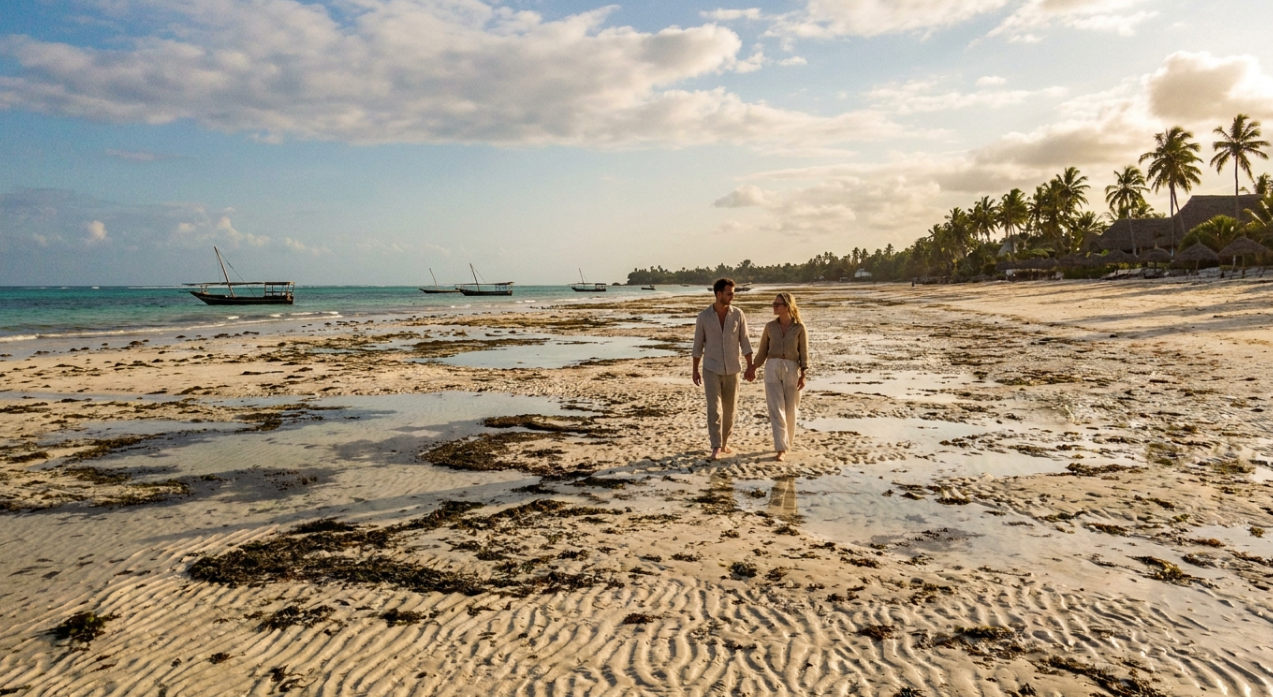
    The east coast sits in a significant tidal zone. At low tide, the water recedes hundreds of meters, exposing seaweed farms and tidal pools. Swimming becomes impossible during low tide windows (which shift daily). The compensation: smaller boutique properties, fewer tourists, and a quieter atmosphere. Matemwe and Pongwe are particularly popular with honeymooners seeking seclusion without the premium of the southeast.

    Southeast Coast: Paje, Bwejuu, Dongwe

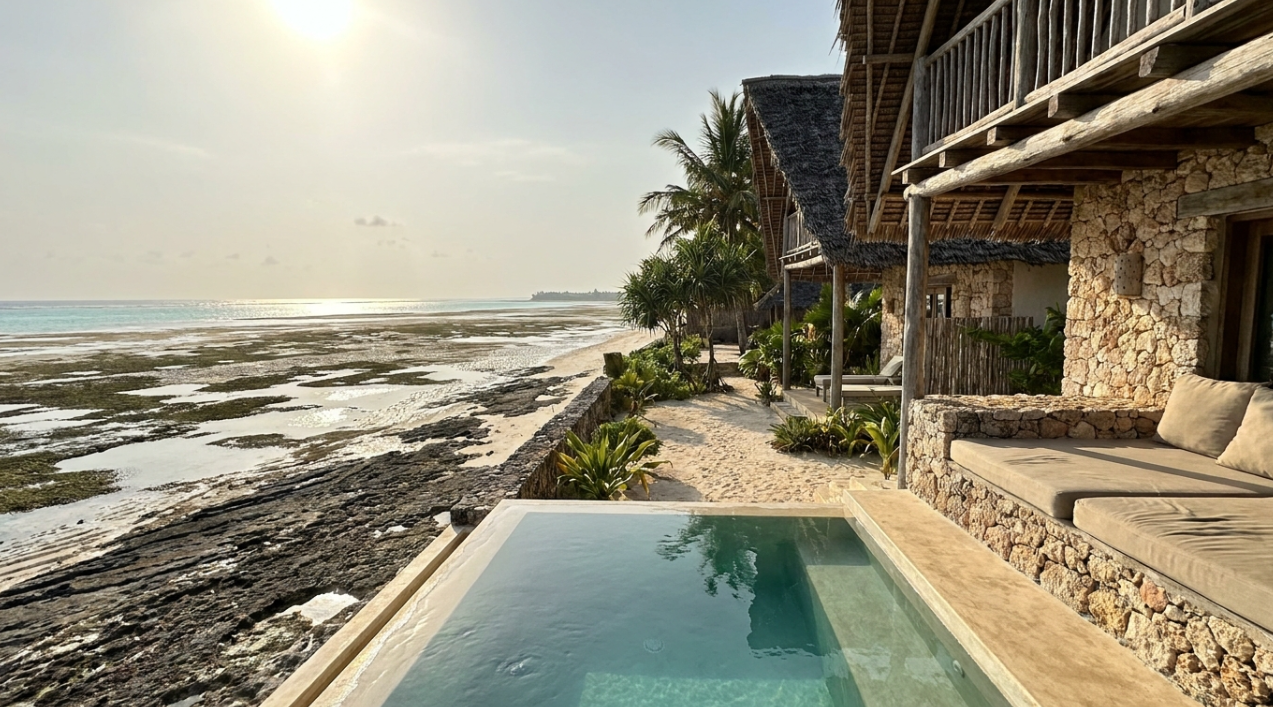
    This is where the Tidal Paradox lives. The southeast coast experiences some of the most extreme tidal shifts on the island, with water receding over a kilometer twice daily. And yet, Zanzibar’s most exclusive honeymoon properties are here: Baraza, The Palms, Xanadu.

    Why? Because the northwest resorts sell the beach, but the east coast resorts sell the villa. When the tide is out, couples retreat to private plunge pools, spa treatments, and in-villa dining. The beach becomes a vast, empty expanse rather than a crowd of tourists. This is a feature, not a flaw, for honeymooners who value privacy over constant ocean access.

    Tidal Paradox
    Zanzibar Honeymoon Extension 2026: Every Term You Need

    “Tidal Paradox” is a useful way to describe a common Zanzibar honeymoon trade-off: some of the island’s most private and villa-focused resorts sit on beaches where the ocean retreats dramatically at low tide.

    The important distinction is that a tide-dependent beach is not necessarily a bad honeymoon beach. Couples choosing these properties are often buying privacy, spacious villas, pools, spa facilities and a quieter atmosphere rather than guaranteed swimming throughout the day.

    If swimming at any hour is essential, prioritize the north coast. If privacy and a villa-centered experience matter more, an east or southeast coast property may be a better fit.

    South Coast: Kizimkazi

    The quietest part of the island. Kizimkazi is known for dolphin encounters (bottlenose and spinner dolphins frequent the channel) and has very few resorts. It suits couples who want near-total isolation but doesn’t have the dining or activity options of the north or east. For ethical dolphin tour options in this area, see the Zanzibar dolphins guide.

    Stone Town

    Zanzibar’s UNESCO World Heritage capital. A dense maze of narrow streets, carved wooden doors, spice markets, and rooftop restaurants. TripAdvisor reviewers consistently recommend spending one night here to experience the culture and history, then moving on to the beach. Stone Town is beautiful but busy, with limited beach access. One night is sufficient for most honeymooners, and it works well as a first or last night when flights align.

    Mnemba Island

    A tiny private island (roughly one kilometer wide) off Zanzibar’s northeast coast, hosting a single ultra-luxurious lodge operated by &Beyond. Mnemba offers supreme privacy and world-class marine life. The surrounding atoll is a protected marine reserve and one of the Indian Ocean’s best snorkeling and diving sites. Mnemba suits couples who prioritize marine life above everything else and have the budget to match. Day trips to Mnemba Atoll for snorkeling are available from the main island without staying at the lodge.


    Seasons and Weather Terms

    Timing a Zanzibar honeymoon extension means matching your dates to both the mainland safari circuit and Zanzibar’s weather patterns. For a deeper look at mainland timing, see the guide on the best time for a Tanzania safari.

    Dry Season (June to October)

    Peak season for both safari and Zanzibar. The simplest combination runs June through October, when the mainland parks and Zanzibar are both in peak form. Warm days, minimal rain, calm seas. This is also the busiest and most expensive period. September and early October offer the best balance of dry weather and thinner crowds for a more intimate honeymoon experience.

    Short Dry Season (January to February)

    The secondary peak and an excellent window for honeymooners. January to February pairs the wildebeest calving season in the Serengeti’s Ndutu area with Zanzibar’s secondary dry period. Fewer tourists than June through October, warmer temperatures, and a more intimate feel.

    Masika (Long Rains: March to May)

    Zanzibar’s wet season. April is the wettest month, averaging 229.7 mm of rainfall across 18 rainy days. Hotel rates drop by roughly 30% compared to peak season, making this the cheapest time for a Zanzibar honeymoon extension. The trade-off is real: overcast skies, rough seas, and some activities (like diving and snorkeling) become unreliable. Some smaller properties close entirely during masika.

    Vuli (Short Rains: November to December)

    A shorter, less intense rainy period. Rain typically arrives in brief afternoon bursts rather than all-day downpours. November is transitional, but December picks up as a busy tourist month thanks to holiday travel. Prices are moderate compared to full peak season.

    Kaskazi and Kusi (Monsoon Winds)

    The two monsoon seasons that shape conditions on Zanzibar’s coasts. Kaskazi (northeast monsoon, November to March) brings warmer temperatures and calmer waters on the east coast. Kusi (southeast monsoon, June to September) brings cooler winds that churn up the east coast but leave the north coast calm. These wind patterns directly affect snorkeling visibility and kitesurfing conditions. If diving or water sports are a priority for your extension, the wind season should influence your coast selection.

    For detailed month-by-month conditions, see the Zanzibar weather and seasons guide.


    Accommodation Terms

    Zanzibar Collection

    An umbrella resort brand comprising four properties: Baraza Resort & Spa, The Palms, Breezes Beach Club, and Zawadi Hotel. Guests at any Zanzibar Collection property can use the spa and dive facilities at the others. This is useful for honeymooners because it means booking a small, intimate property like The Palms (6 villas) while still having access to the larger resort infrastructure of Baraza (30 villas) next door.

    Banda

    A traditional thatched-roof beach cabin or bungalow. The term appears frequently in Zanzibar accommodation listings. A banda can range from a basic wooden structure with a mosquito net to an architecturally designed villa with air conditioning and a private terrace. The word alone doesn’t indicate quality. Always check what’s actually included.

    All-Inclusive vs. Half-Board vs. B&B

    Three meal plan options you’ll encounter when booking Zanzibar accommodations:

    Plan

    What’s Included

    Best For

    All-inclusive

    All meals, most drinks, sometimes activities

    Remote resorts where there are no nearby restaurants (Mnemba, south coast properties)

    Half-board

    Breakfast and dinner

    Most honeymoon resorts, gives you freedom for lunch at beach bars or on excursions

    B&B (Bed & Breakfast)

    Breakfast only

    Budget stays or Stone Town hotels where you want to eat out

    Half-board is the most common default at mid-range and luxury honeymoon resorts in Zanzibar.

    Private Plunge Pool

    A small pool (typically 2 to 4 meters) attached to an individual villa or suite. This is the single most requested honeymoon amenity in Zanzibar. Properties like Kilindi, Baraza, and several boutique east coast resorts include private plunge pools in their villa categories. If this matters to you, confirm it’s included in your specific room category, not just available at the property.

    Adults-Only vs. Structural Privacy

    This distinction trips up a lot of honeymooners. An “adults-only” label means no children are allowed, but it says nothing about the scale of the property. A 200-room adults-only resort can feel more crowded and less romantic than a 9-villa family-friendly property where you simply never encounter other guests.

    The couple who books a 200-room resort because it filtered “adults-only” will spend their honeymoon navigating crowds at the pool and buffet. The couple who books a 9-villa property with a private plunge pool will spend it alone. For honeymoons, structural privacy (the physical design and scale of the resort) matters more than the adults-only filter.

    Honeymoon Package / Honeymoon Amenity

    Most Zanzibar resorts offer some form of honeymoon recognition: a fruit platter on arrival, a bottle of sparkling wine, flower petals on the bed, a complimentary couples’ massage, or a private dinner setup. The specifics vary enormously. Some packages are marketing labels attached to the standard room rate. Others include genuine upgrades like room category bumps or included excursions.

    The key: making sure your operator communicates the honeymoon to the hotel in advance. Verified Duma Explorer client reviews from 2025 note that hotels informed of the honeymoon occasion provided “a small treat” on arrival, a detail that depends entirely on the operator flagging it ahead of time.


    Activities and Experiences

    For detailed logistics, pricing, and booking tips on all of these, see the full Zanzibar excursions and day trips guide.

    Dhow Cruise

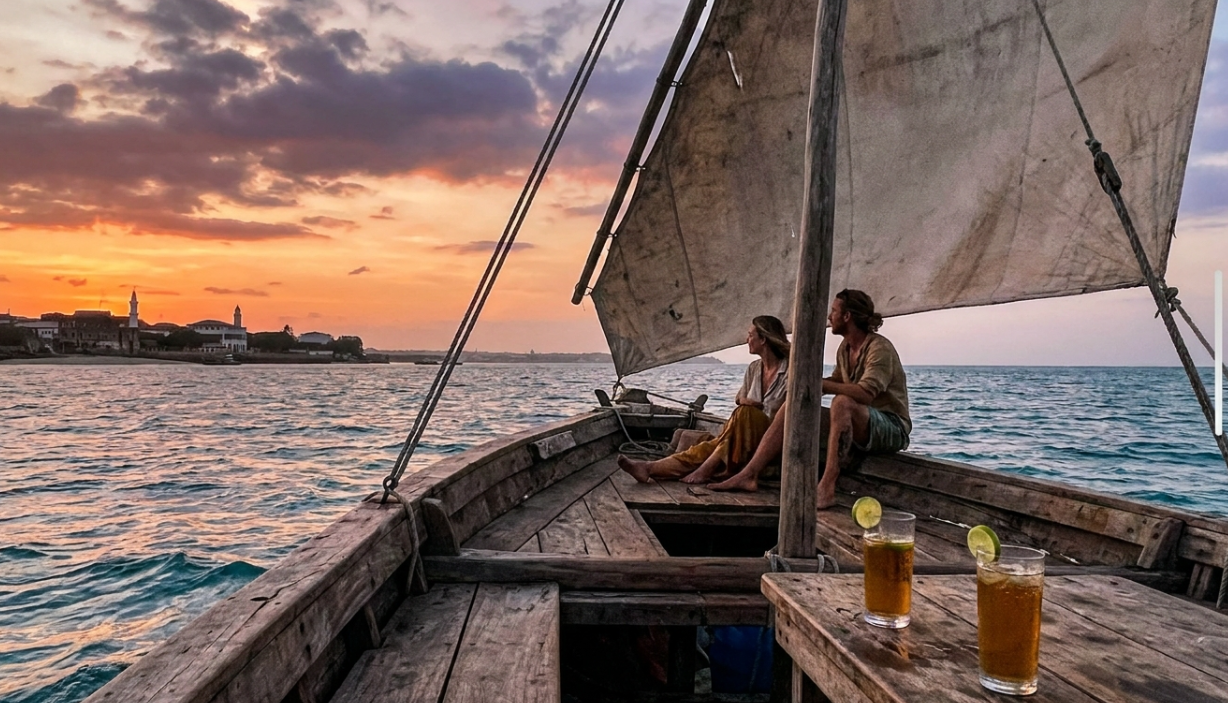
    A sunset sail on a traditional wooden dhow, the single-masted sailing vessel that has plied East African waters for centuries. Most dhow cruises last 1 to 2 hours, depart from Nungwi or Stone Town, and include drinks and snacks. This is one of the most popular honeymoon activities in Zanzibar and is available at virtually every coast.

    Spice Tour

    A half-day guided walk through spice plantations in Zanzibar’s interior. You’ll see (and taste) clove, vanilla, cinnamon, cardamom, nutmeg, black pepper, and turmeric growing in their natural state. Zanzibar’s historical identity as the “Spice Islands” makes this a cultural essential. Tours typically run 2 to 3 hours and cost $20 to $40 per person. For a detailed breakdown of what to expect, see the spice tour glossary.

    Mnemba Atoll Snorkeling
    Zanzibar Honeymoon Extension 2026: Every Term You Need

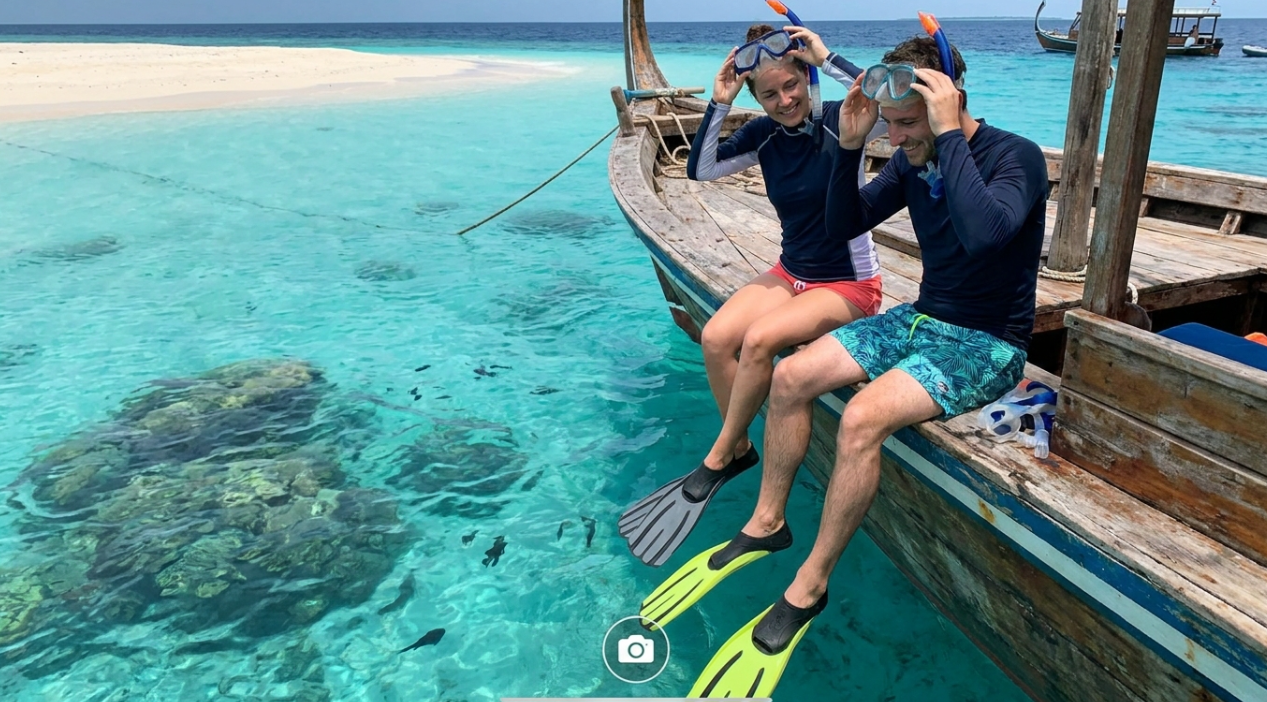
    A day trip by boat to the protected marine reserve surrounding Mnemba Island. You don’t need to stay at the private island lodge to snorkel here. Expect to see sea turtles, reef fish, dolphins, and (seasonally) whale sharks. This is widely regarded as the best snorkeling in Zanzibar. Trips depart from Matemwe or Muyuni beach on the main island and cost $30 to $70 per person depending on the operator.

    Prison Island (Changuu Island)

    A short boat ride from Stone Town, Prison Island is home to a colony of Aldabra giant tortoises and the ruins of a 19th-century quarantine station. The visit takes about 2 hours including the boat transfer. It’s a light, easy excursion that pairs well with a Stone Town afternoon.

    Sandbank Picnic

    A private lunch arranged on an exposed sandbar during low tide. Your boat drops you on a strip of white sand in the middle of the ocean with a prepared meal, drinks, and nothing else. This is one of the most photographed honeymoon experiences in Zanzibar and can be arranged through most mid-range and luxury resorts.

    The Rock Restaurant

    An iconic restaurant built on a tiny rock formation offshore at Michamvi, on the east coast. At low tide, you walk to it. At high tide, a boat ferries you across. Known more for the setting than the food, though the seafood is solid. Reservations are essential, especially during high season.

    Jozani Forest

    Zanzibar’s only national park, home to the rare Zanzibar red colobus monkey. A guided walk takes about 45 minutes. It’s a good option for couples who want a brief nature experience between beach days.

    Forodhani Gardens Night Market

    A nightly food market on Stone Town’s waterfront. Vendors grill seafood, Zanzibar pizza, sugarcane juice, and local snacks from sunset onward. Lively, cheap, and a memorable sensory experience. It’s the best casual dinner option in Stone Town.

    Kitesurfing (Paje)

    Paje, on the east coast, is one of East Africa’s premier kitesurfing spots thanks to consistent winds and the vast tidal flats that create shallow, safe water for beginners. Several schools offer lessons ($60 to $100 for a 2-hour session). Not traditionally a honeymoon activity, but popular with active couples.


    Planning Terms

    Extension

    In safari and travel-industry language, an “extension” is a segment added to the core trip. A Zanzibar honeymoon extension specifically refers to beach nights appended to a mainland itinerary. The extension is typically the last component of the trip, meaning you fly home from Zanzibar rather than returning to the mainland.

    Bush-and-Beach

    A synonym for bush-to-beach, used by some operators to describe the combination of safari (bush) and coastal (beach) segments in one trip. The terms are interchangeable.

    Fly-In Safari

    A safari where you travel between parks by light aircraft rather than by road. Relevant to the Zanzibar extension because a fly-in safari means your final game drive can end at an airstrip, and you board a plane directly to Zanzibar without a long road transfer back to Arusha. This saves an entire day of travel and is the most efficient way to structure a Serengeti-to-Zanzibar honeymoon.

    Shoulder Season

    The weeks between peak and off-peak seasons, typically early June, late October, and parts of November. Shoulder season offers better availability, lower prices, and decent weather, making it an attractive option for couples who can’t travel in the absolute peak window. Expect savings of 15 to 25% on accommodation compared to full peak rates.

    Lead Time / Advance Booking

    How far ahead you need to book. For peak-season Zanzibar honeymoon extensions (June through October), plan to book 6 to 8 months in advance. Small properties like The Palms (6 villas) and Mnemba Island sell out early. January and February also require advance planning due to limited capacity at top properties. Shoulder and off-peak seasons offer more flexibility.

    How Many Nights Should a Zanzibar Honeymoon Extension Be?

    The best length depends on how much of your honeymoon you want to spend recovering versus exploring.

    Length

    Best For

    What You Can Realistically Do

    3 nights

    Short safari or Kilimanjaro recovery

    Resort time + one major excursion

    4 nights

    Most couples

    Beach time + snorkeling/dhow cruise + optional Stone Town

    5 nights

    Relaxed honeymoon

    Two or three excursions plus multiple unstructured beach days

    6–7+ nights

    Slow beach honeymoon

    Best if Zanzibar itself is a major part of the trip

    Best overall choice: 4–5 nights

    For most couples, four or five nights is the best balance. It provides enough time to recover from a safari or climb without turning the extension into another highly scheduled part of the honeymoon.

    If Zanzibar is primarily a recovery stop, three nights can be enough. If the beach experience is one of the main reasons for the trip, five nights or more makes more sense.

    Honeymoon Extension Ideal Length

    Three nights is the minimum for a Zanzibar honeymoon extension, enough to unwind and fit in one or two excursions. Four to five nights is the sweet spot: enough time to settle into the pace, explore Stone Town for a day, take a dhow cruise or snorkeling trip, and still have pure beach days. More than five nights risks feeling too static after the variety of a safari. Reddit post-climb advice often suggests 2 to 3 nights for Kilimanjaro recovery, but honeymoon-focused trips benefit from the extra time.


    Cost Framework

    A Zanzibar honeymoon extension does not have a single price. The total depends on accommodation tier, length of stay, coast, flights, and meal plan.

    Daily Cost Bands

    Tier

    Per Person Per Day

    What You Get

    Budget

    $40–$90

    Basic guesthouse, B&B, fan cooling, shared beach access

    Mid-range

    $120–$250

    Boutique hotel, half-board, air conditioning, possibly a pool

    Luxury

    $300–$600+

    Private villa, plunge pool, full-service resort, half-board or all-inclusive

    For a couple doing a 4-night mid-range Zanzibar honeymoon extension, expect a total of roughly $1,800 to $2,600 including accommodation, meals, domestic flights, and a couple of excursions. Luxury extensions can easily double that figure.

    For a comprehensive breakdown of what affects the total, explore the Tanzania honeymoon cost guide.

    Hidden Costs to Budget For

    • ZIC insurance: $88 per couple

    • Tanzania visa: $100–$200 per couple (varies by nationality)

    • Infrastructure tax: $2–$20 per couple per night

    • Domestic flights: $250–$600 per couple (Arusha route) or $500–$1,200 (Serengeti route)

    • Excursions: $30–$100 per person per activity

    • Tips at resort: 10% of bill if not included

    Visitor Growth Context

    Zanzibar now receives over 900,000 international visitors annually. January 2026 alone saw over 100,000 arrivals, a 19.2% increase over the previous year. This growth means peak-season availability is tighter than it was even two or three years ago, reinforcing the importance of advance booking for honeymoon-quality properties.


    Safety and Practical Notes

    Zanzibar is stable, fully operational, and one of the safer destinations in East Africa in 2026. No travel restrictions or unusual incidents currently affect visitors. The U.S. State Department rates Tanzania at Level 3 (“Reconsider Travel”) as of late 2025, but this is the standard country-level advisory and is not specific to Zanzibar.

    Standard precautions apply: dress modestly outside beach areas (Zanzibar is predominantly Muslim), use hotel-arranged or pre-booked transfers rather than unlicensed taxis, and secure valuables in your room safe. For detailed safety advice, see the Zanzibar safety glossary.


    Frequently Asked Questions

    How many nights should a Zanzibar honeymoon extension be?

    Four to five nights is the sweet spot for most couples. Three nights works if time is tight, especially after a Kilimanjaro climb where the priority is recovery rather than exploration. More than five nights can feel slow after the variety of a safari. The ideal length also depends on whether you want to include a Stone Town night and multiple excursions.

    Can you fly directly from the Serengeti to Zanzibar?

    Yes. Airlines including Coastal Aviation, Auric Air, ZanAir, and Regional Air operate flights between Serengeti airstrips (Seronera, Kogatende) and Zanzibar. Direct flights take about 2 to 3 hours and cost $250 to $600 per person one way. This eliminates the need to backtrack to Arusha and saves a full day of travel.

    Do you need ZIC insurance even if you already have travel insurance?

    Yes. The Zanzibar Insurance Corporation policy is mandatory for all foreign non-residents, regardless of any existing private coverage. It costs $44 per person and must be purchased before arrival. You’ll receive a QR code that immigration checks on entry.

    What is the difference between the north coast and east coast for honeymooners?

    The north coast (Nungwi, Kendwa) offers consistent swimming at any tide, sunset views over the ocean, and a more social atmosphere. The east and southeast coasts (Paje, Bwejuu, Dongwe) experience dramatic tidal shifts but host Zanzibar’s most exclusive, privacy-focused resorts. North coast sells the beach. East coast sells the villa. The right choice depends on whether effortless swimming or total seclusion matters more to you.

    When is the best time for a Zanzibar honeymoon extension?

    June through October aligns both the mainland safari circuit and Zanzibar in peak conditions. January to February is the best alternative, pairing the Serengeti calving season with Zanzibar’s secondary dry period and fewer crowds. Avoid April and early May if weather reliability matters.

    How much does a Zanzibar honeymoon extension cost for a couple?

    A 4-night mid-range extension runs roughly $1,800 to $2,600 for two, including accommodation, meals, domestic flights, and basic excursions. Luxury extensions with private villas and plunge pools can reach $4,000 to $6,000+ for the same duration. Budget $88 per couple for ZIC insurance and $100 to $200 for visas on top of that.

    Is a Zanzibar honeymoon extension only for safari couples?

    No. While the classic pairing is safari followed by beach, Zanzibar extensions also work after Kilimanjaro climbs, gorilla trekking in Uganda or Rwanda, and multi-country East Africa itineraries. The structure is the same: active adventure first, beach recovery last.


    Ready to connect your safari or Kilimanjaro climb with Zanzibar beach time? Build your safari and Zanzibar honeymoon with a trip designer who knows the logistics, the properties, and the coasts firsthand.
  • Best Time for a Tanzania Honeymoon in 2026 | When to Go

    Best Time for a Tanzania Honeymoon in 2026 | When to Go

    TL;DR

    The best time for a Tanzania honeymoon is June through October (dry season) or January through February (calving season). September stands out as a sweet spot, with dry safari conditions, uncrowded Zanzibar beaches, and slightly lower prices than the July/August peak. Avoid April and May, when heavy rains close lodges and muddy park roads.


    The two strongest windows for a Tanzania honeymoon are June through October and January through February. The first gives you reliable dry weather across both the Serengeti and Zanzibar. The second puts you in the southern Serengeti for the wildebeest calving, one of the most dramatic wildlife spectacles anywhere, paired with warm Indian Ocean water.

    September deserves special attention. The weather is just as settled as July and August, but school-holiday crowds thin out, rates drop slightly, and Zanzibar feels polished without being packed. If your wedding date gives you flexibility, September is the month to target.

    April and May are the months to avoid. Heavy long rains make park roads difficult, some lodges shut down entirely, and Zanzibar’s east coast gets battered by wind and rain.

    The rest of this guide defines every seasonal and planning term you’ll encounter while building your itinerary, from monsoon names to migration patterns to pricing tiers, all in the context of honeymoon decisions.

    If you already know your dates, Duma Explorer designs custom honeymoon itineraries around each couple’s travel window and priorities.

    What Is the Best Time for a Tanzania Honeymoon?

    The best time for a Tanzania honeymoon is June through October for dry weather, reliable safari conditions, and excellent Zanzibar beach conditions. January and February are the best alternative for couples who want the wildebeest calving season in the southern Serengeti. For the best balance of wildlife, weather, crowds, and price, September is one of the strongest overall choices.

    If seeing the Great Migration is your priority, choose January to March for calving in the southern Serengeti or July to October for potential Mara River crossings in the northern Serengeti. If beach weather matters most, January, February, June, July, August, September, and much of October generally offer stronger conditions than the main rainy seasons.

    For most couples, the decision comes down to three questions: Do you want the Great Migration? How important is guaranteed-looking dry weather? And how much are you willing to pay for peak-season travel?

    Tanzania Honeymoon Timing at a Glance

    If you want…

    Best time

    Why

    Best overall balance

    September

    Excellent safari conditions, good Zanzibar weather, and fewer crowds than July/August

    Dry-season safari + beach

    June–October

    Reliable safari conditions and generally favorable Zanzibar beach weather

    Wildebeest calving

    January–February

    Peak calving activity in the southern Serengeti and Ndutu area

    Mara River crossings

    July–September

    Best window for potential northern Serengeti crossings

    Lower prices

    June, October, November

    Shoulder or lower-demand periods can offer better value

    Warmest Zanzibar water

    January–March

    Warm Indian Ocean conditions for swimming and snorkeling

    Lowest prices

    April–May

    Main rainy season brings substantial discounts but significant weather and access trade-offs

    Fewer crowds

    January–February or November

    Lower visitor pressure than July–September

    Best overall recommendation: If you have flexibility and want a classic safari-and-Zanzibar honeymoon without the highest peak-season pressure, September is a particularly strong choice.

    Month-by-Month Quick Reference Table

    Month

    Season

    Safari

    Zanzibar

    Migration / Wildlife Highlight

    Crowds

    Price

    Best For

    January

    Short dry

    Excellent

    Warm, generally favorable

    Calving begins in southern Serengeti

    Moderate

    Mid

    Calving + beach

    February

    Short dry

    Excellent

    Warm, generally favorable

    Peak calving

    Moderate

    Mid

    Calving + beach

    March

    Long rains begin

    Variable

    Increasing rain

    Calving period can continue

    Low

    Low

    Green landscapes

    April

    Long rains

    Wettest period

    Heavy rain

    Migration movement continues

    Very low

    Lowest

    Budget/value

    May

    Long rains

    Wet

    Heavy rain

    Herds move toward western Serengeti

    Very low

    Lowest

    Budget/value

    June

    Dry season begins

    Good–excellent

    Generally dry

    Migration moves west/north

    Moderate

    Mid-high

    Shoulder season

    July

    Peak dry

    Excellent

    Dry

    Northern Serengeti / possible crossings

    High

    Peak

    Safari + crossings

    August

    Peak dry

    Excellent

    Dry

    Northern Serengeti / possible crossings

    Highest

    Peak

    River-crossing season

    September

    Late dry

    Excellent

    Dry

    Northern Serengeti / possible crossings

    Moderate-high

    High

    Best overall balance

    October

    Late dry

    Very good

    Warm; rain may increase later

    Northern / eastern Serengeti

    Moderate

    Mid-high

    Shoulder season

    November

    Short rains

    Variable

    Short rains

    Migration begins moving south/east

    Low-moderate

    Mid-low

    Value + fewer crowds

    December

    Short rains

    Variable

    Variable

    Herds return toward southern Serengeti

    Moderate

    Mid

    Holidays + green scenery

    Important: Great Migration timing is weather-dependent, not calendar-locked. The herds can arrive earlier or later than the typical seasonal pattern depending on rainfall and grazing conditions. Treat the month-by-month migration locations above as planning guidelines rather than guaranteed positions.

    What Is the Best Month for a Tanzania Honeymoon?

    September is one of the best overall months for a Tanzania honeymoon because it combines excellent safari conditions with generally favorable Zanzibar beach weather while avoiding some of the highest July and August demand.

    Why September is a strong choice

    • Safari: Dry conditions make wildlife easier to spot, while the northern Serengeti can offer opportunities to see the Great Migration.

    • Zanzibar: The island is generally dry and warm, making it well suited to beach time, swimming, snorkeling, and diving.

    • Crowds: September can be less crowded than the July and August peak.

    • Pricing: Rates may be more favorable than the busiest weeks of the peak season, although luxury properties and migration-focused camps can still command premium prices.

    • Honeymoon experience: Couples can combine several days of safari with a relaxed Zanzibar stay without moving between radically different weather conditions.

    September is not automatically the best month for every couple. January and February can be better if seeing the calving season is your priority, while July through August may be better if your primary goal is a potential Mara River crossing.

    Tanzania’s Season Calendar: Core Terms Defined

    Understanding Tanzania’s seasons is the single most important step in choosing the best time for a Tanzania honeymoon. The country doesn’t have a simple summer/winter split. Instead, it cycles through four distinct periods that directly affect wildlife, road conditions, lodge availability, and beach weather.

    Dry Season (June to October)

    Best Time for a Tanzania Honeymoon in 2026 | When to Go

    The primary recommended window for honeymoon travel. Rainfall is unusual across both the mainland parks and Zanzibar. Daytime temperatures range from 20°C to 30°C, with June being the coolest month and October the warmest. Animals concentrate around shrinking water sources, making them easier to spot. Park roads stay firm and passable.

    This is when the classic safari-plus-beach honeymoon works best. For a deeper breakdown of Tanzania’s safari seasons, including park-by-park conditions, that guide covers the full picture.

    Long Rains / Masika (March to May)

    The Swahili word Masika refers to the heavy rainy season that dominates March through May. These are not afternoon showers. Sustained rainfall turns park roads muddy and impassable in places, and some lodges close entirely during this period. The landscape turns spectacularly green, but the practical trade-offs for honeymooners are significant: fewer operating lodges, limited wildlife visibility in thick vegetation, and Zanzibar’s roughest sea conditions.

    Multiple operators and experienced safari planners recommend avoiding April and May for honeymoon travel entirely.

    Short Rains / Vuli (November to December)

    Vuli brings lighter, less predictable rainfall. November typically sees afternoon thunderstorms that clear quickly, while December dries out toward the end of the month. Travel is possible during this period, and the landscape is lush and photogenic. But the unpredictability makes it a gamble for honeymoon couples who want guaranteed clear skies for their once-in-a-lifetime trip.

    That said, November and early December offer real value. Crowds are thin, rates drop, and the Serengeti’s short grass plains begin attracting the returning migration herds.

    Short Dry Season (January to February)

    This brief dry window sits between the two rainy periods and creates the second strong honeymoon window. The southern Serengeti comes alive with the wildebeest calving, and Zanzibar’s weather is warm with generally dry conditions through mid-February.

    Green Season

    An operator pricing term rather than a formal meteorological season. “Green season” typically refers to March through May (sometimes extending into early June and late November), when lodges lower rates to attract visitors during the wetter months. For detailed pricing breakdowns, including what green-season discounts look like in practice, that guide covers the numbers.


    Safari Timing Terms Every Honeymoon Planner Should Know

    Great Migration

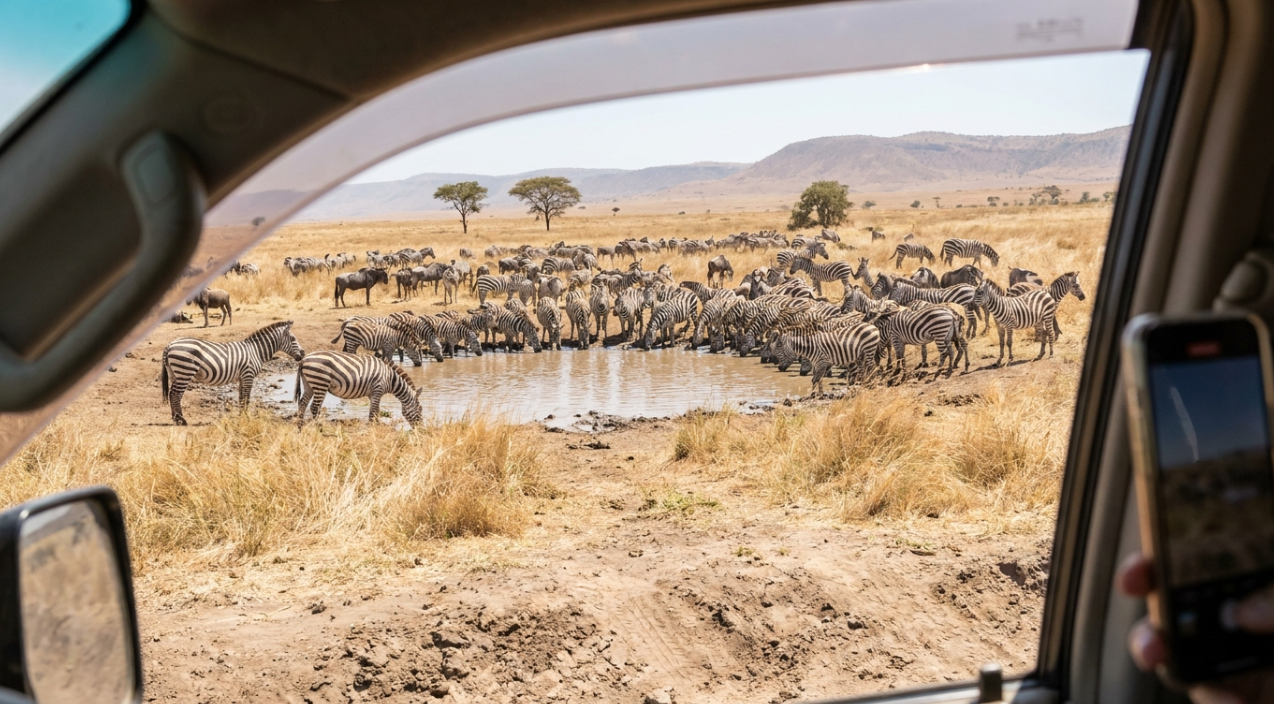
    Every year, approximately 1.5 million wildebeest, 400,000 zebra, and 200,000 gazelle travel a continuous clockwise circuit through the Serengeti-Mara ecosystem, driven by rainfall and the promise of fresh grazing. This is not a single event but a year-round movement. Where you need to be depends entirely on when you travel:

    • January to March: Ndutu and Southern Serengeti (calving)

    • April: Southwestern Serengeti

    • May to June: Western Serengeti

    • July to October: Northern Serengeti (river crossings)

    • November: Eastern Serengeti

    • December: Southeastern Serengeti

    A critical point that many first-time planners miss: the Great Migration is not a schedule. It follows the rain, and the rain follows its own rules. Booking your honeymoon for “migration season” without matching your travel dates to the right part of the Serengeti is one of the most common planning mistakes. Our Great Migration safari guide maps this in more detail.

    Calving Season

    The migration year begins on the short-grass plains of the Southern Serengeti and Ndutu area. Between late January and mid-March, approximately 500,000 wildebeest calves are born in a concentrated burst of new life. At peak, around 8,000 calves arrive every single day.

    For honeymooners, this period offers some of the most dramatic predator action anywhere in Africa. Lions, cheetahs, and hyenas follow the herds, and the open terrain means sightings happen at close range. Practitioners on TripAdvisor forums consistently praise the January/February calving season, with one experienced traveler noting: “This year we went in January and I have to say we had some of the best game viewing we have ever had.”

    The calving season also tends to cost less than the July/August peak, making it an attractive option for couples who want world-class wildlife without peak-season pricing.

    River Crossing Season

    The most photographed moment of the Great Migration. Between July and October, the herds gather along the banks of the Mara River in the northern Serengeti before plunging across in chaotic, dramatic crossings. Crocodiles patrol the water. The tension of a crossing, with thousands of wildebeest surging into the current, is genuinely unforgettable.

    Past Duma Explorer clients have described the Mara River crossing as “the most memorable experience of my life.” The trade-off: this is peak season, with the highest prices and the most vehicles at popular crossing points.

    Northern Circuit

    The classic Tanzania safari route that most honeymoon itineraries follow: Tarangire National Park, the Ngorongoro Crater, and the Serengeti, sometimes with Lake Manyara added. This circuit concentrates the country’s most iconic wildlife and landscapes into a manageable 5 to 10 day loop. For a look at how the Northern Circuit fits into a full itinerary, that guide walks through routing and park sequencing.

    Mobile Tented Camp

    Camps that physically relocate to follow the migration herds through the Serengeti. They set up in the southern plains during calving season and move north for the river crossings. For honeymooners, mobile camps offer an experience that fixed lodges simply cannot match: you’re positioned exactly where the action is, often in remote areas with very few other visitors.

    Fly-in Safari

    Domestic flights between parks (typically on small bush planes carrying 6 to 12 passengers) that replace long overland drives. A fly-in safari between Arusha, the Serengeti, and Zanzibar can save a full day of driving in each direction. For a 10 to 14 day honeymoon where every day counts, flying between parks is often worth the additional cost.


    Zanzibar Weather Terms: Why They Matter for Beach Planning

    Most Tanzania honeymoons combine safari with a Zanzibar beach extension, so getting the island’s weather right is just as important as the mainland conditions. Zanzibar’s climate is driven by two monsoon systems that dictate wind, rain, temperature, and sea conditions.

    Kusi Monsoon (Southeast Trade Winds, June to October)

    The Kusi brings dry air and calm seas from the Indian Ocean, creating Zanzibar’s best beach and diving conditions. Daytime temperatures hover between 25°C and 30°C, dropping to a pleasant 20°C at night. Rainfall averages just 50 to 100mm per month. Dive visibility at sites like Mnemba Atoll reaches 20 to 30 meters during this period.

    This alignment is significant: Zanzibar’s dry season overlaps almost perfectly with the peak safari season on the mainland, a combination that competitors like the Maldives and Seychelles cannot offer. It is what makes the best Tanzania honeymoon timing so straightforward for couples wanting both experiences.

    For a complete picture of Zanzibar’s weather patterns and how they affect specific beaches, that seasonal guide covers wind, tides, and regional differences across the island.

    Kaskazi Monsoon (Northeast Winds, November to March)

    The Kaskazi brings warmer, more humid conditions. November marks the start of the short rains, while January and February are generally warm and dry enough for beach time. Water temperatures peak during this period, making February and March the warmest months for swimming and snorkeling.

    March onward brings increasing moisture, and by April the east coast of Zanzibar gets heavy rain and rough seas.

    Tidal Variation

    Best Time for a Tanzania Honeymoon in 2026 | When to Go

    Zanzibar’s east coast experiences dramatic tidal shifts. At low tide, the water can recede hundreds of meters from shore, exposing sand flats and seaweed. This is not a weather issue but a geographic one, and it catches many honeymoon couples off guard. The north and west coasts (Nungwi, Kendwa) have much less tidal variation and maintain swimmable water at all times, which is why these areas are popular for honeymoon stays.

    For honeymooners planning island activities, our guide to Zanzibar excursions and day trips covers what’s available and when conditions are best.

    When Is the Worst Time for a Tanzania Honeymoon?

    For most honeymoon couples, April and May are the most challenging months because they coincide with Tanzania’s main long-rain season. Heavy rainfall can make some safari roads difficult, reduce accessibility in certain areas, and lead some seasonal properties to close.

    That does not mean Tanzania cannot be visited during April or May. These months can offer lush scenery, fewer tourists, and lower accommodation rates. They are simply less predictable for couples whose priority is reliable safari and beach weather.

    Months to reconsider based on your priorities

    • April–May: Best avoided if reliable weather is your top priority.

    • November: Worth considering for lower prices and fewer crowds, but expect some rain.

    • December: Travel can work well, but holiday demand can increase prices and crowds.

    • July–August: Excellent for safari, but less suitable if you dislike peak-season crowds and prices.


    Pricing and Booking Terms

    Peak Season (July to September)

    The highest-demand period for both safari and Zanzibar. Prices run 30 to 50% higher than shoulder-season rates. July and August see the Great Migration crossing the Mara River, driving demand up significantly. September remains excellent for wildlife viewing at somewhat lower cost, which is one reason it stands out for honeymooners.

    Honeymoon budgets for a 10 to 13 night trip typically range from $3,500 to $15,000+ per person, depending on accommodation level, whether you fly between parks, and how many days you spend on safari versus the beach. For a full breakdown of what a Tanzania honeymoon costs at different tiers, that pricing guide covers the numbers in detail.

    Shoulder Season (June, October, Early November)

    The edges of the dry season, where conditions are still good but demand (and prices) ease. Experienced safari planners often recommend these months for couples who want quality without peak-season premiums. One travel advisor featured in Travel+Leisure specifically suggested that “the period of May through June, or late October, will have smaller crowds.” Shoulder-season savings typically run 12 to 15% on a full safari package.

    Green Season Pricing

    During the long rains (March to May), rates for premium luxury lodges can drop to half of what they charge in peak months. You can expect savings of 20 to 30% in low season on a full safari package. The question is whether those savings offset the weather and access trade-offs, and for most honeymoon couples, they don’t.

    How Far in Advance Should You Book a Tanzania Honeymoon?

    The ideal booking window depends on your travel month, accommodation preferences, and whether you want to follow the Great Migration.

    Travel period

    Suggested planning window

    Why

    July–September

    12–18 months

    Peak demand and limited small camps

    January–February

    9–12 months

    Calving season and popular southern Serengeti camps

    June

    6–12 months

    Strong shoulder-season demand

    October

    6–12 months

    Good weather with growing demand

    November–December

    4–9 months

    More availability, except holiday dates

    April–May

    2–6 months

    Lower demand and greater availability

    If your honeymoon depends on a specific camp, room category, private vehicle, or migration location, book earlier than the general window suggests. Accommodation availability can become the limiting factor even when flights and other parts of the itinerary remain available.

    Lead Time and Advance Booking

    Small tented camps with just 8 to 15 rooms sell out 12 to 18 months in advance for peak dates. This is not marketing hype. Popular camps in the northern Serengeti fill for July through October crossing weeks by the previous September.

    Multiple travelers on forums emphasize that privacy on a honeymoon depends as much on camp selection as on season. Small tented camps with 6 to 10 rooms deliver an intimacy that larger lodges cannot match regardless of month. But those intimate properties book first.

    If your wedding is in spring and you’re planning a summer honeymoon, start the planning process immediately after getting engaged.

    Park Fees and Concession Fees

    Every visitor to Tanzania’s national parks pays daily park fees, which are set by the Tanzania National Parks Authority (TANAPA). These fees are typically included in packaged safari pricing but represent a meaningful portion of the total cost. Concession fees are additional charges for operating within private concession areas that border national parks, areas that offer fewer vehicles and more exclusive wildlife viewing.


    Honeymoon-Specific Terms

    These terms come up repeatedly in honeymoon safari planning and are worth understanding before you start comparing itineraries and lodges.

    Bush Dinner / Private Dinner

    A private outdoor dinner set up in the bush, usually under the stars and away from camp. Staff prepare a multi-course meal at a dedicated site, often with lanterns, candles, and a personal chef. This is one of the signature honeymoon experiences in the Serengeti and is offered by most premium camps. It’s typically arranged by your safari operator and included in honeymoon packages or available as an add-on.

    Private Game Drive

    A game drive with just your guide and your vehicle, no other guests. On a private honeymoon safari, this is standard. On a group safari, it’s an upgrade. The difference matters enormously for couples: you control the pace, the stops, how long you watch a leopard in a tree, and when you head back to camp.

    To understand the full trade-offs, the private vs. group safari comparison breaks down costs and experience differences.

    Concession / Private Conservancy

    Areas of private land bordering or integrated with national parks, operated under agreement with local communities or the government. Vehicle numbers are strictly limited, and off-road driving and night drives (not permitted in national parks) are often allowed. For honeymooners, a concession property means fewer vehicles at sightings, more flexibility with your schedule, and a sense of having the wilderness to yourselves.

    Balloon Safari

    A hot-air balloon flight over the Serengeti at dawn, typically followed by a champagne breakfast in the bush. This is repeatedly mentioned by honeymoon couples as a highlight of their trip. The flights operate year-round (weather permitting) from several launch sites in the central and northern Serengeti. Expect to pay $500 to $600 per person.

    Dhow Cruise

    A sunset sail on a traditional wooden sailing vessel off the coast of Zanzibar. Dhow cruises typically include drinks and sometimes dinner, and they’re one of the most popular romantic activities on the island. They run best during calm sea conditions, making the dry-season months (June to October) and January to February the most reliable times.

    For couples who want to add a different kind of coastal experience, the Swahili Coast travel guide covers alternatives to Zanzibar like Pangani and Saadani.


    Best Time for a Tanzania Honeymoon by Travel Priority

    Best time for safari and Zanzibar

    June through October is the strongest overall period for couples who want to combine a Tanzania safari with a Zanzibar beach stay. Dry-season conditions generally make both parts of the trip easier to plan.

    Best time for the Great Migration

    Choose January to March if you want the wildebeest calving season in the southern Serengeti, or July to October if you want to target the northern Serengeti and potential Mara River crossings.

    Best time for fewer crowds

    January and February are strong choices for couples who want excellent wildlife viewing without the visitor levels typically associated with July and August. November can also offer lower visitor numbers, although rainfall becomes less predictable.

    Best time for a honeymoon on a budget

    Consider June, October, or November for a balance between favorable conditions and potentially lower prices. April and May can be substantially cheaper, but the main rainy season creates greater weather and road-access risks.

    Best time for Zanzibar beaches

    June through October and January through February are generally the strongest windows for combining a safari with beach time. Zanzibar’s weather varies by coast, so the best beach location also depends on wind, tides, and the activities you want to do.

    Best time for a romantic, private safari

    January, February, June, October, and November can be attractive for couples prioritizing privacy and lower visitor density. Choosing a small camp or private concession can make a larger difference to the honeymoon experience than choosing a specific month.


    Common Timing Mistakes Honeymoon Planners Make

    Booking April or May without understanding the long rains. Green-season pricing is tempting, but the Masika rains are real. Road closures, lodge closures, and rough seas on Zanzibar make this the worst time for a Tanzania honeymoon.

    Choosing northern Serengeti in January. The migration is in the south during January and February. If you’re visiting during calving season, you need to be in the Ndutu area or southern Serengeti plains, not the Mara River region.

    Ignoring Zanzibar’s east-coast wind patterns. The Kusi winds that bring dry weather also create choppier conditions on the east coast. Honeymooners staying at east-coast properties during June to October should expect windier beaches than the north coast.

    Waiting too long to book peak-season small camps. If you want a 10-room tented camp in the northern Serengeti during August, you need to be booking 12 to 18 months out. Waiting until six months before your trip means the most intimate properties will already be full.

    Assuming “dry season” means zero rain. Even during the dry season, brief afternoon showers can occur, especially in October. Dry season means dramatically less rainfall, not an absolute guarantee of cloudless skies. Check the Tanzania packing guide for what to bring regardless of season.

    Skipping the e-visa application. Tanzania requires an e-visa for most nationalities. Processing times vary, so apply well before departure rather than assuming you can get a visa on arrival without delays.

    How to Choose Your Tanzania Honeymoon Dates

    Start with the experience you care about most:

    Want the best overall combination of safari and Zanzibar?
    → Choose September.

    Want to see wildebeest calving?
    → Choose January or February and focus your safari on the southern Serengeti/Ndutu area.

    Want to try to see a Mara River crossing?
    → Choose July through September and stay in the northern Serengeti.

    Want lower prices and fewer visitors?
    → Consider June, October, or November, depending on your tolerance for changing weather.

    Want the warmest possible Zanzibar beach experience?
    → Consider January or February.

    Want to avoid the main rainy season?
    → Avoid planning around April and May if reliable weather is essential.

    Can’t choose between safari and beach?
    → Build the itinerary around your safari priority first, then choose the Zanzibar coast and dates that best complement it.

    Frequently Asked Questions

    Is October a good month for a Tanzania honeymoon?

    October is a strong shoulder-season choice. Wildlife viewing remains excellent as animals still cluster around water sources. Zanzibar is warm and dry early in the month, though short rains can arrive by late October. Pricing runs lower than July through September, and crowds thin noticeably. The main risk is a slightly earlier onset of the Vuli rains, which varies year to year.

    Can we do a Tanzania honeymoon in November or December?

    You can, but it’s a calculated bet. November brings the short rains, which means afternoon showers and greening landscapes. Early December is similar, but conditions improve toward the end of the month. Crowds are low and rates are favorable. If you’re comfortable with some unpredictability in exchange for value and privacy, these months can work. Just avoid planning Zanzibar’s east coast during November’s rainiest weeks.

    How far in advance should we book a honeymoon safari?

    For peak-season travel (July to September), aim for 12 to 18 months in advance, especially if you want small, intimate tented camps. Shoulder-season trips (June, October) can sometimes be arranged 6 to 9 months out. Calving-season travel (January to February) is less competitive than the crossing season but still benefits from booking 9 to 12 months ahead.

    Is January or July better for a safari and Zanzibar honeymoon?

    Both months are excellent but offer different experiences. January puts you in the southern Serengeti for the calving season, with warm Zanzibar weather and moderate pricing. July places you in the northern Serengeti for potential river crossings, with Zanzibar’s driest conditions. July is peak season with higher prices and more visitors. January is quieter and less expensive. For many honeymoon couples, January offers the better overall value.

    What does “green season” mean for honeymoon pricing?

    Green season is an industry term for the wetter months (primarily March to May) when lodges reduce rates to attract guests. Savings can reach 50% off peak-season prices at premium properties. The trade-off is rain, limited access to some areas, and fewer operating camps. Most honeymoon planners find the weather risk too high for a once-in-a-lifetime trip, though late November and early June, which some operators also classify as green or shoulder season, can offer savings with better conditions.

    Do we need to see the Great Migration for a good honeymoon safari?

    No. The Serengeti, Ngorongoro Crater, and Tarangire are rich with resident wildlife year-round. The Big Five, tree-climbing lions, cheetahs, elephants, and hundreds of bird species are present regardless of where the migration herds happen to be. The migration is spectacular if your timing aligns, but it is not a prerequisite for an extraordinary honeymoon safari.

    What information should we have ready when planning our honeymoon?

    A good starting point includes your preferred travel dates (or wedding date if you’re still flexible), total trip length, approximate budget per person, how you’d split time between safari and beach, whether you’re set on seeing the Great Migration, any must-do experiences (balloon safari, diving, dhow cruise), and your accommodation style preference (tented camp vs. lodge, private vs. small group).

    What is the cheapest month for a Tanzania honeymoon?

    April and May often have the lowest accommodation rates because they fall during the main rainy season, but the savings come with greater weather and accessibility trade-offs. For couples who want a better balance of price and safari conditions, June, October, and November can be more attractive alternatives.

    Is September better than July for a Tanzania honeymoon?

    For many couples, yes. September combines excellent dry-season safari conditions with strong Zanzibar weather and can have less peak-season pressure than July and August. However, July may be preferable if seeing the Great Migration in the northern Serengeti is the primary goal.

    Is February a good month for a Tanzania honeymoon?

    Yes. February is one of the strongest months for couples who want to combine safari and Zanzibar. The southern Serengeti and Ndutu area can offer exceptional calving-season wildlife viewing, while Zanzibar is typically warm and suitable for beach activities. Rainfall can become more variable toward the end of the month.

    How many days should you spend in Tanzania for a honeymoon?

    A typical Tanzania honeymoon can work well with approximately 10 to 14 nights, depending on how much time you want to divide between safari and Zanzibar. A common structure is several nights on safari followed by several nights on the beach, with domestic flights used when they meaningfully reduce long overland transfers.

    Is Tanzania good for a honeymoon outside the dry season?

    Yes. Tanzania can be an excellent honeymoon destination outside the main dry season, particularly for couples who value lower prices, fewer visitors, lush landscapes, or specific wildlife experiences. The main trade-off is greater weather uncertainty during the rainy periods.

    Which is better for a honeymoon: Tanzania safari or Zanzibar?

    They offer different experiences rather than competing ones. A Tanzania safari provides wildlife and adventure, while Zanzibar adds beaches, swimming, snorkeling, diving, and relaxation. For couples with enough time, combining both is one of the strongest ways to structure a Tanzania honeymoon.


    Duma Explorer designs custom Tanzania honeymoon itineraries that match your travel dates to the right parks, the right camps, and the right Zanzibar beaches. If you’re starting to plan, reach out with your dates and priorities.

    Plan My Tanzania Honeymoon

  • 12 Best Romantic Safari Lodges Tanzania (2026 Guide)

    12 Best Romantic Safari Lodges Tanzania (2026 Guide)

    TL;DR

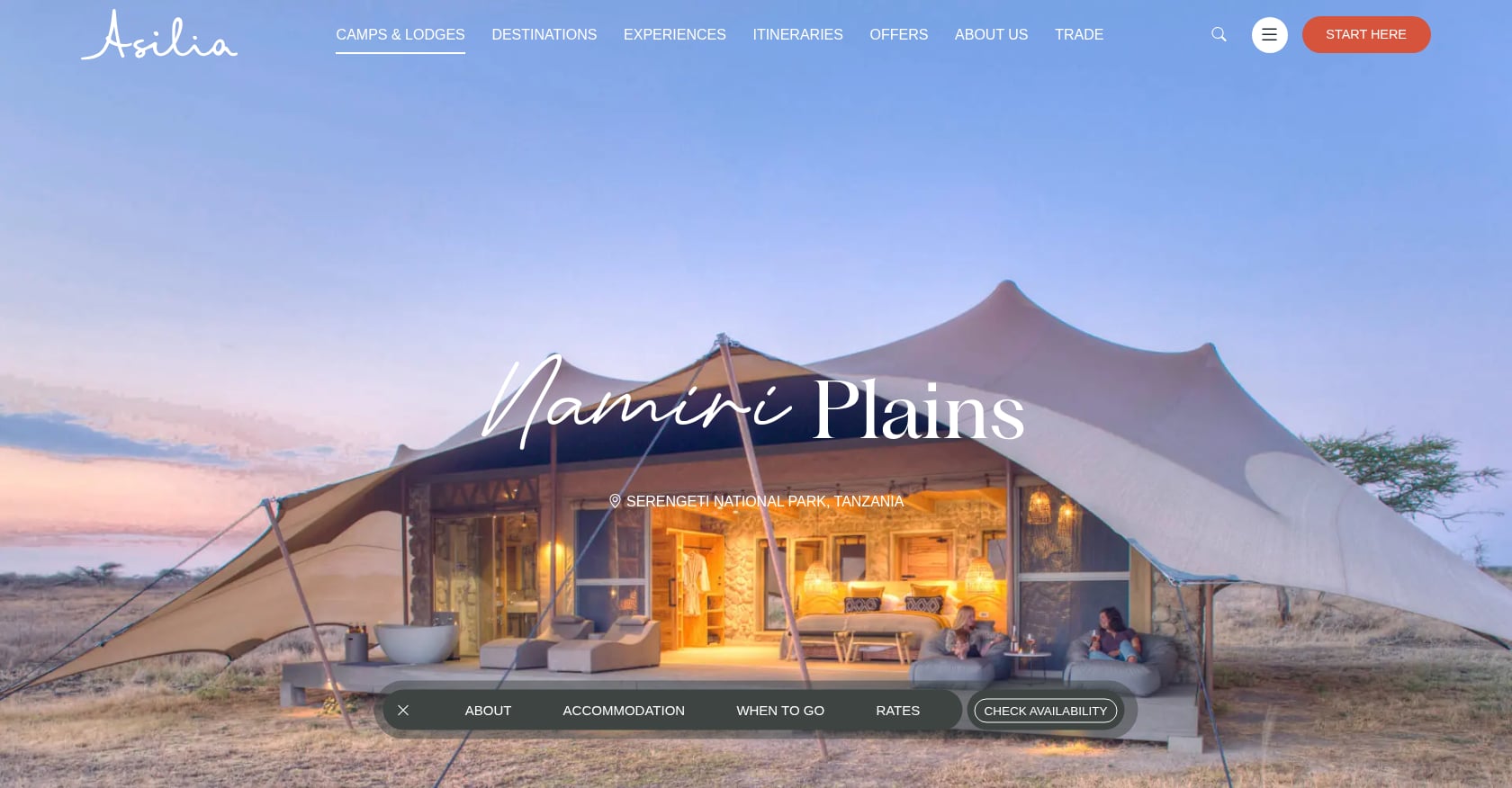
    The best romantic safari lodges in Tanzania depend on your priorities. Singita Sasakwa is the best choice for ultra-luxury and privacy, Mwiba Lodge for private safari experiences, Sayari Camp for Great Migration river crossings, Namiri Plains for big-cat viewing, andBeyond Ngorongoro Crater Lodge for dramatic crater-rim romance, and Tarangire Treetops for a unique treehouse stay. For a safari-and-beach honeymoon, Mnemba Island is the standout Zanzibar finish. Romantic Tanzania safari lodges typically range from about $400 to $3,500+ per person per night, depending on season, inclusions, and exclusivity.


    Tanzania’s romantic safari lodges span several distinct regions, each offering a different type of couples experience. The Serengeti alone has sub-regions that cater to very different priorities, from migration river crossings in the north to big-cat territory in the east and ultra-private concessions in the west. Add crater-rim retreats, highland farms, treehouse camps, and private islands off Zanzibar, and the range becomes difficult to compare without a clear framework.

    This guide covers 12 properties across those regions, organized by the type of romantic experience each delivers. Every lodge was selected based on specific couple-friendly features (not just marketing copy that calls itself “romantic”), real traveler feedback, and how well it fits into a multi-day Tanzania safari itinerary.

    Safari honeymoons are booming. A March 2026 Fora Travel report found Tanzania bookings increased 287% year-over-year, with safari continuing to lead bucket-list honeymoon destinations. That surge means the best romantic safari lodges in Tanzania book out 8 to 12 months ahead during peak season. Planning early matters.

    If you’re starting to shape a honeymoon or anniversary trip, Duma Explorer designs private itineraries that pair the right lodges with the right season for each couple’s priorities.

    Which Is the Most Romantic Safari Lodge in Tanzania?

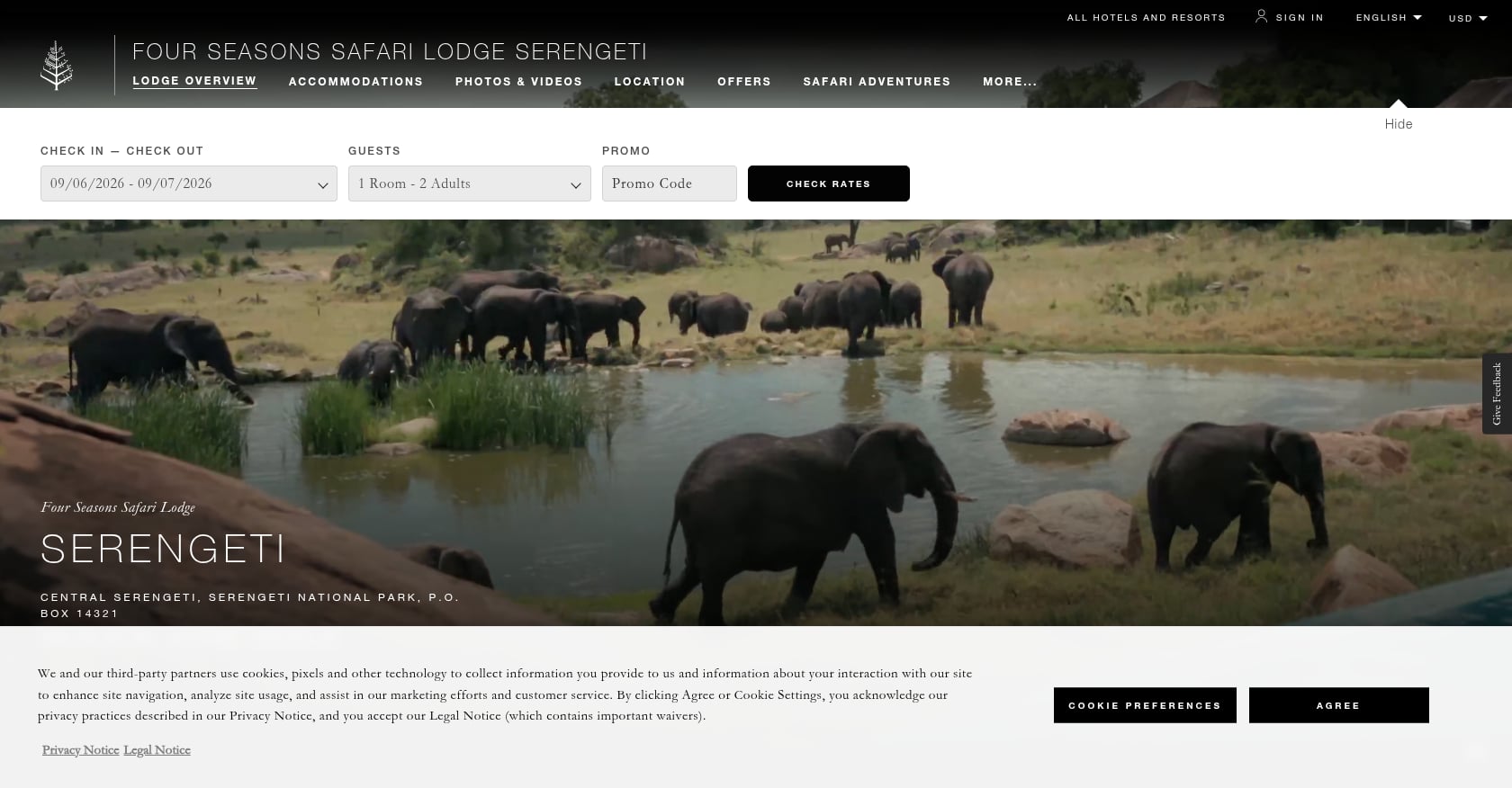
    For most honeymoon couples, the best romantic safari lodge in Tanzania is Mwiba Lodge because it combines a private vehicle and guide, intimate accommodation, flexible scheduling, private dining, and a secluded private-concession setting. Couples prioritizing different experiences may prefer Singita Sasakwa for ultra-luxury, Sayari Camp for the Great Migration, Namiri Plains for big cats, andBeyond Ngorongoro Crater Lodge for dramatic scenery, or Mnemba Island for a safari-and-beach honeymoon.

    Best Romantic Safari Lodges in Tanzania by Experience

    If you want…

    Best pick

    Why

    Best overall for couples

    Mwiba Lodge

    Private vehicle, flexible scheduling, intimate setting

    Maximum luxury

    Singita Sasakwa

    Exceptional suites, private concession, extensive amenities

    Best for Great Migration

    Sayari Camp

    Northern Serengeti location near Mara River crossing areas

    Best for big cats

    Namiri Plains

    Eastern Serengeti wildlife focus and relative solitude

    Most dramatic setting

    andBeyond Ngorongoro Crater Lodge

    Crater-rim location and theatrical interiors

    Best treehouse experience

    Tarangire Treetops

    Elevated suites and distinctive treetop design

    Best farmhouse retreat

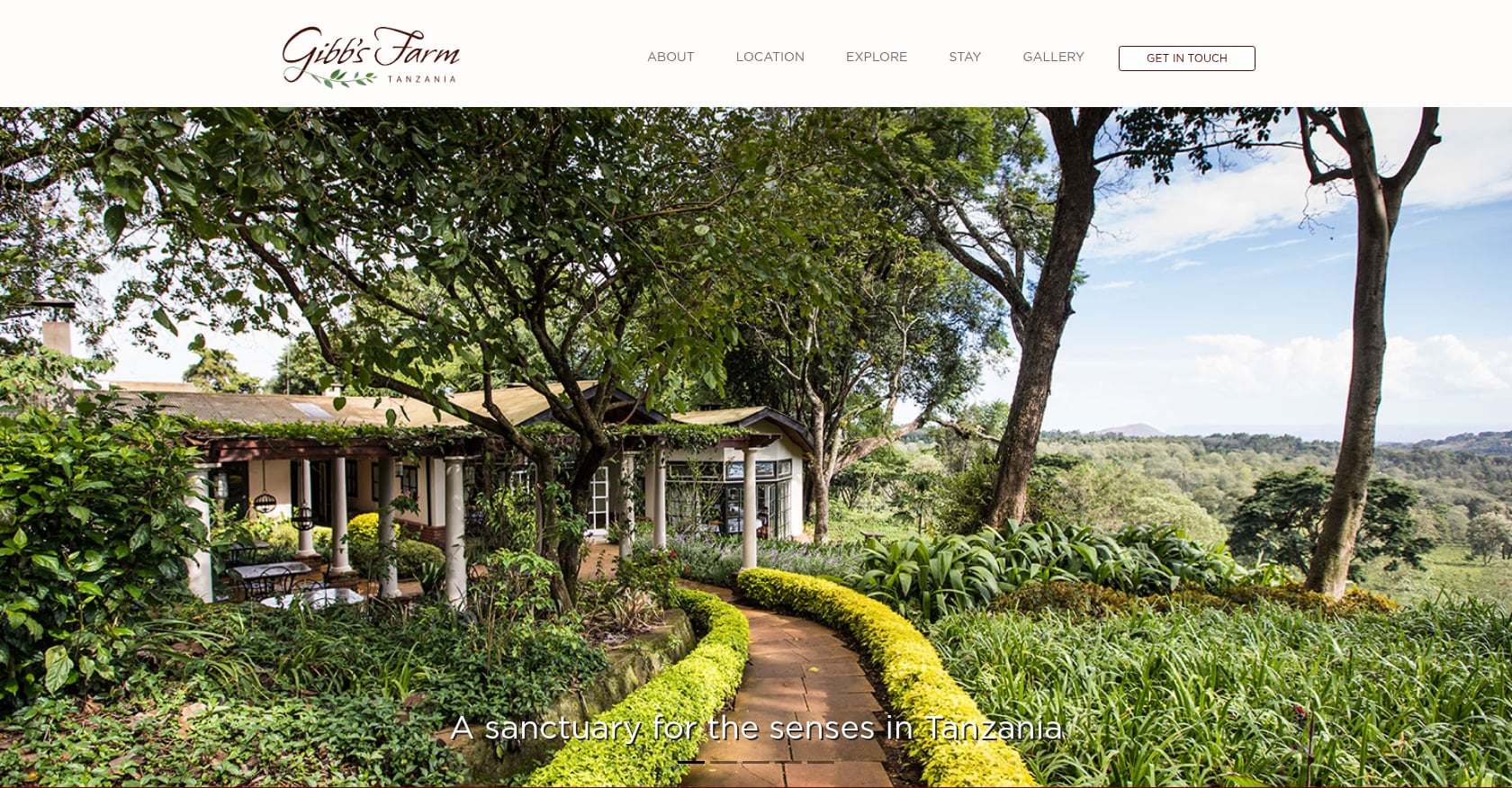
    Gibb’s Farm

    Coffee farm, gardens, food, and slower pace

    Best hotel-style luxury

    Four Seasons Safari Lodge Serengeti

    Spa, pool, larger property, full-service amenities

    Best safari + beach finish

    Mnemba Island

    Private island and highly exclusive beach experience

    Best tented luxury

    Singita Sabora

    Intimate tented accommodation on a private concession

    Best migration honeymoon camp

    Sayari Camp

    Northern Serengeti access and dedicated honeymoon accommodation

    Best value-oriented romantic stay

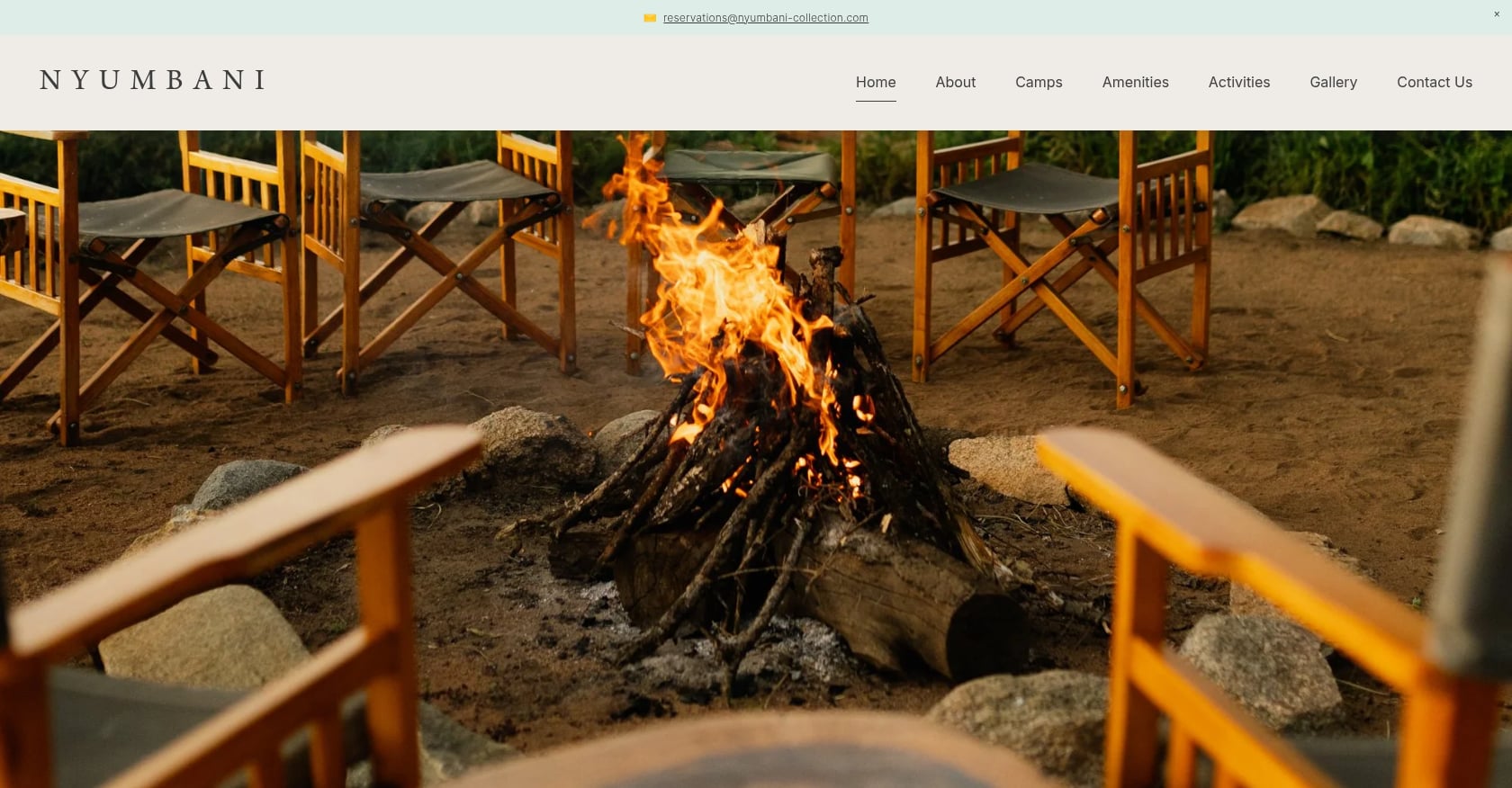
    Nyumbani / Elwai

    Smaller-scale hospitality at lower rates

    How We Ranked the Most Romantic Tanzania Safari Lodges

    We evaluated each property against the factors that matter most for honeymoon and anniversary trips rather than simply relying on whether a lodge describes itself as “romantic.”

    The main criteria were:

    Privacy: Room count, private concessions, private vehicles, and the likelihood of encountering other guests or safari vehicles.

    Couple-specific experiences: Honeymoon suites, private dining, bush dinners, outdoor baths, plunge pools, star beds, sundowners, and celebration arrangements.

    Safari quality: Wildlife density, seasonal game viewing, access to important migration areas, and the flexibility of game drives.

    Location: How the lodge fits into a Northern Circuit or Serengeti itinerary and how much transfer time it requires.

    Service and accommodation: Room design, food, staff-to-guest experience, amenities, and overall level of comfort.

    Value: What is included in the nightly rate and whether the experience justifies the price compared with similar properties.

    Seasonal suitability: Whether the lodge is particularly compelling during migration, calving season, dry season, or green season.

    Because lodge rates, inclusions, operating dates, and availability can change, couples should confirm current pricing and inclusions before booking.

    At-a-Glance Comparison: Tanzania’s Most Romantic Safari Lodges

    Lodge

    Region

    Rooms

    Price Tier (pp/night)

    Best For

    Standout Romance Feature

    Singita Sasakwa

    Western Serengeti

    ~10 suites

    Ultra-premium ($2,455–$3,525)

    Maximum opulence and exclusivity

    Hilltop manor with heated infinity pool, equestrian centre

    Mwiba Lodge

    Southern Serengeti

    10 suites

    Ultra-premium ($2,000+)

    Privacy and personalized scheduling

    Private vehicle per couple, rotating dinner locations

    Sayari Camp

    Northern Serengeti

    15 tents

    Premium ($1,200–$2,000)

    Migration river crossings (Jul–Oct)

    Dedicated honeymoon tent with private butler

    Namiri Plains

    Eastern Serengeti

    11 tents

    Premium ($1,000–$1,800)

    Big cats and solitude

    Rose-petal bath surprises, cheetah research access

    Four Seasons Serengeti

    Central Serengeti

    77 rooms

    Premium (~$1,247+)

    Five-star hotel comfort on safari

    Infinity pool, spa, reliable WiFi

    Singita Sabora

    Western Serengeti

    ~9 tents

    Ultra-premium ($2,000+)

    Tented luxury with Singita service

    1920s explorer aesthetic, private concession

    andBeyond Crater Lodge

    Ngorongoro Crater Rim

    ~30 suites

    Ultra-premium ($2,000+)

    Theatrical, over-the-top design

    Chandeliers, rose petals, crater-view bathtubs

    Gibb’s Farm

    Ngorongoro Highlands

    ~17 cottages

    Mid-luxury ($400–$800)

    Slow-paced farmhouse romance

    1920s coffee farm, organic farm-to-table dining

    Tarangire Treetops

    Tarangire

    ~20 treehouses

    Premium ($800–$1,200)

    Architecturally unique treehouse experience

    Drawbridge entry, butler-drawn dawn coffee

    Mnemba Island

    Off Zanzibar

    12 bandas

    Ultra-premium (~$1,650)

    Ultimate private-island beach finish

    Barefoot luxury, no doors or windows

    Nyumbani Camp

    Central Serengeti

    Small camp

    Mid-luxury ($400–$800)

    Year-round game viewing, great food

    Intimate tented camp with 24-hour hot water

    Elwai Camp

    Serengeti

    Small camp

    Mid-luxury ($400–$800)

    Value and hospitality quality

    Reasonable drink pricing, strong service


    What Makes a Safari Lodge Actually Romantic

    The word “romantic” gets applied loosely in safari marketing. What actually separates a romantic experience from a standard luxury one comes down to a handful of concrete features.

    Private vehicle and guide. This is the single biggest factor. When a couple has their own vehicle, the entire day bends around their preferences. Want to linger at a leopard sighting for an hour? Skip the hippo pool? Return to camp early for a bath before sundowners? A private vehicle makes that possible. At lodges on private concessions, this is often included. Inside national parks, it’s an upgrade worth requesting.

    Small room count. A 10-room camp feels fundamentally different from a 77-room hotel. Fewer guests means quieter communal areas, more personal attention from staff, and less competition for prime game-drive times. For couples, intimacy scales inversely with room count.

    Private concession benefits. Lodges on private concessions (as opposed to inside national parks) can offer night drives, off-road driving, walking safaris, and bush dinners, none of which are permitted inside Tanzania’s national parks. For romance, this translates to sundowner stops in the middle of nowhere, candlelit dinners under acacia trees, and game drives that don’t follow prescribed routes.

    For more on the trade-offs between private and shared safari experiences, that comparison is worth reading before choosing lodges.

    Couple-specific touches. Dedicated honeymoon suites, outdoor bathtubs, rose-petal turndown service, private plunge pools, starbed sleeping options, and bush dinners for two. These aren’t gimmicks at the right properties. They’re what separate a safari trip from a safari honeymoon.


    Serengeti: Where Most Romantic Lodges Are Concentrated

    The Serengeti contains roughly 60% of Tanzania’s top romantic safari lodges, but the park is enormous (14,763 square kilometers), and where you stay within it matters enormously. Each sub-region offers a different experience, different wildlife patterns, and different levels of crowd exposure.

    One operator on a practitioner forum put the crowd dynamics bluntly: “At a big sighting near Seronera in July you can end up with 20 vehicles. Out near Nanyukie you might have two.” For couples prioritizing exclusivity, the sub-region choice is the real decision.

    Here’s the breakdown by Serengeti region, from west to east to north to south. For deeper context on the park’s geography and seasonal patterns, see this Serengeti safari planning guide.

    Which Part of the Serengeti Is Best for a Romantic Safari?

    There is no single “best” part of the Serengeti for couples. The right region depends on whether you prioritize migration, wildlife density, privacy, or convenience.

    Serengeti region

    Best for couples who want

    Main advantage

    Main drawback

    Northern Serengeti

    Great Migration

    Mara River access during migration season

    Remote and seasonal

    Eastern Serengeti

    Big cats and solitude

    Excellent wildlife and fewer crowds

    Less convenient for some itineraries

    Western Serengeti

    Privacy and exclusivity

    Private concessions and flexible activities

    Premium pricing

    Central Serengeti

    Convenience and year-round wildlife

    Strong general game viewing

    More vehicle traffic

    Southern Serengeti

    Calving season

    Wildebeest calving and predator action

    Not ideal for July–October river crossings

    For a honeymoon, western and eastern Serengeti are especially compelling when privacy matters most. Northern Serengeti is the stronger choice when seeing the Great Migration is the primary goal.

    1. Singita Sasakwa Lodge

    Singita Sasakwa Lodge Screenshot

    Region: Western Serengeti (Grumeti Reserve, private concession)
    Best for: Couples seeking the most extravagant, all-out luxury safari experience with total exclusivity and privacy

    Sasakwa is an Edwardian manor-style lodge sitting on a hilltop overlooking the Serengeti plains, set within a 350,000-acre private concession. It is widely considered one of the most opulent safari properties in all of Africa.

    Key features:

    • Heated infinity pool, tennis court, and equestrian centre (horseback safaris are an option)

    • Private concession allows off-road driving, night drives, and walking safaris

    • Fully inclusive rates cover all meals, select drinks, and activities

    • Rates range from approximately $2,455 per person per night (November/December) to $3,525 per person per night during peak season (June through September)

    Romantic details: The hilltop setting means every suite has sweeping views. The scale of the private concession means it’s possible to go an entire game drive without seeing another vehicle. A contributor on FlyerTalk described Sasakwa as “the highlight for our honeymoon a couple years ago.”

    Tradeoffs:

    • Very remote. Requires a charter flight from Arusha, adding cost and transit time.

    • Not practical for short trips (three nights minimum to justify the transfer logistics).

    • Budget: $5,000 to $7,000+ per couple per night, all-inclusive.


    2. Singita Sabora Tented Camp

    Region: Western Serengeti (Grumeti Reserve, private concession)
    Best for: Couples who prefer authentic tented luxury over a formal lodge setting, but still want Singita-level service

    Sabora is Sasakwa’s sister property on the same Grumeti concession. Where Sasakwa is a grand manor, Sabora channels a 1920s explorer aesthetic through its classic tented design. It has been described by reviewers as “one of the most luxurious, professional and stylish properties to be found in Tanzania.”

    Key features:

    • Approximately 9 tented suites with a vintage safari feel

    • Same private concession benefits: private vehicles, walking safaris, night drives

    • Slightly lower price point than Sasakwa while sharing the same reserve

    Romantic details: The tented format creates a closeness to the bush that a stone-and-glass lodge can’t replicate. Falling asleep to the sounds of the Serengeti with nothing but canvas between you and the night sky is a specific kind of intimacy.

    Tradeoffs:

    • Same remoteness and charter-flight logistics as Sasakwa

    • Still ultra-premium pricing, though a step below its sibling


    3. Mwiba Lodge

    Mwiba Lodge Screenshot

    Region: Southern Serengeti (private reserve bordering the park)
    Best for: Couples who value privacy, personalized scheduling, and a quieter alternative to Serengeti National Park proper

    Mwiba sits on a private concession south of the Serengeti, and privacy is its defining feature. Each party gets a private vehicle and guide with complete freedom to set their own schedule. One traveler captured it perfectly: “They changed up our dinner location each night, always managing to keep us in a private spot away from others, perfect for a romantic getaway.”

    Key features:

    • 10 spacious suites, each with a soaking tub, indoor and outdoor rain shower, and private deck

    • Private vehicle and guide per party (included, not an upgrade)

    • Guests staying three nights or more get complimentary entry to Ndutu or Southern Serengeti

    • A TripAdvisor reviewer who visited all of Tanzania’s top-tier properties listed Mwiba among only seven that qualify as truly ultra-luxury

    Romantic details: The rotating private dinner locations are the standout. Staff create a different setting each night, from bush clearings to candlelit riverside spots. The lodge’s private concession means couples can enjoy walking safaris, night drives, and off-road game viewing.

    Tradeoffs:

    • Southern location means Mwiba is not positioned for the Great Migration river crossings (July through October)

    • Pairs best with calving season (December through March), when massive herds gather in the southern plains

    • Fly-in access required


    4. Sayari Camp

    Sayari Camp Screenshot

    Region: Northern Serengeti (Kogatende)
    Best for: Honeymooners timing their trip to the Great Migration river crossings (July through October)

    Sayari is owned by Asilia Africa and positioned in the northern Serengeti near the Mara River, where the wildebeest migration’s most dramatic river crossings occur. It’s one of the top safari options in this part of the park.

    Key features:

    • 15 luxury tents, including one dedicated honeymoon suite

    • The honeymoon tent has a secluded outdoor bath, four-poster bed, extended deck, and uninterrupted views

    • Private butler service for the honeymoon couple, with private meals under the stars

    • An innovative solar-powered micro-brewery, the first of its kind in the bush

    Romantic details: The dedicated honeymoon suite is a genuine differentiator. Most camps offer “honeymoon packages” that amount to a bottle of wine and flower petals. Sayari built a specific tent for the experience, with butler service and private dining that’s standard rather than add-on.

    Tradeoffs:

    • Remote northern location adds transfer time and charter-flight cost

    • The camp is at its best July through October for migration. From November through May, the herds have moved south. The camp is quieter then, with fewer crowds but less migration drama.


    5. Namiri Plains

    Namiri Plains Screenshot

    Region: Eastern Serengeti
    Best for: Couples who prioritize wildlife (especially big cats) over ultra-luxury amenities, and photographers

    Namiri Plains occupies an area of the eastern Serengeti that was closed to tourists for 20 years to protect cheetah populations. That closure worked. The area now has exceptional big-cat density, and Namiri benefits from the relative solitude.

    Key features:

    • 11 tented suites with spacious indoor-outdoor living areas

    • Famous for cheetah, lion, and leopard sightings

    • Activities include game drives, nature walks, cheetah research participation, and hot-air ballooning

    • Particularly strong for wildlife photography (see this safari photography gear guide for preparation tips)

    Romantic details: For one couple’s anniversary, “Sophie and the team surprised us with a bubble bath and what felt like a hundred rose petals arranged in the tub and across the bed. They even brought a chilled bottle of Baleia Debra Rosé 2024 to celebrate.” That kind of personalized effort shows up repeatedly in reviews.

    Tradeoffs:

    • Remote location requires a 75-minute drive from the nearest airstrip at Seronera

    • Game drives are shared by default (private vehicles are an upgrade, not included)

    • The emphasis is on wildlife and atmosphere rather than the highest-end fixtures


    6. Four Seasons Safari Lodge Serengeti

    Four Seasons Safari Lodge Serengeti Screenshot

    Region: Central Serengeti
    Best for: Couples who want familiar five-star hotel standards alongside their safari

    The Four Seasons is one of the few properties that delivers a recognizable luxury-hotel experience in the middle of a national park. For couples who want a spa, concierge service, reliable WiFi, and a structured daily program without sacrificing wildlife access, it fills a gap that tented camps don’t.

    Key features:

    • Hot-air balloon safaris, private game drives, rooms with four-poster beds and sundecks

    • Infinity-edge pool overlooking the Serengeti

    • Rates listed around $1,247 per night (varies seasonally)

    • Full spa and wellness facilities

    Romantic details: The infinity pool with Serengeti views is the signature image, and it genuinely delivers. The hotel’s scale means it can accommodate requests like private bush dinners and in-room celebrations with more resources than a small camp.

    Tradeoffs:

    • 77 rooms makes it the largest property on this list by a wide margin. One reviewer noted it is “too large and hotelish” to feel like an intimate safari camp. If small-scale privacy is your priority, look elsewhere.

    • Central Serengeti (Seronera area) is the busiest part of the park for game-drive traffic.


    7. Nyumbani Camp and Elwai Camp

    Nyumbani Camp and Elwai Camp Screenshot

    Region: Central Serengeti
    Best for: Couples who want an intimate, well-run camp at a more accessible price point

    Not every romantic Serengeti experience requires ultra-premium pricing. Nyumbani Camp and Elwai Camp are smaller properties that deliver genuine warmth and quality at mid-luxury rates.

    Travelers have praised Nyumbani for having “the best food and hot water 24 hours a day,” which sounds simple until you’ve experienced a camp where neither is consistent. The central Serengeti positioning provides strong year-round game viewing. Elwai Camp draws praise for exceptionally reasonable drink pricing (a real consideration when a single gin and tonic at some camps costs $15+) and consistently warm hospitality.

    These are the kinds of intimate tented camps where one couple described the experience as “truly something special” with “luxury and hospitality spot on.” They represent properties that specialized operators actively place clients in, meaning couples can book them as part of a fully designed itinerary rather than navigating individual lodge reservations.

    Tradeoffs:

    • Fewer over-the-top honeymoon amenities compared to ultra-premium lodges

    • Central location means shared game-drive corridors with other camps

    Choosing between Serengeti regions for a romantic safari takes local knowledge. Duma Explorer designs private honeymoon itineraries that pair the right lodges with the right season for each couple’s priorities.


    Ngorongoro: Crater-Rim Romance

    The Ngorongoro Conservation Area offers a completely different character from the open Serengeti. The crater itself is a collapsed volcanic caldera with one of the densest wildlife concentrations in Africa, and the rim, at roughly 2,300 meters elevation, brings cool temperatures, misty mornings, and a dramatic sense of enclosure.

    For deeper planning context on this area, see the Ngorongoro Crater safari planning guide.

    1. andBeyond Ngorongoro Crater Lodge

    andBeyond Ngorongoro Crater Lodge Screenshot

    Region: Ngorongoro Crater rim
    Best for: Couples who want theatrical, over-the-top luxury with an unmatchable location

    This is the lodge people picture when they imagine a romantic safari in Tanzania. The design has been described as “baroque meets bush,” with chandeliers hanging in tented suites, rose petals scattered across four-poster beds, and panoramic crater views from every angle.

    Key features:

    • Three camps: North, South, and Tree Camp. Tree Camp has six smaller suites particularly suited to honeymooners.

    • All-inclusive, including champagne

    • Reviewers describe the rooms as “sumptuous and romantic” with “views out of the wonderful roll-top bath across the crater”

    [FACT CHECK REQUIRED: The lodge was expected to close for a full rebuild. Confirm whether andBeyond Ngorongoro Crater Lodge has reopened for the 2026/2027 season before publishing.]

    Romantic details: A FlyerTalk member confirmed the Crater Lodge was “the highlight” of their honeymoon. The combination of theatrical interiors and one of the most dramatic natural settings on Earth creates something genuinely unique. Two nights is the optimal stay, giving one full day for a crater-floor game drive.

    Tradeoffs:

    • The crater floor itself can get crowded. Travelers report 20 to 30 vehicles converging at popular sightings. The lodge is intimate, but the game drive experience is shared with day visitors.

    • Ultra-premium pricing

    • Private game drives are available but cost extra


    2. Gibb’s Farm

    Gibb's Farm Screenshot

    Region: Ngorongoro Highlands (Karatu)
    Best for: Couples who want a slower, more soulful pace, farmhouse romance rather than safari-camp intensity

    Gibb’s Farm is the outlier on this list in the best possible way. Founded in the 1920s as a coffee plantation, it’s not a game-viewing property. It’s a retreat between safari days, set in the lush green highlands between Ngorongoro and Lake Manyara.

    Key features:

    • Farm-to-table organic cuisine from the property’s own gardens, bakery, and dairy

    • Founded in the 1920s, now embracing traditional East African hospitality

    • Close enough for easy Ngorongoro Crater day trips and Lake Manyara access

    Romantic details: Honeymooners have described Gibb’s Farm as a “gorgeous romantic lush green farm” where they received flower petals on the bed, complimentary champagne, and a celebration dinner with staff singing and a fresh-baked cake. The pace here is deliberately slow. Mornings start with coffee from the farm’s own beans. Afternoons are for walking the gardens or visiting the on-site organic nursery.

    Tradeoffs:

    • No wildlife at the doorstep. This is a retreat, not a game lodge.

    • Best used as a two-night transition stop between parks rather than a destination in itself.


    Tarangire: A Different Kind of Romance

    1. Tarangire Treetops

    Region: Tarangire area (private concession adjacent to the park)
    Best for: Couples who want something architecturally unique, a treehouse experience genuinely different from any other lodge on the Northern Circuit

    Tarangire Treetops (an Elewana property) delivers what travelers describe as a “Tarzan and Jane romantic treetop experience.” The rooms are elevated treehouses accessed by spiral staircases, and the main lodge is built around a thousand-year-old baobab tree.

    Key features:

    • Each room boasts 65 square meters of floor space, one of the largest bedrooms in any camp or lodge in East Africa

    • Access via spiral staircase and a drawbridge system that’s closed once you retire for the night

    • At dawn, a personal butler heats water for your shower and serves coffee on your private balcony

    • Romantic bush meals and sundowners arranged on request

    For background on exploring Tarangire National Park, including its famous elephant herds and baobab forests, that guide covers the essentials.

    Romantic details: The drawbridge is the detail that stays with people. There’s something about a physical barrier being raised behind you, sealing you into your treetop room above the African bush, that creates a feeling no five-star hotel can replicate.

    Tradeoffs:

    • The lodge location is an hour from the Tarangire park gate through an area that tends to be sparse on wildlife. Game viewing is better inside the park itself.

    • Tarangire gets less attention than Serengeti or Ngorongoro on most itineraries, which means fewer people but also shorter visit windows (often just one or two nights).


    Zanzibar and the Swahili Coast: The Beach Finish

    Most couples planning a romantic safari in Tanzania add beach time at the end. The standard combination is safari on the mainland followed by three to five nights on Zanzibar. That sequencing works well logistically, with direct flights from Serengeti airstrips to Zanzibar taking roughly 90 minutes.

    1. andBeyond Mnemba Island

    andBeyond Mnemba Island Screenshot

    Region: Off the northeast coast of Zanzibar (private island)
    Best for: Safari-and-beach honeymooners who want the most exclusive Zanzibar finish

    Mnemba Island is a private 12-hectare coral island with just 12 freestanding beach bandas along the shoreline. There are no doors, no windows, and nothing but soft sand between you and the Indian Ocean. It’s been called the “ultimate Zanzibar honeymoon beach retreat” and “a romantic, exclusive and luxurious paradise.”

    Key features:

    • All-inclusive rates starting from approximately $1,650 per person per night, plus a $100 per person per night conservation fee

    • The most expensive property in Zanzibar

    • Exceptional snorkeling directly off the beach (the island sits within a marine conservation area)

    One reviewer stated plainly: “At $1,670 USD per person per night, a visit to Mnemba doesn’t come cheap. But you’ll struggle to find anywhere that compares in the world.”

    Tradeoffs:

    • Extreme cost. A four-night stay for two runs over $14,000 before transfers.

    • Many excellent Zanzibar alternatives exist at a fraction of the price. Couples who want a beautiful beach experience without the ultra-premium price tag have strong options.

    For couples interested in less-known coastal alternatives, the Pangani and Saadani area offers a combined beach-and-bush experience on the Swahili Coast that very few tourists know about.

    Best Tanzania Safari Lodges for Honeymoons vs. Anniversaries

    The best romantic lodge can differ depending on the occasion.

    Best for a honeymoon

    Honeymoon couples often prioritize privacy, memorable accommodation, special dining, and a sense that the trip is once-in-a-lifetime. Mwiba Lodge, Singita Sasakwa, Sayari Camp, and Mnemba Island are particularly strong choices because they combine intimate settings with highly personalized experiences.

    Best for an anniversary

    Anniversary trips can be more flexible. Couples may prioritize a specific wildlife experience, a favorite region, or a return to a lodge they already know. Namiri Plains works particularly well for couples who want wildlife to be the centerpiece, while Gibb’s Farm provides a slower experience that works well between more intensive safari stays.

    Best for a milestone celebration

    For a major anniversary or other milestone, Singita Sasakwa and andBeyond Ngorongoro Crater Lodge stand out for couples who want the accommodation itself to feel like part of the celebration.

    How to Build a Romantic Safari Itinerary in Tanzania

    A couple doesn’t stay at one lodge for 10 days. A typical romantic safari itinerary includes two to three properties across 7 to 14 nights, usually combining different ecosystems and ending at the coast. Here are three sample sequences, each built around a different style.

    7-Night Highlight Trip

    Nights

    Location

    Lodge Style

    Why

    2

    Ngorongoro area

    Gibb’s Farm or Crater Lodge

    Crater game drive, acclimatize

    3

    Serengeti (any sub-region)

    Tented camp or lodge

    Core safari experience

    2

    Zanzibar

    Beach resort or Mnemba

    Decompress, beach time

    10-Night Classic Honeymoon

    Nights

    Location

    Lodge Style

    Why

    1

    Tarangire

    Tarangire Treetops

    Unique treehouse arrival experience

    2

    Ngorongoro

    Crater Lodge or Gibb’s Farm

    Crater + highland retreat

    3

    Serengeti

    Mwiba, Sayari, or Singita

    Core wildlife, private concession

    4

    Zanzibar

    Mnemba Island or beach resort

    Extended beach relaxation

    14-Night Grand Tour

    Nights

    Location

    Lodge Style

    Why

    2

    Tarangire

    Treetops or Tortilis Camp

    Elephants and baobabs

    2

    Ngorongoro

    Crater Lodge + Gibb’s Farm

    Crater day + farm retreat

    4

    Serengeti (two sub-regions)

    Split between two camps

    Migration + big cats or privacy

    1

    Transit to Zanzibar

    Fly from Serengeti

    Direct flight, no backtracking

    5

    Zanzibar

    Mix of beach + cultural

    Stone Town + beach

    Seasonality matters for sequencing. The best time for safari in Tanzania depends heavily on whether you’re chasing the Great Migration, calving season, or simply the driest weather for general game viewing.

    Couples who want a custom-designed romantic safari across Tanzania’s best lodges can ask Duma Explorer to build an itinerary around their travel dates and preferences.


    How Much Do Romantic Safari Lodges in Tanzania Cost?

    Pricing is the elephant in the room that most safari lodge guides avoid. Here’s a realistic framework.

    Price Tiers for Romantic Safari Lodges

    Tier

    Per Person, Per Night

    What You Get

    Example Properties

    Ultra-premium

    $2,000–$3,500+

    Private concession, private vehicle/guide included, all-inclusive with premium drinks, smallest camps

    Singita Sasakwa, Singita Sabora, Mwiba Lodge, Mnemba Island

    Premium

    $800–$2,000

    Excellent camps with strong service, some private-concession benefits, honeymoon packages

    Sayari Camp, Namiri Plains, Four Seasons Serengeti, andBeyond Crater Lodge

    Mid-luxury

    $400–$800

    Comfortable tented camps with good guides, solid food, authentic bush experience

    Gibb’s Farm, Nyumbani Camp, Elwai Camp, many Tarangire options

    What “all-inclusive” actually means: At most Tanzania safari lodges, rates include accommodation, all meals, house drinks (wine, beer, basic spirits), laundry, and game-drive activities. Premium all-inclusive properties add top-shelf drinks, specialty activities (walking safaris, night drives), and sometimes internal transfers. Park fees and conservancy fees are sometimes included, sometimes not. Always confirm.

    Why private concessions cost more: Properties like Singita and Mwiba pay substantial concession fees for exclusive access to their land. That cost gets passed to guests, but the payoff is significant: off-road driving, night drives, walking safaris, bush dinners, and vehicle limits that mean you might share a cheetah sighting with one other car instead of twenty.

    For a deeper breakdown of total trip costs, see this Tanzania safari cost per person guide.


    Private Concession vs. National Park: Why It Matters for Romance

    This distinction is critical for couples and almost never explained in other guides to romantic safari lodges in Tanzania.

    Factor

    National Park Lodge

    Private Concession Lodge

    Off-road driving

    Not permitted

    Permitted (follow animal tracks)

    Night drives

    Not permitted

    Available

    Walking safaris

    Rarely permitted

    Standard offering

    Bush dinners

    Not possible in most parks

    Regularly arranged

    Vehicle limits

    No cap; popular areas get crowded

    Strict limits (often just the camp’s own vehicles)

    Sundowner stops

    Limited to designated areas

    Anywhere on the concession

    Flexibility

    Must follow park rules on hours/routes

    Guide and couple set the schedule

    For a honeymoon or anniversary, the flexibility of a private concession transforms the experience. The ability to have dinner set up in a riverbed with lanterns and no other humans in sight, or to follow a leopard on foot with an armed guide at dawn, these moments define a romantic safari in ways that a game drive in a line of vehicles cannot.


    FAQs About Romantic Safari Lodges in Tanzania

    When is the best time for a romantic safari in Tanzania?

    June through October (dry season) offers the best general game viewing and coincides with the Great Migration in the northern Serengeti. December through March brings calving season in the southern Serengeti, with fewer tourists and dramatic predator-prey interactions. Green season (April and May) is the lowest-cost period with the lightest crowds, but some camps close and rain can disrupt travel.

    How far in advance should couples book a honeymoon safari lodge?

    Eight to twelve months ahead for peak-season travel (July through October), especially at small properties like Singita, Mwiba, and Mnemba Island. Tanzania welcomed a record 5.36 million tourists in 2024, and the most exclusive lodges have 10 to 15 rooms. The math is not in your favor if you wait.

    Should couples book private or shared game drives?

    Private game drives are worth the upgrade for romance-focused trips. Shared vehicles mean compromising on timing, pacing, and sighting duration with strangers. On private concessions, private vehicles are often included in the rate. Inside national parks, private vehicles are an add-on that typically costs $150 to $400 per day.

    Can you combine a Serengeti safari with a Zanzibar beach stay?

    Yes, and most couples do. Direct flights from Serengeti airstrips to Zanzibar take about 90 minutes, making the transition seamless. The typical structure is safari first (five to seven nights), then beach (three to five nights). This sequencing avoids backtracking through Arusha.

    Is a private concession worth the extra cost for couples?

    For most couples on a honeymoon or anniversary trip, yes. The combination of flexible scheduling, bush dinners, night drives, walking safaris, and near-zero crowds creates a fundamentally different experience than the best lodge inside a national park. The premium is real (often $500 to $1,500 more per person per night), but so is the difference in intimacy.

    Can romantic lodges in Tanzania accommodate dietary restrictions or special celebrations?

    Almost universally, yes. Premium and ultra-premium lodges employ trained chefs and are accustomed to handling dietary needs. For celebrations, most properties will arrange anniversary cakes, champagne, private dining setups, or in-room decorations with advance notice. The key is communicating these details to your operator before arrival, not at check-in.


    Start Planning Your Romantic Tanzania Safari

    The best romantic safari lodges in Tanzania book quickly, especially during peak season. Whether you’re leaning toward the ultra-exclusivity of a Singita property, the private intimacy of Mwiba, the migration drama at Sayari, or a treehouse night at Tarangire Treetops, the most important step is matching your travel dates and priorities to the right combination of lodges.

    Duma Explorer designs private Tanzania honeymoon and anniversary safaris that pair the right properties with the right season, handling lodge bookings, domestic flights, transfers, and Zanzibar extensions as one coordinated itinerary.

    Plan My Romantic Tanzania Safari

  • Safari Zanzibar Honeymoon Guide 2026: Bush & Beach Glossary

    Safari Zanzibar Honeymoon Guide 2026: Bush & Beach Glossary

    TL;DR

    A safari Zanzibar honeymoon combines a Tanzania wildlife safari with a Zanzibar beach stay, typically over 10–14 days. Most couples spend 4–7 nights on safari and 4–7 nights in Zanzibar, with the safari first and the beach second.

    The most common safari route is Tanzania’s Northern Circuit, combining destinations such as Tarangire National Park, the Ngorongoro Conservation Area and Serengeti National Park. A bush flight can connect the Serengeti directly with Zanzibar, avoiding a long return drive to Arusha.

    For most couples, the best travel windows are June–October for dry-season wildlife viewing and December–February for Serengeti calving season combined with Zanzibar beach weather. Total pricing varies significantly by season, accommodation and transport style, but honeymoon itineraries commonly range from mid-four figures to well above $15,000 per person.

    This guide explains the safari, Zanzibar, accommodation, wildlife, logistics and cost terms you are most likely to encounter while planning a Tanzania safari and Zanzibar honeymoon.

    What Is a Safari Zanzibar Honeymoon?

    A safari Zanzibar honeymoon combines a wildlife safari in Tanzania with a beach stay in Zanzibar, usually with the safari first and the beach second. A typical trip lasts 10–14 days, with about 4–7 nights on safari and 4–7 nights in Zanzibar. Most couples fly between the safari region and Zanzibar rather than returning overland to Arusha. The most common safari route is Tanzania’s Northern Circuit, including Tarangire, Ngorongoro and the Serengeti.

    Safari Zanzibar Honeymoon Quick Facts

    Planning Element

    Typical Range / Recommendation

    Total trip length

    10–14 days

    Safari portion

    4–7 nights

    Zanzibar portion

    4–7 nights

    Most common safari region

    Tanzania Northern Circuit

    Common safari parks

    Tarangire, Ngorongoro, Serengeti

    Safari → Zanzibar connection

    Domestic/bush flight

    Best dry-season window

    June–October

    Calving-season window

    December–March

    Best beach areas for easy swimming

    Nungwi or Kendwa

    Best for dramatic tides + activities

    Matemwe or Paje

    Typical honeymoon budget

    Varies substantially by accommodation, season and transport

    How to Plan a Safari Zanzibar Honeymoon

    Planning a safari Zanzibar honeymoon is easiest when you make the major decisions in sequence rather than choosing individual hotels first.

    1. Choose your travel dates

    Your dates determine both safari conditions and Zanzibar beach weather. They also affect where the Great Migration may be located and how much you are likely to pay for accommodation.

    2. Choose the safari experience

    Decide whether your priority is the Great Migration, Big Five viewing, luxury camps, privacy, walking safaris, night drives or minimizing driving time. This determines which parks and accommodation areas make the most sense.

    3. Choose your safari route

    For first-time visitors, the Northern Circuit is usually the easiest starting point because Tarangire, Ngorongoro and Serengeti can be combined into one itinerary.

    4. Decide between driving and flying

    Driving gives you more time to experience the landscape between parks. Fly-in safaris cost more but can save substantial travel time, particularly when visiting the Serengeti.

    5. Choose your Zanzibar beach

    Nungwi and Kendwa are generally better for couples who want easy swimming throughout the day. Matemwe and Paje have more noticeable tidal changes but offer different experiences, including snorkeling, diving and kitesurfing.

    6. Build the itinerary around the transition

    The simplest structure is usually safari first and Zanzibar second. After several early mornings and long game-drive days, the beach provides a slower final chapter before the flight home.

    7. Check the practical requirements

    Before departure, confirm current Tanzania visa requirements, Zanzibar entry requirements, travel insurance rules, luggage restrictions for bush flights, vaccination or health requirements that apply to your nationality, and the policies of your airline and safari operator.

    Safari Zanzibar Honeymoon Glossary: Quick Index

    Trip & Safari Structure

    Bush-to-beach honeymoon · Northern Circuit · Southern Circuit · Fly-in safari · Bush flight · Private safari · Mobile tented camp · Full-board · All-inclusive · Concession

    Wildlife & Safari Activities

    Big Five · Great Migration · Calving season · River crossing · Game drive · Sundowner · Night drive · Walking safari · Hot-air balloon safari · Park fees · Conservation fees

    Zanzibar

    Spice Island · Stone Town · Dhow · Spice tour · Nungwi · Kendwa · Matemwe · Paje · Mnemba Island · Mnemba Atoll · Jozani Forest · Tides · Zanzibar inbound travel insurance

    Accommodation

    Safari lodge · Tented camp · Banda · Boutique hotel · Private plunge pool · Honeymoon perks

    Logistics

    Kilimanjaro International Airport (JRO) · Abeid Amani Karume International Airport (ZNZ) · eVisa · Bush airlines · Tipping · TANAPA · NCAA

    Trip Format and Structure Terms

    These are the big-picture concepts that define how a safari Zanzibar honeymoon is organized. Understanding them first makes every other planning decision easier.

    Bush-to-Beach Honeymoon

    The standard trip format: a wildlife safari in Tanzania’s national parks followed by a beach stay on Zanzibar. The adventure comes first, the relaxation second. This sequencing is not arbitrary. Practitioners on Reddit’s honeymoon planning threads consistently recommend doing the safari before the beach because it is physically more demanding. Ending on the beach gives couples time to decompress before flying home.

    Why honeymooners care: This is the architecture of your entire trip. Almost every operator, itinerary template, and flight routing assumes bush-first, beach-second.

    Northern Circuit

    Tanzania’s most popular safari route, connecting Tarangire National Park, the Ngorongoro Conservation Area, and the Serengeti. Most safari Zanzibar honeymoons follow this circuit because it concentrates the country’s highest wildlife density into a logical driving sequence. A detailed guide to Tanzania’s safari circuits explains the routing in depth.

    Why honeymooners care: The Northern Circuit is the default recommendation for first-time visitors. It offers the Big Five, the Great Migration (seasonally), and the Ngorongoro Crater in a single sweep.

    Southern Circuit

    An alternative safari route through Nyerere National Park (formerly Selous) and Ruaha National Park. These parks are wilder, less visited, and significantly more remote. The Southern Circuit is rarely recommended for honeymoons because the logistics are harder and the beach connection to Zanzibar is less seamless.

    Why honeymooners care: You may see this term in operator brochures. Unless you specifically want off-the-beaten-track isolation, the Northern Circuit is the stronger honeymoon choice.

    Fly-In Safari

    A safari where you travel between parks or from a city to a park by light aircraft rather than driving. Fly-in safaris dramatically reduce transfer time and are more common in the Serengeti, where road distances are vast.

    Why honeymooners care: On a 10-to-14-day honeymoon, every hour matters. A fly-in option between Arusha and the Serengeti can save an entire day of driving each way.

    Bush Flight

    A domestic flight on a small propeller aircraft, typically seating 12 to 14 passengers, between remote airstrips in the bush and major airports. The bush flight from a Serengeti airstrip directly to Zanzibar is the logistical centerpiece of a safari Zanzibar honeymoon. Operators like Coastal Aviation and Auric Air run these routes, and flights take one to two hours.

    Why honeymooners care: Instead of a long drive back to Arusha followed by a separate flight to Zanzibar, a direct bush flight turns a full day of travel into a short scenic hop. This single connection is what makes the bush-to-beach format work so smoothly.

    If you are trying to piece together a safari-to-Zanzibar route without losing days to unnecessary transfers, Duma Explorer can design the trip around your dates and priorities.

    Private Safari

    A safari where only your party occupies the vehicle, with a dedicated driver-guide. The alternative is a shared or group safari, where you ride with other travelers. For a deeper comparison of private and shared safari formats, including cost differences, Duma Explorer has a separate breakdown.

    Why honeymooners care: Privacy is the point. A private safari lets you linger at a sighting, skip a stop you are not interested in, or ask your guide to find a quiet sundowner spot. Honeymoon couples almost universally choose private.

    Mobile Tented Camp

    Safari Zanzibar Honeymoon Guide 2026: Bush & Beach Glossary

    A safari camp that physically relocates throughout the year to follow wildlife movements, particularly the Great Migration. These camps break down and rebuild in different zones of the Serengeti depending on the season. Despite the word “tented,” most are surprisingly comfortable, with proper beds, hot showers, and full-service dining.

    Why honeymooners care: If your honeymoon coincides with the Migration, a mobile camp puts you where the action is rather than waiting for the herds to pass by a fixed lodge.

    Full-Board vs. All-Inclusive

    Full-board means all meals are included (breakfast, lunch, dinner) but drinks are extra. All-inclusive adds beverages, often including local wines, beers, and spirits. In the safari world, most camps and lodges operate on full-board. Some premium properties offer all-inclusive packages.

    Why honeymooners care: This distinction affects your final bill. On a 10-day trip, drinks can add $300 to $500 per couple. Knowing what your camp includes helps you budget accurately. For complete cost context, see our Tanzania safari cost guide.

    Concession

    A private wildlife area leased from the government or local community, bordering or adjacent to a national park. Concessions allow activities that are restricted inside the parks themselves, such as night drives, walking safaris, and off-road driving. Fewer vehicles operate in concessions, which means less crowding.

    Why honeymooners care: Concession camps are where the most exclusive honeymoon experiences happen. They cost more, but the trade-off is genuine privacy in the bush, plus activities you cannot do inside Serengeti National Park proper.

    Best Time for a Safari Zanzibar Honeymoon

    There is no single best month for every safari Zanzibar honeymoon. The ideal timing depends on whether you prioritize dry-season wildlife viewing, the Great Migration, Serengeti calving season, beach weather or lower-season pricing.

    Travel Window

    Safari Highlight

    Zanzibar Conditions

    Best For

    January–February

    Calving season

    Hot, generally dry

    Wildlife + beach combination

    March

    Calving season may continue

    Increasing rain risk

    Couples prioritizing safari

    April–May

    Green season, fewer visitors

    Long-rain period

    Lower-season travel

    June–July

    Migration moves north

    Dry season

    Wildlife + favorable weather

    August–October

    Northern Serengeti, possible Mara crossings

    Dry season

    Migration-focused honeymoons

    November

    Migration begins moving south

    Short rains possible

    Couples seeking flexibility

    December

    Herds return south; calving approaches

    Warm, generally favorable

    Festive-season beach + safari

    Best Months by Priority

    Best for dry-season safari: June–October.

    Best for Serengeti calving: January–March.

    Best for potential Mara River crossings: August–October, although crossings are unpredictable.

    Best for safari + beach balance: January–February or June–October.

    The Great Migration is a year-round movement rather than a single event, so your safari location should be matched to your travel dates rather than simply choosing a month labeled “migration season.”

    Safari and Wildlife Terms

    Once you understand the trip structure, the next vocabulary layer involves the wildlife experiences you are actually planning around.

    Big Five

    The five most iconic African mammals: lion, leopard, elephant, Cape buffalo, and rhinoceros. The term originally referred to the five most dangerous animals to hunt on foot. Today it is a wildlife-viewing checklist. Tanzania’s Northern Circuit offers realistic chances of seeing all five, particularly in the Ngorongoro Crater and the Serengeti.

    Why honeymooners care: Most first-time safari-goers consider “getting the Big Five” a trip goal. Your guide will know this without being told.

    Great Migration

    The continuous, year-round movement of approximately two million wildebeest and several hundred thousand zebra through the Serengeti-Mara ecosystem. There is no single “migration season.” The herds are always somewhere. What changes is where. A month-by-month migration guide explains the positioning in detail, but here is the short version:

    • December to March: Herds concentrate in the southern Serengeti and Ndutu plains for calving season.

    • April to May: Long rains push herds northwest through the Western Corridor toward Lake Victoria.

    • June to July: Herds gather in the Western Corridor and begin moving north toward the Grumeti and Mara rivers.

    • August to October: River crossings at the Mara River, the iconic photographic moment. Herds move between the northern Serengeti and Kenya’s Maasai Mara.

    • November: Herds begin the return south as short rains arrive.

    Why honeymooners care: Timing your safari portion to match the Migration’s location means more dramatic wildlife viewing. This is the single biggest factor in choosing your travel dates.

    Calving Season

    The period from roughly December through March when wildebeest give birth on the short-grass plains of the southern Serengeti and Ndutu area. Hundreds of thousands of calves are born in a concentrated window, which attracts heavy predator activity, particularly from lions, cheetahs, and hyenas. It is some of the most dramatic wildlife viewing in Africa.

    Why honeymooners care: A December to February safari Zanzibar honeymoon aligns calving season with Zanzibar’s best beach weather. It is one of the strongest timing combinations available.

    River Crossing

    The moments when migrating wildebeest and zebra attempt to cross the Mara or Grumeti rivers, typically between July and October. Crocodiles, strong currents, and steep banks make crossings chaotic and visually spectacular. Seeing a crossing is never guaranteed on any particular day.

    Why honeymooners care: If river crossings are a priority, you need to be in the northern Serengeti between July and October and stay multiple days to improve your chances.

    Game Drive

    A vehicle-based wildlife viewing excursion, usually conducted in an open-top or pop-top 4×4. Most safari days include a morning game drive (departing at dawn) and an afternoon game drive (returning at sunset). Some camps offer full-day drives with a packed lunch.

    Why honeymooners care: Game drives are the core activity of the safari portion. Everything else, the camps, the food, the sundowners, frames the drives.

    Sundowner

    Drinks served at a scenic viewpoint during sunset, typically set up by your guide in the bush. A table, camp chairs, cold drinks, and a view across the plains. It is one of the most romantic moments in any safari Zanzibar honeymoon.

    Why honeymooners care: Sundowners are available at most mid-range and luxury camps. Some concession camps offer them in truly private settings where you are the only couple for miles.

    Night Drive

    An after-dark game drive using a spotlight to find nocturnal species like aardvarks, bush babies, genets, and hunting leopards. Night drives are not permitted in Serengeti National Park or most other TANAPA parks but are allowed in concession areas and the Ngorongoro Conservation Area.

    Why honeymooners care: If nocturnal wildlife matters to you, this is a reason to choose a camp inside a concession rather than inside the national park.

    Walking Safari

    A guided, on-foot safari with an armed ranger. Walking safaris change the scale of the experience entirely: instead of watching elephants from a vehicle, you are tracking footprints through the bush, noticing dung beetles, learning about medicinal plants, and feeling genuinely immersed. Available in concessions and select conservation areas but not inside Serengeti National Park itself.

    Why honeymooners care: For couples who want a mix of experiences, a single walking safari morning breaks up the rhythm of vehicle-based drives.

    Hot-Air Balloon Safari

    A dawn flight over the Serengeti in a hot-air balloon, typically lasting about an hour, followed by a champagne breakfast in the bush. Costs run approximately $500 to $600 per person. One Duma Explorer client described the Serengeti balloon ride as “incredible, 100% recommend,” calling it a highlight of their bespoke honeymoon trip.

    Why honeymooners care: This is the single most popular honeymoon add-on in the Serengeti. It is worth budgeting for separately because most safari packages do not include it by default.

    Park Fees and Conservation Fees

    Per-person, per-day charges levied by TANAPA (Tanzania National Parks Authority) for entry to national parks. The current adult conservation fee for most Northern Circuit parks is $60 per person per day. Serengeti and Ngorongoro both charge $60 per adult per day, with Ngorongoro adding a separate $40 vehicle entry fee. On a typical seven-day Northern Circuit safari for two adults in a private vehicle, park fees represent roughly 15 to 20 percent of the total safari cost at mid-range level.

    Why honeymooners care: Park fees are almost always included in your safari price, but knowing the figure helps you evaluate whether a quoted package price is reasonable. If an operator’s total seems unusually low, ask whether park fees are included.

    Zanzibar Beach and Culture Terms

    The second half of a safari Zanzibar honeymoon happens on the island. These terms cover the beach zones, cultural experiences, and practical details you will need.

    Spice Island

    Zanzibar’s historic nickname, earned through centuries as one of the world’s major producers of cloves, nutmeg, cinnamon, black pepper, and vanilla. The spice trade shaped the island’s architecture, culture, and cuisine.

    Why honeymooners care: The name gives context to one of Zanzibar’s signature activities: the spice tour.

    Stone Town

    The historic center of Zanzibar City and a UNESCO World Heritage Site. A dense maze of narrow alleys, carved wooden doors, former slave market sites, palaces, and mosques. The best activities for couples in Stone Town include walking tours, spice market visits, rooftop tea at Emerson on Hurumzi, and sunset dhow cruises.

    Why honeymooners care: Most couples spend one or two nights in Stone Town after landing in Zanzibar before heading to their beach resort. It adds cultural depth to what would otherwise be a pure beach extension.

    Dhow

    Safari Zanzibar Honeymoon Guide 2026: Bush & Beach Glossary

    A traditional wooden sailing vessel with a triangular lateen sail, used for centuries along the East African and Arabian coasts. Today, sunset dhow cruises are one of Zanzibar’s top romantic activities. You sail out of Stone Town harbor as the sun drops, typically with drinks and snacks on board.

    Why honeymooners care: A dhow cruise is low-cost, easy to arrange, and consistently rated as one of the most romantic evenings on the island.

    Spice Tour

    A guided visit to a working spice plantation where you see, smell, and taste cloves, vanilla, cinnamon, lemongrass, and dozens of other spices growing. Most tours last two to three hours. For a full breakdown, see the Zanzibar spice tour guide.

    Why honeymooners care: It is the most popular half-day activity on Zanzibar and pairs well with a Stone Town walking tour on your first full day.

    Zanzibar Beach Zones Compared

    Choosing a beach area is one of the biggest decisions in a Zanzibar honeymoon. Here is how the four main zones compare:

    Beach

    Coast

    Tide Impact

    Vibe

    Best For

    Nungwi

    North

    Minimal

    Lively, sunset-facing, restaurants and bars

    Couples who want options and social energy

    Kendwa

    North

    Minimal

    Calmer than Nungwi, same water quality

    Couples wanting luxury and privacy with swimmable water all day

    Matemwe

    Northeast

    Significant

    Quiet, exposed reef at low tide, remote

    Couples wanting tranquility and easy access to Mnemba Atoll snorkeling

    Paje

    Southeast

    Significant

    Boutique, kitesurfing hub, low-key

    Active couples, kitesurfers, budget-conscious honeymooners

    Nungwi

    Zanzibar’s most popular beach on the northern tip. Sunset-facing, minimal tide impact, and a lively restaurant and bar scene. Accommodation ranges from mid-range to luxury.

    Why honeymooners care: If you want the flexibility to choose between quiet resort time and evening social life, Nungwi offers both.

    Kendwa

    Just south of Nungwi on the north coast. Kendwa shares the same white sand and turquoise water but with a calmer atmosphere and fewer crowds. Tides do not affect swimming here, so couples can enjoy the ocean at any time of day.

    Why honeymooners care: Kendwa is consistently the top beach recommendation for honeymoons. It balances luxury, privacy, and all-day swimmability.

    Matemwe

    On the northeast coast, facing the open Indian Ocean. When the tide goes out, Matemwe reveals tidal pools and sandbanks that are perfect for private walks. The trade-off is that swimming is tide-dependent, and the beach has a very different character at low water.

    Why honeymooners care: Matemwe is the gateway to Mnemba Atoll, Zanzibar’s best snorkeling reef. If underwater experiences matter, this is the coast to pick.

    Paje

    On the southeast coast. Known for consistent winds (making it Zanzibar’s kitesurfing capital), boutique hotels, and a more laid-back, younger atmosphere. Paje has dramatic tidal shifts.

    Why honeymooners care: Paje suits active couples on a lower budget who want a beachier, less resort-oriented experience. The tidal variations are significant, so manage expectations about swim access.

    Mnemba Island and Mnemba Atoll

    Two related but different things. Mnemba Island is a private 12-hectare coral island off Zanzibar’s northeast coast, home to an exclusive lodge with just 12 beach chalets. Mnemba Atoll is the surrounding reef system, one of East Africa’s premier snorkeling and diving sites. You can snorkel the atoll on a day trip from Matemwe without staying on the island.

    Why honeymooners care: Mnemba Island Lodge is the ultra-luxury benchmark for Zanzibar honeymoons. If budget allows, it is extraordinary. If not, a day snorkeling the atoll is still world-class. One Duma Explorer client described snorkeling with dolphins and enjoying fresh lobster on a sandbank during their Zanzibar extension.

    Jozani Forest

    Zanzibar’s only national park, a mangrove and forest reserve in the island’s center. Home to the endemic Zanzibar red colobus monkey, found nowhere else on earth.

    Why honeymooners care: A quick half-day trip that adds something different to a beach-heavy itinerary. Best combined with a spice tour.

    Tides

    Zanzibar’s east and southeast coasts experience dramatic tidal shifts. At low tide, the sea can recede hundreds of meters, exposing sand flats and reef. The north coast (Nungwi and Kendwa) is far less affected, making it possible to swim at any time. This is the single most important practical factor in choosing a beach zone.

    Why honeymooners care: Couples who pick an east-coast resort without understanding tides are sometimes disappointed to find they cannot swim for several hours each day. Ask your operator about tide conditions for your specific travel dates.

    Zanzibar Inbound Travel Insurance (ZIC)

    Since October 1, 2024, the Revolutionary Government of Zanzibar requires all foreign visitors to carry mandatory inbound travel insurance. The cost is $44 per person. It is checked at immigration on arrival. Travelers without this insurance will be refused entry.

    Why honeymooners care: This is new and catches many couples off guard. It is separate from any personal travel insurance you already carry. Purchase it online before departure. For broader guidance on trip protection, see the safari travel insurance guide.

    Couples who want help choosing between Zanzibar’s beach zones and matching accommodation tiers to their honeymoon budget can ask Duma Explorer to compare options for their dates.

    Accommodation Terms

    The vocabulary around where you sleep matters because it directly affects comfort, romance, and cost.

    Safari Lodge

    A permanent, built structure inside or near a national park. Lodges are typically made from stone, wood, and glass, with solid walls and fixed infrastructure. They tend to feel more hotel-like than tented camps.

    Why honeymooners care: Lodges offer reliability and creature comforts. They are a good choice for couples who are not sure they want the canvas-wall experience.

    Tented Camp

    Canvas-sided rooms set on raised platforms, often with hardwood floors, proper beds, en-suite bathrooms, and sometimes even bathtubs. The term “tented camp” in East Africa almost never means roughing it. Many tented camps are more luxurious than the lodges they compete with. The canvas walls let you hear the bush at night, hippos grunting, lions calling, which is part of the romance.

    Why honeymooners care: Tented camps are the classic honeymoon accommodation on safari. They combine immersion in the environment with genuine comfort.

    Banda

    A Swahili-style beach hut, typically a small freestanding structure with a thatched or makuti palm roof. Bandas range from simple to spectacular. Mnemba Island Lodge, for example, uses the term “banda” for its beach chalets, which are among the most exclusive accommodations in East Africa.

    Why honeymooners care: You will see this word in Zanzibar and coastal property descriptions. It simply means a standalone unit, not a room in a larger building.

    Boutique Hotel

    A small, design-forward property, usually with fewer than 20 rooms and strong individual character. Boutique hotels are common in Stone Town and along Zanzibar’s beaches. They tend to offer more personalized service than large resorts.

    Why honeymooners care: For couples who value aesthetics and intimacy over resort amenities, a boutique property is often the better fit.

    Private Plunge Pool

    A small pool attached to your individual room or suite. Found at premium safari camps and many Zanzibar beach resorts. This is a honeymoon-tier amenity that can justify a higher room category.

    Why honeymooners care: After a long morning game drive or a day at the beach, a private plunge pool with a view is one of those small upgrades that punches well above its price.

    Honeymoon Perks

    The extras that properties offer when they know a couple is celebrating their honeymoon: room upgrades, sparkling wine on arrival, spa credits, private bush dinners, flower arrangements, turndown surprises. These perks vary widely by property and are not always advertised. Duma Explorer clients have noted that when properties are informed in advance about the honeymoon occasion, it leads to small treats that are “an unexpectedly lovely touch.”

    Why honeymooners care: Always tell your operator it is your honeymoon. The perks are free but only happen if the property knows. A good operator communicates this to every property on your route.

    Logistics and Practical Terms

    The final vocabulary layer covers the practical mechanics of getting to, through, and home from a safari Zanzibar honeymoon.

    Kilimanjaro International Airport (JRO)

    The main international airport for Northern Circuit safaris, located between Arusha and Moshi. Most couples fly into JRO, spend a night in Arusha, and depart for safari the following morning. For help with Tanzania visa requirements, including the eVisa process, see our separate logistics guide.

    Why honeymooners care: JRO is your starting point. International flights arrive from Nairobi, Addis Ababa, Doha, Istanbul, and Amsterdam, among other hubs. Plan for an overnight in Arusha to recover from the long-haul flight before safari.

    Abeid Amani Karume International Airport (ZNZ)

    Zanzibar’s airport, where most couples end their honeymoon and fly home. Some international carriers operate direct flights from ZNZ; others require a connection through Dar es Salaam or Nairobi.

    Why honeymooners care: Your departure airport is different from your arrival airport. A safari Zanzibar honeymoon is a “multi-city” booking: fly into JRO, fly out of ZNZ.

    eVisa

    Tanzania’s electronic visa, required for most nationalities. It costs $50 per person and should be applied for online before travel through Tanzania Immigration Services. Processing can take several business days.

    Why honeymooners care: Do not leave this to the last minute. Apply at least two weeks before departure. Some nationalities require additional documentation.

    Coastal Aviation and Auric Air

    The two main domestic airlines operating bush flights between safari airstrips and Zanzibar. These are small propeller aircraft, not jets. Luggage limits are strict, typically 15 to 20 kilograms in soft-sided bags only. Hard-shell suitcases are not permitted.

    Why honeymooners care: Pack accordingly. Soft duffel bags are mandatory for bush flights. Most couples leave a larger bag at their Arusha hotel and travel light during the safari portion.

    Tipping

    Tipping is customary and expected throughout Tanzania for safari guides, drivers, lodge and camp staff, and Zanzibar activity guides. Standard norms exist for each category. Our Tanzania tipping guide provides specific amounts.

    Why honeymooners care: Budget for tips separately. They are not included in package prices and can add $300 to $500+ for a couple over a 10-to-14-day trip.

    TANAPA

    Tanzania National Parks Authority. The government body that manages all national parks (Serengeti, Tarangire, Lake Manyara, and others) and sets park entry fees.

    Why honeymooners care: When you see “park fees” on your quote, those payments go to TANAPA. They fund conservation and park infrastructure.

    NCAA

    Ngorongoro Conservation Area Authority. A separate body from TANAPA that manages the Ngorongoro Conservation Area, including the Ngorongoro Crater. The NCAA has its own fee structure, including the $60 per adult per day conservation fee and a separate $40 vehicle entry fee for the crater floor.

    Why honeymooners care: Ngorongoro is not technically a national park (it is a conservation area that allows Maasai pastoralism alongside wildlife). Its separate fee structure means operators quote it differently from other parks.

    How Many Days Should You Spend on Safari vs Zanzibar?

    For a 10–14-day honeymoon, a balanced starting point is roughly 4–7 safari nights followed by 4–7 Zanzibar nights. The right split depends on whether wildlife or beach time is the main priority.

    Trip Length

    Safari

    Zanzibar

    Best For

    10 days

    4–5 nights

    4 nights

    First-time couples with limited vacation time

    12 days

    5–6 nights

    5 nights

    Balanced safari + beach honeymoon

    14 days

    6–7 nights

    6 nights

    Couples wanting a deeper safari and longer beach stay

    If the Great Migration or wildlife photography is the main reason for the trip, adding safari nights is usually more valuable than adding additional beach nights. If relaxation is the priority, a shorter safari followed by a longer Zanzibar stay may be the better fit.

    12-Day Safari Zanzibar Honeymoon Itinerary

    A 12-day safari Zanzibar honeymoon can comfortably combine three Northern Circuit safari areas with a Zanzibar beach stay. A common structure is one arrival night, five to six safari nights, and four to five nights in Zanzibar. The exact routing should change according to the season, wildlife priorities and flight schedule.

    The key principle is simple: front-load the adventure and finish with the beach. This minimizes unnecessary transfers and gives couples a slower final stretch before flying home.

    Sample 12-Day Structure

    Day

    Location

    Experience

    1

    Arusha

    Arrive at JRO and recover

    2

    Tarangire

    Game drive

    3

    Tarangire / Karatu

    Game drive and transfer

    4

    Ngorongoro

    Crater-area experience

    5

    Serengeti

    Transfer + game drive

    6

    Serengeti

    Full safari day

    7

    Serengeti

    Game drives / optional balloon safari

    8

    Serengeti

    Final safari day

    9

    Zanzibar

    Bush flight + beach transfer

    10

    Zanzibar

    Beach / snorkeling

    11

    Zanzibar

    Stone Town, spice tour or dhow cruise

    12

    Zanzibar

    Final beach day / departure planning

    Important: This is a planning framework rather than a fixed route. Park access, migration location, flight schedules, accommodation availability and seasonal conditions can change the ideal sequence.

    How Much Does a Safari Zanzibar Honeymoon Cost?

    Understanding the price tiers helps couples budget realistically. Published competitor benchmarks and operator data cluster around these ranges:

    Honeymoon Tier

    Approx. Per-Person Budget

    Typical Experience

    Value

    $3,500–$5,000+

    Comfortable camps/lodges, fewer premium extras

    Mid-range

    $5,000–$8,000+

    Private safari vehicle + quality beach resort

    Premium

    $9,500–$13,500+

    High-end camps, better locations and upgraded beach stay

    Ultra-luxury

    $13,500–$20,000+

    Fly-in logistics, exclusive camps and premium Zanzibar properties

    What Makes a Safari Zanzibar Honeymoon More Expensive?

    The biggest price variables are:

    • Safari accommodation category

    • Private versus shared vehicle

    • Number of safari nights

    • Fly-in versus overland transfers

    • Travel season

    • Serengeti location

    • Private concessions

    • Zanzibar accommodation category

    • Internal flights

    • Special experiences such as hot-air ballooning

    • Private dinners and honeymoon upgrades

    Two itineraries covering the same parks can therefore have very different prices. Comparing only the headline total can be misleading; check what accommodation, park fees, transfers, flights, meals and activities are actually included.

    What Is Usually Included in a Safari Zanzibar Honeymoon?

    The exact inclusions depend on the operator and accommodation level, but a safari Zanzibar honeymoon package commonly includes accommodation, meals during the safari, safari transportation, a private driver-guide when booked privately, park or conservation fees, and selected domestic flights or transfers.

    Zanzibar packages may include accommodation, breakfast or other meals, airport transfers and selected activities.

    Always Check Whether Your Quote Includes

    Item

    Check Before Booking

    Safari accommodation

    Number of nights and room category

    Zanzibar accommodation

    Room type and meal plan

    Private vehicle

    Confirm whether the vehicle is exclusive to your couple

    Driver-guide

    Confirm whether guide and vehicle are included

    Park/conservation fees

    Ask whether all applicable fees are included

    Bush flights

    Confirm baggage allowance and airport/airstrip transfers

    Zanzibar transfers

    Check airport-to-hotel transportation

    Activities

    Check whether balloon rides, snorkeling and tours are extras

    Drinks

    Full-board does not necessarily mean drinks are included

    Tips

    Usually budgeted separately

    Travel insurance

    Check whether required Zanzibar insurance is separate

    Frequently Asked Questions

    How many days do you need for a safari and Zanzibar honeymoon?

    Ten days is the minimum that still feels complete: five safari nights, four Zanzibar nights, and one travel day on each end. Twelve to fourteen days is more comfortable because it allows for Tarangire, Ngorongoro, and the Serengeti without rushing, plus Stone Town and proper beach time.

    Is it better to do safari first or Zanzibar first?

    Safari first, beach second. This is the near-universal recommendation from operators and couples who have done it. The safari is more physically demanding (early wake-ups, bumpy roads, long drives), and the beach recovery afterward is exactly what you need before a long flight home.

    What is the Zanzibar mandatory travel insurance and how do I get it?

    Since October 2024, all foreign visitors to Zanzibar must carry inbound travel insurance costing $44 per person. It is separate from any personal travel insurance you already have. Purchase it online before you travel. Immigration officials check for it on arrival, and travelers without it will be refused entry.

    When is the best month for a safari Zanzibar honeymoon?

    June through October offers the best dry-season wildlife viewing and coincides with Zanzibar’s dry season. December through February combines Serengeti calving season (dramatic predator-prey viewing) with Zanzibar’s hot, dry, sunny beach weather. Both windows work well. For seasonal detail, see the guide to the best time for a Tanzania safari.

    How much does a safari and Zanzibar honeymoon cost?

    Expect to pay between $5,800 and $20,000+ per couple for a 10-to-14-day trip, depending on accommodation level and season. Value options start around $3,500 per person. Premium packages with top-tier camps and fly-in logistics run $9,500 to $13,500 per person.

    Do I need a visa for Tanzania?

    Most nationalities need an eVisa, which costs $50 per person and should be applied for online at least two weeks before travel. Some nationalities require additional documentation. Check the Tanzania Immigration Services portal for current requirements.

    Can you add dietary requirements across the whole trip?

    Yes. Safari camps and Zanzibar resorts routinely accommodate dietary needs, including coeliac, vegetarian, and allergy-related diets. A Duma Explorer client with coeliac disease confirmed that every venue on their safari-to-Zanzibar trip was informed in advance and they had “absolutely no issues the entire trip.” The key is communicating dietary needs to your operator early so every property along the route is prepared.


    Ready to start building your trip? If you have rough travel dates, a sense of your accommodation preferences, and any priorities (Great Migration timing, a specific beach zone, a balloon ride over the Serengeti), that is enough to begin. Duma Explorer designs custom safari and Zanzibar honeymoons around your specific dates and budget, from the Northern Circuit through the bush flight to whichever beach zone fits your style.

    Build My Safari + Zanzibar Honeymoon →

  • Tanzania vs Kenya Honeymoon 2026: The Complete Guide

    Tanzania vs Kenya Honeymoon 2026: The Complete Guide

    TL;DR

    Both Tanzania and Kenya deliver outstanding safari honeymoons, but they suit different couples. Tanzania costs 10 to 25% more, offers Great Migration access for roughly 10 months of the year, and pairs seamlessly with Zanzibar for a bush-to-beach finish. Kenya is more affordable, gives couples privacy through its conservancy model (night drives, off-road tracking, walking safaris), and connects easily to Diani Beach. This glossary defines every term you’ll encounter while comparing quotes and itineraries for either country.


    Quick Answer: Tanzania vs Kenya for a Honeymoon

    For most couples, Tanzania is the better choice if the priority is a classic safari honeymoon with the Serengeti, Ngorongoro Crater, Great Migration, and an easy safari-to-Zanzibar beach combination. Kenya is the better choice if you prioritize private conservancies, night drives, walking safaris, off-road game viewing, and a potentially lower safari budget.

    Choose Tanzania for scale, the Serengeti, Ngorongoro, longer Great Migration access, and Zanzibar. Choose Kenya for conservancy-based privacy, flexible game viewing, night drives, walking safaris, and Diani Beach. If you have 12 to 14 or more days and want both styles, combining Tanzania and Kenya can create a more varied honeymoon.

    The biggest difference is not which country has “better” wildlife. Both are exceptional. It is how you experience the safari: Tanzania emphasizes vast national-park landscapes and the Serengeti ecosystem, while Kenya’s private conservancies can offer more flexible and intimate game-viewing activities.

    At a Glance

    If you want…

    Better choice

    Serengeti and Ngorongoro

    Tanzania

    Great Migration for the widest range of months

    Tanzania

    Mara River crossings

    Tanzania or Kenya

    Private conservancy experience

    Kenya

    Night drives

    Kenya

    Walking safari options

    Kenya

    Off-road wildlife viewing

    Kenya conservancies

    Zanzibar

    Tanzania

    Diani Beach

    Kenya

    Strong Big Five itinerary

    Both

    More varied safari activities

    Kenya

    Vast wilderness and classic safari scale

    Tanzania

    Simplest bush-to-beach pairing

    Tanzania

    Both countries in one trip

    12–14+ day honeymoon

    Bottom line: Tanzania is the stronger all-around choice for a first-time safari honeymoon centered on the Serengeti and Zanzibar. Kenya is the stronger choice for couples who value privacy, flexibility, and conservancy-based activities. The right answer ultimately depends on your travel month, budget, and preferred safari style.

    Tanzania vs Kenya Honeymoon: Side-by-Side Comparison

    Factor

    Tanzania

    Kenya

    Best for

    Classic safari + Zanzibar

    Conservancy safari + Diani

    Safari style

    Large national parks and concessions

    National reserves and private conservancies

    Signature destination

    Serengeti

    Masai Mara

    Other major highlight

    Ngorongoro Crater

    Amboseli and private conservancies

    Great Migration

    Longer annual window across the Serengeti

    Mara season concentrated around the mid-year period

    River crossings

    Mara and Grumeti areas

    Mara River

    Night drives

    Restricted in national parks; available in some private areas

    Widely available in conservancies

    Off-road driving

    Restricted in national parks; possible in some concessions/private areas

    Common in many conservancies

    Walking safaris

    Available in designated areas and private properties

    Widely available in conservancies

    Beach pairing

    Zanzibar

    Diani Beach

    Cultural beach experience

    Zanzibar and Stone Town

    Diani and Kenya’s coast

    Wildlife density

    Excellent across multiple ecosystems

    Excellent, especially around the Mara

    Rhino-focused itinerary

    Ngorongoro and selected parks

    Strong options including Ol Pejeta and other reserves

    Honeymoon privacy

    Strong with private camps, concessions and private vehicles

    Particularly strong in private conservancies

    Typical trip style

    Safari circuit + optional Zanzibar

    Mara/conservancy + optional coast

    Best for first-time safari couples

    Excellent

    Excellent

    Best for activity variety

    Very good

    Excellent

    Best for wilderness scale

    Excellent

    Very good

    Best for bush-to-beach simplicity

    Tanzania

    Kenya

    The simplest decision: choose Tanzania if the Serengeti, Ngorongoro and Zanzibar are the experiences you picture when you imagine your honeymoon. Choose Kenya if private conservancies, night drives, walking safaris and a more flexible safari experience matter more.Safari Destinations and Structures

    Which Country Is Better for Your Honeymoon?

    The best destination depends less on the quality of the wildlife and more on the type of honeymoon experience you want.

    Choose Tanzania If You Want…

    • The Serengeti and Ngorongoro Crater

    • A classic Northern Circuit safari

    • The widest range of Great Migration locations throughout the year

    • A strong chance to combine safari and Zanzibar

    • Large, open wilderness landscapes

    • A traditional first-time African safari experience

    • A honeymoon built around wildlife, scenery and a bush-to-beach finish

    Best match: Couples who want the iconic East African safari experience and a romantic Zanzibar extension.

    Choose Kenya If You Want…

    • Private conservancy stays

    • Night drives

    • Off-road game viewing where permitted

    • Walking safaris

    • Fewer vehicles around selected wildlife sightings

    • The Masai Mara

    • Amboseli and Mount Kilimanjaro views

    • A beach extension to Diani or Kenya’s wider coast

    Best match: Couples who want more flexibility and a greater variety of safari activities.

    Choose Both If You Want…

    • The Serengeti and Masai Mara

    • Tanzania’s national parks plus Kenya’s conservancies

    • A more varied Great Migration experience

    • Multiple safari styles

    • At least 12 to 14 days for a comfortable itinerary

    Best match: Couples with a larger budget and enough time to justify the additional flights, accommodation and border-entry requirements.

    The One-Sentence Decision

    Tanzania is the better all-around choice for a classic safari honeymoon; Kenya is the better choice for couples who prioritize conservancy-based privacy and safari flexibility.

    Northern Circuit (Tanzania)

    The classic Tanzania safari route: Tarangire, Ngorongoro Crater, and the Serengeti, usually visited in that order from a base in Arusha. Nearly every Tanzania honeymoon safari follows some version of this circuit. The parks are spread across northern Tanzania, and driving distances between them range from two to six hours depending on the segment.

    Why it matters for honeymoons: The Northern Circuit is the standard framework for a Tanzania honeymoon. Most operators build 7- to 14-day itineraries around these three parks, then add Zanzibar at the end. If an operator quotes you a “classic circuit” or “northern safari,” this is what they mean.

    Serengeti National Park

    Tanzania’s 14,750 square kilometer flagship park and the epicenter of the Great Migration. The Serengeti is roughly eight times the size of Kenya’s Masai Mara, which means more space, fewer vehicles per sighting, and a genuine feeling of wilderness. Tanzania won the World’s Leading Safari Destination 2025 at the World Travel Awards, and the Serengeti itself was named World’s Leading National Park 2025, beating South Africa’s Kruger and America’s Yellowstone.

    Why it matters for honeymoons: The Serengeti’s size is both its strength and its logistical challenge. You’ll need at least three nights to explore it properly, and getting between sectors (southern plains, central Seronera, western corridor, northern Kogatende) takes time. Fly-in safaris solve this. For a deeper look at planning, see the Serengeti safari guide.

    Ngorongoro Crater

    Tanzania vs Kenya Honeymoon 2026: The Complete Guide

    The world’s largest intact volcanic caldera, roughly 20 kilometers across and 600 meters deep. The crater floor holds a permanent population of around 25,000 large animals, including all of the Big Five. You drive down in the morning and back up by afternoon.

    Why it matters for honeymoons: Ngorongoro is the one place in Tanzania where you can reasonably see all Big Five in a single game drive. That said, the crater recorded over 611,000 international visitor arrivals in 2024, so it gets crowded, especially between 10 a.m. and 2 p.m. Early-morning descents are essential. Park fees are steep: $60 per person per day plus a vehicle fee. Read the full Ngorongoro planning guide before booking.

    Masai Mara National Reserve

    Kenya’s premier wildlife reserve, sharing an unfenced border with the Serengeti. The Mara covers about 1,510 square kilometers, making it far smaller than its Tanzanian neighbor but with remarkably high wildlife density per square kilometer. Big cat concentrations are among the highest anywhere in Africa.

    Why it matters for honeymoons: The Mara itself is a public reserve with standard national park rules. The real honeymoon value lies in the ring of private conservancies surrounding it (covered below). Practitioners on TripAdvisor forums note that inside the main reserve, you’ll share sightings with many other vehicles, while in the conservancies, “you’re on your own.” If Kenya is your pick, explore romantic destinations in Kenya for the full picture.

    Amboseli National Park

    A smaller Kenya park famous for two things: enormous elephant herds and clear-morning views of Mount Kilimanjaro rising behind them. Nothing in Tanzania quite replicates this photographic combination, because Kilimanjaro is best seen from the Kenyan side.

    Why it matters for honeymoons: Amboseli adds a distinctive visual to a Kenya honeymoon that the Masai Mara alone can’t provide. It works well as a two-night stop before or after the Mara.

    Tarangire National Park

    A Tanzania park known for its ancient baobab trees and massive dry-season elephant gatherings. Park fees are lower than the Serengeti or Ngorongoro, and it’s only about two hours from Arusha, making it a natural first stop on the Northern Circuit.

    Why it matters for honeymoons: Tarangire is often the least crowded park on the circuit, which makes it a good place to ease into safari rhythm as a couple. The Tarangire safari glossary covers what to expect on your first game drive there.

    Tanzania vs Kenya Honeymoon by Month

    Your wedding date can change which country makes more sense. The Great Migration moves continuously through the Serengeti-Mara ecosystem, while rainfall, wildlife concentration, beach conditions and seasonal pricing also change throughout the year.

    Month

    Tanzania

    Kenya

    Better fit

    January

    Excellent for southern Serengeti and calving build-up

    Good, but Migration is generally in Tanzania

    Tanzania

    February

    Peak calving season in southern Serengeti

    Good wildlife, but no equivalent calving concentration

    Tanzania

    March

    Excellent wildlife viewing; green season begins

    Good

    Tanzania

    April

    Green landscapes, fewer visitors, wetter conditions

    Green season and wetter conditions

    Depends on budget

    May

    Green season; Migration moves toward western Serengeti

    Green season; quieter safari period

    Tanzania

    June

    Strong safari month; Migration moves northward

    Strong safari conditions begin

    Tanzania

    July

    Excellent Migration season; Mara ecosystem becomes important

    Excellent Masai Mara season

    Both

    August

    Excellent game viewing and potential river crossings

    Excellent Mara season and river-crossing opportunities

    Both

    September

    Excellent Migration and dry-season wildlife viewing

    Excellent Mara and conservancy conditions

    Both

    October

    Strong safari conditions; Migration begins moving south

    End of peak Mara period

    Tanzania

    November

    Short rains and lower-season opportunities

    Short rains and lower-season opportunities

    Depends on budget

    December

    Green landscapes and strong southern Serengeti build-up

    Good wildlife and festive-season demand

    Tanzania

    Best Months by Honeymoon Priority

    Best for calving: February, Tanzania

    Best for classic dry-season safari: June through October, both countries

    Best for Mara River crossings: Typically July through October, with timing varying from year to year

    Best for lower-season value: April, May and November, subject to rainfall and individual lodge conditions

    Best for Zanzibar after safari: Tanzania works particularly well because the Serengeti-to-Zanzibar routing can be built directly into the itinerary.

    Important: Migration timing is driven by rainfall and grass conditions rather than a fixed calendar. Treat monthly Migration patterns as planning guidelines rather than guaranteed dates.

    How Safaris Work

    Understanding how game viewing is structured in each country is the single biggest factor in choosing between a Tanzania vs Kenya honeymoon. The rules are different, and they shape every aspect of the experience.

    National Park

    A government-managed protected area with formal regulations. In Tanzania’s national parks (Serengeti, Tarangire, Lake Manyara), the rules are straightforward but strict: no off-road driving, no night drives, no walking except in designated zones, and game drives must stay on established tracks. Gates open at 6 a.m. and close at 6 p.m.

    Why it matters for honeymoons: Tanzania’s national park model means structured game drives. You won’t veer off-road to follow a leopard into a thicket, and you’ll be back at camp by sunset. The tradeoff is access to enormous, wild ecosystems that feel genuinely untouched.

    Private Conservancy

    Community-owned or privately managed land adjacent to a national reserve, with its own rules and capped visitor numbers. Kenya’s Masai Mara is surrounded by conservancies like Mara North, Naboisho, and Ol Kinyei, where Maasai landowners and camp operators set the terms. Guides can drive off-road to follow wildlife, conduct night drives with spotlights, and lead walking safaris with armed rangers.

    Why it matters for honeymoons: This is Kenya’s biggest honeymoon advantage. Guest numbers are capped, so a leopard in a tree might be shared with one other vehicle rather than fifteen. Night drives reveal nocturnal species (aardvark, bush babies, genets) that Tanzania park visitors never see. Walking safaris add an intimacy that vehicle-based drives simply can’t match. For couples who want flexibility, privacy, and exclusivity, the conservancy model is hard to beat.

    Concession

    Tanzania’s answer to private conservancies, though the model works differently. A concession is a designated area within or adjacent to a national park where a single lodge or camp holds exclusive operating rights. Concessions exist in several Serengeti sectors and offer more privacy than the busy central Seronera area.

    Why it matters for honeymoons: Some Tanzania concessions allow limited off-road driving and walking safaris, activities normally prohibited in national parks. If privacy matters and you’re set on Tanzania, look for lodges operating in Serengeti concession areas. They cost more but deliver a more exclusive experience.

    Fly-In Safari

    A safari where you travel between camps or parks by small bush plane rather than by road. In Tanzania, flights connect Arusha to the Serengeti’s various airstrips (Seronera, Kogatende, Ndutu) and then onward to Zanzibar. In Kenya, flights connect Nairobi’s Wilson Airport to the Mara’s conservancy airstrips.

    Why it matters for honeymoons: Fly-in safaris eliminate six-to-eight-hour road transfers and replace them with 60- to 90-minute scenic flights. For couples with limited time or low interest in long drives, flying in is worth the premium. It also enables the Serengeti-to-Zanzibar route that makes Tanzania’s bush-to-beach honeymoon so seamless.

    Private Game Drive

    A dedicated safari vehicle and guide for your party only. Rather than sharing a vehicle with four to six other travelers on a set schedule, you control the pace, the timing, and the stops.

    Why it matters for honeymoons: A private game drive means you can linger at a sighting, take the scenic route, leave early, return late, or stop for a champagne toast without negotiating with strangers. Most premium Tanzania honeymoon safaris include private vehicles as standard. For those weighing private versus shared options, this comparison guide breaks down the cost difference.

    Mobile Tented Camp

    A camp that physically relocates to follow the Great Migration herds. These are not permanent structures. Tents are set up, taken down, and moved to new locations several times a year, tracking the wildebeest from the southern Serengeti plains to the northern river crossings and back.

    Why it matters for honeymoons: Staying at a mobile camp puts you at the heart of the Migration without committing to one location and hoping the herds show up. It’s one of the most immersive safari experiences available, and for couples timing their honeymoon around the Migration, it’s a strong option.


    Wildlife Events

    Great Migration

    The year-round, roughly clockwise movement of approximately 1.5 million wildebeest plus hundreds of thousands of zebras and gazelles across the Serengeti-Mara ecosystem. This is not a single event you can circle on a calendar. The animals are always moving, following rain and fresh grass.

    The Migration spends about 10 months in Tanzania and roughly three to four months in Kenya’s Masai Mara (July through October). That difference matters enormously for honeymoon timing. Couples marrying in January, February, March, April, May, or June can catch the Migration in Tanzania. Couples marrying in August or September will find it in both countries, with the most dramatic crossings happening at the Kenya border area. The Great Migration guide maps the full cycle.

    Calving Season

    The period from roughly January through March when the wildebeest herds concentrate on the short-grass plains of the southern Serengeti and Ndutu area to give birth. An estimated 400,000 to 500,000 calves are born in a span of weeks. Predators follow: lions, cheetahs, hyenas, and wild dogs patrol the plains, creating what many safari guides consider the most dramatic wildlife viewing of the year.

    Why it matters for honeymoons: February is peak calving, and it’s a superb time for a Tanzania honeymoon. Green landscapes, newborn animals, intense predator activity, and significantly fewer tourists than the July-to-October peak season. Kenya has no equivalent event at this time, because the herds are in Tanzania.

    River Crossing

    The marquee moment of the Migration: herds plunging into crocodile-filled rivers. There are two key crossing rivers. The Grumeti, in Tanzania’s western Serengeti, sees crossings from roughly May through June. The Mara River, which straddles the Tanzania-Kenya border, sees the most frequent and dramatic crossings from July through October.

    Why it matters for honeymoons: The Mara River crossings in August and September are the iconic Migration footage you’ve seen in documentaries. They happen on both the Tanzanian and Kenyan sides of the river. The Grumeti crossings in May and June are less famous, less crowded, and exclusively Tanzanian. One Duma Explorer reviewer described their Mara River crossing experience as the “most memorable experience of my life.”

    Big Five

    Lion, leopard, elephant, Cape buffalo, and rhino. Both Tanzania and Kenya deliver four of these five reliably. The difference is rhino. Kenya offers more predictable rhino sightings through places like Ol Pejeta Conservancy, Lake Nakuru, or even Nairobi National Park. Tanzania’s primary rhino opportunity on the standard circuit is Ngorongoro Crater, where sightings are possible but can be distant and are not guaranteed.

    Why it matters for honeymoons: If completing the Big Five checklist matters to you as a couple, Kenya has a meaningful edge on the rhino front. It’s not that Tanzania lacks rhinos entirely, but Kenya’s routing makes encounters more likely.


    Beach Extensions

    The phrase “bush-to-beach” describes combined safari and beach honeymoons, and it’s the dominant structure for East African honeymoon travel. Here are the key beach terms and how they compare.

    Bush-to-Beach

    A honeymoon itinerary that pairs a safari (the “bush”) with a beach stay. The two classic routes are Tanzania’s Serengeti to Zanzibar and Kenya’s Masai Mara to Diani Beach. In both cases, you fly rather than drive, making the transition smooth.

    Zanzibar

    Tanzania’s Indian Ocean archipelago, roughly 35 kilometers off the mainland coast. Zanzibar is a semi-autonomous part of Tanzania with Omani, Indian, and African cultural influences layered across centuries. Direct flights from Serengeti airstrips to Zanzibar take just two to three hours, no backtracking to Arusha required. This is the most popular honeymoon route in East Africa.

    Why it matters for honeymoons: Zanzibar offers far more than a beach. Stone Town, spice tours, dhow sailing, snorkeling, and a food scene influenced by three continents make it a honeymoon destination in its own right. Multiple Duma Explorer reviewers specifically praise the Zanzibar extension as a highlight. If your idea of romance includes cultural immersion alongside turquoise water, Zanzibar wins.

    Stone Town

    Zanzibar’s UNESCO-listed historic quarter. Narrow alleyways, carved wooden doors, spice markets, and rooftop restaurants overlooking the harbor. The architecture reflects centuries of Omani sultanate rule, Indian merchant trade, and Swahili culture.

    Why it matters for honeymoons: Stone Town adds a day or two of non-beach activity to a Zanzibar stay. Wandering the markets, sampling street food at the Forodhani Gardens night market, and visiting the old fort are distinctly different from anything you’ll experience on safari.

    Diani Beach

    Kenya’s 17-kilometer stretch of white sand south of Mombasa. You fly from the Mara to Ukunda Airstrip, usually via Nairobi or on seasonal direct charters. Total travel time: three to four hours.

    Why it matters for honeymoons: Diani is quieter, less expensive, and has more consistent tides than many Zanzibar beaches. You get private villas, infinity pools, and direct beach access without the ultra-premium markup. If your idea of romance is intimate and secluded, Diani is the better fit. The tradeoff is that it lacks Zanzibar’s cultural depth and name recognition.

    Swahili Coast

    Tanzania’s mainland coastline, including the towns of Pangani and the beachfront wilderness of Saadani National Park. This is a far less known honeymoon alternative to Zanzibar.

    Why it matters for honeymoons: Pangani offers empty beaches, historic ruins, and virtually no other tourists. Saadani is the only national park in East Africa where the bush meets the beach, meaning you can game drive in the morning and swim in the Indian Ocean in the afternoon. For couples who want something genuinely off the beaten path, the Pangani and Saadani guide is worth reading.


    Costs and Logistics

    PPPD (Per Person Per Day)

    The standard unit for comparing safari quotes across operators and countries. When an operator quotes $600 PPPD, that means $600 per person per day, typically including accommodation, meals, game drives, and sometimes park fees. This is the single most important concept for comparing proposals, because operators bundle different things into their rates.

    Why it matters for honeymoons: Always ask what’s included in the PPPD rate. Two quotes at $500 PPPD can represent wildly different value if one includes park fees, drinks, and laundry while the other doesn’t.

    Park Fees

    Entry charges paid to national park or reserve authorities, varying by park, country, and sometimes by season. This is where the Tanzania vs Kenya honeymoon cost gap starts to widen.

    Tanzania’s Serengeti charges $50 to $60 per person per day. Ngorongoro adds $60 per person per day plus a vehicle fee. Over a five-day Northern Circuit safari, park fees alone can reach $300 to $400 per person.

    Kenya’s Masai Mara charges $100 to $200 per person per day depending on season (peak rates apply during the Migration months). Samburu National Reserve is around $85. Private conservancies often have their own fee structures, sometimes lower than the main reserve.

    For a full breakdown of how fees stack up, the Tanzania safari cost guide covers it in detail.

    eVisa (Tanzania)

    Tanzania’s electronic visa, required for citizens of most countries including the United States, United Kingdom, Canada, Australia, Germany, and France. Cost: $50. You’ll need a passport valid for at least six months, a blank passport page, a return ticket, and proof of accommodation. Apply through the Tanzania Immigration Services portal before departure.

    eTA (Kenya)

    Kenya’s electronic travel authorization, which replaced the old visa system in January 2024. Cost: approximately $30. Apply through Kenya’s eTA portal. You cannot cover both countries with a single regional visa, so couples combining Tanzania and Kenya in one trip need separate documents for each.

    All-Inclusive Rate

    A lodge or camp price that bundles accommodation, all meals, drinks (sometimes including alcohol), game drives, and occasionally park fees into a single nightly rate. Common at premium and luxury properties in both countries.

    Why it matters for honeymoons: All-inclusive rates simplify budgeting. You pay once and stop worrying about extras. But “all-inclusive” doesn’t always mean the same thing. Some properties exclude premium spirits, spa treatments, or balloon safaris. Always request the inclusions list.

    Green Season (Shoulder Season)

    April through May and November. These months see lower prices, fewer crowds, and lush green scenery. Rain is possible but rarely continuous, often falling in late-afternoon showers.

    Why it matters for honeymoons: Green season is a viable honeymoon window for budget-conscious couples who don’t mind occasional rain. Tanzania in November offers the short rains and the start of the Migration’s return south. Rates at premium lodges can drop 20 to 40% from peak-season pricing.

    Dry Season

    June through October. This is peak safari season in both countries: wildlife concentrates around water sources, vegetation thins out (making animals easier to spot), and rain is rare. Prices are highest. Availability is tightest.

    Why it matters for honeymoons: If your wedding falls between June and October, you’re competing with peak-season demand. Book at least six to nine months ahead for popular lodges. For help matching your dates to the best game viewing, the seasonal timing guide is a useful reference.

    Couples who are comparing quotes and finding the numbers confusing can ask Duma Explorer to break down exactly what’s included in a Tanzania or Kenya honeymoon itinerary, and where the money actually goes.


    Romantic Add-Ons and Experiences

    Hot Air Balloon Safari

    An early-morning flight over the Serengeti or Masai Mara, launching at dawn and floating for about an hour over the plains while wildlife moves below. Expect to pay $500 to $600 per person. The flight typically ends with a champagne breakfast in the bush.

    Why it matters for honeymoons: This is consistently cited as a top honeymoon moment by past travelers. Multiple Duma Explorer reviewers mention the balloon safari as a trip highlight. It’s a splurge, but for many couples, it defines the trip.

    Sundowner

    Tanzania vs Kenya Honeymoon 2026: The Complete Guide

    Drinks and appetizers served at a scenic bush viewpoint at sunset. Your guide drives you to a kopje, riverbank, or elevated clearing, sets up a bush bar, and you watch the sun go down with a gin and tonic in hand. Many camps include sundowners as part of the standard experience.

    Why it matters for honeymoons: It’s the most naturally romantic moment on a safari day, and it costs nothing extra at most lodges.

    Night Drive

    An after-dark game drive using a spotlight to find nocturnal species. Available in Kenya’s conservancies and some Tanzania concessions. Reveals animals you’ll never see during daytime drives: aardvarks, bush babies, genets, civets, porcupines, and hunting leopards.

    Why it matters for honeymoons: Night drives are one of the clearest differentiators between a Kenya and Tanzania honeymoon. TripAdvisor forum users put it bluntly: “In Tanzania, there is no off-road safari and no sunrise/sunset safaris. In the conservancies, there are.” If after-dark wildlife viewing excites you, Kenya’s conservancies deliver.

    Walking Safari

    A guided bush walk with an armed ranger, on foot rather than in a vehicle. You move slowly, learn to read tracks, identify dung, listen for bird alarm calls, and experience the bush at ground level. Available in Kenya conservancies and more restricted in Tanzania national parks (typically limited to designated walking zones and specific parks).

    Why it matters for honeymoons: Walking together through the African bush with a guide is an entirely different kind of intimacy than sitting in a vehicle. It’s quieter, slower, and more connected to the environment. Couples who want this experience should factor it heavily into the Tanzania vs Kenya honeymoon decision.

    Frequently Asked Questions

    Is Tanzania or Kenya more expensive for a honeymoon safari?

    Tanzania is generally 10 to 25% more expensive than a comparable Kenya safari. The gap comes primarily from higher park fees (Serengeti and Ngorongoro both charge $50 to $60 per person per day) and longer transfer distances between parks. A mid-range 7-day Tanzania safari runs $2,500 to $4,900 per person in 2026. The same duration in Kenya runs $2,000 to $3,500 per person.

    Can you see the Great Migration from both countries?

    Yes, but the timing is different. The Migration spends about 10 months in Tanzania, moving through various Serengeti sectors. It crosses into Kenya’s Masai Mara from roughly July through October. If you want the widest window of opportunity, Tanzania gives you more months to work with.

    Is Zanzibar or Diani Beach better for a honeymoon?

    It depends on what romance means to you. Zanzibar offers cultural richness (Stone Town, spice tours, UNESCO heritage), dramatic beach variety, and name recognition. Diani offers quieter seclusion, more consistent tides, lower prices, and no visa complications if you’re already in Kenya. First-time safari travelers on Reddit report choosing Zanzibar for the “full experience” and Diani for simplicity.

    How many days do you need for a safari honeymoon in East Africa?

    A minimum of 7 days for safari only, or 10 to 14 days for a bush-to-beach combination. A typical Tanzania honeymoon runs 5 days on the Northern Circuit plus 3 to 5 days in Zanzibar. A typical Kenya honeymoon runs 4 to 5 days in the Masai Mara region plus 3 to 4 days at Diani. Shorter trips are possible but feel rushed.

    Do you need separate visas for Tanzania and Kenya?

    Yes. There is no single visa covering both countries. Tanzania requires a $50 eVisa, and Kenya requires a ~$30 eTA. Both are applied for online before departure. If you’re combining both countries in one honeymoon, budget time and paperwork for both, and check the Tanzania visa guide for current requirements.

    When is the best month for a honeymoon safari in Tanzania?

    February (calving season on the southern Serengeti plains) and June through October (dry season, Migration in the western corridor and northern Serengeti) are the strongest months. February offers green landscapes, fewer tourists, and intense predator-prey drama. July through September offers classic dry-season game viewing and river crossings. November can work as a budget-friendly shoulder month.

    Can you combine Tanzania and Kenya in one honeymoon trip?

    Absolutely, though you’ll need at least 12 days to do it well, separate entry documents for each country, and either a cross-border road transfer or a connecting flight through Nairobi or a regional hub. A combined trip typically costs $350 to $1,000 or more per person per day. The logistics are manageable with the right operator, and the contrast between Tanzania’s vast national parks and Kenya’s intimate conservancies makes the combination genuinely rewarding.


    Ready to start planning? Whether you’re choosing Tanzania, Kenya, or both, the next step is matching your wedding date, budget, and priorities to a specific route.

    Plan My Safari Honeymoon

  • Honeymoon Itinerary Tanzania: Planning Glossary (2026)

    Honeymoon Itinerary Tanzania: Planning Glossary (2026)

    TL;DR

    A typical honeymoon itinerary in Tanzania combines 4 to 7 nights of private safari across the Northern Circuit parks (Serengeti, Ngorongoro, Tarangire) with 3 to 6 nights on the beach, usually Zanzibar. Total trip length runs 10 to 14 days. Budget anywhere from $3,500 to $15,000+ per person depending on accommodation level, season, and fly-in logistics. This glossary defines every term you will encounter while planning.

    When you start researching a honeymoon itinerary for Tanzania, the proposals and blog posts come loaded with unfamiliar vocabulary. Northern Circuit, concession fees, calving season, fly-in safari, per person sharing. These terms shape what you will experience and what you will pay, but almost nobody defines them in a honeymoon context.

    This glossary exists to fix that. It covers safari destinations and routing, beach options, wildlife timing, romantic add-ons, accommodation types, cost components, and booking logistics. The goal is simple: after reading this, you should be able to pick up any operator proposal or safari and Zanzibar honeymoon guide and understand exactly what is being offered, what is missing, and whether it fits your priorities.

    Quick Answer: What Does a Tanzania Honeymoon Itinerary Look Like?

    A typical Tanzania honeymoon itinerary lasts 10 to 14 days and combines 4 to 7 nights of private safari with 3 to 6 nights on the coast, most commonly Zanzibar. First-time couples often combine Tarangire, Ngorongoro and the Serengeti, then fly to Zanzibar for several beach days. The ideal route depends on your travel month, budget, wildlife priorities and preferred level of privacy.

    Quick-Reference Table: Core Honeymoon Itinerary Terms

    Term

    What It Is

    Why Honeymooners Care

    Northern Circuit

    Tarangire, Ngorongoro, Serengeti park loop

    The default safari routing for first-timers, cheaper and more accessible

    Southern Circuit

    Nyerere (Selous), Ruaha

    Remote, intimate, fewer tourists, higher cost

    Fly-in safari

    Bush plane transfers between parks

    Saves full days of driving, connects safari to Zanzibar fast

    Great Migration

    Year-round movement of 1.5M+ wildebeest

    Determines which part of the Serengeti to visit and when

    Calving season

    Jan-Feb in southern Serengeti/Ndutu

    Dramatic predator action, fewer crowds than July-Oct

    Park fees

    $70-$83/day per person at major parks

    Often the biggest hidden cost in budget proposals

    Private game drive

    Vehicle, guide, and schedule are yours alone

    The difference between a honeymoon and a group tour

    Per person sharing (pps)

    Price assumes two people sharing a room

    Standard pricing format; solo travelers pay a supplement

    Concession fee

    Nightly fee for staying inside a park

    $71/night/person in the Serengeti (2026)

    Tented camp

    Permanent or semi-permanent luxury tents

    The signature Tanzania honeymoon accommodation

    Tanzania Honeymoon Itinerary at a Glance

    The easiest way to plan a Tanzania honeymoon is to divide the trip into two parts: safari first, followed by several days on the coast. Safari provides the wildlife and adventure; Zanzibar, Pemba or the mainland coast provides the slower pace that makes the second half of the honeymoon feel like a true break.

    10-Day Tanzania Honeymoon Itinerary

    Day

    Location

    Typical Experience

    1

    Arusha

    Arrival, rest and honeymoon welcome

    2

    Tarangire

    Game drive and elephant viewing

    3

    Ngorongoro

    Transfer and crater-area stay

    4

    Ngorongoro

    Crater game drive

    5

    Serengeti

    Transfer and afternoon game drive

    6

    Serengeti

    Full-day private game drive

    7

    Serengeti

    Morning game drive and fly to Zanzibar

    8

    Zanzibar

    Beach and relaxation

    9

    Zanzibar

    Private excursion, snorkeling or dhow cruise

    10

    Zanzibar

    Final beach day and departure

    14-Day Tanzania Honeymoon Itinerary

    Days

    Location

    Typical Stay

    1

    Arusha

    1 night

    2–3

    Tarangire / Ngorongoro

    2 nights

    4–7

    Serengeti

    4 nights

    8–12

    Zanzibar

    5 nights

    13

    Stone Town or Zanzibar

    1 night

    14

    Departure

    Travel home

    For couples who have more time, the extra days are usually better spent adding depth rather than adding destinations. Four nights in the Serengeti and five nights in Zanzibar will generally feel less rushed than trying to add several additional hotels or islands.

    Best Structure by Trip Length

    Trip Length

    Recommended Structure

    Best For

    7 days

    3–4 nights safari + 2–3 nights beach

    Short honeymoon

    10 days

    4–5 nights safari + 4–5 nights Zanzibar

    First-time couples

    12 days

    5–6 nights safari + 5–6 nights beach

    More relaxed honeymoon

    14 days

    6–7 nights safari + 6–7 nights beach

    Full Tanzania honeymoon

    16+ days

    Safari + Zanzibar + optional extension

    Couples adding gorillas, Kilimanjaro or another destination

    Best Tanzania Honeymoon Itinerary by Month

    Your travel month should influence where you spend your safari nights. Tanzania’s wildlife moves seasonally, while Zanzibar remains a strong beach option for much of the year.

    Travel Period

    Safari Focus

    Beach Focus

    Why Couples Choose It

    January–February

    Southern Serengeti / Ndutu

    Zanzibar

    Calving season and warm beach weather

    March

    Southern Serengeti

    Zanzibar

    Calving can continue with fewer peak-season crowds

    April–May

    Flexible / selected parks

    Zanzibar

    Lowest-season pricing, but heavier rains can affect logistics

    June

    Central/Western Serengeti

    Zanzibar

    Dry-season safari begins and crowds are often lower than later summer

    July–September

    Northern Serengeti

    Zanzibar

    Strong period for migration activity and dry conditions

    October

    Northern/Central Serengeti

    Zanzibar

    Wildlife viewing with the possibility of fewer crowds later in the month

    November–December

    Central/Southern Serengeti

    Zanzibar

    Green landscapes, seasonal movement and potentially lower rates

    Which Safari Area Should You Choose?

    If seeing the Great Migration is the priority, choose your Serengeti region based on the month rather than simply booking a camp because it is called “Serengeti.”

    If privacy is the priority, consider the Southern Circuit or a private concession.

    If this is your first Tanzania safari, the Northern Circuit is usually the simplest way to combine Tarangire, Ngorongoro and Serengeti in one trip.

    Always confirm current wildlife movements and road or weather conditions with your safari operator before finalizing the route.

    What Should You Prioritize on a Tanzania Honeymoon?

    A honeymoon itinerary should not try to maximize the number of destinations. Prioritize experiences that justify the travel time between them.

    Prioritize

    • A private safari vehicle and guide

    • At least two nights in the Serengeti

    • A well-positioned Serengeti camp based on your travel month

    • A relaxed Zanzibar stay after safari

    • One or two special experiences such as a balloon flight, private bush dinner or dhow cruise

    • Direct or efficient domestic flights when they save substantial driving time

    • Accommodation that makes the honeymoon feel special, rather than simply choosing the highest room category

    Consider Skipping

    • Three or four different hotels during a short Zanzibar stay

    • Spending a full day driving when a practical bush flight is available

    • Adding every famous park to a 7- or 8-day trip

    • Choosing a Serengeti camp without checking its location for your travel month

    • Paying for luxury upgrades that you will barely use because you are spending most of the day on safari

    The best honeymoon itinerary is usually not the one with the most stops. It is the one that gives you enough time to enjoy each place without constantly packing and transferring.

    How Many Nights Should You Spend on Safari vs. Zanzibar?

    There is no single perfect split, but a useful starting point is to give safari and beach time roughly equal importance on a 10- to 14-day honeymoon.

    Honeymoon Style

    Safari

    Beach

    Best For

    Wildlife-first

    6–7 nights

    3–4 nights

    Couples who want maximum safari time

    Balanced

    5–6 nights

    5–6 nights

    Most first-time honeymooners

    Beach-first

    3–4 nights

    6–7 nights

    Couples prioritizing relaxation

    Luxury slow travel

    6–7 nights

    6–7 nights

    Couples with 13–14+ days

    For most couples, adding another safari park is less valuable than adding an extra night in the Serengeti or Zanzibar. Longer stays reduce packing, transfers and check-in time while giving you more flexibility for game drives and beach days.

    Safari Destinations and Routing

    Northern Circuit

    The Northern Circuit is the most straightforward choice for a first Tanzania honeymoon because it combines several of the country’s best-known safari destinations in one route: Tarangire, Ngorongoro and Serengeti. It offers strong wildlife viewing, a wide choice of camps and lodges, and multiple options for continuing by air to Zanzibar.

    The main advantage for honeymooners is variety without requiring a complicated itinerary. Couples can experience elephants and baobabs in Tarangire, the wildlife-rich Ngorongoro Crater and the open plains of the Serengeti without changing regions of the country.

    The Northern Circuit is not automatically the cheapest option. Your total cost depends more heavily on accommodation, season, private vehicle arrangements, park fees, flights and the number of safari nights.

    Northern vs. Southern Circuit for a Honeymoon

    Factor

    Northern Circuit

    Southern Circuit

    Main parks

    Tarangire, Ngorongoro, Serengeti

    Nyerere, Ruaha

    Best known for

    Classic Tanzania safari

    Remote wilderness

    Wildlife

    Excellent

    Excellent, with a different mix and setting

    Crowds

    Generally higher in popular areas

    Generally lower

    Activities

    Game drives, selected walking experiences, ballooning

    Game drives, walking and boat activities in suitable areas

    Logistics

    Easier for first-time visitors

    More dependent on domestic flights

    Honeymoon appeal

    Iconic safari + more accommodation choices

    Privacy and a more remote atmosphere

    Best for

    First-time Tanzania couples

    Repeat visitors or couples prioritizing seclusion

    Choose the Northern Circuit if iconic destinations and easier routing matter most. Choose the Southern Circuit if remoteness and a quieter safari atmosphere are more important than ticking off Tanzania’s most famous parks.

    Southern Circuit

    The Southern Circuit centers on Nyerere National Park (formerly Selous Game Reserve) and Ruaha National Park. These parks offer something the north cannot: genuine remoteness, boat safaris, walking safaris, and very few other vehicles.

    Honeymooners drawn to privacy over famous landmarks will find the southern parks more romantic. Intimate bush camps and remote settings create an atmosphere that the busier northern parks struggle to match. The trade-off is cost. Since the Southern Circuit is so remote, it requires fly-in safaris, which pushes prices significantly higher. For a deeper look at how the two circuits compare, see this guide to Tanzania’s safari circuits.

    Serengeti National Park

    The Serengeti is Tanzania’s most famous park and the anchor of nearly every honeymoon safari itinerary. It is renowned for the Great Migration, where millions of wildebeest, zebras, and gazelles traverse the plains in search of fresh grazing. The park is enormous, so where you stay within it matters as much as whether you visit. Different regions (Central Seronera, Western Corridor, Northern Serengeti, Southern Serengeti/Ndutu) offer different wildlife depending on the month.

    Most honeymoon itineraries include two to three nights here. Read the full Serengeti safari planning guide for regional breakdowns.

    Ngorongoro Crater

    The Ngorongoro Crater is a collapsed volcanic caldera and UNESCO World Heritage Site. It holds an extraordinarily high density of wildlife in a relatively small area, including the endangered black rhino. A single day on the crater floor can deliver all of the Big Five.

    Couples should know about the crater service fee: roughly $295 to $300 per vehicle, per descent. This is charged on top of standard park entry fees and is sometimes buried in proposal fine print. See the Ngorongoro Crater safari planning guide for details on timing and logistics.

    Tarangire National Park

    Tarangire is famous for massive elephant herds congregating near the Tarangire River, set against a landscape of ancient baobab trees. It is typically the first or last park on a Northern Circuit honeymoon, and one night is standard.

    Tarangire often gets treated as a warm-up park, but it delivers some of the best elephant encounters in Africa. During the dry season (June through October), hundreds of elephants gather along the river in concentrations you simply will not see in the Serengeti.

    Lake Manyara National Park

    A smaller park sometimes included as a half-day stop between Arusha and Ngorongoro. Known for tree-climbing lions, flamingos along the alkaline lake, and a compact but diverse ecosystem. Some honeymoon itineraries skip it to spend more time in the Serengeti. Others use it as a gentle introduction on the first afternoon.

    Arusha (Gateway City)

    Arusha is where your Tanzania honeymoon begins. It is the staging city for Northern Circuit safaris, with an international airport (Kilimanjaro International, JRO) about 45 minutes east. Most couples spend one night here before departing on safari, and sometimes one night on return before flying to Zanzibar.

    Ndutu

    Ndutu is a region on the southern edge of the Serengeti, within the Ngorongoro Conservation Area. It is the epicenter of the calving season from January through March. Couples visiting in this window will find enormous herds of wildebeest giving birth, with predators (lions, cheetahs, hyenas) hunting actively. February in Ndutu is arguably the best time in Africa to see cheetahs.

    Which Zanzibar Coast Is Best for a Honeymoon?

    Zanzibar is not a single beach experience. The best area depends on whether you care most about swimming, privacy, nightlife, water sports, diving or minimizing tidal disruption.

    Area

    Best For

    Tides

    Atmosphere

    Kendwa

    Swimming and sunsets

    Lower impact

    Lively but romantic

    Nungwi

    Beach activities and restaurants

    Lower impact

    Busier

    Matemwe

    Privacy and boutique stays

    Noticeable

    Quiet

    Paje

    Kitesurfing and younger energy

    Strong

    Social

    Jambiani

    Quiet beach stays and local atmosphere

    Strong

    Relaxed

    Michamvi

    Seclusion and boutique resorts

    Noticeable

    Romantic and quiet

    Stone Town

    Culture and history

    Not primarily a beach stay

    Cultural

    Pemba Island

    Diving and remoteness

    Varies

    Very secluded

    Mafia Island

    Marine experiences and fewer visitors

    Varies

    Remote

    If swimming directly from the beach throughout the day is important, prioritize the north coast. If privacy and a quieter boutique atmosphere matter more, look at Matemwe, Michamvi or the southeast coast. If you want culture rather than a conventional beach resort, add Stone Town.

    Beach and Coastal Destinations

    Zanzibar (Unguja)

    Honeymoon Itinerary Tanzania: Planning Glossary (2026)

    Zanzibar is the default beach component of every Tanzania honeymoon itinerary, and for good reason. It features clear turquoise water, shallow sandbars, white sand beaches, excellent diving and snorkeling, and the historic UNESCO World Heritage Site of Stone Town.

    An important point that most guides skip: Zanzibar is not one beach experience. The north coast, east coast, and southeast coast each offer different conditions, vibes, and tide patterns. Choosing the wrong coast for your priorities can mean spending half your beach days watching the ocean recede a kilometer from shore.

    North Coast (Kendwa, Nungwi)

    The north coast has the least tidal variation, meaning swimmable beaches all day. Kendwa and Nungwi are livelier, with beach bars, sunset cocktails, and a social atmosphere. Good for couples who want some energy mixed with their relaxation. For more on Zanzibar’s best beaches, including tide considerations, that guide covers each coast in detail.

    East and Southeast Coast (Paje, Jambiani, Matemwe, Michamvi)

    The east coast is quieter, more boutique, and has dramatic tides. Low tide exposes vast sandflats where locals harvest seaweed, which is beautiful but means the water can be far from your beach chair for several hours. Paje is the kitesurfing capital. Matemwe and Michamvi offer more seclusion.

    Stone Town

    A UNESCO World Heritage Site and the cultural hub of Zanzibar. Stone Town’s labyrinth of narrow streets, carved wooden doors, and rooftop restaurants makes it worth at least one night or a full day, ideally at the start of your beach stay. A growing number of intimate boutique hotels are establishing Stone Town as a romantic honeymoon destination in its own right.

    For excursion planning during your Zanzibar days, see this guide to Zanzibar day trips and excursions.

    Pemba Island

    Zanzibar’s quieter northern sister island. Pemba has better diving (especially at the Pemba Channel), far fewer visitors, and a genuine feeling of remoteness. If sharing a beach with other tourists sounds unappealing, Pemba is worth the extra domestic flight. It adds cost and a travel day, but the privacy is real.

    Mafia Island

    South of Zanzibar, Mafia Island pairs well with a Southern Circuit safari (Nyerere + Mafia is a natural combination). Think Robinson Crusoe-style beaches, whale shark snorkeling from October to March, and almost no other tourists. It is the most remote mainstream beach option in Tanzania.

    Swahili Coast: Pangani and Saadani

    This is the alternative almost nobody mentions. For couples who want a quiet mainland beach without island logistics, Tanzania’s Swahili Coast offers a genuinely different post-safari ending. Saadani National Park sits between Pangani and Bagamoyo, directly opposite Zanzibar, and it is the only place in Tanzania where you can game drive in the morning and swim in the Indian Ocean before lunch.

    Practitioners on travel forums often overlook this option entirely because Zanzibar dominates the conversation. But for couples short on time or wanting to avoid an extra flight, the Swahili Coast is practical and romantic. Read the Pangani and Saadani beach guide for a full breakdown.

    Mnemba Island

    A private island off Zanzibar’s northeast coast, usually booked as a single-property experience. Mnemba is the ultra-premium beach option: one lodge, a handful of rooms, excellent snorkeling. It carries an ultra-premium price tag to match.

    Wildlife and Seasonal Terms

    Timing a Tanzania honeymoon around wildlife events requires understanding a few key concepts. For a month-by-month breakdown, the best time for a Tanzania safari guide covers this in more depth.

    Great Migration

    The Great Migration is the year-round movement of over 1.5 million wildebeest and hundreds of thousands of zebras and antelope through the Serengeti ecosystem. These animals cover roughly 1,200 miles following the rains and fresh grasses. The migration is not a single event but a continuous cycle, meaning the “best” location within the Serengeti shifts month by month.

    For honeymoon itinerary planning in Tanzania, this matters because it determines which camps and regions to book, and those decisions need to be made months in advance.

    Calving Season

    January through March in the southern Serengeti and Ndutu region. Wildebeest gather in enormous numbers to give birth, and the presence of newborns attracts predators in unusual concentrations. It is an excellent, slightly less crowded alternative to the famous July-October migration window.

    River Crossing

    From July through September, vast herds of wildebeest cross the Mara River in the northern Serengeti. These crossings are chaotic, dramatic, and unpredictable. One reviewer described a Mara River crossing as the “most memorable experience of my life.” The crossings cannot be scheduled or guaranteed; they require patience, a good guide, and flexible days in the northern Serengeti.

    Big Five

    Lion, leopard, elephant, rhino, and Cape buffalo. A Tanzania honeymoon safari covering the Serengeti and Ngorongoro Crater gives you a realistic chance of seeing all five, with the crater being particularly reliable for rhino sightings.

    Dry Season / Peak Season (June through October)

    The best general wildlife viewing conditions. Animals concentrate around water sources, vegetation is thinner (making animals easier to spot), and park roads are in good condition. This is also the busiest and most expensive period. Peak-season camps in the Serengeti can fill up a year in advance.

    Green Season / Low Season

    April and May are the heavy rain months. Many park roads become muddy and difficult to drive. Some lodges close entirely. Prices drop significantly, but the trade-off is real. Most experienced planners advise against scheduling a Tanzania honeymoon in April or May.

    The shoulder months (November, early December, March) offer a middle ground: lower prices, fewer crowds, and generally manageable conditions.

    Shoulder Season

    The transition months between peak and low seasons. November and March often deliver good wildlife viewing at lower cost. Rains are possible but typically come in short afternoon bursts rather than all-day downpours.

    Timing a honeymoon around the Migration or calving season takes precise routing. Duma Explorer designs private honeymoon itineraries around your travel dates and wildlife priorities.

    Romantic Experience and Activity Terms

    Hot-Air Balloon Safari

    If there is one splurge worth building into a honeymoon, this is it. A sunrise balloon flight over the Serengeti costs approximately $599 per person and includes a champagne breakfast after landing. The flight lasts about an hour and covers the open plains at low altitude. It is genuinely unforgettable.

    Sundowner

    An evening ritual where your guide finds a secluded spot, sets up a table with drinks and snacks, and leaves you alone with the sunset. The African sunset happens every day, but a private sundowner setup turns it into one of the most intimate moments of a honeymoon safari.

    Bush Dinner / Private Bush Dining

    A private dinner set up in the bush, lanterns lit, table arranged under the stars, the sounds of the African night surrounding you. Many premium camps offer this as a complimentary honeymoon touch, though some charge extra. It is worth confirming the details when you book.

    Private Game Drive

    Unlike group safaris where you share every game drive with strangers, a private game drive means the vehicle, the guide, and the schedule are entirely yours. Morning coffee becomes an intimate ritual. Sundowners happen where you choose. The pace is yours to set. For honeymoons, this is not a luxury add-on but a fundamental part of the experience. Understanding the differences between private and group safaris helps clarify why this matters.

    Walking Safari

    A guided walk through the bush on foot, available in certain parks and conservancies. Walking safaris offer a completely different sensory experience from a vehicle-based drive. They are typically short (two to three hours), conducted in the early morning, and led by armed rangers. Not available in the Ngorongoro Crater or most parts of the Serengeti, but common in Tarangire and the Southern Circuit parks.

    Night Game Drive

    Game drives conducted after dark using spotlights, available in certain conservancies and parks. Night drives reveal a different cast of animals (bush babies, aardvarks, leopards hunting) and are a memorable addition to a honeymoon safari. Not permitted inside the Serengeti or Ngorongoro, but available at some private concessions bordering those parks.

    Dhow Cruise

    A traditional wooden sailing vessel (dhow) used for sunset cruises along the Zanzibar coast. A private dhow cruise with champagne and snacks is one of the most popular romantic activities in Zanzibar.

    Spice Tour

    A guided walk through Zanzibar’s spice plantations, tasting and smelling cloves, vanilla, cinnamon, and more. It is an excellent half-day activity, especially if you are staying near Stone Town. The Zanzibar spice tour glossary covers what to expect and what it costs.

    Star Bed / Fly Camping

    Some camps offer the option of sleeping on an elevated platform under the open sky, or in a simple fly camp set up away from the main lodge. Both are memorable honeymoon experiences, though they require some tolerance for being genuinely in the wild at night.

    Accommodation Terms

    Tented Camp (Permanent / Semi-Permanent)

    Up

    Honeymoon Itinerary Tanzania: Planning Glossary (2026)

    he signature accommodation type for a Tanzania honeymoon safari. These are not what most people picture when they hear “tent.” Tanzania’s finest tented camps offer freestanding canvas structures with private verandas, outdoor showers, plunge pools, king-size beds, and full en-suite bathrooms. The canvas walls mean you hear the bush at night, which is the entire point.

    Mobile Camp

    A camp that relocates seasonally to follow the Great Migration. Serengeti Under Canvas, for example, moves between different Serengeti regions throughout the year. Mobile camps offer excellent wildlife access because they are positioned where the animals actually are, not where permanent infrastructure was built decades ago.

    Safari Lodge

    A permanent, built structure, often with stone or timber construction. Lodges range from simple to ultra-luxurious. Crater-rim lodges overlooking the Ngorongoro Crater are a classic honeymoon choice, offering views that tented camps in the crater floor cannot provide (because camping in the crater is not permitted).

    Boutique Beach Hotel

    The accommodation style for the Zanzibar portion of a honeymoon itinerary. Tanzania’s coast has everything from barefoot-chic beach bungalows to full-service luxury resorts. The choice depends on your preference for privacy vs. amenities vs. social atmosphere.

    All-Inclusive

    A pricing structure where meals, drinks, and often activities are included in the nightly rate. Common at beach resorts in Zanzibar but less standard on safari, where most camps operate on a full-board (meals included, drinks extra) or fully inclusive basis.

    Honeymoon Suite / Honeymoon Package

    Many camps and lodges offer honeymoon-specific touches: room upgrades, complimentary champagne, private dinners, late checkout, or spa credits. Always mention that you are celebrating a honeymoon when booking, as these extras are often complimentary but not automatically applied.

    Logistics and Cost Terms

    Understanding cost terminology is critical for comparing proposals. Two itineraries that look similar can differ by thousands of dollars based on what is and is not included. For a full cost breakdown, see the Tanzania safari cost per person guide.

    Park Fees / Conservation Fees

    Daily entry fees charged per person at each national park. Major parks like the Serengeti and Ngorongoro charge $70 to $83 per adult per day for non-residents. These fees add up quickly: a five-day safari across two parks can generate $350 to $400 per person in park fees alone. Always check whether quoted itinerary prices include park fees or list them separately.

    Concession Fee

    A nightly fee charged per person for staying inside a national park. In the Serengeti, the concession fee is $71 per adult per night (2026). This is separate from the daily park entry fee. If your proposal says “park fees included” but does not mention concession fees, ask.

    Crater Service Fee

    A specific vehicle fee of approximately $295 to $300 charged per descent into the Ngorongoro Crater floor. This is per vehicle, not per person, and is in addition to regular park entry fees. It is a significant line item that some proposals bury or omit.

    Fly-In Safari vs. Road Safari

    A fly-in safari uses small bush planes (typically 12 to 14 seats) to transfer between parks and from safari to the coast. A road safari uses 4×4 vehicles for all transfers. Flying saves enormous amounts of time, particularly between the Serengeti and Zanzibar. One operator noted that you can be on safari in the Serengeti in the morning and on a tropical beach that same afternoon if you fly, instead of spending an entire day on the road to Arusha.

    Scheduled flights on small safari planes cost around $350 per person each way. The convenience for honeymooners is usually worth it.

    Domestic Flight (Bush Flight)

    Small aircraft operated by companies like Coastal Aviation or Auric Air, connecting airstrips across Tanzania. Bush flights land on dirt or grass strips, sometimes with wildlife visible from the runway. They are safe, well-regulated, and an experience in themselves.

    Private Vehicle / Private Guide

    Having your own dedicated 4×4 safari vehicle and guide for the duration of your trip. Vehicle and guide costs run approximately $350 to $450 per day. For two people, the per-person cost drops to roughly $175 to $225 each. On a honeymoon, a private vehicle is standard for any operator catering to couples, not an optional upgrade.

    Full-Board / Half-Board

    Full-board means breakfast, lunch, and dinner are included. Half-board typically covers breakfast and dinner. Most safari camps are full-board, as there are no restaurants to visit in the middle of the Serengeti. Some high-end camps are “fully inclusive,” meaning all drinks (including alcohol) are also covered.

    Per Person Sharing (pps)

    The standard pricing format in East African travel. It means the quoted price per person assumes two people sharing a room or tent. Solo travelers should look for the “single supplement” line, which can add 30% to 50% to the per-person cost.

    Single Supplement

    The extra charge a solo traveler pays to occupy a room alone. On a honeymoon this is irrelevant (you are sharing), but it matters if you are comparing proposals: some operators quote per-person-sharing prices that look low, then add supplements for anything non-standard.

    Tipping (Safari Guides, Camp Staff)

    Tipping is customary on Tanzanian safaris and not included in quoted prices. Standard ranges vary by role (guide, driver, camp staff, porters). The total can add $200 to $500+ to a couple’s trip cost depending on length and number of camps. The Tanzania safari tipping guide covers amounts by role.

    If operator proposals feel hard to compare, Duma Explorer provides transparent, all-in pricing that includes park fees, transfers, and accommodations so couples can evaluate the real cost. Explore detailed Tanzania safari pricing for a clearer picture.

    Planning and Booking Terms

    Custom / Bespoke Itinerary

    An itinerary designed specifically for you, as opposed to a fixed group departure with set dates and routing. For a honeymoon, custom is the standard approach. Your operator should build the itinerary around your dates, budget, interests, and any special requests.

    Ground Operator / Local Operator

    The company that actually runs your trip on the ground in Tanzania: providing vehicles, guides, making camp reservations, handling logistics. Some international travel agents sell Tanzania trips but subcontract the actual operation to a local company. Knowing who your ground operator is matters, because they determine the quality of your daily experience.

    Lead Time

    How far in advance you need to book. For peak season (July through October), experienced operators recommend booking 6 to 12 months ahead. The best camps fill quickly, and booking nearly a year in advance is not unusual for this period. For shoulder season travel, three to six months is generally sufficient.

    Deposit and Cancellation Terms

    Most operators require a 25% to 30% deposit at booking, with the balance due 60 to 90 days before travel. Cancellation policies become progressively stricter as the travel date approaches, since camps and flights often have non-refundable components. Read the terms carefully before committing.

    Travel Insurance / Medical Evacuation

    Non-negotiable for a Tanzania trip. Standard travel insurance covers trip cancellation and delays. Medical evacuation insurance covers emergency air transport from remote safari locations to a hospital, a scenario that is rare but potentially very expensive without coverage. The safari travel insurance guide explains what to look for in a policy.

    Tanzania Visa

    Visa requirements depend on your nationality and travel circumstances, so honeymooners should check the current Tanzania Immigration requirements before booking or traveling.

    For travelers who require an ordinary tourist visa, Tanzania Immigration currently lists the fee at US$50, while the multiple-entry visa is listed at US$100. U.S. passport holders traveling for tourism are subject to the multiple-entry visa requirement.

    Apply through the official Tanzania Immigration e-Visa system and verify the requirements for your passport before departure.

    Common Honeymoon Itinerary Structures

    These are reference frameworks, not full itineraries. They show how different trip lengths are typically structured.

    7-Day Safari Only

    Four to five days on the Northern Circuit (Tarangire, Ngorongoro, Serengeti) plus transit days. This works for couples adding beach time in a different country or who have already visited Zanzibar. It is tight but viable.

    10-Day Safari and Beach (Most Common)

    The standard honeymoon itinerary structure for Tanzania. Four to five nights of safari followed by four to five nights in Zanzibar. This is the format that appears in nearly every operator proposal and ranking blog post for good reason: it balances wildlife and relaxation without feeling rushed. A 14-day Tanzania itinerary stretches both portions for couples with more time.

    The most common planning mistake, according to practitioners on TripAdvisor forums, is trying to split a short stay across three or more areas. One traveler proposed three hotel moves in eight nights, and replies overwhelmingly suggested simplifying. If you have fewer than six beach nights, pick one base.

    14-Day Safari, Beach, and Extension

    Two weeks allows for a more relaxed safari pace, a longer beach stay, or the addition of a major extension: gorilla trekking in Uganda or Rwanda, a Kilimanjaro day hike, or a second country entirely. This is the format for couples treating the honeymoon as the trip of a lifetime.

    Tanzania Honeymoon Cost: What Does the Budget Include?

    Tanzania honeymoon prices vary widely because safari and beach packages can combine accommodation, private vehicles, guides, park fees, domestic flights and activities in different ways. Before comparing two proposals, check whether both use the same inclusions.

    The budget ranges below are planning estimates rather than fixed prices. Unless an operator states otherwise, treat international flights as separate and confirm whether park fees, domestic flights, transfers, drinks and special honeymoon experiences are included.

    Budget Level

    Approximate Trip Budget Per Person*

    Typical Experience

    Mid-range

    $3,500–$6,000

    Comfortable safari camps/lodges and a quality Zanzibar hotel

    Luxury

    $6,000–$10,000

    Premium camps, private safari logistics and upscale beach accommodation

    Ultra-luxury

    $10,000–$15,000+

    Exclusive camps, premium island stays and multiple private experiences

    *Planning ranges only. Actual pricing varies by season, accommodation, routing, length of stay, flights and inclusions.

    When comparing proposals, ask for the total price and a line-by-line list of what is included rather than comparing the headline per-person figure alone.

    Frequently Asked Questions

    How many days do you need for a Tanzania honeymoon?

    Most couples spend 10 to 14 days. Plan four to five days for safari and five to seven days on the beach. This gives enough time to see wildlife across multiple parks and genuinely unwind in Zanzibar without feeling rushed. Going shorter than 10 days means cutting something meaningful.

    Is it better to do safari first or beach first?

    Safari first is the near-universal recommendation, and operators design itineraries this way for practical reasons. Early morning game drives require 5:00 a.m. starts. Better to do those when you are excited and energized at the beginning of the trip, then decompress on the beach afterward. Flying from the Serengeti to Zanzibar is also a cleaner logistics sequence than the reverse.

    What is the difference between a fly-in safari and a road safari?

    A road safari uses 4×4 vehicles for all transfers between parks. A fly-in safari uses small bush planes. Flying saves significant time (the drive from the Serengeti to Arusha alone takes eight to ten hours) but costs more, roughly $350 per person per flight. For honeymoons of 10 days or fewer, flying at least one leg, typically Serengeti to Zanzibar, is worth the cost to avoid losing an entire day to driving.

    When should you book a Tanzania honeymoon?

    For peak season travel (July through October), book six to twelve months in advance. The best camps fill very quickly during this window. For shoulder season (November, January through March), three to six months is usually sufficient. The earlier you book, the better your camp selection.

    Do you need a visa for Tanzania?

    Yes. Most nationalities can apply for an e-Visa online before departure. The fee is $50 and processing takes a few business days. Apply at least two weeks before travel.

    Can you combine a Tanzania honeymoon with gorilla trekking?

    Yes, and it is one of the most popular extensions. Uganda and Rwanda border Tanzania, and gorilla trekking adds two to three days to a honeymoon itinerary. Permits must be booked well in advance (especially for Rwanda). The combination of safari, beach, and gorilla trekking makes for an extraordinary 14 to 16 day trip.

    What is the best month for a Tanzania honeymoon?

    June through October delivers dry safari conditions, the Great Migration in the northern Serengeti, and excellent Zanzibar weather. January through February combines the calving season in the southern Serengeti with warm beach days and generally fewer crowds than peak season. Avoid April and May due to heavy rains.

    How much should you budget for a Tanzania honeymoon?

    Expect $3,500 to $15,000+ per person for a 10 to 13 night trip, depending on accommodation level, fly-in logistics, and season. A luxury honeymoon with premium camps and fly-in transfers typically runs $6,000 to $13,000 per person. Always confirm whether quoted prices include park fees, concession fees, and domestic flights.


    Ready to turn this vocabulary into an actual trip?

    Plan My Tanzania Honeymoon

    Duma Explorer designs private honeymoon safaris across Tanzania’s Northern and Southern Circuits, paired with Zanzibar, Pemba, or the Swahili Coast. Every itinerary is custom-built around your dates, wildlife priorities, and budget.

  • Tanzania Honeymoon Packages: Terms, Costs & Guide (2026)

    Tanzania Honeymoon Packages: Terms, Costs & Guide (2026)

    TLDR

    Tanzania honeymoon packages typically combine a private safari in destinations such as the Serengeti, Ngorongoro and Tarangire with several nights on Zanzibar. In 2026, a realistic luxury honeymoon can range from roughly $5,800 to $20,000+ per couple depending on trip length, accommodation, season, flights, park fees and how private the itinerary is.

    The biggest price differences are not always obvious from an itinerary headline. A quote that looks cheaper may exclude park fees, domestic flights, transfers, drinks, activities or taxes. Understanding terms such as full-board, all-inclusive, concession fee, fly-in safari and private safari makes it much easier to compare packages on an apples-to-apples basis.

    This guide explains what Tanzania honeymoon packages cost, what they normally include, how to build a safari-and-Zanzibar itinerary, when to go, which upgrades are worth paying for, and the key safari terms you need to understand before booking.

    If you already know what these terms mean and want to see how a safari and Zanzibar honeymoon actually fits together, start there. Otherwise, read on.

    Quick Answer: How Much Does a Tanzania Honeymoon Package Cost?

    A Tanzania honeymoon package typically costs about $5,800 to $20,000+ per couple for 10 to 13 days, with luxury safari-and-Zanzibar trips often falling around $8,000 to $15,000+ depending on the lodge tier and season. Packages commonly include accommodation, meals, a private safari vehicle and driver-guide, park fees, domestic flights or transfers, and airport transfers. International flights, visas, insurance, premium drinks and optional experiences are often extra.

    The most important comparison is not the headline price. Check whether every quote includes park fees, taxes, internal flights, transfers, meals, drinks, activities and private vehicle costs before deciding which Tanzania honeymoon package is actually cheaper.

    Tanzania Honeymoon Packages at a Glance

    Package style

    Typical length

    Best for

    Approx. couple budget

    Safari only

    5–7 nights

    Couples focused on wildlife

    $9,000–$12,000

    Safari + short Zanzibar stay

    7–9 nights

    First-time safari honeymooners

    $13,000–$18,000

    Full safari + Zanzibar honeymoon

    9–12 nights

    Couples wanting adventure + beach

    $16,000–$26,000

    Ultra-luxury private honeymoon

    10–14 nights

    Maximum privacy and premium camps

    $24,000–$30,000+

    These are planning ranges rather than fixed prices. The final cost depends heavily on travel season, accommodation category, number of safari nights, internal flights, park and conservation fees, private vehicle arrangements, Zanzibar hotel category and optional experiences.

    Which package is right for you?

    • Choose safari-only if wildlife is the main reason for visiting Tanzania.

    • Choose safari + Zanzibar if you want a classic adventure-and-beach honeymoon.

    • Choose a longer bush-and-beach itinerary if you want time to slow down after the safari.

    • Choose ultra-luxury/private everything if privacy, exclusive camps, private transfers and special experiences matter more than minimizing cost.

    Tanzania Honeymoon Package Cost Tiers at a Glance

    Before the glossary, here is a quick reference for what Tanzania honeymoon packages actually cost in 2026/2027, broken into the four most common formats:

    Package Type

    Typical Length

    Per Person Cost (USD)

    Per Couple Cost (USD)

    Safari only

    5–7 nights

    $4,500–$6,000

    $9,000–$12,000

    Safari + short beach

    7–9 nights

    $6,500–$9,000

    $13,000–$18,000

    Full bush-and-beach

    9–12 nights

    $8,000–$13,000

    $16,000–$26,000

    Ultra-luxury, private everything

    10–14 nights

    $12,000–$15,000+

    $24,000–$30,000+

    These ranges assume luxury-tier accommodation. Mid-range packages with comfortable but simpler lodges can start closer to $3,500 per person for 10 nights. For a detailed cost breakdown, see the Tanzania safari cost guide.

    What Is Included in a Tanzania Honeymoon Package?

    Tanzania Honeymoon Packages: Terms, Costs & Guide (2026)

    A Tanzania honeymoon package usually bundles several travel components into one itinerary, but the exact inclusions vary by operator and accommodation level. Never assume that a package labeled “all-inclusive” covers every expense.

    Commonly included

    • Safari accommodation

    • Zanzibar accommodation when a beach extension is included

    • Breakfast, lunch and dinner, depending on the meal plan

    • Private safari vehicle and driver-guide

    • Park or conservation fees

    • Airport transfers

    • Domestic flights or bush flights when listed in the itinerary

    • Game drives

    • Selected lodge or camp activities

    • Drinking water during safari, depending on the operator

    • Some honeymoon amenities or special arrangements

    Commonly excluded

    • International flights

    • Tanzania visa fees

    • Travel insurance

    • Premium alcoholic drinks

    • Spa treatments

    • Hot-air balloon safaris

    • Private charter flights

    • Some Zanzibar excursions

    • Personal purchases

    • Tips

    • Laundry, depending on the property

    • Additional transfers not specified in the itinerary

    The most important question to ask

    Before comparing two Tanzania honeymoon packages, ask the operator:

    “Is this price fully inclusive of accommodation, meals, park fees, taxes, internal flights, transfers, private vehicle costs and all scheduled activities?”

    Getting a written list of inclusions is one of the easiest ways to prevent a low headline price from becoming an expensive final bill.

    Tanzania Honeymoon Itineraries: 7, 10 and 14 Days

    There is no single best Tanzania honeymoon itinerary. The right combination depends on whether you want to maximize wildlife viewing, spend more time on Zanzibar, or prioritize private camps and slower travel.

    Itinerary

    Suggested route

    Best for

    7 days

    Arusha → Tarangire → Ngorongoro → Serengeti

    Couples with limited time

    10 days

    Arusha → Tarangire → Ngorongoro → Serengeti → Zanzibar

    Classic first Tanzania honeymoon

    12 days

    Arusha → Tarangire → Ngorongoro → Serengeti → Zanzibar

    More relaxed safari + beach trip

    14 days

    Arusha → Tarangire → Ngorongoro → Serengeti → Zanzibar + excursions

    Couples wanting a slower luxury honeymoon

    Example 10-day Tanzania honeymoon

    Days 1–2: Tarangire
    Start with wildlife viewing and a more relaxed introduction to safari life.

    Day 3: Ngorongoro
    Travel toward the Ngorongoro Conservation Area and include a crater experience where appropriate.

    Days 4–6: Serengeti
    Spend several nights in the Serengeti so you have more time for game drives rather than changing camps every day.

    Day 7: Serengeti to Zanzibar
    Take a domestic or bush flight toward Zanzibar and transition from safari to beach.

    Days 8–10: Zanzibar
    Relax at a beach resort and add experiences such as snorkeling, a dhow cruise, a spice tour or a private sandbank excursion.

    For most couples, three nights in Zanzibar is a useful minimum if the goal is genuine downtime rather than simply checking the island off the itinerary.

    Best Time for a Tanzania Honeymoon

    The best time depends on whether you prioritize dry weather, the Great Migration, lower prices or a combination of safari and Zanzibar beach conditions.

    Travel period

    Safari conditions

    Zanzibar

    Price level

    Best for

    January–March

    Excellent southern Serengeti wildlife and calving

    Hot and generally beach-friendly

    High

    Calving season

    April–May

    Wetter and greener

    Long-rain considerations

    Lower

    Couples prioritizing value

    June

    Strong safari conditions

    Generally favorable

    Medium-high

    Shoulder season

    July–October

    Excellent wildlife viewing

    Generally favorable

    High

    Peak safari season

    November

    Green landscapes and changing migration patterns

    Rain possible

    Medium

    Value + wildlife

    December

    Good wildlife opportunities

    Festive/high-demand period

    High

    Holiday honeymoons

    If the Great Migration is your priority, choose the month based on the wildlife event you want to see rather than assuming there is one “migration season.” The herds move throughout the Serengeti ecosystem, so the best location changes during the year.

    For couples who want to balance safari conditions with price, shoulder periods can offer a useful compromise, but exact lodge availability and seasonal pricing should be checked for your travel dates.

    Group 1: Trip Structure Terms

    Bush-and-Beach Honeymoon

    The dominant format for Tanzania honeymoon packages. You spend the first portion of the trip on a private safari through the northern parks (typically Serengeti, Ngorongoro Crater, and sometimes Tarangire), then fly to Zanzibar for three to five nights on the beach. The most popular version runs about 10 days total.

    Why it matters: This structure lets you front-load the adventure and close with relaxation. Practitioners on Reddit report that safari honeymoons work best when the active portion comes first. “Do the adventure while the excitement is high; do the beach when your body finally realizes the wedding is over” is the consensus among experienced planners.

    Northern Circuit

    The classic Tanzania safari route connecting Tarangire National Park, the Ngorongoro Crater, and the Serengeti. Most Tanzania honeymoon packages follow this circuit because it offers the highest wildlife density and the widest range of luxury lodges.

    Why it matters: When an operator describes a “Northern Circuit honeymoon safari,” this is what they mean. It is also the most expensive circuit due to high park fees and demand for limited luxury camps. For a full breakdown of how these parks and circuits connect, see the destination guide.

    Southern Circuit

    An alternative route through Nyerere National Park (formerly Selous) and Ruaha National Park. Far fewer tourists, more remote camps, and a genuine feeling of isolation.

    Why it matters: Couples who want privacy over spectacle should know this option exists. The Southern Circuit pairs well with a Zanzibar extension and costs less than the Northern Circuit, though flight logistics are slightly more complex.

    Fly-in Safari

    A safari where you travel between parks by light aircraft instead of driving. In the Northern Circuit, this typically means flying from Arusha to the Serengeti (skipping the long drive through Ngorongoro) and between other parks.

    Why it matters: Fly-in safaris save significant travel time. A drive from Arusha to Central Serengeti takes 8 to 10 hours. A flight takes about 90 minutes. For honeymooners with limited days, flying between parks can add a full extra day of game viewing.

    Bush Flight

    Specifically, the light-aircraft transfer from the Serengeti to Zanzibar. This is the flight that connects the two halves of a bush-and-beach honeymoon. From Central Serengeti (Seronera airstrip), the total flight time to Zanzibar is roughly 2 hours 15 minutes to 2 hours 45 minutes, usually with one refueling stop in Arusha. Departures typically leave between 10:45 AM and 1:00 PM, with arrival in Zanzibar by mid-afternoon.

    Why it matters: Unlike Southern African honeymoons that require repositioning flights of three to five hours, the Serengeti-to-Zanzibar bush flight is short and direct. It is one of the reasons the Tanzania bush-and-beach format works so well. However, bush flights impose strict luggage limits (see “soft duffel bag” below).

    Coordinating the Serengeti-to-Zanzibar transition, including bush flights, lodge handoffs, and luggage limits, is where having one operator handle both halves of the trip eliminates headaches. Duma Explorer builds combined safari and Zanzibar honeymoons as a single coordinated itinerary.

    Private Safari

    A safari where you have your own dedicated vehicle, driver-guide, and customized itinerary. You do not share your game drive vehicle with strangers. This is the standard format for Tanzania honeymoon packages at the luxury level.

    Why it matters: Privacy is the whole point of a honeymoon safari. A private setup means you control your wake-up time, how long you spend watching a leopard, and when you head back to camp. For couples weighing the tradeoffs, the private vs. group safari comparison covers costs and logistics in detail.

    Self-Drive Safari

    Renting a 4×4 and driving yourself through the parks without a professional guide.

    Why it matters: This is not a honeymoon format in Tanzania. The roads in the Serengeti and Ngorongoro require serious off-road experience, there are no road signs in most parks, and you will miss 80% of the wildlife without a trained spotter. Some couples consider self-drive to save money. For a honeymoon, skip it.


    Group 2: Accommodation Terms

    Tented Camp

    A semi-permanent or permanent structure with canvas walls, a real bed (often king-sized), en-suite bathroom with running water, and usually a private veranda overlooking the bush. This is not “camping.” High-end tented camps include heated showers, flush toilets, and sometimes plunge pools.

    Why it matters: Tented camps are the signature Tanzania honeymoon accommodation. The canvas walls mean you hear the bush at night: hyenas calling, lions in the distance, insects buzzing. That sensory connection is what separates a tented camp from a hotel room.

    Lodge

    A permanent-structure building, typically made of stone, wood, or concrete. Lodges tend to be larger than tented camps, with more rooms, central dining areas, swimming pools, and sometimes spas.

    Why it matters: Lodges offer more conventional hotel comforts. The tradeoff is that they are often larger (30+ rooms) and feel less intimate than a 10-tent camp. For honeymooners, smaller is usually better.

    Mobile Camp

    A tented camp that physically relocates to follow the Great Migration herds through the Serengeti. The camp is packed up, moved, and reassembled in a new location several times per year.

    Why it matters: Mobile camps put you directly in the path of the migration without the crowds of permanent lodges. They tend to be smaller (6 to 10 tents) and more exclusive. They are also harder to book, so planning early is important.

    Private Concession / Conservancy

    Land that borders a national park but is managed privately, either by a single lodge operator or a conservancy trust. In Tanzania, these are often called “Wildlife Management Areas” or simply “concessions.”

    Why it matters: This is arguably the most important term for honeymooners. Inside national parks, vehicles must stay on designated roads, night drives are prohibited, walking safaris are restricted, and off-road driving is not allowed. On a private concession, all of those rules relax. You can drive off-road to follow a cheetah hunt, take a walking safari with an armed ranger, do night drives to find nocturnal predators, and share the area with only a handful of other guests. The romantic potential lies in selecting lodges located in these exclusive areas. Expect to pay a premium, but for honeymoon intimacy, concessions are worth it.

    Full-Board

    All meals (breakfast, lunch, dinner) are included in the nightly rate. Drinks are usually not included, or limited to water, tea, and coffee.

    Why it matters: Full-board is the standard inclusion level for mid-range and many luxury Tanzania camps. It does not mean “everything is free.” Premium wines, imported spirits, and activities like balloon safaris will cost extra. Check what is excluded before you assume the quoted price covers everything.

    All-Inclusive

    Meals, house wines, local spirits, soft drinks, and often laundry are included. Some all-inclusive camps also include certain activities (walking safaris, guided nature walks) in the rate.

    Why it matters: The difference between full-board and all-inclusive can be $100 to $200 per person per night. For a honeymoon, all-inclusive reduces the mental load of tracking bar tabs. But “all-inclusive” at a safari camp still does not include balloon safaris, spa treatments, or premium champagne. Read the fine print.

    Per Person Per Night (pppn)

    The standard pricing unit for safari accommodation in Africa. A lodge quoted at “$800 pppn” costs $1,600 per night for a couple.

    Why it matters: This pricing convention confuses first-time safari planners. When you see a Tanzania honeymoon package quoted at “$6,000 per person,” that is for one person. Your total as a couple is $12,000. Always confirm whether a quoted price is per person or per couple.

    Honeymoon Turndown

    Special romantic touches arranged by the lodge for honeymoon couples. This can include rose petals on the bed, a bottle of sparkling wine, candles in the bathroom, a private bush dinner setup, or a hand-written welcome note. Most luxury lodges offer this complimentary when they know you are on honeymoon.

    Why it matters: Tell your operator it is your honeymoon. Many camps will upgrade you to a better tent or add extras at no charge. As one couple shared in their review: “Thank you to Stacey and Isack for making our honeymoon so special. It exceeded our expectations in every way.”


    Group 3: Cost and Fee Terms

    Park Fees / Conservation Fees

    Mandatory daily charges set by TANAPA (Tanzania National Parks Authority) for every visitor entering a national park. As of 2026, Serengeti entry is $60 per person per day, Tarangire is $53 per day, and Ngorongoro is $60 per person plus separate vehicle and crater fees.

    Why it matters: Park fees typically account for about 30% of a mid-range safari’s total cost. An additional 18% VAT applies to all park fees in Tanzania. When comparing Tanzania honeymoon packages, always ask whether the quoted price includes park fees and VAT, or whether these are added later.

    Concession Fee

    A separate nightly fee charged for staying inside a national park rather than outside its boundaries. This applies to lodges and camps located within the park gates.

    Why it matters: Staying inside the Serengeti means you can start your morning game drive at dawn without waiting at a park gate. But the concession fee (which varies by camp and park) adds to your nightly rate. Budget operators sometimes quote lower prices by placing you in lodges outside the park, adding a 45-minute drive each morning.

    Vehicle Entry Fee

    A separate daily charge for bringing a safari vehicle into the park. This is charged on top of per-person park entry fees.

    Why it matters: On a private safari, you bear the full vehicle fee as a couple rather than splitting it among six people. This is one reason private safaris cost more per person. For a deeper look at how these fees stack, the safari cost and fee breakdown covers it line by line.

    Crater Service Fee

    A specific additional charge applied only for descending into the Ngorongoro Crater. This is separate from the general Ngorongoro Conservation Area entry fee and is managed by the NCAA (Ngorongoro Conservation Area Authority).

    Why it matters: Ngorongoro has the most complex fee structure of any site in Tanzania. You pay a conservation area entry fee, a crater descent fee, and a vehicle fee, all for a single half-day game drive. It is worth every shilling for the wildlife density, but the fees can surprise couples who did not expect them.

    Green Season / Value Season

    The period when rainfall is most likely (roughly April to May and parts of November). Lodges reduce rates, sometimes by 30% to 50% from peak-season pricing, to attract visitors during wetter months.

    Why it matters: Green season is not necessarily bad. The Serengeti is lush, baby animals are everywhere, and the crowds vanish. But some Zanzibar properties close in April and May (notably Mnemba Island and Chumbe Island), and beach swimming is less reliable during the long rains. For more on when to time your safari, see the seasonality guide.

    High Season / Peak Season

    The premium-pricing periods: June through October (dry season) and December through February (calving season). Expect to pay 20% to 30% more for the same lodge compared to shoulder months.

    Why it matters: Peak season delivers the best wildlife viewing conditions. If your honeymoon falls in July or August, book camps 9 to 12 months in advance. The most sought-after properties sell out entirely.

    Shoulder Season

    The transitional months between peak and value seasons, roughly late May, early June, November, and early December. Conditions are often near-peak, crowds are thinner, and rates sit between high and green season levels.

    Why it matters: Shoulder months are the sweet spot for couples who want strong game viewing without paying top dollar. November in the Serengeti can be excellent, with the migration herds moving south and rain refreshing the plains.


    Group 4: Wildlife and Experience Terms

    Great Migration

    The continuous, circular movement of roughly two million wildebeest, zebras, and gazelles through the Serengeti-Mara ecosystem. There is no start or end point. The herds follow the rains and fresh grass in a roughly clockwise pattern throughout the year.

    Why it matters: The Great Migration is the single biggest draw for Tanzania honeymoon safaris. Different months offer different spectacles: calving in the south (January to March), river crossings in the north (July to October), and long columns moving through the western corridor (May to June). Read the Great Migration guide for month-by-month positioning.

    Calving Season

    The period from roughly January through early March when hundreds of thousands of wildebeest give birth on the short-grass plains around Ndutu, in the southern Serengeti. Predators concentrate in the area, making for intense wildlife viewing.

    Why it matters: Many experienced safari-goers consider calving season the best time of year for a Serengeti safari. It also coincides with Zanzibar’s hot, festive period (January to March), making it a natural pairing for bush-and-beach honeymooners.

    Mara River Crossing

    The dramatic event (typically July through October) when migration herds attempt to cross the crocodile-filled Mara River in the northern Serengeti. Crossings are unpredictable and can happen multiple times in a single day, or not at all for a week.

    Why it matters: Multiple honeymoon reviewers highlight the Mara River area as a trip highlight. One couple described a hot air balloon safari over the Mara River as the defining moment of their honeymoon. But timing a crossing requires flexibility and a guide who understands herd behavior.

    Big Five

    Lion, leopard, elephant, Cape buffalo, and rhinoceros. The term originated from colonial hunting but is now used to describe the five most sought-after animals for wildlife viewing.

    Why it matters: Tanzania’s Northern Circuit is one of the few places where you can realistically see all five on a single trip. Ngorongoro Crater is particularly reliable for rhino sightings, which are rare elsewhere.

    Game Drive

    A vehicle-based wildlife viewing excursion, usually lasting 3 to 4 hours in the morning (starting at dawn) or afternoon (returning at sunset). On a private safari, your guide tailors the drive to your interests.

    Why it matters: Game drives are the core activity of any safari honeymoon. Most packages include two drives per day: an early morning drive and a late afternoon drive, with midday rest at camp.

    Walking Safari

    A guided walk through the bush on foot, accompanied by an armed ranger. Walking safaris focus on smaller details (tracks, insects, plants, birdsong) rather than big-game sightings from a vehicle.

    Why it matters: Walking safaris are only permitted in certain areas, mainly private concessions and a few designated zones within parks. They add a completely different dimension to the safari experience and are particularly romantic for couples.

    Night Drive

    An after-dark game drive using a spotlight to find nocturnal animals: aardvarks, bush babies, genets, honey badgers, and hunting predators.

    Why it matters: Night drives are prohibited inside Tanzania’s national parks. They are only available on private concessions. This is another reason concession-based lodges are valuable for honeymooners who want experiences beyond the standard game drive.

    Hot Air Balloon Safari

    A sunrise flight over the Serengeti in a hot air balloon, followed by a champagne bush breakfast. Flights last about one hour and cost between $550 and $650 per person depending on season and operator. Private charter flights are available in the Grumeti Reserve for couples wanting exclusivity.

    Why it matters: This is the most commonly mentioned honeymoon highlight in traveler reviews. Several couples have described it as the single best experience of their trip. Book it in advance, as flights are limited to a handful of balloons per morning.

    Bush Dinner

    A private, candlelit dinner set up in the bush, away from the main camp. The table is often arranged under a tree or overlooking a river, with lanterns and a dedicated server.

    Why it matters: Most luxury camps will arrange a bush dinner for honeymooning couples at no additional charge (or a small setup fee). Ask your operator to request this when booking.

    Sundowner

    Sunset drinks served at a scenic viewpoint, typically on a kopje (rocky outcrop) or riverbank, with a small spread of snacks. Your guide drives you to the spot, sets up camp chairs, and pours drinks as the sun goes down.

    Why it matters: A sundowner is one of the simplest but most memorable parts of a safari honeymoon. One traveler specifically mentioned bush lunch and sundowner snacks arranged by their guide as a standout memory.


    Group 5: Zanzibar and Beach Terms

    Zanzibar

    An archipelago in the Indian Ocean, about 15 miles off the coast of mainland Tanzania. The main island, Unguja, is where nearly all Zanzibar honeymoon resorts are located. Nicknamed the “Spice Islands,” Zanzibar has been a global source of cloves, nutmeg, cinnamon, and black pepper for centuries.

    Why it matters: Zanzibar is the beach half of Tanzania honeymoon packages. The island offers some of the quietest, most private beach hotels in the Indian Ocean, but choosing the right coast matters enormously (see “East Coast Tides” below). For a full look at Zanzibar excursions and day trips, see the activity guide.

    Stone Town

    The historic heart of Zanzibar City and a UNESCO World Heritage Site. A maze of narrow alleys, carved wooden doors, spice markets, rooftop restaurants, and centuries-old architecture reflecting Arab, Persian, Indian, and European influences.

    Why it matters: Most couples spend one night in Stone Town at the start or end of their beach stay. It is a sharp cultural contrast to the beach resort portion and worth at least a half-day walking tour.

    Spice Tour

    A guided visit to a Zanzibar spice plantation where you see, smell, and taste cloves, vanilla, cinnamon, cardamom, turmeric, and other spices growing in their natural form. Tours last about 2 to 3 hours and cost $20 to $40 per person. For a full breakdown, see the Zanzibar spice tour glossary.

    Why it matters: A spice tour is the most popular cultural excursion on Zanzibar and a good half-day activity when you want a break from the beach.

    Dhow Cruise

    An excursion on a traditional wooden sailing vessel (dhow). Sunset dhow cruises are particularly popular for honeymooners, often including snacks, drinks, and sometimes a seafood dinner served on a sandbank.

    Why it matters: A sunset dhow cruise is one of the most romantic add-ons available on Zanzibar. Most resorts can arrange one with a day’s notice.

    Mnemba Island / Mnemba Atoll

    Mnemba Island is a tiny, private island northeast of Zanzibar with a single exclusive lodge. The surrounding Mnemba Atoll is a marine conservation area with some of the best snorkeling in East Africa. You do not need to stay on the island to snorkel the atoll.

    Why it matters: One reviewer highlighted snorkeling with dolphins and eating lobster on a sandbank near Mnemba as a standout Zanzibar honeymoon experience. Note that Mnemba Island closes for maintenance in April and May.

    East Coast Tides

    Zanzibar’s east coast experiences dramatic tidal swings. At low tide, the ocean can recede hundreds of meters, exposing seaweed-covered mudflats instead of the turquoise water you see in photos.

    Why it matters: This is the single most important piece of Zanzibar information that most honeymoon pages leave out. If your resort is on the east coast (Paje, Jambiani, Bwejuu), you will have limited swimming at low tide. The water literally disappears. It is still beautiful, but it is not what most couples expect from a beach honeymoon. For reliable all-day swimming, choose the north coast (Nungwi, Kendwa).

    Where Should You Stay in Zanzibar on a Honeymoon?

    Zanzibar is not one uniform beach destination. The coast you choose changes the swimming conditions, atmosphere and type of honeymoon experience.

    Area

    Best for

    Main consideration

    Nungwi

    Swimming, resorts and convenience

    Generally busier

    Kendwa

    Beaches and swimming

    More developed

    Paje

    Kiteboarding and relaxed beach atmosphere

    Strong tidal variation

    Jambiani

    Quieter, local atmosphere

    Strong tidal variation

    Bwejuu

    Seclusion and boutique stays

    Strong tidal variation

    Stone Town

    Culture and history

    Not a traditional beach stay

    East coast vs. north coast

    The east coast is visually spectacular but has pronounced tidal changes. At low tide, the shoreline can look dramatically different from the turquoise-water images used in resort marketing.

    The north coast is generally easier for couples who want convenient swimming throughout more of the day.

    If swimming is a major honeymoon priority, check the tidal pattern for your exact resort and travel dates before booking. If privacy, scenery and a slower atmosphere matter more, an east-coast property may still be the better choice.

    Zanzibar’s tourism authority describes the destination as a combination of beaches, warm waters, coral reefs, snorkeling, diving and cultural experiences, so the island can serve as more than just the final “beach stop” on a safari itinerary.

    North Coast

    The northern tip of Zanzibar (Nungwi and Kendwa beaches) where tidal shifts are minimal. The water stays swimmable throughout the day.

    Why it matters: For honeymooners who want to swim whenever they feel like it, the north coast is the safer choice. The tradeoff is that these beaches tend to be slightly busier than the east coast.

    Sandbank Excursion

    A boat trip to a small, exposed sandbar in the ocean where a private picnic, snorkeling gear, and sometimes a grilled seafood lunch are set up just for you. You are literally on a tiny strip of sand surrounded by open water.

    Why it matters: A private sandbank excursion is one of the most photogenic and romantic Zanzibar experiences. Some operators arrange these as surprise honeymoon add-ons.


    Group 6: Logistics and Booking Terms

    Tanzania e-Visa

    An electronic visa obtained online before travel through the Tanzania Immigration portal. Processing takes 3 to 10 business days.

    Why it matters: You cannot enter Tanzania without a visa. Apply at least two weeks before departure. The Tanzania visa guide covers fees, requirements, and common mistakes.

    Yellow Fever Certificate

    Proof of yellow fever vaccination, required if you are arriving from or transiting through a country where yellow fever is endemic (most of sub-Saharan Africa, parts of South America). If you fly directly from the US, UK, or Europe, you typically do not need one.

    Why it matters: If your honeymoon includes a stop in Kenya, Ethiopia, or Rwanda before Tanzania, you will need the certificate. Some airlines check before boarding.

    Soft Duffel Bag

    Tanzania Honeymoon Packages: Terms, Costs & Guide (2026)

    A collapsible, soft-sided bag required for all bush flights in Tanzania. Hard-shell suitcases are not permitted on light aircraft because they cannot be compressed to fit in the small cargo holds. The typical weight limit is 15 kg (33 lbs) per person, including carry-on.

    Why it matters: This catches honeymooners off guard more than almost any other logistics detail. You cannot bring a rolling suitcase on a bush flight. Buy or borrow a duffel before you travel. The packing list guide covers exactly what to bring within the weight limit.

    Flying Doctors Membership

    A membership with the Flying Doctors’ Society of Africa (AMREF) that covers emergency air evacuation from remote safari areas to Nairobi’s hospitals. Costs roughly $25 per couple.

    Why it matters: If you have a medical emergency in the Serengeti, the nearest hospital is hours away by road. Flying Doctors membership gets you airlifted to proper medical facilities. It is inexpensive insurance for peace of mind. For broader coverage options, see the safari travel insurance guide.

    Driver-Guide

    In Tanzania, the person driving your safari vehicle is also your wildlife guide. This is a combined role, unlike in some Southern African countries where the driver and guide are separate people.

    Why it matters: Your driver-guide is the single most important person on your safari honeymoon. Their knowledge of animal behavior, park geography, and timing determines the quality of your wildlife encounters. A great guide makes the trip. A mediocre one wastes your money.

    USD Cash Requirements

    Tanzania operates largely on US dollars for tourism services. However, bills must be from 2009 or later. Older US dollar bills are widely refused by banks, lodges, and exchange bureaus.

    Why it matters: Bring newer US bills. Carry small denominations ($1, $5, $10, $20) for tips and markets. ATMs exist in Stone Town but are unreliable elsewhere.

    What Makes Tanzania Honeymoon Packages More Expensive?

    The largest differences between Tanzania honeymoon packages usually come from six factors: accommodation, season, safari privacy, internal flights, location and optional experiences.

    Cost factor

    Lower-cost choice

    Higher-cost choice

    Accommodation

    Comfortable lodge or camp

    Luxury or ultra-luxury private camp

    Safari vehicle

    Shared vehicle

    Private vehicle

    Location

    Outside major park areas

    Prime wildlife location

    Flights

    More driving

    Fly-in safari and bush flights

    Season

    Green or shoulder season

    Peak migration periods

    Experiences

    Standard game drives

    Balloon, private dinners, walking safaris and other premium activities

    Why two “luxury” packages can have very different prices

    A luxury Tanzania honeymoon package is not a standardized product. One itinerary may use larger lodges outside the park and involve long road transfers. Another may use small camps in prime wildlife areas, private vehicles, multiple bush flights and additional experiences.

    The accommodation price alone therefore does not tell you whether a package represents good value. Compare the complete itinerary and every included cost.


    Terms That Directly Affect Your Honeymoon Budget

    Seven terms from this glossary have the biggest impact on what you actually pay. If you only absorb a few definitions, make it these:

    1. Per person per night (pppn): Doubles the number you see in a quote. A $900 pppn lodge costs $1,800 per night for two.

    2. Park fees: Stack up fast. A 7-day Northern Circuit safari for two generates $700 to $900+ in fees alone before VAT.

    3. High season vs. shoulder season: Traveling in November instead of July can save 20% to 30% on lodge rates for nearly identical wildlife viewing.

    4. Full-board vs. all-inclusive: The gap between these two inclusion levels can add $150 to $400 per night to your total.

    5. Private concession: Costs more per night but unlocks walking safaris, night drives, off-road driving, and dramatically fewer vehicles, all of which elevate a honeymoon.

    6. Bush flight: The Serengeti-to-Zanzibar transfer adds $300 to $500 per person but saves an entire day of travel compared to driving back to Arusha and flying commercially.

    7. Concession fee + crater service fee: Hidden layers in many quotes. Ask whether they are included or itemized separately.


    Frequently Asked Questions

    What is typically included in a Tanzania honeymoon package?

    A standard package covers accommodation, all meals (full-board or all-inclusive), a private safari vehicle and driver-guide, park fees, domestic transfers or bush flights between destinations, and airport transfers. It usually does not include international flights, travel insurance, visa fees, premium drinks (at full-board properties), balloon safaris, or personal expenses like spa treatments and tips.

    How far in advance should you book a Tanzania honeymoon?

    For peak season (July to October and December to February), book 9 to 12 months ahead. The best tented camps in the Serengeti have only 6 to 12 tents, and they fill completely during migration season. Shoulder-season trips (November, May, early June) can sometimes be arranged 4 to 6 months out, but earlier is always better for securing first-choice lodges.

    Is a Zanzibar beach extension worth adding?

    Yes, for most couples. The bush-and-beach format exists because it works. A safari is physically and mentally stimulating, with early mornings, bumpy roads, and adrenaline-filled game drives. Three to five nights on Zanzibar provides genuine recovery time. The transfer is also remarkably simple: a single bush flight from the Serengeti, arriving in Zanzibar by mid-afternoon.

    How much should you budget for add-ons like balloon safaris?

    A hot air balloon safari costs $550 to $650 per person. A private sandbank excursion on Zanzibar runs $80 to $150 per person. Spice tours cost $20 to $40 per person. Sunset dhow cruises range from $30 to $80. Budget an extra $1,200 to $1,500 per couple for add-ons if you want the full experience.

    What is the difference between a tented camp and a lodge?

    A tented camp uses canvas-walled structures with real beds, en-suite bathrooms, and often private verandas. A lodge is a permanent building, more like a hotel. Tented camps tend to be smaller (8 to 15 tents), more intimate, and more connected to the bush. Lodges tend to be larger (20 to 60+ rooms), with more conventional amenities like pools and restaurants. For honeymoons, most couples prefer the intimacy of a tented camp.

    Do you need travel insurance for a Tanzania honeymoon?

    Absolutely. A comprehensive travel insurance policy should cover trip cancellation, medical evacuation, emergency medical treatment, and baggage loss. Safari-specific considerations include evacuation from remote areas (which can cost $10,000+ without coverage) and the fact that the nearest hospital may be a multi-hour flight away. Flying Doctors membership ($25 per couple) covers air evacuation specifically, but it is not a substitute for full travel insurance.

    Can you combine a honeymoon safari with other East Africa experiences?

    Yes. Some couples add romantic destinations in Kenya (like the Maasai Mara) before their Tanzania safari, or include gorilla trekking in Uganda or Rwanda. Multi-country combinations add complexity and cost but create a once-in-a-lifetime itinerary. A good operator will sequence the logistics so you are not spending half your honeymoon in transit.


    If you are comparing Tanzania honeymoon packages and want a custom quote that breaks down every line item (park fees, flights, lodge costs, and add-ons), Duma Explorer designs private honeymoon safaris with full cost transparency. Share your travel dates, trip length, accommodation preferences, and whether you want safari-only or bush-and-beach, and the team will build an itinerary around your honeymoon.

    Plan My Tanzania Honeymoon

  • Tanzania Honeymoon Cost: 2026 Prices & Budget Guide

    Tanzania Honeymoon Cost: 2026 Prices & Budget Guide

    TL;DR

    A 10-day mid-range Tanzania honeymoon combining safari and Zanzibar costs roughly $7,000 to $14,000 per couple, excluding international flights. Budget trips start around $5,000 per couple, and luxury honeymoons run $14,000 to $25,000 or more. The biggest cost drivers are accommodation tier, whether you book a private vehicle, and travel season. Park fees are fixed regardless of budget level, and the safari portion of your trip will always cost significantly more per night than the beach portion.

    Quick Answer: How Much Does a Tanzania Honeymoon Cost?

    A 10-day Tanzania honeymoon for two typically costs about $6,000–$8,500 for a budget trip, $8,500–$14,500 for a comfortable mid-range trip, $14,500–$22,000 for a premium trip, and $22,000–$35,000+ for luxury. These estimates include the Tanzania portion of the trip but exclude international flights. Safari accommodation, park fees, private vehicles, internal flights, Zanzibar hotels, travel season, and honeymoon add-ons are the biggest cost factors.

    For most couples, $10,000–$15,000 is a practical target for a 10-day Tanzania safari and Zanzibar honeymoon with a private safari vehicle, good accommodations, internal transportation, and several romantic experiences.

    Tanzania Honeymoon Cost by Trip Length

    Trip length changes the total substantially because every additional safari or Zanzibar night adds accommodation, meals, transportation, and sometimes additional park or concession fees.

    Trip length

    Budget for 2

    Mid-range for 2

    Premium for 2

    Luxury for 2

    7 days

    $5,000–$7,500

    $7,000–$10,500

    $10,500–$16,000

    $16,000–$25,000+

    10 days

    $6,000–$8,500

    $8,500–$14,500

    $14,500–$22,000

    $22,000–$35,000+

    14 days

    $8,000–$11,000

    $11,000–$18,000

    $18,000–$28,000

    $28,000–$45,000+

    These are planning ranges for two people traveling within Tanzania. International flights are not included, and actual pricing depends heavily on season, safari parks, accommodation, private versus shared transportation, internal flights, and the Zanzibar property you choose.

    What most couples choose

    For a first Tanzania honeymoon, 10 days is a useful middle ground. A common structure is 4–6 nights on safari followed by 3–5 nights in Zanzibar. This gives couples enough time for the Serengeti and another northern-circuit destination without making the trip entirely safari-focused.

    A 14-day itinerary makes more sense if you want a slower safari, multiple parks, several Zanzibar experiences, or time for Kilimanjaro or another major addition.

    What Does a Tanzania Honeymoon Budget Actually Buy?

    The easiest way to understand Tanzania honeymoon costs is to start with your total budget rather than individual hotel prices.

    Budget for 2

    What you can realistically expect

    $5,000–$7,000

    Shorter safari, simpler accommodation, limited internal flying, modest Zanzibar hotel, and few paid extras

    $8,000–$10,000

    Comfortable safari and Zanzibar combination with good lodges, a carefully planned route, and some honeymoon upgrades

    $10,000–$15,000

    The sweet spot for many couples: private safari vehicle, quality camps, internal flights, good Zanzibar resort, and one or two special experiences

    $15,000–$25,000

    Premium camps, better room categories, more fly-in travel, private experiences, and a stronger Zanzibar resort

    $25,000+

    Luxury safari camps, high-end Zanzibar villas, private transfers, premium experiences, and few compromises

    Around $5,000–$7,000

    At this level, keep the itinerary relatively short and avoid unnecessary internal flights. Choose good-value lodges rather than flagship luxury camps and consider spending more nights on Zanzibar, where accommodation can offer more flexibility.

    Around $10,000

    This is where a honeymoon starts to feel substantially more comfortable. You can typically build a private safari with quality accommodation, combine it with several Zanzibar nights, and still leave room for an experience such as a balloon safari or private dinner.

    Around $15,000

    A $15,000 budget gives couples considerably more flexibility. You can upgrade safari camps, choose better-positioned properties, fly between destinations to reduce driving time, and select a stronger Zanzibar room or villa.

    Around $25,000+

    At this level, the question is usually no longer “Can we afford Tanzania?” but “Where do we want to spend the money?” Couples can prioritize flagship safari camps, private-pool suites, premium Zanzibar properties, private transfers, and multiple exclusive experiences.

    Quick-Reference Cost Summary

    Tier

    Per Person (10 Days)

    Per Couple (10 Days)

    Daily Rate Per Person

    Budget

    $2,500–$4,000

    $5,000–$8,000

    $250–$350

    Mid-range

    $3,500–$6,000

    $7,000–$12,000

    $350–$600

    Luxury

    $6,000–$10,000+

    $12,000–$20,000+

    $700–$1,500

    All figures exclude international flights.

    Planning a Tanzania honeymoon means confronting a wall of unfamiliar pricing terms, unclear inclusions, and numbers that bounce between “per person” and “per couple” with no warning. Safari operators quote in per-person-per-day rates. Parks charge fixed entry fees that don’t care whether you’re sleeping in a tent or a $2,000 suite. Zanzibar resorts use entirely different pricing structures than safari lodges.

    This guide defines every cost term you’ll encounter while planning, with real price ranges attached. The goal is simple: by the end, you should understand exactly what makes up your Tanzania honeymoon cost and where you have room to adjust it.

    If you’re already thinking about how to structure a trip that combines the Serengeti with Zanzibar beach time, a 14-day Tanzania safari and Zanzibar itinerary shows how the pieces fit together day by day.

    Core Safari Cost Terms

    These are the building blocks of every safari quote you’ll receive. Understanding them prevents sticker shock and helps you compare operators accurately.

    Per Person Per Day (PPPD)

    The standard pricing unit across the East African safari industry. When an operator quotes $500 per person per day, that means $1,000 per couple per day. Almost every safari quote uses this format, which is why Tanzania honeymoon cost estimates can feel confusing at first. Always multiply by two and by the number of safari days to get your couple’s total.

    Per Person Sharing (PPS)

    A related term you’ll see constantly. It means the price assumes two people sharing a room. This is the default for couples, so honeymoon pricing naturally falls into this bracket.

    Full-Board

    All three meals included in the nightly rate, plus tea and coffee. Drinks beyond that (beer, wine, spirits) cost extra. Most mid-range safari lodges operate on a full-board basis.

    All-Inclusive

    Full-board plus house wines, local beers, soft drinks, and sometimes basic spirits. This sounds comprehensive, but there’s a catch that experienced safari travelers know well: “all-inclusive” at safari lodges does not typically cover premium spirits, imported wines, or bottles ordered outside meal service. At remote luxury Serengeti camps, a bottle of decent wine can cost $60 to $100. If you want champagne with your sundowner, clarify what the bar program covers before booking.

    Park Fees (TANAPA and NCAA)

    These are fixed daily entry fees charged by the Tanzania National Parks Authority (TANAPA) and the Ngorongoro Conservation Area Authority (NCAA). They apply to everyone regardless of accommodation level.

    Park

    Daily Fee Per Person

    Notes

    Serengeti

    $70 (high season) / $60 (low season)

    Plus 18% VAT

    Tarangire

    $59

    Plus 18% VAT

    Ngorongoro Conservation Area

    $71

    Plus 18% VAT

    Ngorongoro Crater descent

    $295

    Per vehicle, not per person

    Source: TANAPA official tariff schedule

    Park fees typically account for about 30% of overall safari costs. This is the great equalizer: a couple staying at a $150-per-night budget lodge and a couple at a $2,000-per-night luxury camp both pay the same $70 per person per day to enter the Serengeti.

    Concession Fee

    An overnight fee charged for staying inside park boundaries. Not every lodge is inside a park (some sit just outside the gate), so this fee doesn’t always apply. Concession fees typically range from $60 to $71 per person per night in the Serengeti.

    Crater Fee

    The Ngorongoro Crater charges a separate vehicle descent fee of $295 on top of the per-person conservation fee. This is charged per vehicle, not per person, which is one reason private safaris cost more per couple here. In a group vehicle shared among six travelers, that $295 splits to about $50 each. For a couple in a private vehicle, it’s $147.50 each.

    For a deeper look at what the crater experience involves, the Ngorongoro Crater safari planning guide covers logistics, timing, and wildlife expectations.

    Vehicle Fee

    A per-vehicle park entry charge, separate from per-person fees. Typically $10 to $40 per day depending on the park and vehicle type.

    Private Safari vs. Group Safari

    This is the single biggest cost lever in Tanzania safari pricing. On a private safari, you have your own dedicated guide and vehicle. On a group safari, you share both with other travelers (typically 4 to 6 people).

    The cost difference is substantial. A mid-range private safari runs $350 to $600 per person per day, while the same lodge-quality group departure might cost $200 to $350 per person per day. The reason is straightforward: guide salary, vehicle costs, fuel, and per-vehicle park fees get divided among more people in a group.

    Most honeymoon couples choose private safaris. Sharing a game drive vehicle with strangers on your honeymoon is an awkward proposition, and a private guide can adjust the schedule to your preferences. You can compare private vs. group safari costs in detail to decide what fits your budget and expectations.

    Single Supplement

    A surcharge applied when one person occupies a double room alone. Not relevant for couples sharing, but worth knowing if one of you plans a side trip or if your dates don’t fully overlap.

    Tanzania Safari vs. Zanzibar: Which Part Costs More?

    For most couples, the safari portion of a Tanzania honeymoon costs more per night than the beach portion because a safari price can include accommodation, park or conservation fees, a dedicated vehicle, a professional guide, fuel, meals, and remote logistics.

    Zanzibar can offer more flexibility because couples can choose from a much wider range of hotels and meal plans.

    Expense

    Safari

    Zanzibar

    Accommodation

    Higher at premium camps

    Wide range from budget to luxury

    Park fees

    Yes

    No safari park fees

    Private vehicle

    Often included

    Usually unnecessary

    Guide

    Usually included

    Paid for individual excursions

    Meals

    Often bundled

    Depends on meal plan

    Internal flights

    Sometimes

    Not applicable once on island

    Romantic add-ons

    Balloon, bush dinner, sundowner

    Dhow cruise, spa, snorkeling, private dinner

    The best budget strategy

    If your honeymoon budget is limited, do not automatically cut the safari. Instead, consider reducing one safari night and adding that night to Zanzibar.

    A shorter, well-planned safari followed by several relaxed beach nights can deliver more variety than trying to maximize the number of safari days on a fixed budget.

    Accommodation Cost Terms

    Where you sleep accounts for the largest variable portion of your Tanzania honeymoon cost. Here’s what each type actually means.

    Safari Lodge

    A permanent structure, typically built from stone, wood, or concrete, with standard hotel-style rooms or suites. Quality ranges enormously: from functional $150-per-night guesthouses near park gates to sprawling $2,500-per-night properties with private plunge pools overlooking the Serengeti.

    Permanent Tented Camp

    Tanzania Honeymoon Cost: 2026 Prices & Budget Guide

    Canvas walls on permanent raised platforms, often with proper beds, en-suite bathrooms, and verandas. Despite the word “tent,” these are among the most sought-after honeymoon accommodations in Tanzania. Expect $300 to $1,200 per person per night at reputable camps. The experience feels immersive (you hear hippos at night) without sacrificing comfort.

    Mobile Tented Camp

    Set up and taken down seasonally to follow the wildebeest migration. These camps offer a more rugged but authentic experience. Pricing sits in the $400 to $800 per person per night range for quality operations.

    Fly Camp

    Remote, minimal-luxury bush camps focused on maximum wilderness immersion. These aren’t common honeymoon picks but appeal to adventurous couples who prioritize the experience over thread count.

    Beach Resort (Zanzibar)

    Zanzibar accommodation operates on a completely different cost structure than safari camps. Budget options start around $80 to $120 per room per night, mid-range runs $150 to $300, and luxury beachfront properties command $400 to $1,200+ per room per night. Many offer all-inclusive or half-board packages.

    For couples comparing Zanzibar properties and neighborhoods, the complete Zanzibar cost guide breaks down prices by area and accommodation type.

    Boutique Hotel (Zanzibar)

    Smaller properties with 10 to 20 rooms, often in Stone Town or along quieter stretches of coast. Popular for honeymoons because of the personal service and distinctive character. Pricing typically falls in the mid-range to luxury bracket.

    Transportation Cost Terms

    Getting around Tanzania adds a meaningful chunk to your total, especially if you opt to fly between destinations.

    Bush Flight (Scheduled Light Aircraft)

    Small prop planes operated by carriers like Coastal Aviation and Auric Air, connecting safari airstrips to each other and to Zanzibar. These flights save hours of driving and are the standard way to move between the Serengeti and Zanzibar without backtracking through Arusha.

    Route

    One-Way Cost Per Person

    Arusha to Serengeti

    $200–$400

    Serengeti to Zanzibar

    $400–$600

    Serengeti to Ngorongoro area

    $200–$400

    Baggage limits are strict, usually 15 kg in soft-sided bags. This isn’t just a rule on paper. The planes are genuinely small, and hard-shell suitcases won’t fit.

    Charter Flight

    Hiring an entire aircraft for your party. Costs range from $1,500 to $4,000+ per sector depending on aircraft type and distance. Rarely necessary for a couple unless you’re visiting very remote areas or have a tight schedule.

    Road Transfer

    The 4×4 Land Cruiser transfer between parks or from the airport to your first lodge. Most safari packages include these transfers, but the drive times are significant. Arusha to Tarangire is about 2 hours. Arusha to the Serengeti is 7 to 8 hours by road. This is why many couples opt for at least one bush flight.

    International Flights

    These are always excluded from safari package pricing. Budget approximately:

    • From the U.S.: $900–$1,800 round trip per person

    • From Europe: $600–$1,200 round trip per person

    • From the Middle East: $500–$900 round trip per person

    Flights to Kilimanjaro International Airport (JRO) or Dar es Salaam (DAR) are the most common entry points. Zanzibar (ZNZ) also receives some direct international flights.

    Airport Transfer

    Pickup and dropoff at Kilimanjaro International Airport or Zanzibar Airport. Usually included in safari packages, but confirm this. A private airport transfer in Arusha typically runs $30 to $60 per vehicle.

    Honeymoon Add-On Costs

    These are the extras that transform a standard safari-and-beach trip into something that feels specifically designed for a honeymoon. They’re optional, but they’re also the line items most frequently mentioned in honeymoon reviews.

    Hot Air Balloon Safari

    The most iconic honeymoon add-on in Tanzania. A sunrise flight over the Serengeti costs approximately $599 per person through the main operator, Serengeti Balloon Safaris. The price includes roughly one hour of flight time, a champagne bush breakfast after landing, and aviation insurance. For two people, that’s about $1,200, a significant addition to any budget.

    Practitioners on Reddit and in traveler reviews consistently cite the balloon safari as the single most memorable experience of their Tanzania honeymoon. It appears in virtually every five-star honeymoon review of the Serengeti.

    Private Bush Dinner

    A table set up in the bush or on a lodge terrace, away from other guests, with private service. Most luxury and some mid-range camps offer this for $100 to $350 per couple. It’s one of the highest-value honeymoon add-ons relative to its cost.

    Sundowner

    Evening drinks at a scenic bush location, typically a kopje (rocky outcrop) or riverbank. Often included at luxury camps. At mid-range properties, it may cost $20 to $50 per person for drinks and a guide to drive you out.

    Dhow Cruise (Zanzibar)

    A traditional wooden sailing vessel trip, usually at sunset. Costs $30 to $80 per person and is one of the more affordable romantic experiences in Zanzibar. Many Zanzibar excursions and day trips can be arranged through your hotel.

    Spice Tour (Zanzibar)

    A guided visit to spice plantations in Zanzibar’s interior. Budget $20 to $40 per person. The Zanzibar spice tour guide covers what to expect and how to pick a good tour.

    Snorkeling Trip (Mnemba Atoll)

    A boat trip to the coral reef surrounding Mnemba Island. Costs $40 to $80 per person for a half-day trip. The marine life is genuinely impressive, with regular sightings of sea turtles, dolphins, and reef fish.

    Couples Spa Treatment

    Available at most luxury lodges and Zanzibar resorts. Expect $50 to $200 per couple depending on the treatment and property.

    Tanzania Honeymoon Extras: How Much Should You Set Aside?

    Optional experiences can add hundreds or thousands of dollars to a honeymoon, so it is better to create an “experience budget” before booking.

    Experience

    Typical budget for 2

    Priority

    Hot-air balloon safari

    ~$1,200

    Big splurge

    Private bush dinner

    ~$100–$350+

    Romantic

    Sundowner

    ~$40–$100+

    Easy add-on

    Zanzibar dhow cruise

    ~$60–$160

    Good value

    Spice tour

    ~$40–$80

    Budget-friendly

    Snorkeling excursion

    ~$80–$160

    Good value

    Couples spa treatment

    ~$100–$400+

    Relaxation

    Private beach dinner

    ~$100–$300+

    Romantic splurge

    Prices vary by operator, location, season, and whether transportation is included. Confirm the final price before booking.

    A simple rule

    If you have a limited budget, choose one major splurge and one or two inexpensive experiences rather than paying for every available honeymoon upgrade.

    Administrative and Entry Costs

    These are the fixed costs that every traveler pays regardless of trip tier. They’re easy to overlook during budgeting.

    Tanzania e-Visa

    $50 for most nationalities, $100 for U.S. citizens (multiple-entry visa). Applied for online through the Tanzania immigration portal before arrival. Processing typically takes 5 to 10 business days.

    For a detailed walkthrough, the Tanzania safari visa guide covers requirements, processing, and common mistakes.

    Zanzibar Mandatory Insurance (ZIC)

    Since October 2024, all inbound travelers to Zanzibar must purchase travel insurance from the Zanzibar Insurance Corporation before arrival. The cost is approximately $44 per person. This is not optional and is separate from your regular travel insurance.

    Comprehensive Travel Insurance

    A standard travel insurance policy costs roughly 5% to 7% of your total trip cost. For a $12,000 honeymoon, that’s $600 to $840 per couple. Given the remote locations involved in a Tanzania safari, a policy with emergency evacuation coverage is strongly recommended.

    The safari travel insurance coverage guide explains what to look for and why standard policies often fall short for safari trips.

    Yellow Fever Certificate

    Required if arriving from an endemic country (including many connecting hubs in East Africa). The vaccine itself costs $0 to $50 depending on your home country and healthcare system. If you’re flying direct from North America or Europe without a layover in an endemic country, it’s technically not required, though some border officials may ask for it regardless.

    Tipping Terms

    Tipping is expected in Tanzania and represents a real line item in your honeymoon budget. It’s not optional in the way it might be in some countries.

    Safari Guide Tip

    $15 to $30 per person per day for a private safari guide (higher end of that range for a private vehicle; lower end for group departures). On a 5-day private safari, that’s $150 to $300 per person, or $300 to $600 per couple.

    Lodge Tip Box

    $10 to $15 per person per night, deposited in a communal tip box that’s divided among the entire staff. Over five safari nights, that’s $100 to $150 per couple.

    Zanzibar Tipping

    More modest than safari tipping. $2 to $5 per person for boat crews, restaurant staff, and activity guides. Budget roughly $10 to $20 per couple per day on Zanzibar.

    Total Tipping Budget

    For a 10-day honeymoon (5 safari days, 5 Zanzibar days), budget approximately $500 to $700 per couple in total tips. Carry this in small USD bills ($1, $5, $10, $20). ATMs in Arusha and Stone Town dispense Tanzanian shillings, but tips are typically given in dollars.

    For detailed tipping amounts and etiquette, the Tanzania safari tipping guide covers every scenario you’ll encounter.

    What Affects Your Total: The Six Cost Levers

    Understanding these levers is more useful than memorizing price lists, because they’re how you actually control your Tanzania honeymoon cost.

    1. Travel Season

    Peak season (July through October) is 30% to 50% more expensive than shoulder season. The same lodge room that costs $400 per person per night in November might cost $600 or more in August.

    Booking during shoulder season (April through June or November) saves 15% to 25% compared to peak rates while still offering solid wildlife viewing. The best time for a Tanzania safari explains the trade-offs month by month.

    2. Accommodation Tier

    This is the biggest variable in absolute dollar terms. The difference between a $150-per-night lodge and a $1,000-per-night camp is $8,500 per couple over five safari nights. No other single factor moves the needle this much.

    3. Private vs. Shared Vehicle

    As noted above, going private adds 30% to 60% to your safari cost. For honeymoons, most couples consider this non-negotiable, but if budget is tight, a small-group departure (4 to 6 people) with good chemistry can work.

    4. Fly-In vs. Drive-In

    A round-trip bush flight between Arusha and the Serengeti costs $400 to $800 per person. For a couple, that’s $800 to $1,600 that a driving route avoids. The trade-off is time: driving to the Serengeti takes 7 to 8 hours each way, which burns two full days from your trip. Many couples fly one direction and drive the other as a compromise.

    5. Safari-to-Beach Ratio

    This is an underused budget tool. Safari days cost significantly more per night than beach days because of park fees, vehicle costs, guide fees, and the remote logistics of running a camp in the bush. A night on Zanzibar might cost $150 to $400 per couple at a nice property. A night on safari easily runs $500 to $1,500 per couple at the same quality level.

    Shifting one night from safari to beach lowers your overall spend without shortening the trip. A 4-night safari plus 5-night Zanzibar combination costs meaningfully less than 6 nights of safari plus 3 on the beach, while giving you a longer total trip.

    6. Add-On Experiences

    A balloon safari for two ($1,200), two private bush dinners ($300), and a snorkeling trip ($120) add roughly $1,600 to your total. These are worth it, but they need to be budgeted separately from the base package.

    Couples who want help balancing safari nights against beach time, or comparing fly-in versus drive-in options, can share their priorities with Duma Explorer for a custom comparison.

    Build a custom safari and Zanzibar honeymoon

    When Is the Cheapest Time for a Tanzania Honeymoon?

    The cheapest time depends on both the safari circuit and the Zanzibar portion of the trip, so there is no single “cheap month” for the entire country.

    Period

    Cost tendency

    Best for

    January–February

    Moderate

    Calving season and warm Zanzibar weather

    March

    Moderate

    Wildlife and fewer crowds

    April–May

    Often lower

    Couples prioritizing value

    June

    Rising

    Excellent safari conditions

    July–October

    Higher

    Dry season and Great Migration

    November

    Often lower

    Short rains and fewer crowds

    December

    Variable to high

    Holidays and festive travel

    Best value strategy

    If saving money matters more than seeing a specific migration event, compare shoulder-season dates rather than automatically choosing July through October.

    The most important thing is to price your exact itinerary. A cheaper month does not necessarily produce a cheaper honeymoon if you choose an expensive lodge, add several internal flights, or travel during a holiday period.

    Sample Budget Breakdown: 10-Day Safari and Zanzibar Honeymoon

    Tanzania Honeymoon Cost: 2026 Prices & Budget Guide

    This table shows what a typical 10-day honeymoon (5 safari nights, 4 Zanzibar nights, 1 transit night in Arusha) looks like across three budget tiers, priced for a couple.

    Line Item

    Budget (Couple)

    Mid-Range (Couple)

    Luxury (Couple)

    Safari accommodation (5 nights)

    $1,500–$2,500

    $3,000–$5,000

    $7,000–$12,000

    Park fees (5 days, 2 parks)

    $1,200–$1,400

    $1,200–$1,400

    $1,200–$1,400

    Private vehicle and guide (5 days)

    Included/group

    $1,500–$2,500

    $2,000–$3,000

    Zanzibar accommodation (4 nights)

    $640–$960

    $1,200–$2,400

    $3,200–$6,400

    Internal flights (Arusha–Serengeti–Zanzibar)

    $0 (drive)

    $1,200–$1,600

    $1,600–$2,400

    Arusha hotel (1 night)

    $80–$150

    $150–$300

    $300–$600

    Add-ons (balloon, dinners, excursions)

    $200–$400

    $800–$1,400

    $1,500–$2,500

    Visas (2 people)

    $100–$200

    $100–$200

    $100–$200

    Zanzibar ZIC insurance (2 people)

    $88

    $88

    $88

    Travel insurance

    $300–$500

    $400–$700

    $700–$1,200

    Tips

    $350–$500

    $500–$700

    $600–$800

    Estimated Total (Couple)

    $5,000–$7,500

    $10,000–$16,000

    $18,000–$30,000+

    International flights ($1,800–$3,600 per couple from the U.S.) are additional.

    Note how park fees barely change across tiers. They’re roughly $1,200 to $1,400 per couple for a five-day safari regardless of whether you stay at a $100-per-night lodge or a $1,500-per-night camp. This means budget travelers pay a proportionally larger share of their total on park fees, while luxury travelers see park fees become a smaller percentage of the overall bill.

    Where to Spend More (and Where to Save)

    Not every line item matters equally on a honeymoon. Here’s an opinionated breakdown.

    Worth spending more on:

    Guide quality. A knowledgeable, personable guide transforms every game drive. The difference between a guide who spots a leopard in a tree at 200 meters and one who drives past it is the difference between a good safari and an extraordinary one. Private guides at reputable operators tend to be the most experienced, which is one reason private safaris cost more.

    Your Zanzibar room. You’ll spend 3 to 5 nights here, and unlike safari camps where you’re out on game drives most of the day, you’ll actually be in your beach room or on your terrace for extended stretches. A room with an ocean view, a good bed, and a decent restaurant matters more here than it does at a safari camp where you leave at 6 a.m. and return at 6 p.m.

    One “wow” experience. A balloon safari, a private dinner on the bush, or a sunset dhow cruise. Pick one or two and build them into the budget from the start rather than treating them as afterthoughts.

    Where you can save without sacrificing the honeymoon:

    Consider Tarangire instead of an extra Serengeti night. Tarangire National Park has lower park fees ($59 vs. $70 per day), excellent elephant herds, and beautiful baobab-studded scenery. Swapping one Serengeti night for Tarangire adds variety to your safari while saving on fees.

    Travel in shoulder season. November and early December offer solid wildlife viewing at 15% to 25% lower prices. The short rains are typically brief afternoon showers, not all-day downpours.

    Drive one direction, fly the other. Flying into the Serengeti and driving out through Ngorongoro (or vice versa) saves one flight per person while still avoiding the longest drive day.

    Skip premium spirits on safari. House wines and local beers included in all-inclusive packages are perfectly fine. Ordering imported wines at $60 to $100 per bottle adds up fast across five safari nights.

    For a full breakdown of Tanzania safari prices and fees, including how each park’s fee structure compares, that guide covers the details beyond what’s specific to honeymoons.

    Hidden Costs and Commonly Missed Expenses

    These are the charges that catch couples off guard because they’re rarely mentioned in package marketing:

    • Premium drinks at safari lodges: $60–$100 per bottle for imported wines; $8–$15 per premium cocktail

    • Laundry at safari camps: $3–$8 per item; adds up over five days

    • Zanzibar ZIC insurance: $44 per person, mandatory since October 2024

    • Domestic airport departure taxes: Sometimes included in your ticket, sometimes collected at the airport ($5–$12)

    • SIM card and data: $5–$15 for a local SIM with data; useful for Zanzibar

    • Souvenirs and market shopping: Budget $50–$200 per couple; Stone Town has tempting shops

    • Photographer tips: If your lodge provides a photography guide or spotter, a separate tip of $10–$20 per day is customary

    • Credit card surcharges: Some operators charge 3% to 4% for card payments; wire transfers may be cheaper

    Frequently Asked Questions

    How much should a couple budget for a Tanzania honeymoon?

    A realistic all-in budget for a 10-day mid-range honeymoon (safari plus Zanzibar) is $10,000 to $16,000 per couple, excluding international flights. This assumes a private safari vehicle, mid-range to upper-mid-range lodges, a few add-on experiences, and comfortable Zanzibar beach accommodation. Budget trips can work for $5,000 to $8,000, while luxury honeymoons typically run $18,000 to $30,000+.

    Are park fees included in safari package prices?

    Usually, yes. Most reputable operators include TANAPA and NCAA park fees in their quoted package price. But “usually” isn’t “always.” Confirm in writing before booking, and ask specifically about the Ngorongoro Crater vehicle descent fee ($295), which is sometimes listed separately.

    What costs are NOT included in a typical Tanzania honeymoon package?

    International flights, comprehensive travel insurance, visa fees, Zanzibar ZIC insurance, tips, premium alcoholic drinks, laundry, and most honeymoon add-ons (balloon safari, private dinners, spa treatments) are typically excluded. Some operators also exclude internal bush flights.

    Is a hot air balloon safari worth the cost on a honeymoon?

    At roughly $1,200 for two people, it’s a serious spend. But it’s also the single most cited highlight in honeymoon reviews of Tanzania. The sunrise flight over the Serengeti, followed by a champagne breakfast in the bush, is unlike anything most couples have experienced. If your budget allows one splurge, this is the one most travelers recommend.

    Is peak season worth the premium for honeymoons?

    It depends on your priorities. Peak season (July through October) offers the driest weather, the best Great Migration river crossings, and the highest animal concentration around water sources. But shoulder season (November, or April through June) delivers excellent game viewing at 15% to 25% lower prices with fewer tourists. For honeymoons, fewer crowds can actually be more romantic.

    How much cash should we bring for tips?

    Budget $500 to $700 per couple in small USD bills ($1, $5, $10, $20) for a 10-day trip. Bills should be from 2013 or later, as older notes are sometimes rejected in East Africa. You can also tip in Tanzanian shillings, but USD is the standard.

    Is Zanzibar cheaper than the safari portion?

    Significantly. A comfortable beach hotel room on Zanzibar costs $150 to $400 per night for two people. A comparable quality safari experience costs $500 to $1,500 per couple per night when you factor in park fees, vehicle, guide, and accommodation. This is why adjusting your safari-to-beach ratio is such an effective budget tool.


    Ready to put real numbers behind a specific itinerary? Duma Explorer designs private Tanzania honeymoons around your dates, budget, and priorities, whether that’s a fly-in Serengeti experience, a longer Zanzibar stretch, or both.

    Plan my Tanzania honeymoon

  • Luxury Tanzania Honeymoon Glossary 2026: 30+ Terms

    Luxury Tanzania Honeymoon Glossary 2026: 30+ Terms

    TL;DR

    When planning a luxury Tanzania honeymoon, you’ll encounter terms like “bush and beach,” “fly-in safari,” “barefoot luxury,” and “PPPPN” across operator quotes and websites. None of them get explained. This glossary defines the 30+ terms couples encounter most often, organized by category: trip structure, accommodation types, romantic experiences, wildlife and seasons, pricing, and key destinations. Understanding these terms before requesting quotes can save you thousands and help you book exactly the right trip.


    When you start comparing quotes for a luxury Tanzania honeymoon, the language shifts fast. One operator mentions a “fly-in safari with a bush-and-beach structure.” Another lists a “mobile tented camp on a private concession” followed by “barefoot luxury on Mnemba.” A third quotes you “PPPPN, all-inclusive, excluding conservation fees.”

    These terms rarely get defined. Every top-ranking honeymoon page assumes you already know what they mean, which creates a real problem when the difference between “all-inclusive” and “full board” can shift your budget by over a thousand dollars.

    This glossary covers the terms you’ll actually encounter while planning, organized by category so you can jump to what you need. If you want to see how these pieces fit into a real itinerary, the Zanzibar honeymoon safari guide walks through the full trip structure.

    Quick Answer: What Terms Matter Most on a Luxury Tanzania Honeymoon?

    A luxury Tanzania honeymoon combines safari and beach travel, often using terms such as fly-in safari, bush and beach, private concession, luxury tented camp, PPPPN, full board, all-inclusive, sundowner, and Great Migration. The most important terms to understand are those affecting your route, accommodation, inclusions, wildlife timing, and total trip cost.


    15 Luxury Tanzania Honeymoon Terms to Know Before Booking

    Term

    Category

    Why It Matters

    Bush and Beach

    Trip structure

    Combines a Tanzania safari with a Zanzibar or island stay

    Fly-in Safari

    Logistics

    Replaces long road transfers with small-aircraft flights

    Private Safari

    Logistics

    Gives your couple a dedicated vehicle and guide

    Luxury Tented Camp

    Accommodation

    Offers hotel-level comfort in a wilderness setting

    Mobile Tented Camp

    Accommodation

    Moves seasonally to follow wildlife and migration patterns

    Private Concession

    Safari access

    Can provide fewer vehicles and activities unavailable in national parks

    Barefoot Luxury

    Beach accommodation

    Describes informal, highly personalized luxury

    All-Inclusive

    Pricing

    Defines which meals, drinks, activities, and services are included

    Full Board

    Pricing

    Usually means breakfast, lunch, and dinner, with drinks treated separately

    PPPPN

    Pricing

    Means price per person per night

    Conservation Fee

    Pricing

    A separate charge that may support conservation or protected areas

    Sundowner

    Experience

    Sunset drinks served during a safari outing

    Balloon Safari

    Experience

    Sunrise hot-air-balloon flight over the Serengeti

    Great Migration

    Wildlife

    The annual movement of wildebeest, zebra, and other grazing animals

    Green Season

    Seasonality

    A wetter period that can offer lower rates, lush scenery, and fewer visitors


    Trip Structure and Logistics

    These terms describe how a luxury Tanzania honeymoon is organized, the routes it follows, and how you move between destinations.

    Bush and Beach Honeymoon

    The dominant format for a Tanzania honeymoon. You start with safari (the “bush” half, typically in the Serengeti or Ngorongoro area), then fly to Zanzibar for white-sand beaches. The contrast between the two is part of what makes it feel so complete: adventure first, then ease.

    Most couples spend 4 to 5 days on safari and 5 to 7 days on the beach, totaling 10 to 14 days. The 14-day Tanzania itinerary guide shows how this structure works day by day.

    Northern Circuit

    The most famous Tanzania safari route, encompassing the Serengeti, Ngorongoro Crater, Tarangire, and Lake Manyara. Virtually all luxury Tanzania honeymoons follow some version of this circuit, though not every trip includes all four parks. The Serengeti and Ngorongoro are near-universal; Tarangire is the common third choice for its elephant herds and baobab-studded landscapes.

    Fly-in Safari

    Uses light aircraft (typically Cessna Caravans operated by airlines like Coastal Aviation and Auric Air) to travel between destinations. Instead of spending five or six hours on a bumpy road between Arusha and the central Serengeti, you fly in roughly 90 minutes, with aerial views of the plains as a bonus.

    For honeymooners, fly-in safaris mean more time together at camps and less time in transit. They also unlock access to remote luxury camps that are simply impractical to reach by road.

    The flight from the Serengeti to Zanzibar takes about two hours, making the bush-to-beach transition seamless. If you’re weighing the tradeoffs between driving and flying, a private vs. group safari comparison covers how vehicle and flight choices affect cost and experience.

    Bush Flight

    The actual light-aircraft flights between safari airstrips and islands. These are small planes, often seating 6 to 12 passengers. The critical logistics detail for honeymooners: baggage limits are usually 15 kg per person in a soft-sided bag. No hard-shell suitcases. If you’re packing evening wear for Zanzibar dinners, plan accordingly. The Tanzania packing list has specific guidance on what to bring and how to pack light.

    Domestic Flight Hops

    Your bush flight will likely make one or two interim stops at small airstrips to drop off or pick up other passengers before reaching your destination. This is completely normal, not a sign of a budget product. These “hops” add 15 to 30 minutes to your journey and are standard practice across all East African safari airlines.

    Private Vehicle and Private Guide

    A dedicated 4×4 safari vehicle and driver-guide exclusive to your couple. At the luxury tier, this is standard. You set the schedule. If a leopard appears and you want to watch for an hour, nobody else is itching to move on. If you want to sleep in and start your game drive late, that’s fine. The flexibility alone makes it worth the premium, and your guide becomes the single biggest factor in the quality of your safari experience.

    Private Safari

    A safari where the vehicle and guide are reserved exclusively for your couple or travel party. Unlike a shared safari, you generally have more control over departure times, how long you spend at wildlife sightings, and the pace of the day. Private safaris are particularly popular for honeymoons because they provide greater flexibility and privacy.

    Shared Safari

    A safari in which you share a vehicle with other travelers. Shared safaris generally cost less than private safaris but offer less control over the daily schedule. For honeymooners, the main tradeoff is price versus privacy and flexibility.

    Safari Circuit

    A sequence of parks, reserves, or safari regions visited during one trip. A Northern Tanzania itinerary might combine Tarangire, Ngorongoro, and Serengeti before continuing to Zanzibar. The more destinations you add, the more transfers and travel time your honeymoon requires.

    Airstrip

    A small landing area used by safari aircraft to connect remote camps and lodges. Safari airstrips are often located close to camps, reducing the need for long road transfers. Your itinerary may list an airstrip rather than the name of the camp as the destination for a bush flight.

    Game Drive

    A guided wildlife-viewing excursion, usually conducted in a 4×4 safari vehicle. Game drives are typically scheduled in the early morning and late afternoon, when wildlife activity and temperatures are often more favorable.

    What These Safari Terms Mean for Your Honeymoon

    The terminology matters because each choice changes the balance between privacy, travel time, wildlife viewing, comfort, and cost.

    If you see this in a quote

    It usually means

    Ask the operator

    Private safari

    Dedicated vehicle and guide

    Is the vehicle exclusive for the entire safari?

    Fly-in safari

    Small-aircraft transfers

    How many flight legs and stops are included?

    Private concession

    Restricted-access safari area

    Are night drives and off-road driving permitted?

    Mobile camp

    Seasonal or temporary camp

    Where will the camp be located on our dates?

    All-inclusive

    Multiple meals, drinks, and services included

    Can you provide the complete inclusions and exclusions?

    Full board

    Breakfast, lunch, and dinner

    Are drinks, game drives, and transfers extra?

    PPPPN

    Per person, per night

    Does the rate include taxes and conservation fees?

    Bush and beach

    Safari followed by the coast

    Which flights connect the safari and beach portions?

    Green season

    Wetter travel period

    Which properties remain open and what activities operate?

    Conservation fee

    Additional conservation-related charge

    Is this already included in the quoted rate?


    Accommodation Types

    Safari accommodation terminology is genuinely confusing. A “tent” might have a king bed, freestanding bathtub, and private plunge pool. A “lodge” might be a concrete building or an open-air treehouse. Here’s what each term actually means.

    Luxury Tented Camp

    Luxury Tanzania Honeymoon Glossary 2026: 30+ Terms

    Don’t let the word “tent” fool you. These accommodations often feel more like boutique hotels in the wilderness. A typical luxury tent includes a spacious bedroom with fine linens, en-suite bathroom with hot-water shower (sometimes a freestanding tub), a private veranda overlooking the bush, and in some cases a personal plunge pool.

    The “tent” part refers to the canvas walls and roof, which give the space an immersive feel: you hear the wildlife at night, catch the morning breeze, and feel connected to the landscape in a way that concrete walls don’t allow.

    Mobile Tented Camp

    A tented camp designed to operate seasonally from temporary or semi-permanent locations rather than remaining in one fixed structure year-round. Some mobile camps relocate to position guests near seasonal wildlife movements, including the Great Migration, while others move according to the operator’s planned safari circuit. Always check where the camp will be located during your travel dates.

    Permanent Lodge

    A fixed-structure property with traditional hotel amenities: swimming pools, spas, restaurants, multiple room categories. Permanent lodges offer the most “resort-like” safari experience. They tend to have more guests than tented camps but also more facilities.

    Banda

    A standalone beach cottage or hut, common on Zanzibar and its surrounding islands. Bandas range from simple to spectacular. Mnemba Island, the pinnacle of private-island honeymoons in Tanzania, has just 12 secluded bandas hidden among palms beside pristine beach. Each one is its own private retreat.

    Barefoot Luxury

    A term describing properties where the experience is the height of luxury and exclusivity, combined with understated simplicity. No dress code, no shoes required, yet the service, food, and quality are exceptional. Mnemba Island Lodge is the textbook example, offering dedicated butlers and world-class diving while maintaining a deliberately relaxed atmosphere.

    The concept works because it strips away formality without stripping away quality. For honeymooners, this translates to spending days in swimwear and bare feet while still eating beautifully prepared meals and sleeping in extraordinary comfort.

    Star Bed / Sleep-Out

    Open-air sleeping platforms, sometimes elevated on wooden decks or built into treehouses, positioned so you sleep directly under the stars. Many luxury camps offer these as a one-night add-on experience. You’re sleeping out in the bush in extraordinarily comfortable beds with mosquito netting, often with a campfire nearby and a guide within earshot for safety. The sounds of the African night become the experience itself.

    Fly Camping

    An overnight adventure away from your main lodge, inspired by old-school safari, when hunters would go out into the wild for days sleeping under a simple “fly sheet.” Modern fly camping is a sanitized version of that: you hike or drive to a remote spot, sleep in a basic but comfortable camp, and return the next morning.

    It works best in Tanzania’s most remote parks like Ruaha, Katavi, and the Mahale Mountains. For adventurous honeymoon couples, it’s a night that feels like stepping back in time.

    Suite / Villa

    A larger or more private accommodation category than a standard room or tent. At luxury safari camps and beach resorts, suites and villas may include separate living areas, private decks, plunge pools, outdoor showers, or dedicated service. Always check the actual room layout rather than assuming every “suite” includes a private pool.

    Private Pool

    A swimming pool reserved exclusively for your accommodation. Private plunge pools are common at high-end safari camps and villas and can add privacy without requiring a full-size resort pool. If a quote describes a “private pool villa,” confirm whether the pool is genuinely exclusive or shared with another accommodation.


    Romantic Experiences and Add-Ons

    These are the terms you’ll see listed as optional upgrades or included touches in luxury honeymoon quotes.

    Balloon Safari

    A hot air balloon flight over the Serengeti at dawn, drifting silently above herds of wildebeest, zebra, and the golden plains. Typically followed by a champagne bush breakfast after landing. Multiple Duma Explorer reviewers, including honeymooners and anniversary travelers, describe this as the single standout experience of their trip.

    Balloon safaris cost approximately $500 to $600 per person and must be booked in advance during peak season. They operate from several launch points across the Serengeti, with the central and northern zones being most popular.

    Bush Dinner

    A private dinner set up in the wilderness: lantern light, no other guests, and a sky that has no competition. Staff from your camp arrange a table in a scenic location (often under an acacia tree or on a kopje), prepare a multi-course meal, and leave you alone to eat by firelight.

    This is the kind of evening that a luxury Tanzania honeymoon can deliver, and Arusha-based safari planners note that bush dinners are among the details couples remember most clearly despite costing relatively little on top of the overall trip price.

    Sundowner

    Sunset drinks served in a scenic bush or lakeside location during or after an afternoon game drive. Your guide will find a beautiful spot, pull out a cooler with gin and tonics or cold beer, and you watch the African sun go down. A standard inclusion at luxury camps and one of those rituals that defines the safari experience.

    One Duma Explorer client celebrating their 25th wedding anniversary described the overall experience as “absolutely magical,” with sundowner moments frequently singled out in reviews.

    Champagne Breakfast

    A fully catered breakfast served outdoors after a morning activity (typically a balloon flight or early game drive), often with sparkling wine. It’s essentially a picnic, but with white tablecloths, proper silverware, and a chef who prepared everything in a mobile kitchen nearby.

    Dhow Cruise

    Sailing in a dhow, the traditional wooden sailing boat of Zanzibar, along the coast or to a sandbar. Sailing in the late evening to watch the sun set is the best time of day and is wonderfully romantic. Most luxury beach properties offer this as a complimentary or low-cost add-on. The Zanzibar excursions guide covers dhow cruises and other coastal activities in more detail.

    Spice Tour

    A guided tour of Zanzibar’s spice plantations, where you see, smell, and taste the cloves, vanilla, cinnamon, cardamom, and nutmeg that earned the island its “Spice Island” nickname. It adds cultural depth beyond beach days and pairs well with a night in Stone Town. The Zanzibar spice tour glossary explains what to expect.

    Private Concession

    A leased area adjacent to or within a national park where a single operator has exclusive game-drive rights. This means fewer vehicles on the road (sometimes yours is the only one), more intimate wildlife sightings, and the ability to do off-road driving and night game drives that aren’t permitted in public park areas.

    For honeymooners, a private concession offers a level of solitude that public parks can’t match during high season.


    Wildlife and Seasonal Terms

    Understanding these terms helps you time your luxury Tanzania honeymoon to match the wildlife experiences you care about most.

    Great Migration

    The largest mass movement of land mammals on Earth: more than a million wildebeest along with hundreds of thousands of zebra and gazelle circling through the Serengeti and Kenya’s Masai Mara in a continuous loop. There is no single “migration season.” The herds are always somewhere in the Serengeti ecosystem. Your timing determines what you see.

    Duma Explorer reviewers consistently rank the Migration as the single most-mentioned honeymoon highlight. For a deeper look at timing and locations, the Serengeti safari guide covers the full annual cycle.

    Migration Timing Is Regional, Not a Single Date

    The Great Migration does not follow a fixed annual timetable. Herd locations change from year to year based on rainfall and grazing conditions. Instead of asking an operator simply for “migration season,” ask where the herds are most likely to be during your exact travel dates and which safari area gives you the best chance of seeing the behavior you want.

    For example, couples interested in calving should look at the southern Serengeti and Ndutu area during the relevant seasonal window, while couples hoping to see river crossings should focus on northern Serengeti positioning and allow multiple days for an unpredictable event.

    Calving Season

    January and February in the southern Serengeti and Ndutu region, where hundreds of thousands of wildebeest gather to give birth. Roughly 8,000 calves are born daily during the peak. Newborn animals also attract predators, creating unusually active wildlife viewing with hunts and chases happening regularly.

    Calving season is an excellent honeymoon window. It combines dramatic wildlife with warm weather, green landscapes, and generally fewer crowds than the June-through-October peak.

    Mara River Crossing

    The dramatic river crossings in the northern Serengeti (typically July through September) where wildebeest plunge into the crocodile-filled Mara River. One Duma Explorer traveler described it as the “most memorable experience of my life.” Crossings are unpredictable, so staying multiple nights near the river increases your chances of witnessing one.

    Big Five

    Lion, leopard, elephant, Cape buffalo, and black rhinoceros. Tanzania’s national parks feature all Big Five. Ngorongoro Crater is widely considered the best single location to see them, as the crater walls create a natural enclosure with high wildlife density.

    Kopje

    Pronounced “copy.” Granite rock outcroppings scattered across the Serengeti plains. Lions love resting on them for the vantage point and the warmth of sun-heated rock. Kopjes make for dramatic photographs and are a regular feature of game drives. Your guide will likely stop at several.


    Pricing and Booking Terms

    This section covers the terms that appear in quotes and invoices. Understanding them before you compare proposals can prevent expensive misunderstandings.

    PPPPN (Per Person Per Night)

    The standard safari pricing unit. When a lodge quotes $800 PPPPN, that means $800 per person, per night. A couple staying three nights would pay $800 x 2 people x 3 nights = $4,800. Luxury safari is priced per person, per night, and is almost always all-inclusive at the top tier.

    All-Inclusive

    At luxury safari camps, “all-inclusive” typically covers: accommodation, all meals, house wines and spirits, soft drinks, laundry, scheduled game drives, and park fees. What it does NOT usually cover: premium experiences like balloon safaris, spa treatments, diving, charter flights between camps, and gratuities.

    Always ask for the specific inclusions list. The gap between what you assume is included and what actually is can be the difference between a $10,000 and $13,000 trip.

    Full Board

    Accommodation plus three meals daily (breakfast, lunch, dinner). Drinks may or may not be included. Full board is common at mid-range properties and some luxury lodges. If drinks aren’t included, expect to pay $5 to $15 per alcoholic drink in the bush. The Tanzania safari cost guide breaks down how different board types affect your total spend.

    Conservation Fee

    Some properties add a separate nightly conservation fee on top of their quoted rate. Mnemba Island, for example, charges approximately $1,650 per person per night all-inclusive, plus a $100 per person per night conservation fee. This fee typically supports the marine reserve or wildlife area surrounding the property. Always check whether the quoted price includes or excludes conservation fees.

    Peak / High Season

    June through October is the long dry season and the peak of the safari calendar. Wildlife concentrates around water sources, making game viewing excellent. Vegetation is shorter and thinner, improving visibility. This is also when prices hit their maximum and popular camps sell out months in advance.

    Green / Shoulder Season

    March through May (the “long rains”) and November (the “short rains”). The same lodge that costs $1,200 PPPPN in August might drop to $600 to $800 in April. The landscape turns gorgeously lush, birdlife peaks, and parks are dramatically less crowded. The tradeoff: some roads become muddy, occasional heavy afternoon rain can limit game drives, and a few camps close entirely.

    For honeymooners on a budget, green season can be 30 to 50% cheaper for the very same lodge. The best time for Tanzania safari covers how each month compares.


    Key Honeymoon Destinations

    These are the places that appear in virtually every luxury Tanzania honeymoon itinerary, along with alternatives that offer more privacy or a different character.

    Serengeti National Park

    The centerpiece of most Tanzania honeymoon safaris. Named World’s Leading National Park at the 2025 World Travel Awards, surpassing Kruger and Yellowstone. Covering 14,763 square kilometers, the Serengeti is vast enough to support dozens of luxury camps without feeling crowded, especially if you fly into remote areas or stay on private concessions.

    Ngorongoro Crater

    A collapsed volcanic caldera about 20 kilometers across, with walls rising 600 meters above the floor. The crater contains one of the densest concentrations of wildlife in Africa. Game drives here feel different from the Serengeti because the enclosed geography keeps animals within a relatively small area. You’re almost guaranteed to see the Big Five in a single visit.

    Planning note: andBeyond Ngorongoro Crater Lodge, one of the most famous luxury properties overlooking the crater, is closed for refurbishment until January 2027. If that lodge was on your shortlist, alternatives exist but should be booked early. The Ngorongoro Crater planning guide covers current options.

    Tarangire National Park

    Known for its enormous elephant herds (some of the largest in East Africa), ancient baobab trees, and a quieter atmosphere than the Serengeti. Tarangire is often added as a first or last safari stop on the Northern Circuit. For couples who value intimacy over fame, Tarangire delivers excellent game viewing with significantly fewer vehicles.

    Zanzibar

    The beach half of the bush-and-beach formula. Key areas for honeymooners:

    • Northeast coast (Nungwi, Kendwa): Reliable swimming beaches with minimal tidal variation, vibrant restaurant scenes, and sunset views over the water.

    • Southeast coast (Michamvi, Pingwe): Dramatic tidal flats, quieter properties, and a more remote feel.

    • Stone Town: Zanzibar’s historic center, a UNESCO World Heritage Site with spice-scented markets and centuries of layered history. Most couples spend one night here, either at the start or end of their beach stay.

    Experienced planners suggest upgrading accommodations as the itinerary progresses, a “gradual upward trend” that builds toward the most relaxing property at the end. Start with the adventure of safari, end with the finest beach resort.

    Pemba Island and Mafia Island

    For an even more intimate experience, you could spend a few days on Pemba or Mafia Islands, two secluded havens forming part of the Zanzibar Archipelago. Both offer world-class diving and snorkeling with almost no tourist infrastructure. Privacy seekers and serious divers should consider these as alternatives to Zanzibar proper. The Pangani and Saadani guide covers another lesser-known beach-and-bush alternative on the mainland.

    Mnemba Island

    A private island off Zanzibar’s northeast coast with only 12 bandas, offering what is widely described as the ultimate barefoot luxury experience. Dedicated butlers, world-class diving on the house reef, and absolute seclusion. At approximately $1,700 per person per night (plus conservation fees), Mnemba sits at the top of the Tanzania honeymoon price scale, and couples who choose it consistently describe it as worth every dollar.

    Pricing Terms That Can Change Your Final Honeymoon Cost

    Luxury Tanzania Honeymoon Glossary 2026: 30+ Terms

    The headline nightly rate is not always the final price. When comparing Tanzania honeymoon quotes, check whether each proposal treats the following items as included, excluded, or optional.

    Cost item

    Why it matters

    Accommodation

    Usually the largest fixed component

    Meals

    May be included under full board or all-inclusive rates

    Drinks

    House drinks may be included while premium beverages cost extra

    Park fees

    Can be included in safari rates or listed separately

    Conservation fees

    May appear as a separate charge

    Domestic flights

    Often essential for fly-in itineraries

    Balloon safari

    Usually an optional premium experience

    Private vehicle

    Can materially increase the safari rate

    Spa treatments

    Normally additional

    Diving and marine excursions

    Often separate from accommodation

    Tips

    Usually paid separately

    International flights

    Normally outside the safari package

    Travel insurance

    Normally paid separately

    Visa costs

    Normally paid separately

    What a Luxury Tanzania Honeymoon Actually Costs

    Pricing varies dramatically based on season, accommodation tier, trip length, and how you choose to move between destinations. Here are realistic ranges based on 2026 operator data:

    Trip Type

    Duration

    Approximate Cost Per Person

    Safari only (luxury tier)

    5-7 nights

    From ~$4,500

    Bush + short beach

    7-9 nights

    From ~$6,500

    Full bush and beach

    9-12 nights

    From ~$8,000

    Ultra-luxury, fully private

    10-14 days

    From ~$12,000

    These figures typically include accommodation, meals, game drives, park fees, and domestic flights. International flights, visas, travel insurance, tips, and premium add-ons (balloon safaris, spa, diving) are usually extra.

    One cost insight worth noting: booking directly with a Tanzania-based operator instead of an overseas agency can reduce the total price by 25% to 40%, because you eliminate the intermediary markup. The operator on the ground is doing the actual work regardless of who sells the trip.


    The “Slow Safari” Approach to Honeymoon Pacing

    The most consistent advice from couples who have done it: fewer lodges, longer stays. Rushing between camps turns romance into logistics. Staying three nights somewhere instead of two changes the whole feeling.

    This “slow safari” philosophy is gaining traction among modern couples. Instead of rushing to see everything, the goal is to see better. Spend a full morning watching a lion pride without checking your watch. Have a long breakfast on your veranda. Skip the afternoon game drive to swim in the pool together.

    An Arusha-based honeymoon specialist with over 10 years of experience noted that romantic touches like in-room flower petal turndowns, private sunrise breakfasts on your lodge deck, guided nature walks, and private sunset dhow cruises are all inexpensive relative to the overall trip cost, and they’re the details couples remember most clearly.

    For most couples, the best months for a Tanzania honeymoon are June through October (dry conditions, excellent Zanzibar weather) or January through February (calving season, warm beaches, fewer peak-season crowds).


    If you’re comparing quotes and want help decoding what’s included, or if you want a bush-and-beach honeymoon built around your specific dates and priorities, Duma Explorer designs custom Tanzania honeymoon safaris with private vehicles, hand-picked camps, and the kind of small details that turn a trip into the trip.

    Plan My Tanzania Honeymoon →


    Frequently Asked Questions

    How long should a luxury Tanzania honeymoon be?

    Ten to fourteen days is the standard range. This gives you 4 to 5 days on safari and 5 to 7 days on Zanzibar or a private island. Shorter trips (7 to 9 days) work but require tighter logistics and less beach time. Longer trips allow for additions like Tarangire, a spice tour, or a night in Stone Town.

    What does a fly-in safari include that a road safari doesn’t?

    Fly-in safaris include light-aircraft transfers between destinations instead of long 4×4 drives. You gain time (hours instead of a full day), access to remote camps, and aerial views of the landscape. The tradeoff is cost (flights add $200 to $500 per leg) and the 15 kg soft-bag luggage limit.

    Is green season worth considering for a honeymoon?

    Yes, especially for couples who want privacy and lower prices. Green season (March through May) can cut lodge costs by 30 to 50%. Parks are emptier, landscapes are lush, and birdlife is exceptional. The risk is rain and occasionally impassable roads. November’s “short rains” are a milder compromise: some discounts, less disruption.

    What’s typically NOT included in “all-inclusive” safari pricing?

    Balloon safaris ($500 to $600 per person), spa treatments, premium wines or champagne beyond house selection, diving excursions, laundry at some properties, charter flights between camps, travel insurance, international flights, visa fees, and gratuities for guides and camp staff.

    What’s the luggage limit on bush flights, and how do honeymooners manage it?

    Fifteen kilograms per person in a soft-sided duffel, no hard suitcases. Pack lightweight, quick-dry safari clothing and one set of nicer evening wear for Zanzibar. Most Zanzibar resorts offer laundry service, so you don’t need as many outfits as you’d think. Some couples ship a separate bag ahead to their beach hotel.

    When should we start planning a luxury Tanzania honeymoon?

    Six to twelve months in advance, especially for peak season (June through October) or if specific properties like Mnemba Island are on your list. Popular camps have limited capacity, often fewer than 20 guests, and sell out early. Calving season (January and February) is slightly easier to book with shorter lead times but still benefits from early planning.

  • Serengeti Honeymoon Glossary 2026: 30+ Terms to Know

    Serengeti Honeymoon Glossary 2026: 30+ Terms to Know

    TL;DR

    A Serengeti honeymoon glossary helps couples understand the safari terms that affect where they stay, what wildlife they see, what activities they can do, and what their trip costs. The most important terms are Central Serengeti, Ndutu, Northern Serengeti, Great Migration, calving season, private concession, mobile camp, fly-in safari, private game drive, full board, bush-and-beach, and Zanzibar extension. Your travel dates and priorities should determine which terms matter most.


    A Serengeti honeymoon sounds straightforward until you start researching it. Within minutes, you’ll run into phrases like “fly-in safari,” “private concession,” “calving season,” and “concession fee.” Tour operator websites assume you already know what these mean. Most couples don’t.

    That gap between excitement and understanding is where bad decisions get made. You book a lodge in the wrong zone for your travel dates. You pay for “full board” expecting drinks to be included. You choose a camp inside the national park and miss out on night drives.

    This glossary exists to close that gap. Every term is defined in plain language, organized by the order you’ll encounter them while planning, and connected to the honeymoon decisions that actually matter.

    If you want the full planning picture beyond terminology, our Serengeti safari guide covers zones, fees, and migration timing in depth.

    Quick Answer: What Terms Matter Most for a Serengeti Honeymoon?

    The most important Serengeti honeymoon terms are safari zone, Great Migration, calving season, private concession, mobile tented camp, private game drive, fly-in safari, full board, bush-and-beach, and Zanzibar extension. Your travel dates determine the best zone, while your budget and desired level of privacy determine whether a private vehicle, concession, luxury camp, or special activity is worthwhile.

    As a rule of thumb:

    January–March: understand Ndutu and calving season.

    June–July: understand the Western Corridor and Grumeti.

    July–October: understand Northern Serengeti, Kogatende, and Mara River crossings.

    Any time of year: Central Serengeti and resident wildlife are important terms.

    For privacy: learn private concession and private game drive.

    For convenience: learn fly-in safari and bush airstrip.

    For romance: learn sundowner, star bed, bush dinner, balloon safari, and honeymoon package.

    For trip structure: learn bush-and-beach and Zanzibar extension.

    Serengeti Honeymoon Glossary: Definition

    A Serengeti honeymoon glossary explains the safari terms couples encounter when choosing Tanzania accommodations, wildlife zones, seasons, activities, transportation, and honeymoon packages. Key terms include Central Serengeti, Ndutu, Great Migration, private concession, mobile camp, fly-in safari, sundowner, balloon safari, full board, and bush-and-beach. Understanding these terms helps couples compare itineraries, accommodation options, inclusions, and travel dates more confidently.

    Quick-Reference Table: Serengeti Honeymoon Terms

    Term

    What It Means

    Why It Matters

    Serengeti National Park

    Tanzania’s famous wildlife park and part of the larger Serengeti ecosystem

    Defines the main safari destination

    Serengeti Ecosystem

    The wider ecological area surrounding and extending beyond the park

    Wildlife and migration cross park boundaries

    Central Serengeti

    The Seronera area in the center of the park

    Strong year-round wildlife and big-cat viewing

    Ndutu

    Southern Serengeti area associated with seasonal grazing and calving

    Important for January–March trips

    Northern Serengeti

    Northern section around areas such as Kogatende

    Key area for Mara River migration activity

    Western Corridor

    Western Serengeti around the Grumeti River

    Important for the migration’s westward movement

    Great Migration

    Annual movement of wildebeest and other herbivores across the Serengeti-Mara ecosystem

    Determines where major herds may be found

    Calving Season

    Period when large numbers of wildebeest give birth in the southern plains

    Excellent for newborns and predator activity

    Big Five

    Lion, leopard, elephant, buffalo, and rhino

    Common safari wildlife benchmark

    Kopjes

    Rocky outcrops scattered across the grasslands

    Important wildlife habitat and scenic landmarks

    Private Concession

    Privately managed conservation land outside or adjacent to the national park

    May allow activities unavailable inside the park

    Mobile Tented Camp

    A camp that relocates seasonally to follow wildlife movements

    Keeps couples closer to seasonal wildlife

    Fly-In Safari

    Safari using small aircraft between camps and airstrips

    Reduces long overland transfers

    Private Game Drive

    Game drive using a dedicated vehicle and guide

    Maximizes privacy and flexibility

    Sundowner

    Sunset drinks served in the bush

    Popular romantic experience

    Star Bed

    Outdoor sleeping setup under a protected canopy or mosquito net

    Adds a distinctive overnight experience

    Bush Dinner

    Meal served outdoors in a wilderness setting

    Common honeymoon experience

    Night Drive

    Wildlife viewing after dark

    Usually associated with areas where night drives are permitted

    Walking Safari

    Guided wildlife experience on foot

    Provides a more immersive bush experience

    Full Board

    Usually breakfast, lunch, and dinner

    Helps compare accommodation inclusions

    All-Inclusive

    Package including meals plus additional inclusions defined by the property

    Important when comparing prices

    Balloon Safari

    Dawn hot-air balloon experience over the Serengeti

    High-demand romantic activity

    Champagne Breakfast

    Breakfast served outdoors, often following a balloon flight or game drive

    Popular honeymoon add-on

    Photography Drive

    Game drive designed around wildlife photography

    Useful for couples prioritizing photographs

    Bush and Beach

    Safari followed by a coastal or Zanzibar stay

    Classic Tanzania honeymoon structure

    Zanzibar Extension

    Beach portion added after the safari

    Provides relaxation after the safari

    Domestic Flight

    Internal flight between Tanzanian destinations

    Connects safari parks, airstrips, and Zanzibar

    Bush Airstrip

    Small airstrip serving remote safari areas

    Where fly-in safari transfers arrive

    Park Entry Fee

    Fee charged for entering a national park

    Affects total safari cost

    Concession Fee

    Fee associated with certain concession or accommodation arrangements

    Can affect lodge/package pricing

    Honeymoon Package

    Special accommodation or experience benefits for newlyweds

    May include romantic extras or discounted rates

    The Serengeti: What It Is and How It Works

    Serengeti National Park

    Spanning nearly 14,763 km², the Serengeti is Tanzania’s most famous protected area and a UNESCO World Heritage Site. It is not one uniform grassland but a mosaic of distinct ecological zones: open plains in the south, wooded savannah in the center, hilly terrain and river systems in the north, and riverine forest in the west.

    For couples, this matters because where you stay determines what you see and when. A lodge in the Central Serengeti offers a completely different experience than a tented camp in the Northern Serengeti, even during the same week.

    Serengeti Ecosystem

    The wildebeest migration doesn’t recognize park boundaries. The Serengeti ecosystem extends beyond the national park to include adjacent reserves and private conservancies. This is why some of the best honeymoon camps sit outside the park itself, in concessions where rules around vehicle access and activity timing are more flexible.

    Northern Circuit

    The standard safari routing through northern Tanzania, typically running Arusha to Tarangire to Ngorongoro Crater to the Serengeti. Most first-time visitors follow some version of this circuit. It’s efficient because the parks form a rough loop, and domestic flights connect the major airstrips.

    For a deeper look at how to structure a Northern Circuit safari, including Tarangire and Ngorongoro, that guide covers routing and pacing.

    TANAPA (Tanzania National Parks Authority)

    The government body that manages all Tanzanian national parks, sets entry fees, and enforces park rules. TANAPA fees are fixed and non-negotiable. They directly fund conservation, anti-poaching operations, road maintenance, and wildlife protection. Every package you’re quoted will include these fees, whether itemized or bundled.

    Serengeti Zones: Where to Stay and When

    Choosing which zone to stay in is the most consequential decision in planning a Serengeti honeymoon. It’s entirely driven by what time of year you’re traveling.

    Serengeti Zones: Which Area Is Best for a Honeymoon?

    There is no single “best” Serengeti zone for every honeymoon. The right area depends primarily on your travel dates, desired wildlife experience, tolerance for driving, and preference for privacy.

    Serengeti Area

    Best Known For

    Best For

    Central Serengeti / Seronera

    Resident wildlife and big cats

    First-time visitors and flexible dates

    Southern Serengeti / Ndutu

    Calving season

    January–March wildlife trips

    Northern Serengeti

    Mara River and northern migration

    July–October migration-focused trips

    Western Corridor / Grumeti

    River and seasonal migration activity

    Couples seeking a quieter alternative

    Private concession areas

    Privacy and flexible activities

    Honeymooners prioritizing exclusivity

    The migration moves continuously, so these periods are approximate rather than guarantees. Your safari operator should match the itinerary to current wildlife conditions as well as the calendar.

    Central Serengeti (Seronera)

    Serengeti Honeymoon Glossary 2026: 30+ Terms to Know

    A mix of woodland and savannah that holds resident lions, leopards, elephants, and cheetahs year-round. Accessible by both road and air, this is the standard first-timer base. If your wedding date doesn’t align neatly with migration timing, Central Serengeti is a safe bet: you’ll see big cats regardless of the month.

    Ndutu

    Ndutu is an area on the southern edge of the Serengeti ecosystem, within the Ngorongoro Conservation Area, and is closely associated with the southern end of the wildebeest migration. It becomes especially important from roughly January through March, when large numbers of wildebeest gather for calving.

    For honeymooners, Ndutu can be a strong choice if newborn wildlife, predator activity, open plains, and a quieter safari atmosphere matter more than seeing the Mara River crossings.

    Northern Serengeti (Kogatende / Lamai)

    Hilly terrain, kopjes, and open grassland along the Mara River. This is where the famous July through October river crossings happen, drawing peak lion and crocodile activity. One Duma Explorer reviewer described witnessing a Mara River crossing as the “most memorable experience of my life.”

    Timing a Serengeti honeymoon to coincide with crossings requires booking in the northern zone during these specific months. Camps here fill early, sometimes a year in advance.

    Western Corridor (Grumeti)

    Riverine forest lining the Grumeti River, with dramatically lower visitor numbers than other zones. The migration passes through here in June and July, creating theatrical river crossings without the crowds of the northern sector. It’s an underrated choice for couples who want a more private migration experience.

    Kopjes

    Rocky outcrops that rise from the Serengeti grasslands like stone islands. Big cats, particularly lions and leopards, use them as lookout points and resting places. The most famous formation, Moru Kopjes in the central Serengeti, is a reliable spot for predator sightings. Your guide will likely build a game drive route around kopje systems.

    To match your wedding date to the best zone and wildlife activity, when to time your Tanzania safari breaks this down month by month.


    Wildlife and Migration Terms

    Great Migration (Wildebeest Migration)

    Not a single event. The Great Migration is a year-round cycle driven by rainfall and grazing patterns. Over 1.5 million wildebeest, along with hundreds of thousands of zebras and gazelles, travel continuously in search of fresh grass and water. Where the herds are at any given moment depends on recent rains.

    This is the single most-mentioned highlight across safari reviews. Another Duma Explorer traveler reported seeing “42 big cats in 3 days” during their trip, which gives a sense of the predator density that follows the herds.

    Calving Season

    The period from roughly January through March when the migration concentrates on the southern Serengeti plains for birthing. The sheer volume of newborn calves attracts predators from every direction. It’s visceral, dramatic, and far less crowded than the dry-season river crossings.

    Mara River Crossing

    The northern Serengeti’s signature spectacle. From July through October, massive herds gather on the banks of the Mara River and eventually plunge across, with crocodiles waiting below. Timing is unpredictable on any given day, but spending several days in the Kogatende area during these months gives strong odds of witnessing at least one crossing.

    Big Five

    Lion, leopard, elephant, Cape buffalo, and black rhino. Originally a hunting term, it now serves as the benchmark checklist for safari wildlife viewing. The Serengeti is one of the few places where all five can be seen in a single trip, though rhino sightings require patience and some luck.


    Accommodation and Experience Terms

    Sundowner

    One of the most popular rituals on a Serengeti honeymoon. A sundowner involves stopping at a scenic viewpoint as the day ends, pouring drinks (often gin and tonics or champagne), and watching an African sunset paint the sky. Most safari lodges include sundowners in their daily program. Honeymoon packages often upgrade this to a private sundowner, with a dedicated setup just for the two of you.

    Star Bed

    An open-air sleeping platform, typically elevated and screened by mosquito netting, positioned in the bush away from the main lodge. With nothing between you and the Milky Way, it’s a completely different experience from sleeping inside a tent or room. Not every camp offers star beds, so couples who want this experience should ask when booking.

    Bush Dinner / Bush Breakfast

    Private meals set up in the wilderness at scenic locations. A bush dinner might involve a candlelit table under acacia trees with a campfire nearby; a bush breakfast is often served after a dawn game drive. Many lodges include these as part of honeymoon packages, and some position them near active wildlife areas.

    Mobile Tented Camp

    A luxurious semi-permanent camp that physically relocates around the Serengeti to stay within range of the migration herds. These camps break down and move two to four times per year, following a seasonal calendar. Mobile camps are the best way to be close to the action without sacrificing comfort. Expect proper beds, en-suite bathrooms, and full meal service.

    Private Concession / Conservancy

    This is one of the most important terms for honeymoon planning. A private concession is a tract of land bordering the national park, managed by a single lodge operator. Only guests of lodges within that concession can access it.

    The practical difference is significant. In private concessions, your guide can follow wildlife off-road, conduct night drives, and lead walking safaris. All three activities are restricted or prohibited inside the national park. The result is fewer vehicles, more flexibility, and a more intimate experience. Concessions cost more per night, but for a honeymoon, the privacy and exclusivity are often worth the premium.

    Night Drive

    Vehicle-based wildlife viewing after dark, using spotlights to spot nocturnal species like aardvarks, bush babies, genets, and hunting leopards. Not permitted inside Serengeti National Park. Only available in private concessions bordering the park. If night drives matter to you, your accommodation choice needs to account for this.

    Walking Safari

    A guided bush walk with armed TANAPA rangers. Walking changes the sensory experience entirely, from observing inside a vehicle to feeling the ground, hearing insects, and reading animal tracks. Limited availability inside the park, and more flexible in private conservancies. It’s a quieter, more intimate way to experience the Serengeti and makes for a memorable honeymoon morning.

    Full Board vs. All-Inclusive

    Full board means breakfast, lunch, and dinner are included. All-inclusive adds drinks (alcoholic and non-alcoholic), laundry, and sometimes activities like game drives or park fees. Most Serengeti safari lodges operate on a full-board or all-inclusive basis. Understanding this distinction prevents sticker shock and helps couples compare packages accurately. Always confirm what’s included before assuming a price covers everything.

    Honeymoon Package

    Most Serengeti lodges offer specific honeymoon perks: champagne on arrival, private bush dinners, couples’ massages, room upgrades, and sometimes discounted rates. For example, andBeyond’s Serengeti properties offer the bride or groom 50% off the standard rate (minimum two nights). The critical detail is that you must inform the lodge in advance that you’re honeymooners. If you don’t mention it during booking, you may miss out on perks that were available for the asking.

    If matching Serengeti zones and seasons to your wedding date feels complicated, Duma Explorer can design a honeymoon itinerary around the wildlife experience you want most, whether that’s calving season in the south or river crossings in the north. Explore Serengeti safari options to start building your picture.

    What Does a Serengeti Honeymoon Package Usually Include?

    The phrase “Serengeti honeymoon package” does not have one standardized set of inclusions. Packages vary by lodge, safari operator, accommodation category, transportation method, and itinerary.

    Possible Inclusion

    Often Included?

    Confirm Before Booking

    Accommodation

    Yes

    Room or tent category

    Breakfast, lunch and dinner

    Often

    Exact meal plan

    Game drives

    Often

    Shared or private vehicle

    Safari guide

    Often

    Dedicated or shared guide

    Airport or airstrip transfers

    Often

    Which transfers are covered

    Domestic flights

    Sometimes

    Baggage allowance and routes

    Park/conservation fees

    Often bundled

    Amount and validity period

    Drinks

    Varies

    Alcoholic and non-alcoholic drinks

    Laundry

    Varies

    Number of items or unlimited

    Bush dinner

    Sometimes

    Private or shared

    Sundowner

    Sometimes

    Standard or private setup

    Balloon safari

    Usually extra

    Price and operating area

    Couples’ massage

    Sometimes

    Availability and booking requirements

    The safest way to compare two honeymoon quotes is to compare their total inclusions, not just the nightly accommodation price.

    Which Serengeti Terms Matter Most by Travel Month?

    Your travel month determines which Serengeti terms deserve the most attention. The migration is a continuous ecological cycle rather than a single event, so the best zone depends on recent rainfall, animal movements, and the experience you want.

    Travel Period

    Terms to Know

    Typical Planning Focus

    January–March

    Ndutu, calving season, Southern Serengeti

    Newborn wildebeest, predator activity, open plains

    April–May

    Green season, low season, wet season

    Lush scenery, fewer visitors, possible camp closures

    June

    Western Corridor, Grumeti, migration

    Herd movement toward the west

    July–October

    Northern Serengeti, Kogatende, Mara River crossing

    Migration activity and river-crossing opportunities

    November–December

    Short rains, Southern Serengeti, migration cycle

    Herd movement toward the southern plains

    No migration calendar guarantees a specific wildlife sighting. The herds respond to rainfall and grazing conditions, so treat seasonal locations as planning guidance rather than fixed dates.

    Serengeti Honeymoon Terms Couples Often Confuse

    Serengeti National Park vs. Serengeti Ecosystem

    The Serengeti National Park is a specific protected area. The Serengeti ecosystem is much larger and includes surrounding protected areas and landscapes used by migrating wildlife. The distinction matters because a camp can be associated with the Serengeti ecosystem without being located inside Serengeti National Park.

    Private Concession vs. National Park

    A private concession is privately managed conservation land, often associated with a lodge or camp. National park land is managed under national park regulations. The rules governing activities such as night drives, walking, and off-road driving can therefore differ.

    Full Board vs. All-Inclusive

    Full board generally means breakfast, lunch, and dinner. All-inclusive is broader, but exactly what it covers varies by property. Always check the property’s written inclusions rather than assuming drinks, laundry, transfers, activities, or park fees are included.

    Private Game Drive vs. Private Safari

    A private game drive generally means your vehicle and guide are dedicated to your party. A private safari can refer to the entire trip being privately arranged, including transportation, accommodation, guides, and activities. They are related but not identical terms.

    Mobile Camp vs. Permanent Camp

    A mobile camp relocates seasonally to follow wildlife movements. A permanent camp remains in one location. Mobile does not necessarily mean basic: many mobile camps offer en-suite bathrooms, comfortable beds, dining areas, and full service.

    Bush and Beach vs. Zanzibar Extension

    Bush and beach describes the overall safari-plus-coast concept. A Zanzibar extension specifically means adding Zanzibar to a safari itinerary. Zanzibar is therefore one possible form of a bush-and-beach honeymoon.


    Romantic Add-Ons and Upgrades

    Balloon Safari

    Serengeti Honeymoon Glossary 2026: 30+ Terms to Know

    A dawn hot-air balloon flight over the Serengeti plains. In 2026, expect to pay $550 to $650 per person, which includes the roughly 60-minute flight, a champagne toast on landing, a full bush breakfast cooked in the field, lodge transfers, and TANAPA’s $40 ballooning concession fee.

    Flights launch at approximately 6:00 a.m. from four sites across the Serengeti: Central (year-round), Ndutu (December 25 to March 15), Western Corridor (June to October), and Northern Serengeti (July to October). The hot-air balloon experience over the Serengeti is one of the most frequently mentioned highlights in traveler reviews. It’s also one of the few add-ons that genuinely lives up to the marketing photos.

    Worth noting: balloon safaris involve early mornings and some physical movement getting in and out of the basket. Consider safari travel insurance that covers adventure activities.

    Private Game Drive

    For the ultimate honeymoon privacy, book a private safari vehicle through your lodge. Instead of sharing a Land Cruiser with four to six other guests, it’s just you and your guide. This lets you control the pace, linger at a sighting, and skip anything that doesn’t interest you. A typical Serengeti honeymoon safari includes a private vehicle as standard, but confirm this when comparing packages.

    One TripAdvisor advisor put it plainly: “Most honeymooners don’t want to go on a trip with others, especially those they don’t know.” That’s the core argument for private over group, particularly on a honeymoon. For a detailed comparison of private and group safari options, including cost differences, that guide lays it out.

    Champagne Breakfast

    Often paired with a balloon safari landing or served as a standalone bush experience. A champagne breakfast in the Serengeti usually involves a full cooked meal set up under acacia trees with sparkling wine and fresh juice, sometimes within sight of wildlife. It’s one of the lower-cost romantic add-ons and one of the most photographed.

    Couples’ Massage

    Many upscale Serengeti lodges have bush spas offering massages with a view. These are typically booked on “rest days” between game drives. If your itinerary includes a two-night stay at a single property, scheduling a couples’ massage on the middle day creates a natural rhythm of activity and relaxation.

    Photography Drive

    A specialized game drive focused on getting the best wildlife photographs, often at dawn or dusk when light is optimal. Some lodges pair this with a guide who understands camera angles and animal behavior. Couples who care about coming home with exceptional photos should ask about dedicated photography drives or bring the right equipment. Safari photography tips can help you prepare.


    Logistics and Cost Terms

    Fly-in Safari

    A premium travel option where small chartered or scheduled aircraft fly you directly between national parks and remote lodges. This eliminates long road journeys and reclaims hours for wildlife viewing and relaxation. The three main Serengeti airstrips are Seronera (Central), Lobo (Northern), and Kogatende (Mara River area). Flying between zones often replaces a four-to-five-hour road transfer with a 35-minute flight.

    Practitioners on travel forums consistently recommend fly-in options for honeymoons. As one reviewer from The Points Guy noted, “Safari can be quite adventurous, requiring a ton of flying, bumping around in Land Cruisers and navigating unfamiliar territory.” Fly-in logistics smooth out the rough edges.

    Park Entry Fee / Conservation Fee

    The 2026 TANAPA entry fee for Serengeti National Park is $70.80 per adult per day in low season and $82.60 per adult per day during peak season (May 16 to March 14). Valid for 24 hours. These fees are always included in any legitimate package quote, but knowing the exact number helps you evaluate whether a “deal” is actually cutting corners.

    Concession Fee (Overnight Fee)

    If you stay inside the park or in a private concession, additional overnight fees apply. Government fees alone run roughly $160 to $180 per adult per day once you count entry, the overnight concession fee ($59.00 low season, $70.80 peak), and a share of the $17.70 daily vehicle fee. These are baked into your lodge rate, but understanding them explains why Serengeti accommodation costs more than you might expect.

    For a complete breakdown, the Tanzania safari cost guide itemizes every fee category.

    Dry Season (Peak Season)

    June through October. Animals concentrate around shrinking water sources, making them easier to find. Vegetation thins out, improving visibility. This is the most popular period for safari travel and for Serengeti honeymoons. Expect higher prices, camps booking out months in advance, and more vehicles at popular sightings.

    Green Season (Shoulder / Low Season)

    April and May bring intermittent rain, lush green scenery, and significantly lower prices. Some camps close. Others offer discounts of 30% or more. The photography light during green season is often better (softer, more dramatic skies), and you’ll share the Serengeti with far fewer tourists. The tradeoff is that some roads become difficult and wildlife can be harder to spot in tall grass.

    Bush and Beach

    The most common Tanzania honeymoon structure. Five to seven nights on safari in the Serengeti (and often Ngorongoro), followed by three to five nights of beach relaxation in Zanzibar. Plan about 10 to 14 days total if you want both without rushing.

    To see how this works in practice, a 14-day Tanzania safari and Zanzibar itinerary maps out one version day by day.

    Zanzibar Extension

    The beach portion of a bush-and-beach honeymoon. Zanzibar sits about 90 minutes by flight from the Serengeti. Adding it costs roughly $2,000 to $6,000 per couple depending on resort choice and duration. Four to six nights is the sweet spot after a safari. Fewer than three nights feels rushed. For ideas on what to do once you’re there, Zanzibar excursions and day trips covers the options.


    Planning Decision Terms

    Private vs. Group Safari

    A private safari means a dedicated vehicle, guide, and flexible schedule. A group safari puts you in a shared vehicle with other travelers on a fixed itinerary. For a honeymoon, private is the strong recommendation. You control the pace, you don’t compromise on what to see, and you get the intimacy that makes this feel like a honeymoon rather than a tour.

    Trip Pacing

    How many nights you spend at each location and how many transfers you make. Overpacking a Serengeti honeymoon itinerary with one-night stays creates fatigue from constant packing and moving. Two to three nights at each camp is the comfortable minimum. Three nights at a single property gives you a full day without a transfer, which is valuable for relaxation and deeper wildlife immersion.

    Domestic Flight

    Internal flights within Tanzania, operated by small airlines like Coastal Aviation or Auric Air, using Cessna Caravans and similar aircraft. These connect Arusha, the Serengeti’s various airstrips, Ngorongoro, and Zanzibar. Luggage is typically limited to 15 kg in soft-sided bags. If you’re planning a fly-in Serengeti honeymoon followed by a Zanzibar beach extension, domestic flights are the connective tissue of the whole trip.

    Bush Airstrip

    A small, unpaved landing strip in or near a national park. These range from well-maintained gravel strips to grass runways. They’re perfectly safe but look dramatically different from commercial airports. Your lodge will arrange a vehicle to meet you at the airstrip, often with a game drive built into the transfer to camp.


    How Much Does a Serengeti Honeymoon Cost?

    There is no single standard Serengeti honeymoon price. The total depends on travel season, number of safari nights, accommodation level, private versus shared transportation, domestic flights, romantic experiences, and whether Zanzibar is included.

    For a useful comparison, separate your budget into these categories:

    Cost Category

    What Changes the Price

    Accommodation

    Camp/lodge category, location, season, room type

    Safari transportation

    Private vehicle, shared vehicle, road transfers, flights

    Park and conservation fees

    Destination, visitor category, applicable tariff

    Activities

    Game drives, balloon safari, walking, special experiences

    Honeymoon extras

    Private dinners, sundowners, massages, upgrades

    Zanzibar

    Resort category, number of nights, transfers

    International flights

    Origin, airline, cabin class, travel dates

    Because safari rates and government fees can change, use current operator and official park tariffs when building a 2026 budget rather than relying on a single universal price range.

    For a quote comparison, ask each operator to provide the per-person cost, total couple cost, included fees, transportation, activities, accommodation category, and exclusions separately.


    Frequently Asked Questions

    How many days do you need for a Serengeti honeymoon?

    Five to seven nights on safari is the comfortable minimum for the Serengeti and Ngorongoro combined. If you’re adding Zanzibar, plan 10 to 14 days total. Anything shorter than 10 days for a bush-and-beach honeymoon will feel rushed.

    What is the best month for a Serengeti honeymoon?

    It depends on what you want to see. June through October (dry season) offers the best general wildlife viewing and Mara River crossings in the north. January and February (calving season) provide dramatic predator action in the southern plains with fewer crowds and often lower prices. There’s no bad month, just different experiences.

    Should we fly in or drive to the Serengeti?

    For a honeymoon, flying in is worth the extra cost. It saves four to five hours of driving each way and gives you more time for game drives and relaxation. The Serengeti has multiple airstrips, so you can fly directly to the zone that matches your travel dates.

    Do lodges offer honeymoon packages?

    Most do, but you must tell them in advance. Standard perks include champagne on arrival, room upgrades, private bush dinners, and sometimes discounted rates. Some properties offer significant savings, like 50% off one guest’s accommodation for stays of two nights or more. Ask your operator to check what’s available at each property on your itinerary.

    Can you combine a Serengeti honeymoon with Zanzibar?

    Yes, and most couples do. The bush-and-beach structure is the classic Tanzania honeymoon format. A 90-minute flight connects the Serengeti to Zanzibar. Four to six nights on the island after safari creates a balanced trip with both adventure and relaxation.

    Is a Serengeti honeymoon worth the cost?

    One Duma Explorer couple who honeymooned on safari put it simply: “It exceeded our expectations in every way.” The combination of wildlife encounters, intimate camps, and vast open spaces creates something no beach resort or European city can replicate. The cost is real, but what you get in return is genuinely uncommon.

    What should we pack for a Serengeti honeymoon?

    Neutral-colored clothing (khaki, olive, tan), layers for cool mornings, a good pair of binoculars, sunscreen, and a camera with a decent zoom. Soft-sided luggage is required for domestic flights. For a complete list, what to pack for a Tanzania safari covers everything.


    Ready to start planning? Duma Explorer designs private Serengeti honeymoon itineraries around your travel dates, preferred wildlife experiences, and budget, from zone selection to Zanzibar extension. Plan your Serengeti honeymoon.