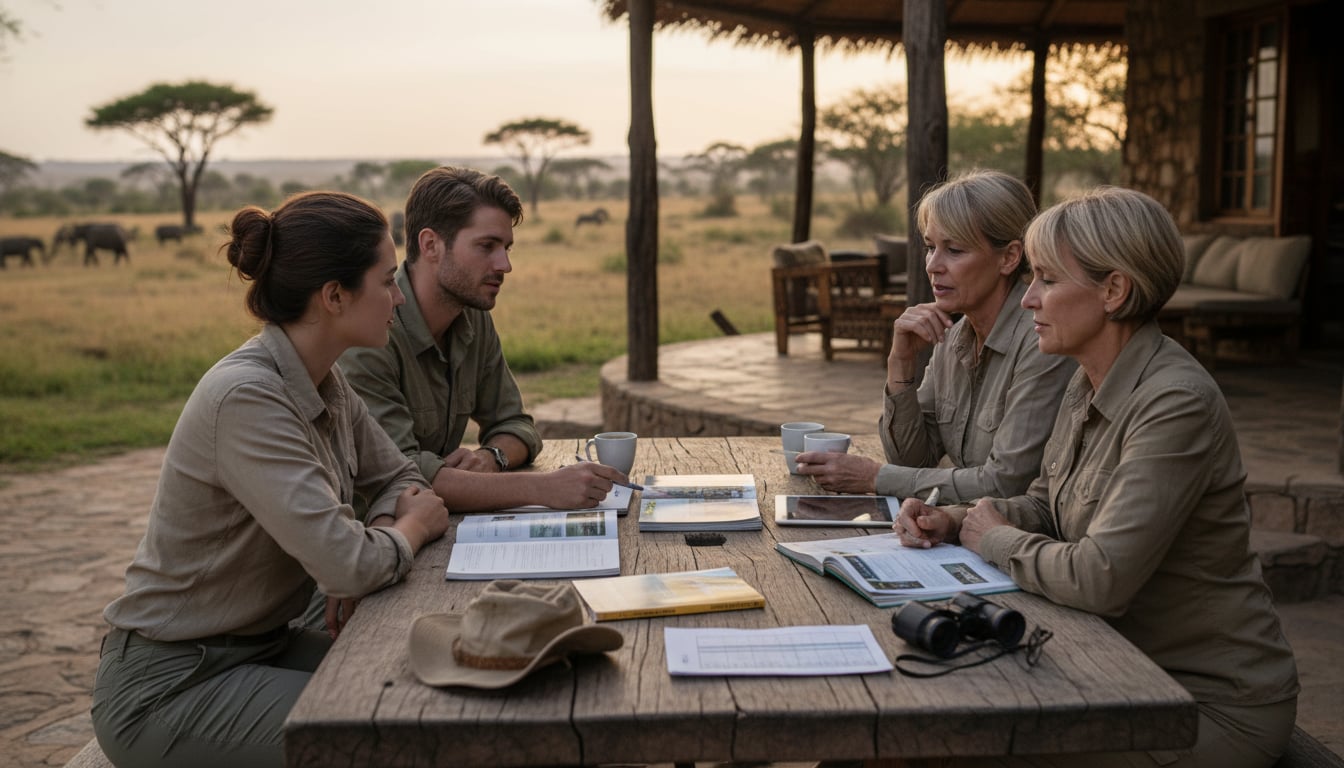
Planning the trip of a lifetime to Tanzania is incredibly exciting, but it also brings up one big question: what is the actual Tanzania safari cost? The price can swing from a few thousand dollars to tens of thousands depending on your travel style, comfort level, and the experiences you prioritize.
This guide breaks down every element that contributes to your final Tanzania safari cost. It covers the difference between budget, mid range, and luxury trips, fixed costs like park fees, and how choices like group size and travel season can make a huge impact. It also addresses topics that come up constantly in planning forums: ultra luxury pricing, the real cost difference between private and shared safaris, inside park versus outside park accommodation trade offs, and what to budget for international flights before you even land in Tanzania.
Looking for a personalized quote? Get a custom safari itinerary tailored to your budget and interests.
How Much Does a Tanzania Safari Cost? An Overview
A safari package typically bundles all major on the ground expenses into one price. This includes accommodation, all meals, park entry fees, a private 4×4 vehicle with a pop up roof, and the expertise of a professional driver guide.
To give you a starting point, here are the general daily price ranges per person:
- Budget Safaris: Approximately $250 per person, per day.
- Mid Range Safaris: Around $375 to $450 per person, per day.
- Luxury Safaris: Starting from $600 and climbing to $1,500 or more per person, per day.
- Ultra Luxury Safaris: $2,000 to $3,500+ per person, per day at the highest tier properties.
Using these numbers, a one week (7 day) safari could range from about $1,750 for a basic camping trip to over $4,200 for a comfortable lodge experience. The overall Tanzania safari cost is higher than in some other African destinations, largely due to its world famous parks and the conservation fees that protect them. More on how Tanzania stacks up against other countries later in this guide.
Tanzania Safari Daily Cost Comparison (2026 Estimates)
| Safari Tier | Daily Cost (Per Person) | Accommodation Type | Best For |
|---|---|---|---|
| Budget | $200 to $400 | Public Campsites / Basic Tents | Solo travelers and Backpackers |
| Mid Range | $450 to $800 | Comfort Tented Camps / Lodges | Couples and Families (Best Value) |
| Luxury | $850 to $1,500+ | 5 Star Lodges / Fly in Camps | Honeymoons and Special Occasions |
| Ultra Luxury | $2,000 to $3,500+ | Exclusive Use Villas / Helicopter Access | Privacy seekers and Ultra High Net Worth travelers |
Breaking Down Your Safari: Budget, Mid Range, Luxury, and Ultra Luxury
Your choice of travel style is the single biggest factor determining your final Tanzania safari cost. Here is what you can expect from each tier.
The Budget Safari Experience
A budget safari is for the adventurous traveler who prioritizes the wildlife experience over creature comforts. These trips keep costs low by using simple accommodations, like public campsites where you sleep in tents, or basic lodges outside the parks.
Expect a budget group camping safari to start at around $250 per person per day. This price typically includes park fees, a shared 4×4 vehicle, a guide, camping equipment, and meals often cooked by a dedicated safari chef. It is a rustic and authentic way to experience the bush. Practitioners on Reddit frequently note that budget safaris still deliver incredible wildlife sightings since you are in the same parks as luxury guests, just with simpler accommodations at the end of the day. For a full breakdown of what budget options look like, check the budget safari cost guide.
The Mid Range Safari: Comfort and Value
The mid range safari is the most popular option for travelers in Tanzania, striking a balance between comfort and cost. This is the sweet spot for great value.
Mid range safaris usually cost between $375 and $450 per person per day. For this price, you get a significant upgrade in lodging. Think charming tented camps with real beds and private ensuite bathrooms, or comfortable lodges with great amenities. Your safari vehicle is often private for your group, and the itinerary can be customized to your interests. For a real world example, a 5 day private safari can start from around $2,000 per person.

The Luxury Safari: Premium Comfort
A luxury safari is an all inclusive, top tier journey where every detail is taken care of. These trips feature exclusive five star lodges in prime locations, gourmet dining, and highly personalized service.
The price for a luxury safari averages $600 per person per day but can easily exceed $1,000 per person per day at the most exclusive properties. At this level, you might enjoy fly in safaris with bush plane flights between parks, private sundowners overlooking the savanna, and expert guides who offer deep insights into the ecosystem. For travelers seeking unparalleled privacy and service, the luxury Tanzania safari guide covers the best lodges and what to expect at each price point.
The Ultra Luxury Safari: What $2,000+ Per Day Actually Gets You
There is a tier above standard luxury that many cost guides skip entirely. Ultra luxury safaris occupy a niche where the daily per person cost runs $2,000 to $3,500 or more, and the experience is fundamentally different from even a $1,000 per night lodge stay.
At this level, you are looking at properties like Singita’s Serengeti concessions, One Nature Nyaruswiga, or andBeyond’s exclusive use offerings. What distinguishes ultra luxury from regular luxury is not just nicer sheets or better wine lists. The differences are structural:
- Private conservancy access. Many ultra luxury camps sit on private concessions where only their guests are allowed, meaning you can do off road driving, night drives, and walking safaris that are prohibited in national parks. The result is wildlife encounters with zero other vehicles present.
- Exclusive use pricing. Some properties offer entire camp buyouts where your family or group has the lodge, all guides, vehicles, and staff entirely to themselves. These buyouts can run $8,000 to $15,000 per night for the whole property.
- Helicopter transfers. Instead of a 45 minute bush plane flight or a full day drive, some ultra luxury itineraries use helicopter transfers between parks, adding $1,500 to $3,000 per hop but cutting transit time dramatically.
- Specialist guides. At properties like Singita, guides hold advanced FGASA qualifications and often have 15+ years of field experience. The quality of interpretation, from tracking predators on foot to explaining complex ecological relationships, is noticeably higher than at most mid range lodges.
Practitioners on travel forums describe the ultra luxury tier as “a completely different product” from standard luxury. One traveler on a YouTube safari vlog noted that their three night stay at a Singita property cost more than their entire two week trip to Southeast Asia, but called it “the most memorable travel experience of my life.” The per person daily rate included all drinks, laundry, private vehicle, guide, and all park fees.
Who books ultra luxury? Primarily honeymooners with significant budgets, anniversary travelers, and high net worth families who value privacy above all else. If this tier interests you, the romantic safari lodges guide covers several of these properties in detail.
Worth noting: ultra luxury pricing is seasonal too. Some Singita and andBeyond properties charge 40% to 60% more during peak migration months (July through September) compared to their green season rates.
Inside Park vs. Outside Park Accommodation: The Price Difference
One of the most overlooked cost decisions in safari planning is whether to stay inside or outside the national parks. The price gap is substantial, and understanding it can save hundreds of dollars or, alternatively, unlock a much better wildlife experience.
Why Inside Park Lodges Cost More
Lodges and tented camps located within national park boundaries charge a premium for two reasons. First, the nightly concession fee (roughly $47 to $71 per person depending on the park) gets passed directly to guests. Second, the simple advantage of location commands higher rates. A lodge inside the Serengeti means you are already in the park at dawn, when animal activity peaks. There is no driving 30 to 60 minutes through a gate while paying for fuel and burning daylight.
At the mid range level, staying inside the Serengeti typically adds $80 to $150 per person per night compared to lodges just outside the park boundary. At the luxury tier, the gap can be $200 to $400+ per night. According to TANAPA’s published fee schedules, concession fees alone account for a meaningful chunk of this difference, but the rest is the market premium operators charge for prime positioning near wildlife corridors.
When Outside Park Stays Make Sense
For budget and lower mid range travelers, staying in lodges or camps in gateway towns (like Karatu for the Ngorongoro area or Arusha for day trips to nearby parks) makes solid financial sense. You sacrifice some convenience, but the wildlife in the parks does not change based on where you sleep.
Practitioners on Reddit frequently point out that outside park lodges often have better Wi-Fi, more spacious grounds, and swimming pools, amenities that rarely exist inside the parks. For families with kids who need downtime between game drives, this trade off works well. The family safari lodges guide covers several outside park properties that cater specifically to families.
Quick Comparison
| Factor | Inside Park | Outside Park |
|---|---|---|
| Nightly cost (mid range) | $250 to $500 pp | $120 to $300 pp |
| Concession fee included | Yes ($47 to $71 pp/night) | No |
| Morning drive start time | Immediate (already inside) | 30 to 90 min drive to gate |
| Atmosphere | Deep bush, minimal lights | Town or rural setting |
| Best for | Photographers, short trips | Budget travelers, families |
The calculus changes with trip length. On a 3 day safari where every hour counts, staying inside the park is almost always worth the premium. On a 7 to 10 day trip, mixing a few nights inside with a few outside can save $300 to $600 per person without meaningfully reducing wildlife viewing time.
Crater Rim vs. Karatu: The Ngorongoro Lodging Decision
The Ngorongoro Crater is on nearly every Northern Circuit itinerary, and the lodging choice here creates one of the sharpest cost splits in all of Tanzania safari planning.
Crater Rim Lodges
Lodges perched on the rim of Ngorongoro Crater offer staggering views and immediate access to the crater floor. Properties like Ngorongoro Serena Lodge, the Crater Lodge (andBeyond), and the newer Lemala Ngorongoro sit right on the edge, often with rooms looking directly down into the caldera.
The cost reflects the location. Crater rim lodges typically run $300 to $600 per person per night at the mid range to luxury level, with ultra luxury options exceeding $1,000. On top of that, the Ngorongoro Conservation Area charges its own entry fees and the $295 vehicle descent fee for the crater floor drive. For more on what the crater day actually involves, see the Ngorongoro Crater planning guide.
Karatu: The Budget Smart Alternative
Karatu is a small town about 20 to 30 minutes from the Ngorongoro gate. It has a growing cluster of lodges and boutique hotels that range from $80 to $200 per person per night, roughly half the cost of crater rim properties.
The trade off is clear. Staying in Karatu means an earlier morning departure (typically leaving by 6:00 AM to reach the crater floor by 7:00 to 7:30 AM) and missing the experience of watching sunset from the rim. But the game drive itself, which is the main event, is identical. You descend into the same crater, see the same resident lions and black rhinos, and spend the same 5 to 6 hours on the floor.
Several travelers on safari planning forums have noted that Karatu lodges often have better food and more character than the larger, somewhat institutional crater rim lodges. One poster on Reddit called their Karatu farm stay “the best meal of the entire trip” and said the 25 minute morning drive was a non issue.
For couples on a honeymoon itinerary, the crater rim is hard to beat for sheer romance. For families or budget conscious travelers, Karatu delivers almost the same experience at a significantly lower price.
Serengeti Camping Fees: What the Park Actually Charges
The Serengeti is the most visited park in Tanzania, and its camping fees are a specific line item that deserves attention because they are often buried inside package quotes without explanation.
Public Campsite Fees
TANAPA operates several public (also called “ordinary”) campsites throughout the Serengeti. These are basic sites with pit latrines, no running water, and minimal facilities. The fee is $35.40 per adult per night and $11.80 per child (ages 5 to 15) as of 2026, VAT inclusive. These fees are separate from the park entry fee of $82.60 per adult per 24 hour period.
So the total per night cost for one adult camping in the Serengeti breaks down as:
- Park entry fee: $82.60
- Public campsite fee: $35.40
- Total government fees alone: $118.00 per adult per night
That is before any food, vehicle, guide, or equipment costs. This is why even “budget” Serengeti safaris cannot go much below $200 per person per day, as the government fees consume more than half of that amount.
Special Campsites
Special (also called “private”) campsites in the Serengeti cost $59 per adult per night. These sites are reserved for one group at a time, offering far more privacy and a better bush atmosphere. Operators running mid range camping safaris almost always use special campsites because the experience is dramatically better for only $24 more per person per night.
How This Affects Your Quote
When comparing operator quotes, check whether they specify public or special campsites. A quote using public campsites should be cheaper, but the on the ground experience is noticeably rougher. Shared pit latrines at Seronera public campsite during peak season, with 20+ tents crammed together, is a frequently cited complaint on travel forums.
Private vs. Shared Safari: The Real Cost Difference
The question of private versus shared (group) safaris comes up in almost every safari planning thread online, and for good reason. It is one of the biggest cost variables after accommodation tier.
What a Private Safari Costs
A private safari means your own dedicated vehicle, your own guide, and an itinerary built around your preferences. You decide when to leave in the morning, how long to stay at a sighting, and when to head back to camp.
The premium for going private is significant. A private safari for two people typically costs 20% to 40% more per person than joining a shared departure with the same operator, same lodges, and same parks. The reason is straightforward: the fixed costs of the vehicle ($150 to $300 per day including fuel) and the guide ($80 to $150 per day including salary, meals, and per diems) are split between fewer people.
Here is how it plays out in practice:
| Group Size | Estimated Vehicle + Guide Cost Per Day | Per Person Share |
|---|---|---|
| 2 travelers (private) | $350 | $175 |
| 4 travelers (private) | $350 | $87.50 |
| 6 travelers (shared group) | $350 | $58.33 |
For a couple on a 7 day private safari, that vehicle and guide premium alone adds roughly $800 per person compared to a six person group departure. Add in the fact that some lodges offer lower rates for group bookings, and the gap can widen further.
What a Shared Safari Costs
Shared safaris, sometimes called group or join in departures, pair you with other travelers (usually 4 to 6 people total) in one vehicle with a set itinerary and fixed departure dates. The per person cost drops because everyone shares the vehicle, guide, and sometimes accommodation costs.
Budget and mid range shared safaris typically run $200 to $350 per person per day, compared to $300 to $500+ for an equivalent private trip at the same tier. The trade off is flexibility. You cannot change the route, and if someone in the group wants to spend 45 minutes watching a sleeping lion, everyone watches the sleeping lion.
Travelers on Reddit regularly debate this trade off. The consensus among experienced safari goers is that for first time visitors doing a standard Northern Circuit itinerary, a shared safari delivers 90% of the same wildlife experience at a meaningfully lower price. Where private safaris become worth the premium is for photographers who need positioning flexibility, families with young children, and anyone visiting during peak season when crowded sightings make vehicle positioning critical.
The Solo Traveler Problem
Solo travelers face the steepest pricing challenge. Most operators charge a single supplement of $50 to $150 per night for solo occupancy at lodges, and you bear the full vehicle and guide cost alone on a private trip. The most cost effective option for solo travelers is joining a scheduled group departure. Some operators also match solo travelers with other singles to split costs.
How to Compare Quotes and Validate Your Safari Price
Getting multiple quotes is standard advice, but knowing how to read them is just as important. Not all quotes are structured the same way, and two prices that look similar can represent very different experiences.
What a Good Quote Should Include
A transparent safari quote should clearly list every major cost component:
- Accommodation (with specific lodge or camp names, not just “lodge in Serengeti”)
- Park entry fees (per person, per day)
- Concession fees (if staying inside parks)
- Vehicle and guide costs
- All meals
- Internal transfers (airport pickups, drives between parks)
- Any internal flights
If a quote simply says “7 day safari, $3,500 per person, all inclusive,” without specifying lodge names or what “all inclusive” covers, that is a red flag. Practitioners on Reddit consistently warn against operators who are vague about accommodations, because a quote that seems cheap may be using the lowest tier lodges or public campsites while a slightly higher quote books special campsites or better lodges.
The Apples to Apples Test
When comparing two or more quotes, line them up against these variables:
- Same parks and same number of nights in each park. A quote with 3 nights in the Serengeti will always cost more than one with 2 nights, even if the daily rate looks lower.
- Same accommodation names. “Mid range lodge in Ngorongoro area” could mean a $150 per night Karatu guesthouse or a $400 per night crater rim property. Ask for specific names.
- Private vs. shared vehicle. Some operators default to shared vehicles without making it explicit.
- What is excluded. The cheapest quote often excludes items like the Ngorongoro crater descent fee ($295), balloon safaris, or drinks. These add up fast.
A useful approach: ask each operator to break the quote into a simple table showing the cost per night for accommodation, daily park fees, vehicle and guide costs, and any extras. Most reputable operators will do this willingly. Avoiding common booking mistakes starts with understanding exactly what you are paying for.
Price Ranges That Should Raise Questions
If a 7 day Northern Circuit safari (Tarangire, Serengeti, Ngorongoro) is quoted below $1,500 per person, something is being cut. Government park fees alone for that itinerary run approximately $500 to $600 per person. Add vehicle, fuel, guide, camping fees, and food, and the math simply does not work below a certain floor without serious compromises in safety, vehicle condition, or guide quality.
On the other end, if a mid range safari is quoted above $800 per person per day with standard tented camps, that is worth questioning too. The operator may be applying excessive markups. Getting three quotes from different operators and comparing line by line is the most reliable way to spot outliers.
International Flight Costs: The Expense Before the Safari Begins
Most Tanzania safari cost breakdowns focus exclusively on what happens after you land. But the international flight is often the single largest line item in the total trip budget, and it varies wildly depending on where you are flying from.
What to Expect by Region
Tanzania has two main international airports: Kilimanjaro International Airport (JRO) near Arusha, which is the gateway to Northern Circuit safaris, and Julius Nyerere International Airport (DAR) in Dar es Salaam, which serves the Southern Circuit and Zanzibar connections.
| Origin | Typical Round Trip Economy | Typical Round Trip Business |
|---|---|---|
| Eastern United States | $800 to $1,400 | $3,500 to $7,000 |
| Western United States | $1,000 to $1,600 | $4,000 to $8,000 |
| United Kingdom / Europe | $500 to $900 | $2,500 to $5,000 |
| India / Middle East | $400 to $800 | $1,500 to $3,500 |
| Australia | $1,200 to $2,000 | $5,000 to $9,000 |
These ranges reflect 2025 and 2026 booking data from Google Flights and Skyscanner. Prices fluctuate substantially based on booking lead time, season, and routing.
How to Find the Best Fares
A few patterns consistently hold true for flights to Tanzania:
Book 3 to 6 months ahead for economy. The sweet spot for East Africa economy tickets from North America is roughly 90 to 150 days before departure. Booking less than 30 days out typically adds 30% to 50% to the fare.
Consider connecting hubs. Direct flights to Kilimanjaro are limited. Most travelers connect through Doha (Qatar Airways), Istanbul (Turkish Airlines), Amsterdam (KLM), or Addis Ababa (Ethiopian Airlines). Ethiopian Airlines consistently offers some of the lowest fares from the US, though with longer layover times. Turkish Airlines tends to offer the best balance of price and comfort for economy travelers, with Istanbul connections that keep total travel time under 20 hours from the East Coast.
Watch for fuel surcharge differences. Business class fares to East Africa vary enormously between airlines. Qatar Airways business class from the US often runs $5,000 to $7,000 round trip, while Ethiopian Airlines business class on the same route can be $3,000 to $4,000. The product is different, but for travelers who just want a lie flat seat to arrive rested, the savings are meaningful.
Fly into JRO, not DAR, for Northern Circuit safaris. Flying into Dar es Salaam and then connecting to Arusha adds a domestic flight ($100 to $200) plus a wasted half day. Unless you are starting in the Southern Circuit or heading directly to Zanzibar, Kilimanjaro airport is the better choice.
How Flights Change the Total Trip Cost Picture
Consider two travelers booking a 7 day mid range safari at $3,000 per person for the ground package. If they fly economy from New York for $1,100 each, the total per person cost becomes $4,100. If they fly business class at $5,500 each, the total jumps to $8,500. The flight alone more than doubled the ground cost.
This is why many experienced travelers recommend allocating flight savings toward a better safari tier rather than upgrading the seat. A $400 savings on flights can fund an extra night in the Serengeti or a hot air balloon ride. That said, arriving well rested after a 16+ hour journey has real value, especially if the safari starts the next morning.
Key Factors That Influence Your Tanzania Safari Cost
Beyond your choice of safari tier, several other variables can raise or lower your final price. Understanding these is key to planning a trip that fits your budget.
- Seasonality: Traveling during peak season (the dry months of June to October) is most expensive. Significant discounts, sometimes 30% or more, are available during low season (April, May, and November). For help choosing the right window, read the guide to the best time for safari.
- Trip Duration: The longer you stay, the higher the total cost. Each day adds more accommodation, food, and park fee expenses.
- Accommodation Style: A night in a public campsite might cost $30, while a night in a luxury lodge can run over $1,500.
- Transportation: Driving between parks is the most common and cost effective method. Flying between remote parks on small planes is faster but adds hundreds of dollars per flight.
- Group Size: The more people sharing the fixed costs of a vehicle and guide, the lower the price per person. A private safari for two will cost more per person than a trip for a family of five.
- Optional Activities: Standard game drives are included, but extras like a hot air balloon ride over the Serengeti or a guided walking safari will add to your budget.

A Closer Look at Core Safari Expenses
Here are the specific line items that make up your Tanzania safari cost.
Accommodation Costs
Lodging is often the biggest piece of the safari price puzzle. Your nightly rate can range from $30 to $50 for a basic campsite all the way up to $800 to $1,500 per person for a high end luxury lodge (and well above $2,000 for ultra luxury properties). If you stay at a lodge or camp located inside a national park, you will also pay a nightly concession fee of around $60 to $70, which goes directly to the park authorities for conservation.
Fixed 2026 Government Park Fees (VAT Inclusive)
These fees are mandatory and usually included in your tour operator’s quote. Fees are often higher in Peak Season (July through September).
| Park / Area | Adult Fee (16+) | Child Fee (5 to 15) | Notable Extra Fees |
|---|---|---|---|
| Serengeti NP | $82.60 | $23.60 | $70.80 Nightly Concession Fee |
| Ngorongoro Crater | $70.80 | $23.60 | $295.00 Vehicle Descent Fee |
| Tarangire / Manyara | $53.10 | $17.70 | $47.20 Nightly Concession Fee |
| Nyerere (Selous) | $59.00 | $35.40 | Lower crowds, higher flight costs |
For the most popular parks like the Serengeti and Ngorongoro Conservation Area, the entry fee is approximately $70 to $83 per adult for every 24 hour period. These fees are the same year round and are included in your package price by your tour operator. For a park by park breakdown, see Tanzania safari parks and circuits.
Transportation Costs: Getting Around the Parks
Your safari 4×4 vehicle, fuel, and driver guide are all bundled into your package. A road safari, where you drive between all the parks in the Northern Circuit, is the most economical approach.
A fly in safari, more common for the remote Southern Circuit, saves time but adds considerable expense. A single internal flight can cost $200 to $400 per person, and you may need several to complete your itinerary.
How Group Size Impacts Your Per Person Cost
A standard safari vehicle typically seats up to six guests. Because the costs of the vehicle and guide are fixed, sharing them among six people is far cheaper per person than if only two people are covering the cost.
If you are traveling solo or as a couple, you can often reduce costs by joining a small group departure. Families can also use the family safari guide for tips on planning multi generational trips and smart ways to save.
Dining Costs on Safari
Nearly all safari packages are full board, meaning breakfast, lunch, and dinner are included. While on safari, you will not need to budget for meals, as there are rarely restaurants available in the bush anyway.
Water, tea, and coffee are usually included, but clarify if soft drinks and alcoholic beverages are covered. If not, plan to pay for those extras at your lodge or camp.
Itinerary Choices and Their Impact on Cost
Where you go and what you do will also shape your budget.
Northern vs. Southern Circuit: Which Costs More?
Tanzania’s famous Northern Circuit (Serengeti, Ngorongoro, Tarangire) is visited by about 90% of all safari travelers. The Southern Circuit (Ruaha, Nyerere) is more remote and wild.
While the park fees in the south can be slightly lower, the overall cost of a Southern Circuit safari is often higher. You typically need to fly between the parks, which adds significant transportation costs. The Northern Circuit, which can be done entirely by road, generally offers better value, especially for first time visitors. A 7 day Northern Circuit safari might cost between $2,000 and $3,500, while a similar trip to the south could be $2,500 to $4,000.
Adding Optional Activities: Walking Safaris and More
While daily game drives are the heart of a safari, you can enhance your trip with special excursions. These are almost always an additional cost.
- Hot Air Balloon Safari: A breathtaking flight over the Serengeti at dawn costs around $599 per person.
- Night Game Drive: A guided drive after dark to spot nocturnal animals can cost between $50 and $200.
- Ngorongoro Crater Descent: To drive down onto the crater floor, there is a special vehicle fee of $295 per vehicle. This is usually included in itineraries featuring the crater, but it is a key reason why that day is more expensive.
- Walking Safari: A guided walk through the bush with an armed ranger costs between $30 and $100 per person depending on the location and duration. Walking safaris are available in areas like the Ngorongoro Conservation Area, Ndutu, and certain game reserves in the Southern Circuit. They are not permitted in most national parks for safety reasons.
What Does a Walking Safari Actually Cost?
Walking safaris deserve special attention because they are one of the most memorable add ons you can book, yet many travelers overlook them or assume they are prohibitively expensive. They are not. A typical 2 to 3 hour guided bush walk runs $30 to $80 per person in most areas. Longer, full day walking safaris or multi day walking expeditions (available in Ruaha and parts of the Selous ecosystem) can run $150 to $300 per person per day, usually inclusive of a professional walking guide and an armed ranger.
Practitioners on travel forums note that walking safaris completely change how you perceive the bush. One traveler on Reddit described their walk through Ndutu as “the single most intense hour of the entire trip,” explaining that being on foot among zebra and wildebeest, with a Maasai guide reading tracks, felt far more immersive than any vehicle based game drive. The cost is modest compared to a balloon flight, yet many repeat safari goers rate it as an equal or better experience.
The Cost of Cultural Tours
Visiting a local community, such as a Maasai village, is a wonderful way to enrich your trip. These cultural tours are optional add ons and typically cost between $50 and $200 per person, depending on the length and depth of the experience. The fee usually supports the community directly and provides a guided, authentic interaction.
How Tanzania Safari Costs Compare to Other African Countries
One question that comes up constantly on planning forums: is Tanzania more expensive than Kenya, Botswana, or South Africa? The short answer is that Tanzania sits in the middle to upper range of African safari pricing, and there are clear reasons why.
Tanzania vs. Kenya
Kenya and Tanzania share borders, the Great Migration, and similar wildlife. But Tanzania is generally 15% to 30% more expensive for comparable safari tiers. The biggest reason is park fees. Tanzania’s TANAPA fees are among the highest in East Africa, with the Serengeti charging $82.60 per adult per day compared to roughly $80 for Kenya’s Maasai Mara (which is technically a national reserve, not a national park, so the fee structure is different). Where the cost gap widens is in the Ngorongoro Conservation Area’s $295 vehicle descent fee, which has no equivalent on the Kenyan side.
Accommodation pricing is broadly similar at the mid range level, but Kenya offers more budget options near Nairobi based parks like Amboseli that Tanzania cannot match. That said, many travelers and operators argue that Tanzania’s parks feel less crowded and offer more diverse ecosystems.
Tanzania vs. Botswana
Botswana is significantly more expensive than Tanzania at every tier. A mid range Botswana safari typically starts around $600 to $800 per person per day, compared to Tanzania’s $375 to $450. Botswana’s government intentionally pursues a “high value, low volume” tourism model, with park fees, concession costs, and accommodation premiums all reflecting that philosophy. According to SafariBookings’ country comparison data, Botswana consistently ranks as the most expensive mainstream safari destination in Africa.
Tanzania offers far more flexibility across budget tiers. If you want a camping safari for $250 a day, that option exists in Tanzania. In Botswana, it barely does.
Tanzania vs. South Africa
South Africa is the most affordable major safari destination, with Kruger National Park offering self drive options that can bring daily costs below $100 per person. Even guided safaris in private reserves bordering Kruger start around $300 to $500 per person per day, which is comparable to Tanzania’s mid range but with shorter driving distances from Johannesburg.
The trade off is scale and exclusivity. Tanzania’s parks are vastly larger (the Serengeti alone is roughly the size of Northern Ireland), and the Great Migration has no equivalent anywhere else. South Africa offers excellent Big Five viewing at a lower cost, but the “wild Africa” atmosphere that draws people to Tanzania is harder to replicate in a country with paved highways running past game reserves.
Quick Cost Comparison Table
| Country | Budget (Per Person/Day) | Mid Range (Per Person/Day) | Luxury (Per Person/Day) | Key Cost Driver |
|---|---|---|---|---|
| Tanzania | $200 to $400 | $450 to $800 | $850 to $1,500+ | High park fees, concession fees |
| Kenya | $150 to $350 | $400 to $700 | $800 to $1,500+ | Slightly lower park fees |
| Botswana | $350 to $500 | $600 to $1,000 | $1,200 to $2,500+ | High value, low volume policy |
| South Africa | $80 to $250 | $300 to $600 | $700 to $1,500+ | Self drive options lower floor |
| Uganda | $150 to $300 | $350 to $600 | $600 to $1,200+ | Gorilla permits ($800) are the wild card |
One thing to note about Uganda: the daily safari costs are lower than Tanzania’s, but if gorilla trekking is on the agenda, a single permit costs $800 in Uganda and $1,500 in Rwanda. That one line item can outweigh multiple days of park fee savings. The gorilla trek cost guide breaks down what those permits include and how to budget for them.
Why Tanzania Commands Higher Prices
Tanzania’s pricing reflects a few realities that other countries do not share:
- Conservation funding model. Tanzania uses park fees as a primary funding mechanism for TANAPA (Tanzania National Parks Authority). The fees directly support anti poaching patrols, road maintenance, and ranger salaries across a system of 22 national parks.
- The Great Migration. No other country can offer the full calving to river crossing cycle of the wildebeest migration. This gives Tanzania a pricing advantage that operators and lodges capitalize on, especially during peak migration months.
- Limited budget infrastructure. Unlike South Africa or Kenya, Tanzania has fewer paved roads between parks and limited public transportation options, making independent travel difficult and operator led safaris the norm.
The higher cost does come with genuine returns. Several travelers on YouTube safari vlogs have commented that after visiting both Kenya and Tanzania, they found Tanzania’s parks less crowded and the wildlife encounters more intimate, particularly in Tarangire and the southern Serengeti.
Putting It All Together: Sample Cost Calculations
A 7 Day Luxury Safari for Two People
Here is how costs add up for a hypothetical luxury trip:
- Accommodation: 7 nights at $500 per person, per night = $3,500 per person
- Park Fees: 7 days at an average of $80 per day = $560 per person
- Private Vehicle and Guide: 7 days at $250 per day, split by two = $875 per person
- Optional Balloon Safari: $599 per person
- One Internal Flight: $250 per person
- International Flights (Economy from US): $1,100 per person
Total Estimated Cost: $6,884 per person, excluding visas, travel insurance, and tips. Notice how adding the international flight pushes the total nearly $1,100 higher than ground only estimates. This is why it is important to budget for the full trip, not just the safari package.
A 7 Day Budget Camping Safari for Two People
- Shared Group Safari Package (all inclusive): $250 per day x 7 = $1,750 per person
- International Flights (Economy from Europe): $700 per person
- Visa: $50 per person
- Tips and Spending Cash: $250 per person
Total Estimated Cost: $2,750 per person. A Tanzania safari does not have to cost $5,000+. With the right choices, a week in the Serengeti and Ngorongoro is achievable for under $3,000 including flights from Europe.
Tipping Guidelines and Extra Costs
While your package is “all inclusive,” budget for these standard 2026 industry rates:
- Safari Guide: $20 to $30 per vehicle, per day (shared by the group).
- Camp/Lodge Staff: $10 to $15 per guest, per day (usually via a communal tip box).
- Tanzania Visa: $100 for US Citizens; $50 for most other nationalities. Details in the Tanzania visa guide.
- Serengeti Balloon Safari: $595 to $650 per person.
- Maasai Village Visit: $30 to $50 per person.
- Travel Insurance: $75 to $200 per person depending on coverage level and trip length. The safari travel insurance guide covers what policies should include.
Practical Money Matters for Your Trip
One final piece of the puzzle is managing your money on the ground.
How Much Cash Should You Bring on Safari?
While your main safari costs are prepaid, you will need cash for a few key things. Park gates do not accept cash, but it is essential for tipping, buying souvenirs, and paying for your visa on arrival.
- Visa on Arrival: U.S. citizens must pay $100 in USD cash. Most other nationalities pay $50.
- Tipping: It is customary to tip your guide (around $10 to $20 per person, per day) and lodge staff. Tips are almost always given in cash.
- Souvenirs: Local markets and village craft stalls operate on a cash basis.
A good guideline is to bring $200 to $300 in cash per person for a week long trip. It is best to have a mix of U.S. dollars (newer bills) and some local Tanzanian Shillings, which you can get from an ATM in Arusha before your safari begins.
Frequently Asked Questions About Tanzania Safari Costs
What is a realistic Tanzania safari cost for a week?
A realistic Tanzania safari cost for a 7 day trip can range from $1,750 for a basic camping safari to $3,500 for a comfortable mid range lodge safari, and $6,000 or more for a luxury experience. The mid range option is the most popular for its excellent balance of comfort and value.
What is the cheapest month for a Tanzania safari?
The cheapest months are typically during the long rainy season in April and May. Many lodges offer significant discounts during this time, but be prepared for potential disruptions due to weather. The shoulder seasons (like November and early December) can also offer better pricing than the peak dry season.
Are there hidden costs on a Tanzania safari?
With a reputable tour operator, there should be no hidden costs. Your safari quote should clearly state what is included and excluded. Exclusions typically consist of international flights, visa fees, travel insurance, tips, alcoholic beverages, and personal items. Comparing quotes line by line (see the quote comparison section above) is the best way to avoid surprises.
How much should I budget for tips on a safari?
A common guideline is to budget $10 to $20 per person, per day for your main safari guide. For lodge and camp staff, you can either tip individuals or leave an amount in a general staff tip box, often around $5 to $10 per person, per day.
Is Tanzania more expensive than Kenya for a safari?
Yes, Tanzania is generally 15% to 30% more expensive than Kenya for a comparable safari experience. Higher park fees, the Ngorongoro vehicle descent fee, and fewer ultra budget accommodation options inside parks all contribute. However, Tanzania’s parks are larger, often less crowded, and home to the full Great Migration cycle, which many travelers consider worth the premium.
How much does a walking safari cost in Tanzania?
A walking safari in Tanzania typically costs $30 to $100 per person for a 2 to 3 hour guided bush walk. Multi day walking expeditions in the Southern Circuit can run $150 to $300 per person per day. Walking safaris are available in select areas like the Ngorongoro Conservation Area and Ndutu, but not in most national parks.
Is a private safari worth the extra cost?
For first time visitors on a standard Northern Circuit route, a shared group safari delivers nearly identical wildlife sightings at 20% to 40% less cost per person. Private safaris become worth the premium for photographers, families with small children, and anyone who values complete control over the daily schedule.
How much should I budget for flights to Tanzania?
Round trip economy flights to Tanzania typically cost $800 to $1,600 from the United States, $500 to $900 from Europe, and $1,200 to $2,000 from Australia. Booking 3 to 6 months ahead and comparing airlines like Ethiopian, Turkish, and Qatar Airways usually yields the best fares.
Should I stay inside or outside the park to save money?
Staying outside the park saves $80 to $200+ per person per night at the mid range level, mainly due to avoiding concession fees and paying lower accommodation rates. The trade off is longer morning drives to reach the park gates. For short trips (3 to 4 days), staying inside is usually worth the premium. For longer trips, mixing inside and outside nights is a common cost saving strategy.
How much are Serengeti camping fees?
Public campsite fees in the Serengeti are $35.40 per adult per night, while special (private) campsites cost $59 per adult per night. These are on top of the $82.60 daily park entry fee, bringing total government fees alone to $118 to $142 per adult per night before any operator costs.
Ready to start planning? The key is to work with an expert who can tailor an itinerary to your specific budget and interests. Explore Tanzania safari options and let a specialist design the perfect trip for you.
Leave a Reply